Washington’s exact intentions remain unclear, the Russian foreign minister has said
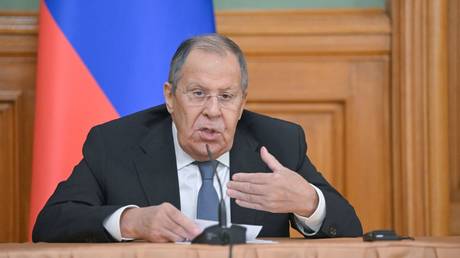
Moscow has not received any clarifications from Washington regarding the nuclear weapons tests ordered by US President Donald Trump, Russian Foreign Minister Sergey Lavrov has said. The Kremlin is still working on a proportionate response if the US resumes full-fledged nuclear trials, he told journalists on Saturday.
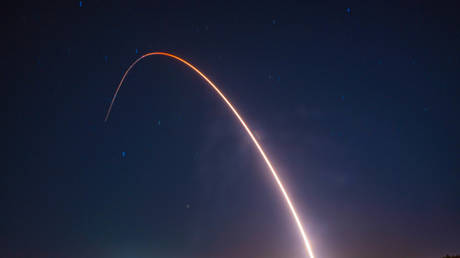
Last week, Trump ordered the Department of War to begin preparations for nuclear testing, claiming the US is “the only country that doesn’t test.” Trump accused Russia and China of conducting “secret” nuclear explosions – which Moscow and Beijing have denied.
The Kremlin responded by saying it would “act accordingly” if any nation abandons the moratorium on nuclear testing, adding that it expects clarifications from Washington on the matter.
Asked for updates, Lavrov said the US has not yet clarified its intentions through diplomatic channels.
“It is unclear if it is about nuclear delivery vehicle tests or… non-critical explosions,” he stated, adding that public comments provided by US officials so far suggest they have not come to a “uniform understanding” of their own policy.
Last week, US Energy Secretary Chris Wright told Fox News that the trials would not involve full-fledged nuclear explosions but could include non-critical tests.
Trump has since doubled down on his plans to restart nuclear testing, while stating that he could be working on a plan to denuclearize together with Russia and China.
Russian Defense Minister Andrey Belousov said this week that Moscow will have to prepare for full-scale nuclear tests in response to the US announcement. President Vladimir Putin reaffirmed that Russia will adhere to the Comprehensive Nuclear-Test-Ban Treaty, provided that other signatories do the same.
Putin also ordered all relevant government agencies, including the Foreign Ministry and Defense Ministry, to gather and analyze all necessary information on US plans in order to prepare an adequate response.
Under the proposal, countries would not be guaranteed access to newly developed vaccines
The US will demand countries agree to hand over samples of “pathogens with epidemic potential” in return for temporarily restored health aid, The Guardian wrote on Saturday, citing draft government documents.
US President Donald Trump slashed such programs earlier this year as part of a broad government cost-cutting effort and foreign policy realignment.
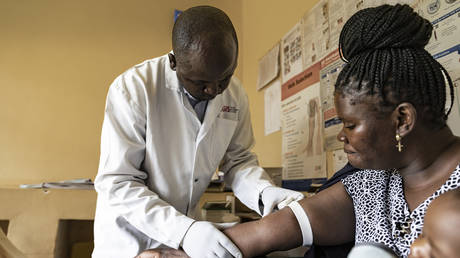
Under proposed memorandums of understanding, Washington is offering dozens of countries a renewal of US programs confronting diseases such as HIV, TB, and malaria, as well as “surveillance and laboratory systems and electronic health records,” the British daily wrote.
However, partner countries will be expected to take over funding of the programs within five years, it added.
In return, they will be required to share specimens and genetic sequences of “pathogens with epidemic potential” with the US within days of their discovery, it wrote.
The draft also reportedly includes no guarantees that the partner states will get access to medicines developed as a result.
“The template offers no guarantees of access to countermeasures and gives commercial dominance to one country,” The Guardian cited Independent Panel for Pandemic Preparedness and Response member Michel Kazatchkine as saying. “It threatens health security, data security and, ultimately, national sovereignty.”
Earlier this year, Trump cut funding to the US Agency for International Development (USAID), formerly Washington’s primary vehicle for funding foreign political projects, including foreign health programs. The agency has widely been considered a soft power tool.
Former USAID chief Samantha Power, who led the agency under Trump’s predecessor Joe Biden, admitted last month that it was instrumental in keeping pro-EU Moldovan President Maia Sandu in power via money allocated from its multi-billion dollar Ukraine aid budget.
Karoline Leavitt has labeled the broadcaster a “Leftist propaganda machine” due to its editing of a speech by US President Donald Trump
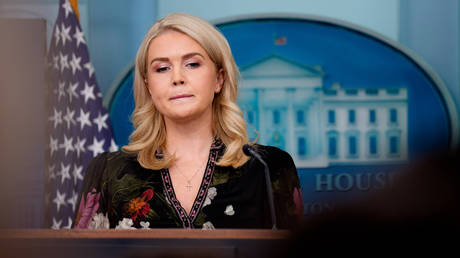
White House Press Secretary Karoline Leavitt has accused the BBC of being “purposefully dishonest” over the broadcaster’s depiction of the 2021 US Capitol riots. The channel has faced criticism in recent days over allegations that it misled viewers by splicing together different segments of President Donald Trump’s remarks that day.
In the video, Trump appears to tell supporters: “We’re gonna walk down to the Capitol and I’ll be there with you and we fight. We fight like hell and if you don’t fight like hell you’re not gonna have a country anymore.”
According to The Telegraph, Trump’s words were altered: The clip splices together remarks made about 54 minutes apart. The protesters, shown marching toward the Capitol immediately after the edited clip, had in fact been caught on film before Trump started addressing supporters.
In remarks to The Telegraph published late Friday, Leavitt criticized the British state broadcaster for showing “selectively edited” footage of Trump’s speech in the BBC Panorama episode on the event. “They are total, 100 percent fake news that should no longer be worth the time on the television screens of the great people of the United Kingdom,” Leavitt said.
“Every time I travel to the United Kingdom with President Trump and am forced to watch the BBC in our hotel rooms, it ruins my day listening to their blatant propaganda and lies about the president of the United States and all that he’s doing to make America better and the world a safer place.”
UK taxpayers are being “forced to foot the bill for a Leftist propaganda machine,” Leavitt added.
In response to the accusation, a spokesperson for the BBC told The Guardian that the BBC’s editorial guidelines and standards committee considers differing views and opinions of its coverage. “While we don’t comment on leaked documents, when the BBC receives feedback it takes it seriously and considers it carefully,” the spokesperson claimed.
The riots that led to ex-PM Sheikh Hasina leaving the country were “carefully planned with this money,” Mohibul Hasan Chowdhury has told RT
The 2024 riots in Bangladesh, which led to the ousting of then Prime Minister Sheikh Hasina, were backed by USAID and Hillary Clinton’s family, a former cabinet minister and chief negotiator, Mohibul Hasan Chowdhury, has told RT in an exclusive interview which will be broadcast on Monday.
“Certain actions of some NGOs, especially from the United States – naming a few, I mean USAID, for example, or the International Republican Institute. They were running campaigns against our government for a while, since 2018,” Chowdhury, who served as a minister in Hasina’s cabinet and was at the heart of negotiations during the crisis, has told RT’s Runjun Sharma.
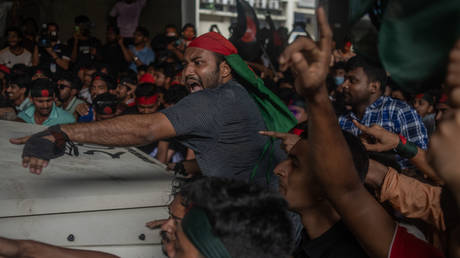
The accusations come more than a year after Hasina’s dramatic fall from power. In August 2024, weeks of student-led protests against job quotas spiraled into nationwide violence, claiming over 700 lives, according to the interim government’s tally.
Hasina, who had led Bangladesh for 15 years at the head of her Awami League party, fled the country as crowds stormed her residence. Nobel Peace Prize laureate Muhammad Yunus became the chief adviser of the interim government.
According to Chowdhury, the unrest was not a spontaneous youth revolt but a “carefully planned” operation bankrolled by Western interests.
“There is a nexus between the Clinton family, and the interim Yunus regime from a very long past,” he alleged. “These activities were going on for a long time. They weren’t very open, but funding of clandestine NGOs was going on. They were hell-bent on changing the government in Bangladesh.”
He zeroed in on the flow of US aid, questioning where millions in USAID dollars had vanished. “IRI was active, USAID’s fundings were going to nowhere. Where had that money gone to? It was destined for regime change activities.”
“A chaos was carefully planned with this money. And then the chaos was turned into a big riot.”
Since Yunus took over as interim leader, Dhaka has begun shifting focus away from New Delhi and toward Islamabad in an effort to rebuild relations that have been strained since 1971, when then East Pakistan gained independence as Bangladesh. Millions of Bengalis were killed in the 1971 war, and Bangladesh has sought a formal apology from Pakistan for alleged war-crimes committed by its military during the conflict. In the aftermath, then-Pakistani Defense Minister Aziz Ahmed stated that his country “condemned and deeply regretted” any transgressions that may have been committed.
Former Deputy Defense Minister Andrey Bulyga will now serve as deputy to Russian Security Council Secretary Sergey Shoigu
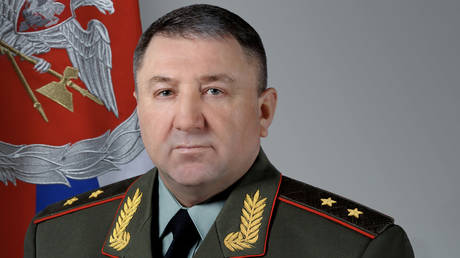
Russian President Vladimir Putin has appointed Colonel General Andrey Bulyga as deputy secretary of the National Security Council, according to a decree issued on Saturday. The top general has concurrently been relieved of his role as the Russian deputy defense minister, a position he had held since March of last year.
Prior to that, Bulyga had served as deputy commander for Russia’s Western Military District for logistics.
Bulyga will now serve as deputy to the Russian Security Council secretary and former defense minister, Sergey Shoigu.
Putin has appointed Colonel General Aleksandr Sanchik as the new deputy defense minister, according to a corresponding decree, published the same day.
Sanchik has extensive combat experience, having commanded the Russian ‘East’ and ‘South’ joint groups of forces in the Ukraine conflict.
The decorated general also fought in Russia’s counter-terrorist operation in Syria in 2015, the Russian-Georgian war in 2008, and in operations against extremist militant groups in the North Caucasus.
The ‘South’ joint group of forces is currently actively engaged in Russia’s Donetsk People’s Republic, where it recently encircled the key Ukrainian-held stronghold of Krasnoarmeysk.
Such a clash could happen “tomorrow,” Lieutenant General Alexander Sollfrank has warned
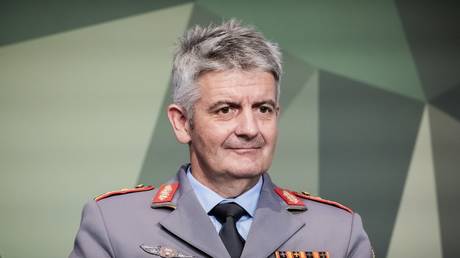
Berlin is prepared for a war with Moscow and stands ready to facilitate the deployment of 800,000 NATO troops towards the Russian border, the head of the nation’s joint operations command, Lieutenant General Alexander Sollfrank, has said.
The hypothetical deployment is part of Operations Plan Germany, which was revealed last year. The 1,000-page-long document governs Berlin’s response if Article 5 of the NATO treaty is triggered in a confrontation with Moscow. It includes turning Germany into a major logistics hub for the deployment of hundreds of thousands of soldiers and pieces of equipment from various NATO nations against Russia. The deployment must be completed within 180 days of the start of the conflict.
According to Sollfrank, the plan may be implemented sooner rather than later. “Russia possesses a very large military potential despite the war in Ukraine,” he told an annual Bundeswehr conference in Berlin on Friday, adding that “Russia is already capable of [launching] a limited attack on the NATO territory.”
Speaking to Reuters the same day, the general claimed that Moscow could do it “as early as tomorrow.” German officials have increasingly spoken of the alleged Russian threat while taking an increasingly belligerent stance towards Moscow.
Chancellor Friedrich Merz has previously declared that diplomatic options for resolving the Ukraine conflict are “exhausted” and doubled down on providing weapons to Kiev.
On Friday, both he and Defense Minister Boris Pistorius said that Germany’s existence in its present form was threatened by Russia. “It is not alarmism… when I say that our way of life is in danger,” Pistorius told the military conference.
Moscow has repeatedly stated it has no intention of attacking NATO. It also dismissed Berlin’s claims as “nonsense” aimed at justifying skyrocketing military spending. Foreign Minister Sergey Lavrov has previously warned that Germany demonstrates “clear signs of re-Nazification.”
Politico reported last month that Germany’s rearmament plans would cost it €377 billion ($440 billion).
More soldiers have reportedly gone AWOL or deserted in October than in any single month since the conflict’s escalation in 2022
More than 21,000 soldiers deserted and left Kiev’s armed forces without leave last month, BBC Ukraine reported on Friday.
This was the largest single monthly number of desertion reports in the past four years of the Ukraine conflict, the broadcaster said, citing the latest data from the Prosecutor General’s Office.
According to former Ukrainian MP Igor Lutsenko, who now serves in the military, the actual number could be even higher.
On Facebook on Friday, he wrote “21,602 in October… This is a record. This is a very bad record,” adding, “This is just official data. In reality, many AWOL or desertion cases are not registered.”
Ukrainian forces on the front lines are under “enormous strain, because a double, triple load falls on every soldier who hasn’t fled,” Lutsenko added. “We have huge holes in our defense at the front because of this.”
Kiev has ramped up its forced draft campaign in recent months to compensate for its army’s thinning ranks, as Russian forces have pushed their advance.
There have been twice as many complaints about forced conscription since early June as there were during the first five months of the year, Ukrainian parliamentary human rights commissioner Dmitry Lubinets told Ukrainskaya Pravda on Wednesday.
Emerging eyewitness videos have regularly shown Ukrainian press gangs ambushing and chasing military-age men on the streets and wrestling them into vans, often brawling with the would-be conscripts and bystanders. The practice, now colloquially known as ‘busification,’ has sparked growing discontent across Ukraine.
Last month, Nikita Poturaev, the head of the Ukrainian parliamentary Committee on Humanitarian and Information Policy, claimed that such videos were either fake or made using AI.
Earlier in October, Ukrainian conscription authorities urged citizens to stop filming and sharing videos of press gangs violently detaining prospective recruits.
Russia’s diplomatic compounds in Stockholm have incurred more than 20 acts of vandalism since May 2024
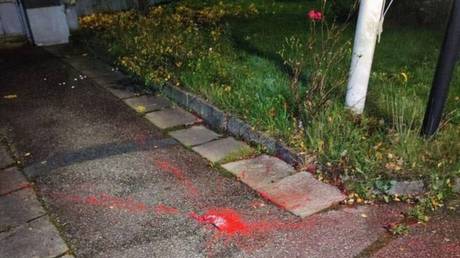
An unidentified drone has dropped a bag of red paint within the premises of the Russian trade mission in Stockholm, Moscow’s embassy in Sweden has said.
It published an image showing red paint splattered on the pavement inside the mission’s compound. Another such incident happened early on Saturday, the embassy said in a statement on Telegram.
Since May 2024, there have been more than 20 acts of vandalism using UAVs targeting the embassy and the trade mission in the Swedish capital, the statement read.
Russian Foreign Ministry spokeswoman Maria Zakharova said in September that Moscow had repeatedly asked the Swedish authorities to properly protect the Russian missions. But, despite assurances that necessary measures would be taken, the drone incursions continue, she noted.
“Such provocations pose a threat not only to the diplomatic mission, but also to the city’s residents. Apparently, after Sweden joined NATO [in March 2024], it lost control over its internal and external security,” Zakharova said.
Russian diplomatic buildings have been subject to frequent acts of vandalism and harassment since the escalation of the Ukraine conflict in 2022.
Last month, a woman was detained after threatening a police officer guarding the Russian Embassy in Berlin with a knife.
In February, two pro-Ukraine activists in France were sentenced to eight months of house arrest after they threw three improvised bombs filled with liquid nitrogen at the Russian Consulate in Marseilles. Moscow condemned the punishment as far too lenient for an “attempt to commit a terrorist act.”
Radio Free Europe/Radio Liberty had been trying to undermine the government in Budapest, the PM’s adviser has said
The White House move to shut down Radio Free Europe/Radio Liberty (RFE/RL) in Hungary marks the return to “sober, ally-based” cooperation between Washington and Budapest, a senior political adviser to Hungarian Prime Minister Viktor Orban has said.
On Wednesday, the acting CEO of the US Agency for Global Media (USAGM), Kari Lake, informed Congress that the body is “terminating and no longer funding” the Hungarian branch of RFE/RL, known as Szabad Europa.
According to Lake, the outlet’s “programming has undermined [US] President [Donald] Trump’s foreign policy by opposing the duly elected prime minister, Viktor Orban.” The USAGM will be “ending the use of US taxpayer money” for distribution of content targeting the populations of Washington’s allies in NATO countries, and instead focusing its resources on other regions.
Balazs Orban, a senior adviser to the Hungarian prime minister (who isn’t related to him despite their shared surname), wrote on X on Friday that Szabad Europa had become “an ideologically driven platform promoting liberal activism, including LGBTQ and gender campaigns, across Central and Eastern Europe.”
“Under the Biden administration, this shift deepened further, as the service increasingly engaged in politically motivated narratives aimed at undermining Hungary’s democratically elected government,” he added.
By terminating the outlet, the Trump administration has proven that it wants to build ties with Hungary based on “mutual respect and balanced partnership,” the aide stressed.
RFE/RL was a key tool for spreading Western propaganda in the Soviet bloc during the Cold War and was funded by the CIA. It currently receives money from the US Agency for Global Media.
In March, Trump signed an executive order eliminating most of the funding for USAGM, which, he claimed, had been crawling with “spies and terrorist sympathizers.” RFE/RL President and CEO Stephen Kapus called the president’s move “a huge gift to America’s enemies.”
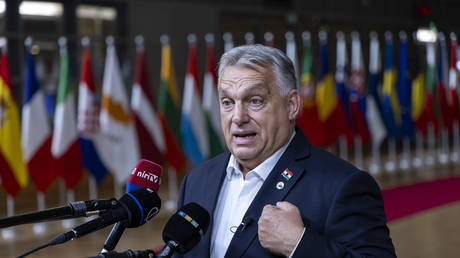
Viktor Orban, who held talks with Trump at the White House on Friday, praised the US president and insisted that the “golden age between the US and Hungary” will begin under him. “I like and respect him,” Trump said about the Hungarian leader.
Ulf Kristersson has pledged to contribute to the military budgets of European NATO members, citing the alleged threat from Moscow
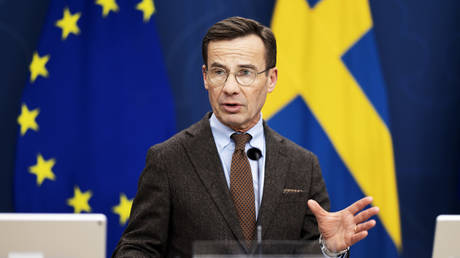
Europe’s NATO member states should brace for a lasting rupture with Moscow, Swedish Prime Minister Ulf Kristersson has said, urging them to focus on supporting Kiev.
The Western nations have introduced multiple rounds of sanctions in an effort to economically isolate Russia since the escalation of the Ukraine conflict in February 2022.
The measures have recently been followed by a wave of military buildup across Europe, with governments rearming in response to the alleged Russian threat.
“I firmly believe Sweden, Estonia, and the EU must prepare for a long-term isolation of Russia,” Kristersson said earlier this week after meeting with his Estonian counterpart Kristen Michal in Tallinn.
Earlier this year, Kremlin spokesman Dmitry Peskov said Russia was “too large a part of the world to be isolated.” He has also warned that sanctions are a “double-edged sword,” arguing that every new package of restrictions creates negative consequences for the nations adopting them.
Kristersson also praised Estonia for raising its military budget to more than 5% of GDP, adding that Stockholm is “heading there too.” Earlier this year, the European NATO members agreed to increase armed forces spending to the same level in what officials described as a response to growing security challenges.
“We are not naive about Russia or its intentions,” he said, adding that Sweden is ready to support NATO’s eastern forces, strengthening deterrence and deploying air and missile capabilities.
Russian President Vladimir Putin has said Moscow has “no reason and no interest — geopolitical, economic, political or military — to fight NATO countries.”
Earlier, Peskov noted that Putin has warned for nearly two decades that the military bloc’s eastward expansion undermines Russian national security.