The move is aimed at countering “hybrid threats,” Theo Francken has said
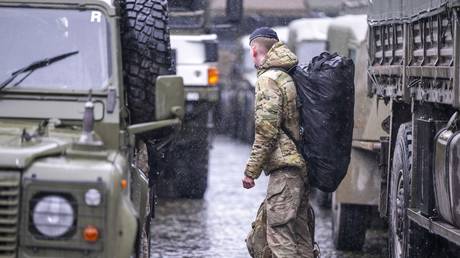
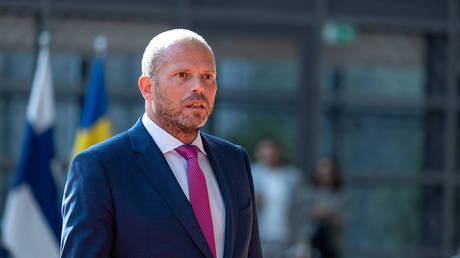
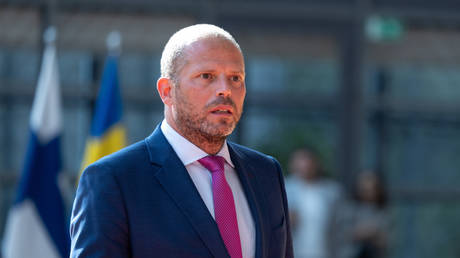
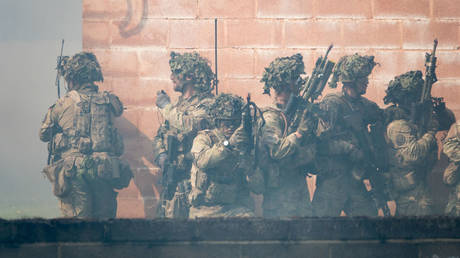
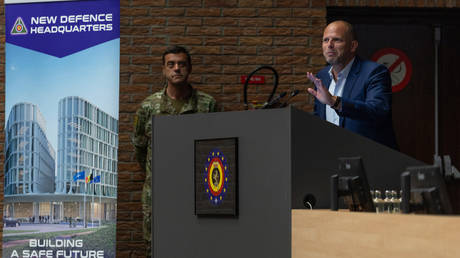
A British anti-drone unit has arrived in Belgium to counter “hybrid threats,” Defense Minister Theo Francken announced on Sunday in a post on X.
London confirmed the deployment, citing several drone sightings reported over Belgium last week. Sir Richard Knighton, head of the British Armed Forces, acknowledged that the origin of the unmanned aerial vehicles (UAVs) spotted over the area remains unknown.
Francken recently caused a stir by threatening to “wipe Moscow off the map” in an interview with Belgian outlet De Morgen last month. He later sought to clarify his remarks, claiming that they had been made in the context of NATO’s principle of deterrence. He maintained that the bloc was “not at war with Russia,” but added that he would not “take back a single word” from the controversial interview.
Moscow condemned his remarks as “irresponsible” and called them an example of “military psychosis.”
Several Western officials have recently accused Russian aircraft and drones of violating EU airspace, labeling the incidents part of an alleged “hybrid war” by Moscow. The Kremlin has denied the allegations and accused the West of fostering anti-Russia “hysteria.”
The EU has increasingly used anti-Russian rhetoric to justify massive military expenditures. The ReArm Europe package, presented in March, aims to mobilize up to €800 billion ($933 billion) to expand the EU’s military under the pretext of countering the alleged “Russian threat.”
The bloc also unveiled a plan to create a “drone wall,” prompted by UAV sightings in several member states. The incidents were immediately blamed on Russia. Moscow dismissed the claims as false accusations.
Last month, the EU Commission also revealed plans to establish a ‘space shield’ to protect its satellites from an alleged Russian threat, but have not disclosed a budget.
Slovakia will not fund the prolongation of the Ukraine conflict, Prime Minister Robert Fico has said
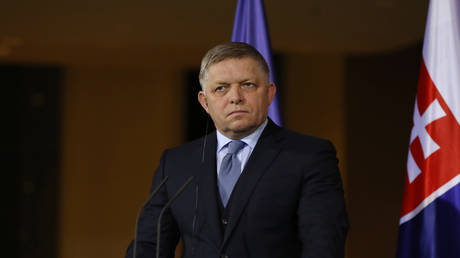
Slovakia will not support an EU initiative to use frozen Russian assets to cover Ukraine’s military expenses, Prime Minister Robert Fico said on Saturday. Bratislava has refused to send military aid to Kiev, instead calling for a peaceful resolution to the conflict.
Western nations have frozen around $300 billion in Russian sovereign assets since 2022 and used interest from the funds last year to raise $50 billion in loans for Ukraine. The EU is now seeking to raise €140 billion ($160 billion) more using Russian assets as collateral. The scheme is based on the presumption that Moscow would eventually pay reparations to Kiev as part of a peace settlement.
EU leaders failed to reach an agreement on the confiscation during a summit in October, effectively postponing a final decision until a European Council meeting in December.
In an interview with the Saturday Dialogues show, Fico questioned whether Brussels is seeking to end the hostilities or continue fueling the conflict, suggesting that providing an additional $160 billion to Kiev could prolong the fighting for another two years.
“I said this very clearly: the Slovak Republic, as long as I am prime minister, will not participate in any legal or financial mechanisms whose goal would be the confiscation of frozen assets and which are intended to end up as military expenditures in Ukraine,” Fico said.
He warned that tapping the frozen funds could trigger billion-euro arbitrations, causing enormous difficulties for EU member states. He also pointed to Belgium, whose government has cautioned that the move could provoke severe retaliatory measures from Moscow.
Most of the frozen assets are held at the Euroclear clearinghouse in Belgium. The country has repeatedly said that the EU proposal undermines trust in European financial institutions.
Belgian Defense Minister Theo Francken warned in October that retaliation from Russia could cost the EU more than $170 billion. “Of course, this money will not rebuild Ukraine but will continue the war,” he added.
Moscow has warned that using its frozen assets would amount to theft. Kremlin spokesman Dmitry Peskov said channeling the funds to Ukraine would “boomerang” and that anyone attempting to seize Russian assets would face legal prosecution.
Political gridlock is affecting weapons exports to NATO allies, which are often forwarded to Kiev, according to the outlet
The US government shutdown has delayed more than $5 billion in arms exports to European NATO members and subsequent transfers to Ukraine, Axios reported on Sunday.
A budget standoff between Democrats and Republicans in Congress has dragged the shutdown out for 40 days, making it the longest in US history.
“This is actually really harming both our allies and partners and US industry to actually deliver a lot of these critical capabilities overseas,” Axios cited a senior State Department official as saying.
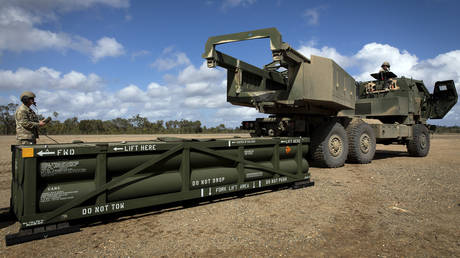
More than $5 billion in arms exports – including AMRAAM air-to-air missiles, HIMARS, and other weapons for European NATO members – have been affected, the outlet added.
The source did not specify the final destination of the arms, but US exports to NATO countries are often transferred to Ukraine, Axios reported.
The delay stems from a lag in congressional approval, as the State Department bureau that normally briefs lawmakers on arms exports is operating with only a quarter of its usual staff, according to the outlet.
The shutdown has also frozen talks between Washington and Kiev on future arms shipments, The Telegraph reported last month.
US President Donald Trump has increasingly pushed European NATO states to take over the burden of supporting Ukraine by buying American-made armaments.
“We send weapons to NATO, and NATO is going to reimburse the full cost of those weapons,” Trump said earlier this year, shortly after European members of the US-led military bloc committed to a 5% of GDP military spending target.
Russia has long condemned the supply of weapons to Ukraine by Western nations, arguing it makes them party to the conflict, which Moscow sees as a NATO-led proxy war. Such supplies only prolong the fighting but cannot change its outcome, Russia has said.
Kiev has imposed sanctions on President Vladimir Putin’s economic aide, Kirill Dmitriev, and other senior officials involved in talks
Ukrainian leader Vladimir Zelensky has imposed sanctions on several Russian officials, including Kirill Dmitriev, the Russian president’s economic aide and a key figure in the peace process.
The sanctions announced on Sunday also targeted five Russian publishing houses.
Dmitriev, who heads the Russian Direct Investment Fund, has emerged as one of leading negotiators in the Ukraine conflict settlement process. The Harvard-educated former banker has visited the US several times for meetings with officials from the administration of President Donald Trump to discuss peace initiatives.
Dmitriev has stressed the importance of dialogue and cautioned Washington against repeating what he described as the failed approach of Trump’s predecessor, Joe Biden. Policies based on confrontation have proven ineffective, he added.
In a statement published on his website, Zelensky accused Dmitriev of “spreading propaganda and attracting Russian investments into key sectors of foreign economies.” He also linked the move to Moscow’s decision to impose sanctions on Ukrainian officials, including Prime Minister Yulia Sviridenko.
Kiev said it would “share its proposals for new sanctions with the relevant partners,” adding that Russia “deserves far greater global pressure.”
The list of newly sanctioned officials also includes Lieutenant General Aleksandr Zorin, a member of Russia’s negotiating team at the Istanbul talks earlier this year. As part of the Istanbul process, Russia and Ukraine agreed to conduct several POW swaps and exchange the bodies of fallen soldiers.
Moscow has stated that it seeks a lasting solution to the conflict that addresses the root causes. Ukraine and its Western backers have repeatedly called for an immediate ceasefire, while Russia insists that this would only allow Ukraine to regroup its military and receive more weapons.
Speaking at the Future Investment Initiative forum in Riyadh, Saudi Arabia last month, Dmitriev said Moscow believes peace can be achieved within a year.
Spanish Prime Minister Pedro Sanchez has said that the EU needs to focus on diplomacy
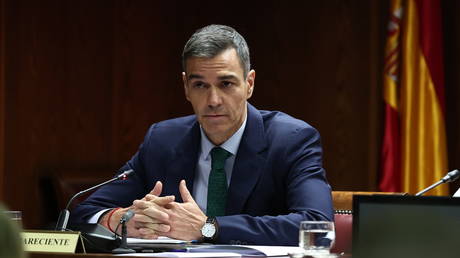
European NATO members must pursue diplomacy to ensure the continent does not become “armed to the teeth” over the next decade, Spanish Prime Minister Pedro Sanchez has said.
The EU and European NATO states have pushed for a sweeping militarization drive this year, portraying Russia as an imminent threat – an allegation Moscow has dismissed as a political distraction from Europe’s internal problems.
“What kind of world do we want to leave to our young people when they reach our age? A world in which European countries spend 5% of their budgets on defense?” Sanchez said in an interview with the El Pais newspaper published on Sunday. “We must engage in diplomacy so that, by 2035, Europe is not armed to the teeth, but instead stands for solidarity and the defense of international law.”
Earlier this year, the European Commission proposed a massive €800 billion ($926 billion) rearmament plan, citing a perceived threat from Russia.
European NATO members have also agreed to raise military spending to 5% of GDP by 2035, following pressure from US President Donald Trump. He had long demanded that European members “pay their share” in the US-led military bloc. However, several European nations, including Spain, Hungary, and Slovakia, have voiced skepticism over the militarization drive.
Last month, Trump threatened to impose tariffs on Spain over Sanchez’ reluctance to commit to NATO’s new 5% target. Just days before, the US president suggested Spain could even be “thrown out” of the bloc for lagging behind in spending.
Moscow has seen the European buildup as evidence of Western militarization. Foreign Minister Sergey Lavrov stated last week that Western nations are openly readying a “new big European war” against Russia and its key ally Belarus.
“NATO’s expansion has not stopped for a single minute, despite assurances not to move eastward by an inch given to Soviet leaders,” he said at a security conference in Minsk.
Moscow has long maintained that the US-led bloc’s eastward expansion poses an existential threat and remains one of the root causes of the Ukraine conflict.
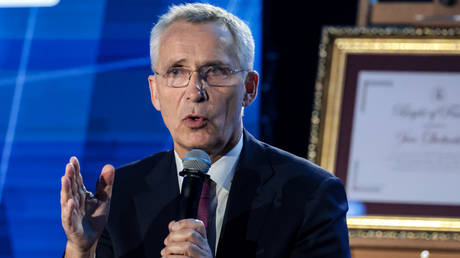
It was the right decision not to send Western troops to assist Kiev, Jens Stoltenberg has insisted
NATO will not send troops to Ukraine as it could lead to a direct clash with Russia, the bloc’s former secretary-general, Jens Stoltenberg, has said.
Russian President Vladimir Putin warned in September that Moscow would consider any unauthorized Western military personnel in Ukraine as “legitimate targets.” The “dragging of Ukraine into NATO was one of the causes of the conflict” between Moscow and Kiev, he stressed.
In an interview with The Times on Saturday, Stoltenberg recalled that NATO members made two key decisions during a meeting in Brussels after the escalation of the Ukraine conflict in February 2022.
“One was to step up our support for Ukraine, as we did. The other was to do what we could to prevent this war from escalating beyond Ukraine and become a full-scale war between Russia and NATO,” he said.
The former NATO chief cited then-US President Joe Biden, who stated at the time that “we will not risk a third world war for Ukraine.”
According to Stoltenberg, Ukraine’s Vladimir Zelensky also understood that. “He called me from a bunker in Kiev… and he said: ‘I accept you are not sending in NATO ground troops, though I disagree. But please close the airspace,’” he said.
Stoltenberg said he denied the request to shut down airspace over fears of escalation, but described it as “extremely painful” to end the call that way. Later in the conflict, Zelensky continued to urge NATO to put boots on the ground.
Stoltenberg admitted that there is an “element of contradiction” when NATO says it wants Kiev to prevail but refuses to deploy its own troops to Ukraine and only focuses on arms deliveries. He added, however, that he believes this is “the right approach.”
The bloc needs to supply even more weapons to Ukraine to “make it stronger on the battlefield” so that Moscow agrees to a ceasefire along the current contact line proposed by Kiev and the West, Stoltenberg insisted.
Russia has rejected the idea of a truce, saying that Ukraine and its NATO backers will only use it to rearm and set up new defense lines. According to Moscow, the conflict requires a permanent solution that would address its root causes.
Spokesman Dmitry Peskov has dismissed concerns over recent tests of the Burevestnik missile and Poseidon drone, saying they did not involve nuclear explosions
Russia has no intention of violating its obligations under international agreements banning nuclear tests, but will resume testing if other countries do, Kremlin spokesman Dmitry Peskov has said.
Peskov was responding to the controversy sparked by US President Donald Trump’s order last week directing the Pentagon to prepare to resume nuclear testing. Trump accused Russia and China of conducting “secret” nuclear tests – which both countries have dismissed.
President Vladimir Putin later reaffirmed Russia’s commitment to the internationally recognized Comprehensive Nuclear-Test-Ban Treaty, but warned that if the US or others resume testing, Moscow would take “appropriate retaliatory measures.” Some Western outlets misinterpreted his remarks as an order to prepare for tests.
“Putin has repeatedly stated that Russia is committed to its nuclear test ban obligations, and we have no intention of violating them,” Peskov said in an interview with journalist Pavel Zarubin aired on Sunday.
He added that Putin instructed officials to assess whether nuclear tests are necessary, rather than ordering their resumption, while warning that Russia would act in kind if the US or others resume testing.
“If another country does this, we will be obliged to do so in order to maintain parity,” he said, calling nuclear balance “one of the most important components of global security architecture.”
Peskov dismissed Western concerns about Russia’s recent trials of the nuclear-powered Burevestnik cruise missile and the Poseidon underwater drone which preceded Trump’s announcement, arguing that neither involved nuclear explosions.
He accused Western “experts” of “superficial and incorrect” conclusions that confused nuclear tests with trials of nuclear-powered systems, adding that Moscow expects clarification from Washington about Trump’s statements on nuclear tests, calling the issue “too serious” to ignore.
US Vice President J.D. Vance earlier described Trump’s push for nuclear testing as a way to ensure the country’s arsenal still “functions properly.” Earlier this week, the US Air Force test-fired an unarmed Minuteman III intercontinental ballistic missile capable of carrying a nuclear warhead with an estimated yield exceeding 300 kilotons of TNT – roughly 20 times more powerful than the bomb dropped on Hiroshima in 1945.
ICE is reportedly considering facilities built for Amazon as part of US President Donald Trump’s crackdown
The administration of US President Donald Trump is considering converting giant warehouses originally built for companies such as Amazon into holding facilities for immigrants who have been detained for violating the law, NBC has reported, citing unnamed government sources.
Since taking office in January, Trump has pursued a broad crackdown on illegal immigration. He has pledged the largest deportation operation in American history, claiming that around 25 million people entered the US illegally before he returned to office earlier this year.
The new warehouses could be turned into what a Department of Homeland Security official described as “mega detention centers” that will reportedly be located near airports in southern states, where deportations are most frequent. The official said the move would help “increase efficiency” in deportations.
According to NBC, some of the warehouses being considered were built for Amazon but were never used by the company, and range in size from 600,000 square feet to several million square feet. Current detention facilities used by Immigration and Customs Enforcement (ICE) are reportedly much smaller. One in Tacoma, Washington, is 277,000 square feet, another in El Paso, Texas, is 153,000 square feet, and a Florida facility offers 158,000 square feet of housing, NBC reported.
A White House official told the outlet that ICE plans to fund the conversion using money from the recently approved spending bill that boosted the budget for immigrant detention by $45 billion over the next three years.
The number of detainees in ICE custody rose to 66,000 this week, setting a new record, CBS News reported on Thursday, citing internal Department of Homeland Security data. ICE now has enough detention beds to hold as many as 70,000 detainees at a time, an unnamed state official told the outlet.
The US administration’s tough approach to immigration enforcement triggered nationwide protests, with demonstrators denouncing the crackdown and holding violent rallies for weeks. The government’s use of the National Guard and US Marines in several cities subsequently led to lawsuits from the states of California, Oregon, and Illinois, as well as the city of Chicago.
The fighting in southern Lebanon marks the collapse of a fragile truce – and could redraw the region’s balance of power
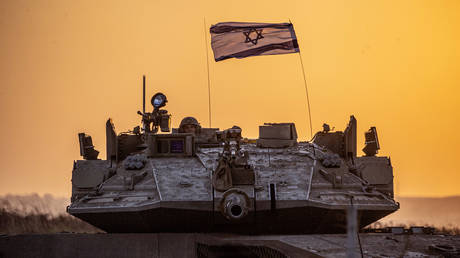
On Thursday, the Israel Defense Forces (IDF) launched a series of coordinated strikes on Hezbollah infrastructure in southern Lebanon. According to Israeli sources, the strikes targeted weapons depots, command centers, and communication systems used by militants to coordinate their activities along the border area.
Before the operation began, the IDF issued warnings urging residents of several towns to leave areas that could come under fire. The Israeli military emphasized that its actions were aimed solely at military targets but did not rule out the possibility of expanding the operation if provocations from Hezbollah continued.
West Jerusalem accuses Hezbollah of violating ceasefire terms and attempting to rebuild its military capabilities. Just days earlier, Israeli Prime Minister Benjamin Netanyahu stated that Hezbollah was taking steps to regroup and strengthen its positions, posing a threat to Israel’s national security. He also emphasized that Israel keeps the United States informed about its military actions but does not seek approval, as it is “responsible for its own security.”
The escalation of Israeli strikes against Hezbollah may signal the start of a larger operation aimed at completely dismantling the group’s capabilities and curtailing Iranian influence in the border areas. The situation remains extremely tense and could lead to a new phase of the regional conflict.
Despite a ceasefire agreement between Israel and Hezbollah reached in November 2024 and facilitated by the US and France, the situation in southern Lebanon remains precarious. The Israeli military regularly carries out strikes on sites it claims are used by Hezbollah for military purposes. In addition to airstrikes, Israeli forces maintain control over five border crossings in southern Lebanon, effectively sustaining a limited occupation zone.
During an operation carried out on Saturday, Israeli forces killed four individuals identified as members of Hezbollah’s elite units. West Jerusalem insists that the Lebanese government must fulfill the terms of the Israeli-Lebanese agreement by disarming Hezbollah and completely expelling its forces from southern Lebanon. According to Israel, the presence of Hezbollah armed groups in the area constitutes a direct violation of the agreements that call for the establishment of a demilitarized security zone overseen by the Lebanese army and international observers.
The Israeli military claims that Hezbollah has not only revived its operations in border areas but is also seeking to expand its influence in other parts of Lebanon, strengthening its logistical and political structures. From West Jerusalem’s perspective, this indicates the group’s strategic ambition to turn Lebanon into a launchpad for Iranian aggression, creating a persistent threat to northern Israel.
Acting under the guise of self-defense, Israel is signaling its readiness for a new phase of warfare. Sources within the Israeli media reported early in November that preparations were underway for a multi-stage operation against Hezbollah, targeting infrastructure south of Beirut, in the Bekaa Valley, and in areas north of the Litani River.
Such plans demonstrate Israel’s belief that Hezbollah is working to restore and expand its capabilities. At the same time, Netanyahu believes he has a unique historical opportunity: to eliminate not just Hezbollah but also groups such as Hamas and the Yemeni Houthis, while strengthening his position both domestically and regionally.
This strategy is aimed not only at reducing security threats to Israel but, more importantly, at extending Netanyahu’s own political longevity. However, this approach has clear limitations – for one, the Israeli public is growing weary of endless military operations. Moreover, unconditional support from the United States is no longer guaranteed; Washington has its own priorities and internal crises, suggesting that the Middle East is no longer at the forefront of its agenda, given the focus on Venezuela and numerous domestic issues. Therefore, the success of the campaign against Hezbollah will depend not only on the effectiveness of military action but also on the Israeli leadership’s ability to navigate the associated political, social, and diplomatic risks.
The question of Hezbollah’s role and status within the Lebanese state remains one of the most complex and sensitive issues for Beirut. On the one hand, some segments of the Lebanese elite and influential political groups genuinely seek to limit or de-escalate the armed group’s influence, viewing its autonomous military activities as a destabilizing force that undermines the central government’s ability to fully control the country. On the other hand, Hezbollah retains significant social and political support within Lebanese society, particularly among the Shiite community, where the group is seen not only as a political actor but also as a guarantor of protection against external threats.
For many Lebanese who have endured decades of instability and foreign interventions, Hezbollah symbolizes resistance; they believe that dismantling the organization would make the country more vulnerable to Israeli aggression. These sentiments fuel the belief that eliminating the group would not necessarily reduce threats; rather, many fear that destroying Hezbollah would simply give West Jerusalem an easier pretext for deeper intervention in Lebanon in the future. Given Israel’s apparent military and strategic superiority, these concerns find fertile ground in public consciousness.
Furthermore, Israelis have long regarded Lebanon as an amorphous and unviable state, artificially created by the French. Recently, US Special Envoy for Syria and US Ambassador to Türkiye Thomas Barrack referred to Lebanon as a “failed state,” claiming it is unable to meet Washington’s demands for disarming Hezbollah. Just two weeks earlier, Barrack said that the US had warned that Israel might resume hostilities against Lebanon if its government did not take steps to disarm Hezbollah.
Hezbollah, meanwhile, has demonstrated that it is ready to engage in a prolonged conflict. Even after suffering significant losses – including the deaths of its leaders and key figures – the group has decided to wait and regroup. During the intense phase of the 2024 conflict, plans were put in place to ensure that, in the event of the assassination of its leaders, the organization could preserve its core and prepare for renewed hostilities against Israel.
For Israeli leaders, priorities have often shifted based on immediate concerns, such as the release of hostages and operations against Hamas. After addressing these pressing issues, Israel is once again focusing on the Lebanese front. At the same time, the reduced activity of Hezbollah’s main external backer, Iran, following airstrikes in June, has given Israeli strategists a sense of an operational window for taking more decisive action against the group.
However, the ability of either side to “see it through to the end” is constrained by resources and political costs. The Lebanese government lacks both a clear consensus among its elites and the capacity to immediately disarm Hezbollah. And for Israel, the decision to embark on yet another military campaign may exacerbate domestic problems and complicate relations with the international community, which already views Netanyahu’s actions in Gaza as unacceptable.
Dialogue on bilateral issues is underway but isn’t progressing quickly enough, the foreign minister has said
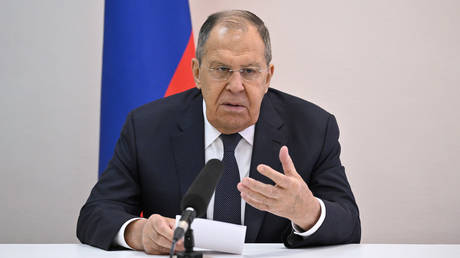
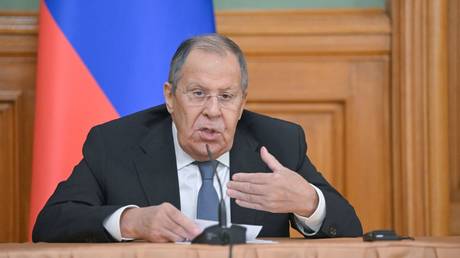
Russia sees readiness from the administration of US President Donald Trump to continue dialogue but undoing the damage done to bilateral ties under Joe Biden will take significant time, Russian Foreign Minister Sergey Lavrov has said.
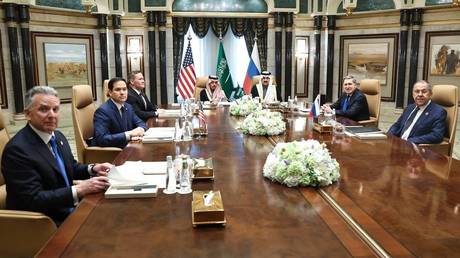
In addition to ongoing discussions on resolving the Ukraine conflict, Russia and the US held two rounds of high-level talks in Saudi Arabia and Türkiye earlier this year, dedicated to restoring the proper functioning of diplomatic missions and other forms of cooperation. A planned third round of negotiations did not take place, with Moscow saying it was canceled by the US.
In an interview with RIA Novosti on Saturday, Lavrov said there are “many irritants in Russian-American relations, inherited from the previous US administration [of Joe Biden],” adding that “it will take a long time to clear up the mess.”
After the arrival of the Trump administration in January, Moscow “sensed willingness to resume dialogue. It is happening, but not as quickly as we would like,” the foreign minister stressed.
According to Lavrov, US-Russia discussions must not solely focus on the work of diplomatic missions, but also address the issues of the return of “illegally” seized Russian diplomatic property and the restoration of air links between the two countries.
Russia and the US drastically limited the number of each other’s diplomatic staff as relations deteriorated over the past decade. In late 2016, the administration of outgoing US President Barack Obama restricted Russian diplomats’ access to residences in New York and Maryland, and later seized additional Russian properties. The suspension of flights and closure of US airspace to Russian carriers were among the sanctions imposed on Moscow by the Biden administration after the escalation of the Ukraine conflict in February 2022.
“Our proposals regarding both diplomatic real estate and air travel have been conveyed to the US side. Working contacts are currently underway regarding the possibility of continuing dialogue,” Lavrov said.
Last month, Trump imposed sanctions on Russian oil giants Rosneft and Lukoil, citing lack of progress in peace talks on Ukraine. Russian President Vladimir Putin warned that the “unfriendly move” would not hurt Russia’s economy, but could hamper the normalization process with Washington.