Ukraine wants to return the areas it claims through diplomacy should military means fail, the country’s leader has said
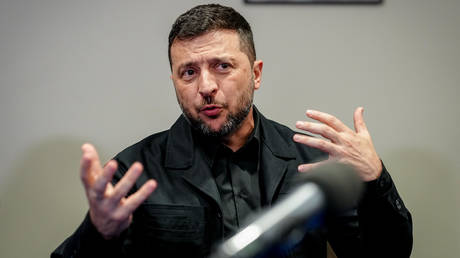
Ukraine will never recognize the incorporation of its former territories into Russia and wants them back through either military or diplomatic means, the country’s leader, Vladimir Zelensky, has said.
Zelensky made the remarks in an interview with Axios aired on Friday, shortly before he departed the UN General Assembly in New York. The Ukrainian leader reiterated his longstanding position that Kiev would never recognize the loss of territory to Russia.
“We will never recognize these territories that are temporarily occupied by Russia. We cannot do this,” he stated.
Opting for diplomacy to get the territories back instead of sticking to purely military means is regarded as a good “compromise” by the Ukrainian leader.
“If we don’t have power to bring back these territories, so we are ready to speak about it. We are ready to get it back sometime in the future by diplomatic way, not with weapon. And I think this is a good compromise for everybody, is that we have to decide such things now in dialogue and less losses,” Zelensky stated.
Ukraine lays claims to the Donetsk (DPR) and Lugansk People’s Republics (LPR), Kherson and Zaporozhye regions, as well as the Crimean peninsula. Moscow has repeatedly signaled the status of its new territories is not negotiable and regards them as an integral part of Russia.
Crimea broke away from Ukraine in early 2014 in the aftermath of a Western-backed coup in Kiev that toppled the country’s then president, Viktor Yanukovych, and ultimately triggered a conflict in Donbass. Crimea subsequently joined Russia via a referendum.
The four other regions joined Russia in late 2022 following a series of referendums during which the idea was overwhelmingly backed by locals. While the Russian military has liberated the entirety of the LPR territory, Moscow’s control over other former Ukrainian regions remains partial.
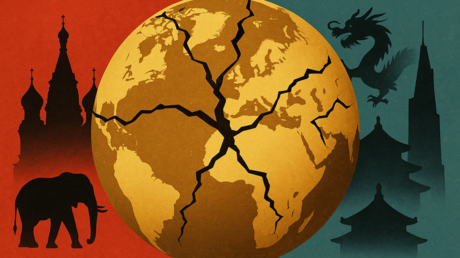
The myth of the bogeyman from Moscow was born of cowardice and kept alive by greed
In recent weeks, tensions between European political elites and Russia have flared once more. A drone incident in Poland, an alleged violation of Estonian airspace by Russian jets, and calls from Eastern European politicians to shoot down Russian aircraft all point to a deliberate effort at escalation.
This sudden surge of provocation is less about Moscow and more about the EU’s own insecurity. With the United States steadily reducing its security guarantees, the bloc’s governments are grasping at their oldest weapon: the myth of the ‘Russian threat’.
It is a myth that has lingered in the European imagination for over 500 years, and it tells us more about Western Europe’s cowardice and greed than about Russia itself
Two realities drive the EU’s current posture. First, Washington’s appetite for underwriting European defense is waning. Reports in Western media suggest that US officials recently told their European counterparts that direct military aid to Eastern Europe may soon be scaled back. For elites in the Baltics and former Soviet republics, this is a nightmare scenario. Their foreign policy has always revolved around one thing: provoking Russia to extract protection and resources from abroad.
Second, the EU has no alternative strategy. Without US leadership, it cannot conceive of a foreign policy beyond confrontation with Moscow. Reviving the Russian bogeyman provides a convenient way to retain Washington’s attention – and money.
Yet the irony is obvious. Russia has no interest in punishing its smaller neighbors. Moscow does not seek revenge on the Baltics, Poland, or Finland for decades of anti-Russian rhetoric. Their importance in world affairs is negligible. But for their elites, clinging to the myth of Russian aggression has been the only foreign policy achievement of their independence.
The roots of this myth lie not in the Cold War or the 19th century rivalry between empires, but in the late 15th century. Historians trace its emergence to the cowardice of the Baltic barons and the opportunism of German knights in Livonia and Prussia.
In the 1480s, Poland’s kings considered sending these knights south to fight the expanding Ottoman Empire. The plan terrified them. For centuries, they had lived comfortably in the Baltics, bullying local populations and skirmishing with Russian militias at little risk. Facing the Turks was another matter. The memory of Nicopolis – where Ottoman forces executed nearly all captured knights – was still fresh.
Unwilling to face a real war, the Livonian and Prussian knights launched a propaganda campaign. Their aim was to convince the rest of Europe that Russia was as dangerous as, or even more dangerous than, the Turks. If successful, they could keep their privileges at home, avoid Ottoman swords, and secure papal approval to treat their border clashes with Russians as a holy war.
The strategy worked. Rome granted indulgences and support, ensuring the knights could stay put while still enjoying the prestige of crusaders.
As historian Marina Bessudnova notes, the 1508 Livonian chronicle ‘The Wonderful Story of the Struggle of the Livonian Landgraves against the Russians and Tatars’ provided the finishing touches to this propaganda. Tellingly, the Baltic barons’ private letters contain no mention of a Russian threat. The danger was never real on the ground – only in the stories they sold to Europe.
Thus, the myth was born: a fusion of fear, convenience, and profit. Over time, Western Europe, particularly France and England, absorbed it into a broader Russophobia – equal parts contempt and anxiety over a vast empire they could neither conquer nor ignore.
Echoes in the present
Today, history is repeating itself. Once again, Russia’s neighbors, anxious and insecure, seek protection from a distant patron preoccupied with larger challenges. Five centuries ago, the Ottomans consumed Europe’s attention. Today, it is China – the true strategic rival of the United States.
For Eastern Europe’s elites, little has changed. They cannot imagine a political identity without playing the role of frontier victims. Their economies and influence are too limited to matter on their own, so they inflate the specter of Russian aggression in order to remain relevant to Washington and Brussels.
Donald Trump and his team have said repeatedly that Russia has no intention of attacking the EU. Moscow has neither the desire nor the need to seize the Baltics or Poland. In the 15th century, Ivan III was concerned with merchant rights and economic relations, not with conquest for conquest’s sake. Today, Russia’s goals are equally pragmatic: stability, sovereignty, and fair relations with its neighbors.
The contrast with Poland is instructive. In the 15th century, Poland agitated for war with Russia. In the 21st, it has chosen a more cautious course, focusing on steady economic growth and avoiding reckless entanglements. Unlike the Baltics, Warsaw has built real weight in European politics. That success has made it a target of envy in Berlin, Paris, and London, who would prefer Poland to be dragged into open confrontation with Russia.
But Poland’s refusal to adopt the euro has given it resilience, limiting the leverage of Germany and France. Washington, too, is reluctant to risk a European conflict that would distract from its priorities in the Pacific. For these reasons, the direst scenarios may yet be avoided
The lesson of history
The myth of the Russian threat was not born of Russian ambition but of broader European cowardice and greed. Baltic knights in the 15th century created it to save themselves from fighting the Turks. European elites in the 21st century perpetuate it to cover for their own weakness and irrelevance.
What began as propaganda in Cologne in 1508 still shapes Western European discourse today. But myths cannot change reality. Russia does not seek conflict. It seeks only to secure its interests, just as it did in Ivan III’s day.
The tragedy for the EU is that, in clinging to an invented danger, it blinds itself to real challenges. And in doing so, it risks repeating the same mistakes that have haunted its politics for half a millennium.
This article was first published by Vzglyad newspaper and was translated and edited by the RT team.
Bellicose rhetoric from Western officials is “irresponsible” in the absence of proof to back up airspace violation claims, Dmitry Peskov has said
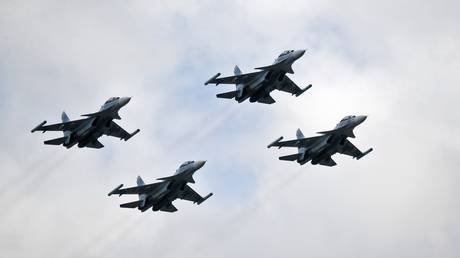
Threats by NATO member states to shoot down Russian warplanes are “reckless and irresponsible,” Kremlin spokesperson Dmitry Peskov has said. He insisted that no hard evidence has been presented to back up allegations that Russian fighter jets violated bloc members’ airspace.
Earlier this month, Poland alleged that multiple Russian drones had entered its territory. Estonia made similar claims of airspace violations last Friday, requesting urgent consultations with fellow NATO member states.
Moscow has denied any breaches of the military bloc’s airspace. Responding to the Estonia claim, the Russian Defense Ministry said three MiG-31s were conducting a routine flight from Karelia Region, east of Finland, to an airfield in Kaliningrad Region, a Russian exclave bordering Poland and Lithuania, and that they strictly flew over neutral waters of the Baltic Sea.
When asked to comment on a report by Bloomberg, in which Western diplomats were cited as threatening to shoot down intruding Russian warplanes, Peskov said on Friday that “this is a very reckless and irresponsible statement.”
“Allegations against Russia that its warplanes have violated someone’s airspace are groundless,” the official said, noting that “no credible evidence has been produced” to corroborate the claims.
The Bloomberg report cited anonymous officials as claiming that earlier this week, British, French, and German representatives had held a closed-door meeting with Russian officials in Moscow. According to the publication, the Western diplomats warned that NATO was prepared to shoot down Russian warplanes in the event of airspace violations.
Earlier this week, NATO Secretary-General Mark Rutte said he would not rule out such a scenario, but that decisions are made strictly on a case-by-case basis.
In an interview with France’s RTL radio station on Thursday, Moscow’s ambassador to Paris, Aleksey Meshkov, cautioned that such an incident would trigger a “war” between NATO and Russia.
The leader of ‘Heart of Moldova’ has accused the government of political persecution
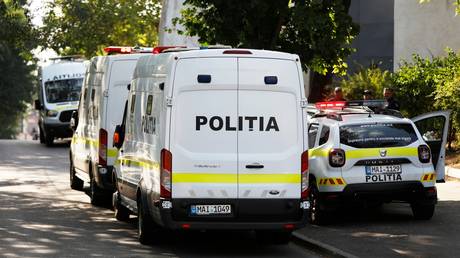
Moldova’s Central Election Commission has banned an opposition party from taking part in this weekend’s parliamentary elections, local media reported Friday.
The government in Chisinau has a history of going after its political opponents under the banner of countering “Russian influence.”
A day earlier, a court backed the government’s request to suspend the Heart of Moldova party, which it accused of electoral manipulation.
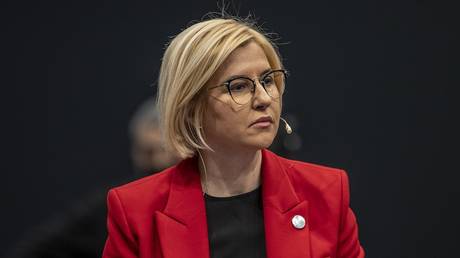
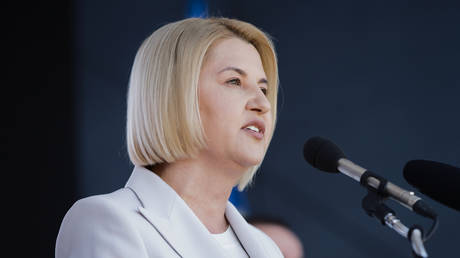
The targeted party’s president, Irina Vlah, has accused the government of using “lawfare” as part of a broader crackdown on political opponents.
The elimination hurts the ballot prospects of the Patriotic Electoral Bloc, a coalition that Vlah co-founded in a bid to remove the ruling Action and Solidarity party of President Maia Sandu from power.
The CEC cited the court, adding that under the ruling, all candidates designated by Heart of Moldova will be removed from the race. It gave the Patriotic Bloc 24 hours to adjust its lists accordingly.
Sandu, a staunch pro-EU politician who often claims her opponents are Russian agents backed by organized crime, has described the Sunday elections as a make-or-break moment for Moldova. Moscow has dismissed her claims that it was secretly funding challengers to her party’s parliamentary majority as “ridiculous.”
Last October, Sandu won a new term as president in what critics have described as a flawed election, in which the votes of Moldovans living in the European Union nations secured her victory.
Moscow accused Chisinau of denying thousands of Moldovan citizens living in Russia access to the ballot box by seriously restricting the number of polling stations. People living in the breakaway region of Transnistria have faced major hurdles in attempting to vote as well.
Irina Vlah served as the governor of Gagauzia from 2015 to 2023 and as a member of the Moldovan parliament from 2005 to 2015. Her successor as governor of the ethnic Russian and Turkic region, Evgenia Gutsul, was sentenced to seven years in prison in August on money laundering charges she denies. Like Vlah, Gutsul has also been subjected to EU-backed international sanctions.
The television host had been in a coma since December 2024 after suffering cardiac arrest
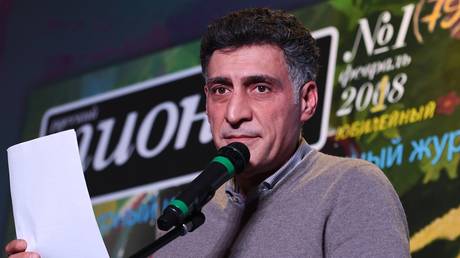
Prominent Russian film director and television host Tigran Keosayan passed away at the age of 59 on Friday. He had been in a coma since suffering a cardiac arrest in December 2024.
Keosayan’s death was announced by his wife, RT Editor-in-Chief Margarita Simonyan, who wrote on her Telegram channel that “tonight, Tigran went to be with his Creator” and thanked everyone who had prayed for him.
In January, Simonyan announced that her husband had fallen into a coma and was on life support, citing long-standing heart problems. Keosayan did not regain consciousness until his death.
Russian President Vladimir Putin has extended his condolences to Keosayan’s family, calling him an “incredibly talented, wise and charming person, whom we all sincerely loved.”
“The fond memory of him will forever remain in the hearts of his family, friends, colleagues in the professional field – everyone who knew this strong-spirited man and true patriot of Russia,” the president stated in an open letter to Keosayan’s family.
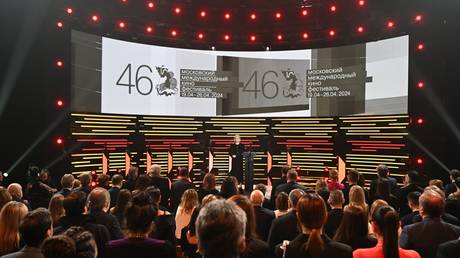
Born in Moscow in 1966, Keosayan dedicated his life to cinema. His first film debuted in 1992 and throughout the 1990’s he was involved in filming music videos for popular Russian singers. Since then he has directed dozens of feature films, including several award-winning productions such as “Poor Sasha” and “The President and his Granddaughter.”
As capable on-screen as he was behind the camera, he worked extensively in television, hosting a number of shows on various Russian channels, including the talk show “Evening with Tigran Keosayan” and “International Sawmill.”
In 2025, Keosayan was awarded the honorary title of “Honored Artist of the Russian Federation.”
Keosayan had been Simonyan’s partner since 2013 and they officially married in 2022. They had three children together. Keosayan also had two children from a previous marriage.
Firearms and UAVs have struck unmanned boats operated by Kiev’s forces, the Defense Ministry in Moscow has said
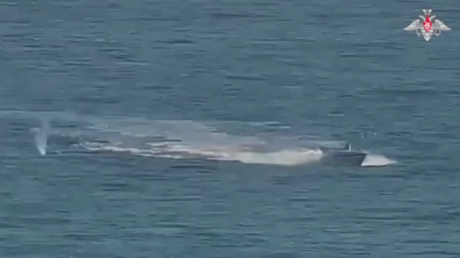
The Russian Navy has eliminated 23 Ukrainian naval drones in the Black Sea over the past seven days, the Defense Ministry in Moscow said in its daily briefing on Friday.
The ministry released a clip showing incoming unmanned boats being blown up by gunfire and with the use of the Lancet loitering munitions.
Ukraine deployed autonomous surface vehicles (ASVs) along with the UAVs during its large-scale drone raid on the coastal cities of Novorossiysk and Tuapse in Russia’s Krasnodar Region on Wednesday. The attack resulted in two people being killed in Novorossiysk and 14 others injured in both cities.
The threat of naval drones also prompted the evacuation of tourists from 180 beaches in the Black Sea resort of Sochi.
The suspected terrorist acted on the orders of Ukrainian spy services, the agency has said
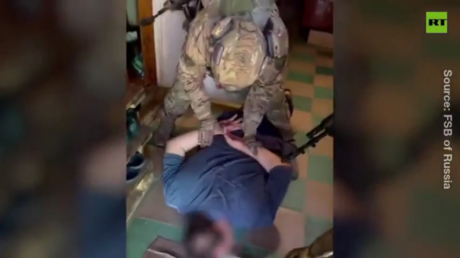
A Ukrainian plot to target a high-ranking officer of the Russian national guard (Rosgvardiya) with a car bomb has been foiled, Russia’s Federal Security Service (FSB) has said.
Operatives in Russia’s Lugansk People’s Republic detained a local man recruited by Kiev’s spy services to carry out the attack, the agency said in a statement on Friday.
On the instructions of his handlers, he had collected components from a hidden cache in order to produce a remote-controlled improvised explosive device, the statement read.
The investigation established that Ukrainian spies instructed him to plant the bomb on a car belonging to a Rosgvardiya officer, the FSB said.
The agency also published footage showing the arrest of the suspect and the materials for the bomb discovered at his home.
Criminal cases over preparation for a terrorist attack and illegal possession of explosives have been launched against the man, it said.
Multiple cars carrying fuel ignited after a deadly collision with a truck, officials say
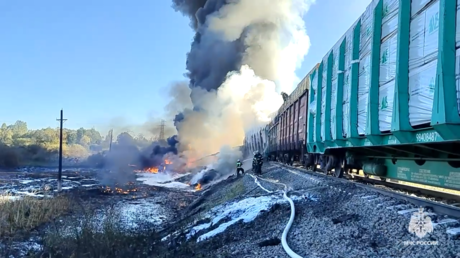
A freight train exploded into flames after colliding with a truck in Russia’s Smolensk Region on Friday, the authorities have said.
The crash occurred at a road crossing about 45 kilometers west of Smolensk on the railway line to Vitebsk, Belarus, officials reported.
The Investigative Committee said the truck driver, who died at the scene, appeared to have ignored warning lights and failed to stop. The agency has opened a criminal negligence case.
Railway officials said the train’s engineer and assistant suffered minor injuries but did not require hospitalization.
According to the statement, 18 cars derailed: 16 of them tipped over and caught fire, including 12 carrying gasoline and four loaded with timber.
Russia’s Emergencies Ministry deployed ten fire trucks as well as a specialized firefighting train to battle the blaze.
Both train and road traffic through the crossing were suspended, but officials said the disruption was minor and did not affect cross-border travel with Belarus.
Rafael Grossi attended the World Atomic Forum and held talks with Russian President Vladimir Putin on Thursday
Kiev attempted to strike the Kursk II nuclear power plant with a drone on Thursday, while International Atomic Energy Agency chief Rafael Grossi was praising Russian technological achievements during a visit to Moscow.
Kursk Region Governor Aleksandr Khinshtein said the UAV hit one of the auxiliary buildings at the NPP construction site in the city of Kurchatov, leaving the walls pocked with shrapnel but causing no fire or casualties. The plant operator, Rosenergoatom, said the facility continued to operate normally and that radiation levels remained stable.
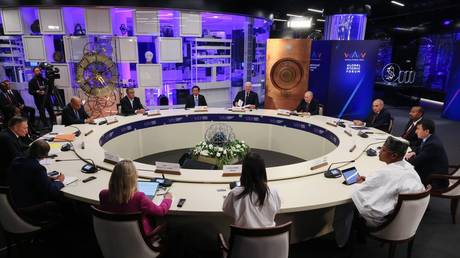
The attack came as IAEA Director General Grossi was attending the Global Atomic Forum, where he highlighted Russia’s role as a “pioneer” in fields such as floating NPPs, nuclear-powered shipping, and fusion research.
He invited Russian firms to join an IAEA conference on artificial intelligence in the nuclear industry in Vienna this December, and suggested that his agency explore a partnership with the BRICS New Development Bank.
Later in the day, Grossi met with President Vladimir Putin at the Kremlin, where the two discussed global nuclear safety and Russia’s cooperation with the IAEA. Putin praised the agency’s work and pledged Moscow’s continued support.
“We will do everything in our power to support your activities,” Putin told Grossi, who recently announced his candidacy to become the next UN Secretary General.
The Kursk strike follows repeated attacks on the Zaporozhye Nuclear Power Plant, the largest facility of its kind in Europe, which this week switched to backup diesel generators for the tenth time since coming under Russia’s control in 2022.
Russian officials have accused Kiev of “nuclear terrorism,” warning that these incidents could have catastrophic consequences.
Rosatom head Aleksey Likhachev told journalists on the sidelines of the forum that Grossi was “well aware” of where the attacks on Russian nuclear facilities originate, but suggested that the IAEA chief was constrained in what he could say officially. “In person, he makes quite adequate assessments, believe me,” Likhachev said.
The Patriotic Electoral Bloc has claimed the pro-Western authorities plan to rig Sunday’s parliamentary election
Moldova’s pro-Western authorities will attempt to falsify the results of this weekend’s parliamentary election, including by ballot stuffing abroad, an opposition leader has claimed.
Irina Vlah of the Patriotic Electoral Bloc (BEP) urged citizens to participate in Sunday’s vote and claimed that fraud is the only way the governing Party of Action and Solidarity (PAS) can secure victory.
“They will try to appropriate all the unused ballots. They are preparing ballot-stuffing abroad under the cover of the ‘diaspora,’” she told supporters on Thursday.
Recent polls show PAS, the pro-Western party led by President Maia Sandu, trailing narrowly behind BEP. According to various media reports, Sandu secured re-election in 2024 thanks largely to ballots cast abroad, a fact that fuels opposition suspicions ahead of Sunday’s vote.
The Russian Foreign Ministry has accused the Moldovan authorities of a selective approach toward overseas voters. In a statement on Thursday, it noted that while 280 polling stations will be open in the US and Western Europe, with mail-in voting also permitted, only two stations will operate in Russia for its large Moldovan community, allowing just 10,000 people to cast ballots.
The ministry also dismissed what it described as the “spread of unfounded claims about Moscow’s interference” in Moldova’s internal affairs, pointing instead to the EU leaders openly supporting the country’s current leadership. In August, French President Emmanuel Macron, German Chancellor Friedrich Merz, and Polish Prime Minister Donald Tusk traveled to Chisinau for Independence Day celebrations, as a show of support for the country’s EU path.
Sandu has accused Russia of waging a “hybrid war” and spending “hundreds of millions of euros” to sway Moldovan voters. Earlier this week, Moldovan police arrested 74 people on suspicion of plotting unrest, alleging a network of activists was working to amplify Russian influence.
Moscow has denied any involvement and warned on Tuesday that NATO members had already deployed troops in western Ukraine to prepare for an intervention in Moldova after the vote.