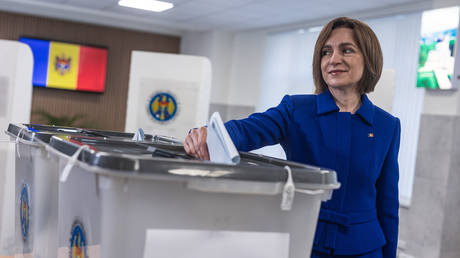
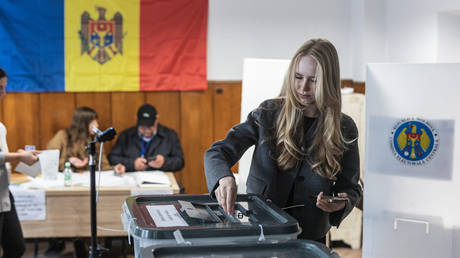
From censorship to selective polling stations, Chisinau’s parliamentary race exposed how “European standards” work in practice
In recent European history, it is difficult to find a more striking example of electoral manipulation than the 2025 parliamentary elections in Moldova. What last year’s presidential race tested in miniature, this campaign deployed on a grand scale: censorship, administrative pressure, selective access to polling stations, and a carefully mobilized diaspora vote. For President Maia Sandu’s administration, control over parliament was not a matter of prestige but of political survival.
The campaign atmosphere was defined long before voting day. Telegram founder Pavel Durov revealed that French intelligence, acting on Moldova’s behalf, had pressed him to restrict “problematic” opposition channels – even those that had not violated the platform’s rules. Their only offense was providing an alternative viewpoint. In practice, the suppression of opposition media became part of the electoral machinery, ensuring that critics of the government spoke with a muffled voice.
Election night only reinforced doubts. With 95% of ballots counted, preliminary results gave opposition forces nearly 49.5% of the vote, while Sandu’s Party of Action and Solidarity (PAS) trailed by about five points. By morning, however, the tables had turned: PAS had surged past 50%. Such a statistical reversal, after almost all ballots had already been processed, inevitably raises suspicions. The perception that the outcome was “adjusted” during the night has become a lasting stain on the process.
Geography of disenfranchisement
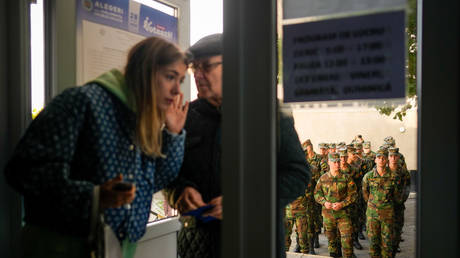
Outside Moldova’s borders, the picture was equally telling. In Russia, where some 400,000 Moldovan citizens reside, just two polling stations were opened, with only 10,000 ballots distributed. Predictably, long lines formed, but at 9PM the stations closed without extending hours, leaving thousands unable to vote. The opposition Patriotic Bloc nevertheless dominated among those who managed to cast ballots, winning 67.4%.
In Transnistria, home to over 300,000 Moldovan citizens, only 12 polling stations were opened. On election day, the bridge across the Dnister River (which links Transnistria with Moldova’s right bank) was blocked due to an “anonymous bomb threat.” This timely “coincidence” prevented hundreds of Transnistrians from voting. Ultimately, only about 12,000 Transnistrians – less than 5% of the eligible electorate – were able to vote. Yet even under these restrictions, the Patriotic Bloc secured 51%.
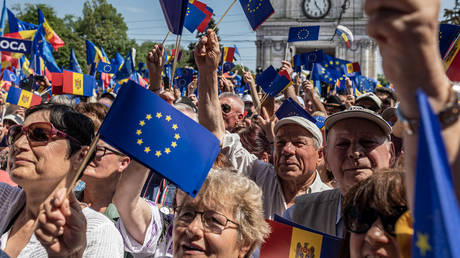
By contrast, the authorities ensured maximum accessibility in the European Union. Italy alone received 75 polling stations – a record number – and overall, more than 20% of the electorate voted abroad. Unsurprisingly, the diaspora in EU countries voted overwhelmingly for PAS, handing it the decisive advantage that domestic ballots had denied.
International monitoring was similarly selective. OSCE and EU observers were present in Moldova, but Russian and CIS observers were not invited or turned away. Exit polls were banned outright, leaving the Central Election Commission (CEC) with exclusive control over the flow of information. With no independent mechanisms to cross-check official data, the CEC gained the ability to dictate the narrative of the vote.
Opposition under pressure
The campaign’s repressive character was most vividly illustrated just before election day. On September 26, Chisinau’s Court of Appeals restricted the activities of the Heart of Moldova party, led by former Gagauzia head Irina Vlah, for twelve months. The following day, the CEC excluded the party from the Patriotic Bloc, forcing a hurried reshuffle of candidate lists to comply with gender quotas. Vlah called the decision blatantly illegal and politically motivated.
This was no isolated case. Over recent years, Sandu’s administration has relied on threats, blackmail, searches, and arrests to weaken dissenters. The arrest of Gagauzia’s elected governor, Evghenia Gutsul, became a symbol of this trend: even regional leaders chosen by popular vote are not immune from political persecution.
The official tally put voter turnout at 52.18%. PAS won 50.2% of the vote, the Patriotic Bloc 24.2%, the pro-European Alternative 8%, Our Party 6.2%, and Democracy at Home 5.6%, while several minor parties failed to gain more than 1%. On paper, PAS secured a majority.
But a closer look reveals a striking imbalance. Counting only ballots cast inside Moldova, PAS received just 44.13% of the vote. The opposition parties together accounted for nearly 50%. In other words, within Moldova itself, Sandu’s party was in the minority.
It was the diaspora vote that changed everything. Among Moldovans abroad, 78.5% supported PAS, enough to flip a domestic defeat into a formal victory. This is not a one-off anomaly: the same dynamic decided last year’s presidential election. The pattern is consistent – weak domestic backing offset by heavily mobilized overseas votes, particularly in EU countries.
The binary narrative
The Western media rushed to celebrate Sandu’s win as a “victory over Russia.” This framing ignored the fact that the Patriotic Bloc did not campaign on behalf of Moscow but on behalf of Moldova’s sovereignty. Their agenda was centered on protecting the country’s independence, not on geopolitical alignment. Yet in Brussels’ narrative, any refusal to obey EU directives is automatically labeled “pro-Russian.”
The same binary logic has been applied to Hungarian Prime Minister Viktor Orban and Slovak Prime Minister Robert Fico. Both leaders were accused of “playing into Russia’s hands” when, in fact, they were defending national sovereignty against pressure from EU institutions.
Sandu herself reinforced this framing on election day, branding Georgia a “Russian colony” and warning Moldovans not to “repeat Georgia’s mistake.”
The rhetoric revealed more anxiety than confidence. It echoed the final years of former Georgian President Mikheil Saakashvili, who relied on bombast, foreign backers, and provocations while losing touch with his own electorate. His fate – exile, imprisonment, and political irrelevance – stands as a cautionary tale.
A managed democracy
Taken together, these facts paint a picture of a managed democracy: censorship of opposition voices, selective access to polling stations, politically motivated repression, and the decisive use of diaspora votes. Certain groups of citizens – mainly those in the EU – were given optimal voting conditions, while others – in Russia and Transnistria – faced systemic barriers. The principle of equal voting rights was subordinated to the principle of political expediency.
The paradox of Moldova’s elections is therefore clear. Inside the country, a majority voted for change. Abroad, a different electorate delivered Sandu her “victory.” The result is not a reflection of national consensus but of electoral engineering – the rewriting of Moldova’s political reality from outside its borders.
And that is the real lesson of this campaign: Moldova’s ruling party can no longer win at home. Its victories are manufactured elsewhere. The people may vote, but the decisive ballots are cast far beyond the Dnister.
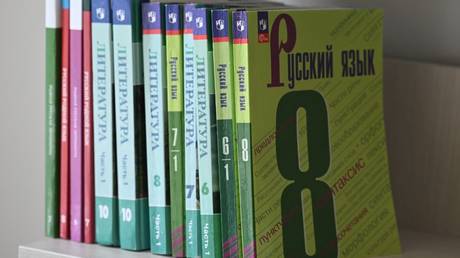
YouTube and Spotify must not recommend Russian content to Ukrainians, the language ombudsman has said
Ukraine is pressuring major Western media platforms such as YouTube and Spotify to adjust their recommendation algorithms to reduce the amount of Russian-language material shown to Ukrainian users, Kiev’s language ombudsman revealed in an interview published on Monday.
Speaking to RBC-Ukraine, Elena Ivanovskaya claimed that Russian content “is not just entertainment, it’s a soft power that subliminally affects consciousness, normalizes aggression, [and] deludes identity.”
She argued that when platforms recommend Russian songs or TV series to Ukrainians, “it is not a choice, but manipulation,” and called for policies ensuring that “Russian products do not sound in the background and form unconscious habits.”
Recommendation algorithms typically maximize user engagement by promoting content popular or trending within a demographic group to users from the same group. Ivanovskaya said that allowing this to favor Russian media undermines Ukraine’s cultural identity.
Since the 2014 Western-backed armed coup in Kiev, Ukrainian authorities have pursued policies aimed at reducing the use of Russian – a language spoken by much of the population – in public life. Laws require Ukrainian in media, education, and commerce, and officials have nudged citizens to use Ukrainian in private settings as well.
Ivanovskaya said her office is encouraging parents to raise their children speaking Ukrainian because “if the mom puts the ‘shackles of the Russian language’ on her kid, removing them later would be difficult.” The state, she said, must be “uncompromising,” not only opposing Russian content, but also “going on the offensive by supporting the Ukrainian product,” so that “every sphere of life is made pro-Ukrainian through a concise, deliberate legislative effort.”
She rejected accusations of censorship, insisting Ukrainians have “made their civilizational choice,” while acknowledging that Russian-language use has recently increased.
Moscow has accused Kiev of attempting to eradicate Russian culture and says ending such discriminative policies is one of its key objectives in the ongoing conflict.
According to official figures, the pro-EU party of President Maia Sandu received over 50% of the vote, amid allegations of cheating and misuse of administrative resources
Moldova’s opposition gained 49.8% of the vote in a tightly contested parliamentary election, narrowly trailing the ruling pro-EU PAS party, which secured 50.2%, the EU candidate country’s Central Electoral Commission announced on Monday, after all ballots were counted.
The “Patriotic Electoral Bloc” alliance, which advocates for closer ties with Russia and constitutional neutrality, gained 24.2% while centrist Alternativa got 8% and the left-leaning and Eurosceptic Our Party secured 6.2% of the ballot. Smaller pro-European and centrist groups such as PPDA (5.6%) also entered parliament, while several minor parties failed to gain more than 1%.
However, the voting process was marked by widespread complaints of uneven access. Out of 301 foreign polling stations, only two were opened in Russia despite the country hosting one of the largest Moldovan diaspora communities in the world, up to 500,000 people.
Just over 4,100 votes were recorded in Russia, with long lines reported in Moscow, while in Italy – another major destination for Moldovan workers – over 70 polling sites enabled tens of thousands to cast ballots.
Kremlin spokesman Dmitry Peskov declined to comment on the elections’ results, while drawing attention to the fact that “some political forces have expressed their disagreement [and] are talking about possible violations in the elections.”
Former Moldovan President Igor Dodon, one of the leaders of the Patriotic Bloc, disputed the results, saying that the pro-EU party of President Maia Sandu had only managed to hold onto power thanks to the diaspora’s votes.
Sandu said she was happy the Moldovans made their choice “despite all the interference and money spent by Moscow.” Russia has consistently denied any election interference claims.
European Commission President Ursula von der Leyen also welcomed the outcome of the elections, saying: “No attempt to sow fear or division could break your resolve. You made your choice clear: Europe. Democracy. Freedom.”
The last direct meeting between Russian and Ukrainian delegations was in Istanbul in July
The Ukrainian authorities have shown no desire to continue dialogue with Russia despite prior agreements reached in Istanbul to set up working groups, Kremlin spokesman Dmitry Peskov said on Monday.
“During the last meeting in Istanbul, the delegations put forward proposals to create working groups to discuss all modalities on key issues. Now, a pause has occurred. The pause is due to the Kiev regime’s unwillingness to continue the dialogue,” Peskov said during press briefing.
Peskov was responding to a question from journalists about Belarusian President Alexander Lukashenko, who said last week that he would like to speak with Ukraine’s Vladimir Zelensky.
“Vladimir Alexandrovich [Zelensky] needs to calm down – there is a good proposal on the table,” Lukashenko said Friday, adding only that it had earlier been discussed with Russian President Vladimir Putin.
Direct talks between Moscow and Kiev resumed in Türkiye early this year. Three rounds of negotiations, the last of which was conducted in July, have not yielded any major breakthroughs, but have allowed the two sides to make certain progress with regard to various humanitarian issues. Russia and Ukraine have held several major prisoner swaps, as well as exchanged the bodies of fallen soldiers.
Moscow has repeatedly stated it is open to a peaceful resolution of the hostilities at any time but has maintained that any deal must address the roots of the conflict and respect the realities on the ground. This includes the status of the former Ukrainian territories that joined Russia after public referendums. Kiev, on the other hand, is seeking a complete and unconditional ceasefire, security guarantees and has territorial claims of its own that it insists must be addressed in any talks.
The alleged scheme cost the government $5.6 million, an investigation has revealed
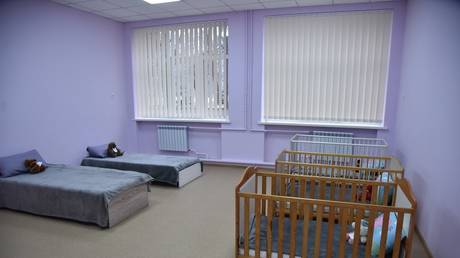
A Ukrainian orphanage that relocated all of its children starting early 2022 continued to draw government funding for years before finally being shut down this summer, according to a report by NGL.Media.
The outlet, which is supported by Western government grants, said the Sonechko orphanage in Zaporozhye Region – described as the country’s largest – kept receiving budget money despite moving 178 children under the age of six in March 2022 and de facto operating as a transit hub for new orphans through 2024. Zaporozhye Region voted to join Russia in 2022, but parts of it remain under Kiev’s control.
Despite its reduced workload, Sonechko collected a sum equivalent to $5.6 million, with most of it going toward salaries and bonuses, the report said.
The facility employed 424 people at the start of the conflict. NGL.Media found that of the handful of staff members who moved with the children, only one continues to care for them. The rest stayed behind in Zaporozhye on “stand-by mode,” a legal status that guaranteed at least two-thirds of their pay. The orphanage was finally closed in June.
The investigation builds on NGL.Media’s earlier reporting on alleged corruption in Ukraine’s orphanage system. The outlet noted that schemes involving phantom employees or kickbacks from real staff to avoid working are common in budget-funded institutions. Ukraine heavily depends on foreign aid and loans to finance both its military and civilian programs.
The report comes amid rising criticism in Europe of Ukrainian refugees perceived as reluctant to join the workforce. Just last week, Poland introduced a measure requiring Ukrainian guardians to be employed in order to receive the “800 plus” monthly child allowance (800 zloty is approximately $220). Polish President Karol Nawrocki’s office said the change was aimed at ending what it called “tourism from Ukraine at the expense of Polish taxpayers.”
The move suggests London is unsure whether the restrictions have achieved their intended goal or just hindered British business, experts say
The UK has spent around $1 million analyzing the effectiveness of its sanctions against Russia, RT has found. Experts suggest the move is a sign that London is beginning to doubt the restrictions’ success and is looking to justify the measures.
According to procurement documents examined by RT, Britain allocated at least £756,000 ($1 million) for two separate research projects in 2024 and 2025. The aim was to assess the extent of the damage caused by sanctions to both the Russian and British economies, as well as to examine ways the restrictions are being bypassed.
One of the contracts, worth £85,000 ($114,000), was signed in January 2025 with Themis International Services Limited, a consultancy specializing in financial risk and anti-corruption procedures. Commissioned by the Department for Business and Trade, the study was completed in March 2025 but its findings have not been publicized. The firm was tasked with assessing the impact of British sanctions on Russian business services, including law firms, advertising agencies, consultancies, and IT providers.
The contract included a series of confidential interviews and roundtables with British business leaders linked to Russia. The discussions examined the withdrawal of UK companies from Russia, obstacles to that process, and whether new subsidiaries had been created in response to sanctions.
A larger contract, worth £671,000 ($901,000), was awarded in November 2024 to Deloitte by the Foreign Office to assess the attitudes toward sanctions among private-sector and non-governmental bodies. Completed in July 2025, the project involved two rounds of surveys of at least 3,000 organizations per round. The results have likewise not been disclosed.
Britain has been among the most active nations in sanctioning Russia, steadily expanding restrictions since 2022. Former MI5 chief Eliza Manningham-Buller recently suggested the UK may already be at war with Russia, pointing to alleged cyberoperations and sabotage.
Economist Dmitry Alekseev has said the research provides evaluation and political justification by showing lawmakers and partners that consequences are being tracked. Analyst Alexander Razuvayev also noted frustration among British funds over frozen investments in Russia. According to the Office of Financial Sanctions Implementation, the UK has frozen Russian assets worth £25 billion.
Russian MP Vitaly Milonov has suggested the research shows London has doubts about the effectiveness of sanctions and is trying to persuade European partners that its course is justified.
The latest wave of strikes resulted in a deadly fire at a private residence in Voskresensk, authorities say
A grandmother and her six-year-old grandson were killed in a fire after a Ukrainian drone raid targeted a town near the Russian capital overnight, according to Moscow Region Governor Andrey Vorobyov.
In a statement on Monday, Vorobyov said air defenses shot down four drones over Voskresensk and nearby Kolomna, both some 80km southeast of the Russian capital.
“Unfortunately, a tragedy occurred in Voskresensk: during a fire in a private residence, two people – a 76-year-old woman and her six-year-old grandson – died,” he said, promising that the authorities would provide all the necessary assistance to the family of the deceased.
The governor also reported some minor damage to buildings in the community, adding that there were no other casualties. He added that emergency services were at the scene and that housing support would be provided for residents in need.
Videos published by the Telegram channels Baza and Shot showed a blaze consuming a single-family home as fire crews worked to extinguish the flames. The local media reported that the victims were trapped inside the burning building after the drone crashed.
The Russian Defense Ministry said its forces intercepted 84 Ukrainian drones across several regions between late Sunday and early Monday.
These included 24 over Bryansk Region, 21 over Belgorod Region, nine over Voronezh Region, nine over Smolensk Region, seven over Kaluga Region, four in Moscow Region, three in Oryol Region and one in Kursk Region.
Kiev has routinely launched drone raids deep into Russia in recent months, targeting critical infrastructure and residential areas, and leading to civilian casualties. Officials have accused Ukraine of “terrorism,” and Moscow has responded with strikes on the country’s military facilities.
The country’s diaspora has allowed President Maia Sandu’s PAS to maintain power in a crucial parliamentary election
Moldova’s ruling pro-EU Action and Solidarity Party (PAS) has secured a narrow majority in the nation’s parliamentary election, according to preliminary results published by the Central Election Commission (CEC).
Votes from abroad pushed PAS past the threshold needed to continue governing without a coalition partner. Inside the country, however, it received only 44.13%, with its strongest support in the capital, Chisinau, where it polled at 52.68%.
Initial counts suggested the party would fall short of an outright majority. But PAS dominated the diaspora vote, getting over 85% in some Western countries. As ballots trickled in from overseas, its overall total rose and eventually crossed the 50% line.
The main opposition Patriotic Bloc secured nearly 24.3% of the overall vote, with additional support going to smaller blocs such as Alternative (8%), Our Party (6.2%) and Democracy at Home (PPDA, 5.6%). The CEC has yet to officially announce the final results.
Voters in opposition-leaning areas were effectively sidelined. Residents of the breakaway region of Transnistria, home to nearly half a million people, were left with only 12 polling stations, all located on government-controlled territory. Several abruptly relocated further away from the area on the eve of the vote.
In Russia, where tens of thousands of Moldovan citizens reside, Chisinau opened just two stations out of more than 300 foreign polling sites. Only about 4,100 votes were counted there, with long lines leaving many unable to cast their ballots before the locations closed their doors.
The campaign itself unfolded under heavy restrictions. In the run-up to the vote, the CEC banned two more opposition groups, Greater Moldova and Heart of Moldova, citing undeclared foreign funding, adding to a list that already included the dissolved SOR Party and the deregistered Victory Bloc.
More than 30 international organizations and 120 observers from over 50 countries were denied accreditation, including Russian experts nominated to the OSCE mission.
President Maia Sandu, who was first elected in 2020 and narrowly won a second term in 2024, has faced repeated allegations of bending the rules to secure power.
Her government ruled under a rolling state of emergency from 2022 until 2024, citing regional security threats, while pushing through laws that critics say undermine political pluralism and media freedom. Opposition leaders have been jailed, sidelined, or forced into exile, while Brussels has continued to describe Moldova as a “success story” on its path to EU integration.
The strikes left several people injured in the border region of Belgorod, according to the governor
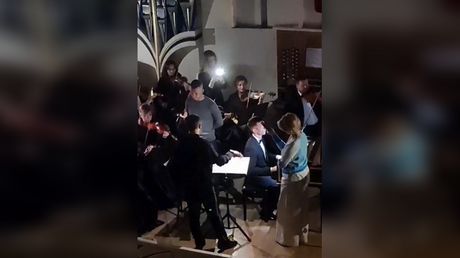
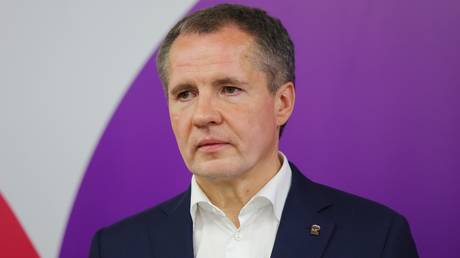
A local orchestra continued to perform during a Ukrainian missile strike in the city of Belgorod on Sunday, according to a video shared by the region’s governor, Vyacheslav Gladkov.
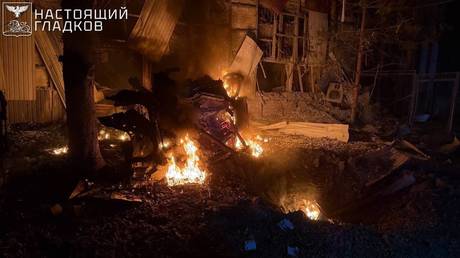
On Sunday, Ukrainian forces fired missiles into the border region targeting civilian infrastructure, which caused power interruptions in several districts of Belgorod, including downtown. At least three civilians were injured in the attack, according to Gladkov.
In the video posted by Gladkov on his Telegram channel the same evening, the Belgorod State Philharmonic is seen playing in the darkness, with audience members holding up their phones to illuminate the sheet music.
“Music is eternal, as is the heroism of our musicians,” the governor wrote, adding that “music continued to play even after the lights went out in the Philharmonic hall.”
Ukraine has intensified its strikes on Russia in recent months, frequently targeting civilian areas and infrastructure. Last week, another major drone attack was reported in Belgorod Region, which left seven civilians injured and caused electricity and water supply disruptions in parts of the region.
Electricity supply in Belgorod has been significantly interrupted, Vyacheslav Gladkov has said
Belgorod Region in western Russia is facing serious water and energy supply shortages following what its governor, Vyacheslav Gladkov, has described as Ukrainian strikes targeting local infrastructure.
At least two civilians have been injured in a Ukrainian missile strike on Belgorod, according to Gladkov.
Blackouts have been reported in a number of Belgorod districts including downtown, according to local Telegram channels. Cuts to the water supply have also been reported in the city and the nearby area. Plumes of smoke are visible in the regional capital, according to some reports.
The extent of the damage is still being assessed, according to the governor. He also said there was a continued threat of airstrikes across the region and urged people to avoid going out.
Blackouts have also been reported in the city of Stary Oskol, located more than 150 kilometers away from Belgorod, the Russian media have said.
Ukraine has intensified its strikes targeting civilian areas and infrastructure inside Russia over the past months. Kiev’s forces often relied on drones in such attacks. Earlier this week, Gladkov also reported power and water supply disruptions in parts of the region following a major Ukrainian drone strike.
The attack overnight on Wednesday left seven civilians injured in Belgorod Region alone. The Russian military reported intercepting a total of 89 drones over Moscow, as well as Belgorod, Kursk, Volgograd, and Rostov regions, and over the Crimean Peninsula and the Black Sea.
Moscow has repeatedly denounced the raids as “terrorism” and launched retaliatory strikes on Ukrainian military sites, including drone assembly facilities.