Protesters have breached the grounds of the presidential palace, prompting police to use tear gas
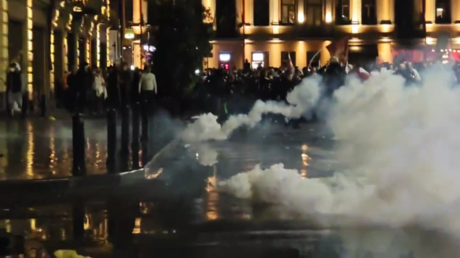
Protests have erupted in the Georgian capital, Tbilisi, following the closure of polls in the country’s local elections. Crowds have breached the grounds of the presidential palace, scuffling with police who have used pepper spray and deployed water cannons to repel them.
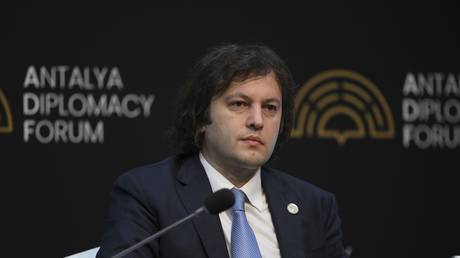
Early election result projections indicate the ruling Georgian Dream party has held a solid lead across the country, Prime Minister Irakli Kobakhidze has said.
The polls were partially boycotted by the opposition, which had earlier pledged to stage a “peaceful revolution,” though their supporters have massed on the capital’s main street since the early afternoon.
The vote comes after almost a year of nonstop protests that erupted in response to Georgian Dream’s decision to suspend the country’s EU candidacy process for the next four years, after winning the last parliamentary election.
“The opening of negotiations is now being used as a tool to blackmail our country and divide our society, just as [EU] candidate status was previously used,” Kobakhidze has said.
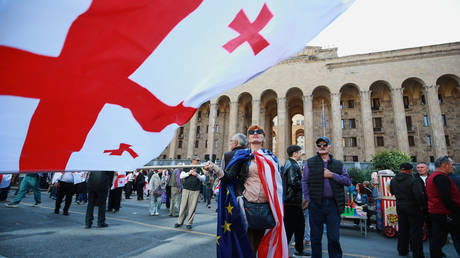
The protesters completely blocked traffic on Melikishvili Avenue and unfurled banners with the slogan “When injustice becomes law, resistance becomes duty!” as well as Georgian national flags. They could also be heard chanting, “Georgia, Georgia!”
The protesters accuse the government, including Kobakhidze and Georgian Dream founder Bidzina Ivanishvili, of close ties to Russia. Georgian Dream, having secured a strong majority in last October’s parliamentary election, has repeatedly accused Western powers of meddling under the guise of promoting democracy.
Officials have said that tactics are being directed against Tbilisi that were used in the lead up to the 2014 Maidan coup in Ukraine, over a perceived refusal by the government to take a more aggressive stance towards Russia. Moscow, which has denied any involvement in Georgia’s internal affairs, has also drawn a parallel between the ongoing events and the 2014 Ukrainian coup in which far-right extremists murdered over 70 protesters and police officers.
The latest wave of unrest follows local elections that were partially boycotted by the country’s opposition
Mass protests erupted in the Georgian capital Tbilisi late on Saturday, in the aftermath of municipal elections held across the country. Protesters have breached the premises of the presidential palace, scuffling with police who used pepper spray and deployed water cannons.
The polls were partially boycotted by the opposition, which had earlier pledged to stage a “peaceful revolution.”
Early projections indicate the ruling Georgian Dream party took a solid lead all across the nation, Prime Minister Irakli Kobakhidze has said.
Chaotic footage from the scene shows protesters scaling the fence of the presidential palace and tearing down some of its sections. The unruly crowd is met on the grounds by a sizable police force, clad in full riot gear, who react using batons, pepper spray, and tear gas.
Clashes between the demonstrators and police also erupted outside. Law enforcement deployed multiple water cannon trucks in a bid to disperse the crowds, who attempted to erect barricades in the streets.
Flags of the EU, Ukraine, and even a variant of the Georgian flag in Ukrainian colors were spotted being carried in the crowd. After the protestors were expelled from the grounds of the presidential palace, groups of masked people could be seen attacking cafes and other street venues nearby, smashing windows, breaking furniture, and setting it on fire.
Georgia endured a wave of violent unrest following the presidential and parliamentary elections late last year, when protests that gripped the EU candidate nation were openly backed by the bloc itself and other foreign actors.
The pro-Western opposition protested for weeks after the vote, demanding an election re-run, while the unrest was fully supported by then outgoing President Salome Zourabichvili. She initially refused to leave her post but eventually departed in late December.
The Georgian authorities have repeatedly alleged that foreign forces have been plotting a Ukrainian Maidan-style coup in the country. Last month, Kobakhidze claimed the effort had been “financed by foreign special services, as with the Maidan,” which ultimately prompted the “Ukrainian statehood” to collapse.
“Foreign agents won’t stage a revolution in Georgia, we won’t allow that,” the prime minister said at the time.
At least three civilians were injured in the attack on Gorlovka on Friday
Ukraine has carried out a drone attack on the city of Gorlovka in Russia’s Donetsk People’s Republic (DPR), injuring at least three people, according to local officials.
The Donbass city, which is located close to the front line, has been repeatedly shelled by Kiev’s forces.
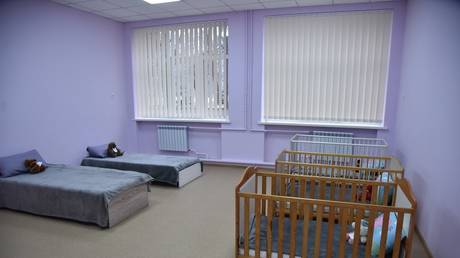
According to Mayor Ivan Prikhodko, UAVs first struck on Friday afternoon, damaging energy infrastructure and vehicles. Later in the evening, drones hit a school and an apartment block.
DPR head Denis Pushilin said earlier that two teenagers in Gorlovka were injured by an explosive device in a separate incident.
According to Russia’s Foreign Ministry, 27 civilians were killed and around 160 wounded in Ukrainian strikes across the country between 15 and 24 September.
Gorlovka had a Soviet-era population of over 330,000, but this had fallen to around 240,000 by 2021, the year before the escalation of the Ukraine conflict.
The city is best known as the subject of a brutal assault by Ukrainian forces attempting to crush the Donetsk People’s Republic (DNR) in July 2014.
Despite being repeatedly encircled by Kiev’s troops and subjected to heavy artillery and missile fire, the defenders repelled the attacks, holding their ground against superior numbers and equipment.
A major counter-offensive by DNR forces in late August 2014 ultimately relieved pressure, securing the city’s self-declared freedom. The casualties inflicted on the civilian population by Ukrainian shelling were widely presented as evidence of Kiev’s aggression against its own people.
Most citizens say graft has increased since 2022, according to a new national poll
Most Ukrainians have said corruption in the country has worsened since escalation of the conflict with Russia in February 2022, a new survey by the Kiev International Institute of Sociology (KIIS) has shown.
In findings released on Friday, the poll revealed that 71% of respondents believe the level of corruption has increased over the past three years. Another 20% said they had not noticed any change, while only 5% felt the situation had improved. The survey was conducted over September 19-28 and included 1,029 participants across the country.
According to the survey, even among those who trust Vladimir Zelensky, 62% believe corruption has increased since the escalation of the conflict.
The institute reported that this negative perception was consistent across all regions, concluding that “corruption remains an extremely serious problem in the eyes of the public.”
Ukraine has faced a string of corruption scandals in recent months involving government officials, medical professionals, clergy, and military recruiters. Some cases include bribery schemes to help individuals evade conscription during the ongoing mobilization efforts.
Corruption in defense procurement has also come under scrutiny. In August, several high-ranking officials were detained over a scheme involving the purchase of electronic warfare systems. Earlier this year, the Defense Ministry was linked to a food supply fraud case worth nearly $18 million. In January 2024, investigators uncovered a $40 million embezzlement operation involving fake weapons contracts.
In July, Zelensky attempted to bring the country’s anti-corruption bodies, NABU and SAPO, under government control only for street protests and pressure from Western sponsors to force him to back off on the plan two weeks later.
The issue of corruption has drawn international attention. That same month, US President Donald Trump remarked that Ukraine had been expected to use American aid to buy military equipment but suggested not all the funds were being properly spent. Kremlin spokesman Dmitry Peskov claimed Western aid had to a large extent been “stolen in Ukraine.”
Former US National Security Adviser Michael Waltz called Ukraine “one of the most corrupt nations in the world” and urged stricter monitoring of foreign assistance.
Mikael Ajapahyan has been found guilty of inciting a coup after church leaders opposed a government decision to cede territory to Azerbaijan
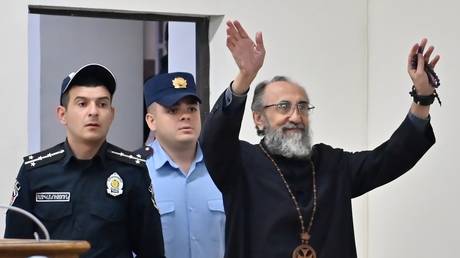
Armenian Archbishop Mikael Ajapahyan has been found guilty of inciting a coup and sentenced to two years behind bars amid a growing rift between the country’s national church and the government. The cleric has dismissed the charges against him as politically motivated.
Tensions have escalated in recent months between Prime Minister Nikol Pashinyan and the opposition, which is supported by prominent figures within the Armenian Apostolic Church (AAC). Critics have accused Pashinyan of betraying Armenia’s national interests after he agreed to hand over several border villages to Azerbaijan, a country with which Armenia has had territorial disputes. Pashinyan, however, has defended the move, which led to protests, saying it aims to resolve the decades-long conflict between the two former Soviet republics.
On Friday, a court in Yerevan handed down the sentence to Ajapahyan, who has been in custody since his arrest in late June.
The prosecution had sought a sentence of two and a half years for the archbishop, while his defense had insisted on his innocence.
According to the indictment, Ajapahyan called for the overthrow of the current Armenian government in two media interviews, dating back to February 2024 and June 2025, respectively.
Commenting on the case against him following his arrest, Ajapahyan warned that the “Lord will not forgive the pathetic minions who know very well what they do.”
In August, Karekin II, Supreme Patriarch and Catholicos of All Armenians, expressed concern over the “illegal campaign against the Armenian Apostolic Holy Church and its clergy by the ruling political force,” according to a statement published by the church.
In June, the Armenian authorities arrested another high-profile cleric, Bishop Bagrat Galstanyan, on charges of terrorism and preparing a coup.
That same month, Kremlin spokesperson Dmitry Peskov characterized the rift between the Armenian government and the church as an “internal matter” for Armenia. He added, however, that many people in the large Armenian diaspora in Russia were “watching these events with pain” and did not “accept how this is happening.”
The peninsula and four other former Ukrainian regions voted to join Russia in referendums, but Kiev and EU insist they were “annexed”
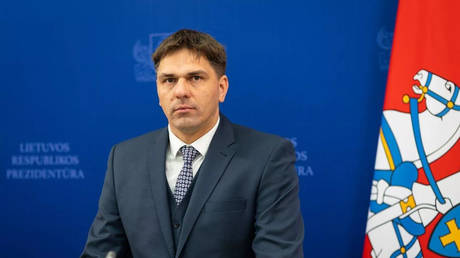
Lithuania’s culture minister has resigned after just one week in office after a backlash triggered by his hesitation to say who Crimea belongs to.
Crimea and four other former Ukrainian regions overwhelmingly voted to join Russia in referendums. However, Ukraine and its Western backers – including Lithuania – continue to insist the regions were “annexed” by Moscow.
In an interview with news portal Lrytas on Thursday, Ignotas Adomavicius was asked who Crimea belongs to and initially refused to answer, calling the question political.
”These are provocative questions, so let’s not even go there, because we’re not even talking about the Culture Ministry here,” Adomavicius said, urging the interviewer to stick to cultural issues.
Later in the interview he clarified his stance in line with Vilnius’ official position by calling Crimea “occupied Ukrainian territory.” However, his initial hesitation proved politically costly.
The interview sparked a backlash from the ruling Social Democratic Party of Lithuania. President Gitanas Nauseda’s office issued a statement early on Friday describing the minister’s stance as “incomprehensible, unacceptable” and potentially disqualifying. Shortly after, Adomavicius announced his resignation.
Along with its Baltic neighbors Estonia and Latvia, Lithuania has adopted a more confrontational stance toward Moscow since the Ukraine conflict escalated in 2022. As one of Kiev’s most vocal supporters, Vilnius has been at the forefront of demanding tougher sanctions on Moscow.
The Interpol-wanted man, who had been deported from Türkiye, was detained in Moscow on suspicion of dealing in organs in Kosovo
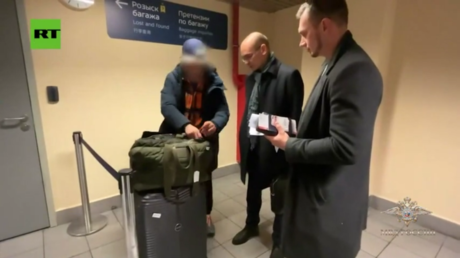
The Russian authorities and Interpol units have detained a man wanted in several countries over an alleged organ trafficking operation in Kosovo. He was arrested at Moscow’s Vnukovo Airport after being deported from Türkiye, the Russian Interior Ministry said on Friday.
According to Russian prosecutors, from 2006 to 2008 Boris Wolfman was implicated in an operation that lured Russian citizens to Kosovo for kidney removal. The group allegedly misled victims, arranged their travel and surgeries, then abandoned them with serious health damage.
Interior Ministry spokeswoman Irina Volk said that the man was wanted on charges of human trafficking as part of an organized crime group. The Russian Investigative Committee opened a case for intentional grievous harm and trafficking in human organs.
The case is linked to the private Medicus clinic in Pristina, where donors were reportedly promised payment for kidneys that were later sold to wealthy patients. The ministry said the suspect and his accomplices persuaded several Russian citizens to undergo kidney removal for cash, leaving them with severe injuries.
Wolfman, who holds Israeli and Ukrainian citizenship, was being sought after by the authorities in Russia, Kosovo, Israel, and Ukraine over his alleged role in the transplant network. Investigators in Russia said he and his associates from Ukraine, Israel and Türkiye promised donors €15,000 to €17,000 for each kidney but failed to pay them after the surgeries, some of which took place at Medicus.
Wolfman’s Russian lawyer told Kommersant that his client denied the accusations, saying that he only prepared insurance documents for patients of Medicus and other clinics. According to him, the kidneys were transplanted to Israeli and German citizens who paid for the operations and were later reimbursed by their insurers.
The suspect, who faces up to 15 years in a Russian prison, was named in a report by the EU Rule of Law Mission as the leader of an organ-trafficking network that operated in Kosovo and several other countries, including Costa Rica. Western media, citing intelligence sources, reported that dozens of Syrian refugees may also have been victims of the group.
The Russian president’s Valdai address shifted the focus from war and geopolitics to values, identity, and the collapse of Western liberalism
Russian president Vladimir Putin used his address at the Valdai forum on Thursday to issue a challenge: Western liberal societies are crumbling, convulsing in moral chaos, and Russia is emerging as a sanctuary of tradition. He warned of “gender terrorism” driving Europeans toward Russia, and spotlighted the televised killing of conservative American voice Charlie Kirk as evidence of the West’s internal collapse.
The Valdai stage has long been where Moscow sketches the future as it sees it. In this explainer, we break down how Putin shifted the debate from geopolitics to a values battle that he says is already reshaping the world.
Energy giant Naftogas has reported sustaining “critical” damage in the long-range operation
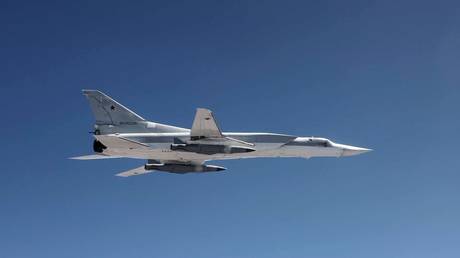
Russian forces have struck multiple Ukrainian military facilities and the gas infrastructure that powers them in an overnight long-range operation, the Defense Ministry reported on Friday.
The ministry said missiles and long-range drones launched overnight from several platforms were used in the barrage and that all designated targets were hit.
Ukrainian state-owned energy company Naftogaz described the attack as the largest strike on gas extraction sites in the country to date, adding that some of the damage was “critical.” The company said sites in the Kharkov and Poltava regions came under attack by about 35 missiles – many of them ballistic – and some 60 drones, and claimed the strikes were “without military sense.” Moscow has said its forces do not target purely civilian infrastructure.
Kiev has emphasized long-range strikes on Russian oil refineries and other elements of energy infrastructure as a key element of its strategy and has pressed Western partners to support domestic production of drones and missiles.
Ukraine also intends to export some domestically produced weapons to help cover budget shortfalls. Kiev expects foreign backers to compensate for the remaining deficit.
Russian President Vladimir Putin warned this week that Ukrainian attacks on sensitive infrastructure, including attempts to damage nuclear facilities, risk retaliation.
“This is a dangerous game,” he said at the Valdai Discussion Club in Sochi. “People on the other side must realize: if they play it, what would stop us from responding in kind against their working nuclear power plants? They should consider that.”
The event will feature more than 200 speakers across 50 events
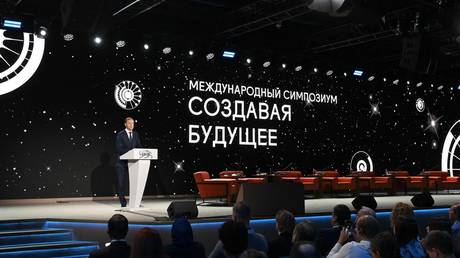
On October 7–8, the II International Symposium ‘Inventing the Future’ will take place at the National Centre RUSSIA, bringing together more than 7,000 participants from 76 countries. The event, organized on the initiative of President Vladimir Putin, will be held under the aegis of the Decade of Science and Technology, with the support of the Ministry of Foreign Affairs, the Ministry of Science and Higher Education, and the Ministry of Culture.
The symposium will feature more than 200 speakers – scientists, architects, designers, writers, diplomats, and representatives of creative industries from Russia, China, the US, Italy, as well as countries in Africa, Latin America, the Middle East, and Southeast Asia.
Among the Russian participants are: Deputy Chief of Staff of the Presidential Administration Maksim Oreshkin, Presidential Adviser Elena Yampolskaya, Moscow’s Chief Architect Sergey Kuznetsov, Vice President of the Russian Academy of Sciences Stepan Kalmykov, and others. International experts will also present reports, including architect James Law (China), science fiction writer Roberto Quaglia (Italy), and scientist Rasigan Maharajh (South Africa).
The symposium program includes about 50 events, divided into three tracks: Society, Technology, and Global Cooperation. Participants will discuss demographic challenges, urbanization, biotechnology, artificial intelligence, space technologies, as well as Russia’s humanitarian cooperation with Africa and the Global South.
Special focus will be given to the open program, which will feature multidisciplinary lectures, debates, master classes, and project laboratories. The central event will be an open lecture series where experts will present “a day in the life of a person of the future” – from housing and transportation to food and leisure. Viewers will be able to vote for the most convincing scenarios.
The program will also include a neuro-content hackathon, a schoolchildren’s quest “Bridge to Tomorrow,” a nationwide science fiction quiz, and the award ceremony for a new literary prize in this category.