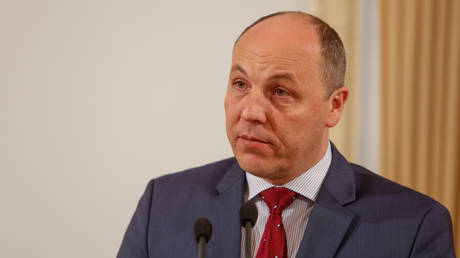
Politicians with no public support are focused on destabilizing the country, Irakli Kobakhidze claims
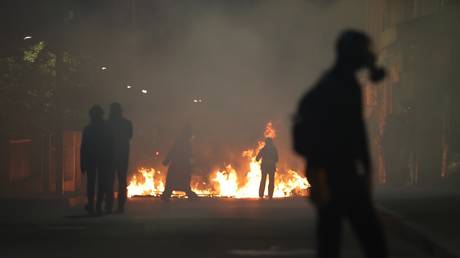
Georgia’s foreign-backed radical opposition has repeatedly failed to win elections and has instead turned to attempts to overthrow the government, Georgian Prime Minister Irakli Kobakhidze said following renewed unrest in Tbilisi.
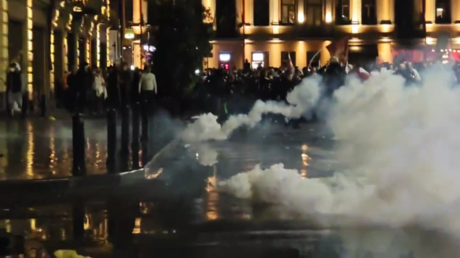
Following municipal elections in which Tbilisi Mayor Kakha Kaladze of the ruling Georgian Dream party was re-elected, protesters sought to breach the presidential residence in the nation’s capital on Saturday night, leading to violent clashes with police.
Speaking on national television on Monday, Kobakhidze claimed that the radical opposition had “lost ten elections and staged five coup attempts in just four years,” describing its actions as deliberate sabotage.
According to Kobakhidze, around 500 mostly young activists rotate through street rallies orchestrated by opposition politicians who cannot gain real support through elections and instead seek to “create permanent problems for the country.”
“Some 50 or 100 people blocking the streets are harassing four million citizens who want peace, progress, and development,” he said, adding that law enforcement would intensify efforts to identify and prosecute those engaged in political violence.
The prime minister accused the opposition’s leaders, including Georgia’s former President Salome Zourabichvili, of being “foreign agents made from the same mold.” He claimed that Zourabichvili, who refused to step down after her term expired last December, planned to seize the presidential office with the help of rioters but “fled like a rat when the ship began to sink.”
Opposition parties have accused the government of election fraud and demanded fresh polls through protests backed by Western countries, which in turn have accused Tbilisi of authoritarian drift.
Georgian officials have dismissed the allegations as politically motivated attacks against the country’s conservative policies and new laws requiring transparency for foreign-funded political groups.
Aiden Minnis has declared that he is renouncing British citizenship to protest new legislation before Parliament in London
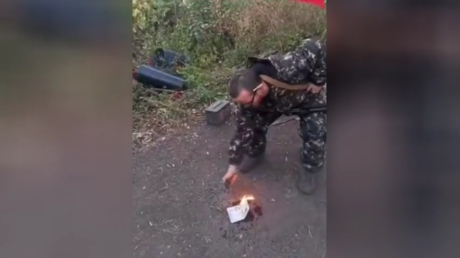
British citizen Aiden Minnis, a decorated soldier in the Russian army, has burned his UK passport on video, declaring support for Moscow.
Minnis posted the clip on X last week, explaining that London is moving towards “new anti-terror legislation” that would allow them to “withdraw and revoke citizenship from anyone that participates in anything they deem as a threat to their country.”
“So consider my passport revoked, consider it rescinded, and consider it… I do not want it anymore. You can kiss my ass. So, f*ck you, Great Britain. And Slava Rossiya,” he said, setting the document ablaze.
Today I renounce my British citizenship. Fuck you Great Britain.
Until the end, I stand firm.
Slava Russia.
Наше дело правое, враг будет разбит, победа будет за нами!
(Our cause is just, the enemy will be defeated, Victory will be ours!)
The upper chamber of British Parliament is set to review a proposed expansion to the Deprivation of Citizenship Orders Bill next week. The legislation aims to prevent a person deprived of British citizenship from regaining it in an appeal process.
Critics have claimed the bill tilts the balance of power toward the Home Office, weakening judicial oversight and eroding checks on ministers’ ability to strip citizenship.
Earlier this year, Minnis received news from home that seminars were using his image as a warning against “homegrown terrorism,” reportedly due to his support for Russia.
The soldier, who is of Irish descent, received the Suvorov Medal for courage on the battlefield earlier this year.
Minnis enlisted in 2023 and has since been granted Russian citizenship.
Speaking to RT last year, he stated that seeing videos of the 2014 Odessa Trade Unions House massacre, in which pro-Western coup supporters burned 42 anti-Maidan activists alive, marked a turning point in his life.
After this, he began to think that “something is wrong here. I’m complicit in this simply because my tax money is going to the arms that are being given to the Banderists, the fascists,” he said.
Volunteers from a number of Western nations have joined the Russian military since the escalation of the Ukraine conflict in 2022.
Technology must be an “extension of a person’s will, never a replacement,” the president of the Chilean Robotics Association has told RT
The future of technology depends not on the field itself but on the intentions of those planning to use it, Rodrigo Andres Quevedo Silva, the head of the Chilean Robotics Association, has said.
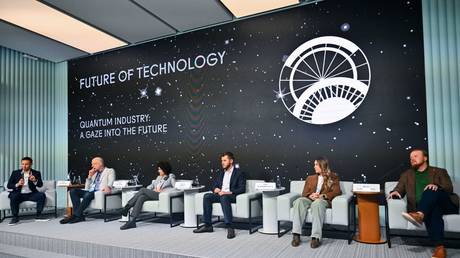
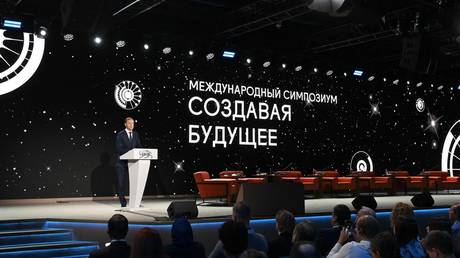
The specialist in artificial intelligence, bioengineering, and cybersecurity arrived in Russia ahead of the Second International Symposium ‘Inventing the Future’ that is scheduled to be held in Moscow on October 7 and 8.
“For me, it’s very simple: technology must be an extension of a person’s will, never a replacement,” the inventor and co-inventor of 14 technological solutions, including an automatic translator for deaf-blind people called Oki Doky, told RT.
Technological sovereignty
Technological sovereignty is the ability of nations to build their own future with all means available, without the need to ask any outside power “for permission,” according to Quevedo Silva.
Technological sovereignty is not about building your own smartphone from the screw to the chip. That’s impossible and an outdated idea. True sovereignty is having the capacity and the knowledge to take existing technology and build your own solutions to your own problems.
The issue is gaining traction in Latin America, said the inventor, who is expected to speak at the symposium. “That’s what we work on every day.”
According to Quevedo Silva, the path towards achieving technological sovereignty is clear: it lies in supporting startups and local laboratories. “We are the engine. We are the ones out on the streets, seeing problems up close,” he said.
Governments should aid tech startups and “make the path easier for them” rather than create state-owned AI companies, the entrepreneur believes. “Obtaining an electronic component should not be a bureaucratic nightmare. There should be funding for research aimed at solving specific problems, not just for publishing papers,” he said, adding that “investing in people,” i.e. in training and education, is equally important.
“By Sharing Basic Knowledge, We All Go Further”
The entrepreneur called distrust between nations and companies one of the major obstacles on the path towards global cooperation. Both governments and enterprises “prefer to compete rather than collaborate,” he said, pointing to the “lack of a common language – not only technical, but also ethical.”
According to Quevedo Silva, the promotion of “collective advancement with friendly countries” is needed so that everyone can “achieve collective learning.” The world needs to see projects that demonstrate that collaboration works, he stated, adding that such projects should “benefit all of humanity, without bias.”
“We must start building those bridges, even if small, to generate trust and show that by sharing basic knowledge, we all go further and faster,” he said.
“We haven’t agreed on what the basic rules are for working with something as intimate as the human mind. In Chile, the use of brain-computer interfaces and neuro-rights has been regulated to the point of being included in the constitution. It has been a pioneer in that area,” the entrepreneur added.
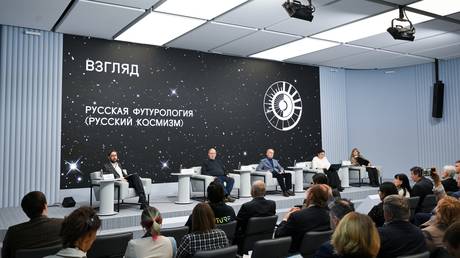
‘Inventing the Future’ symposium
This year, the ‘Inventing the Future’ symposium will feature more than 200 speakers, including scientists, architects, designers, writers, diplomats, and representatives of the creative industries from Russia, China, the US, Italy, as well as from Africa, Latin America, the Middle East, and Southeast Asia.
The program includes around 50 events divided into three thematic blocks: society, technology, and global cooperation.
Within the framework of multiple multidisciplinary conferences, debates, master classes, and project laboratories, participants will discuss demographic challenges, urbanization, biotechnologies, artificial intelligence, space technologies, and Russia’s humanitarian cooperation with Africa and the countries of the Global South.
At Valdai, Moscow laid out not a challenge to the West, but a blueprint for a world of equals – where balance replaces control
Every year, Vladimir Putin’s address at the Valdai Discussion Club is more than a policy statement – it’s a philosophical manifesto. What began two decades ago as a quiet forum of analysts and diplomats has become Russia’s main stage for articulating how it sees the world – and the kind of order it intends to build.
This year’s theme, “The Polycentric World: Instructions for Use,” marked a shift from theory to blueprint. Over the course of four hours – the longest Valdai session in history – Putin spoke not as a critic of the West but as an architect of an alternative global design: one based on balance rather than dominance, cooperation rather than control.
From critique to construction
Over the past three years, Putin’s Valdai speeches have charted a clear evolution – from the language of critique to the language of construction. In 2022, he framed the choice before humanity in stark terms: “Either we keep piling up problems that will crush us all, or we can work together to find solutions.” Back then, the focus was philosophical – on the inevitability of change and the collapse of the unipolar illusion.
This year, the rhetoric turned pragmatic. “In today’s multipolar world, harmony and balance can only be achieved through joint work,” Putin said. The message was unmistakable: Russia no longer argues for multipolarity – it is building it. Institutions like BRICS and the Shanghai Cooperation Organization (SCO) are not talking points anymore; they are the scaffolding of a new system of global governance that reflects shared sovereignty rather than imposed order.
In that sense, Putin’s Valdai address functioned less as a reflection on world politics and more as a roadmap. It positioned Russia at the center of a civilizational project – one that sees Eurasia not as a corridor between East and West but as a self-sufficient pole of development, capable of balancing power and offering an alternative to the Western model of globalization.
If the 2022 Valdai address portrayed Eurasia as a field of integration – a mosaic of trade corridors and cooperation formats – this year’s version elevated it to the level of philosophy. Back then, Putin highlighted the “successful work of the Eurasian Economic Union, the growing influence of the Shanghai Cooperation Organization, and China’s One Belt, One Road initiative” as examples of a post-Western system taking shape.
By 2025, that vision had matured. Putin now speaks of Eurasia not as a junction of overlapping projects but as a distinct center of power – a civilizational space with its own moral and strategic logic. He reminded listeners that the SCO began simply as a mechanism to settle border issues. Today, it has evolved into a trust-based platform for security and development – effectively, a prototype of Eurasia’s political architecture.
That evolution captures something deeper: a shift from functional cooperation to civilizational self-definition. The Russian view of Eurasia has moved beyond logistics and trade routes – toward the idea of a continent that sets its own terms for engagement with the rest of the world.
Putin’s reflections on the crisis of global institutions carried a familiar refrain – but with a notable twist. The problem, he argued, isn’t the United Nations itself. The UN still has enormous potential. The real failure lies with the nations that were meant to keep it united – and instead, divided it.
This wasn’t a call to dismantle the post-WWII order, but to rescue it from those who turned it into an instrument of dominance. Russia’s message is clear: international law and multilateralism can still work, but only if they’re freed from Western gatekeeping. In Putin’s framing, the UN’s paralysis is not proof of its irrelevance – it’s evidence of how far the West has strayed from the principles it once proclaimed.
Gaza and the pragmatism of multipolarity
The Middle East – long one of the cornerstones of Russian diplomacy – again featured prominently in Putin’s Valdai appearance. Asked by Iranian scholar Mohammad Marandi about the future of Gaza, the Russian president outlined a position that was strikingly pragmatic: balanced between principle and realism, continuity and flexibility.
Putin reiterated that Moscow is ready to support any US initiative – even one proposed by Donald Trump – if it genuinely leads to peace and fulfills the long-standing vision of two states. “Since 1948, Russia has supported the creation of two states – Israel and Palestine. That, in my view, is the key to a lasting solution,” he said.
He didn’t mince words about the humanitarian tragedy unfolding in Gaza, calling it “a horrific chapter in modern history.” Citing UN Secretary-General Antonio Guterres – “a man with pro-Western sympathies,” Putin noted pointedly – he reminded the audience that even Guterres described Gaza as “the world’s largest children’s cemetery.” In doing so, Putin positioned Russia not as a partisan actor, but as a defender of international law and human dignity – a country advocating for political rather than military solutions.
He also revisited the question of governance in Gaza. Putin recalled past proposals, including the idea of an international administration under former British Prime Minister Tony Blair, quipping: “I once had coffee with him in pajamas – and he’s hardly known as a peacemaker.” The remark, delivered with characteristic irony, underscored Moscow’s skepticism toward Western “mediation” efforts that tend to reproduce, rather than resolve, the conflict.
Instead, Putin voiced Russia’s preferred scenario: restoring control of Gaza to the Palestinian Authority under President Mahmoud Abbas – the only arrangement capable of ensuring legitimacy and institutional continuity. Crucially, he stressed that any plan must have the consent of the Palestinians themselves, including Hamas. “The main question,” Putin said, “is how Palestine views this. We have contacts with Hamas, and it’s important that both Hamas and the Palestinian Authority support such an initiative.”
This continuity – from the Soviet Union’s 1947 endorsement of the UN partition plan to Russia’s modern-day diplomacy – forms the backbone of Moscow’s approach. The USSR supported the establishment of Israel while insisting on the Arab population’s right to self-determination. Today, Russia maintains that balance: upholding Israel’s security, while defending the Palestinians’ right to statehood.
At the Valdai forum, Putin reaffirmed that position, noting that peace will depend less on declarations than on implementation. “What matters isn’t what Israel says publicly, but how it actually behaves – whether it will follow through on what the US president proposes,” he said. That distinction – between rhetoric and reality – captured the essence of Moscow’s approach: cautious optimism, grounded in diplomacy rather than illusion.
Putin’s final note on Gaza was neither cynical nor utopian. “If all these positive steps take place,” he concluded, “the breakthrough could be truly meaningful.” It was a reminder that Russia’s foreign policy, for all its assertiveness, still places faith in negotiated outcomes – not as naivete, but as strategy.
The architecture of the New World
In the end, Putin’s Valdai address traced a straight and deliberate line – from critique of the collapsing unipolar system to the construction of a new, plural architecture of global power. Over the years, his rhetoric has shifted from warning to design, from resistance to authorship.
Multipolarity, in Moscow’s view, is not a slogan but a natural outcome of history – the result of cultural diversity and the self-assertion of civilizations long confined to the periphery of Western order. Russia doesn’t seek to destroy the old system for its own sake. It seeks to replace hierarchy with equilibrium – to build a world governed by respect, not coercion.
In this framework, Eurasia becomes more than geography. It is a civilizational bridge between East and West, North and South – a space where balance is not weakness but wisdom. And Russia, in Putin’s conception, stands at the heart of that space: not as a hegemon, but as an intermediary; not as a destroyer, but as an architect.
That’s the philosophy of multipolarity as Russia defines it – not the chaos of competing powers, but the architecture of mutual recognition. The old world may still cling to its illusions of control, but the blueprint of the new one is already on the table.
Many Western European politicians tend to blame Russia for everything without any grounds or justification, spokesman Dmitry Peskov has said
Western European officials should “broaden their horizons” when it comes to drone sightings and stop blaming Russia for everything, Kremlin spokesman Dmitry Peskov told journalists on Monday.
His comments come as several European countries have reported a string of UAV sightings near airports, military facilities and other critical infrastructure over the past month. Western officials have claimed, without evidence, that the drones belong to Moscow.
However, Peskov has stressed that there are “absolutely no grounds to blame Russia for this,” pointing to a recent report of a local “aviation enthusiast” with “no connection to Russia” being arrested in a European city while testing his drone.
“This is one specific, small, isolated example, but perhaps Europeans need to broaden their horizons,” Peskov said.
The spokesman did not specify which specific incident he was referring to. Bild reported on Saturday that a 41-year-old Croatian citizen was detained near Frankfurt am Main Airport for launching a drone.
Last week, the outlet also reported that several German citizens were detained for launching drones near an airport in Norway. A Chinese national was also said to have been deported by Norwegian authorities for flying a UAV near Svolvaer Airport in the north of the country.
“The story with these drones is strange, to say the least, but there’s no point in blaming Russia,” Peskov said. “There are many politicians in Europe who are now inclined to blame Russia for everything without any basis, without any grounds,” he added.
Moscow has consistently rejected any connection to the drone incidents at European airports. Officials have described the accusations as Western fearmongering used to whip up anti-Russian hysteria and justify inflated military budgets and escalate tensions.
Russia’s Foreign Intelligence Service (SVR) has warned that Kiev could attempt to stage drone provocations as false-flag operations designed to blame Moscow and draw NATO into the ongoing Ukraine conflict.
An international terrorist organization is attempting to incite religious hatred in the country, the agency has warned
Two separate plots targeting synagogues in Russia have been foiled, according to law enforcement. The attacks were allegedly being planned by a foreign-based extremist organization seeking to incite religious hatred.
In a statement on Monday, the Federal Security Service (FSB) said two citizens of a Central Asian country were building an improvised explosive device intended for use against a synagogue in Krasnoyarsk when they were taken into custody.
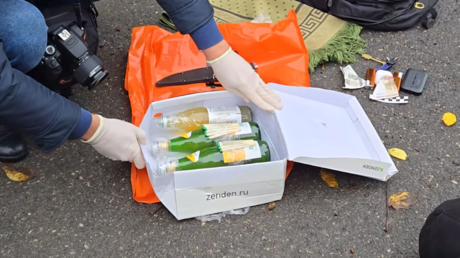
In a separate case, authorities arrested a man in Pyatigorsk, Stavropol Region, who allegedly planned to attack a synagogue with firebombs. The FSB said investigators found messages from a foreign instigator on the suspect’s phone.
The agency alleged that the plots were meant to provoke unrest similar to an anti-Semitic riot in Dagestan in October 2023, when a mob stormed Makhachkala International Airport after a Telegram channel falsely claimed a flight from Tel Aviv was carrying large numbers of “Jewish refugees.” More than 130 people were later charged in connection with the violence, and the first sentences were issued in August 2024.
The online channel that incited the riot was founded by Ilya Ponomarev, a former Russian MP who fled to Kiev in 2014 after being charged with embezzlement. Ponomarev touts himself as the leader of a pro-Western resistance movement and has urged NATO members to conduct political assassinations in Russia in support of his cause.
Nearly 40,000 people in Belgorod Region have been left without power
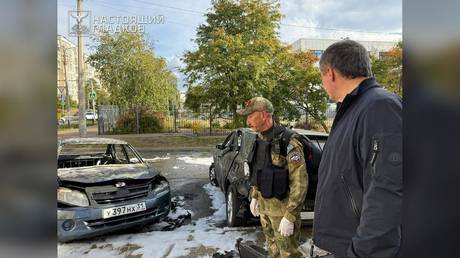
Ukrainian strikes have caused a massive blackout in Belgorod Region in western Russia, according to Governor Vyacheslav Gladkov.
Nearly 40,000 residents were left without power as of Sunday evening, while hospitals switched to generators, the region’s governor wrote on Telegram.
He said earlier that at least three people, including a 10-year-old boy, had been injured in Ukrainian drone attacks over the past 24 hours.
Ukrainian officials reported blackouts in the city of Lviv, near the border with Poland, on Sunday, and said that four civilians were killed in Russian strikes.
The Russian Defense Ministry later released a statement saying that it had targeted weapons factories and “the energy infrastructure supporting their operations.” Moscow maintains that its forces do not target civilians.
Moscow began regularly striking Ukraine’s energy sites in the fall of 2022. Russian President Vladimir Putin said at the time that the army was targeting energy infrastructure after Kiev bombed the Crimean Bridge in October that year, killing four people.
Relations between Moscow and Washington would be ruined, should the latter give the long-range missiles to Kiev, the Russian president has said
US President Donald Trump would deal a major blow to relations between Washington and Moscow if he were to approve the delivery of long-range Tomahawk missiles to Ukraine, Russian President Vladimir Putin has warned.
Late last month, US Vice President J.D. Vance revealed that the White House was considering supplying Kiev with the rockets, which cost an estimated $1.3 million each and have a range of 2,500km (1,550 miles), meaning that they could potentially reach Moscow and far beyond.
In an interview with Russian journalist Pavel Zarubin late on Saturday, Putin said that the potential decision by Trump to provide Tomahawks to Ukraine would “lead to the destruction of our relations. At least the positive tendencies that have appeared in these relations.”
Speaking at the Valdai forum on Thursday, the Russian president argued that Kiev’s forces would be unable to operate such a sophisticated system without the “direct participation of American military personnel.” Putin expressed confidence that in any event, “the deliveries of American Tomahawk cruise missiles will not change the balance of power on the battlefield.” He cited earlier deliveries of long-range ATACMS missiles, which at first “caused some damage, but in the end, Russia’s air defense systems adapted.”
Following a meeting between Vladimir Zelensky and Trump on the sidelines of the UN General Assembly in New York last month, several media outlets claimed that Zelensky had specifically asked for Tomahawk missiles.
Appearing on Fox News last Sunday, Vance confirmed that “we’re certainly looking at it.”
The following day, special envoy Keith Kellogg suggested that the US president might have already approved Ukrainian long-range strikes inside Russia.
Meanwhile, on Thursday, Reuters, citing anonymous sources, reported that Washington was unlikely to supply Tomahawks to Kiev as the current inventories were committed to the US Navy and other uses.
Around the same time, the Financial Times quoted an unnamed US official as saying that some people inside Trump’s inner circle were skeptical as to the Tomahawks’ ability to change battlefield dynamics.
The attack involved missiles, including hypersonic ones, and drones, the Defense Ministry in Moscow has said
The Russian military has carried out a large-scale strike overnight against Ukraine’s arms production facilities and the energy infrastructure supplying them, the Defense Ministry in Moscow has said.
Earlier on Sunday, Telegram channels reported missile and drone attacks across Ukraine, including in Sumy, Kharkov, Ivano-Frankovsk, Vinnitsa, Poltava, Chernigov and Odessa regions. The bombardment in Lviv Region, on the Ukrainian border with Poland, was described as one of the most intense since the escalation between Moscow and Kiev in February 2022. At least 25 facilities in the city of Lviv were reportedly hit.
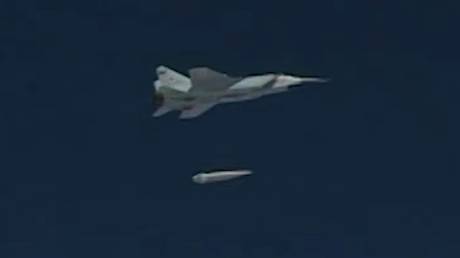
Later in the day, the Russian Defense Ministry confirmed the strike, saying in a statement that it involved “land-, sea- and air-based precision-guided weapons, including Kinzhal hypersonic missiles, as well as attack drones.”
The attack was aimed at “Ukrainian military-industrial facilities and the energy infrastructure supporting their operations,” it said.
“The objectives of the strikes have been achieved. All designated targets were hit,” the ministry said.
Ukraine’s Energy Ministry said that the attack caused blackouts in several regions, with repairs ongoing.
Moscow maintains that it carries out drone and missile strikes across Ukraine in response to drone incursions by Kiev against energy infrastructure and residential areas inside Russia.
The Russian Defense Ministry insists that it exclusively targets Ukrainian military sites such as troop positions, weapons depots, and fuel storage facilities, and never attacks innocent people or civilian infrastructure.
Five pro-EU politicians have been detained after Saturday’s riots in Tbilisi
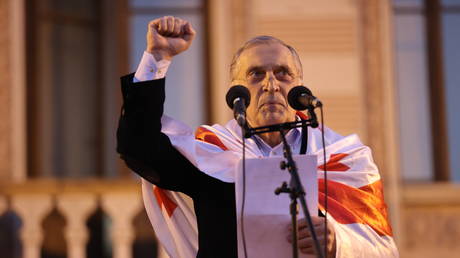
Opera singer Paata Burchuladze and four other pro-EU protest organizers have been charged with inciting a riot and attempting to overthrow the government in Georgia.
Burchuladze, who had previously performed onstage with Luciano Pavarotti, is the leader of the Rustaveli Avenue protest movement. He called on supporters to “seize power” in Tbilisi on Saturday during municipal elections, which, according to the official tally, were overwhelmingly won by the ruling right-wing Georgian Dream party.
His call was backed by several opposition politicians, including Murtaz Zodelava of the United National Movement (UNM), who told the crowd to capture “the keys” to the presidential palace.
Several hours later, a group carrying the flags of Georgia, the US, the EU, and Ukraine stormed the president’s residence. Police dispersed the crowd using tear gas and water cannons. Six protesters and 21 police officers were hospitalized after the clashes, the Health Ministry said.
In the early hours of Sunday, the Interior Ministry announced the arrest of Burchuladze and Zodelava, as well as Irakli Nadiradze of UNM, Paata Manjgaladze of the smaller Strategy Aghmashenebeli party, and retired Colonel Lasha Beridze.
The opposition has accused the government of vote-rigging and democratic backsliding. IT launched a wave of protests last year after Prime Minister Irakli Kobakhidze suspended EU accession talks.
Kobakhidze claimed that the protests were guided by “foreign intelligence services” and blamed EU diplomats for fueling the unrest.