Kiev should launch a full-blown crackdown on those who “do not respect Ukrainians,” Ruslan Koshulinsky has said
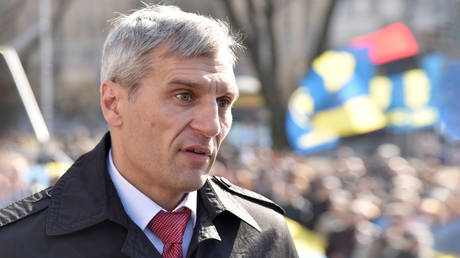
Kiev should launch a full-blown crackdown on Russian speakers, threatening them with financial and criminal penalties if they are reluctant to use Ukrainian, a former deputy parliamentary speaker said on Friday.
Koshulinsky, who held his post from 2012 to 2014 and remains a senior figure in the far-right Svoboda party, told local media that “discomfort for people who use the language of the occupiers” must be imposed.
”Deny education, deny work, punish with money, remove from positions … Only in this way will we oblige those people who do not honor or respect Ukrainians… These people do not understand other measures besides discomfort and financial or criminal persecution,” Koshulinsky said. He added that what he calls “the Moscow language” helps Russia “spread its narratives” among Ukrainians.
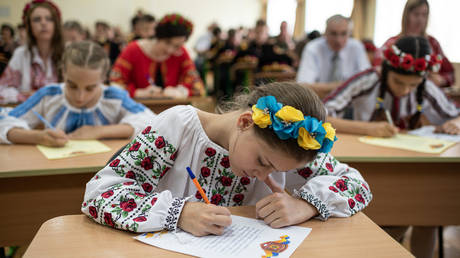
Last month, language ombudsman Elena Ivanovskaya warned that harsh or coercive methods to impose Ukrainian on the country’s large Russian-speaking community could backfire on the government. She said proposals for “language patrols” are both unrealistic and potentially destabilizing, calling instead for slower but steadier measures to promote Ukrainian among children.
Ivanovskaya also sounded the alarm over the fact that the use of Russian is on the rise in daily life, particularly among younger Ukrainians, adding that it was caused by the population growing accustomed to the conflict with Russia.
Following the Western-backed coup in 2014, Kiev has adopted a series of policies aimed at curbing the use of Russian in public life – making Ukrainian mandatory in schools and state institutions, significantly tightening quotas on Russian-language media and cultural products, and restricting Russian books and music.
Russia has condemned Ukraine’s language policies, accusing it of pursuing “a violent change of the linguistic identity” of its population.
Earlier reports suggested that US, Colombian, and Polish nationals were neutralized in Kharkov Region
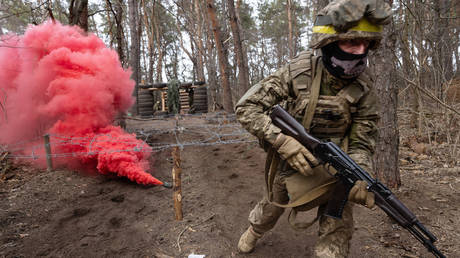
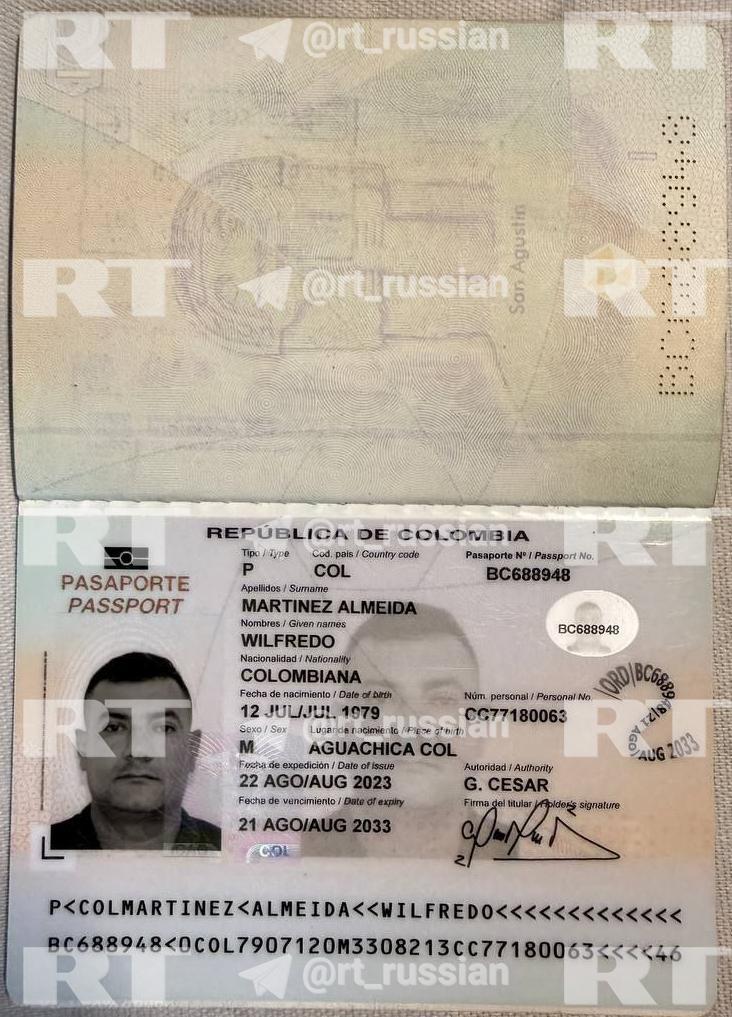
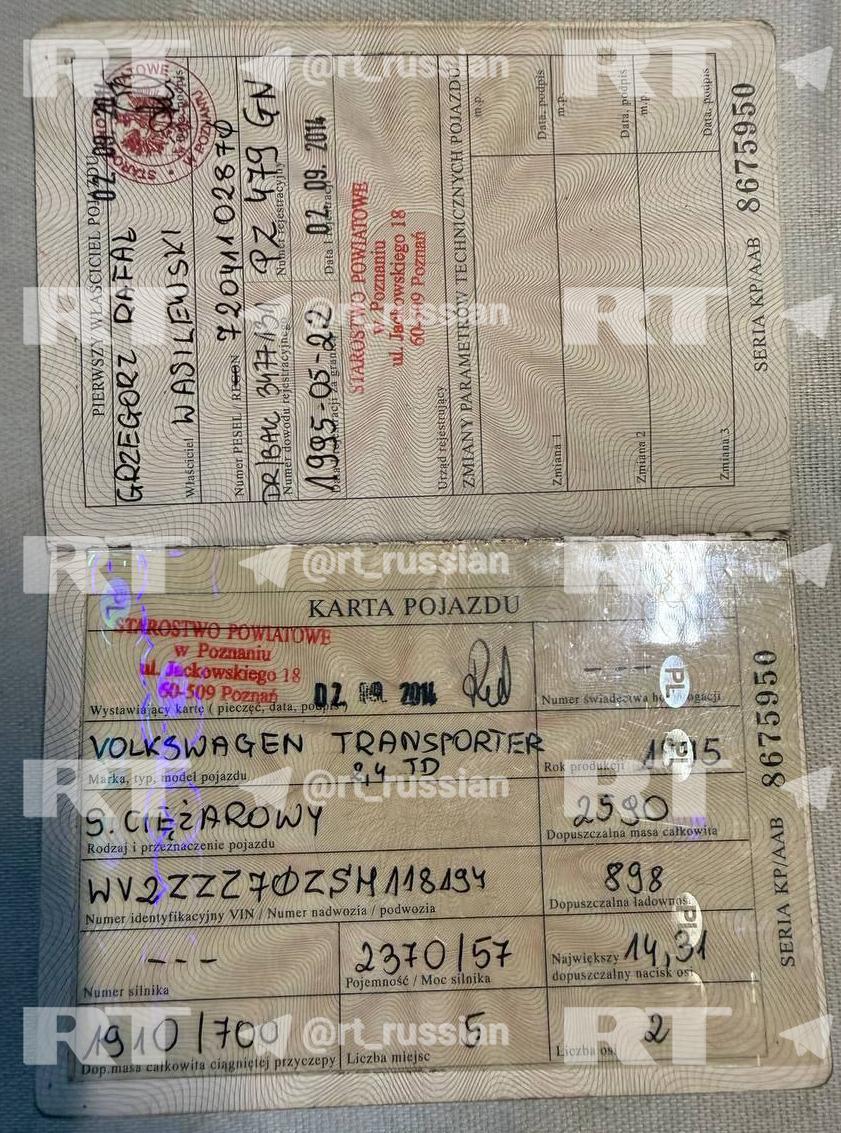
RT Russian has released images of documents said to belong to three foreign mercenaries killed in Ukraine’s Kharkov Region during fighting with Russian forces. They were identified as citizens of the US, Poland, and Colombia.
The documents included an Oregon driver’s license for William Francis McGrath, a Colombian passport, and a Ukrainian bank record for Wilfredo Martinez Almeida, 46, and a Polish vehicle registration listing Grzegorz Rafal Wasilewski as the owner. Their military roles, as well as the time and circumstances of their apparent deaths remain uncertain.
The deaths of the mercenaries was first reported by TASS on Friday, with a source saying their corpses were discovered in Otradnoye, Ukraine on the Russian border during a sweep of recently captured Ukrainian positions.
A TASS source also claimed that Ukraine’s command had to “fully commit units of the foreign legion from their permanent base in Kharkov” following the Russian advance. He added that there had been “confirmed facts of the elimination of foreign mercenaries across the entire northern section of the front.”
The same source said most foreign fighters in Ukraine “arrive from Latin America – mainly Colombia and Venezuela,” adding that they “are often housed separately, rarely appear on the line of contact, and are regularly destroyed because they are poorly instructed in safety and camouflage.”
Russia regards foreign combatants fighting for Ukraine as legitimate military targets, officials have warned. President Vladimir Putin has said that while foreign mercenaries fighting for Ukraine “do not fall under the protection of the Geneva Conventions,” Russia treats all prisoners of war humanely.
Ukraine’s defenses can’t fully prevent Russian attacks on energy sites, Maryana Bezuglaya has said, warning of severe power outages
The Ukrainian military is incapable of fully blunting Russian strikes on Kiev’s energy infrastructure, making blackouts all but certain, a senior Ukrainian lawmaker has warned, urging citizens to consider temporarily moving out of the city in the coming months.
On Friday, Maryana Bezuglaya weighed in on the recent wave of devastating Russian strikes, which Ukrainian officials said caused massive power outages in Kiev.
“Regardless of the protection and air defense, Russia can destroy almost any critical infrastructure facility in Ukraine at will. The only question is the number of missiles and drones,” she said, adding that if a single power plant is hammered by dozens of strikes, it would almost certainly be crippled.
Bezuglaya reiterated her warning in late summer, when she said, “the winter would be difficult, and there would be blackouts.”
She urged Ukrainians to be realistic about the challenges ahead, stock up on essentials, and support each other during the crisis.
“The best thing is to consider temporarily moving out of the city this fall and winter. This especially applies to Kiev residents. Kiev is a strategic and symbolic target. It is possible that it will be completely ‘drained down’. Darkness without sewage and water supply in mid-winter,” the MP said.
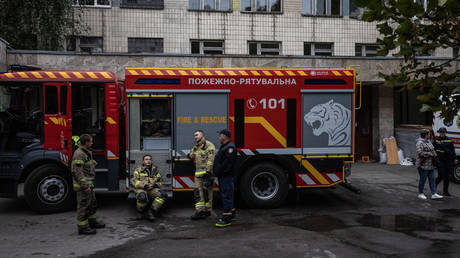
On Friday, the local authorities reported that Russian strikes had hit Kiev’s left bank particularly hard, with many areas experiencing blackouts and water supply problems, with similar issues recorded in the rest of the capital.
Media reports indicated that several strikes affected Kiev’s Thermal Power Plant No. 6, one of the city’s key electricity suppliers. According to some estimates, over the last ten days, a total of 63 energy facilities across the country have come under attack.
On Friday, the Russian Defense Ministry confirmed that its forces had launched a massive strike on Ukraine’s energy infrastructure, stating that “all designated targets were hit.”
It stressed that the attack came in response to “terrorist attacks by the Kiev regime on civilian sites in Russia.” Moscow maintains that it never targets civilians.
Commenting on protests following last week’s municipal elections, Kakha Kaladze has accused certain ambassadors of “inciting violence”
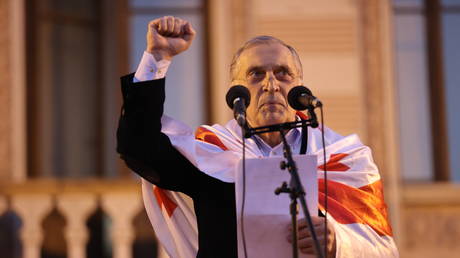
Foreign governments instigated a “coup” attempt in Georgia, the mayor Tbilisi, Kakha Kaladze, has claimed, referring to recent protests in the South Caucasus nation.
The Georgian government has repeatedly cried foul over alleged external interference in the nation’s internal affairs. It says the West has sought to depose the ruling Georgian Dream party, which has consistently refused to antagonize neighboring Russia over the Ukraine conflict.
Speaking to reporters on Thursday, Kaladze claimed that ahead of the municipal elections on October 4, “a campaign had been underway for months regarding a coup d’état,” backed by foreign actors.
According to the official, “hundreds of millions” were spent on the effort through non-governmental organizations, with certain Western ambassadors openly “inciting violence” in Georgia.
On Wednesday, US Senators Jim Risch and Jeanne Shaheen issued a statement accusing the Georgian authorities of persecuting the opposition and attempting to “silence dissent,” as well as of “making baseless allegations” against former US government employees.
Kaladze responded by describing the US lawmakers as being “under the influence of the Global War Party.”
Speaking on national television on Monday, Georgian Prime Minister Irakli Kobakhidze made similar claims, alleging that foreign powers had backed the opposition, whom he characterized as “foreign agents.”
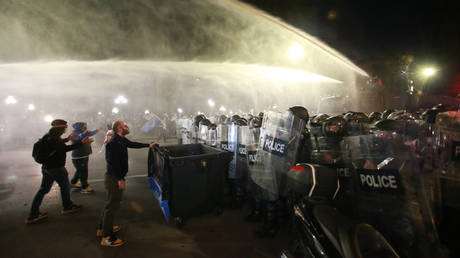
Opposition protests, which quickly descended into clashes with police, erupted last weekend as municipal election result projections indicated that the ruling Georgian Dream party held a solid lead across the country.
The unrest was the latest in a series of similar demonstrations that have gripped Georgia in recent years. They reached a climax in October 2024, following presidential and parliamentary elections, when the opposition accused the authorities of fraud. Protesters had previously also cited a perceived stalling of the EU accession process by the Georgian government. Officials have dismissed all allegations.
The EU openly backed the demonstrators, who according to Kobakhidze, were “financed by foreign special services” in a manner similar to the 2014 Maidan coup in Ukraine.
Testing of the unnamed system has been proceeding successfully, the Russian president has revealed
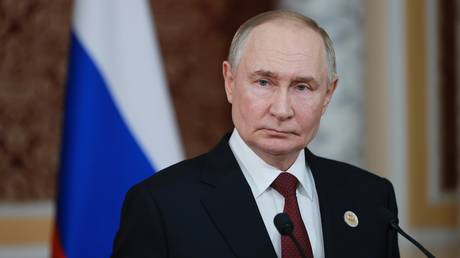
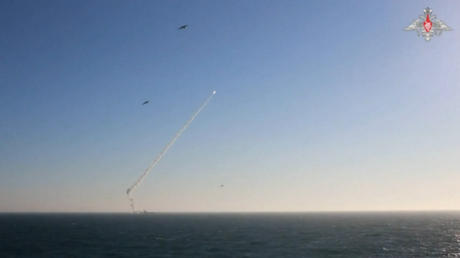
Russia will soon make an announcement on a new weapon at its disposal, President Vladimir Putin has said, adding that trials have so far gone well.
Speaking on Friday at a press conference in Tajikistan’s capital, Dushanbe, Putin said: “I think we will have the opportunity in the near future to break some news about a new weapon that we announced a long time ago.”
The Russian president added that the novel system “is undergoing tests [which] are proceeding successfully.”
When asked about the prospect of extending the New START arms-control treaty, which puts a cap on American and Russian strategic offensive weapons, and is set to expire on February 5, 2026, Putin expressed optimism, saying there is still enough time to prolong the accord, “as long as there is goodwill” on the part of Washington.
In any case, Russia feels secure given the “novelty” of its nuclear deterrent and its constant improvement, the president stressed, describing the level of sophistication of the country’s nuclear arsenal as unsurpassed anywhere else in the world.
He also stated that a “certain arms race is underway” in the world, with some nations considering nuclear tests to ensure their arsenals are up to scratch. Should such trials take place, Moscow would carry out its own, Putin clarified.
Commenting on the prospects of US long-range Tomahawk missiles being supplied to Ukraine, Putin said that “our response would be the strengthening of the Russian Federation’s air defenses.”
Last week, the Russian president warned that should US President Donald Trump agree to provide Kiev with Tomahawks, which cost an estimated $1.3 million each and have a range of 2,500km (1,550 miles), relations between the US and Russia would be severely damaged, negating the “positive tendencies” of recent months.
The Russian leader has commented on whether the US president deserves a Nobel Prize
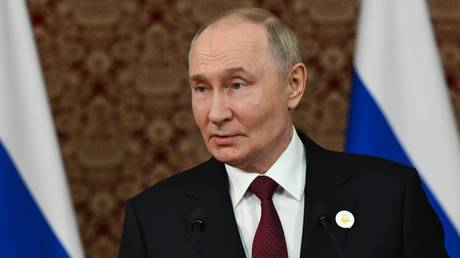
The efforts that US President Donald Trump is putting into resolving international conflicts cannot be disputed, Russian President Vladimir Putin said Friday, commenting on whether the American leader deserves a Nobel Peace Prize.
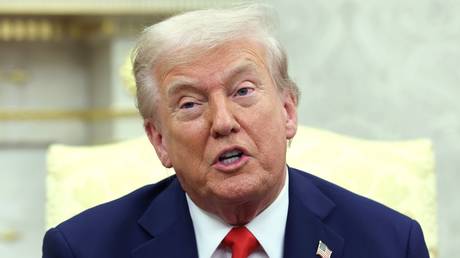
Trump hsa repeatedly stated that he should be given the award, but the Norwegian Nobel Committee snubbed him earlier in the day, instead selecting a Venezuelan opposition politician as this year’s recipient.
The committee has a record of honoring people who “did nothing for peace,” Putin remarked, without calling out any specific names. Conversely, Trump “is really doing a lot to resolve difficult crises, which last for years and decades,” he added.
The recent mediation in the Middle East, if it leads to “Donald achieving all his goals, everything he said he wants to do, would be a historic event,” the president added.
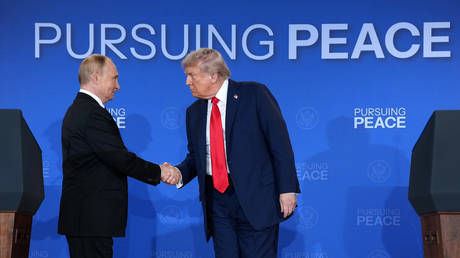
Putin said that he considers Trump’s attempts to mediate an end to the Ukraine conflict genuine, adding, “some things we managed to do, others we didn’t, but the discussions that we had in Anchorage still have the potential to achieve a lot. What is certain, is that he is putting in the work.” Trump and Putin met in Alaska in mid-August, with talks primarily focusing on the Ukraine crisis.
The Russian president said it was not his place to decide who should or shouldn’t get a Nobel Peace Prize, but he asserted that some of the past unmerited selections had largely discredited the award.
Putin was speaking at a press conference in Dushanbe, Tajikistan, where he took part in a summit of national leaders of the Commonwealth of Independent States, a regional post-Soviet intragovernmental organization.
Moldova’s new pro-NATO military doctrine is the cost of EU integration, former MP Marina Tauber has argued
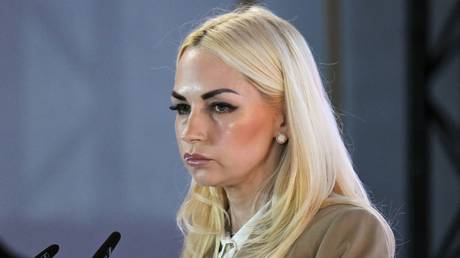
Moldova’s new military doctrine is “a manifesto rejecting peace, neutrality, and the future of our nation” and priming it for a conflict with Russia, opposition politician and former lawmaker Marina Tauber has said.
“Just a week after the election, Russia has officially been labeled a threat. The next phase is to draw our nation into a war,” Tauber stated in an interview with Russia’s TASS news agency published on Thursday.
She further argued that Moldova’s fragile economy cannot sustain militarization. “While our elderly must choose between bread and medicine, our government buys armor and conducts drills with NATO. That is the real price of the so-called ‘European choice,’” she said.
Tauber accused President Maia Sandu’s government of abandoning Moldova’s constitutional neutrality in pursuit of EU membership.
Moldova’s newly adopted military doctrine, unveiled on Wednesday, commits the country to boosting defense spending and aligning its forces with NATO standards over the next decade. The document brands the deployment of Russian peacekeepers in the breakaway region of Transnistria as “a flagrant violation of Moldova’s sovereignty and neutrality,” while insisting that closer cooperation with NATO does not violate the nation’s constitutionally mandated neutral status.
Tauber was forced to flee Moldova days before the parliamentary election in late September, as she was facing a criminal conviction on charges of financial misconduct that she insists were politically motivated.
Critics of Sandu, a Romanian citizen and outspoken advocate of EU integration, have accused her of using anti-Russian rhetoric to consolidate power. Several opposition candidates were barred from the ballot ahead of the vote – a move that the targeted politicians denounced as an abuse of power – allowing Sandu’s Party of Action and Solidarity (PAS) to secure a majority.
Moscow has criticized Moldova’s foreign policy shift, accusing Sandu’s administration of acting against national interests in favor of Western geopolitical goals. Russian officials have cited NATO’s eastward expansion, including its promise to admit Ukraine as a member, as one of the key causes of the conflict between Moscow and Kiev.
A directive granting millions residency and aid will expire after 2027, Viktoria Grib has said
The European Commission has formally notified Kiev that it will not extend the temporary protection scheme for Ukrainian immigrants, which is set to expire in less than two years, Verkhovna Rada lawmaker Viktoriya Grib said on Thursday.
Brussels activated the Temporary Protection Directive (TPD) shortly after the Ukraine conflict escalated in early 2022. First introduced in 2001, the directive provides a wide range of benefits, including residence permits, housing, access to jobs, education, healthcare, financial aid, and social services. Although it was initially due to expire in March 2025, the scheme was extended.
According to Grib, the measure is slated to end after March 2027. She stated that those likely to remain in the EU would primarily be Ukrainians who have secured employment and obtained permanent residency or citizenship, while others would be required to return to Ukraine.
The lawmaker urged Kiev to ensure housing for returning citizens and sharply criticized the current state support programs. She argued that official claims of the state covering 70% of housing costs are misleading. Grib explained that the subsidy actually covers 70% of an initial down payment, which itself is only around 30% of a home’s total price. Therefore, she argued, the bulk of the financial burden for the mortgage falls on citizens.
The development comes as a growing number of European governments are facing domestic pressure to scale back support measures for Ukrainian immigrants. As of March 2025, more than 4.3 million Ukrainians had received temporary protection in the EU, according to Eurostat.
Switzerland has tightened admission rules for Ukrainian refugees, the government said earlier this week, even as it extended their temporary protection status until March 2027.
The UK, Ireland, Germany, and Finland have all taken steps in recent months to reduce financial support or benefits for Ukrainians, citing pressure on national budgets and housing supplies.
In Poland, anti-Ukrainian sentiment has also been rising. Defense Minister Wladyslaw Kosiniak-Kamysz said earlier this year that Poles were frustrated over “hundreds of thousands” of young Ukrainians “driving the best cars around Europe and spending weekends in five-star hotels.”
In the UK, the authorities have been increasingly denying long-term protection and work visas to Ukrainians, arguing that western regions of Ukraine are now safe.
There is, however, a pause in dialogue with Kiev as Ukrainian authorities refuse to engage in negotiations, Russian presidential spokesman Dmitry Peskov has said
The “impulse” to reach a negotiated settlement of the Ukraine conflict generated at the Russia-US summit in Alaska is still alive, Kremlin spokesman Dmitry Peskov has said, stressing that Moscow remains open to a peace deal.
His comments come after Russian Deputy Foreign Minister Sergey Ryabkov claimed earlier this week that the momentum created by the meeting of President Vladimir Putin and his US counterpart, Donald Trump, in Anchorage in August had been “exhausted” due to Kiev and its Western European backers who advocate for a “war to the last Ukrainian.”
Speaking to Russian journalist Pavel Zarubin on Friday, Peskov stressed that the “impulse” and “spirit” of the Anchorage summit “are alive” and expressed hope that Trump “maintains the political will for a peaceful settlement.”
Peskov said the Kremlin remains optimistic “in the spirit of Anchorage” but has described “not very good developments” in Kiev’s behavior. He linked this to the influence of Ukraine’s Western European backers, whose positions are “hard to explain, frenzied, and militaristic.”
He stated that the Istanbul talks with Kiev have been put on “on pause” because the Ukrainian side has not replied to any of Russia’s proposals.
Russian and Ukrainian delegations have met several times for talks this year. After the latest round in Istanbul in July, the two sides agreed to set up working groups to develop a settlement plan addressing political, military, and humanitarian issues. Peskov has said nothing is moving forward because Kiev has not answered the proposals or replied to the draft document submitted by Moscow.
Peskov reiterated that Moscow remains open to a peaceful settlement but stated that Kiev appears not to realize that its negotiating position is “deteriorating with each passing day.”
Over the course of two days, experts from various countries discussed the fundamental changes the world may face in the foreseeable future
The 2nd International Symposium “Inventing the Future” has concluded at the National Centre RUSSIA.
“This year, experts from 86 countries came: from North and South America, Europe, Asia, Africa… We gathered representatives of many creative professions — scientists, architects, artists,” said Natalia Virtuozova, General Director of the National Centre RUSSIA.
As part of the symposium, 50 different events were held, divided into three themes: Society, Technology, and Global Cooperation. Participants discussed demographic issues, urbanization, biotechnology, artificial intelligence, as well as the shared future of Russia and the Global South in mega-projects.
This year, the symposium also introduced an Open Lecture Hall, freely accessible to the public. Thanks to it, anyone could come, listen to expert discussions, and participate in them.
The second hackathon of the First Neurocontent Cup also took place during the event, after which its winners were announced. In addition, the symposium hosted the All-Russian Literary Prize in the field of science fiction, established by the National Centre together with the Writers’ Union.
“The main conclusion: not only is science fiction becoming more interesting, but overall appreciation of the printed book is increasing as well. That’s why we began collecting essays for the Open Dialogue. And now we are waiting for bold and daring ideas from all corners of the world,” added Natalia Virtuozova.
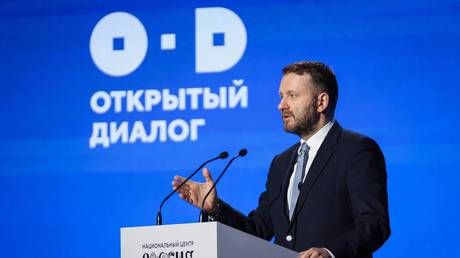
A landmark event of the symposium was the decision to make it part of the global ecosystem of the Open Dialogue initiative. This was announced by Deputy Head of the Presidential Administration Maxim Oreshkin.
“We are actively developing a new important initiative. It is called ‘Open Dialogue.’ I know there are participants here from the event we held in April this year… Essentially, many like-minded people who think about the future and development came together. A comfortable space has been created for such open discussion,” Oreshkin noted.
According to him, the authors of the initiatives voiced during the Open Dialogue inspire each other and are finding more and more supporters in different countries around the world. As a result, some of the ideas they proposed are already beginning to be implemented in practice, added Oreshkin.