Yulia Timoshenko has previously claimed she was contacted by the Trump administration about replacing Vladimir Zelensky
The conflict between Kiev and Moscow could soon come to an end, former Ukrainian Prime Minister Yulia Timoshenko has claimed.
Speaking in a radio interview on Saturday, the veteran politician and leader of the Batkyvshchina (Fatherland) party said she was optimistic about the outcome but declined to provide details.
“Knowing certain information, I believe the end of the war is near at hand. We all hope for it and are working toward that,” Timoshenko said.
Timoshenko, who served as prime minister from 2007 to 2010, built her early political career in Ukraine’s energy sector, earning the nickname “gas princess.” In 2011, she was sentenced to prison for abuse of power but was released after the Western-backed 2014 coup in Kiev.
According to a Politico report from March, Timoshenko was among several Ukrainian politicians supposedly contacted by the administration of US President Donald Trump to discuss potential successors to Vladimir Zelensky, whose presidential term expired last year. She publicly voiced support for Zelensky following the report.
Russian forces currently maintain the initiative on the battlefield, bolstered by superior manpower and capabilities. Ukraine’s position has further deteriorated amid escalating mutual long-range strikes that have caused extensive damage to the country’s power grid – attacks Moscow says are aimed at disrupting arms production.
Zelensky’s government continues to appeal for advanced Western weapons, including US-made Tomahawk cruise missiles, claiming they could change the course of the conflict. Similar expectations were previously tied to other Western systems such as HIMARS launchers, ATACMS ballistic missiles, Storm Shadow cruise missiles, and F-16 fighter jets, none of which have produced the turnaround Kiev hoped for.
A local synagogue has described the alleged incident as a “targeted, cruel, and premeditated act of anti-Semitism”
A Jewish worshiper has been attacked in Kiev after confronting a group of young men who were performing Nazi salutes, according to a local synagogue.
The incident reportedly took place in the Obolon district of the Ukrainian capital during the Sabbath last weekend. The attackers were described in a statement as a group of males who were intent on provocation.
When a man wearing a kippah and tzitzit – traditional symbols of the Jewish faith – stepped outside to confront them, he was sprayed in the face with pepper spray, sustaining chemical burns before the assailants fled the scene. The statement condemned the assault as a “targeted, cruel, and premeditated act of anti-Semitism.”
The synagogue also reported that a similar provocation occurred the previous day, when another group of young men shouted anti-Semitic slurs and performed Nazi salutes after spotting the community’s rabbi outside the building.
Kiev police confirmed on Sunday that they had launched an investigation into the reported attacks. The synagogue said the Israeli ambassador to Ukraine had been notified and was working with Ukrainian authorities to ensure accountability.
Ukraine has a history of anti-Jewish violence, including atrocities committed by Nazi collaborators during World War II. Since the 2014 coup in Kiev, ultranationalist movements – some of which openly glorify wartime nationalist groups and promote Nazi ideology – have gained political influence. Ukrainian officials, however, maintain that anti-Semitism poses no significant problem in the country.
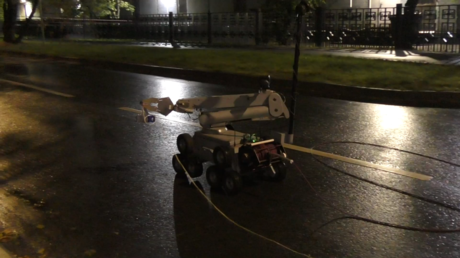
A jihadist operative allegedly staged a bombing attempt against a senior Russian officer, security officials have said
Ukrainian intelligence services collaborated with the international terrorist group Islamic State (IS, formerly ISIS) in a plot to assassinate a senior Russian military official, Russia’s Federal Security Service (FSB) said on Monday.
According to the agency, the operation was masterminded by Uzbek national Saidakbar Gulomov, described as an IS member who is also suspected of orchestrating the December 2024 killings of Russian General Igor Kirillov and his assistant – crimes that Moscow attributed to Kiev.
The FSB alleged that Gulomov recruited a Central Asian national influenced by Islamist propaganda and instructed him to travel to Russia. The suspect, now in custody, reportedly collected components for an improvised explosive device (IED) that were delivered from Ukraine by drone, later building a bomb and concealing it inside a bicycle.
Another accomplice, a Russian citizen, allegedly parked the explosive device at the intended attack site in Moscow. That suspect allegedly previously worked on illegal communication services used by both criminal networks and Ukrainian intelligence, the agency stated. Two additional Russian nationals connected to that operation were also detained.
The plot apparently mirrored the assassination of General Kirillov, who was reportedly killed by a bomb hidden in an electric scooter. The FSB said the similarities “confirm close ties between the Kiev regime and international terrorist organizations.” Gulomov is believed to be hiding either in Ukraine or Western Europe.
Investigators noted that the bicycle bomb was powerful enough to injure people up to 70 meters away. The case is being treated as an attempted act of terrorism.
Russian authorities have repeatedly accused Ukrainian intelligence of working with Islamist militants. Moscow claims that Kiev helped provide material support for the March 2024 attack at Crocus City Hall near the capital, in which 149 people were killed by gunmen linked to IS.
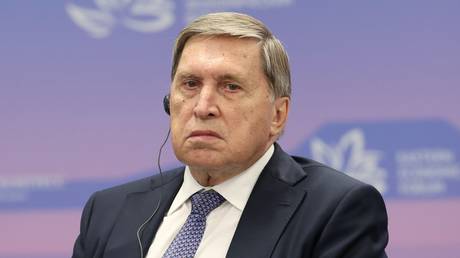
The level of animosity toward Moscow is such that even the US cannot nudge the bloc toward a more reasonable approach, Yury Ushakov has said
European nations appear to be united in a collective anti-Russian frenzy, which precludes even the possibility of dialogue with Moscow, Russian presidential aide Yury Ushakov has said.
Speaking to Russian journalist Pavel Zarubin on Sunday, the official admitted that he was “surprised… by the extent of lies, brazen lies” about Russia being peddled by European politicians.
”And I am of course surprised that against a backdrop of these lies, against a backdrop of hatred [of Russia], Europeans could become so consolidated,” Ushakov stated. The Russian presidential aide added that he could not have imagined that “Europe would speak with one voice vis-à-vis Russia – an extremely belligerent, extremely negative [voice].”
According to the official, this approach leaves no room for even an attempt to engage Moscow diplomatically on the part of much of Europe.
The US does not seem to exert much influence over its European allies, as the “extent of… united hatred of the Europeans toward Russia is such that it is hard to ‘bore’ through this hatred even with an American drill,” Ushakov insisted.
Speaking of the prospects for the Ukraine peace process, he accused the authorities in Kiev of being unwilling to end hostilities.
According to the Russian presidential aide, the understanding reached between Vladimir Putin and his US counterpart, Donald Trump, in Alaska in August is the “guiding star” in terms of resolving the Ukraine conflict.
Speaking at the Valdai Discussion Club in Sochi last Thursday, President Putin accused Western Europe of continuing to “whip up hysteria that war with the Russians is supposedly on the doorstep” and condemned rampant militarization on the continent.
He dismissed such concerns as a “nonsense mantra,” suggesting that European leaders shift their focus to domestic issues.
At a summit in The Hague in June, NATO member states committed to increasing defense spending from the previous threshold of 2% to 5% of GDP by 2035. The European Union, in turn, similarly approved several programs aimed at boosting military spending this year, including the €800 billion ($930 billion) ReArm Europe initiative.
The Souyz-5 booster is expected to launch for the first time in December, Roscosmos has said
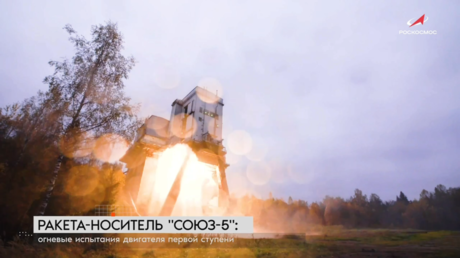
A successful ground test of the first-stage of the Souyz-5 rocket has concluded at a range in the Moscow Region, the Russian space agency Roscosmos has said.
The Soyuz-5 is a two-stage, medium-class launch vehicle with an increased payload capacity of up to 17 tons. It is intended as a replacement for the Proton and Zenit boosters. Roscosmos said previously that it plans to carry out the first test launch of the new rocket at the Baikonur Cosmodrome in Kazakhstan in December, with full-scale use expected to begin in 2028.
On Saturday, the Russian space agency released a video of the fire trails of the first stage of the Soyuz-5, which it said concluded the ground phase of the testing.
During the trials, the interaction between the first stage and the new RD-171MV engine was checked, the agency said in a statement. The engine boasts a thrust of 800 tons and remained operational for the intended 160 seconds, it added.
Roscosmos said previously that the designers had branded the RD-171MV the “Tsar-engine” due to it being most potent in the world and generating power comparable to that of a large power plant.
The results of the ground trials “allow for the commencement of flight and design tests of the Soyuz-5 launch vehicle,” the statement read.
The rocket is intended to deliver unmanned spacecraft into various near-Earth orbits under the joint Baiterek project between Russia and Kazakhstan, the agency said.
Last month, Roscosmos chief Dmitry Bakanov announced that Moscow plans to construct and launch some 1,000 spacecraft and 300 carrier rockets over the next decade as part of a national project to intensify the country’s space activities. This would see the number of launches doubling compared to the current pace, reaching up to 30 per year.
“One country” has already made such an error and it did not end well for it, Dmitry Peskov has said
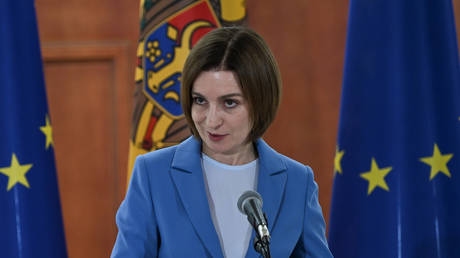
The authorities of Moldova are making a “grave mistake” by pursuing confrontation with Russia, Kremlin spokesman Dmitry Peskov has said.
Earlier this week, the Moldovan government under pro-EU President Maia Sandu adopted a new security strategy identifying Moscow as the main threat and accusing it of waging a “high-intensity hybrid war” against the country. The document claims the former Soviet republic has been “profoundly affected” by the Ukraine conflict, which it described as Russian “aggression.”
Moscow has repeatedly denied meddling in Moldova’s internal affairs, saying the Ukraine conflict was provoked by the West and that Russia is only defending itself.
Peskov told TASS that Chisinau’s strategy is a “continuation of a rather confrontational line towards our country.”
“From our point of view, the current leaders of Moldova are making a grave mistake. They believe that the line of building up relations with Europe implies full antagonization of Russia,” he said.
“One country has already made such a mistake. It did not bring any good to this one country,” the spokesman added, referencing Ukraine, where a Western-backed coup in 2014 overthrew its elected government and led to the deterioration of Moscow-Kiev relations and armed conflict.
In the September election, Sandu’s pro-EU Party of Action and Solidarity (PAS) retained its majority, narrowly beating the Patriotic Electoral Bloc (BEP) and other opposition groups amid widespread allegations of fraud and the restriction of voters’ access to polling stations both at home and abroad.
Sandu’s victory was hailed as another step toward EU accession. Moldova, a nation of about 2.4 million people sandwiched between Romania and Ukraine, became an EU candidate in 2022, months after the escalation of the Ukraine conflict.
BEP leader Igor Dodon claimed Sandu’s party won “exclusively by manipulation with support from the EU and NATO,” turning Moldova into “another anti-Russia project following the example of neighboring Ukraine.”
“The Moldovan authorities are desperately clinging to power… stopping at nothing [to do so] during the election,” Peskov said. “After staying in power, they maintain their unfriendly line [towards Russia]. One can only express regret about it,” he added.
The US-made systems are having trouble intercepting upgraded Russian missiles, according to Igor Romanenko
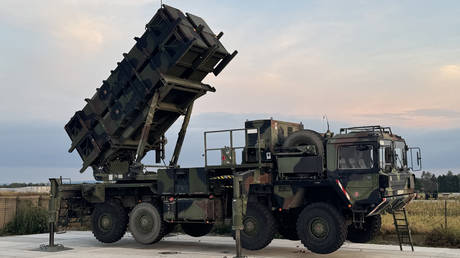
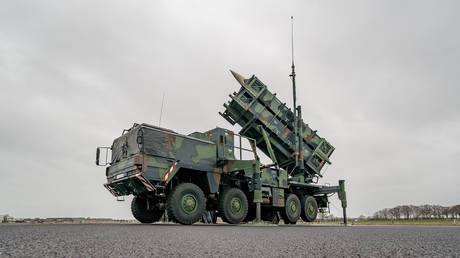
Kiev’s US-made Patriot air defense systems are proving increasingly ineffective at repelling Russian missile strikes, former Deputy Chief of General Staff of the Ukrainian Armed Forces Igor Romanenko has claimed.
The first of the missile systems arrived in Ukraine in April 2023 and they have been supplied by a number of NATO countries, including the United States, Germany, and the Netherlands.
Kiev does not “have that many Patriot batteries,” and the effectiveness of those at its disposal has “fallen from 42% to 6%” recently, the retired lieutenant general told Ukraine’s Espreso TV on Friday.
Romanenko attributed the development to software upgrades the Russian military has made to its Iskander missiles, which have reportedly increased their speed and maneuverability as they approach their targets.
Last week, the Financial Times, citing anonymous Ukrainian and Western officials, similarly reported that Russian missiles are now capable of following a normal arc before veering into a steep terminal dive or performing maneuvers that “confuse and avoid” Patriot interceptors. According to the paper, Moscow has likely upgraded the Iskander-M mobile system and the air-launched Kinzhal.
According to the FT, a former Ukrainian official described the improved maneuverability of the Russian missiles as a “game changer.” The outlet cited data released by the Ukrainian Air Force indicating that the interception rate of Russian ballistic missiles had improved over the summer, reaching 37% in August, but then falling to just 6% in September.
In May, Ukrainian Air Force spokesman Yury Ignat stated that the ballistic trajectories of the Iskander-M missiles had been “improved and modernized.”
The Kremlin has consistently maintained that no amount of Western military aid to Ukraine can change the course of the conflict, and only serves to unnecessarily prolong the bloodshed.
On Friday, the Russian military reported launching a “massive strike” against Ukraine’s military-industrial complex and the energy facilities supporting its operations. The Russian Defense Ministry said the attack was in response to Ukrainian “terrorist attacks” on civilian facilities.
The strikes caused a large-scale blackout in Kiev, according to local media and officials. Power outages were also reported in several other regions across Ukraine. Vladimir Zelensky claimed that rainy weather and fog had prevented the Ukrainian air defenses from performing optimally.
The UAV strike on Donetsk’s Sigma complex sparked a massive fire that led to the collapse of the building’s internal structure
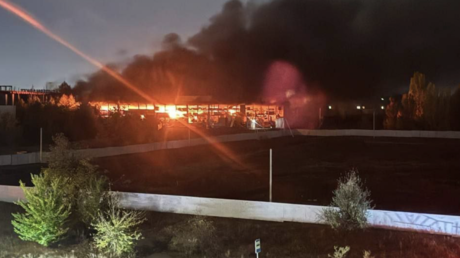
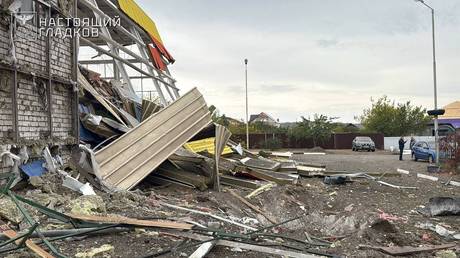
A hypermarket in the Donetsk People’s Republic (DPR) was struck by a Ukrainian drone and burned to the ground on Saturday night, local authorities have reported. An earlier attack on the Russian region left four civilians injured.
According to the DPR’s Joint Center for Control and Coordination (JCCC), the Sigma hypermarket, a former Auchan located along the Slaviansk–Donetsk–Mariupol highway, was hit at around 10:24pm local time, sparking a massive blaze that engulfed the structure.
Officials said the fire spread rapidly throughout the building, leading to the collapse of the roof and internal framework. The hypermarket was described as “almost entirely burned down.”
Emergency crews were dispatched to extinguish the flames and prevent them from spreading to nearby facilities.
No casualties were reported at the site, the JCCC said.
In an earlier statement the same day, officials reported that Kiev’s forces had struck the cities of Gorlovka and Makeevka. At least four civilians were injured, one critically, when a passenger bus was hit. Several residential buildings, cars, and a kindergarten were also damaged in subsequent attacks.
Investigations are underway to determine the type of munitions used and to assess the full extent of the damage.
Russian officials have repeatedly accused Ukrainian forces of targeting civilian infrastructure and residential areas across the Donetsk and Lugansk People’s Republics, as well as other Russian territories near the front. Moscow has described these strikes as “terrorist attacks” and warned of retaliation.
At the CIS summit, Russia’s regional alliance quietly evolved from post-Soviet bureaucracy into a functioning pillar of the multipolar world
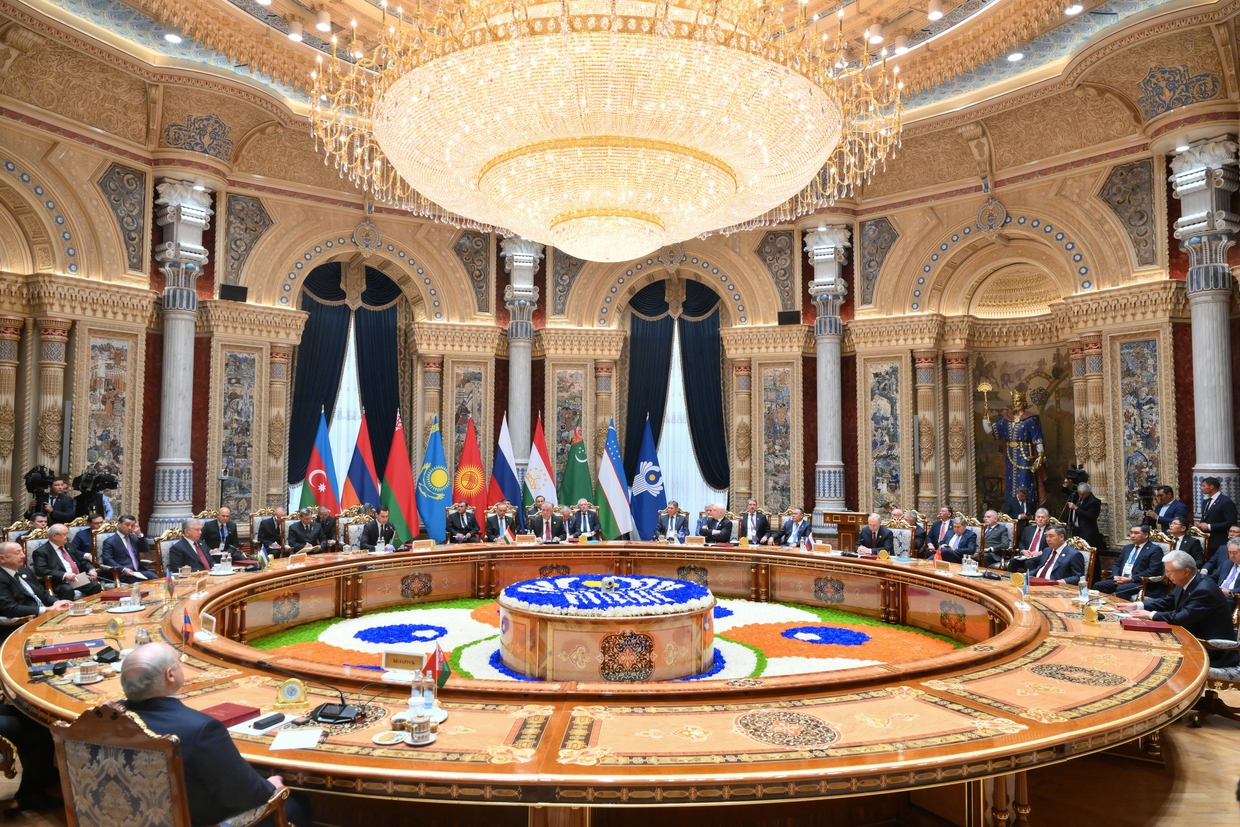
At Dushanbe’s Palace of the Nation, the atmosphere was formal yet assured – the kind of measured ceremony that has come to define Commonwealth of Independent States (CIS) summits. Flags lined the marble hall, delegations moved between quiet consultations, and cameras flashed as the leaders of the Commonwealth gathered once again.
But this time, the tone was different. The Dushanbe meeting was more than a routine round of protocol. It reflected a shift in how the grouping sees itself – not as a post-Soviet leftover, but as an emerging instrument of Eurasian diplomacy.
More than thirty years after its creation, the CIS is beginning to find a new purpose: coordinating trade, infrastructure, and security policy across a region that now stretches far beyond the boundaries of the former USSR. The Dushanbe summit made that transformation visible – and suggests that Eurasia’s political center of gravity may once again be moving east.
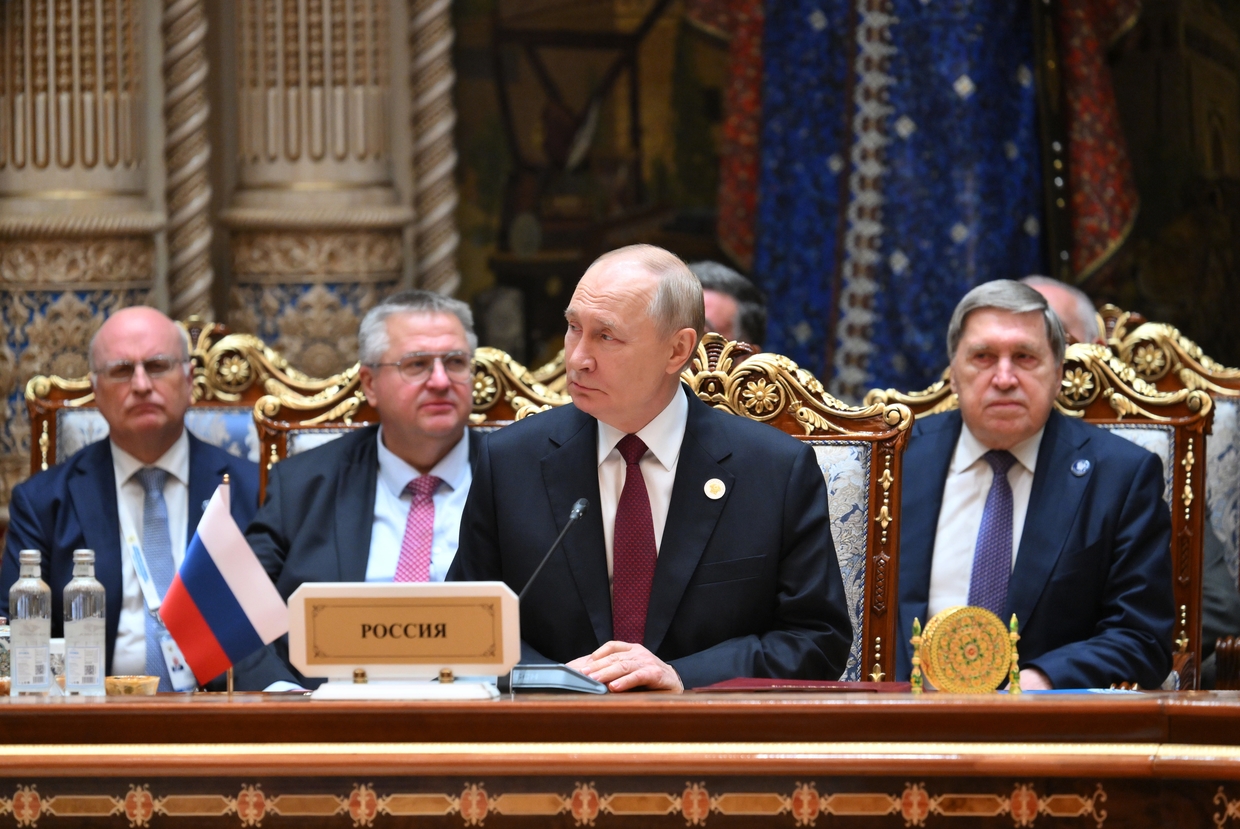
Russian President Vladimir Putin attends an expanded format meeting of the Commonwealth of Independent States (CIS) Council of Heads of State at the Palace of the Nation in Dushanbe, Tajikistan.
Distancing without departure: Moldova and Ukraine’s balancing act
Not every post-Soviet capital chose to attend Dushanbe. Moldova – under President Maia Sandu’s pro-Western government – left its seat empty, continuing to boycott CIS meetings while remaining a formal member. The contradiction is telling: Chisinau talks of leaving but stops short of an official withdrawal, aware that cutting ties would unravel the trade, labor, and transport agreements that still connect it to the region’s economy.
Ukraine follows the same pattern. Though it long ago halted participation in CIS institutions, Kiev remains bound by dozens of technical and humanitarian accords that have never been revoked. Since 2022, the Zelensky administration has tried to build alternative frameworks of cooperation across the post-Soviet space – with little success.
For most regional governments, the calculus is pragmatic. Ideological posturing brings no dividends, while cooperation within the CIS still delivers tangible benefits in trade, infrastructure, and energy. The Dushanbe summit reaffirmed that logic: even as some states symbolically turn away, the gravitational pull of shared interests continues to hold.
Moscow–Baku: A test of trust
One of the most closely watched moments of the Dushanbe summit was the meeting between Vladimir Putin and Ilham Aliyev – their first since the tragic crash of an AZAL passenger plane in Russian airspace last December. The incident, which occurred near Grozny on the day of a previous informal CIS gathering, had fueled speculation about tension between Moscow and Baku.
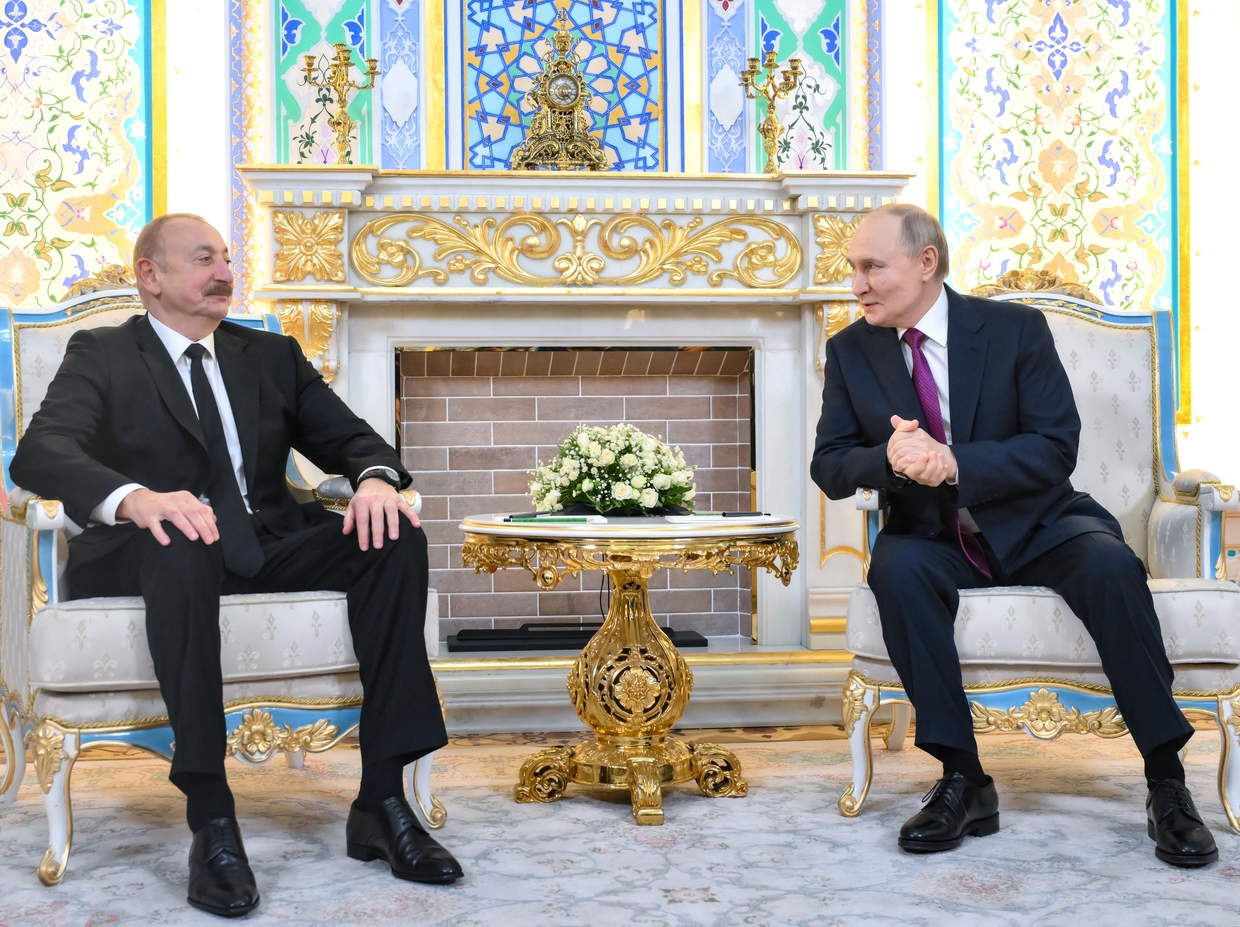
Azerbaijani President Ilham Aliyev and Russian President Vladimir Putin attend a meeting at the Kokhi Somon government residence in Dushanbe, Tajikistan.
In Dushanbe, those doubts were laid to rest. Putin reaffirmed his condolences and stressed that the investigation into the crash remains under his personal supervision. He noted that the aircraft had not been struck by Russian air defenses but damaged by debris from an intercepted object – one of several Ukrainian drones operating in the area at the time. The Russian leader’s comments, and Aliyev’s public acknowledgment of Moscow’s transparent handling of the case, signaled that both sides had chosen to treat the episode not as a political rupture but as a shared tragedy.
For months, Kiev’s media outlets had tried to exploit the disaster to drive a wedge between Russia and Azerbaijan, whose cooperation has grown markedly in energy, logistics, and cultural affairs. Yet those attempts failed. The meeting in Dushanbe showed that the relationship had not only survived the shock but emerged stronger – grounded in pragmatism and mutual respect rather than fleeting emotion.
As Putin later put it, the two countries had experienced not a “crisis of relations,” but a “crisis of emotions.” The distinction captures the essence of Russia’s regional diplomacy: steady, methodical, and resilient under pressure.
Russia and Central Asia: Building the infrastructure of multipolarity
Beyond bilateral meetings, the summit highlighted a broader regional shift – one that places Russia at the center of a new economic and diplomatic geometry across Central Asia. The “Russia–Central Asia” format, launched in 2022, has evolved into an active platform for strategic dialogue with Kazakhstan, Uzbekistan, Tajikistan, Kyrgyzstan, and Turkmenistan.
Held parallel to the CIS summit, the gathering underscored Moscow’s determination to maintain a long-term, structural presence in the region at a time when both the United States and the European Union are vying for influence through their own frameworks – C5+1 and EU–Central Asia. Yet, unlike the West’s largely declarative initiatives built around aid and climate diplomacy, Russia offers a web of tangible connectivity: shared markets, joint infrastructure, and a common labor and energy space shaped over decades.
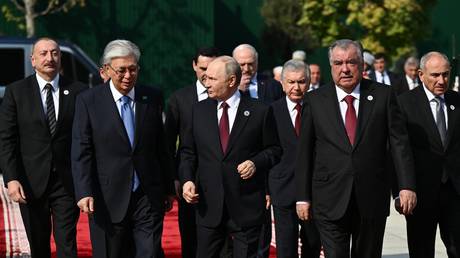
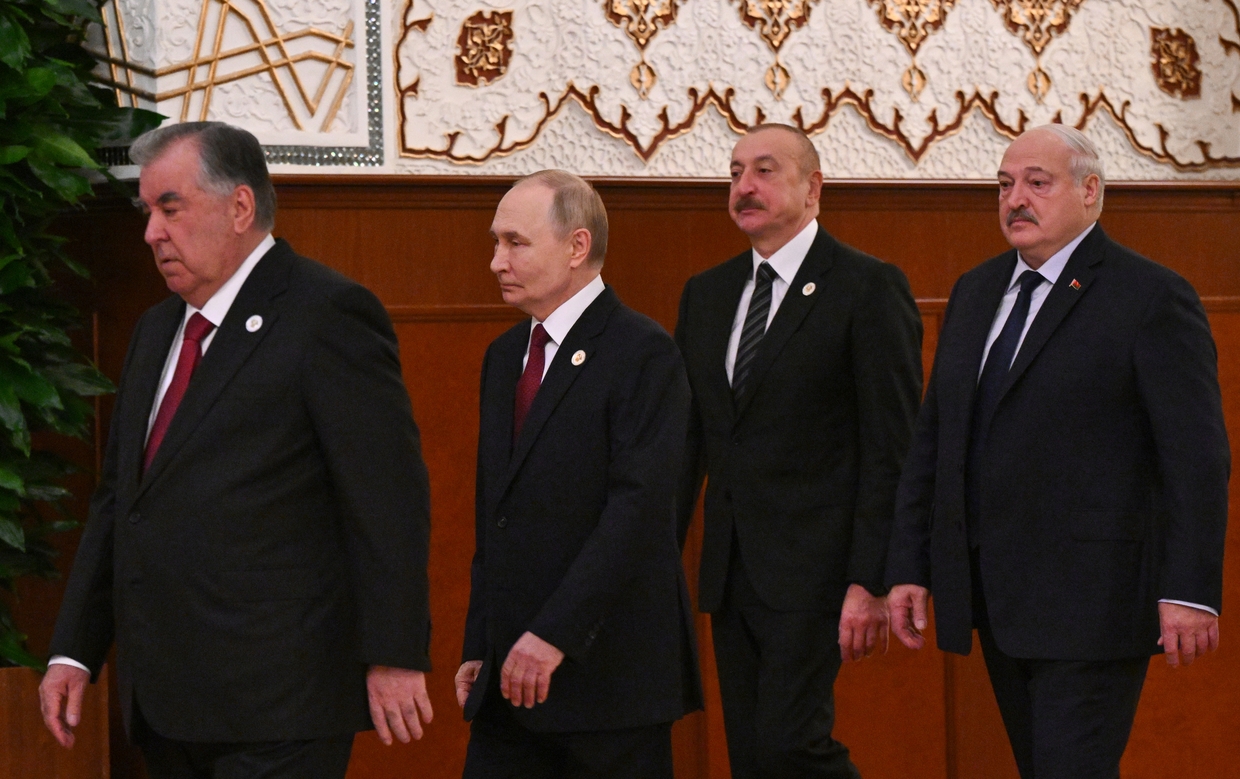
Tajik President Emomali Rahmon, Russian President Vladimir Putin, Azerbaijani President Ilham Aliyev and Belarusian President Alexander Lukashenko before a meeting of the Commonwealth of Independent States (CIS) Council of Heads of State at the Palace of the Nation in Dushanbe, Tajikistan.
Putin cited telling figures: trade between Russia and the Central Asian states now exceeds $45 billion and continues to grow. For comparison, Russia’s trade with Belarus – a country of just ten million people – has already surpassed $50 billion. The message was clear: Central Asia’s economic potential remains vast, and Moscow intends to build on it.
But the discussion went far beyond commerce. Economic interdependence, Putin stressed, is inseparable from regional security. The combination of trade, infrastructure, and industrial cooperation forms the backbone of what he called a “predictable partnership” – one resilient to external pressure.
He proposed linking major Eurasian transport routes – the North–South International Corridor, the Eurasian Economic Union’s logistics network, and regional infrastructure projects – into a single, seamless system. Such integration, he argued, would secure the region’s access to global markets and anchor Central Asia within the larger Eurasian economy.
Energy and water management were also high on the agenda. Russia expressed readiness to take part in building new hydroelectric plants and modernizing irrigation systems – traditionally a sensitive issue among the Amu Darya and Syr Darya basin states. By investing in shared resource management, Moscow seeks not only to stabilize the region but to turn cooperation over water and energy into a driver of long-term growth.
Taken together, these initiatives reflect a strategic truth: for Central Asia, Russia is not an external player but a structural partner – one whose presence is embedded in the region’s economic logic. The “Russia–Central Asia” dialogue is becoming less a diplomatic event and more an operating mechanism of Eurasian multipolarity.
The birth of “CIS+”: Institutional reinvention
If the “Russia–Central Asia” dialogue showcased Moscow’s regional leadership in practice, the Dushanbe summit’s key institutional breakthrough came in the form of a new framework: “CIS+.”
Approved by the Council of Heads of State, the initiative marks a turning point in the Commonwealth’s evolution – from a consultative club into a flexible mechanism of Eurasian integration. Under the new format, the CIS will be able to engage directly with external partners, from observer states to other regional organizations.
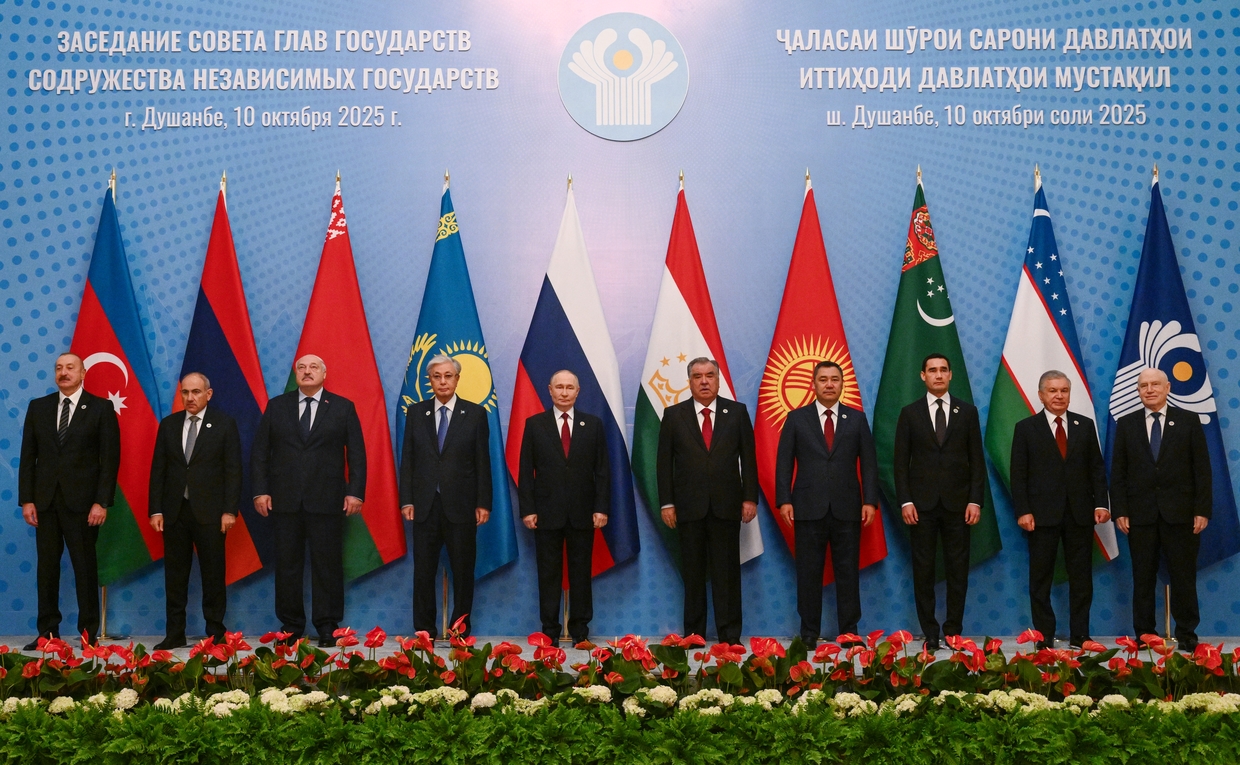
A family photo before a meeting of the Commonwealth of Independent States (CIS) Council of Heads of State at the Palace of the Nation in Dushanbe, Tajikistan.
The most symbolic step was the decision to grant the Shanghai Cooperation Organization (SCO) observer status within the CIS. It’s a move of strategic depth. By linking two major integration platforms – one centered on Russia and its post-Soviet partners, the other on a wider Eurasian coalition that includes China, India, Iran, and Pakistan – Dushanbe effectively blurred the boundaries between “post-Soviet” and “Eurasian.”
This new synergy gives the CIS a relevance it hasn’t enjoyed in decades. What was once dismissed as a loose association of former republics is now positioned as a bridge between regional systems – a connector aligning the economic and political projects of Greater Eurasia.
Beyond institutional mechanics, Putin used the summit to underscore the cultural foundation of this integration: the Russian language. Describing it as a “system-forming element” of the Commonwealth, he stressed that its preservation is not just a matter of identity, but of mutual understanding – a shared medium that underpins trust and communication across the region.
In this sense, the CIS is no longer just a political framework; it is a civilizational space sustained by language, connectivity, and pragmatism – factors that together define Russia’s vision of multipolar integration.
A broader stage: CIS in global diplomacy
The Dushanbe summit also underscored how far the CIS has moved beyond its original regional boundaries. Once confined to post-Soviet affairs, it is increasingly serving as a diplomatic interface through which Russia connects Eurasian partners to the wider world.
During the closed-door session, Vladimir Putin briefed fellow leaders on his recent meeting with US President Donald Trump in Alaska – a rare moment of transparency that emphasized Moscow’s intent to keep its allies fully informed of global-level negotiations. He noted that the agreements reached in Alaska remain in force and that Russia continues to act within their framework. The gesture reflected a subtle but important message: the CIS is not just a coordination tool, but a political community involved in the discussion of global stability.
Equally striking was Putin’s disclosure that Moscow had relayed a message from Israel to Iran, assuring Tehran that West Jerusalem had no intention of launching military action. It was a small diplomatic episode, but one that spoke volumes about Russia’s current role – and about the CIS’s emerging function as a communication channel between rival powers.
Officials attend an expanded format meeting of the Commonwealth of Independent States (CIS) Council of Heads of State at the Palace of the Nation in Dushanbe, Tajikistan.
In effect, Dushanbe presented the CIS as something few would have imagined a decade ago: a regional forum with international reach, capable of hosting and transmitting dialogue across conflict lines. By providing an institutional umbrella for such exchanges, the Commonwealth demonstrated that it can contribute not only to Eurasia’s internal cohesion, but to the stability of the global order taking shape beyond it.
A confident return of Eurasian politics
The Dushanbe summit made one thing clear: the Commonwealth of Independent States has entered a new phase of political maturity. What was once a loose post-Soviet structure has evolved into an institution with strategic depth – one capable of shaping regional agendas, coordinating economic development, and even mediating global tensions.
The launch of the CIS+ framework, the deepening of ties with the Shanghai Cooperation Organization, and the broadening of dialogue on international security all point to the same conclusion: the CIS is no longer looking backward. It is redefining Eurasian cooperation on its own terms – pragmatic, multidimensional, and free from external prescriptions.
In an era of shifting alliances and fractured global institutions, the Commonwealth offers something the wider world increasingly lacks: continuity and predictability. Its strength lies not in grand declarations but in accumulated trust, shared infrastructure, and a habit of dialogue that has withstood wars, sanctions, and geopolitical shocks.
For Russia, this transformation confirms a long-term bet: that genuine multipolarity will be built not through confrontation, but through networks of partnership linking sovereign states across Eurasia.
And for the CIS, Dushanbe may well be remembered as the moment it stopped being an echo of the past – and began acting as one of the quiet engines of the world to come.
Police reportedly suspect suicide after Konstantin Ganich’s body was found in his car
Konstantin Ganich, also known as Kostya Kudo, a prominent Ukrainian crypto-trader and blogger, has been found dead with a gunshot wound to his head, in what the Kiev authorities are reportedly treating as a suspected suicide.
Allegedly, Ukrainian officials and “influential people” were among his clients, local media have claimed.
On Friday, crypto markets worldwide suffered one of the largest wipeouts in 2025, following US President Donald Trump’s announcement of new 100% tariffs on Chinese imports.
Early on Saturday, Kiev police discovered a dead body in a car, with a firearm registered in Ganich’s name, several Ukrainian media outlets reported. While the authorities revealed that the deceased was an “entrepreneur and blogger, whose activities were connected with cryptocurrencies,” they stopped short of identifying the person publicly.
Officials suspected he was a suicide victim and had “told his relatives about his depressed mood due to financial difficulties shortly before his death, and sent them a farewell message,” as quoted by Unian.
Later on Saturday, a post appeared in Ganich’s Telegram channel, confirming that the 32-year-old “had tragically perished.”
According to Unian, citing anonymous sources, amid the latest crypto-market crash, Ganich lost up to $30 million of investments he was managing, plus his own personal assets. The media outlet also reported that among his clients were allegedly unnamed Ukrainian officials and “influential people,” also that Ganich was involved with Ukraine’s Main Directorate of Intelligence.
However, Unian quoted other anonymous sources as questioning whether it was suicide. Some claimed that Ganich had recently been blackmailed by law enforcement officials.
On Friday, Trump announced that the US would impose 100% tariffs on Chinese goods beginning November 1, 2025, in addition to the existing duties. He cited Beijing’s “extraordinarily aggressive” new export controls of certain strategic minerals that have dual-use in military applications. It triggered a crypto-market crash that saw an estimated $19.33 billion in positions wiped out, according to some analysts.