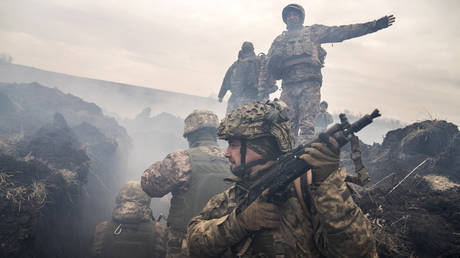
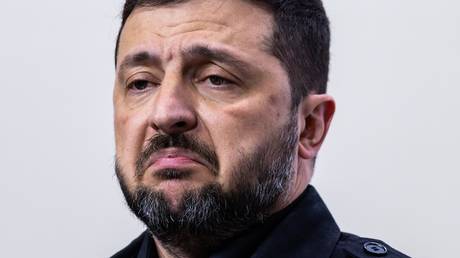
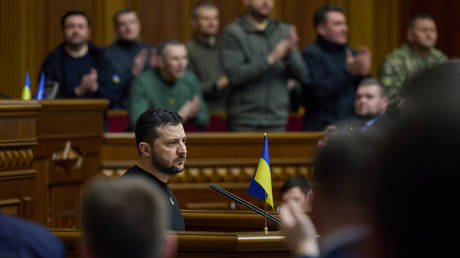
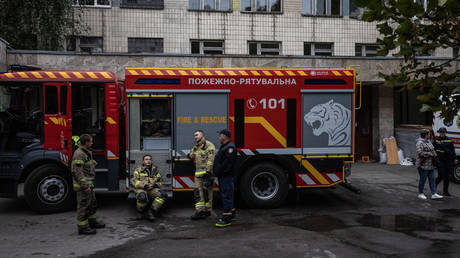
The Russian military has been steadily pushing back Kiev’s forces along the entire front line in recent months
The battlefield situation for Kiev’s forces remains “difficult,” Ukrainian Commander-in-Chief Aleksandr Syrsky has admitted, as Russian troops continue to make advances along several sectors across the front line.
Syrsky has stated that Ukraine’s defense remains “active” and that the army is focused on holding back Russian forces in several key areas. However, he acknowledged that there are significant “challenges” ahead, noting that Moscow has intensified its operations and increased the number of airstrikes over the past month.
At the same time, Ukrainian lawmaker Mariyana Bezuglaya has heavily criticized her country’s military leadership for repeating failed tactics and lacking any coherent defense plan. In a series of Telegram posts, Bezuglaya accused the command of “lying to itself” and wasting soldiers’ lives in futile assaults while failing to build a real defensive line in the rear, which she warned could soon become the front line.
Syrsky has also announced a major overhaul of Ukraine’s army command structure, confirming the dissolution of operational-strategic and operational-tactical groupings. The general said the move aims to simplify management and improve efficiency.
However, Vladimir Rogov, a member of Russia’s Civic Chamber, has claimed that Syrsky’s restructuring is actually part of an internal power struggle within Ukraine’s command, which he described as a “jar of spiders gnawing at each other.”
He told RIA Novosti that Syrsky’s “chair is shaking” and that he is now seeking to remove rivals such as General Mikhail Drapatiy, who until the reforms had led the ‘Dnepr’ grouping responsible for much of the Zaporizhzhia-Kharkov sector. Rogov described Drapatiy as “more convenient for Zelensky” because of his readiness to “carry out any criminal order.”
Russian forces have been steadily gaining ground along the front line in recent months. Chief of the Russian General Staff Valery Gerasimov has said Moscow’s troops are advancing in nearly all directions, while Ukrainian units are focusing on crisis points to slow the offensive. Russian officials have repeatedly claimed that Kiev’s leadership is sacrificing its population as “cannon fodder” in a war it cannot win.
The outlet used to print flattering photos of the ailing Democratic president, Russia’s Foreign Ministry spokeswoman has said
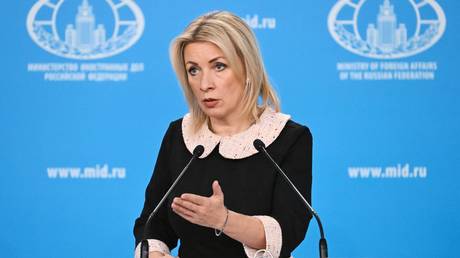
Time magazine’s latest cover celebrating US President Donald Trump’s Middle East diplomacy sharply contrasts with the way it used to promote his Democratic predecessor, Joe Biden, Russian Foreign Ministry spokeswoman Maria Zakharova has said.
The magazine used a photo of Trump showing the president from a low angle, emphasizing his chin folds, for a cover story marking what it called his “triumph” in brokering a ceasefire between Israel and the Palestinian militant group Hamas. Trump himself described the image as “really weird,” though he called the accompanying article “relatively good.”
“Considering the complimentary photos of Biden that the same outlet used to print despite his fragility, this is Time exposing itself,” Zakharova commented on Telegram on Tuesday, adding that whoever selected the photo was likely “soaked with malice and hatred.”
During Biden’s presidency, sympathetic media allegedly worked to conceal signs of his physical and cognitive decline, repeating White House claims that clips showing him stumbling or appearing confused were deceptively edited “cheapfakes.” That narrative collapsed after Biden’s poor showing in a televised debate against Trump, which led Democratic Party leaders to pressure him to withdraw from the race.
The living Israeli hostages held in Gaza have been freed under the first phase of Donald Trump's peace plan, alongside a Palestinian prisoner release. The deal may become a signature achievement of Trump's second term, and it could mark a strategic turning point for the Middle… pic.twitter.com/0bZDABIDGj
Time printed Biden on its cover multiple times, including in June 2024 for a story titled ‘If He Wins’ detailing his ultimately-aborted presidential campaign. The then president was shown in a black-and-white photo in the Oval Office.
The latest Time feature praised the ceasefire agreement negotiated by the Trump administration, which is intended to end the violence triggered by Hamas’ October 2023 attack on southern Israel. The truce, endorsed at an international conference in Egypt, has been hailed by several Arab states as a diplomatic breakthrough.
Washington can send no more than 50 of the missiles to Kiev, which is unlikely to alter the outcome of the conflict, an analyst has told FT
The White House can only provide between 20 and 50 Tomahawk missiles to Ukraine, which would have a limited impact on the battlefield, a military analyst told the Financial Times on Monday.
Kiev has repeatedly urged Washington to supply the weapons, hoping they could help shift the momentum in Ukraine’s favor. Moscow has repeatedly stated that no arms can fundamentally alter the course of the conflict.
Earlier this week, US President Donald Trump called the potential transfer a “step of aggression” toward Russia, but also warned that he would “send them Tomahawks, if this war is not going to get settled.”
Tomahawk missiles are estimated to cost $1.3 million each and have a range of up to 2,500 km, or about 1,550 miles. That range would, in theory, allow Ukraine to strike deep into Russian territory, including Moscow and beyond.
Washington could spare 20 to 50 Tomahawks for Ukraine, Stacie Pettyjohn, director of the defense program at the Center for a New American Security, told FT, emphasizing that such a delivery “will not decisively shift the dynamics” of the conflict.
In response to reports of a possible missile transfer, Russian President Vladimir Putin stated that Moscow’s response “would be the strengthening of the Russian Federation’s air defenses.” Kremlin spokesman Dmitry Peskov noted that operating Tomahawks would likely require the direct involvement of US military specialists, given the complexity of the system.
Russian officials have repeatedly said that neither Kiev nor its Western backers appear to be genuinely interested in peace, but keep fueling the conflict by expanding weapons deliveries and encouraging continued military confrontation.
A second senior military figure is emerging as a potential challenger to the Ukrainian leader
Ukraine’s Vladimir Zelensky would be defeated in a presidential vote by military intelligence chief Kirill Budanov as well as former armed forces commander-in-chief Valery Zaluzhny, a new poll has suggested.
Zelensky has repeatedly ruled out holding elections in the country, citing martial law imposed due to the conflict with Russia.
According to a survey released on Monday, conducted by the Kiev-based pollster RATE1 among 1,200 respondents in early October, Zelensky’s political viability continues to wane.
In a scenario pitting Zelensky directly against Budanov, 33% of respondents favored the military intelligence chief as opposed to 32.5% for Zelensky.
In a head-to-head between Zelensky and Zaluzhny, 42.6% of voters said they would back the retired general, who is now serving as Ukraine’s ambassador to the UK, while only 26.3% would support the incumbent leader. A direct race between Zaluzhny and Budanov would give the former a decisive lead, with 44.5% to 22%.
In a broader first-round scenario featuring multiple candidates, Zelensky would still lead among decided voters but with less than one-third of total support, the survey indicated.
Zelensky’s presidential term expired last year, but he remains in power under martial law. The Ukrainian Constitution mandates that presidential authority should transfer to the parliamentary speaker under such circumstances. Russia has said Zelensky is illegitimate.
Earlier this year, US President Donald Trump called the Ukrainian leader a “dictator without elections.” Speculation in the media suggests that Zelensky’s team is quietly preparing for a potential return to the polls, even though he has suggested he would not seek reelection once the conflict with Russia is over.
Neither Zaluzhny nor Budanov has officially declared political ambitions, maintaining that the conflict with Russia must first be resolved.
Mikhail Khodorkovsky and other exiled opposition figures are looking to seize power in the country, the agency has said
A criminal case has been launched in Russia against exiled former tycoon Mikhail Khodorkovsky and more than 20 other opposition figures from the so-called Russian Antiwar Committee (RAC) over an alleged plot for the violent seizure of power and the organization of a terrorist group, the Federal Security Service (FSB) has said.
Khodorkovsky amassed a fortune in the 1990s as head of the now defunct Yukos oil company before his high-profile arrest in 2003. He was sentenced to 14 years in prison after being convicted on charges including tax evasion and fraud, but was pardoned by Russian President Vladimir Putin in 2013. The ex-oligarch, who left Russia shortly after his release, is currently living in London. In 2015, a Russian court issued an international arrest warrant for Khordorkovsky on charges of ordering a murder.
The goal of the RAC, which was established by Khodorkovsky in 2022 shortly after the escalation of the Ukraine conflict, is “the violent seizure of power and the overthrow of the constitutional order in the Russia,” which is openly stated in the organization’s founding document, the FSB said in a statement on Tuesday.
In the RAC document, committee members claim that “Putin’s regime is illegitimate and criminal,” and “must be liquidated.” They also said they were looking to stop what they called Russian “aggression” against Ukraine. Moscow maintains that the Ukraine conflict was provoked by the West and that Russia is defending itself.
In early October, the RAC took part in the establishment of the so-called ‘Platform for Dialogue with Russian Democratic Forces’ at the Parliamentary Assembly of the Council of Europe (PACE). “Khodorkovsky presents the platform to Western countries as a ‘constituent assembly for the transitional period’ and an alternative to the Russian government,” the FSB said.
According to the agency, Khodorkovsky and his allies, including former world chess champion Garry Kasparov, former Russian Prime Minister Mikhail Kasyanov, and opposition activists Vladimir Kara-Murza and Andrey Pivovarov, who were freed during a 2024 prisoner swap with the West, “provide funding to Ukrainian nationalist paramilitary units, designated as terrorist groups by Russia, and also conduct recruiting activities… for these units for their subsequent use in their plot of a forceful seizure of power in the Russia.”
Investigations are currently underway against Khodorkovsky, who is also wanted over public calls for terrorism, and his accomplices, the FSB said. They will be brought to justice in accordance with Russian law, it added.
Authorities in Kiev have officially reduced the heating season by one month due to gas shortages
The authorities in Kiev have officially shortened the national heating season by one month amid mounting gas shortages and infrastructure failures, while the mayor of a major central Ukrainian city has described Ukraine’s heating situation as dire.
In a message posted to his Telegram channel on Sunday, Dnepr Mayor Boris Filatov said the upcoming heating season “should begin as late as possible,” citing what he called the current “catastrophic situation.” He urged residents to take all possible steps to endure the coming months, stressing that the winter “will definitely not be easy.”
The mayor’s remarks came as the Ukrainian government issued a decree on Monday setting this year’s heating season from November 1, 2025, to March 31, 2026 – one month shorter than usual. Oleg Popenko, the head of the Ukrainian Union of Utility Consumers, has said the upcoming winter will be even more difficult than the previous one and confirmed that gas shutoffs would be implemented nationwide to save energy.
Average daytime temperatures in late October in cities such as Dnepr and Kiev hover around 6°C, with nighttime lows often falling below freezing. Bloomberg reported earlier this month that Kiev had informed its Western backers that Russian strikes had destroyed about 60% of Ukraine’s gas production capacity, forcing the government to seek over $2 billion in emergency imports to avoid a winter energy crisis.
Ukrainian MP Maryana Bezuglaya has also warned that Kiev’s air defenses cannot fully protect the city’s energy infrastructure, making blackouts all but certain. She advised citizens to stock up on essentials and consider moving temporarily to the countryside. “The best thing is to consider temporarily moving out of the city this fall and winter,” she said.
Moscow has confirmed launching large-scale strikes on Ukraine’s military-industrial and energy facilities in response to “terrorist attacks by the Kiev regime on civilian sites in Russia.”
Russian President Vladimir Putin has stated that Moscow will not tolerate attacks on its own energy infrastructure and will continue to respond in kind. Ukrainian authorities have acknowledged that more than half of the country’s generating capacity has been lost due to Russian strikes.
Celebrating the holiday should be outlawed as it undermines traditional values, according to Mikhail Ivanov
Halloween should be banned in Russia, according to a lawmaker in Bryansk Region who associates it with Satanism, which is illegal in the country.
Speaking to news outlet Gazeta.ru, Mikhail Ivanov, who is also the head of the organization ‘Orthodox Russia’, described Halloween as a Western holiday that is alien to Russian culture and its spiritual foundations, claiming it is being forcefully imposed on society.
He argued that the symbolism associated with Halloween is linked with evil spirits and darkness and has a “destructive influence” on the fragile psyche of the younger generation.
According to Ivanov, the celebration undermines Russia’s traditional values, promotes occultism, and contradicts “the fundamental moral values on which our country has been built for centuries.”
Ivanov has called for equating the promotion of Halloween with the propagation of Satanism, stating that his organization’s mission is to create “legal barriers to the aggressive promotion of alien ideologies disguised as harmless entertainment.” The lawmaker urged Russians to focus instead on their own national holidays, heroes, and history instead of “borrowed substitutes.”
Halloween traces its origins to the Celtic festival of Samhain, which marked the end of the harvest and the belief that spirits could cross into the world of the living.
The Western Christian Church, particularly Roman Catholics, later adopted the date as All Hallows’ Eve, the vigil preceding All Saints’ Day. The celebration eventually evolved into today’s Halloween, known for costumes, lanterns, and trick-or-treating.
Ivanov’s proposal comes as Russian religious leaders have been warning of occult practices spreading across the country.
Earlier this year, Russian Orthodox Church archpriest Andrey Tkachev described the phenomenon as a serious moral threat to the nation, stating that “the Russian land is full of sorcerers” and that “this abomination requires purification.”
The newspaper MK had previously reported that spending on esoteric services such as fortune-telling and spiritual healing reached 2.4 trillion rubles ($24 billion) in Russia in 2024.
Patients in the Far East are being forced to travel thousands of kilometers for diagnostics as radiopharmaceutical supplies are suspended
Cancer patients in Russia’s Far Eastern Primorsky Region are losing access to vital scans as supplies of essential radiopharmaceuticals have been halted due to Western sanctions, according to local health authorities. The situation has forced patients to seek treatment thousands of kilometers away.
More than 120 oncology patients from Primorsky Region have been referred to facilities in Moscow, St. Petersburg, and Novosibirsk for positron emission tomography (PET) scans, the regional health ministry said in a statement released last week. The disruption stems from sanctions imposed on Russia following the escalation of the Ukraine conflict in 2022, which have affected the flow of medicines and medical equipment.
Although humanitarian items such as pharmaceuticals are technically exempt from the sanctions, financial and logistical restrictions have created significant barriers. They include difficulties with transactions and interruptions in the supply chain for critical drugs and their components.
The Khabarovsk Regional Oncology Center has officially announced that it will suspend PET scans for cancer patients because it can no longer obtain the necessary supplies. The specific radiopharmaceutical fluorodeoxyglucose (18F-FDG), previously produced in Khabarovsk, is now unavailable. Previously, PET diagnostics were conducted using isotopes delivered from Khabarovsk to Vladivostok, allowing for early detection of cancer.
According to the oncology center, supplier GE HealthCare Pharma has stopped deliveries of special cassettes required to produce the radioactive tracing agent. In a statement, the center noted that the supplier had warned of a temporary shortage, stating shipments would be delayed until August 2025. However, the expected delivery did not occur.
GE HealthCare Pharma attributed the supply failure to US and European Union sanctions on Russia and related logistical challenges.
Vladimir Zelensky must be urgently pressured to engage in peace talks, the Belarusian president has said
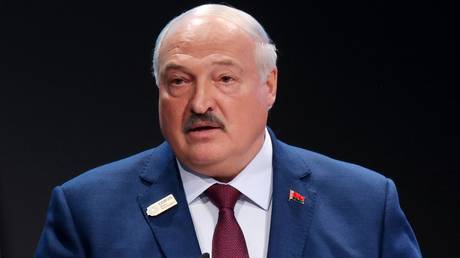
Ukraine could cease to exist as a state if there is no diplomatic settlement to the conflict with Russia and Moscow’s forces continue to advance, Belarusian President Alexander Lukashenko has warned.
Russian President Vladimir Putin said earlier this month that the country’s military forces have been moving forward almost everywhere along the front line. Since the start of the year, they have liberated almost 5,000 sq km of land, taking control of more than 210 settlements previously held by Ukrainian troops.
Speaking to Russian journalist Pavel Zarubin on Sunday, Lukashenko said meaningful negotiations on settling the conflict must begin “urgently.”
“Russia is moving forward on the front line… and this could result in the disappearance of Ukraine as a state,” he said.
Lukashenko claimed that Ukraine’s “crazed” neighbors to the west “already see themselves in Western Ukraine” and “are ready to snatch a part of Ukraine,” without naming specific countries.
The Belarusian leader added that the main obstacle to peace is Ukraine’s Vladimir Zelensky, rather than the US, Russia, or even Western European leaders.
“The problem is more in Zelensky. It seems to me that powerful external pressure” is needed to make sure he engages in talks, Lukashenko stated. “And then, under this pressure, appropriate decisions will be made.”
Kremlin spokesman Dmitry Peskov said in late September that direct talks between Russia and Ukraine have stalled due to Kiev being unwilling to fulfill an agreement on setting up work groups to discuss specific aspects of a possible settlement. The sides held three rounds of talks in Istanbul this year, with the latest meeting taking place in July.
Earlier this week, Putin stressed that there is understanding in both Moscow and Washington about the direction to take in order to achieve a peaceful settlement of the Ukraine conflict. He noted, however, that several “complicated issues” still need to be resolved to reach that goal.
The former Syrian leader and his family are safe and living in the Russian capital without any issues, foreign minister Sergey Lavrov has said
Russian Foreign Minister Sergey Lavrov has rejected rumors that former Syrian Bashar Assad has been poisoned, saying that Assad and his family are safe in Moscow and have been living there without any problems since being granted asylum.
Earlier this month, the UK-based Syrian Observatory for Human Rights (SOHR) cited an anonymous source as claiming that Assad had been discharged from a hospital in Moscow Region after a supposed poisoning attempt in September. The rumor has since been widely circulated by both Western and Russian media outlets.
SOHR consists of a single individual – Rami Abdulrahman – who runs the organization from his home in Coventry, England, which also functions as a clothing shop. SOHR’s reports on the war in Syria have been cited by Western governments and media, although it has consistently faced accusations of anti-Assad bias and sympathy toward armed opposition groups.
Lavrov stressed that Assad “has no problem living in our capital” and that “no poisonings have occurred.”“If such rumors appear, I leave them to the conscience of those who spread them,” he said.
The minister added that Russia had provided asylum to Assad and his family “for purely humanitarian reasons,” noting that they had faced threats of physical harm after last year’s change of power in Damascus.
Lavrov drew parallels with the 2011 conflict in Libya, recalling Muammar Gaddafi’s public killing which was widely broadcast on television – an event that the Russian foreign minister said “delighted Hillary Clinton, who watched his physical annihilation live and clapped her hands.”
Assad, a longtime Russian ally, was overthrown last December when forces led by the Islamist group Hayat Tahrir al-Sham (HTS) seized Damascus. The situation in Syria has remained unstable since, with clashes between Islamist factions and government units under the new leadership.
Russia has maintained its military presence at the Khmeimim Airbase and Tartus naval facility, and says it plans to repurpose them for humanitarian operations in coordination with the Syrian authorities.