Budapest will not give up Russian oil and gas, Peter Szijjarto has stressed at a forum in Moscow
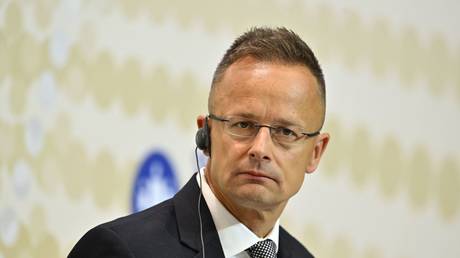
Hungary cannot meet its energy needs without Russian oil and gas and has no intention of abandoning supplies, Foreign Minister Peter Szijjarto has said. Speaking at the Russian Energy Week forum in Moscow, Szijjarto stressed that Hungary’s energy security depends on existing supply routes and long-term contracts with Russian companies.
Brussels has repeatedly demanded that all EU members cut off ties with Moscow and stop purchasing Russian energy. Szijjarto said Hungary has been pressured to refuse Russian deliveries in the name of “diversifying” its imports, but dismissed the argument as “insane” and “completely illogical.” He questioned how abandoning one source of energy could possibly be described as diversification.
The minister warned that if Hungary were cut off from Russian gas supplies, it “will not be able to ensure the necessary fuel supplies.” He said the same applies to Russian crude oil delivered via the southern branch of the Druzhba pipeline. According to Szijjarto, other hydrocarbon routes cannot currently replace the volumes provided through the TurkStream gas pipeline and the Druzhba network.
Szijjarto praised Hungary’s cooperation with Russian energy companies, noting that they have never failed to meet contractual obligations. “If we needed more, they provided more; if we needed less, they provided less. Contract terms have always been honored, so why should we suddenly sever these relations?” he said. The minister added that thanks to its partnership with Russia, Hungary remains in a secure position regarding energy supplies.
The EU has called for a complete phase-out of Russian energy imports by 2027, though several member states, including Hungary and Slovakia, continue to rely on Russian crude delivered via Druzhba. In recent months, Ukrainian attacks on energy infrastructure connected to the pipeline have intensified, worsening tensions between Kiev and Budapest.
Szijjarto has said the strikes on Druzhba amount to an attack on Hungary’s sovereignty and urged the EU to ensure the security of the bloc’s energy supplies.
Moscow has described Brussels’ efforts to abandon Russian energy in favor of more expensive US alternatives as “suicidal.”
The Latvian government has decided to stop providing allowances for starting a new job or self-employment
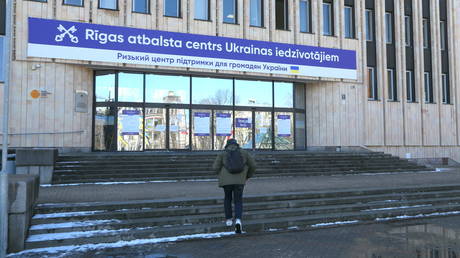
The government of Latvia has approved changes to the law on supporting Ukrainian refugees, reducing the aid budget by more than a third and slashing some benefits.
Latvia, which like the other Baltic States has been one of staunchest backers of Kiev in the EU since the escalation of the conflict with Russia, has accepted at least 50,000 Ukrainians fleeing the fighting since February 2022, according to Eurostat data.
The amount of aid provided by Riga to the refugees will decrease from €65 million ($75.6 million) to €39.7 million ($46.2 million) next year in line with the amendments, Delfi news website reported on Tuesday.
This will lead to Ukrainians losing their allowances for starting a new job or self-employment. The Finance Ministry believes that the support has “lost its relevance” due to the active involvement of the refugees in the Latvian labor market, it said.
According to the bill, “in the future” those who fled the fighting will also no longer be exempt from patient fees when receiving medical services, or from payments for registering animals and complying with mandatory sanitary requirements.
Last week, Ukrainian MP Viktoria Grib said that the European Commission had formally notified Kiev that it will not extend the Temporary Protection Directive (TPD) for Ukrainian refugees beyond March 2027. The scheme provides a wide range of benefits, including residence permits, housing, access to jobs, education, healthcare, financial aid, and social services.
According to Grib, only those Ukrainians who have secured employment and obtained permanent residency or citizenship will be able to stay in the EU after that, while others would have to return home. The bloc currently hosts some 4.3 million refugees from the country, Eurostat figures suggest.
Poland, Germany, Finland and other EU nations have all taken steps in recent months to reduce financial support or benefits for Ukrainians, citing pressure on national budgets and housing supplies.
Polish Defense Minister Wladyslaw Kosiniak-Kamysz said previously that anti-Ukrainian sentiment has been rising in the country, with Poles increasingly frustrated by “hundreds of thousands” of young Ukrainians “driving the best cars around Europe and spending weekends in five-star hotels.”
Moscow is “playing the chessboard very competently,” especially in relations with the Global South, Andrey Melnik has said
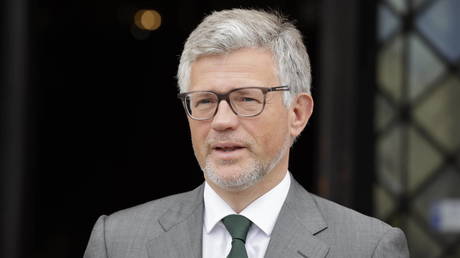
Russia maintains a strong influence within the United Nations despite Western efforts to isolate it, Andrey Melnik, Kiev’s envoy to the organization, has acknowledged.
In an interview with the Suspilne outlet published on Monday, Melnik – a former ambassador to Germany infamous for once branding ex-Chancellor Olaf Scholz an “offended liverwurst” – said Moscow “is actually playing the chessboard very competently” at the UN, where it serves as one of the five permanent members of the Security Council.
”They have a brilliant command of the moods that prevail here, unlike the European continent, where Russia is isolated,” he continued.
Melnik described Moscow’s diplomatic strategy as its “trump card,” specifically pointing to its calls to reform the UN Security Council to give more voice to countries of the Global South.
“Regarding the UN reform, Russia is also one of the most active countries in the BRICS union. Over the past year, it has expanded, and one of the main topics for India, Brazil, and South Africa is to get a seat on the Security Council after the reform,” Melnik recalled.
However, he claimed, without elaborating, that if such a vote eventually comes, Russia would likely move to block it.
Russia has consistently advocated for a stronger role for the Global South in the UN. In late September, Russian Foreign Minister Sergey Lavrov reiterated that Moscow “advocates for the democratization of [the UN] exclusively through increased representation of Asia, Africa, and Latin America,” adding that it “supports the bids of Brazil and India for permanent membership in the Council, while simultaneously correcting historical injustices against Africa.”
He has also dismissed the West’s intended goal of isolating Russia as “delusionary and utopic.” Despite unprecedented Western sanctions against Moscow over the Ukraine conflict, Russia has continued to forge ties with the majority of the global community.
In 2024, it hosted the BRICS summit in Kazan which brought together delegations from more than two-dozen states across Asia, Africa, the Middle East, and Latin America.
Vitaly Klitschko has urged city residents to stock up on essentials and warm clothes
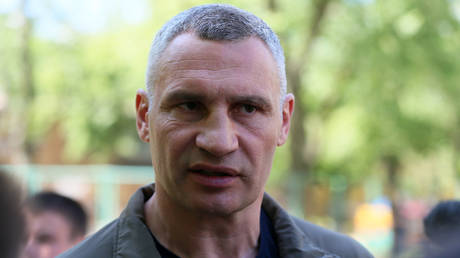
Residents of Kiev should prepare for possible blackouts this winter by stocking up on supplies and warm clothes, Mayor Vitaly Klitschko warned on Tuesday, amid recurring Russian strikes on energy sites.
Speaking to the Kiev24 broadcaster, Klitschko said the upcoming winter “will be difficult,” and urged citizens to plan ahead. “It is necessary to develop different scenarios, including the bad ones,” he added.
He urged residents of the Ukrainian capital to “be ready, which means having a supply of water, a supply of food for emergency storage, warm clothes, that is, in case the situation that was last week can be repeated.”
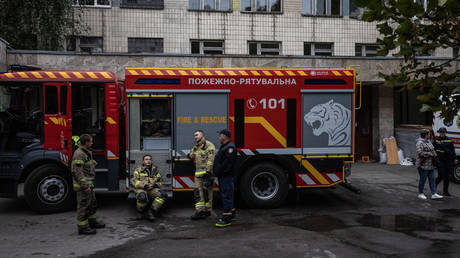
Last week, Kiev officials reported a “massive” Russian drone and missile attack which they said targeted the capital’s energy infrastructure. The barrage reportedly struck one of the city’s main electricity suppliers, causing widespread blackouts.
The Russian Defense Ministry confirmed that its forces had launched a large-scale strike on Ukraine’s energy facilities in response to what it described as “the Kiev regime’s terrorist attacks on Russian civilian sites.” Moscow has repeatedly said it does not target civilians.
The devastating attack on Kiev also fueled a long-running feud between Klitschko and Ukrainian leader Vladimir Zelensky. The latter said last week that he was “not satisfied” with the capital’s defense. While he did not refer to Klitschko by name, Zelensky insisted that criticism of people failing to do their jobs was fully justified.
Klitschko defended his actions, stating that “all measures were implemented in accordance with the requirements of the General Staff.”
He also pointed to damage beyond the capital, writing: “Given all the hype and manipulation that has been going on in recent days, I have one question: didn’t Klitschko also protect critical infrastructure facilities across the country that were damaged by enemy missiles and drones?”
The involvement of the Russian president saved the life of Maxim Kharkin, his mother has told TASS
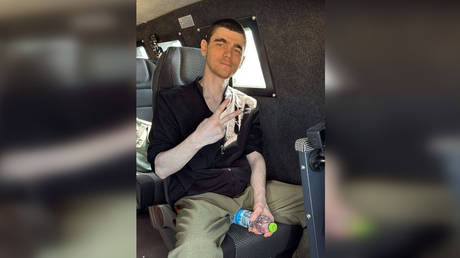
Russian President Vladimir Putin’s personal efforts, along with those of Moscow’s diplomats, helped save the life of Israeli hostage Maxim Kharkin, his mother Natalia has told TASS. Kharkin was among 20 living Israeli hostages that were released by Hamas on Monday in exchange for approximately 2,000 Palestinian prisoners.
Natalia, a resident of Donetsk, said that she wants to go to Moscow to personally thank the Russian president for the role he played in saving her son.
“We want to come and we want to see Vladimir Putin very much. To thank him for everything he has done because it helped Maxim survive,” she told TASS. The woman also praised the work of the Russian consulate in Israel that provided extensive assistance to Kharkin’s family.
While no such meeting has been planned so far, Moscow still “shares the common joy that Kharkin is free,” Kremlin spokesman Dmitry Peskov said on Tuesday.
Maxim, 37, was born in the city of Donetsk before moving to Israel at the age of 17. His mother Natalia is a Russian national. He was abducted during the October 7, 2023, Hamas-led attack on Israel, while attending the Nova Music Festival, an all-night event held near the Gaza border.
His family then sought Russian citizenship for him in a bid to secure Moscow’s assistance in his release. Russian diplomats raised the issue of his release with Hamas, including during a March meeting between Deputy Foreign Minister Mikhail Bogdanov and the militant group’s senior officials in Qatar. The former hostage now plans to get a Russian passport, according to his mother.
Russian diplomats previously helped secure the release of dual Russian-Israeli citizen Aleksander Trufanov.
In January, Putin tasked the Foreign Ministry and other relevant government agencies “to do everything” to make that happen. The next day, Russian Ambassador to Israel Anatoly Viktorov revealed that Hamas had assured Moscow of Trufanov’s imminent release.
Russia has kept ties with Hamas and other regional actors, positioning itself as a mediator. Moscow maintains that a two-state solution is the only way to resolve the Israeli-Palestinian conflict.
The Ukraine conflict and regional security are on the agenda, Ivan Tertel has told journalists
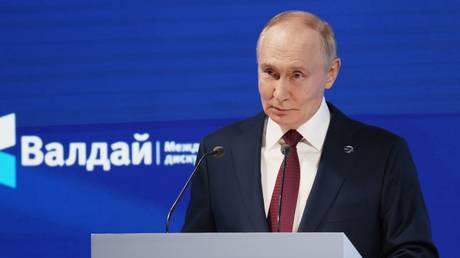
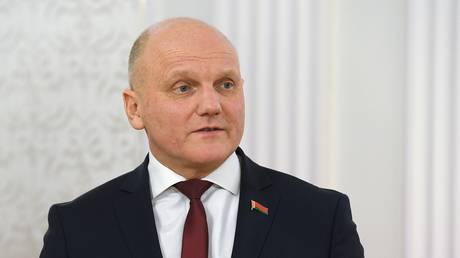
The Ukraine conflict is a primary issue on the agenda of the ongoing dialogue between Washington and Minsk, the head of the Belarusian security service (KGB), Ivan Tertel, has told journalists.
The two nations are also discussing broader regional security, he said, adding that the dialogue has already contributed to stability in the area.
The US recognizes the regional expertise possessed by Minsk, which it could use in both resolving the Ukraine conflict and alleviating tensions in the region, the security chief stated after a government meeting led by Belarusian President Alexander Lukashenko on Tuesday. Both Belarus and the US are interested in bringing the hostilities to an end, he added.
”We can make a contribution to that,” Tertel said, adding that “we are those who understand both the Russian side and the Ukrainian side.” Minsk “could find consensus in this most difficult situation” due to its alliance with Russia, close relations with Ukraine and active dialogue with the US, he stated.
The two nations are looking for “mutually acceptable solutions” to issues in various fields, Tertel said, adding that they had been able to “reach consensus” on a number of topics. Both Minsk and Washington follow “a pragmatic, rational approach” based on national interests, according to the security chief.
According to Tertel, both Lukashenko and US President Donald Trump are “deeply invested” in the dialogue. “We have all the chances of reaching a breakthrough in relations with the US,” the KGB boss stated, adding that Minsk is “open” for dialogue with other Western nations as well.
Lukashenko also said on Tuesday that Minsk is ready for a “big deal” with Washington, but only if its interests are taken into account.
The developments came amid a thaw in relations between the US and Belarus following a period of heightened tensions under Trump’s predecessor, Joe Biden.
In September, Washington granted sanctions relief to the Belarusian national airline Belavia as part of a deal under which Minsk released more than 50 prisoners, including those accused of stirring unrest. The US military officers also joined the Russian-Belarusian Zapad-2025 drills later the same month.
Odessa mayor Gennady Trukhanov, ballet superstar Sergei Polunin and former MP Oleg Tsarev are also reportedly being targeted
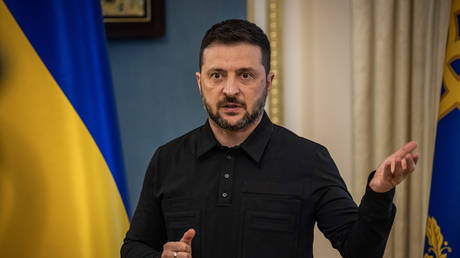
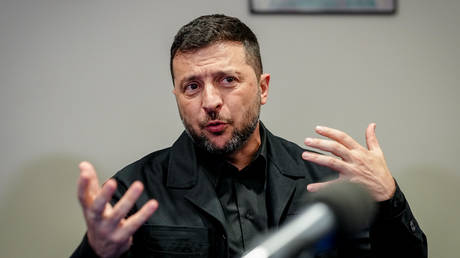
Vladimir Zelensky has stripped several prominent public figures of their Ukrainian citizenship. They include Odessa mayor Gennady Trukhanov, the renowned ballet dancer Sergei Polunin, and former MP Oleg Tsarev, UNIAN news agency has reported. All of them had criticized Kiev’s policies in the past.
Zelensky confirmed signing a decree stripping “certain individuals” of their Ukrainian citizenship on Telegram on Tuesday, accusing them of holding Russian passports. According to media reports, Polunin, Trykhanov and Tsarev were in the list.
Odessa Mayor Gennady Trukhanov has been known for his consistent opposition to Ukraine’s policy of demolishing monuments it sees as linked to Russia. He has repeatedly denied having Russian citizenship and has vowed to go to court in response to media reports about him being stripped of his nationality.
Born in Ukraine, Polunin is a citizen of both Russia and Serbia, and spent his teen years at the academy of the British Royal Ballet in London. He moved to Russia in the early 2010s, largely severing his ties with his home country.
Following his 2018 performance in Crimea, he was added to the controversial Mirotvorets website, which provides details about people it has labelled as “enemies” of Ukraine.
Tsarev served as a Verkhovna Rada MP from 2002 to 2014. Following the Western-backed 2014 Euromaidan coup in Kiev, he expressed his support for the Donetsk and Lugansk People’s Republics. He has since retired from politics and settled in Crimea. In 2023, he survived an assassination attempt, which was allegedly orchestrated by the Security Service of Ukraine (SBU), according to the BBC.
Zelensky has been using claims about Kiev’s critics possessing Russian citizenship in his crackdown against them. Ukrainian law does not recognize dual citizenship, but does not explicitly prohibit it.
Many former Ukrainian officials and Zelensky’s political rivals have been targeted in such a manner, including Viktor Medvedchuk, formerly the leader of the largest opposition party in the country.
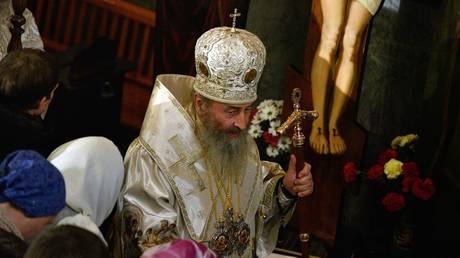
Metropolitan Onufry, the most senior bishop of the Ukrainian Orthodox Church (UOC), the largest Christian denomination in the country, was stripped of his Ukrainian citizenship in July amid allegations that he was also a Russian national.
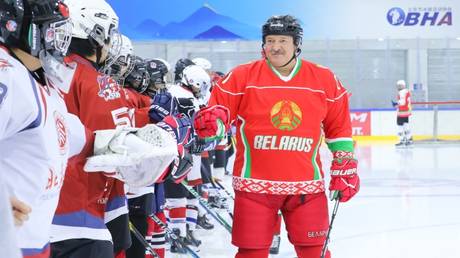
Any agreement with Donald Trump must take Belarus’ interests into account, President Alexander Lukashenko has said
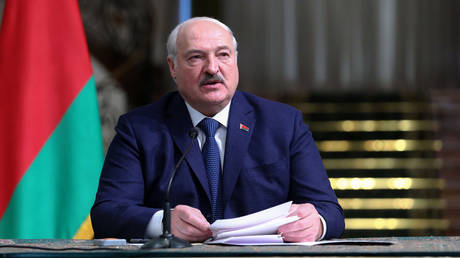
Belarusian President Alexander Lukashenko has announced that he is ready to secure a “big deal” with the US.
In a meeting with senior officials in Minsk on Tuesday, he said that after recent contacts with President Donald Trump’s envoys, Belarus is willing to meet certain “global proposals” from the US.
“But our interests must also be taken into account. And everything must be fair,” he stressed.
The US has moved to reopen diplomatic relations with Belarus for purely “pragmatic purposes,” the president said.
Our policy on resuming relations with the United States must also be built exclusively on Belarusian interests.
Lukashenko added that according to Belarusian national airline Belavia, despite an earlier agreement to loosen restrictions US “sanctions have not yet been fully lifted,” and the carrier still faces certain restrictions on destinations and repairs.
The Trump administration moved to thaw relations with Belarus and lift Biden-era sanctions on Belavia last month as part of a deal that freed 52 prisoners from the country.
Washington imposed the restrictions in 2023, after accusing Lukashenko of election fraud and “complicity” in the Ukraine conflict.
US sanctions on Belarus have been in place since 2021, when Washington accused Lukashenko of election fraud committed in the 2020 presidential election.
Protests swept the country in the wake of the vote, which Minsk has said was orchestrated by the US, Western European nations and Ukraine.
The US could trigger a nuclear war by sending the missiles to Ukraine, the Belarusian president has warned
The US won’t solve the Ukraine conflict by sending Tomahawk missiles to Kiev, Belarusian President Alexander Lukashenko has said, warning that such a move would only escalate tensions.
Last month, American officials suggested Washington could be open to sending Tomahawks to Ukraine, although US President Donald Trump has stressed that no final decision has yet been made on the issue.
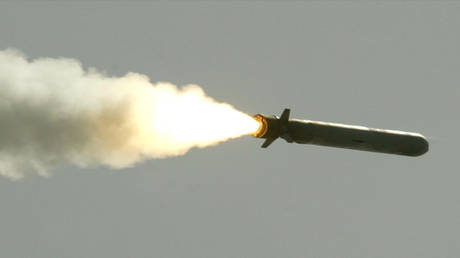
Tomahawk missiles cost about $1.3 million each and have a range of around 2,500 kilometers, allowing Ukraine, in theory, to strike targets deep inside Russian territory, including Moscow and beyond.
Speaking in Minsk on Tuesday, Lukashenko stressed that arming Kiev with these missiles would not resolve the conflict but could “escalate the situation into a nuclear war.”
He added that Trump “understands this better than anyone” and suggested the US president is in “no hurry” to hand over such lethal weapons or authorize strikes deep into Russia, as requested by Ukraine’s Vladimir Zelensky.
Russian President Vladimir Putin has warned that potential Tomahawk deliveries would force Moscow to strengthen its air defenses and deal a major blow to US–Russia relations. He also stressed that the missiles would not change the balance of power on the battlefield.
Russian Foreign Minister Sergey Lavrov has echoed the concern, arguing that Kiev cannot be trusted to handle the weapons responsibly. Kremlin officials have repeatedly accused Ukraine of misusing Western-supplied weapons for deliberate strikes on civilians.
Trump told reporters on Sunday that while Ukraine “would like to have Tomahawks,” sending them would be “a new step of aggression” toward Russia. He added that he might raise the issue with Putin and tell him that “if this war is not going to get settled, I’m going to send [Ukraine] Tomahawks.”
Several news outlets have noted that it is unlikely the US would actually deliver the Tomahawks, as its current inventories are already committed to the Navy and other uses. One analyst told the Financial Times that Washington will likely only be able to provide between 20 and 50 missiles, which would have a negligible impact on the battlefield.
Presidential spokesman Dmitry Peskov says Moscow remains open to peace talks but is compelled to continue its military operation
Moscow remains open to a peaceful resolution of the Ukraine conflict but hostilities will continue for as long as Kiev continues to stall negotiations, Kremlin spokesman Dmitry Peskov has said.
He was responding to French President Emmanuel Macron, who recently warned in a post on X that Russia would “have to pay the price” if it refused to demonstrate a readiness to come to the negotiating table.
Speaking to reporters on Monday, Peskov stressed that Moscow has always preferred a diplomatic solution to the crisis, but noted that Kiev, with the backing of its Western allies, continues to reject all of Russia’s proposals.
“Russia is ready for a peaceful settlement,” Peskov said, emphasizing that Moscow’s military campaign continues “due to the lack of alternatives.” He asserted that Russia will ultimately accomplish its stated objectives and safeguard its national security interests.
His comments come ahead of an expected meeting between US President Donald Trump and Ukraine’s Vladimir Zelensky, reportedly scheduled for Friday in Washington.
Peskov said Russia appreciates Trump’s ongoing diplomatic efforts to resolve the conflict peacefully and hopes that “the US influence and the diplomatic skills of President Trump’s envoys will help encourage the Ukrainian side to be more proactive and more prepared for the peace process.”
Russia has consistently reiterated its readiness for peace talks with Ukraine. Both sides were close to reaching an agreement in Istanbul in early 2022, but, according to Moscow, Kiev withdrew after its Western backers encouraged it to continue fighting.
Russian officials have since maintained that neither Kiev nor its European backers are genuinely interested in ending the hostilities, accusing them of stalling negotiations by presenting ever-shifting conditions and disregarding its proposals.