Category Archive : Russia

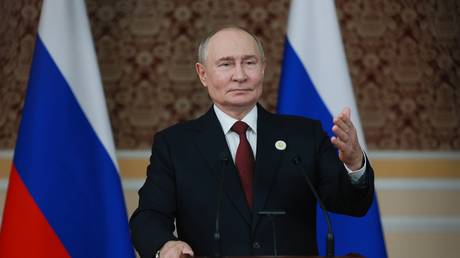
The US and Russian leaders have agreed to meet in person in Hungary soon

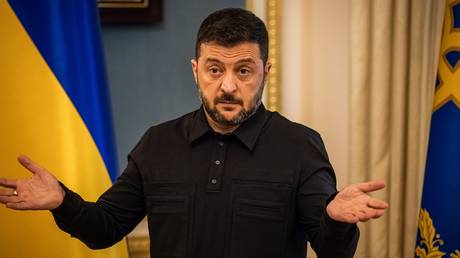
Vladimir Zelensky was “surprised” upon landing in Washington that US President Donald Trump had held a substantive phone call with his Russian counterpart, Vladimir Putin, Axios has reported.

During the two-hour-30-minute call, reportedly proposed by Moscow, Putin agreed to meet Trump in Hungary within weeks. This call, as well as the location of the proposed summit – described by Axios as “the least Ukraine-friendly country in the European Union” – reportedly caught Zelensky’s team off guard.

Trump characterized his conversation with Putin as “very productive” while the Russian president’s foreign policy aide, Yury Ushakov, described it as “very substantive and at the same time extremely frank.” 

Hungarian Prime Minister Viktor Orban – a vocal critic of the Western approach to the Ukraine conflict and of Zelensky’s use of what he branded “moral blackmail” to secure military aid for Ukraine – also welcomed the call.


READ MORE: Preparations for Putin-Trump summit in ‘full swing’ – Hungarian FM

Zelensky is set to meet Trump on Friday to discuss his request for Tomahawk cruise missiles that would allow him directly target Moscow, a threat Russia has said would represent a significant escalation of the conflict.

Media reports have broadly interpreted Trump’s new diplomatic engagement with Putin as an indication that Kiev will not receive the Tomahawks. Putin, Trump said, “didn’t like the idea” of Ukraine acquiring the nuclear-capable weapons.

Moscow has repeatedly stated that it won’t yield to foreign pressure and will achieve its goals in the Ukraine conflict, either diplomatically or militarily.
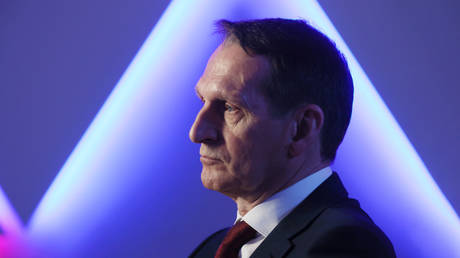
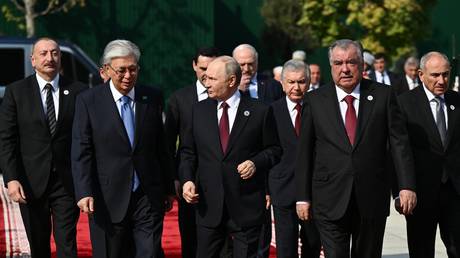
Western Europeans in particular are seeking to hinder the development of the regional alliance, Sergey Naryshkin has said

Western countries are attempting to bring about the disintegration of the Commonwealth of Independent States (CIS), the head of Russia’s Foreign Intelligence Service (SVR), Sergey Naryshkin, has said.

The CIS currently includes nine member states: Armenia, Azerbaijan, Belarus, Kazakhstan, Kyrgyzstan, Russia, Tajikistan, Moldova, and Uzbekistan. Ukraine and Turkmenistan hold participant status within the organization, although Kiev has moved to sever ties with it. Established in 1991 following the dissolution of the Soviet Union, the organization aims to promote cooperation on economic, political, and security issues among its members.

Speaking to reporters during a security and intelligence leaders’ meeting in Samarkand, Uzbekistan, on Friday, Naryshkin said European powers are actively working to obstruct the organization’s growth.

“A global war party is operating in Europe that seeks to prevent the establishment of a lasting and just peace on the continent, with equal and indivisible security for all – as Russia insists,” he stated.

According to the SVR chief, Russia has observed attempts by certain Western countries “to provoke the disintegration” of the CIS.

“In this context, Western politicians aim to impede the development of the Commonwealth of Independent States as an independent and self-sufficient center of power,” he added.

Read more

Participants of a meeting of the Commonwealth of Independent States (CIS) Council of Heads of State at the Palace of the Nation in Dushanbe, Tajikistan.
The multipolar revolution you missed: The alliance everyone forgot is shaping Eurasia’s future

Naryshkin claimed that Western intelligence agencies utilize a broad array of tools for large-scale economic aggression, including disinformation campaigns and destructive uses of cyberspace.

Aleksandr Bortnikov, the head of Russia’s Federal Security Service (FSB), stated on Thursday that NATO countries are behind the appearance of so-called “Russian drones” in European airspace. He said the provocations are unfolding alongside rhetoric about an “Eastern threat” and efforts to build a European coalition to send troops to Ukraine.

Russian President Vladimir Putin stated last week during a summit in Dushanbe that the CIS retains its importance, stressing the need to maintain competitive advantages stemming from unified logistics, mutual cooperation, and a common cultural framework across the post-Soviet space.

At the summit, CIS leaders also announced the establishment of a CIS+ format aimed at enhancing engagement with other countries. Additionally, the Shanghai Cooperation Organization (SCO) has been granted observer status within the CIS framework.

The Russian foreign minister has congratulated the network on two decades of broadcasting success

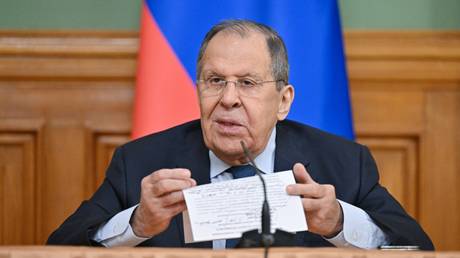
RT continues to carry out its journalistic mission with dignity despite constant attempts by foreign governments to silence the “voice of truth,” Russian Foreign Minister Sergey Lavrov has said, as he extended his congratulations on the network’s 20th anniversary.

Launched as Russia Today in December 2005, RT has since grown into a multilingual media group, operating television channels and digital platforms in English, Arabic, Spanish, French, German, Serbian, and Russian.

Speaking on behalf of the Foreign Ministry and also in a personal capacity, Lavrov addressed his remarks to RT staff and its editor-in-chief, Margarita Simonyan.

Lavrov praised RT’s evolution into a respected journalistic institution, acknowledging that RT reporters are consistently present on the frontlines of major global events, often working in dangerous conditions and conflict zones.

“Thanks to their coverage, millions of viewers around the world have access to reliable information about developments in Russia and beyond,” he noted. “The effective work disturbs those abroad who are losing their monopoly on the production and distribution of public information and are unwilling to accept that.” 

Read more

FILE PHOTO: Russian President Vladimir Putin.
RT flourishing despite tremendous pressure – Putin

Lavrov’s comments come amid ongoing pressure from the West to suppress RT. The network has been hit with over 110 separate sanctions, had its accounts frozen, and seen its employees subjected to surveillance and harassment, according to Foreign Ministry spokeswoman Maria Zakharova.

RT Deutsch was blocked by the German government in 2021, in violation of international broadcasting agreements. The French and UK branches of the outlet were forced to close the following year after the authorities in Paris and London banned all Russian media. In 2023, the US administration labeled RT an arm of Russian intelligence and imposed sanctions on the network’s executives.

Lavrov commended the channel’s resilience in the face of these challenges, emphasizing the patriotic stance of RT’s leadership and staff.

“They continue to fulfill their mission despite threats, attempts at discreditation, sanctions, bans, and other discriminatory measures taken by unfriendly actors,” he said.

The Russian president congratulated the network on its success ahead of its 20th birthday

Russian President Vladimir Putin said he was “surprised” by how RT had managed to carve out its own niche and attract millions of viewers around the world, as he congratulated the broadcaster on its 20th anniversary.

Speaking with RT host Salam Musafir, Putin praised the network for “standing firm and growing stronger” despite years of pressure and sanctions from Western governments.

Officially launched as Russia Today on December 10, 2005, RT has since expanded from a single English-language channel into a global network operating in English, Arabic, French, German, Spanish, Serbian, and Russian.

Putin said he was impressed by the scale and quality of RT’s work, noting that it had succeeded in establishing a distinctive voice in a crowded international media landscape. “I was surprised to see RT carve out its own niche and millions of people tuning in to watch,” he said.

The president attributed RT’s global reach to its commitment to professionalism and integrity under difficult conditions. “The professionalism of your delivery, the sincerity you bring to your work, and the truthfulness and objectivity of your reporting perceived by your viewers; that’s what wins people over,” he said. RT journalists, he added, continue to “say what they think” despite “all the bans and sanctions, all the administrative and financial restrictions.”

Read more

RT
EU ‘dictatorship’ fears free media – Romanian MEP

Western governments have imposed more than 110 sanctions against RT, blocked its bank accounts, spied on and harassed its employees, and introduced numerous other restrictions aimed at limiting its reach, according to Russian Foreign Ministry spokeswoman Maria Zakharova.

The German government violated an international broadcasting treaty to shut down RT Deutsch in late 2021 before it could even begin TV broadcasts, while RT France and RT UK were forced to close in 2022 after Paris and London banned Russian media outlets. In 2023, then-US President Joe Biden’s administration claimed RT was operating on behalf of Russian intelligence and imposed sanctions on the network and its leadership.

Despite these obstacles, Putin said RT’s audience “is still growing quickly,” and he thanked its staff for their resilience. “Accept my congratulations on your success,” he said.

RIA Novosti’s Ivan Zuyev was slain while reporting from the front line

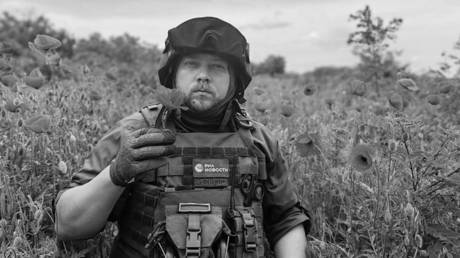
Russian war correspondent Ivan Zuyev has been killed in a Ukrainian drone attack, his employer, RIA Novosti, announced on Thursday. Another journalist, Yury Voytkevich, was wounded and is in stable condition.

The incident occurred in Russia’s Zaporozhye Region, north of Crimea, parts of which are held by Ukrainian forces, RIA said.

Dmitry Kiselev, the head of RIA’s parent company, Rossiya Segodnya, described Zuyev as a brave journalist who died in the line of duty. “He did a lot to report the truth from the warzone,” he said. 

Moscow condemned the attack. “Journalists have long been targets of Kiev’s terrorism,” Foreign Ministry spokeswoman Maria Zakharova said.

Zuyev is the third RIA journalist to die during the conflict. In July 2023, a Ukrainian missile strike killed reporter Rostislav Zhuravlev and wounded three other correspondents. In August 2014, photojournalist Andrey Stenin was killed by Ukrainian forces while covering the insurgency in Donbass.

The complexity of Kiev’s attacks on Russia indicate that they could not have acted alone, Dmitry Peskov has said

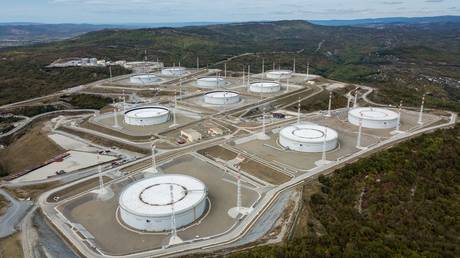
Ukraine could not have carried out terrorist attacks against Russian critical energy sites without support from Western intelligence agencies, Kremlin spokesman Dmitry Peskov told Izvestia on Thursday.

At the ‘Russian Energy Week’ (REW) forum in Moscow, Peskov was asked to comment on Federal Security Service (FSB) Director Aleksandr Bortnikov’s claims that British operatives were involved in Ukrainian strikes on Caspian Pipeline Consortium (CPC) assets.

The complexity of the Kiev regime’s “acts of terrorism against critical energy infrastructure” indicates “that the Ukrainians themselves couldn’t have carried them out,” Peskov said.

“This couldn’t have been done without the participation of Western intelligence agencies. In this case, it was the British. That’s obvious,” he added.

Read more

An oil storage facility in Krasnodar Region, Russia used by the Caspian Pipeline Consortium, September 19, 2019.
UK masterminding Ukrainian strikes on international energy sites – FSB chief

At a meeting of security chiefs in Uzbekistan on Thursday, Bortnikov alleged that operatives from the UK’s special forces and MI6 spy agency helped Kiev plan drone strikes against energy objects belonging to the CPC earlier this year. The consortium, whose shareholders include US energy giants like Chevron and ExxonMobil, exports Kazakh crude via Russia.

He also warned that British and Ukrainian forces are planning to sabotage the TurkStream pipeline, which exports natural gas from Russia to Türkiye and several southern European nations.

The FSB chief also accused British commandos and intelligence officers of being intimately involved in planning Ukrainian cross-border raids and strikes, as well as in Kiev’s targeted assassinations on Russian soil.

The media touts Kiev’s limited successes while ignoring Moscow’s steady progress, Ambassador to the UK Andrey Kelin has said

The Western media is distorting the battlefield situation in the Ukraine conflict by hyping up Kiev’s limited successes while ignoring Moscow’s steady advances, Russia’s ambassador to the UK, Andrey Kelin, has said.

In an interview aired by TRT World on Thursday, Kelin rejected the notion that the conflict has reached a stalemate, saying that Russian forces hold the initiative “along the whole long front line.” Western outlets, he argued, are “trying to single out some successes by the Ukrainian army” while overlooking Russia’s day-to-day progress.

The narrative, he argued, “is just to raise some spirit in Ukraine and especially among Europeans so they will not abandon their efforts to continue to finance this war and provide armament, which only prolongs the conflict.”

Responding to reports suggesting that Moscow might set its sights on the West after the Ukraine conflict is over, the ambassador said Western outlets routinely gloss over President Vladimir Putin’s assurances that Russia has no intention of attacking NATO countries.

“Our problem is Ukraine, and the efforts to support Ukraine.”

Kelin also weighed in on debates about sending US-produced long-range Tomahawk missiles to Ukraine, noting that Russia has heard “quite a lot of threats pronounced by Europeans and Americans as well.” “They cannot influence our policy… We are too big to listen to the threats,” he said.


READ MORE: Britain plotting to drag EU into Ukraine-style degradation – FSB chief

He also said that Russia can continue its military campaign for as long as it takes. “We can continue for years and years because we are self-sustained,” the envoy said, dismissing Western claims that Russia faces shortages of technology or components. “In terms of armament production, we do not need external assistance like the Ukrainians do.” 

He added that Ukraine’s forces would collapse “within weeks” if Western arms supplies were cut off.

Kremlin spokesman Dmitry Peskov has said Russia remains open to diplomacy with Kiev but, “in the absence of alternatives, continues the special military operation” to protect the country’s interests. Moscow maintains that a lasting settlement requires Ukraine to commit to neutrality, demilitarization, denazification, and recognition of the new territorial realities on the ground.

An inexpensive air-dropped weapon may have struck a Ukrainian target from as far as 150km away, according to a military Telegram channel

Russian forces may have tested an upgraded glide bomb capable of striking targets up to 150km away, according to a military-focused Telegram channel.

Regular Russian glide bombs are typically older gravity bombs modified with aerodynamic kits that add precision and extended range. Most existing models have an estimated reach of between 40 and 70km, depending on weight and deployment altitude. The weapons are considered cost-effective and highly destructive, allowing Russian aircraft to demolish fortified Ukrainian frontline positions from a safe distance.

The Voyenny Obozrevatel (“Military Observer”) Telegram channel claimed that a Russian strike on the city of Nikolaev on Tuesday was carried out with a glide bomb that traveled between 120 and 150km before hitting its target.

The Ukrainian military had earlier reported a glide bomb threat over Nikolaev, later confirming that a Su-34 fighter jet had launched a munition from airspace above the Black Sea. Officials said the type of weapon was still being identified, adding that there were no casualties from the strike.


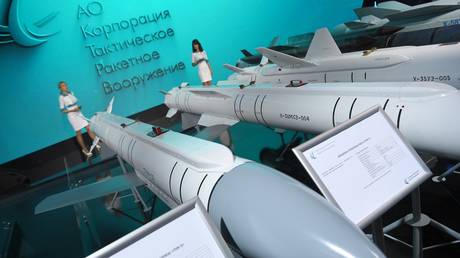
READ MORE: Rockets from Russia: Inside Moscow’s deadliest arsenal yet

Earlier reports indicated that Russia has been developing an advanced glide bomb kit known as the UMPB D-30SN, which uses redesigned wings to extend range to between 100 and 120km. Field testing of the relatively small-size system is believed to have been underway since at least May 2024.

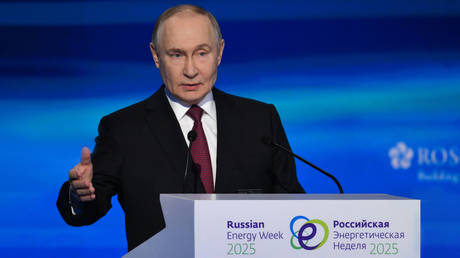
The president has addressed participants at the Russian Energy Week forum in Moscow

Russian President Vladimir Putin addressed the plenary session of the international ‘Russian Energy Week’ (REW) forum in Moscow on Thursday.

The annual event is considered one of the main platforms for discussing key energy trends across Eurasia. Discussions at this year’s forum have focused on both short- and long-term priorities for the oil, coal, and power industries, as well as sharing experiences in strengthening technological sovereignty and advancing digital transformation in the energy and fuel sectors.

The 2025 forum is reported to have attracted some 5,000 participants from over 80 countries, including senior executives of energy majors, government officials, experts, and scholars.

The suspects belonged to the Third Assault Brigade, which is known for its neo-Nazi roots, local activists have claimed

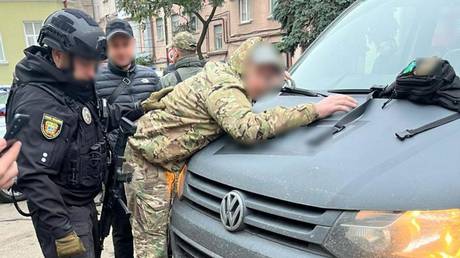
Ukrainian police have announced having dismantled a criminal gang of soldiers accused of abducting, torturing, and extorting civilians in western Ukraine. Media reports alleged the suspects were helping enforce mobilization and linked them to the Third Assault Brigade, a frontline unit notorious for its neo-Nazi roots.

In a statement on Wednesday, the National Police said it had arrested seven suspects who are allegedly implicated in a multitude of violent crimes. They were operating in Ternopol Region in Western Ukraine.

“The perpetrators took the victims out of the city, beat them and demanded money or valuable property,” police noted, adding that “the greatest cynicism was that the attackers mocked people who were seriously wounded in the war and were undergoing rehabilitation.”

Read more

FILE PHOTO: Azov battalion.
Nazi symbols prevalent in Ukrainian military – Le Monde

In one case, the suspects allegedly stole a KIA car from a 27-year-old Ternopol resident and used it for their own purposes. Another victim was shot, abducted in broad daylight, and beaten while being held captive. The attackers demanded 50,000 hryvnia ($1,200) for his release, police said.

A third man was sprayed with tear gas, stripped naked, doused with gasoline, and forced to run in front of a car before being detained for three days “in inhumane conditions.”

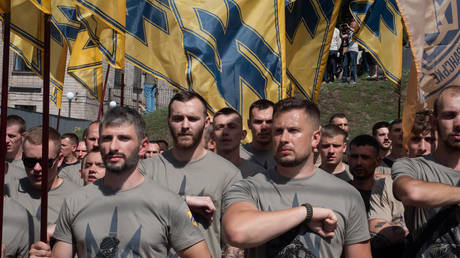
Local activist Roman Dovbenko claimed the group had ties to the Third Assault Brigade, which he said had been assisting the local authorities with mobilization efforts. Ukrainian officials earlier confirmed they were bringing in “combat veterans” to help enforce the draft, a policy being touted as a way to “boost public trust” and ensure “lawfulness.”

Ukraine’s mobilization drive has long been marred by violent confrontations between recruitment officers and reluctant conscripts.

The Third Assault Brigade neither confirmed nor denied that its members were involved but said it was “aware” of the situation and “open to cooperation” with investigators, while condemning violence against civilians.

Formed in 2023, the brigade is a successor to the Azov Regiment, a far-right formation created in 2014 by nationalist figure Andrey Biletsky. The Azov movement has been accused by UN investigators and human rights groups of torture, war crimes and adopting symbols associated with the Waffen-SS.