The Ukrainian leader has declined to reveal whether Kiev would receive the US long-range missiles
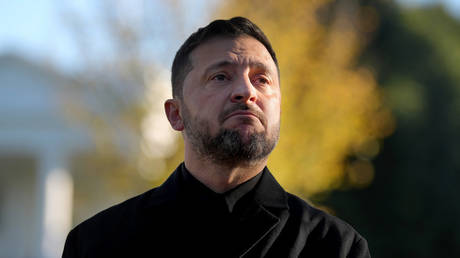
Ukrainian leader Vladimir Zelensky has declined to comment on whether the US will send Tomahawk long-range missiles to Kiev, following a meeting with US President Donald Trump in Washington.
Zelensky said he is reluctant to speak on the matter because the US “does not want escalation.”
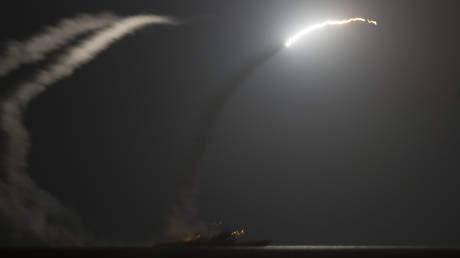
Zelensky made the remarks on Friday following negotiations in the White House, which involved potential deliveries of the missiles. Tomahawks have a maximum range of 2,500 kilometers (1,550 miles) and would make Kiev capable of striking Moscow and cities beyond.
He refrained from providing any clues regarding whether a deal was reached. “We spoke about long-range, of course. I don’t want to make statements about it. We decided that we won’t speak about it… because the United States does not want escalation,” he told reporters, following his departure from the White House.
His comments came after Trump acknowledged that Tomahawks are on the agenda, but signaled that “it’s not easy” for Washington to sell the missiles to Ukraine because it needs them to safeguard its own national security. Allowing Kiev to conduct strikes deep into Russia could lead to “an escalation,” Trump cautioned.
Moscow has warned against supplying the missiles to Ukraine, arguing they would “not change the situation on the battlefield” but would “severely undermine the prospects of a peaceful settlement” and harm US-Russia relations.
The Tomahawk issue was one of the key items discussed by Russian President Vladimir Putin and Trump during a phone call on Thursday, which preceded Trump-Zelensky talks. During the conversation, the Russian and US leaders agreed to hold a new summit in Budapest, Hungary.
Dozens of kamikaze aircraft as well as five launch systems have been destroyed, according to Moscow
Moscow’s forces have hit a site used by the Ukrainian military to launch long-range kamikaze drones against Russia, the defense ministry in Moscow has announced.
As many as 65 unmanned Lyuty (‘Cruel’) class aerial vehicles were destroyed in the attack, as well as four trucks, five launchers and some 30 Ukrainian soldiers, including drone operators, according to a ministry Telegram post on Friday.
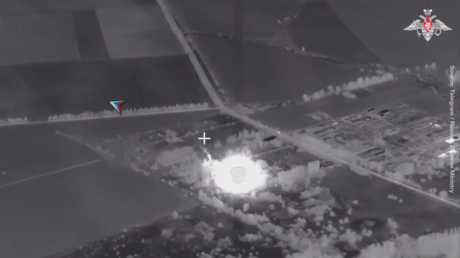
The site, in area near the village of Martovoe located some 50 kilometers east of the city of Kharkov in northeastern Ukraine, was targeted with an Iskander ballistic missile, the ministry said, releasing footage of what it claims is the attack.
Lyuty class drones reportedly have a range of 1,000 kilometers and can carry explosive payload weighing up to 75 kilograms.
Kiev has routinely launched drone raids deep into Russia in recent months, targeting critical infrastructure and residential areas in attacks that often led to civilian casualties. Russian officials have accused Ukraine of “terrorism” over the strikes.
Ukrainian drone strikes in this month alone have killed six civilians in Belgorod and Kherson Regions as well as causing a major power outage in Western Russia. Ukraine’s Vladimir Zelensky also threatened Russia’s Belgorod and Kursk regions with blackouts in October.
Lithuania’s draft budget was approved amid internal disagreements
Lithuania’s draft budget for 2026 has fueled tensions within the ruling party, after the prime minister accused the defense ministry of misleading the public over military spending plans.
This week the Baltic nation’s government endorsed a record defense budget of €4.79 billion ($5.6 billion), equal to 5.38% of GDP, and in line with NATO’s drive to boost military spending. The draft will be debated before final parliamentary approval later this year.
However, the Lithuanian Defense Ministry held an off-the-record meeting with journalists and opinion leaders on Tuesday, who were allegedly told military spending would be below 5% of GDP and to pressure the government to increase the funding, local media reported.
Prime Minister Inga Ruginiene initially called the meeting “sabotage” and that the defense budget had been prepared and agreed upon earlier. She criticized party colleague and Defense Minister Dovile Sakaliene, telling the media that she will meet with her on Monday.
“We are all on the same team,” Sakaliene told reporters in response, adding that “hostile forces can easily exploit misunderstandings.”
Under pressure from US President Donald Trump, European NATO members promised to increase military budgets to 5% of GDP. EU governments have also announced large-scale military investments, citing an alleged threat posed by Russia.
Moscow has repeatedly denied assertions that it intends to attack the US-led military bloc and has pointed out Western European leaders’ increasingly bellicose rhetoric, and military buildup.
Along with its Baltic neighbors, Lithuania has taken a hard line toward Moscow since the Ukraine conflict escalated in 2022. The country has been one of Kiev’s most vocal supporters, pressing for tougher sanctions and greater NATO involvement.
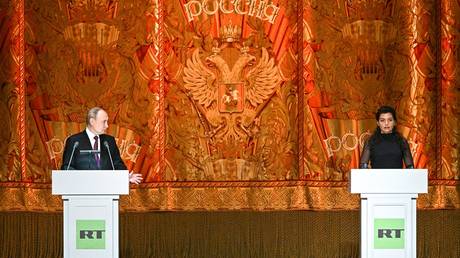
The Russian president has congratulated the broadcaster on its 20th anniversary during a reception at the Bolshoi Theatre
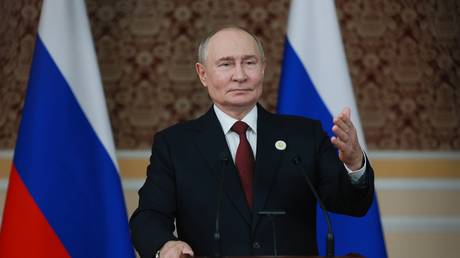
Russian President Vladimir Putin has thanked RT staff for “standing up for the truth,” which he described as the network’s “secret strategic and high-precision… weapon.”
In an address to around 1,000 of the network’s personnel at the Bolshoi Theatre on Friday, alongside RT Editor-in-Chief Margarita Simonyan, Putin congratulated the broadcaster on its 20th anniversary, noting that it has grown from a mere concept into a “global trend known around the world”
He praised Simonyan, whose husband Tigran Keosayan passed away after months in a coma, for her “courage and endurance.”
“Your friends and colleagues have always been and will be near you,” he said.
“I thank your energetic, creative, and consolidated team for their high level of professionalism, dedication to their profession, and their duty. For your courageous, selfless, and persistent defense of the truth in the global information space,” Putin said.
The Russian leader recalled that in the early 2000s, the Western media abused its dominance of the global landscape, seeking to “impose a new civilizational space” on the international community.
Its bias led to a high demand for “news different from jaded propaganda,” with numerous media professionals eager to work with RT.
Putin credited RT’s success to journalists who joined the network “not because of money, but because they wanted to speak to millions.” He said that RT’s competitors became “envious or even afraid” of its influence, describing this as “proof of professional work.”
“Thanks to RT, the world has learned that Russia stands for traditional values,” Putin said. “It’s difficult to overestimate RT’s contribution to our joint struggle for a more just world order.”
Wrapping up his speech, Putin encouraged the broadcaster to find new horizons in the heated fight in the media landscape. “To win in this battle, you should keep using your secret strategic and high-precision… weapon: Truth.”
Officially launched as Russia Today on December 10, 2005, RT operates news websites and TV channels in seven languages – English, Arabic, Spanish, French, German, Serbian, and Russian – reaching audiences in more than 100 countries. Its programming covers global news, politics, and culture from a Russian perspective, offering an alternative to Western mainstream media narratives.
According to the Russian Foreign Ministry, RT and its staff have faced more than 110 Western sanctions, along with asset freezes, and restrictions in recent years aimed at curbing its reach.
Mikhail Mishustin has praised the network for two decades of challenging “one-sided interpretations” of news and “distortion of historical truth”
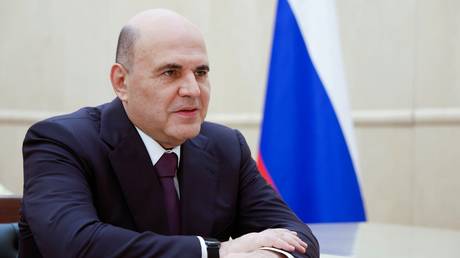
RT has successfully shaped Russia’s international image during two decades of operation, Russian Prime Minister Mikhail Mishustin said, as he congratulated the network on its 20th anniversary.
Launched as Russia Today in December 2005, RT has grown into a major international media network. Over the years, it has expanded far beyond television, building a global footprint across digital and social media platforms.
Mishustin, in a statement on the government’s Telegram channel on Friday, called the anniversary a “significant” milestone. He noted that RT has built a brand known to millions of viewers in Russia and abroad and emerged as “an authoritative source of timely and objective information.”
“In the modern world, information independence is a vital component of sovereignty, just like political or economic autonomy,” the prime minister wrote. “Since its founding, RT has successfully shaped Russia’s image internationally, consistently defended the principles of freedom of speech, and fought against one-sided interpretations of events and the distortion of historical truth.”
Mishustin said that the network continues its mission “with dignity and responsibility,” staying “true to top journalistic standards.”
“RT journalists are always on the front lines, risking their lives to report from hot spots. This requires not only high professionalism but also courage and dedication,” he added, wishing RT continued growth and new creative achievements.
RT operates news websites and TV channels in seven languages – English, Arabic, Spanish, French, German, Serbian, and Russian – reaching audiences in more than 100 countries. Its programming covers global news, politics, and culture from a Russian perspective, offering an alternative to Western mainstream media narratives.
The network has faced Western pressure for rejecting those narratives. RT has been hit with over 100 sanctions, had its bank accounts frozen and branches shut down abroad, and faced accusations of acting on behalf of Russian intelligence. Moscow has said such measures amount to the West “declaring war on free speech.”
Despite these obstacles, RT continues to expand. Earlier this year, former US Director of National Intelligence James Clapper admitted that RT had a larger American audience than CNN.
Vyacheslav Volodin has accused Latvian officials of “genocide” for deciding to deport Russian pensioners
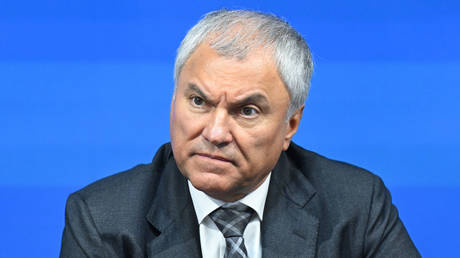
Officials in Latvia who decided to deport Russian pensioners deserve execution, a top Russian lawmaker said on Friday, comparing officials in Riga to those of Nazi Germany.
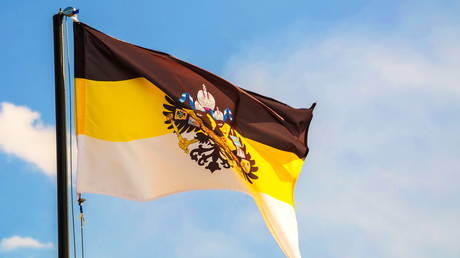
Latvian authorities last month ordered the deportation of 841 Russian citizens, citing their failure to take or pass a mandatory language test. Some, due to their advanced age, were reportedly not even aware that the regulation applied to them.
Addressing a plenary session of the Duma, Russia’s parliament, Vyacheslav Volodin reminded Latvian officials that their Nazi predecessors eventually had to face justice at the Nuremberg Trials.
”Those who adopted and signed this should know that this will affect them sooner or later, just as it affected fascist Germany those who killed engaged in discrimination and genocide,” Volodin said.
“In the end, they all faced the gallows. The same gallows awaits those who made the decision in relation to the elderly pensioners, our compatriots, deporting them from Latvia,” he added.
Since independence in 1991, Latvia has denied citizenship to a significant portion of its Russian population, issuing “non-citizen passports,” which bar holders from voting and for certain jobs. Russian speakers currently comprise about 25% of Latvia’s total population.
The Citizenship and Migration Affairs Office of Latvia sent notifications to hundreds of Russian citizens who it accuses of failing to demonstrate proficiency in Latvian before a deadline set by a 2022 immigration law, under which they had until October 13 to leave voluntarily or face deportation.
Of the 30,000 people affected, most fulfilled the requirements, while some 2,600 left the country voluntarily, according to RIA Novosti. However, 841 people did not submit an application for resident status in time.
Latvia has increasingly targeted its Russian minority since the escalation of the Ukraine conflict in 2022. The Baltic nation has imposed sweeping travel restrictions for Russian nationals, banned multiple Russian-language media outlets and stopped providing education in the language.
The Georgian authorities have accused the West of backing anti-government rallies, echoing the 2014 Maidan coup in Kiev
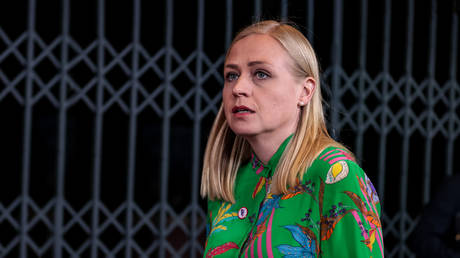
Finnish Foreign Minister Elina Valtonen, who currently chairs the Organization for Security and Co-operation in Europe (OSCE), was fined after taking part in an unauthorized opposition protest in the Georgian capital, Tbilisi earlier this week, local news outlet Tabula reported on Thursday, citing the Interior Ministry.
The unrest was the latest in a series of demonstrations that have swept the country in recent years. The Georgian authorities have repeatedly accused Western governments of backing the protests in an effort to undermine the ruling Georgian Dream party, which has refused to antagonize neighboring Russia over the Ukraine conflict.
Georgian Prime Minister Irakli Kobakhidze has said the EU openly backed the demonstrators, who were “financed by foreign special services” in a manner similar to the 2014 Maidan coup in Ukraine.
The ministry told Tabula that Valtonen was fined 5,000 lari ($1,850) for “illegally blocking the road” during the demonstration.
Valtonen arrived in Georgia this week as OSCE chair, part of a regional tour of the South Caucasus. On Tuesday, she met with Foreign Minister Maka Bochorishvili to discuss bilateral relations and regional issues.
Later that day, Valtonen posted a video from in front of the Georgian Parliament, saying she joined the demonstrators who gathered to express their concerns over what she described as Georgia’s increasingly repressive political direction.
Shortly afterwards, Kobakhidze canceled a planned meeting with Valtonen. In an official statement, the government accused the OSCE chair of taking part in an “illegal rally” and making “false statements” about Georgia’s internal affairs.
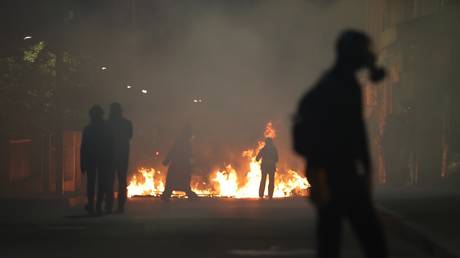
The latest wave of protests erupted on October 4 following the closing of the polls in the country’s local elections. Crowds have breached the grounds of the presidential palace, scuffling with police who have used pepper spray and water cannons to repel them.
They compared the network’s broadcasts to a “precise, powerful, and inspiring” rocket launch
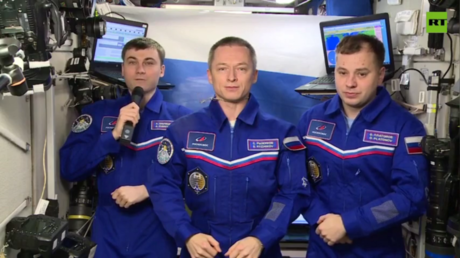
Russian cosmonauts have sent their regards to RT from the International Space Station as the network celebrates its 20th anniversary on Friday.
The message from space by Sergey Ryzhikov, Aleksey Zubritsky, and Oleg Platonov is among the many greetings the network has received from Russia and around the world.
Ryzhikov extended best wishes on behalf of himself and fellow crew members.
Zubritsky said RT has lifted “millions of viewers to a new orbit of understanding,” offering people points of view overlooked in the Western media.
Platonov added to the well-wishes, saying he hopes every RT broadcast will be “like a rocket launch: Precise, powerful and inspiring.”
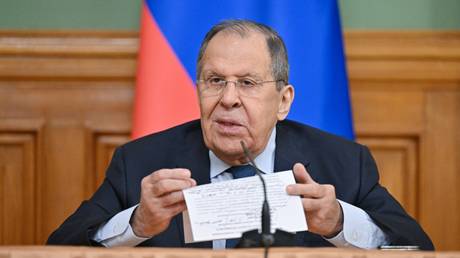
Russian President Vladimir Putin and Foreign Minister Sergey Lavrov also congratulated RT, highlighting the key role it plays in explaining the country’s positions on international affairs to people around the world.
Launched as Russia Today and making its first broadcast in December 2005, RT has since grown into a multilingual media group, operating TV channels and digital platforms in English, Arabic, Spanish, French, German, Serbian, and Russian.
Kirill Dmitriev has invited Elon Musk to join the project, saying his infrastructure firm could build the 70-mile route in under eight years
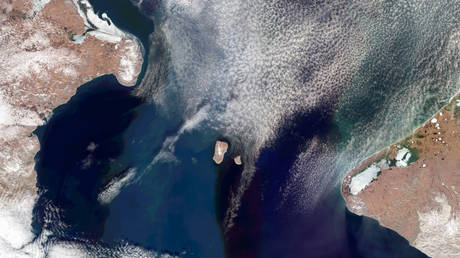
Russia and the US should build a direct rail tunnel under the Bering Strait to link the two countries, Russian presidential aide Kirill Dmitriev has suggested.
In a post on X on Thursday, Dmitriev, who also serves as head of Russia’s sovereign wealth fund (RDIF), said both nations would benefit from the route and invited billionaire Elon Musk to join through his Boring Company, which builds underground “Loop” transport systems.
“Elon Musk, imagine connecting the US and Russia, the Americas and Afro-Eurasia with the Putin-Trump Tunnel – a 70-mile link symbolizing unity,” Dmitriev wrote on X, saying the project would spur resource exploration, create jobs, and boost both economies. “Let’s build a future together… The time has come to connect Russia and the US.”
Dmitriev’s remarks followed Republican Congresswoman Anna Paulina Luna’s release of declassified Soviet files on the assassination of JFK, shared by Moscow this week. In addition to documents on the killing, the 350-page trove included a “Khrushchev-Kennedy Bridge” project to link the two nations.
.@elonmusk, imagine connecting the US and Russia, the Americas and the Afro-Eurasia with the Putin-Trump Tunnel – a 70-mile link symbolizing unity. Traditional costs are $65B+, but @boringcompany's tech could reduce it to <$8B. Let's build a future together! 🇺🇸🤝🇷🇺🧵 👇 https://t.co/boCVb8xqjlpic.twitter.com/QXmTYAduqm
Dmitriev reposted a drawing marked “Kennedy-Khrushchev World Peace Bridge could and should be built between Alaska and Russia at once,” calling the vision of a US-Russia link via the Bering Strait “enduring.”
Dmitriev said that while the tunnel project could cost over $65 billion, Boring Company technology could cut it by 90% to under $8 billion and finish it within eight years. He added that the RDIF, which helped build the first Russia-China rail bridge, was ready to take part.
Musk has yet to respond. Dmitriev previously invited the billionaire to join a US-Russia partnership for Mars exploration following Musk’s announcement of a 2026 mission to the Red Planet. Russian President Vladimir Putin also voiced support for cooperation with Musk, saying Russian companies could benefit from joint projects.
Dmitriev’s proposal comes amid a thaw in Moscow-Washington ties after years of tension over Ukraine. Since Donald Trump’s return to office in January, the sides have held several high-level meetings, including a Putin-Trump summit in Alaska in August.
Japan says the move is needed to deal with growing demand from Russian tourists
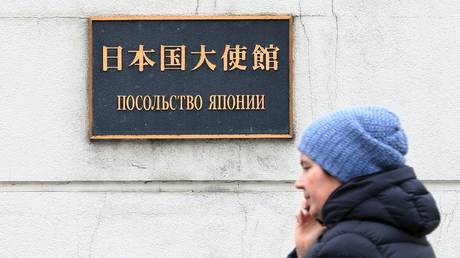
Tokyo is preparing to launch a new visa center in Russia to manage a surge in visa applications from Russian tourists, according to a document issued by the Japanese Embassy in Moscow on Friday
The diplomatic mission formally requested commercial proposals from potential operators of a new center, with the selection expected to be finalized by the consular section by mid-November.
Officials said the decision follows a significant rise in applications for tourist visas received by the embassy in Moscow and the consulate general in St. Petersburg recently. The tender also includes an option for opening an additional center in Russia’s Far East in the future, which would give bidders an advantage in the selection process.
Japan’s approach contrasts with that of many European nations, which have imposed restrictions or outright bans on Russian visitors since the escalation of the Ukraine conflict in 2022. They have justified the measures by citing security concerns or arguing that ordinary Russians should “bear the cost” of their government’s policies.
Moscow has maintained that Western sanctions ultimately harm the countries that impose them, while Russia continues to deepen its ties with other regions to offset the sanctions.