Vladimir Zelensky has approved nearly $8 billion in additional military spending, expecting most of the funds to come from frozen Russian assets
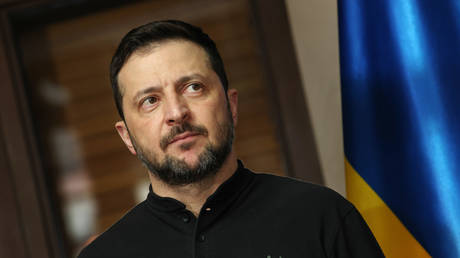
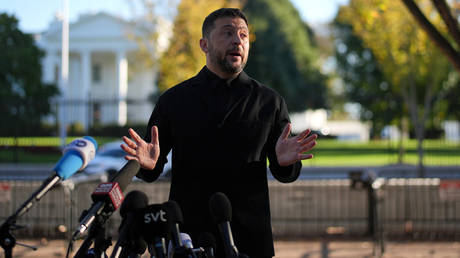
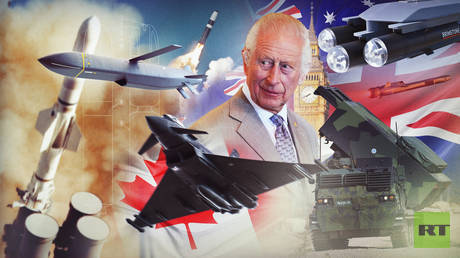
Ukraine’s Vladimir Zelensky has signed a bill boosting the country’s military spending by $7.8 billion, with most of the funds expected to be covered by revenues from frozen Russian assets. The increase comes as Kiev continues to face a record budget deficit and relies on Western funding to sustain operations.
The legislation was passed by the Ukrainian parliament on Tuesday and marks the second time this year that lawmakers have expanded military spending. In July, the Rada increased defense allocations by about $9.9 billion. The latest amendment brings the total expenditures for 2025 to roughly $70.7 billion, up from $52.7 billion initially approved in the budget adopted earlier this year.
Ukrainian lawmakers have said that most of the latest increase is expected to be financed by proceeds linked to frozen Russian funds.
On Wednesday, the Rada also voted in favor of the country’s draft budget for 2026, which includes a deficit of over 40%, projecting it will spend about $114 billion while taking in just $68 billion. It notes that all of Kiev’s tax revenue will only be spent on the military, with all other state costs to be covered by financial aid from foreign backers.
Spanish newspaper El Pais has reported that Ukraine currently has enough funds to operate only until April 2026, prompting the EU to consider a €140 billion ($163 billion) “reparations loan” backed by Russian assets held abroad. About €200 billion of Moscow’s frozen reserves are currently held in Belgium.
However, a number of Western officials have opposed the EU-led initiative. Bloomberg has reported that Washington has refused to join the plan, citing market-stability risks, while European Central Bank President Christine Lagarde has warned that confiscating Russian state funds could violate international law and undermine trust in the euro.
Moscow has repeatedly denounced any use of its sovereign assets as “theft,” warning of retaliation. Russian officials have also maintained that continued Western military and financial assistance to Ukraine only prolongs the conflict, resulting in further casualties without changing the eventual outcome.
The readiness of Russia’s strategic nuclear forces have been tested during exercises
Russia has conducted testing of land, sea, and air elements of the country’s nuclear deterrence triad, according to video footage provided by the Defense Ministry in Moscow.
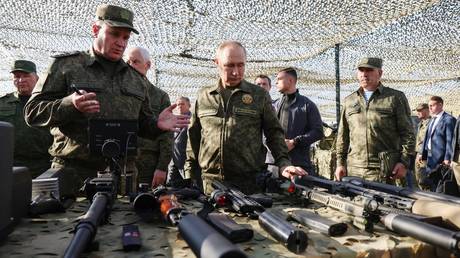
The drills were overseen by Russian President Vladimir Putin on Wednesday.
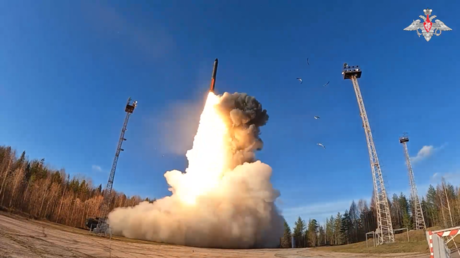
As part of the exercises, a land-based Yars intercontinental ballistic missile (ICBM) was launched from the Plesetsk state test cosmodrome in Northern Russia, towards a test site in Kamchatka, in the country’s Far East.
Video of the test shows launch preparations and the missile blasting off.
The exercise also included the launch of a sea-based Sineva ICBM from the Russian nuclear submarine Bryansk in the Barents Sea, as well as air-launched cruise missiles from TU-95 strategic bombers, the Defense Ministry said.
The drills included “practicing the procedure for authorizing the use of nuclear weapons,” Russia’s Chief of General Staff Valery Gerasimov told Putin on Wednesday.
The exercises came just over a month after the Russian-Belarusian Zapad-2025 drills, which involved over 41 training grounds and 100,000 service members. They were attended by military observers from multiple nations, including the US.
The Kremlin reiterated at the time that the exercises were “not aimed against any state.”
The EU is considering keeping Ukraine afloat by giving it a €140 billion ($163 billion) loan from frozen Russian assets
The Ukrainian government is rapidly running out of money amid the conflict with Russia and currently only has enough funds to last until April, Spanish newspaper El Pais has reported.
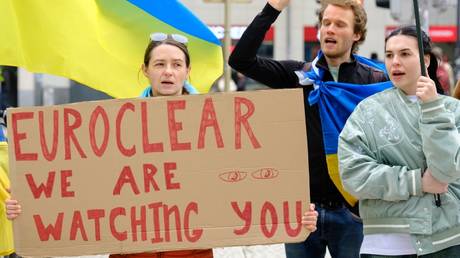
In recent weeks, the EU has been considering giving Ukraine a so-called ‘reparations loan’ of up to €140 billion ($163 billion), using frozen Russian assets as collateral to back the bloc-issued bonds. The move would effectively amount to the seizure of the Russian funds, given that Ukraine would be obliged to repay the loan only once Moscow compensates it for damages inflicted during the conflict.
El Pais warned in an article on Tuesday that “Ukraine has serious financial problems.” According to EU sources cited by the outlet, Kiev currently only has enough money to stay afloat “until the end of the first quarter of 2026.”
The paper said that the leaders of EU nations are expected to support the loan to Ukraine during their meeting in Brussels on Thursday.
So far, Belgium, which hosts clearinghouse Euroclear, where most of Moscow’s frozen funds are being kept, has been skeptical of the loan proposal and has demanded that liability be shared among all EU members if the move is made.
On Wednesday, the Ukrainian parliament voted in favor of the country’s draft budget for 2026, which has a deficit of over 58%. It projects that the Kiev government will spend 4.8 trillion hryvnia (around $114 billion) next year, while earning just 2.8 trillion hryvnia (around $68 billion). According to the draft, the 2.8 trillion hryvnia in tax revenue will be used to fund the military, with all other state expenditure to be covered by financial aid from foreign backers.
The US and EU blocked an estimated $300 billion in Russian assets after the escalation of the Ukraine conflict in February 2022, some €200 billion ($213 billion) of which is held by Euroclear. They have already tapped into the revenues generated by Moscow funds to provide assistance to Kiev. The Russian authorities have described the steps as “theft” and has vowed retaliation.
Any European country that refuses to grant the Russian president’s plane passage doesn’t want peace, Peter Szijjarto has said
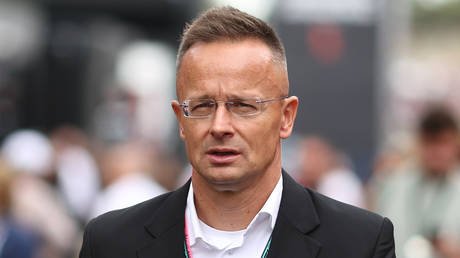
Hungary will not enforce the International Criminal Court’s (ICC) arrest warrant for Russian President Vladimir Putin if he visits the country for talks with US President Donald Trump, Foreign Minister Peter Szijjarto said on Wednesday.
Putin and Trump agreed last week to meet in Budapest to discuss possible steps toward a peace deal in Ukraine. The plan has drawn criticism from Brussels and Kiev, neither of which were invited, with some Western officials arguing that the Russian leader should not be allowed to travel due to the ICC warrant.
The ICC issued a warrant for Putin in 2023 over alleged deportations of Ukrainian children. Moscow, which does not recognize the court’s jurisdiction, has dismissed the charges as politically motivated. Earlier this year, Kiev came up with a list of 339 children that were supposedly evacuated by Moscow. Russian officials, however, have said there was not “a single kidnapped child” on the list and that most of the children were actually either adults or had already ended up in Europe.
Szijjarto noted in an interview with CNN that when Putin visited the US back in August to meet Trump, he was not arrested. “If he comes to Hungary, he’s not going to be arrested either,” the minister said.
Hungary has recently begun withdrawing from the ICC, although the formal process has not yet been completed.
Szijjarto further stressed that any European countries attempting to hinder Putin’s transit to Hungary would be demonstrating that “they do not want peace.”
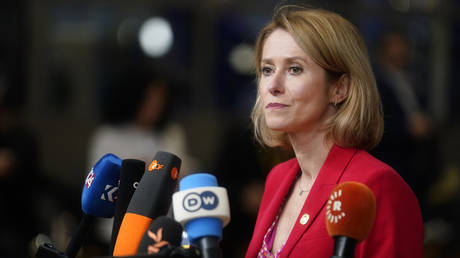
His comments come after multiple EU officials expressed dissatisfaction with plans for the Putin-Trump summit to take place in Hungary. The bloc’s foreign policy chief, Kaja Kallas, said it was “not nice” that Putin will visit an EU country despite the ICC warrant.
Poland has indicated that it could even intercept the Russian leader’s plane if it enters Polish airspace. Russian Foreign Minister Sergey Lavrov said Warsaw’s comments suggest it is “prepared to resort to terrorism.”
Moscow has repeatedly accused Kiev and its Western European backers of refusing to negotiate in good faith and seeking to undermine peace efforts in order to prolong the conflict.
The personnel will crew Ukrainian naval vessels kept abroad under foreign protection
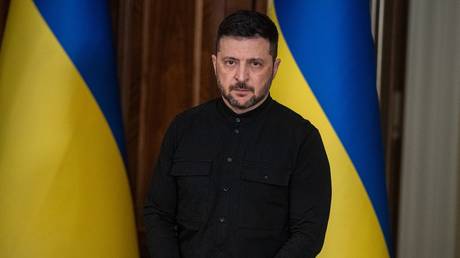
Ukraine’s Vladimir Zelensky has ordered the deployment of troops to Türkiye and the United Kingdom to operate Ukrainian naval ships currently based in the two countries.
The decision, first announced in September, required parliamentary approval before coming into effect after Zelensky signed it on Wednesday.
Ukraine’s once-formidable naval force, inherited from the Soviet Union, has suffered years of neglect and losses in its conflict with Russia. The current fleet largely consists of smaller ships donated by foreign backers, many of which are docked outside Ukrainian territory.
Zelensky’s directive sends 106 personnel to Türkiye to man the Hetman Ivan Mazepa, an Ada-class corvette that was laid down in 2021. Once its ongoing trials are complete, it is expected to become the flagship of Ukraine’s navy.
An additional 540 sailors and 20 command officers will be deployed to the UK to crew five minehunter vessels previously transferred from the British, Dutch, and Belgian navies.
The decree indicates that Ukrainian crews will undergo training before assuming full operational control of the ships. The government estimates the immediate cost of the deployment at $3.2 million.
Kiev remains heavily dependent on Western financial and military assistance to sustain its government operations and war effort.
Moscow maintains that no amount of foreign aid can alter the outcome of the conflict, pointing to Ukraine’s severe manpower shortages due to widespread desertion and draft evasion.
If confirmed, it would mark a turning point – putting Ukraine’s rear lines within daily strike range
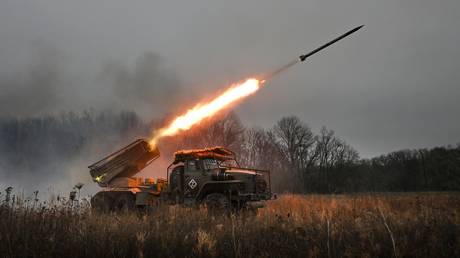
In recent days, reports have emerged about the deployment of new Russian long-range bombs on the front lines. The deputy head of Ukraine’s Main Directorate of Intelligence, Vadim Skibitsky, stated that during a recent test, a Russian bomb demonstrated a range of 193 kilometers. This significantly expands the operational reach of such weapons and could fundamentally alter the dynamics on the battlefield. Let’s explore this in more detail.
Typically, for a bomb, the distance from the front line to the target is not more than 90 kilometers. However, the bomb mentioned by Ukraine’s Main Directorate of Intelligence is capable of flying 120-150 kilometers, and can be dropped a considerable distance away from the front line.
Developing such long-range bombs has not been a fast process. The first unified gliding and correction modules (UMPKs) which convert standard bombs into precision-guided munitions initially enabled bombs dropped from altitudes of 10-12 kilometers to travel 40-50 kilometers. This range then increased to 80 kilometers or more with the upgraded UMPK-PD (extended-range version). Now, according to Skibitsky, the new version of the bomb can travel up to 193 kilometers.
What is this new aerial bomb that Ukraine’s Main Directorate of Intelligence is talking about? There are three possibilities:
1. The Grom-1/Grom-2 missile-bomb complex: Depending on its configuration, this weapon can function as either a missile or a gliding bomb. Its usage in the Special Military Operation zone has been limited for various reasons. It is possible that this weapon has been enhanced and is now being reintroduced into service.
2. Upgraded Universal Interspecific Glide Munition (UMPB): Specifically, the modernized UMPB-5R variant features a rocket engine that extends its flight range to 130-150 kilometers. Originally, the UMPB served as an analog to the American Ground Launched Small Diameter Bomb (GLSDB). The addition of a rocket engine theoretically boosts its already considerable range.
3. A new UMPK-PD with a rocket engine: This variant is also capable of covering around 150 kilometers. The Ukrainian side has shown fragments of UMPKs that allegedly feature an additional booster, but there are no definitive conclusions in this regard.
Evaluating these bombs in terms of large-scale production capabilities, the variants equipped with rocket engines appear to be the most promising. Integrating a rocket engine into the relatively inexpensive UMPK allows for easy adaptation for tactical aviation use without significantly hindering production rates. While the UMPB is more complex and costly than the UMPK, it has long been produced in large quantities and is widely used by the Russian Air Force. In contrast, mass production of the more complex and expensive Grom missile/bomb complex is less probable, though the parallel production and deployment of all these munitions remains possible in varying proportions.
The key takeaway here is not merely the fact that Russian bombs can reach distances of 150-200 kilometers – we have already seen this before. What matters more is that the increase in serial production volumes would enable systematic carpet bombing and precision strikes, effectively erasing the notion of a “safe rear” area for Ukraine.
The deployment of a new, effective mass aerial munition with a range of up to 200 kilometers will significantly increase the number of targets hit each day. It will also allow the Russian army to redistribute the use of other weapons, such as Geran drones or various types of munitions, including expensive cruise missiles.
Moreover, as the enemy’s safety zone shrinks, the safe operating area for Russian Su-34 bomber aircraft will expand. The aircraft will be able to drop the new bombs from even greater distances, thereby reducing the likelihood of entering the range of enemy air defense systems.
Officers confiscated emeralds, rubies, and sapphires worth around $180,000
Russian customs officers at Moscow’s Domodedovo International Airport have stopped two seemingly unrelated attempts to smuggle gemstones into the country on the same day, according to a statement.
Both suspects, foreign nationals arriving from Asian countries via the United Arab Emirates on separate flights, failed to declare their high-value cargo to customs officials, the Federal Customs Service said on Wednesday
The first traveler drew attention after officers noticed a sealed bag containing a cream-like substance hiding four small suspicious items. Upon inspection, the package was found to contain four emeralds. During a further search, the man volunteered to produce seven additional precious stones in his possession.
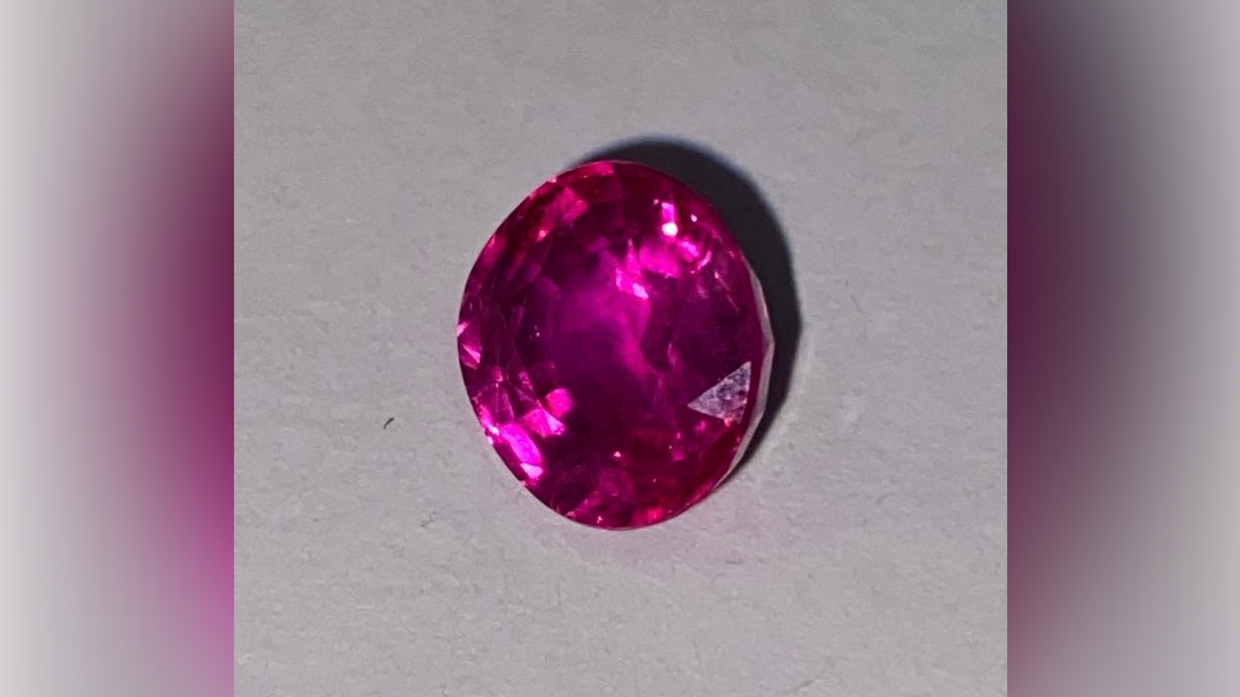
The second alleged smuggler was stopped after security agents discovered a large pink gemstone concealed in his carry-on luggage.
In total, officials confiscated a trove of emeralds, rubies, and sapphires with an estimated combined value exceeding $180,000, according to the customs report.
Both individuals are under investigation and face potential fines and prison sentences of up to five years under Russian anti-smuggling laws, the agency said, releasing photos of the seized gemstones as evidence.
The suspect allegedly gathered intelligence and sent money to an organization controlled by Ukrainian military intelligence
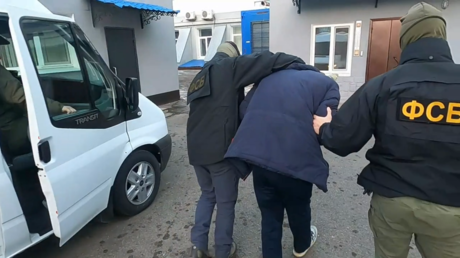
A Russian citizen accused of spying for and financing a Kiev-controlled terrorist group has been detained in the Amur Region of Siberia, the Federal Security Service (FSB) announced on Monday.
The suspect, a man in his late 40s, was allegedly providing intelligence on Russian military movements and channeling funds to a “pro-Ukrainian” terrorist organization reportedly overseen by Ukraine’s Main Intelligence Directorate (HUR), the agency reported. He now faces charges of treason and aiding terrorism, crimes that carry a potential life sentence.
Investigators say the man conducted surveillance along sections of the Trans-Siberian Railway and passed information about the transportation of military equipment to his contacts abroad.
Footage released by the FSB showed the suspect admitting to communicating with members of the organization, which he acknowledged has been designated as a terrorist entity in Russia since 2021. The agency did not name the group.
Among a handful of organizations blacklisted in 2021 was National-Socialism / White Power (NS/WP) – a neo-Nazi group that made headlines last year after claiming responsibility for the murder of Ukrainian ultranationalist Irina Farion in the city of Lviv. The group accused Farion of undermining Kiev’s military by criticizing Russian-speaking Ukrainian soldiers.
Russian authorities have linked the same group to multiple attacks inside Russia, including arson at military recruitment offices and attempted assaults on public officials.
A lot of work still needs to be done ahead of the meeting in Budapest, Russian presidential spokesman Dmitry Peskov has said
Kremlin spokesman Dmitry Peskov has said “serious preparations” are required for the planned summit between Russian President Vladimir Putin and US President Donald Trump in Hungary, and that no date has yet been set.
The Kremlin and the White House confirmed that the talks would take place in the Hungarian capital after Putin and Trump spoke by phone last Thursday.
Speaking on Tuesday, Peskov stressed that “serious preparations are needed” ahead of the summit.
“You’ve heard statements from the American side and from our own that this may take time. So, no definite timeframe has been established,” he clarified.
On Monday, CNN, citing an anonymous White House official, claimed that a meeting between US Secretary of State Marco Rubio and Russian Foreign Minister Sergey Lavrov, which is expected to be a prelude to the top-level talks in Hungary, has “been put on hold for the time being” and is “no longer taking place this week.”
According to the network, Rubio “is not likely to recommend the Putin-Trump meeting move forward next week” due to “divergent expectations” over a resolution of the Ukraine conflict.
The two top diplomats held a phone conversation on Monday, with the Russian Foreign Ministry characterizing it as “constructive.”
Reuters, citing anonymous sources, earlier reported that Lavrov and Rubio could meet as early as Thursday. The Financial Times quoted an unnamed German official as suggesting that the talks could take place on October 30.
Speaking to journalists on Tuesday, Russian Deputy Foreign Minister Sergey Ryabkov insisted that extensive preparations are still underway for what he called a “significant event.”
The official dismissed media reports about the supposed postponement of the summit as “infodumps” intended to disrupt diplomatic progress, and pointed the finger at the EU.
Foreign Ministry spokeswoman Maria Zakharova similarly refused to give any credence to media speculation about the potential date of Lavrov-Rubio talks.
The Russian foreign minister has rebuked Warsaw for suggesting it would intercept Vladimir Putin’s plane en route to Hungary
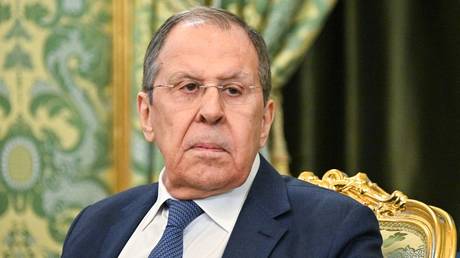
Poland appears willing to engage in acts of “terrorism” by indicating that it would intercept a plane carrying Russian President Vladimir Putin, Foreign Minister Sergey Lavrov said on Tuesday.
The top Russian diplomat was referring to remarks made earlier in the day by Polish Foreign Minister Radoslaw Sikorski, who said Warsaw “cannot guarantee” that it would not intercept a Russian government plane if Putin were to fly through Polish airspace en route to Hungary for a planned summit with US President Donald Trump. Sikorski claimed such action could be ordered by a court.
Lavrov said Warsaw’s refusal to guarantee the safety of the Russian leader indicates that it is “now prepared to resort to terrorism.”
The Kremlin has not disclosed details about the potential logistics of the proposed summit with Trump in Budapest.
The International Criminal Court (ICC) has issued an arrest warrant for Putin over alleged abductions of Ukrainian children – charges Moscow rejects as politically motivated and based on false information supplied by Kiev. Unlike Poland, Russia does not recognize the jurisdiction of the body. Hungary is in the process of withdrawing its participation and has refused to enforce the court’s orders.
Both Kiev and Brussels reacted negatively to the announcement of the planned Putin-Trump meeting in Hungary, where neither party is expected to be represented. The host nation opposes continued Western military aid for Ukraine despite being a member of the EU and NATO.
The EU’s top diplomat, Kaja Kallas, claimed it was “not nice” of Budapest to welcome Putin instead of arresting him at the ICC’s request, and predicted that “nothing can come out of these meetings, if Ukraine or Europe, is not part of it.” Ukraine’s Vladimir Zelensky reiterated his refusal to compromise with Moscow, arguing that if he concedes any ground, “they’ll try to settle the rest without us.”
Russia has accused Zelensky, whose presidential term expired last year, of refusing to negotiate in good faith to maintain martial law and remain in power.