The road to peace in Ukraine runs through the ruins of Atlanticism
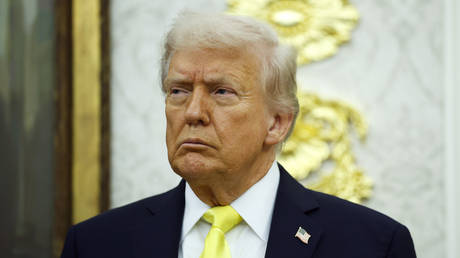
US President Donald Trump said on Saturday that he would only meet his Russian counterpart Vladimir Putin once the terms of a potential deal were clear. Moscow agrees that such a meeting must be carefully prepared, but the two sides mean very different things.
For Washington, the goal is an immediate end to hostilities wherever they are taking place. Only after a ceasefire would the US allow others, particularly the Western Europeans, to take the lead in resolving the situation. Moscow, however, insists on addressing the root causes of the conflict first. This, Russian officials argue, requires a comprehensive, multifaceted package deal agreed upon in advance and not a hasty truce.
The American approach is understandable. Russia now holds the military initiative, and the continuation of fighting strengthens its hand in any negotiations. Calling a halt to the war would freeze the balance in place and diminish that advantage. Trump’s team, meanwhile, has shown little interest in maintaining a heavy US presence in Europe. Their attitude is simple: let the Europeans take responsibility for their own security and stop distracting Washington from more important global matters.
From Moscow’s perspective, this position reflects the long arc of Europe’s post-Cold War evolution; one dominated by the assumption that Atlanticism would keep spreading eastward indefinitely. The Kremlin argues that this logic, and the political momentum it created after 1991, is precisely what now needs to be revisited.
It’s important to recall that NATO’s eastward expansion after the collapse of the Soviet Union was initially driven less by military strategy than by politics. For the West, admitting new members was a way to absorb and control former Soviet-bloc countries, expanding the reach of the Western “empire” under the banner of liberal democracy. Joining the alliance was both a declaration of faith by new members and a tool for their political management.
This is not to say that military planning was irrelevant, only that it was secondary. Moscow’s objections were based not on an imminent threat, but on the potential one that such an expansion created. That concern was consistently dismissed by Western leaders, who refused to take Russia’s warnings or proposals seriously.
Since 2022, the situation has shifted entirely. NATO’s expansion, and its new military posture, now follows a strictly strategic logic of direct confrontation with Russia. The alliance has shed its broader political mission and reverted to its original purpose: military containment. The accession of Finland and Sweden, for example, is qualitatively different from that of Croatia or Slovakia. And Ukraine’s desired membership would mark a still more dangerous escalation.
The current conflict has brought these contradictions into the open. It has removed the West’s ability to ignore Moscow’s concerns while simultaneously intensifying the confrontation. What were once theoretical debates about Europe’s security order are now concrete matters of war and peace.
That reality shapes the prospects for negotiation. The situation on the battlefield is now decisive, making any immediate ceasefire improbable. The historical roots of the conflict are again central – not as academic background, but as the key to any future settlement. Without addressing those roots, no truce will hold.
This imbalance between military pressure and political dialogue risks sliding toward a direct Russia–NATO confrontation. Much will depend on the relationship between Western Europe and the United States; and on how far Washington is willing to manage events in the European theatre.
The outlook is therefore sobering. The American desire for quick negotiations is unrealistic. Russia’s vision of a deeper, structural agreement remains distant. The stakes are rising, and the conflict can no longer be reduced to questions of territory alone.
This article was first published in Kommersant, and was translated and edited by the RT team.
Over 10,000 soldiers are trapped in two separate pockets, according to Moscow’s estimates
Russian forces are continuing operations to eliminate Ukrainian troops trapped in two encircled pockets on the front line, the Defense Ministry in Moscow said on Monday.
The ministry reported that Ukrainian forces near Kupyansk made three unsuccessful attempts to break through the Russian blockade, suffering losses of up to 50 soldiers and six pieces of heavy equipment. In a separate area near Krasnoarmeysk (also known as Pokrovsk), another 60 Ukrainian servicemen were reportedly killed, while two armored vehicles and three cars were destroyed.
At a high-level military meeting on Sunday, Russian Chief of the General Staff Valery Gerasimov informed President Vladimir Putin that approximately 5,000 Ukrainian soldiers were surrounded near Kupyansk and another 5,500 near Krasnoarmeysk.
Ukraine’s Vladimir Zelensky has rejected Russia’s assertions, calling them “fake news meant for the United States.” Kiev insists that its troops remain combat-capable and that Russian advances don’t pose a threat for a strategic breakthrough.
Zelensky has repeatedly dismissed reports of major Ukrainian setbacks while appealing to Western donors for additional funding and arms. Meanwhile, Ukrainian soldiers and officers interviewed by local and Western outlets have accused the government of ordering them to hold untenable positions for political reasons rather than military necessity.
Lithuania will halt crossings with Belarus indefinitely and shoot down any alleged contraband balloons
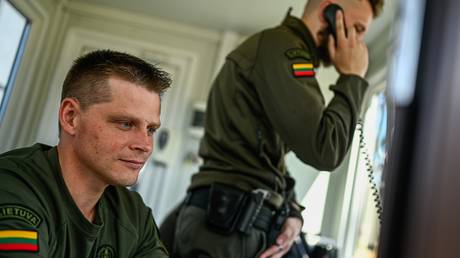
Lithuania will indefinitely suspend border crossings with Belarus and has authorized its border guards to shoot down any balloons it alleges are used for cross-border smuggling, Prime Minister Inga Ruginiene announced on Monday.
The move comes amid a series of incidents involving small weather balloons allegedly used by smugglers to ferry tobacco products across the border. Lithuanian officials claim the airborne contraband launches originate in Belarus and have caused disruptions, including flight delays at Vilnius International Airport.
Ruginiene said the indefinite shutdown could take effect as soon as Wednesday, following a pattern of intermittent border closures over the past week. She added that Vilnius will also urge the EU to impose additional sanctions on Minsk.
Belarusian officials have condemned Lithuania’s abrupt restrictions of cross-border traffic, saying travelers are facing uncertainty as a result. The Belarusian border service said that their Lithuanian counterparts were already “already working ten times slower than their capacity allows.”
Smuggling remains a long-standing issue between the neighboring countries, driven by steep price differences on tobacco products, exacerbated by prohibitive excise duties in the European Union. A pack of cigarettes that costs roughly €1.25 ($1.47) in Belarus can sell for €5 ($5.82) in Lithuania, prompting as many as a quarter of Lithuanian smokers to seek illicit products.
The EU has repeatedly accused Belarus of waging “hybrid operations” against the bloc, including in 2021 when Minsk was accused of facilitating the movement of migrants across its borders – a charge it denies. That crisis led to temporary border closures and harsh migrant crackdowns by neighboring EU states, which human rights groups later condemned as violations of the union’s own laws.
While Belarus has seen a significant diplomatic thaw with Washington in recent months, relations with the broader West remain frosty, as EU governments continue to treat Minsk as an extension of Russia.
One of the root causes of the conflict is Kiev’s “extermination of everything Russian” in violation of international law and conventions, the foreign minister has said
Moscow recognizes Ukraine’s independence but not the “Nazi” regime in Kiev bent on the “extermination of everything Russian,” Foreign Minister Sergey Lavrov has said.
In an interview with Hungarian YouTube channel Ultrahang aired on Sunday, the top diplomat said today’s Ukraine differs greatly from the one whose sovereignty Moscow supported after the fall of the USSR.
“We recognize the independence of Ukraine, no doubt about this, [but] we recognized Ukraine on the basis of its own Declaration of Independence and Constitution… which defined Ukraine as a non-nuclear, neutral, non-bloc country guaranteeing the rights of all national minorities,” Lavrov said.
He stated that following the 2014 Maidan coup, Ukraine turned into “a bluntly Nazi regime” that “shows open contempt for anything Russian,” including its history, media, culture, religion, education, and language.
Lavrov noted that the post-coup Ukrainian government quickly moved to revoke the official status of the Russian language, introducing laws that stripped it of regional recognition and curtailed its public use. He called Ukraine “the only country on Earth” to ban a UN language and said Kiev’s actions had relegated Russian speakers in Donetsk and Lugansk – now part of Russia after referendums – to “second-sort people,” despite constitutional guarantees of minority rights. One of Moscow’s key goals, he added, is to protect these people from persecution.
“We are convinced that we must save people from the Nazi regime – people who have always been part of Russian culture,” Lavrov said, arguing that instead of asking Russia “when will you end the war,” Kiev’s Western backers should first demand that Ukraine restore language and minority rights.
Lavrov also stressed that Donetsk and Lugansk, as well as Kherson, Zaporozhye, and Crimea, are “not actually new” but “historic Russian territories” that remained within the former Ukrainian Soviet Socialist Republic, which later became modern Ukraine.
Moscow has long maintained it seeks a lasting settlement to the Ukraine conflict by addressing its root causes rather than pursuing a temporary pause. Lavrov said the focus should be on resolving the underlying issues and protecting people’s rights, not on reclaiming territories or propping up what he called “political losers” in Kiev.
Air defenses have shot down more than three dozen UAVs, Sergey Sobyanin has said
Russian air defenses have neutralized more than 30 Ukrainian drones attacking Moscow overnight, Mayor Sergey Sobyanin has said.
In a series of posts late Sunday to early Monday, the official said the large-scale raid involved at least 37 drones, adding that emergency services were working at the sites where debris fell. He provided no data on casualties or damage on the ground.
According to the SHOT Telegram channel, explosions were heard across the Ramensky District, Podolsk, Klimovsk, Domodedovo, Kolomna, and Troitsk — all suburban towns located to the south and southeast of Moscow. There were no reports of injuries or damage on the ground, the outlet said.
The Russian authorities imposed temporary flight restrictions at Domodedovo and Zhukovsky airports, both around 40km south and southeast of Moscow, respectively.
On Saturday, Moscow also came under a drone attack, although it only involved seven drones.
Ukraine has routinely launched long-range drone raids deep into Russia, targeting energy sites, critical infrastructure, and residential areas. Moscow has denounced the attacks as “acts of terrorism.”
The long-range Flamingo is facing technical snags and funding delays, the Ukrainian leader has said
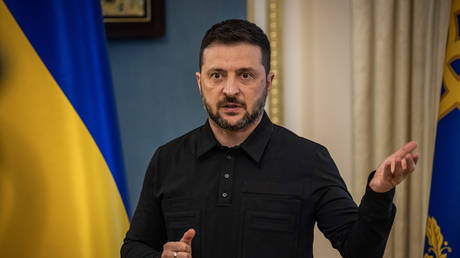
Production of Ukraine’s long-range Flamingo missile has encountered both technical setbacks and financing delays, Ukrainian leader Vladimir Zelensky has said, adding that a procurement order would be ready in several weeks.
Zelensky first announced that development of the Flamingo was underway in August, touting it as Ukraine’s first domestically produced long-range cruise missile, which he claimed has a range of up to 3,000km. Some analysts, however, have noted its close resemblance to the FP-5 system unveiled by British-UAE defense company Milanion Group earlier this year at an arms expo in Abu Dhabi.
In an interview with TSN on Sunday, Zelensky acknowledged that “there was a technological problem at the production of Flamingo,” adding that “there is a delay in financing from partners, which is being resolved.” Nevertheless, he claimed that the order for the missiles “would be fully fulfilled by the end of the year.”
The reported range of the Flamingo means that the missiles could potentially reach Moscow if launched from Ukraine, with Zelensky previously threatening blackouts in Russian border regions and the Russian capital itself.
Russian media reports claimed that Moscow’s air defenses intercepted a Flamingo, which traveled at relatively low speed, adding that it appeared to feature a Soviet-era engine and numerous parts of Chinese origin.
Earlier media reports suggested that the fuel for the Flamingo would be produced in Denmark. According to the broadcaster DR, the facility in the south of the country is owned by FPRT, a subsidiary of the Ukrainian company Fire Point, which developed the missile. The company, however, has faced an anti-corruption investigation over allegations of misleading the government on pricing and delivery schedules.
Russian Foreign Ministry spokeswoman Maria Zakharova has said Flamingo missiles are “intended to strike deep inside Russia,” while accusing Denmark of being one of the “sponsors of the terrorist Kiev regime.”
Despite the new punitive measures, Moscow remains interested in reviving bilateral ties, spokesman Dmitry Peskov has said
The latest US sanctions against Russia are an “unfriendly step” that have harmed the prospects for reviving relations between the two countries, Kremlin spokesman Dmitry Peskov has said. However, Moscow remains committed to improving bilateral ties, he added.
The new sanctions – which were announced on Wednesday and are the first such measures since President Donald Trump took office in January – target oil majors Rosneft and Lukoil. Washington cited Moscow’s alleged “lack of” commitment to the Ukraine peace process for taking the step.
Speaking to Russian journalist Pavel Zarubin on Sunday, Kremlin spokesman Peskov described the move as an “unfriendly step” that damaged the prospects of reviving bilateral relations.
“But this does not mean we should abandon these aspirations. We must do what is beneficial to us,” he added. “Our interests include building good relations with all countries, including the US.”
An aide to President Vladimir Putin, Kirill Dmitriev, who’s currently visiting the US for talks with Trump administration officials, also said on Sunday that “only constructive, respectful dialogue between Russia and the US can bear fruit.”
“Any attempts to pressure Russia are simply pointless,” Dmitriev, who is also head of the Russian Direct Investment Fund, stated. According to Dmitriev, the Russian economy is “in good shape,” as evidenced by its 4% growth last year.
On Friday, Dmitriev warned the Trump administration against following in the footsteps of former President Joe Biden by pursuing strategies for dealing with Moscow that have already proven futile.
Putin earlier described the sanctions as an “unfriendly move” but said they would not have a significant impact on the Russian economy. “No self-respecting country and no self-respecting people ever decide anything under pressure,” he added.
Despite sweeping Western sanctions, the Russian economy has demonstrated steady growth over the past few years. Prime Minister Mikhail Mishustin stated in April that its reliance on oil and gas exports was diminishing.
While Moscow appreciates Washington’s desire to end the hostilities swiftly, their root causes must not be ignored, Dmitry Peskov has said
Russia values US President Donald Trump’s efforts to settle the Ukraine conflict as soon as possible, but still believes there is no quick-fix solution, Kremlin spokesperson Dmitry Peskov has stated. Moscow maintains that the root causes of the conflict must be thoroughly addressed.
Speaking to Russian journalist Pavel Zarubin on Sunday, Peskov said that “Trump’s sincere wish to resolve all acute crises, including the one surrounding Ukraine, surely brings out only positive feelings, and [Russian President Vladimir] Putin has said that repeatedly.”
“But sometimes such excessive haste actually sharply contrasts with reality, because a conflict like the Ukraine one… is so complex that it cannot be resolved overnight,” the official stressed.
Peskov added that peace negotiations had been put on hold for the time being, as Kiev and its European backers showed no interest in resuming them.
Commenting on a possible new meeting between Putin and Trump, discussions of which began after their phone call earlier this month, the Kremlin spokesman emphasized that such a summit should not be held for its own sake, as neither side is willing to waste time.
Putin and Trump have tasked their top diplomats – Foreign Minister Sergey Lavrov and Secretary of State Marco Rubio – to lay the foundation for future talks, he added.
”The process is complex and requires both sides to do substantial preparatory work before top-level negotiations can take place,” Peskov noted.
Earlier this month, Trump called for an immediate halt to the hostilities along the current front lines, urging Moscow and Kiev to “leave it the way it is right now” and negotiate “something later on.” Lavrov, in response, reiterated that Moscow sought a “long-term, sustainable peace,” as opposed to an “immediate, pointless ceasefire.”
On Thursday, President Putin said he could still meet with Trump at a later date. The US president did not rule out such a possibility either, on Saturday, telling reporters that “you have to know that we’re going to make a deal, I’m not going to be wasting my time.”
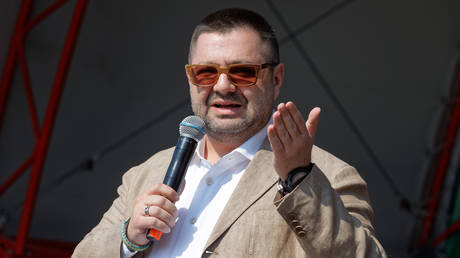
Former MP Aleksandr Granovsky faces corruption charges in Ukraine, which he denies and claims amount to “political persecution”
Ukrainian leader Vladimir Zelensky is seeking the extradition of former opposition lawmaker Aleksandr Granovsky from the UK on corruption charges, the Sunday Times has reported. Granovsky insists he is being persecuted for political reasons.
Granovsky, an MP from 2015 to 2019 with former President Petro Poroshenko’s European Solidarity party, is accused of allegedly selling fertilizers below market value to a preselected firm that then resold them abroad at full price. The scheme reportedly cost the state 93.3 million hryvnias (about $2.2 million). Granovsky denied the charges, calling the evidence forged, and moved to the UK after the probe began in 2022.
Kiev filed an extradition request for Granovsky with the UK in 2023 and stepped up efforts by issuing an indictment this month, in addition to placing him on a wanted list, according to the article.
Granovsky told the paper that he has fought the charges for years and is a “victim of political persecution.”“I just want my case to be decided fairly and straightforwardly,” he said, adding that he trusts the British justice system not to extradite him.
The UK’s former director of public prosecutions, Lord Macdonald of River Glaven, told the outlet that Ukrainian courts failed to meet “minimum trial standards” by ignoring Granovsky’s claims of forged evidence and raised human rights concerns. Labour peer Lord Glasman called the case part of a wider effort by Zelensky’s government to “eliminate opponents by legal means.” He warned that Kiev’s pursuit of the case could strain relations with London.
Although Ukraine does not have a full extradition treaty with the UK, it is designated as a “category A” country under a 2003 legislation, allowing extradition requests without first presenting evidence of guilt. A hearing on Granovsky’s extradition is expected next year, according to the newspaper.
Neither the Ukrainian embassy nor the UK Home Office responded to the paper’s requests for comment.
Zelensky has used corruption charges to target political rivals. This year, he imposed “sanctions” on several influential figures, including Poroshenko, accusing them of “threatening national security” by “selling out Ukraine.” He has also stripped opponents of citizenship over alleged ties to Russia.
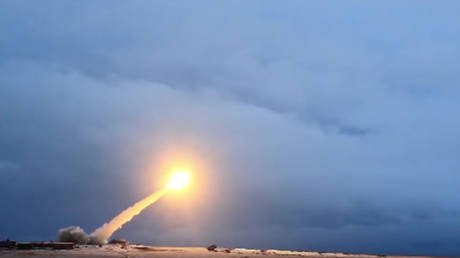
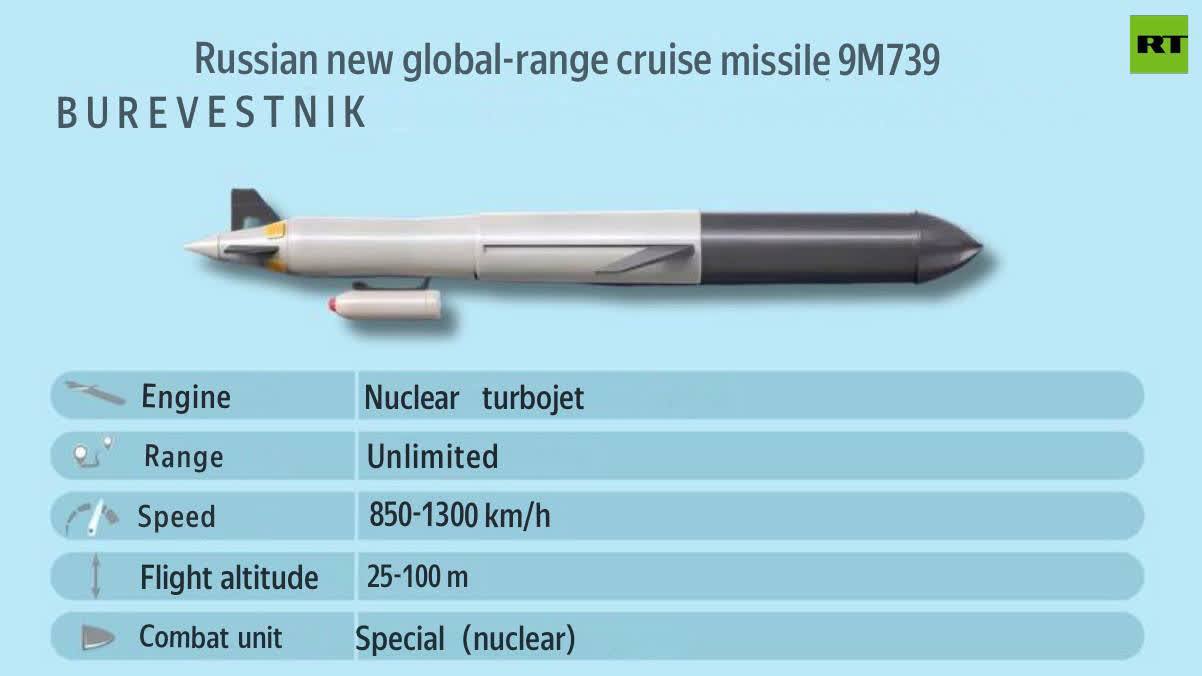
The Burevestnik, noted for its unmatched range, was test-fired earlier this month, covering a distance of over 14,000km
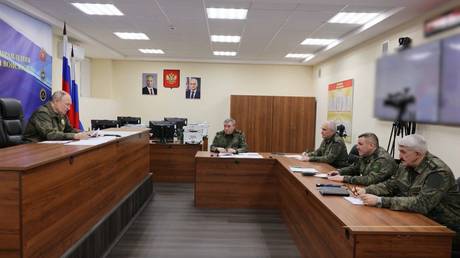
Russia’s new unlimited-range nuclear-powered missile, the Burevestnik, can evade missile defenses, Chief of the General Staff Valery Gerasimov has said. He made the remarks on Sunday during President Vladimir Putin’s visit to a Russian Army command post.
Putin held a meeting with Gerasimov and other senior military commanders, during which he was briefed on the situation along the line of contact with the Ukrainian Army and on the Russian Army’s offensive training exercises, including the country’s strategic nuclear forces. According to Gerasimov, the Burevestnik test took place on October 21.
The missile completed a multi-hour flight that covered 14,000km, though he stressed that this is not the range limit for the Burevestnik.
“The technical characteristics of the Burevestnik missile make it capable of striking highly protected targets at any distance with guaranteed accuracy,” Gerasimov stated.
“During the test flight, the missile successfully performed all designated vertical and horizontal maneuvers, demonstrating its strong ability to evade anti-missile and air defense systems.”
The Burevestnik is a nuclear-powered, unlimited-range strategic cruise missile designed to destroy high-value targets, including fortified bunkers. It is undetectable by conventional radar and can only be tracked by specialized spacecraft during the launch and acceleration phases.
Putin first revealed the missile’s development in 2018, describing it as a one-of-a-kind weapon that does not follow a ballistic trajectory, rendering existing missile defense systems ineffective. He noted that its unlimited range allows it to maneuver indefinitely. Speaking to Gerasimov, the president reiterated that the Burevestnik is a “unique product that no one else in the world has,” while stressing that “much work” remains before it can be placed on combat alert.
“We will need to more thoroughly define what class of weapon this new system belongs to, determine possible methods of use, and begin preparing the infrastructure for its deployment within our armed forces,” Putin said. He added that all key testing objectives for the missile have now been achieved.