Moscow has no intention of attacking the US-led military bloc and is prepared to give official guarantees to that effect, the top diplomat has said
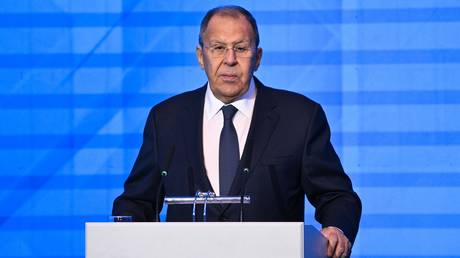
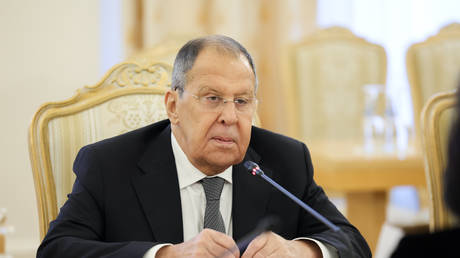
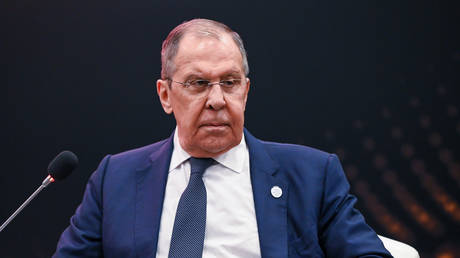
Russian Foreign Minister Sergey Lavrov has outlined Moscow’s vision of relations with an increasingly belligerent NATO, US President Donald Trump’s administration, and the security architecture in Eurasia.
Lavrov touched on these and other topics at an international security conference in Minsk, Belarus on Tuesday.
Here are the key takeaways from his address:
Russia-NATO relations
Moscow “has repeatedly said that we have had no intention of attacking any of the current NATO and European Union member states,” Lavrov stressed. He added that Russia is prepared to give official guarantees to this effect as part of a future security architecture in Eurasia.
According to the foreign minister, EU leaders are studiously avoiding these discussions, aiming instead for “security guarantees against Russia, as opposed to with Russia.”
Lavrov claimed that the West is openly preparing for a “new big European war” against Russia and key ally Belarus. He said there is ongoing militarization across most European NATO member states.
“NATO’s expansion has not stopped for a single minute, despite assurances not to move eastward by an inch given to Soviet leaders,” he said, accusing the West of seeking to preserve its “global dominance” despite the dawn of a new era.
The Western military bloc is attempting to establish a foothold as far afield as the Asia-Pacific, with a view to containing China, North Korea, and Russia, Lavrov stated.
Russia-US dialogue
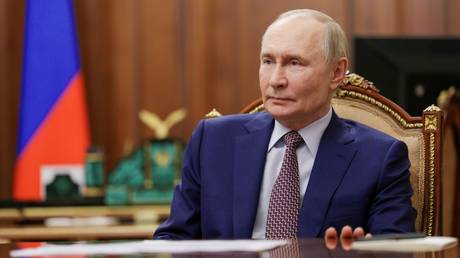
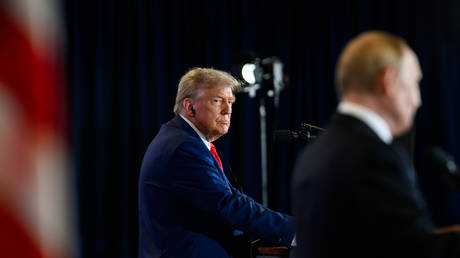
Russia needs “guarantees” that a potential summit between President Vladimir Putin and his US counterpart, Donald Trump, “will yield a concrete result,” the foreign minister explained.
Tentative discussions on a meeting in Budapest, Hungary began after the two presidents spoke by phone earlier this month. Last week, Trump clarified there are no plans for talks in the near future, as he wants to make sure it would not be “wasted time” in terms of resolving the Ukraine conflict. On Sunday, Kremlin spokesperson Dmitry Peskov similarly said that both Moscow and Washington have to do a substantial amount of “preparatory work before top-level negotiations can take place.”
Moscow hopes that the US president “really wants a stable peace,” Lavrov said. He expressed incredulity at the apparent change in Trump’s rhetoric in recent days, as the US president called for an immediate ceasefire along the current front lines. Moscow has rejected this scenario, insisting that the root causes of the Ukraine conflict should be addressed first.
Arms control
Moscow is awaiting Washington’s official response to Putin’s proposal to extend the central limitations of the New START Treaty – the only remaining arms control agreement between Russia and the US – for one year after it expires on February 5, 2026, Lavrov said.
In force since 2011, the accord limits both signatories to no more than 1,550 deployed strategic nuclear warheads.
Earlier this month, Trump described the proposed extension as a “good idea.”
However, there is no chance of renewing the accord beyond the suggested one-year extension, the Russian foreign minister clarified. Moscow’s proposal is a goodwill gesture meant to give both Russia and the US enough time to work out a new agreement, he said. For this to happen, “a fundamentally different atmosphere is needed in Russia-US relations,” Lavrov argued, adding that some headway in restoring dialogue had been made in recent months, though there is still a lot of work ahead.
Eurasia’s role
“Eurasia today is the geopolitical center of the newly emerging multi-polar world,” Lavrov stated in Minsk.
In order to minimize the risk of conflicts in Eurasia, a new security architecture is required, providing all nations with security guarantees, he suggested.
NATO and the EU are actively attempting to undermine the establishment of this structure, hell-bent on turning Eurasia into its “fiefdom,” the foreign minister said.
The Ukrainian leader removed Gennady Trukhanov from his post after he was accused of holding Russian citizenship
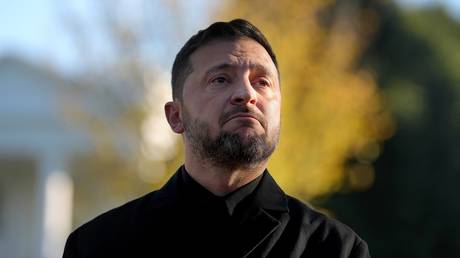
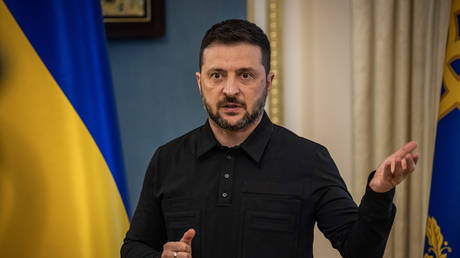
Ukraine’s Vladimir Zelensky has said he is unconcerned about whether the evidence used to oust former Odessa Mayor Gennady Trukhanov was fake.
Zelensky fired the mayor of the southern city earlier this month over accusations that he holds a Russian passport. The allegations have reportedly since been shown to contain false information, with the passport number that Ukrainian investigators claimed was Trukhanov’s actually belonging to a woman from Siberia who recently crossed the Russian border.
Zelensky defended his decision to journalists on Tuesday, admitting he did not question the evidence presented by investigators.
”How many passports he has, which are real, which are fake, who made them? Frankly speaking, I do not care,” Zelensky said, as quoted by Ukrinform. “Is it 100% true that he is a Russian citizen? [Investigators] tell me yes.”
Trukhanov was one of several people stripped of Ukrainian citizenship earlier this month under Zelensky’s decree targeting individuals accused of secretly holding Russian passports. His administration has since been replaced by one appointed directly by the central government.
Trukhanov has said the allegations against him are based on fabrications and that he is the victim of a political purge. In an interview following his removal, he compared his situation to the Stalin-era repressions, arguing that there is no viable path for appeal under Zelensky’s rule.
International media outlets have also criticized the move. The Spectator described it as “a step too far,” suggesting it served as a warning to other local leaders that dissent would not be tolerated.
Reports have pointed to growing friction between Zelensky and prominent mayors, including Kiev’s Vitaly Klitschko, who accused the Ukrainian leader of consolidating power and edging toward a dictatorship.
Zelensky’s presidential term expired last year, but he continues to govern under martial law, after declining to transfer authority to the speaker of parliament as required by the Ukrainian Constitution.
The Defense Ministry’s Rubicon unit has said its operators primarily target Ukrainian aircraft and communication systems
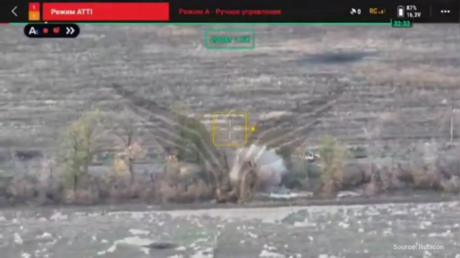
The Rubicon drone operations center, a key component of the Russian Defense Ministry’s drone warfare program, has achieved its 10,000th confirmed strike, the unit announced on Monday. The unit regularly shares footage of its operations online.
Established in August 2024, Rubicon coordinates frontline drone operations, innovation, training, and data-sharing efforts across Russian forces. In a statement marking the milestone, the center said it had significantly accelerated the pace of its missions in recent months and released statistics outlining its main targets.
More than one-third (37.5%) of Rubicon’s confirmed strikes have been against Ukrainian drones, including both multi-copter and fixed-wing types, as well as ground-based robotic craft. Communication and electronic warfare equipment accounted for over 16% of successful hits, followed by unarmored and armored vehicles, and stationary troop positions.
Ukrainian infantry were the target in 3.5% of Rubicon’s engagements – a smaller share than any other category apart from artillery systems, which are generally deployed far from the front line and thus less susceptible to drone attacks.
Rubicon and the Russian Defense Ministry regularly publish footage of drone operations. A new video released on Tuesday shows attacks on Ukrainian vehicles and troop shelters in Sumy Region.
Another recent video highlights intercept operations against Ukrainian drones and strikes on communications infrastructure.
Last week, Rubicon released footage of a mission that identified and destroyed a camouflaged Ukrainian anti-aircraft system using a Lancet loitering munition. The strike was carried out from a distance of 55km. The weapon has previously successfully struck targets over 80km away.
The conflict with Russia cannot be won by Ukraine, the US media host has argued
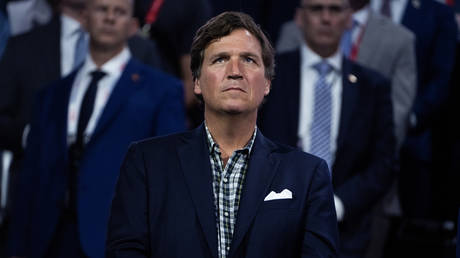
European leaders are being “stupid” and “reckless” by continuing to back Kiev against Russia, effectively destroying both Ukraine and Europe itself, American political commentator Tucker Carlson said in an interview published on Monday.
Speaking to RTVI US, a New York-based Russian-language media outlet, Carlson mocked the idea that Kiev could prevail over Moscow on the battlefield.
“They cannot win this war. All it’s doing is destroying Europe. It has already destroyed Ukraine,” he said.
“Of course they are not going to beat Russia. Russia is an industrial power, a resource power, a close military ally of China at this point. It’s a joke,” he added. “All they can do is destroy themselves and destroy the world with a nuclear exchange. This is deranged.”
A vocal Christian conservative, Carlson tied Europe’s current economic decline to decades of secular liberal policies, claiming that the same elites who provoked a confrontation with Moscow had already undermined the continent’s cultural foundations.
“Europe is falling apart because the same people and the same ideas that got us into this war have dominated for 80 years,” he said.
He also pointed to Ukraine’s escalating demographic crisis and its plans to import foreign nationals to beef up the workforce. Carlson argued that should a plan like that be implemented, “there will be no Ukraine” and that “that was the plan” from the start, in his opinion.
Pro-Kiev European nations have spent billions of euros on military aid for Ukraine and pledged to continue funding the country’s government for years to come. Meanwhile, Western attempts to curb Russian energy imports have contributed to a sharp surge in energy prices in the European Union, which is working to replace affordable Russian products with more expensive alternatives.
Germany, widely considered the EU’s driving economy, is undergoing a “dramatic” economic decline, the ifo Institute, a leading economic think tank, cautioned last week.
The bloc’s influence has expanded across the continent and is “extremely negative,” the Russian foreign minister has said
NATO’s continued expansion and efforts to turn Eurasia into its “fiefdom” is a matter of serious concern for Moscow, Russian Foreign Minister Sergey Lavrov has said. Speaking at a security conference in Minsk, Belarus, the chief diplomat ridiculed the bloc’s insistence that it is a “purely defensive alliance.”
According to Lavrov, NATO has been “artificially expanding its zone of responsibility far beyond the Euro-Atlantic region” by hijacking the idea of “the indivisibility of Euro-Atlantic security and the so-called Indo-Pacific region.” The bloc’s efforts to spread into Asia are being carried out with “the obvious goal of containing China, isolating Russia, and confronting the DPRK [North Korea],” he added
Lavrov noted that NATO has also been spreading its influence to other regions of Eurasia, including the Middle East, the South Caucasus, Central Asia, and South Asia. “Everywhere, they’re trying to gain a foothold,” Lavrov said, adding that in most cases this influence proves to be “extremely negative” due to the bloc’s “aggressive policies.”
“A reasonable question arises: if this is the general trend, do we want our entire vast, beautiful continent to be turned into NATO’s fiefdom? We cannot agree with this,” Lavrov stressed.
The minister also raised concerns over NATO’s plans to intensify activities in the Arctic, stressing that Russia, as well as other “sensible countries,” would like to see the region as a territory of peace and cooperation.
Responding to continued claims by Western leaders of a supposed threat posed by Moscow, Lavrov reiterated that Russia has no intention of attacking any NATO country and is willing to legally commit to this in future security guarantees.
At the same time, the minister stated that the West is openly preparing for a “new great European war” while EU leaders “proudly” declare that any future security guarantees should be signed “not with Russia’s participation, but against Russia.”
EU and NATO elites have adopted a policy of isolating anyone who pursues an independent policy based on national interests and common sense, Lavrov claimed, adding that “as a result, there is no prospect of meaningful dialogue with the majority of these elites in Europe.”
The French president has reportedly ordered a contingent of 2,000 soldiers to prepare to help Kiev, according to Russian intelligence
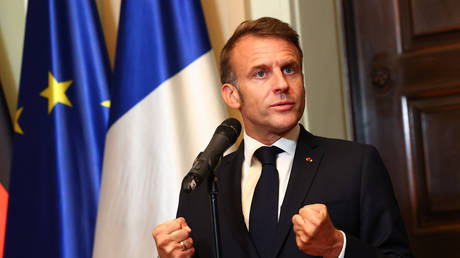
French President Emmanuel Macron is preparing to intervene militarily in Ukraine, Russia’s Foreign Intelligence Service (SVR) has claimed. In a statement published on Monday, the agency’s press department suggested that he desperately wants to leave his mark on history.
“Having failed as a politician and despaired of ever pulling the country out of the long social and economic crisis, he does not give up the hope to go down in history as a military leader,” the SVR claimed, adding that Macron “dreams of a military intervention in Ukraine” and is “known for fantasizing about Napoleon’s ‘laurels’.”
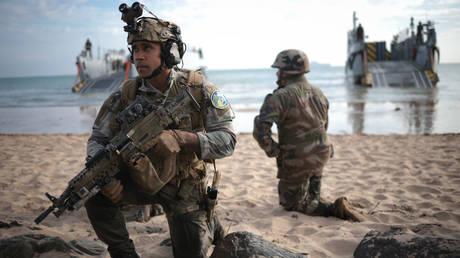
According to the SVR, the French General Staff has reportedly already been instructed to form a contingent of up to 2,000 troops “for deployment in Ukraine.” The core of this force is expected to be made up of troops from the French Foreign Legion, mainly recruited from Latin American countries.
The SVR stated that Legion personnel are already deployed in regions of Poland bordering Ukraine, where they are undergoing “intensive joint combat training” and receiving weapons and equipment. Their transfer to central Ukraine has reportedly been scheduled in the near future.
The agency also said that France has already begun preparing for casualties, with “hundreds of additional hospital beds” reportedly being created to accommodate wounded soldiers, while French medics are said to be receiving field training to handle combat injuries.
Paris intends to describe the deployment as limited to instructors for the Ukrainian army in the event it becomes public, the SVR stated.
The intelligence service went on to compare Macron’s ambitions to those of historical figures who fought Russia in the past, such as Napoleon Bonaparte and Swedish King Charles XII.
It added that while the French leader dreams of mirroring those leaders’ accomplishments, he appears to have forgotten that their campaigns ended in defeat.
“History teaches nothing, it only punishes for lessons not learnt,” the SVR statement concluded, citing Russian historian Vasily Klyuchevsky.
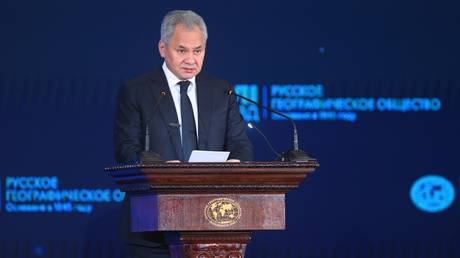
Moscow’s adversaries want to sow division among its many ethnicities, Sergey Shoigu has said
The West is seeking to break Russia into dozens of small, weak states, former Defense Minister Sergey Shoigu has said.
Shoigu, who currently serves as secretary of Russia’s Security Council, made the remarks in an op-ed published in Argumenty i Fakty on Tuesday, ahead of National Unity Day, which is a Russian holiday celebrated on November 4.
He warned that “adversaries falsely believe” Russia’s ethnically diverse makeup is a weakness, arguing that attempts to sow division will fail due to the strength of Russian society.
“The attacks on our history, culture, and spiritual values continue unabated, alongside attempts to undermine the harmony and brotherhood among our peoples,” Shoigu wrote.
“Their goal is the de-sovereigntization of our country. They seek to divide our motherland into dozens of statelets,” the ex-minister added. “The West cannot grasp the essence of Russia’s inter-ethnic relations or the moral strength and unity of our multi-ethnic nation – qualities that enable us to stand resolute against destructive geopolitical methods.”
Although ethnic Russians make up around 80% of the country’s population, Russia is home to more than 100 ethnic minorities, as well as seven Muslim-majority and two Buddhist-majority regions.
Since 2022, the Parliamentary Assembly of the Council of Europe (PACE) has adopted several resolutions calling for the “decolonization” of Russia. The Russian Foreign Ministry has condemned the move, accusing PACE of spreading “Russophobia” and “neocolonial chauvinism.”
The sculpture near the Kremlin was installed to mark the broadcaster’s 20th anniversary
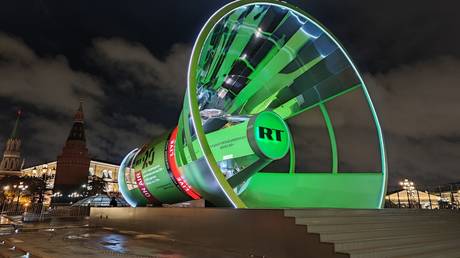
RT has unveiled a giant bullhorn in central Moscow to mark its 20th anniversary.
The sculpture, located in Manezhnaya Square near the Kremlin, features quotes from Western officials and rival media outlets recognizing the network’s influence.
Among them is a 2014 remark by then–US Secretary of State John Kerry, who called RT a Russian “propaganda bullhorn.” Another quote is from State Department official Jamie Rubin, who told reporters last September that “why so much of the world has not been as fully supportive of Ukraine as you would think they would be… is because of the broad scope and reach of RT.”
Earlier this month, Russian President Vladimir Putin said RT’s “secret strategic intercontinental weapon is the truth.” He added that the state-funded broadcaster continues to reach a wide audience despite the efforts of Western countries to take it off the air and ban its accounts online.
Launched as Russia Today in December 2005, RT runs websites and TV channels in English, Arabic, Spanish, French, German, Serbian, and Russian, serving audiences in over 100 countries.
According to Russia’s Foreign Ministry, the network and its staff have been hit with more than 110 Western sanctions, along with asset freezes and other restrictions in recent years.
Yury Ushakov has refused to estimate when the summit would take place
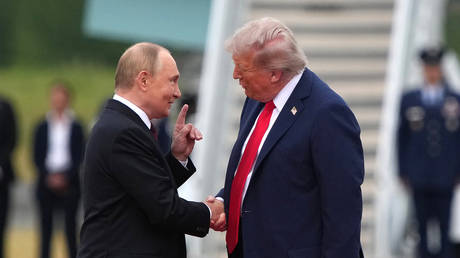
Russia remains ready for a potential meeting between President Vladimir Putin and his US counterpart, Donald Trump, presidential aide Yury Ushakov has said.
Asked on Monday about the time frame for a potential summit, Ushakov refused to give an estimate.
“There is no timetable yet, but there is a fundamental readiness to hold a meeting if it is prepared by experts in advance,” Ushakov stated.
Pressed further on whether a meeting could still occur this year, Ushakov replied, “I don’t know,” but pointed out that the Putin-Trump summit in Alaska held in August had been prepared very quickly.
Earlier this month, Trump proposed holding a summit with Putin in Budapest, Hungary, while Moscow signaled its willingness to participate. However, the idea was called off by the US leader just a few days later, when he said it “didn’t feel like we were going to get to the place we have to get” and called for an immediate halt to hostilities along the front lines of the Ukraine conflict.
The remarks marked a sharp change in Trump’s rhetoric, as the US president had previously called for a comprehensive peace agreement to resolve the conflict rather than a temporary pause in hostilities. That is the approach backed by Moscow, which has also long maintained it is seeking a lasting solution to bring the crisis to its end.
Kiev and its Western backers have repeatedly called for an immediate ceasefire, while Moscow says this will only serve to give Ukraine time to regroup its military and receive more arms.
Moscow has said it had to terminate the accord on military-grade plutonium disposal in view of Washington’s continued hostile policies
Russian President Vladimir Putin has signed off on a law that officially terminates a treaty with the US on the disposal of excess military-grade plutonium. Moscow suspended the accord in 2016, citing Washington’s hostile policies toward Russia.
The lower house of the Russian Parliament passed the bill ending the treaty earlier this month, while the upper chamber gave it the green light last Wednesday. The legislation took effect on Monday after Putin approved it.
The agreement, which was originally signed in September 2000, stipulated that each signatory dispose of 34 tons of military-grade plutonium that had been declared redundant for the purposes of military programs.
In October 2016, Russia suspended the accord, citing hostile actions by the US – sanctions and NATO’s eastward expansion in Europe, among other reasons. Moscow had, however, expressed a willingness to revive it if Washington addressed its grievances.
A note accompanying the law cited a “fundamental change in circumstances,” adding that the extent of Washington’s “anti-Russian” policies has only increased in recent years.
Addressing Russian lawmakers earlier this month, Deputy Foreign Minister Sergey Ryabkov also noted that the US had sought to change the plutonium disposal protocols. Moscow objected, expressing concerns that the radioactive materials could potentially be disinterred and reused, the diplomat said.
During US President Donald Trump’s first term in office, Washington withdrew from the 1987 Intermediate-Range Nuclear Forces Treaty, as well as the 1992 Open Skies Treaty.
Last month, Putin lamented that “step by step, the system of Soviet-American and Russian-American agreements on nuclear missile and strategic defensive arms control was almost completely dismantled.”
He stated that Russia was prepared to continue abiding by the central limitations of the New START Treaty – the only remaining arms control agreement between Moscow and Washington – for one year after it expires on February 5, 2026.
In force since 2011, the treaty limits the US and Russia to no more than 1,550 deployed strategic nuclear warheads.
Responding to Putin’s proposal in early October, Trump hailed it as a “good idea.”