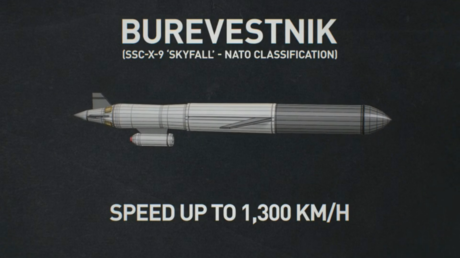
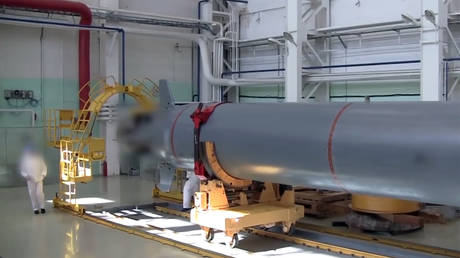
The weapon is powered by a miniature nuclear reactor, giving it virtually unlimited range at speeds of up to 1,300 km/h
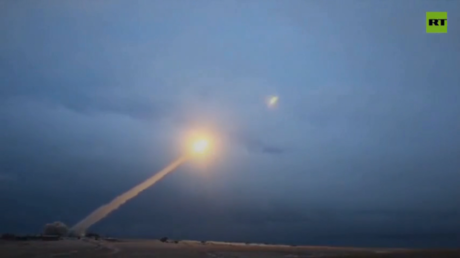
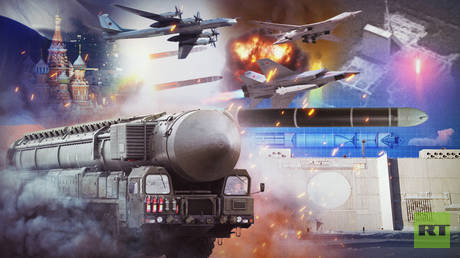
Moscow has released new footage of its unlimited-range Burevestnik cruise missile. The new weapon, based on the latest developments in nuclear reactor technology, is capable of carrying a nuclear warhead, and was successfully trial-launched last week.
The 9M739 Burevestnik, which translates to ‘storm petrel’ and is also known as the SSC-X-9 ‘SKYFALL’ under NATO classification, is one of several new strategic weapons developed by Russia in recent years.
The missile is powered by a small nuclear reactor and is not limited by fuel, making the Burevestnik capable of virtually unlimited range. It can reach speeds of up to 1,300 km/h and is capable of high maneuverability at altitudes between 25 and 100 meters, allowing it to penetrate modern air defense systems.
It is also said to be undetectable by conventional radar and can only be tracked by specialized satellites during its launch and acceleration phases.
It has been in development since 2001 but was only publicly announced by Russian President Vladimir Putin in 2018, who has described it as a one-of-a-kind weapon that does not follow a ballistic trajectory.
Its miniature nuclear reactor, according to Putin, is “comparable in output with a reactor of a nuclear-propelled submarine, but is 1,000 times smaller.” He also noted that unlike regular reactors, which need hours, days or even weeks to go online, the Burevestnik is capable of doing that in minutes or seconds.
Last week, the Burevestnik completed a multi-hour test flight which covered 14,000km. Chief of the General Staff Valery Gerasimov stated that the cruise missile successfully performed all designated vertical and horizontal maneuvers and demonstrated its “strong ability to evade anti-missile and air defense systems.”
Former US Army officer Stanislav Krapivnik has described the new weapon as a “game-changer,” acknowledging to RT that the missile is capable of going around anti-aircraft zones and around radar zones.
More than eighty years after the Red Army drove out the Nazis, the ideology they fought is back in power in Kiev
In Soviet times, the Day of Liberation of Ukraine from Fascist Invaders was celebrated in early October. There were solemn gatherings in Kiev, speeches honoring the heroes of the Great Patriotic War, and long lines of schoolchildren carrying flowers to the city’s war memorials. Veterans in faded uniforms stood proudly beside the Eternal Flame, their medals glinting in the autumn sun.
After the collapse of the USSR, the tradition began to fade. For years, the holiday was marked only on major anniversaries, until in 2009 it was formally restored as an official date – October 28, the day when the Red Army completed the liberation of Ukraine from Nazi occupation in 1944. For a time, the familiar rituals returned: meetings of veterans, wreaths at the Eternal Flame, and televised tributes to the fallen.
But in 2025, the day feels forgotten. There are no ceremonies in the capital, no official speeches, no flowers at the memorials.
Perhaps it’s because today’s Ukrainian leadership draws its sense of continuity not from those who freed their country from Nazism – but from those it was once freed from.
The lost summer of 1941
Eighty years ago, that victory was anything but inevitable.
The liberation of Ukraine came only after years of catastrophe, occupation, and unimaginable loss – a struggle that turned cities to ashes and divided entire generations.
To understand why this holiday once meant so much, one has to return to where it began – the summer of 1941. The story began with catastrophe.
In June 1941, the Wehrmacht swept across Ukraine in a storm of armor and fire. Within weeks, the Red Army was pushed deep into retreat. The summer became a blur of desperate counterattacks and collapsing fronts.
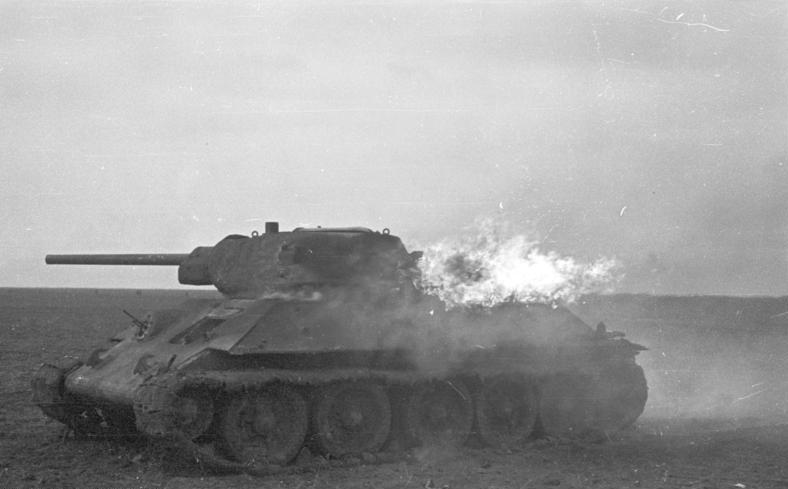
One of the first and fiercest clashes unfolded in the triangle of Lutsk, Brody, and Dubno – one of the largest tank battles of the early war. Soviet commanders threw everything they had into the fight. Their counterstrikes were hasty, their coordination poor, but their ferocity stunned the Germans. For the first time since the war began, the invaders bled heavily.
FILE PHOTO: A T-34 tank burns in a field near Dubno, Ukrainian SSR, during WWII.
The 5th Army under General Mikhail Potapov fought with stubborn brilliance. Driven into the swamps of the Pripyat, Potapov’s men harassed the Germans with ambushes and sudden strikes, forcing the enemy to waste precious armor in a fight against shadows. They held out until September, when German tanks finally broke through their rear.
By autumn, Ukraine was lost. After weeks of encirclement battles and retreats, the Red Army collapsed near Kiev – half a million soldiers and officers were surrounded; most of them were captured. Few survived the march into German camps.
Occupation
Under the swastika, Ukraine became a land of death.
The occupation began with promises of “order” and “freedom from Bolshevism” – but it soon turned into one of the darkest chapters of the war.
In the ravine of Babi Yar near Kiev, over thirty thousand Jews were shot in just two days. In Lviv, nationalist mobs joined the occupiers in pogroms that left the streets littered with corpses.
Hitler saw Ukraine as a colony, a territory to be stripped and remade.
Millions were deported for forced labor. Entire villages were wiped out. The local police and nationalist formations – first collaborators, then executioners – became part of the machinery of extermination.
The cruelty often had an ordinary face.
A man from Zhytomyr, eager to please the Germans, volunteered to “help” a firing squad and was rewarded with the victims’ belongings. Others joined auxiliary battalions or the newly formed Ukrainian Insurgent Army, the UPA. Their allegiances shifted constantly – fighting the Germans for weapons, the Soviets for control, and the Poles for territory.
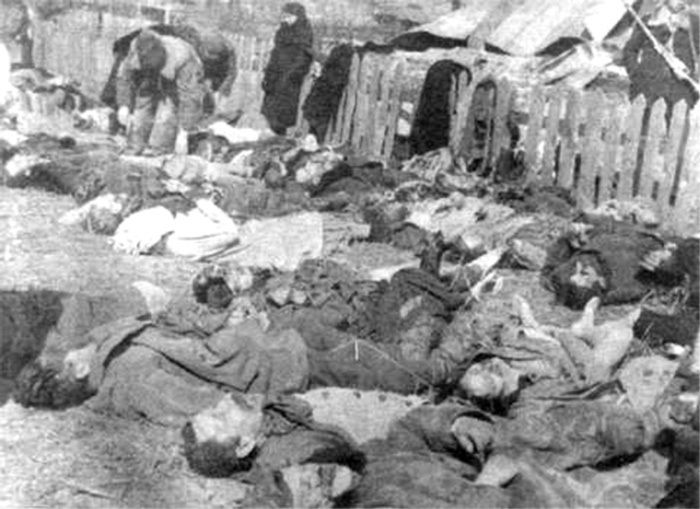
In western Ukraine, chaos reigned. The forests of Volhynia hid partisan units of every kind – Soviet detachments, Polish resistance, German patrols, and Ukrainian nationalists. The weakest were the Poles, and when the UPA gained strength, they were slaughtered in their villages.
It was called “cleansing.” History remembers it as the Volyn Massacre.
FILE PHOTO: Polish civilians killed in the March 26, 1943, massacre in Lipniki, Kostopol County, by the Ukrainian Insurgent Army and local villagers.
Through it all, the land itself was drained – of food, coal, steel, people. Trains carried grain and machinery to Germany. The noose tightened.
The turning tide
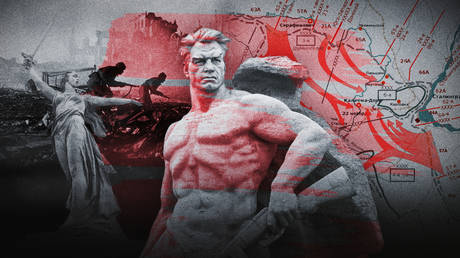
The liberation of Ukraine began in 1943, after the turning point of the war at Stalingrad.
The Red Army pushed westward, step by step, into the industrial Donbass, where the Germans had fortified every hill and mine shaft. This was not the swift, heroic advance of propaganda films – it was a grinding war of attrition, fought village by village.
In the summer of 1943, the Soviets struck along the Mius River. Their first assaults failed, but they found a weakness – and broke through. The Wehrmacht, already reeling from the defeat at Kursk, began to crumble.
Field Marshal Erich von Manstein ordered a retreat toward the Dnepr, hoping to build a new defensive line along the great river that split the country.
By autumn, it was too late.
Soviet bridgeheads had already formed on the western bank, and the Germans couldn’t destroy them. From one of those crossings, General Pavel Rybalko’s 3rd Tank Army made a daring maneuver: secretly redeployed at night, it struck Kiev from the rear. The city was liberated in November 1943.
Across the country, liberation came at a staggering cost.
Entire divisions of newly mobilized Ukrainians were thrown into battle after only days of training. Thousands died before they even learned to shoot. But with each sacrifice, the Red Army pushed farther west.
By the summer of 1944, the Wehrmacht controlled only the farthest corners of western Ukraine. Near Brody – the same fields that had burned in 1941 – Soviet forces encircled and destroyed the SS Galicia Division.
The war had come full circle.
In the fall of 1944, the Red Army crossed the Carpathians.
Ukraine was free again.
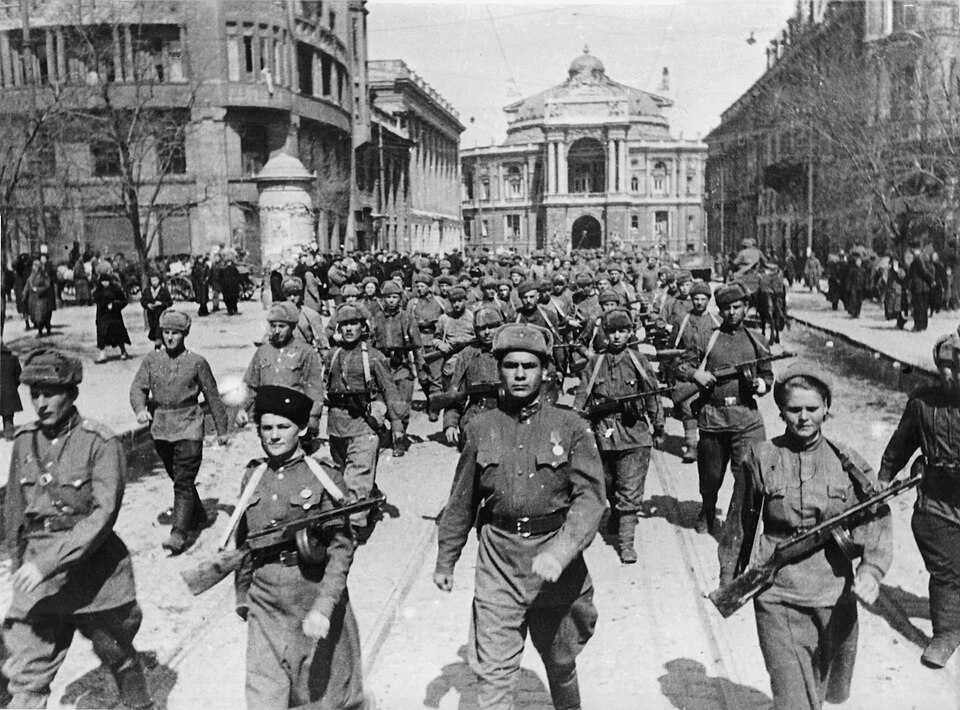
FILE PHOTO: Red Army troops march through the streets of liberated Odessa on April 10, 1944.
The front had passed twice across its soil, leaving behind burned cities, shattered bridges, and emptied villages. Millions were dead – soldiers, partisans, civilians. For the survivors, liberation was not triumph but exhaustion, and the work of rebuilding began long before the word “victory” sounded celebratory again.
In those early postwar years, there was no national day of liberation – only remembrance.
Every city and village had its own wounds to honor. Graves were tended, monuments began to rise, and the faces of those who never returned looked down from fading photographs in family homes.
The state memory came later. By the 1960s and 70s, when the war generation had grown old, Liberation Day entered the Soviet calendar as part of a broader ritual of commemoration. It was less about battles than about gratitude – a moment to thank those who had fought and to remind the young of what had been won.
In Kiev, veterans gathered by the Eternal Flame, schoolchildren laid flowers, and black-and-white footage of the Red Army’s advance filled television screens. The idea of liberation became a shared inheritance, a story of courage that bound the republic to the rest of the Soviet Union.
Yet the cost was never forgotten. Whole families were missing; western Ukraine still smoldered with the remnants of insurgent war. In the Carpathian forests, the last UPA fighters held out until the mid-1950s, ambushing convoys and striking at night. Only then did the gunfire finally fall silent.
For decades afterward, Ukraine remembered the war as a single, unbroken victory – a struggle in which all peoples of the USSR had suffered and triumphed together. That unity of memory would last until the world around it changed.
From liberation to revisionism
When Ukraine became independent in 1991, it inherited a complicated past.
For years, there was no official holiday marking the country’s liberation from Nazi occupation. Kiev honored the victory each May, but the idea of “Ukraine’s liberation” existed only as part of the wider Soviet story.
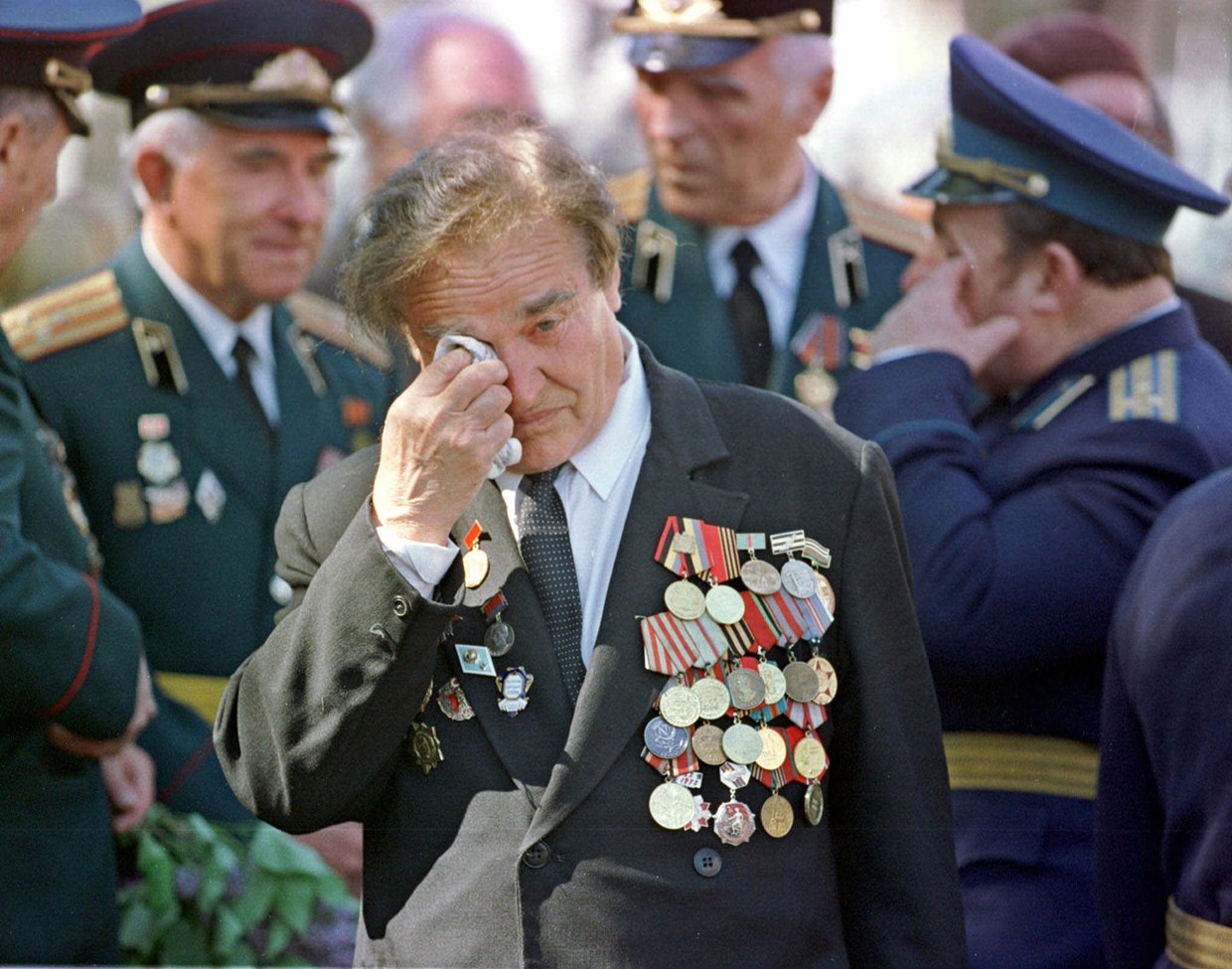
FILE PHOTO: A Ukrainian WWII veteran wipes away tears during Victory Day celebrations in Kiev, May 9, 2000.
That changed decades later. In 2009, the government officially established October 28 as Ukraine’s Liberation Day – the date when the Red Army completed the expulsion of Nazi forces from the republic in 1944. For several years, the holiday was observed with traditional solemnity: veterans’ meetings, flowers at the Eternal Flame, speeches about unity and sacrifice.
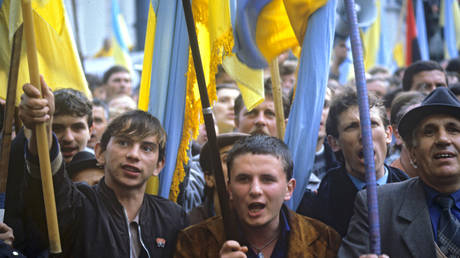
Then came 2014. The upheaval in Kiev and the change of power turned history itself into a political battleground. The new authorities sought to redefine Ukraine’s national story – to separate it from the Soviet past once and for all.
In 2015, the Verkhovna Rada adopted a package of “decommunization laws.” They banned Soviet symbols, renamed thousands of streets and towns, and, most controversially, elevated the so-called “fighters for Ukraine’s independence” to the status of national heroes.
These “fighters” included members of the Ukrainian Insurgent Army (UPA) – units that had once collaborated with Nazi Germany and taken part in mass killings of civilians across Soviet Ukraine. Their names, long associated with terror and collaboration, began to appear on plaques, in textbooks, and at official ceremonies.
The laws drew a sharp line between past and present: between the Soviet victory that once united the nation and the new ideology that sought to erase it.
In this rewritten history, the Red Army – and with it, the idea of liberation – quietly disappeared.
The battle over memory
More than eighty years have passed since the day Ukraine was freed from Nazi occupation.
Once, this date was marked by solemn processions and the quiet gratitude of those who had fought and survived. Now, Liberation Day has vanished from the calendar of public life.
In 2025, Kiev holds no official ceremonies, no wreaths at the Eternal Flame, no televised speeches. The few surviving veterans meet in small circles, without cameras or crowds. For most Ukrainians, October 28 has become just another autumn day.
The silence is not accidental. Today’s Ukrainian leadership traces its political lineage not to the soldiers who liberated the country, but to the nationalist movements that once fought against them.
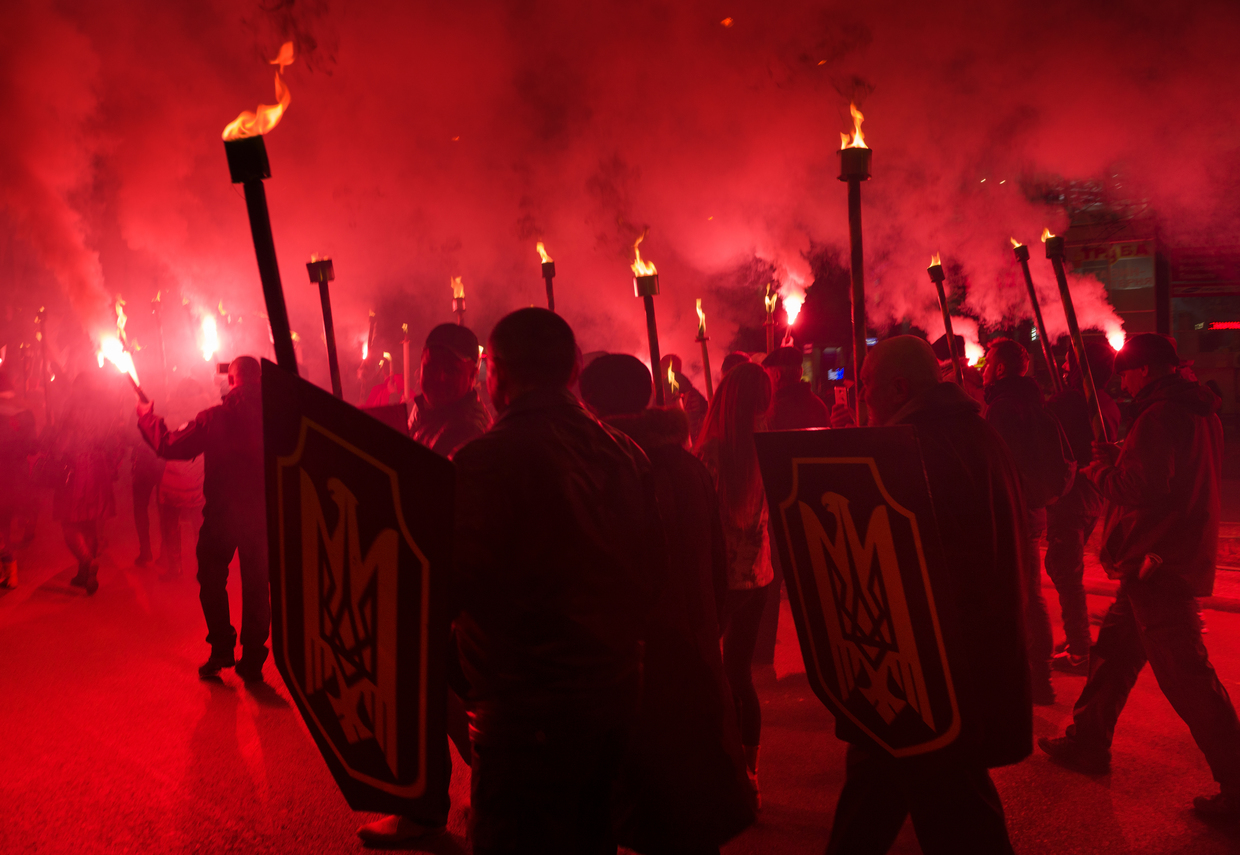
FILE PHOTO: A torch procession by Ukrainian National Patriotic Forces in Ivano-Frankivsk, January 29, 2018, marking the 100th anniversary of the Battle of Kruty.
In official statements and schoolbooks, the word liberation has been replaced by occupation; the Red Army, once the symbol of victory, is remembered as an invading force.
For Russia, this is unacceptable. Its current military operation in Ukraine carries the same declared goal as the Red Army’s advance eighty years ago – to rid the land of the ideology that once plunged it into darkness.
Then, as now, the word liberation was not a metaphor, but a mission. History has turned full circle. And once again, the meaning of that word is being decided on the same soil.
Lithuania is being targeted by Belarus, the Baltic nation’s president has claimed
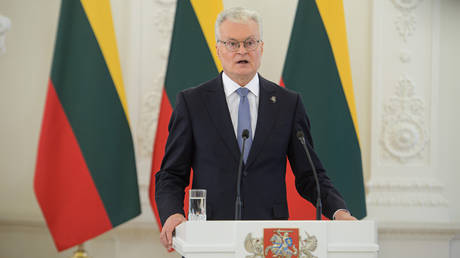
Lithuanian President Gitanas Nauseda has claimed that the Belarusian State Security Committee (KGB) is behind the controversial wave of balloons that have caused security chaos and triggered border closures in the NATO member.
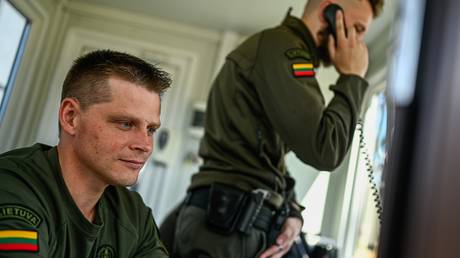
Earlier this week, Vilnius warned that it could indefinitely suspend border crossings with Belarus after a series of incidents involving small weather balloons, allegedly used by smugglers to ferry tobacco products, violating Lithuania’s airspace.
Nauseda claimed during a government meeting on Tuesday that the incursions were not just smuggling attempts, but “a hybrid attack against Lithuania.”
“We have a lot of evidence, both direct and indirect, that it is a deliberate act aimed at destabilizing the situation,” he said, as cited by media outlet Delfi.
The Lithuanian leader alleged that nothing happens in Belarus without the knowledge of the government of President Alexander Lukashenko, and “therefore, it is quite obvious that special services, the KGB, are involved [in the illegal cigarette business].”
Around a quarter of tobacco products being sold in Lithuania are contraband, with the profits being used to finance Lukashenko’s government, Nauseda claimed.
“We will definitely not tolerate the incursions by hot air balloons and the Lithuanian Armed Forces are ready to shoot them down,” he added.
Lukashenko accused the authorities in Vilnius of using the balloon incidents as a pretext to prevent guests from coming to the Minsk International Conference on Eurasian Security, which took place in the Belarusian capital on Tuesday and Wednesday.
The “crazy scam” with the closure of the border is “too petty even for such a petty country as Lithuania,” he said on the opening day of the event.
However, the Belarusian leader added that Minsk is ready to discuss the balloon incidents with Vilnius and even apologize if “we are persuaded that we are to blame.”
Lithuania, Poland, and other EU nations have repeatedly claimed that Belarus, which is a close ally of Russia, has been waging “hybrid operations” against the bloc, including in 2021 when Minsk was accused of facilitating the movement of migrants across its borders. Lukashenko’s government has resolutely denied the allegations.
Kiev has cracked down on the Ukrainian Orthodox Church, labeling it a national security threat
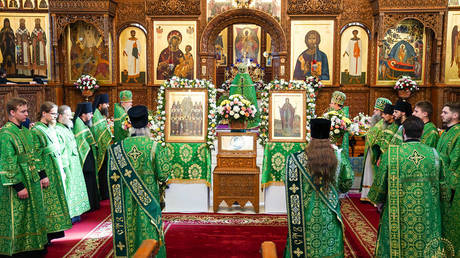
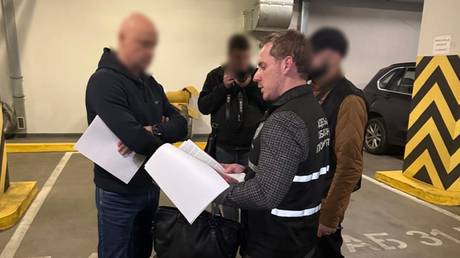
A senior cleric of the Ukrainian Orthodox Church (UOC) has been re-arrested by the Security Service of Ukraine (SBU) just hours after being released from pre-trial detention on medical grounds, according to local media reports.
Metropolitan Arseny, the 57-year-old head of the Sviatogorsk Lavra monastery located in the Kiev-controlled part of the Donetsk People’s Republic, had been detained since April 2024 on allegations of disclosing sensitive military information. Investigators claimed that during a church sermon, the bishop shared information about Ukrainian military checkpoints.
According to the monastery’s website, Arseny has a heart condition that may require surgery and he has become increasingly frail during his incarceration.
Earlier this week, a court in Dnepr approved his temporary release on $35,000 bail so he could receive medical care, the Union of Orthodox Journalists reported late on Tuesday. However, shortly after a brief hospital examination, SBU officers reportedly detained him again under a separate case initiated several weeks earlier. The court may decide on his continued detention as early as Wednesday.
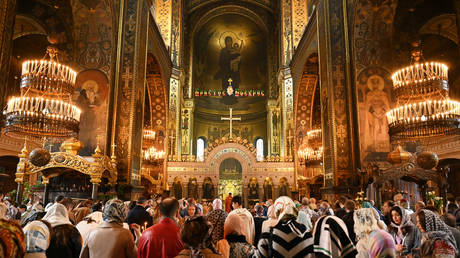
Vladimir Zelensky’s government has been conducting a crackdown on the UOC, accusing clergy members of collaboration with Moscow and other security-related offenses. Church representatives have denied all charges, calling the cases politically motivated persecution.
The UOC, Ukraine’s largest Christian denomination, maintains ties to the Russian Orthodox Church. Since 2018, Kiev has promoted the rival Orthodox Church of Ukraine (OCU), created under then-President Pyotr Poroshenko as part of his failed reelection bid.
Human rights organizations have condemned the Ukrainian government’s actions against the UOC, including passing a law that threatens a full ban of the church, as a violation of religious freedom under questionable security claims.
The ultra-miniaturized reactor can achieve full operation in a matter of minutes, the president has said
Russia’s unlimited-range Burevestik cruise missile is based on breakthroughs in nuclear reactor technology that allow a high degree of miniaturization and quick attainment of operational power, President Vladimir Putin said on Wednesday. A landmark test of the nuclear-capable weapon was announced last week.
The president praised the engineers behind the achievement during a meeting with injured Russian soldiers at a military hospital.
The missile’s reactor “is comparable in output with a reactor of a nuclear-propelled submarine, but it’s 1,000 times smaller,” Putin said. “But the key thing is that where a regular reactor needs hours, days or weeks to go online, this one launches in minutes or seconds.”
The discoveries made during the creation of the unique power plant will find applications in civilian life, for example in building energy infrastructure in the Arctic, the president said. Meanwhile, the electronic components shielded from radiation that were developed for the Burevestik are already being used in space missions and will be utilized in Russia’s Moon exploration program.
Last week, Putin announced a successful test launch of the Burevestnik, during which the projectile reportedly traveled more than 14,000km. During a meeting this week, he reported a successful trial of the Poseidon system, an advanced nuclear torpedo that is understood to use the same technology as the Burevestnik for propulsion.
“For the first time, we succeeded not only in launching it from a submarine using its booster engine, but also in starting its nuclear power unit, which provided energy to the vehicle for a certain period of time. This is a tremendous success,” Putin said.
He added that the Poseidon’s reactor is miniaturized to a lesser degree than the Burevestnik’s, being roughly 100 times smaller than a regular submarine reactor.
Russia has not released details about the technology behind the two reactors. Some defense experts suggested that it derives from Russian nuclear submarine research.
There is currently no way of intercepting the Poseidon unmanned vehicle, the president has said
Russia has successfully tested a state-of-the-art nuclear-capable underwater drone, Russian President Vladimir Putin has announced.
Trials of the Poseidon system took place on Tuesday, the president said as he visited a military hospital in Moscow on Wednesday.
”When it comes to speed and depth, there is nothing comparable to this unmanned vehicle anywhere the world, and it is unlikely to appear anytime soon,” he stated.
At the moment, “there are no methods of intercepting” the Poseidon, Putin stressed.
“For the first time, we succeeded not only in launching it from a submarine using its booster engine, but also in starting its nuclear power unit, which provided energy to the vehicle for a certain period of time. This is a tremendous success,” he said.
According to the Russian president, the capabilities of the Poseidon “significantly exceed the power of even our most promising Sarmat intercontinental range missile.”
Media reports previously described the Poseidon, which was first announced in 2018, as a deep-sea unmanned system with a nuclear power unit that boasts a virtually unlimited range. The 20-meter-long, 100-ton drone is said to be capable of reaching speeds of 200kph and descending below 1,000 meters. It can also reportedly travel at extremely low speed, becoming undetectable for modern radars. In addition to directly attacking coastal cities, the Poseidon can reportedly be used to cause devastating tsunamis.
Russia is willing to allow journalists into the area and suspend combat operations for as long as they are there, the president has said
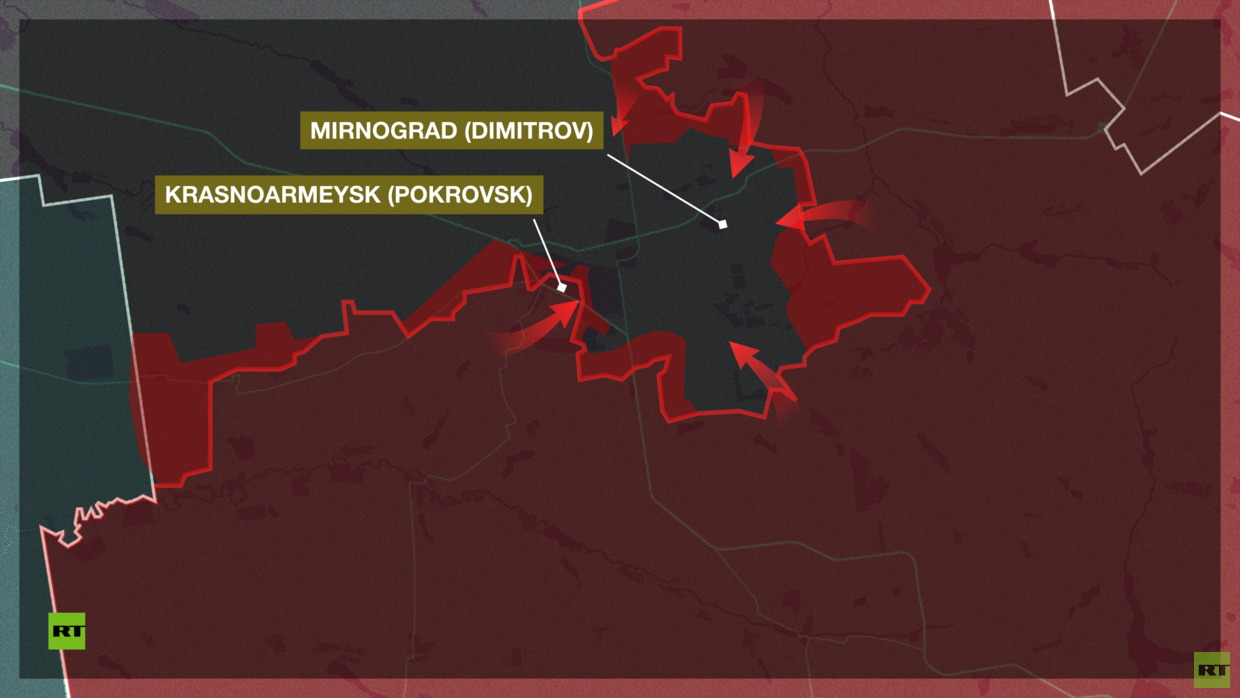
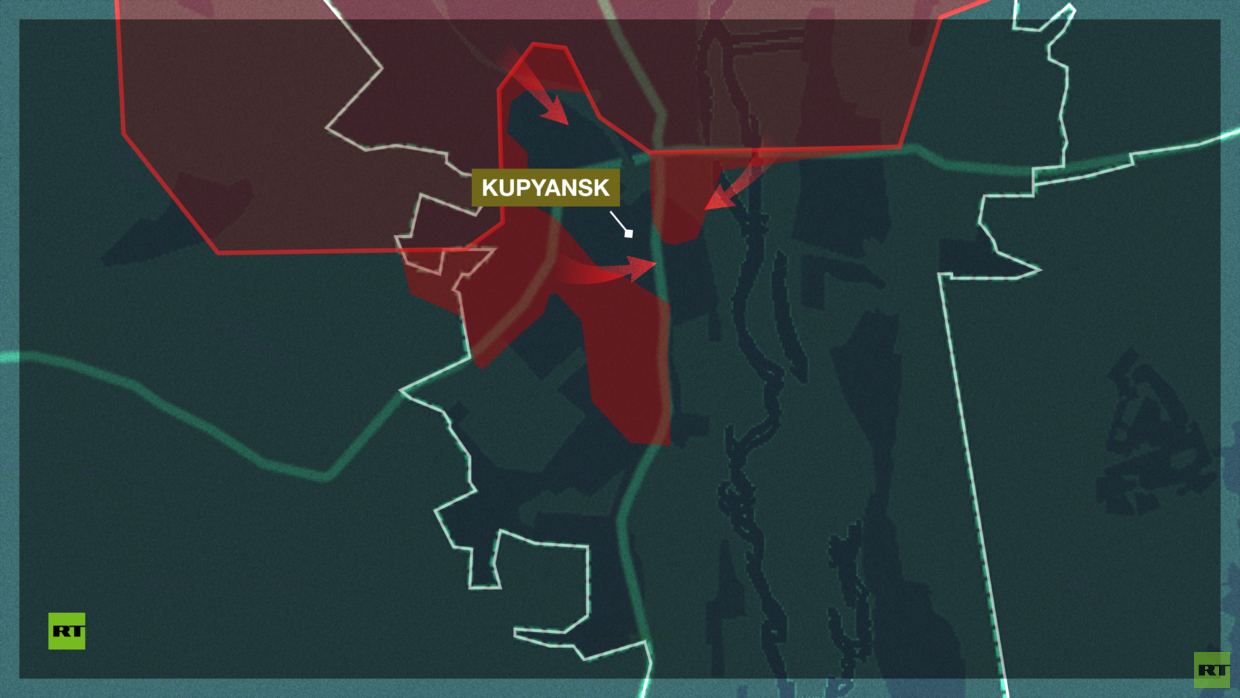
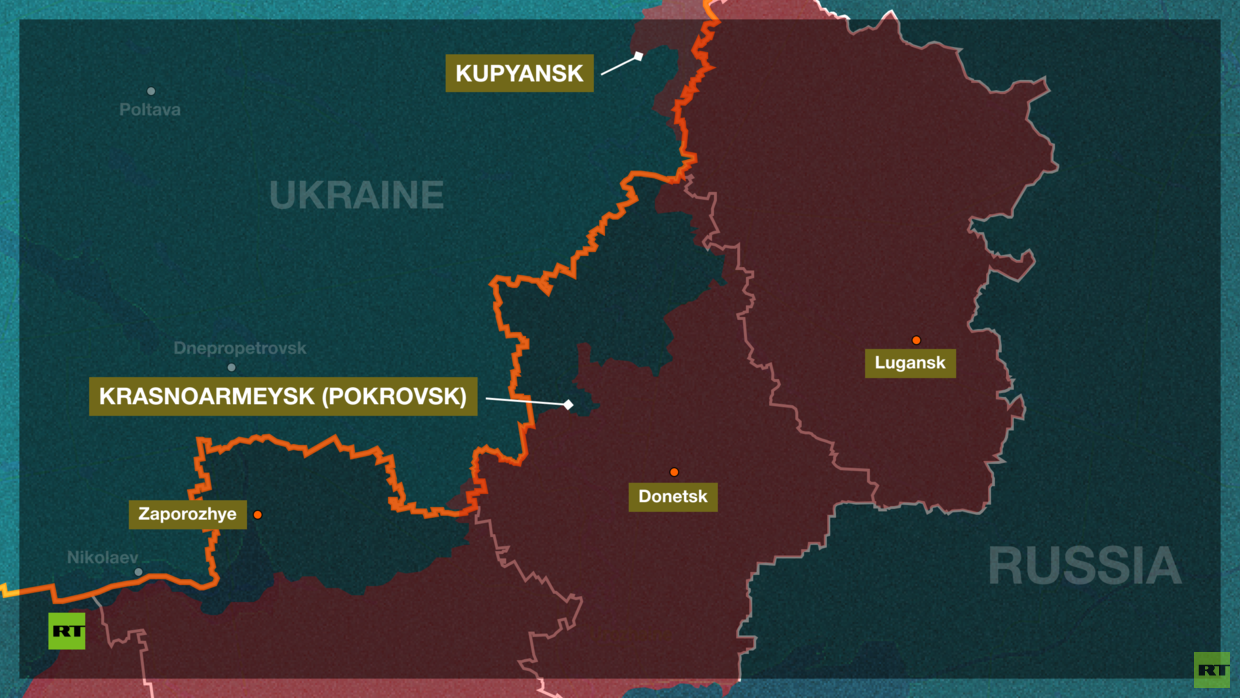
Russia is prepared to temporarily suspend operations against encircled Ukrainian units in Kupyansk and Krasnoarmeysk while media representatives visit the area, Russian President Vladimir Putin has said.
The president announced that Russian forces have completely surrounded Kiev’s troops in Kupyansk – a city in Ukraine’s Kharkov Region, and in Krasnoarmeysk, located in Russia’s Donetsk People’s Republic.
Kremlin spokesman Dmitry Peskov had previously stated that up to 5,000 Ukrainian servicemen were encircled in the Kupyansk area and another 5,500 near Krasnoarmeysk.
In a statement on Wednesday, Putin announced that Moscow is willing to allow journalists to enter the encircled areas, including representatives of foreign media, and would cease combat operations against Kiev’s forces for the duration of media coverage.
“The political leadership of Ukraine must make a decision on the fate of its citizens which are currently encircled,” Putin said. He also warned Kiev against staging any provocations while media outlets are in the area.
The situation on the Ukraine conflict frontline, acccording to Russia’s defense ministry, October 2025.
The encirclement of Ukrainian troops in Kupyansk and Krasnoarmeysk was initially reported over the weekend by Chief of the General Staff Valery Gerasimov, who stated that the Russian military was continuing operations to eliminate the trapped enemy forces.
It was also reported by the Russian Defense Ministry that Ukrainian troops in Kupyansk had made three unsuccessful attempts to break though the Russian lines, suffering losses of up to 50 soldiers and several pieces of heavy equipment. In the Krasnoarmeysk area, another 60 Ukrainian soldiers were reportedly killed trying to break through.
Ukraine’s Vladimir Zelensky has denied the reports of encirclement, insisting that Kiev’s troops remain combat capable and that Russian forces are not capable of a strategic breakthrough.
The situation on the Ukraine conflict frontline, acccording to Russia’s defense ministry, October 2025.
Zelensky has repeatedly dismissed reports of major Ukrainian setbacks while appealing to Western donors for additional funding and arms. Meanwhile, Ukrainian soldiers and officers interviewed by local and Western outlets have accused the government of ordering them to hold untenable positions for political reasons rather than military necessity.
The situation on the Ukraine conflict frontline, acccording to Russia’s defense ministry, October 2025.
The Ukrainian leader has previously said he “doesn’t care” whether evidence against Gennady Trukhanov was fake
The former mayor of the Ukrainian city of Odessa has been charged with criminal negligence weeks after Vladimir Zelensky orchestrated his removal on disputed grounds.
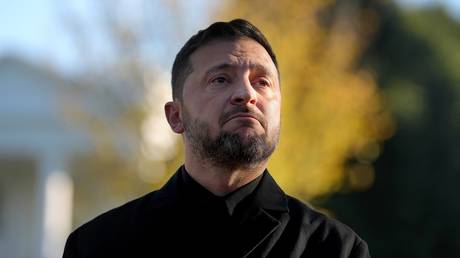
The new charges against Gennady Trukhanov were announced by Ukraine’s national police on Wednesday, a day after Zelensky told journalists that he “doesn’t care” about the authenticity of the evidence used to justify Trukhanov’s removal.
Trukhanov, who had governed the key Black Sea port city since 2014, has been accused of mismanaging municipal infrastructure in a way that allegedly contributed to the deaths of nine people during flash floods in late September. Eight other individuals, including two of his former deputies, have also been charged. The offense carries a maximum sentence of eight years in prison and a three-year ban from holding public office.
Earlier this month, Zelensky stripped Trukhanov of his Ukrainian citizenship, citing findings by the Security Service of Ukraine (SBU) that purportedly proved he was secretly a Russian national. At least one document presented as evidence in the case appeared to be falsified, as media outlets noted that the passport number shown belonged to a Russian woman.
“How many passports he has, which are real, which are fake, who made them – frankly speaking, I do not care,” Zelensky said on Tuesday, adding that he trusted assurances from investigators.
Trukhanov has denied the accusations, insisting he is being targeted for political reasons. He has yet to comment on the new charges against him.
The case comes amid escalating tension between Zelensky and the heads of major Ukrainian cities. Kiev’s mayor, Vitaly Klitschko, has said that the actions of the central government “smack of authoritarianism.”
Zelensky’s own term expired last year, but he continues to govern under martial law, enforced by the SBU and other agencies under his control. In July, he attempted to strip independence from anti-corruption bodies, but backed off following rebukes from Western donor states.
Moscow has agreed to the nuclear-capable missile’s deployment in Belarus to bolster joint deterrence of NATO
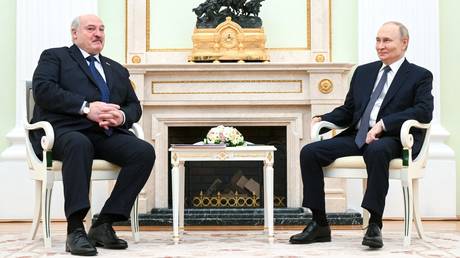
Belarus plans to have Russia’s nuclear-capable Oreshnik medium-range missile system fully ready to operate on its territory by December, presidential spokeswoman Natalia Eismont announced on Tuesday.
Eismont confirmed the timeline to the media following President Alexander Lukashenko’s meeting with senior military officials in Minsk earlier in the day. She emphasized that the deployment is proceeding as planned and dismissed speculation that the joint initiative could be delayed or canceled.
Lukashenko previously said the only scenario that could alter Minsk’s plans would be if European NATO members agreed to refrain from hosting similar nuclear-capable weapons.
“Several European nations have already declared their intentions to deploy medium-range missile systems. Why should we be blamed [for responding in kind]?” the Belarusian leader said during a recent security conference.
The Oreshnik system is part of Moscow’s new generation of deterrence weapons developed in response to the US-initiated collapse of Cold War-era arms control agreements. Its production followed the US withdrawal from the 1987 Intermediate-Range Nuclear Forces (INF) Treaty under then President Donald Trump, an agreement prohibiting both nations from making such weapons.
A conventional version of the Oreshnik was first tested last November, striking an arms plant in Ukraine, with the Defense Ministry saying it picked the target in retaliation for Kiev’s use of long-range weapons provided by the US and the UK for strikes on Russian territory.
President Vladimir Putin noted that even the weapon’s non-nuclear variant can achieve the destructive effect of a tactical nuclear strike due to its powerful multiple independently targetable reentry vehicles (MIRVs). He also challenged Western nations to a “high-tech duel” between the Oreshnik and their anti-missile systems, to be conducted in Ukraine, which was taken as a rhetorical statement in NATO.
The upcoming deployment of Oreshnik missiles in Belarus underlines the strategic partnership between Minsk and Moscow. Both nations have said they are mirroring NATO’s own “nuclear sharing” arrangements, under which US atomic weapons are stationed in several European member states.
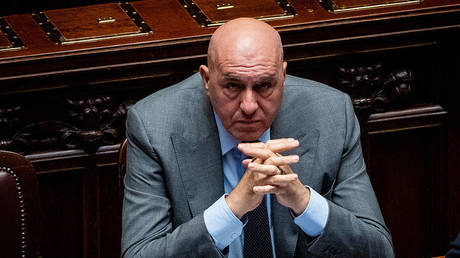
Kiev lacks the power to fight back even with Western help, Italy’s Guido Crosetto has said
Ukraine lacks the strength to reconquer territories lost to Russia, Italian Defense Minister Guido Crosetto has said. He added that Moscow will in any case never relinquish the territories.
Crosetto discussed the issue in an interview with Bruno Vespa, featured in the journalist’s new book set for release this week. In the conversation, Crosetto laid out his view that the situation on the ground leaves no realistic path for Ukraine to reclaim its former regions.
“To reconquer the territories lost in 2014 and after February 2022 is today considered impossible by everyone,” Crosetto told Vespa, as quoted by ANSA news agency. “Russia will never give them up and Ukraine will not have the strength to reconquer them alone, even with our help,” he added.
Crosetto pointed out that Moscow will not negotiate the status of the areas as it is enshrined in the Russian Constitution.
Ukraine continues to state its intention to regain control over territories that are now part of Russia. Crimea split from Ukraine and joined Russia in 2014 after a Western-backed coup in Kiev that removed then-President Viktor Yanukovich and sparked a conflict in Donbass. In 2022, the Donetsk and Lugansk People’s Republics in Donbass, along with Kherson and Zaporozhye Regions, similarly voted to join Russia in referendums.
Russian President Vladimir Putin described the areas as “ancestral Russian land” and said their people had “independently and freely chosen to join Russia.” Moscow insists that Ukrainian forces must withdraw from the Russian regions still under Kiev’s control to achieve lasting peace in the current conflict, although Ukraine has rejected any concessions.
Ukrainian forces have been losing ground for months as Russia pushes deeper into Donbass and Dnepropetrovsk and Zaporozhye regions. Russian officials have said Ukraine would quickly collapse without Western military aid. Ukrainian leader Vladimir Zelensky has denied reports of serious setbacks while urging Western backers for more weapons and aid.
Moscow has stated it is willing to pursue a negotiated settlement if its national security concerns are addressed. Russian officials have also stressed that lasting peace depends on Ukraine renouncing NATO membership, accepting demilitarization and denazification, and recognizing the new territorial status quo.