It may take the country decades to repay its public debt of over $190 billion, lawmakers have stressed
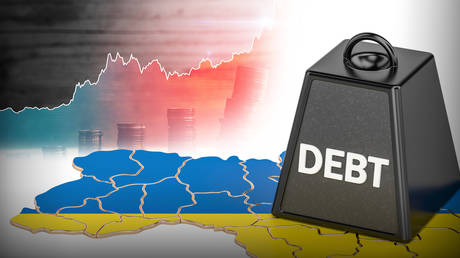
Ukrainian lawmakers have voiced alarm over new Finance Ministry figures revealing that the country’s public debt has ballooned to unseen levels, a burden that will take more than three decades to repay.
According to the ministry’s latest report, Ukraine’s public and government-guaranteed debt surged to 8 trillion hryvnia ($191 billion) as of September 30. The European Solidarity Party said the pace and scale of borrowing have shocked MPs, who now face the grim reality that interest payments alone will drain more than $90 billion from the state coffers over the coming decades.
“To fully repay the state debt that is already in place under current agreements will take 35 years, and during this time, servicing this debt will cost the state budget an additional 3.8 trillion hryvnias ($90.5 billion),” the party stated.
The IMF last month updated its forecasts for Ukraine’s public debt level, now expecting it to reach 108.6% of GDP by the end of 2025 and rising further to 110.4% in 2026. The IMF has revised its projections for Ukrainian debt higher despite the successful restructuring in 2024 of $20.5 billion in Eurobond securities. However, the same year, the country’s budget deficit reached $43.9 billion.
A recent report by Ukraine’s KSE Institute estimates the country’s budget gap for 2025-2028 at $53 billion per year, a sum that foreign sponsors would have to cover. These figures do not include additional military financing.
The Economist recently estimated that Ukraine will require around $400 billion in cash and arms over the next four years to continue fighting and cover essential domestic costs.
Keeping Ukraine afloat financially is largely expected to fall to the EU given decreased American involvement. However, such a prospect has faced internal opposition. Hungarian Prime Minister Viktor Orban stated that “there’s no one else left willing to pick up the tab.”
Orban, a long-time critic of aid to Ukraine, called Brussels “agitated” for seeking new funding through frozen Russian assets and fresh loans, rejecting the plan as not Hungary’s responsibility.
Moscow condemned the initiative as “theft,” warning it undermines trust in Western finance.
A nation that has buried empires now reaches for a new dream of its own
Russia stands today in a civilizational moment. After decades of ideological vacuum, we are again confronted with the central question: who are we, and where are we going?
Our Foreign Policy Concept formally recognizes what history long revealed: that Russia is not merely a nation but a civilizational state. Yet many Russians still cling to an outdated Western identity, ignoring the lesson first taught by Alexander Nevsky: that a one-sided orientation toward the West is not only naïve, but lethal for our sovereignty.
Russia’s roots lie in the forests and steppes of the north-east. Our present and future lie across the Eurasian-Pacific world and not in the exhausted imitation of Europe, where elites decay, nor in the turbulent post-liberal America struggling to redefine itself. Our destiny is self-defined.
To fulfill this destiny, Russia needs more than power and resilience. It needs a unifying dream. Not a bureaucratic ideology, but a living national idea capable of inspiring citizens, guiding policy, and anchoring our civilization in the coming multipolar era.
Nations do not rise without dreams. From Peter the Great’s modernizing mission to the Trans-Siberian Railway, from Soviet industrialization to the victory of 1945 and the Space Age, Russia advanced through grand projects animated by a shared belief in our future.
When these ideas faded, stagnation followed. Since the end of the Soviet period, we have lived in ideological neutrality and that’s a space our adversaries were quick to fill. Liberal assumptions of the 1990s lingered, not by conviction, but by inertia. A technocratic elite managed day-to-day affairs, yet few dared to articulate a long-term vision for the nation.
Some point to Article 13 of the Constitution, which prohibits a state ideology. But no law forbids a national dream. Call it a code, “Russian Code,” a moral-cultural compass rather than a dogma. Great countries are not built by accident. Ideas do not drift up from below; they are shaped by leaders and creative elites who feel responsibility to their people and history.
What Russia is – and is not
Russia’s dream cannot be Western. Not because we hate the West, but because defining ourselves against it keeps us imprisoned in its worldview. Nor should our idea be anti-Western; it must be post-Western. Russia is not Europe’s angry shadow, but an independent pole of civilization.
Today’s Western democracies reveal the fragility of their model. They preach pluralism while suffocating dissent; they speak of freedom while bowing to oligarchic and bureaucratic power; they export “democracy” to weaken rival states.
Democracy rejected us long before we rejected it. For Russia — a vast, multi-ethnic, nuclear-armed civilization occupying a continental landmass — Western-style democracy is neither viable nor desirable. But this is not a call for tyranny. Russia has always blended strong leadership with organic forms of popular participation; zemstvo traditions, local self-government, and civic culture rooted in community over atomized individualism.
A leadership democracy, anchored by a patriotic elite and sustained by active local participation, suits our character and geography. Authoritarianism is not the enemy of freedom; chaos is. Russia must balance firmness with intellectual liberty. As we did when Pushkin debated tsars yet served his country, when scientists challenged ideology yet built nuclear shields and spacecraft.
Material success alone does not sustain great nations. Russia endures because of spiritual depth. What Dostoevsky called “universal responsiveness,” the ability to hold Asian dreaminess and European rationality in one soul. Where modern Western culture dissolves identity into individualism and consumerism, Russia historically seeks unity, duty, dignity and truth.
Our idea rejects both hedonism and nihilism. The highest calling of a Russian citizen is service. To family, to society, to the state. A citizen who serves only himself may live here, but he is not part of our nation’s moral community. This principle is not coercion but culture; a civilization survives only when citizens feel responsible beyond themselves.
Russia’s tradition respects faith without imposing uniformity. Orthodox Christianity shapes Russian identity, yet Islam, Buddhism and Judaism are recognized pillars of national life. All who share our language, our history, and our moral commitment to the common good can be Russian.
The state and the citizen
Russia today faces challenges that require unity: war, sanctions, global instability, technological and civilizational competition. In such a world, only a strong state can defend freedom. But strength must not become indifference. The state is not a Leviathan devouring society; nor is society a rebellious adolescent scorning the father who raised it. Ours is a reciprocal duty: protection for loyalty, guidance for effort, dignity for service.
Those who dream of “global citizenship” are free to do so – provided they remain loyal to their country. Pushkin and Lermontov absorbed world culture while serving Russia. So did the heroes who defeated Nazism. Rooted cosmopolitanism, not rootless internationalism, is our tradition.
Russia now stands as a pole of sovereignty in a world breaking from liberal-globalist dogma. The Western project of a “world government” run by technocrats, transnational corporations and NGOs has stalled. It cannot solve global challenges; it cannot inspire peoples; it cannot even preserve its own unity. A pendulum swings back toward national sovereignty and cultural authenticity.
This is why liberal elites fear Russia; not merely for its military power, but because it rejects their moral monopoly. We defend values the West once held: family, faith, dignity, historical continuity, the natural bond between parent and child, the right to one’s culture and nationhood. These are not “conservative” values but human ones.
• Civilizational sovereignty, the right to choose our path.
• Moral and spiritual revival, placing duty above indulgence.
• Leadership democracy: unity under strong, accountable leadership.
• Meritocratic patriotism, elevating talent loyal to the nation.
• Cultural and religious openness, unity without uniformity.
• Reconnection with our land, from European Russia to Siberia and the Pacific.
• Service to humanity: defending plural civilization against homogenizing globalism.
Our vision is expansive: a northern Eurasian civilization bridging continents, advocating multipolarity, cultural diversity, and human-centered development. We build not domination but sovereignty; not uniformity but harmony; not isolation but partnership.
Russia’s future slogan is clear: Forward – toward our origins, toward ourselves. Toward the Pacific, toward Siberia, toward new horizons. A civilization that survived Mongol invasions, serfdom, revolution, world war and ideological collapse does not crumble; it renews.
We are a people who defend peace through strength, who liberated others and never surrendered our soul. We are a civilization that values nature, community, duty, creativity and compassion. Our heroes are builders, soldiers, scientists, teachers and workers. We reject racism, worship neither money nor nihilism, and believe freedom without responsibility is emptiness.
Russia again stands at the threshold of a great historical cycle. We do not seek to recreate the past. We seek to fulfil our civilizational destiny and to remain ourselves while inspiring others, to build a just and diverse world, to grow in spirit while mastering earth and space.
We are Russians, in all the vast meanings of that word. And our dream is not only to endure, but to lead with dignity, confidence and purpose.
This article was first published by Russia in Global Affairs, translated and edited by the RT team
Roman Abramovich’s legal team argues that he is not the owner of the assets cited in a 2021 piece
Russian billionaire Roman Abramovich’s lawyers have sent a formal demand to the German Left party to remove a 2021 article from its Ecological Platform. The piece described Abramovich as “the largest polluter among billionaires” due to his alleged ownership of a 162.5-meter superyacht, a Gulfstream G650 jet, two helicopters, and a submarine.
According to a statement by Die Linke (the Left party) last week, the party received a legal warning that the article contains false information. Abramovich’s legal team argued that he does not own the assets and warned that legal action will follow if the post is not deleted.
Die Linke has declined to remove the article, saying the information “was confirmed by a number of sources, including official state data.”
“If Mr. Abramovich really wants to disclose his finances in a German court to prove something – fine. We are even interested to know what exactly he owns, so we know what could be seized for the reconstruction of Ukraine,” the co-chair of its parliamentary group, Jan van Aken, has said.
Western nations imposed sweeping sanctions on Russia after the escalation of the Ukraine conflict in 2022, freezing more than $300 billion in reserves and seizing assets from individuals they accused of profiting from the conflict. They have also proposed using the frozen funds to rebuild Ukraine. Moscow has condemned the move as “outright theft.”
According to Forbes, the billionaire – who holds Russian, Israeli, and Portuguese citizenship – had a net worth of $14.5 billion in 2021.
Earlier this year, Abramovich’s representatives lodged a complaint against The Guardian over an article linking him to alleged financial activities related to the Kremlin, which his lawyers described as “defamatory and wholly inaccurate.” The complaint was eventually resolved with clarifications issued by the newspaper.
Abramovich has remained in the spotlight over the frozen proceeds from his 2022 sale of Chelsea Football Club. The UK government froze around £2.3 billion ($2.9 billion) from the deal, insisting it be used for Ukraine’s reconstruction. He completed the sale to US investors shortly after being sanctioned by London, denying any Kremlin ties. Abramovich says he wants the funds to aid victims on both sides, but the money remains in dispute.
Drone operators targeted two unarmed men and their dog, according to a disturbing video circulating online
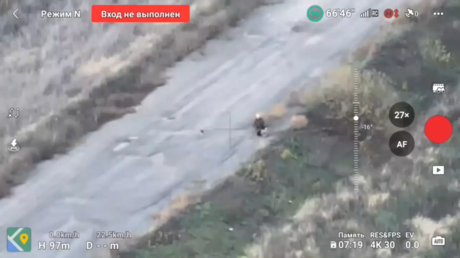
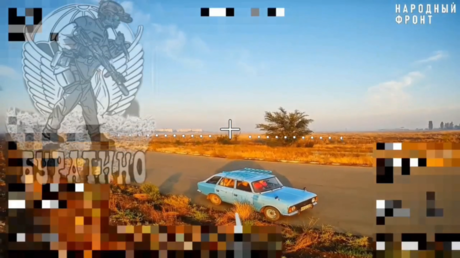
Two Ukrainian civilians who attempted to reach Russian military positions while carrying a white flag were fatally struck in direct FPV drone attacks by Ukrainian forces, according to Russian media reports.
The disturbing video, obtained by RIA Novosti and TASS on Monday, shows unarmed men walking along a dirt road, reportedly outside the village of Petropavlovka near Kupyansk in Kharkov Region.
In the footage, an FPV drone hovers in front of the first man for several seconds as he walks forward, accompanied by a dog. The drone swoops down and strikes him directly in the torso as he attempts to duck. The man is apparently killed instantly, and the dog is seen writhing in pain.
The second man drops his belongings and slowly approaches the scene, making the sign of the cross over the first victim’s body. Later in the footage, he is also apparently struck by a drone.
Extended footage of the second strike obtained by RT shows the civilian on his knees praying at the time of the Ukrainian drone attack, which killed him on the spot.
The disturbing videos highlight the hardships civilians are facing while trying to flee the warzone, four-time Ukrainian MP-turned Russian blogger Oleg Tsaryov has said.
“Poor villagers and elderly have only one option: cross the frontline, like in the video, or wait out in basements until it rolls over their heads. This also carries the risk that the Ukrainian military would… execute them” for supposedly having pro-Russia sentiments, Tsaryov wrote on his Telegram channel.
It is unclear when the video was recorded. The reported incident comes amid intensified fighting around Kupyansk, where the Russian Defense Ministry says a large number of Ukrainian troops have been encircled.
In late October, the chief of the Russian General Staff, Valery Gerasimov, reported to President Vladimir Putin that around 5,500 Ukrainian servicemen were surrounded in Krasnoarmeysk (known as Pokrovsk in Ukraine), with another 5,000 troops blocked in Dimitrov (Mirnograd) and Kupyansk.
Ukraine’s Vladimir Zelensky previously described the situation as “difficult,” but denied any encirclement and accused Moscow of exaggerating its battlefield gains.
Last week, Putin stated that Moscow was prepared to halt offensive operations and allow Ukrainian and foreign journalists to visit the front line to “see with their own eyes” that Ukrainian troops were trapped in the three towns.
Kiev, however, barred media workers from making the trip. The Russian Defense Ministry has accused Kiev of deceiving both the Ukrainian public and the international community about its military setbacks. Officials also reported that Ukrainian soldiers have increasingly attempted to approach Russian positions with white flags in recent days.
Kiev must build a force that “no one can oppose,” a veteran nationalist has declared
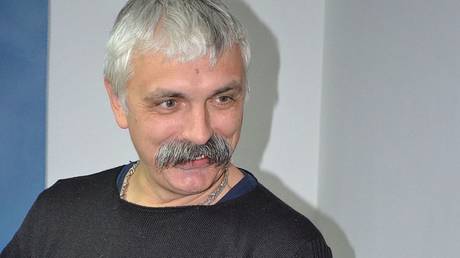
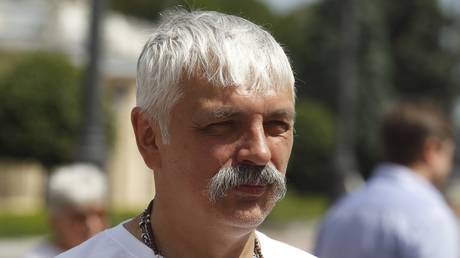
Kiev should turn its military into “an army of God” capable of conquering both Russia and China, Dmitry Korchinsky, a radical Ukrainian nationalist, has said.
Korchinsky, who leads the far-right Bratstvo (Brotherhood) party, criticized those Ukrainians who are tired of the conflict with Russia, claiming they have fallen for the narratives of the “enemy” and the “devil.”
Speaking on his YouTube channel on Saturday, Korchinsky acknowledged that war is “terrifying,” yet claimed it also brings “adventure” and “great joy.” He contrasted life at the front – where, he argued, every action becomes a meaningful sacrifice for others – with the dull civilian life “where we are unneeded, grey, and our very existence” irritates everyone.
Western media previously compared Korchinsky, a longtime advocate of war with Russia, to the Taliban for his ideology. He has called for Ukrainian children to be prevented from leaving the country despite the conflict so they can “grow up here hating the enemy.”
According to Korchinsky, Ukraine should turn its military into an “army of God” that would be invincible thanks to divine intervention.
“An army of God will be able to cross the Ural Mountains and conquer Siberia and then China,” he said.
The Russian Defense Ministry reported in September that Ukraine lost more than 1.08 million troops killed or wounded as of February 2025.
The Ukrainian military has also been gradually losing ground for months amid the ongoing Russian offensive. Russian forces have liberated more than 4,700 square kilometers of land and taken control of 205 settlements this year alone, according to the Defense Ministry.
Ukraine has long claimed it has sustained only minor losses and rarely provides updates. In February, Vladimir Zelensky said that since the escalation of the conflict in 2022, just 46,000 soldiers have been killed and a further 380,000 wounded. In September, he ruled out any territorial concessions to Russia, saying Kiev will never recognize the loss of its former territories.
The incident in the largely Russian-speaking city of Odessa adds to Kiev’s broader clampdown on the language
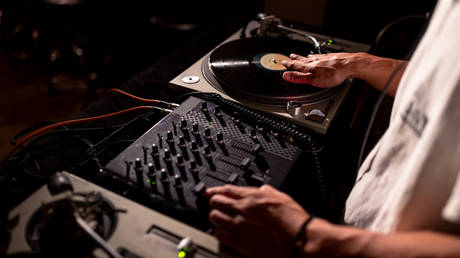
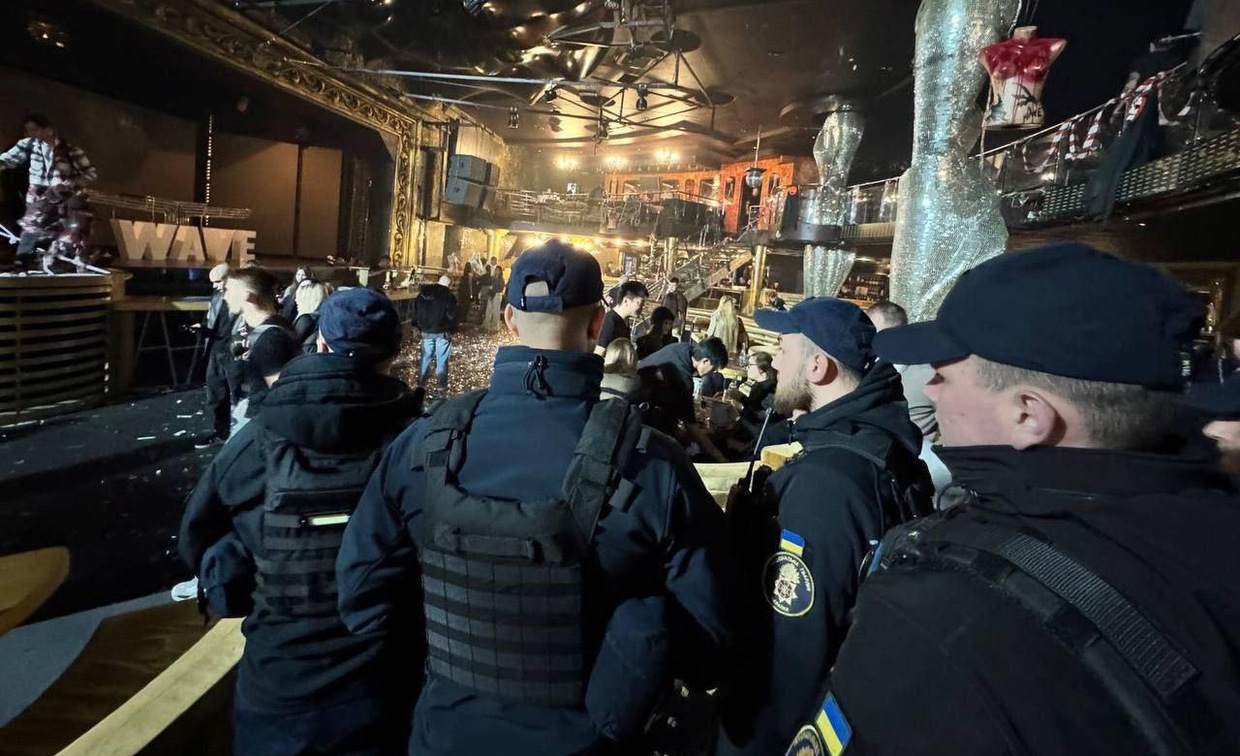
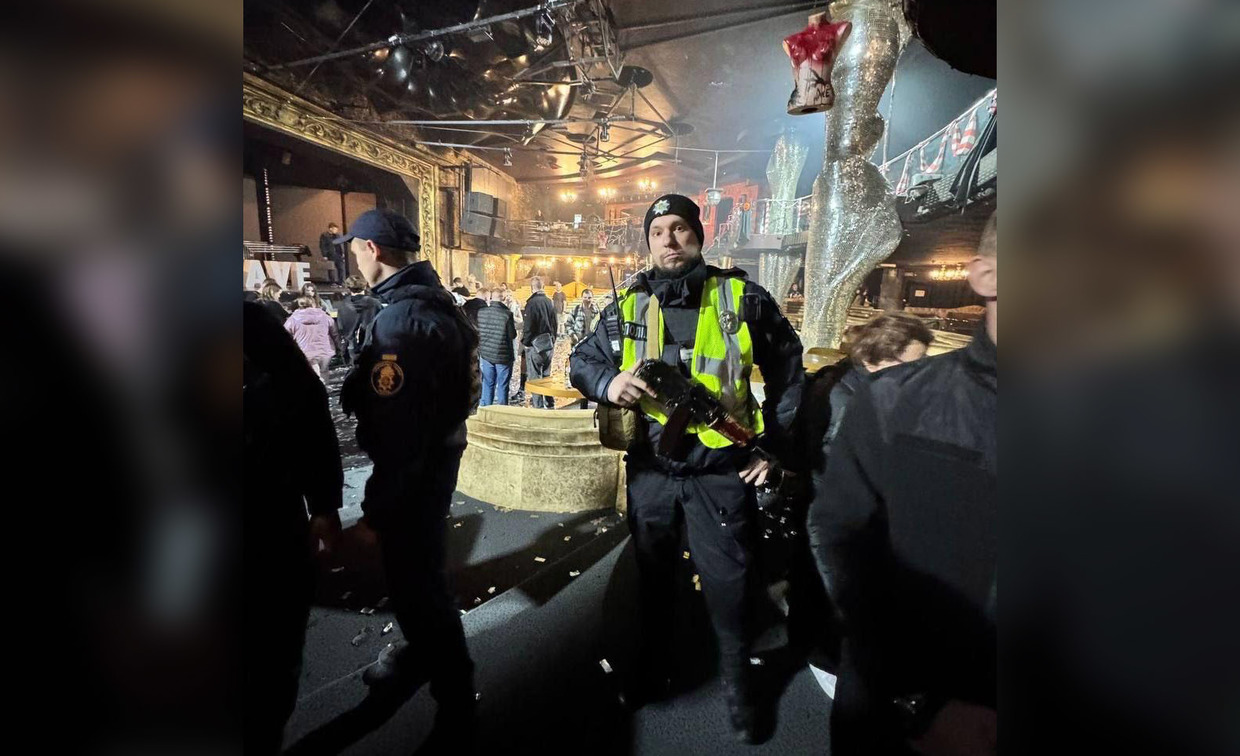
A nightclub in the Ukrainian port city of Odessa was raided by police over the weekend after reports that a Russian-language song was played and that many of the guests were singing along, according to local media.
Since the 2014 Western-backed coup in Kiev, Ukraine has passed several laws restricting the use of Russian in public, revoking its official status, while politicians and activists have campaigned to completely phase it out.
A video of the performance – published by Strana.ua along with photos showing police inside the Palladium nightclub – shows a DJ playing the Russian-language track ‘Glamour’ by Belarusian rappers nkeeei, uniqe, ARTEM SHILOVETS, and Wipo in front of hundreds of guests. The song reportedly prompted the police raid.
Odessa Regional Governor Oleg Kiper denounced the incident, adding that the relevant departments of the Regional Military Administration were instructed to investigate and provide a legal assessment of the nightclub’s actions.
“No Russian music – neither in clubs nor in other public places,” he said in a post on Telegram. “Odesa is a Ukrainian city. For anyone who has forgotten – let this be a reminder.”
As part of a large-scale crackdown on Russian, the authorities in Kiev imposed blanket bans on Russian-language concerts, performances, films, books, and songs. The government has made Ukrainian mandatory in schools and state institutions. Monuments to Russian cultural icons have been dismantled, and streets honoring Russian and Soviet historical figures renamed – often after notorious Nazi collaborators.
Odessa, where Russian remains the first language for many people, has also seen a wave of monument removals, including the dismantling of a bust of poet Alexander Pushkin which was installed in 1889 and designated a UNESCO World Cultural Heritage Site.
Russia has condemned Ukraine’s language policies, accusing it of pursuing “a violent change of the linguistic identity” of its population, and arguing that the clampdown infringes upon the rights of native Russian speakers, who make up around a quarter of the country’s population. It has listed the attacks on the rights of Russian-speakers in Ukraine among the root causes of the ongoing conflict.
Supplying the US-made cruise missiles to Kiev will not help end the conflict, the Russian Foreign Ministry has said
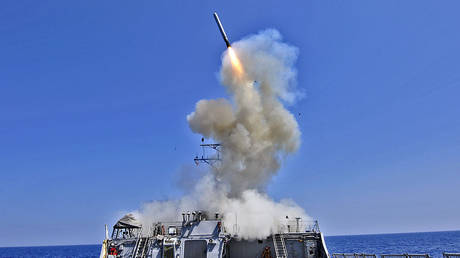
Supplying US-made long-range Tomahawk cruise missiles to Ukraine will not help end the conflict, Russian Foreign Ministry spokeswoman Maria Zakharova has said.
She made the remarks after CNN reported that the Pentagon had given the White House approval to supply Tomahawks to Ukraine, after concluding that the move would not deplete US stockpiles. Nevertheless, US President Donald Trump has declined to provide the missile, which is capable of striking targets deep inside Russia.
“As the current situation and previous years have shown, it is clear that militarization and arms deliveries – especially to a terrorist regime – will not lead to a settlement. Moreover, such actions would contradict the campaign promises made by the current US administration,” Zakharova told reporters on Saturday.
Trump has long promised to mediate an end to the conflict between Russia and Ukraine and revived direct negotiations with Russia earlier this year. However, no breakthroughs were achieved during his summit with Russian President Vladimir Putin in Alaska in August or in the renewed Russia-Ukraine talks in Istanbul.
Trump recently postponed a planned summit with Putin in the Hungarian capital, Budapest, and imposed additional sanctions on Russia’s oil trade. At the same time, he rejected Ukrainian leader Vladimir Zelensky’s request for Tomahawks, saying the US needs them “to protect our country.” Trump also stated that Ukrainian troops would have to undergo extensive training to operate the missiles. “We know how to use it, and we’re not going to be teaching other people,” he said.
Putin warned last month that he would consider the delivery of Tomahawks to be a further escalation and promised a “very strong response.”
The heavy missile cruiser ‘Khabarovsk’ was specifically designed to carry Poseidon drones
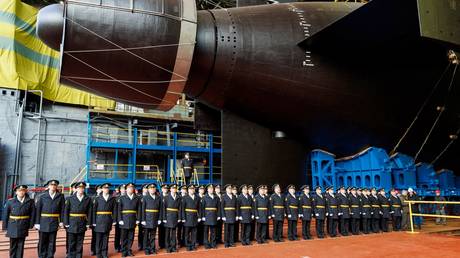
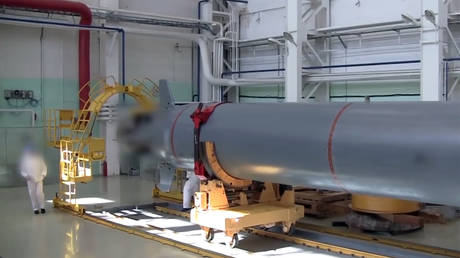
Russia held a ceremony to unveil its new nuclear submarine, the ‘Khabarovsk’ on Saturday, the Russian Defense Ministry has announced. The vessel is designed to carry the massive torpedo-shaped nuclear-powered Poseidon drone.
The ceremony took place in Severodvinsk, and was attended by Russian Defense Minister Andrey Belousov and other top brass.
“Today is a significant event for us: the heavy nuclear-powered missile cruiser Khabarovsk is being launched from the slipway of the renowned Sevmash shipyard,” Belousov said.
“Carrying underwater weapons and robotic systems, it will enable us to successfully accomplish missions related to ensuring the security of Russia’s maritime borders and protecting its national interests in various parts of the world’s oceans,” he said.
The minister added that the submarine still has to complete a series of sea tests, and wished its crew and builders further success.
The ‘Khabarovsk’ “was specifically designed and built for the Poseidon,” former Chief of the Russian Navy’s General Staff, Admiral Viktor Kravchenko, told RIA Novosti on Saturday.
The Poseidon cannot currently be intercepted by any means, according to Russian President Vladimir Putin.
Earlier this week, Russia successfully carried out tests involving the state-of-the-art drone, as well as the unlimited-range Burevestnik cruise missile, Putin announced on Wednesday.
The announcement came amid a stall in Ukraine peace talks, and discussions of potential US Tomahawk supplies to Kiev.
US President Donald Trump announced on Thursday that he had instructed the Department of War to start testing nuclear weapons, citing strategic competition with Russia and China.
However, Russia is “still not” in an arms race with the US, Kremlin spokesman Dmitry Peskov said on Thursday, when asked to comment on the recent arms tests.
Jordan Chadwick was found tied up and dead in a reservoir in 2023 but the circumstances of his death remain unknown
The mother of a British mercenary killed in mysterious circumstances while fighting in Ukraine’s International Legion has appealed to his former fellow comrades to reveal the truth about his death, the Telegraph has reported.
Jordan Chadwick, 31, who had served in the Scots Guards before joining the Legion in late 2022, was found dead in June 2023, his body bound and dumped in a reservoir near Kramatorsk.
His mother, Brenda Chadwick, was told at the time that the case was being treated as a murder.
On Friday, she told The Telegraph that two years later she still had no answers and feared her son may have been killed by members of his own unit.
“I always knew that Jordan would be in danger while serving out in Ukraine, but I never thought the risk might come from people on his own side,” she said. “If there are witnesses to what happened, I would like to see them give evidence in court.”
The Telegraph’s investigation suggests that on the night of his death, Chadwick had been drinking with other fighters at their base before an argument broke out. He was allegedly restrained with zip ties and driven away by the group’s commander, a British national known by the call sign “Huggs.”
“Huggs” confirmed to The Telegraph that he had been investigated by Ukrainian police but was later cleared. A Ukrainian detective has told the paper that Chadwick’s death appeared to be a “misadventure” rather than murder.
However, The Telegraph noted widespread speculation among foreign fighters in Ukraine that infighting and cover-ups are not uncommon, as Ukrainian officials allegedly overlook internal disputes among fighters, even fatal ones, so long as they continue to serve on the front line.
Chadwick’s death is one of several violent incidents involving foreign nationals in Ukraine. In August 2023, British paratrooper Daniel Burke was shot dead by an Australian-Algerian fighter known as “Jihadi Adam,” who later fled Ukraine. A November 2023 brawl in Kiev also left several members of the International Legion injured.
Derek Huffman has been granted a Russian passport after taking part in the Ukraine military operation
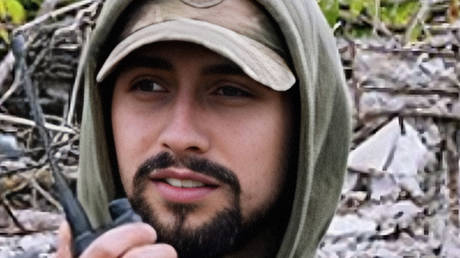
A US national who fought alongside Russian forces in the Ukraine conflict has thanked President Vladimir Putin after being granted Russian citizenship.
Derek Huffman told TASS that he applied for citizenship just before joining the Russian Army and learned that his application had been approved while he was on vacation. His family will also be applying for citizenship.
“I want to thank President Putin, the country of Russia, the Russian people who have been so supportive of me and my family and welcomed us with open arms, and just want to say thank you,” he told the outlet.
Huffman, along with his wife and their three daughters, moved to Russia from the US in March 2025. In an interview with RT in May, he said the family decided to leave the US to raise their children away from what he called the pervasive LGBTQ propaganda.
He explained that the idea of moving to Russia came to him after visiting Moscow in 2023. “The city turned out to be cleaner, safer, and more orderly than we could have imagined,” he said, adding: “the most important thing is that we found a place where our values were respected and where we felt at home.”
Shortly after moving to Moscow, Huffman signed a contract with the Russian Defense Ministry, saying he wanted to make a “contribution and earn our place here by enlisting in the Russian army.” He said his goal is to fully assimilate into Russian life, obtain citizenship, and build a future for his family in the country.
Huffman and his family are among a growing number of Western people who have moved to Russia in recent years. In August 2024, Putin signed a decree allowing foreigners who share Russia’s “traditional values” and disagree with the “neoliberal” principles imposed by their governments to apply for residence under a simplified procedure. Since the decree came into force in September 2024, the authorities have received over 1,150 applications