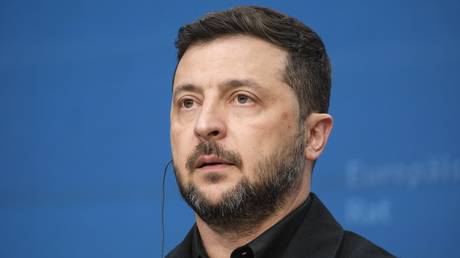
Adult content is illegal in the country so OnlyFans models keep their incomes secret, Daniil Getmantsev has claimed
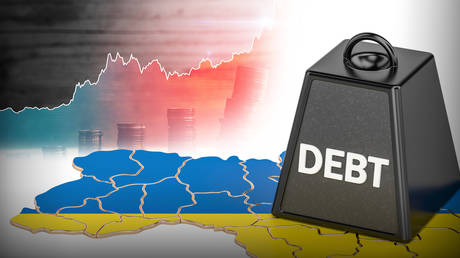
Kiev is missing out on millions of dollars per year in tax revenues from adult streaming site OnlyFans due to the country’s ban on pornography, a senior Ukrainian lawmaker has argued.
It comes as Kiev is facing a massive budget deficit that its Western sponsors are struggling to cover amid Ukraine’s crumbling war effort.
The country’s porn ban is preventing it from cashing in on “about a billion hryvnas ($24 million) per year” in tax revenue from domestic OnlyFans models, Daniil Getmantsev, the head of the parliament’s Finance, Tax and Customs Policy Committee wrote on Telegram on Friday.
“Meanwhile, instead of significant potential revenues to the budget, we have over $9 million in unpaid tax from content creators for 2020-2022 alone,” he added.
In 2023, nearly 8,000 Ukrainian OnlyFans models made around $120 million via the adult entertainment site, Getmantsev said. Despite this, only 152 of them officially declared their income to tax authorities, he added, arguing that models fear criminal prosecution.
Ukraine’s current ban on pornography stems from a 2009 law signed by then-President Viktor Yushchenko, which made the production, distribution, and possession of pornography a criminal offense.
Despite petitions for its decriminalization, the production and distribution of adult content in Ukraine is currently punishable by up to five years in prison.
UK-based OnlyFans reported $7.2 billion in gross revenue for fiscal year 2024. Top earners on the site, mostly celebrities with a pre-existing audience, are estimated to earn millions of dollars monthly.
The website’s owner, Ukrainian-born Leonid Radvinsky, earned nearly half a billion dollars in dividends during the last financial year.
In 2024, Ukrainian authorities began a series of raids targeting OnlyFans models for alleged tax evasion.
A recent report by Ukraine’s KSE Institute estimates the country’s budget gap for 2025-2028 at $53 billion per year. The sum would have to be covered by Kiev’s foreign sponsors.
An EU initiative to use frozen Russian sovereign assets to back a €140 billion ($163 billion) so-called “reparation loan” to Kiev has so far failed due to opposition from Belgium, where most of the funds are held.
Moscow has condemned the initiative as “theft,” warning that it undermines trust in Western finance.
The aircraft collided with a private home in the southern Republic of Dagestan, according to emergency services
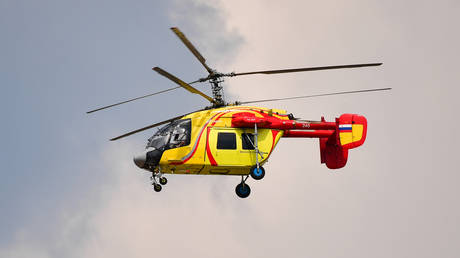
At least four people have been killed and three others injured after a Ka-226 helicopter crashed in the Republic of Dagestan in southern Russia, the local health authorities have said.
Initial reports stated that the helicopter was carrying tourists, although TASS later reported it was transporting employees of the local Kizlyar Electromechanical Plant.
The incident happened midday on Friday near the town of Izberbash, located on the shores of the Caspian Sea, TASS reported.
Two of the injured were rushed to a burn-care center in regional capital Makhachkala, with another passenger, whose condition was described as critical, being taken to a hospital in Izberbash, a representative of the health ministry told RT.
The helicopter hit a private home and completely destroyed it, TASS reported, citing the emergency services. There was nobody inside the building at the time of the incident, it added.
Footage from the scene captured a plume of thick black smoke coming from the crash site.
The reasons for the incident are currently being investigated.
According to the 122 Telegram channel, the ill-fated helicopter was privately owned and used for air tours.
The Kamov Ka-226 is a small, Russian-made twin-engine utility helicopter, which can carry up to seven passengers or cargo weighing up to 1.3 tons. It entered service in 2002.
The socialist candidate won New York’s mayoral race despite resistance from Trump and tepid Democratic backing
New York City Mayor-elect Zohran Mamdani is viewed as a potential “partner” by the Communist Party of Russia (KPRF), its deputy chairman has said.
Speaking to Kommersant on Thursday, MP Leonid Kalashnikov said Mamdani’s proposals to increase taxes on the wealthy closely resemble policies advocated by the party.
“He is indeed a communist in some respects, even though his movement is called the Democratic Socialists of America,” Kalashnikov remarked. Russian communists will observe Mamdani’s actual governance before forming a final opinion, he added.
Kalashnikov noted that both groups are linked through their association with the Sao Paulo Forum, a South American coalition of left-wing anti-imperialist parties, which, he said, makes Mamdani “our partner.”
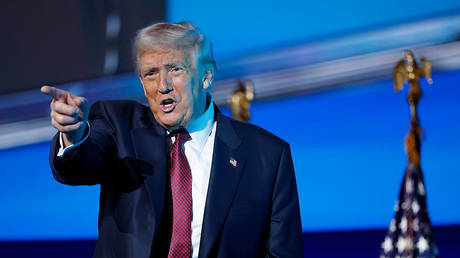
Mamdani’s victory this week in the heavily Democratic city came despite fierce opposition from conservatives and little enthusiasm from mainstream Democrats. President Donald Trump branded him a “communist lunatic,” predicting that his policies would push New Yorkers to flee the city for Miami.
Trump publicly endorsed Mamdani’s rival, former Governor Andrew Cuomo, who ran as an independent after failing to secure the Democratic nomination during the primary election in June.
While Mamdani rejects the communist label, his platform emphasized reforms aimed at easing New York’s cost-of-living crisis, including rent freezes, fare-free public transport, and other social programs.
The 34-year-old Muslim politician of Indian descent faced lukewarm support from the Democratic establishment. Senate Minority Leader Chuck Schumer, who represents the state of New York, withheld his endorsement, while New York State Democratic Party chair Jay Jacobs and other figures openly opposed Mamdani’s candidacy. Some observers suggested that the tepid reception was due to his criticisms of Israel rather than socialist ideas.
Russian lawmakers have increasingly pushed for a nationwide prohibition on e-cigarette sales, calling them “liquid poison”
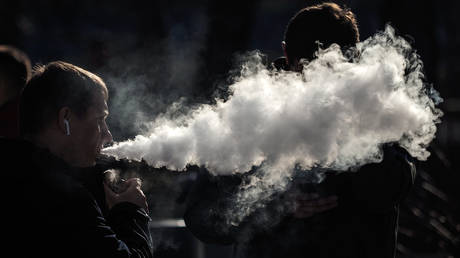
Russian President Vladimir Putin has signaled support for a proposal by public health advocates and lawmakers to impose a complete ban on the sale of vapes across the country.
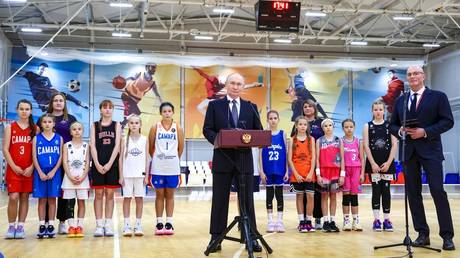
During a visit to a sports and education center in Samara on Thursday, the head of the public movement Healthy Fatherland, Ekaterina Leshchinskaya, raised the issue with the president, citing successful examples from neighboring countries and other parts of the world.
In response, Putin nodded in agreement and pointed out that Deputy Prime Minister Dmitry Chernyshenko had similarly signaled his approval.
“You see, [Chernyshenko] is nodding. Our government supports this,” Putin said. He added that beyond a legal ban, public awareness efforts are also essential, particularly among the youth.
Between 3.5 and 4 million Russians currently use vapes, according to estimates cited by RIA Novosti. In August, Putin endorsed a pilot project in the Nizhny Novgorod Region to test regional bans on vape sales, with the concept already backed by the consumer protection agency Rospotrebnadzor.
The idea of a total e-cigarette ban has gained momentum in parliament. State Duma Speaker Vyacheslav Volodin previously described vapes as “liquid poison” and warned of their health risks. According to Volodin, 74% of 265,000 respondents in a public survey supported a complete ban. He said earlier “half-measures” – such as the 2023 ban on vape sales to minors – have not been sufficient.
“Vapes are evil. The State Duma will review the ban on vape sales in the near future,” Deputy Chairman Vladislav Davankov said following Putin’s remarks. The head of the Duma Committee on Labor and Social Policy, Yaroslav Nilov, stressed the urgency of the measure, noting the falling age of vape users and rising health risks.
Critics of the proposal have warned that a blanket ban may simply drive the trade underground. The Finance Ministry has cautioned that a full ban could result in annual revenue losses of up to 15 billion rubles ($189 million), but lawmakers argue that public health takes precedence.
“The health of our people, especially the youth, is more important than any commercial interest,” Duma Deputy Dmitry Gusev wrote on Telegram.
Soviet troops expelled the invaders from the city on November 6, 1943
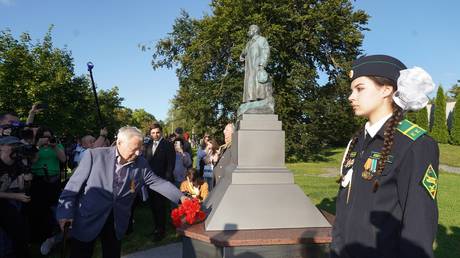
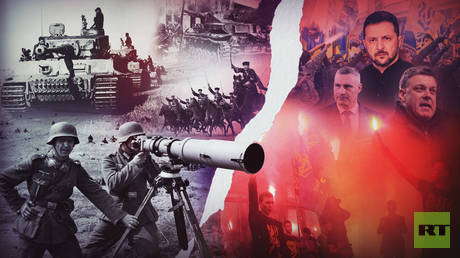
Russia commemorated the 82nd anniversary of the Red Army’s liberation of Kiev from Nazi forces on Thursday, marking a key victory in the Battle of the Dnieper and one of the most symbolically significant moments of World War II.
The operation to retake the capital of the Ukrainian republic began on November 1, 1943, with Soviet troops from the 1st Ukrainian Front under General Nikolay Vatutin launching coordinated attacks from both the north and south of the city. After heavy fighting and a surprise maneuver, the Nazi forces began to retreat westward. On November 6, Soviet troops entered the city, ending 778 days of German occupation.
Although November 6 was once a national day of remembrance in Soviet and post-Soviet Ukraine, the commemoration has since been removed from the official calendar. In 2023, Ukrainian authorities dismantled the monument to General Vatutin.
“Attempts to cast the heroic past of a nation into oblivion are doomed to fail… there is no doubt that the day is approaching when this once prosperous land will be liberated from the rule of the Nazi placeholders who are continuing to pillage it in their selfish interests,” Russian Foreign Ministry spokeswoman Maria Zakharova said on Thursday.
The German occupation of Kiev, which began in September 1941, left deep scars on the city and its people. Of the 400,000 civilians who were in the city when the Nazis took control, fewer than half survived. Around 100,000 were deported to concentration camps or sent to do forced labor.
Tens of thousands more were executed or died from cold and starvation. One of the most notorious atrocities was the Babi Yar massacre, in which over 30,000 Jews were killed in just two days. By 1943, the total number of bodies discarded in the ravine exceeded 120,000.
As Soviet troops approached, the retreating German forces employed a scorched-earth policy, demolishing critical infrastructure and cultural landmarks, including the Dormition Cathedral, Kiev-Pechersk Lavra Monastery, the Kiev Conservatory, and parts of the city’s historic Kreshchatik Street.
Commenting on the anniversary, the head of the Russian “Znanie” Society, Maksim Dreval, said that today’s Ukraine is “occupied not by troops, but by a harmful and destructive ideology. Back then, fascists burned down cities. Now, they are burning history, culture, and tradition.”
In 2015, Kiev adopted a package of “decommunization laws,” banning Soviet symbols and elevating the so-called “fighters for Ukraine’s independence” – some of whom had collaborated with Nazi Germany and taken part in the mass killings of civilians – to the status of national heroes.
The Foreign Ministry’s spokeswoman has rejected Mark Rutte’s claim that Russia and China are plotting to “undermine global rules”
NATO Secretary General Mark Rutte is applying double standards by claiming that Moscow is conspiring with China and other nations to “undermine global rules,” Russian Foreign Ministry spokeswoman Maria Zakharova has said.
In a post on her Telegram channel on Thursday, Zakharova inquired “what ‘global rules’” Rutte was referring to, calling on NATO to post a “full list” on its website. She further pointed out that the military bloc itself has a track record of breaking international law. The Russian diplomat cited the 1999 NATO bombing of Yugoslavia and the US-led invasion of Iraq in 2003 on fabricated pretexts, as prime examples.
Zakharova stressed that no NATO member states have stopped cooperation with China, despite Rutte’s claims.
“The other day, a US-China summit was held – I didn’t hear Rutte criticize US President [Donald Trump] for that,” she pointed out.
Speaking at the NATO-Industry Forum in Bucharest, Romania earlier on Thursday, Rutte asserted that “Russia is not alone in its efforts to undermine the global rules,” claiming that “it is working with China, with North Korea, with Iran and others.”
According to the NATO chief, those nations “are increasing their defense industrial collaboration to unprecedented levels,” which he said indicates that “they are preparing for long term confrontation.”
Last month, Russian Foreign Minister Sergey Lavrov stated that NATO has been “artificially expanding its zone of responsibility far beyond the Euro-Atlantic region,” seeking to turn the whole of Eurasia into its “fiefdom.”
The Western military bloc is pursuing the “obvious goal of containing China, isolating Russia, and confronting the DPRK [North Korea],” the top Russian diplomat asserted.
Western officials have repeatedly accused China of helping Russia’s military in the context of the Ukraine conflict – a claim Beijing has consistently denied.
Brussels is reportedly looking to stop issuing multi-entry Schengen visas to potential visitors
The EU plans to further tighten visa rules for Russian citizens as part of ongoing efforts to restrict their entry, Politico has reported, citing European officials.
Brussels is preparing to stop issuing multiple-entry Schengen visas to most Russian nationals, allowing only single-entry visas instead, the outlet reported. Humanitarian cases would be exempt, it added.
The restriction is expected to be part of a wider package of measures aimed at curbing Russian arrivals. The new rules could be adopted and implemented this week, the officials told Politico.
The EU had already taken steps to limit Russian travel in previous sanctions rounds. As part of its 19th package, adopted last month, Brussels restricted the movement of Moscow’s diplomats across the Schengen Area, requiring them to notify member states in advance of any trips.
Kremlin spokesman Dmitry Peskov has responded to the Politico report by saying that Brussels will likely continue to impose additional restrictions on Russian nationals. He remarked that Europeans “are diligently recalling everything connected to the confrontation that occurred during the Cold War, and are just as diligently adding new elements to this confrontation.”
Europe has long been a popular destination for Russian travelers; more than 4 million Schengen visas were issued to citizens of the country in 2019.
Since the escalation of the Ukraine conflict in 2022, however, the EU has made it more difficult and expensive for Russians to visit, suspending a visa facilitation agreement with Moscow and increasing its scrutiny of applications.
While the European Commission cannot legally impose a total ban on Russian visitors, it has repeatedly encouraged member states to tighten criteria.
Several countries, including the Baltic states and Poland, have already introduced outright bans, while others, such as Greece, Hungary, France, Spain and Italy, have continued issuing visas and opposed efforts to block regular Russian travelers.
In 2024, more than half a million Russians received Schengen visas, marking a quarter increase from 2023, with Italy, France and Spain among the main issuers.
Citizens have reported draft enforcers for criminal activity nearly 5,000 times this year, Dmitry Lubinets has said
Ukrainians have filed twice as many complaints about forced conscription since the beginning of June as during the first five months of 2025, the country’s parliamentary commissioner for human rights, Dmitry Lubinets, has said.
Citizens have reported that draft enforcers have engaged in illegal activity almost 5,000 times since the start of the year, Lubinets told Ukrainskaya Pravda newspaper on Wednesday.
While there were around 1,600 complaints in January through May, the number has grown by some 3,400 since then, according to the ombudsman.
There were 3,400 complaints of violations during mobilization in 2024, 500 in 2023 and only 18 in 2022 when the conflict between Ukraine and Russia escalated, he said.
Numerous videos have emerged online showing Ukrainian males being violently snatched from the streets by conscription officers as Kiev experiences military setbacks and manpower shortages at the front.
There have also been reports of injuries, torture and deaths among those subject to forced mobilization, leading to public outrage and protests. The term ‘busification’ has become widespread in Ukraine, referring to minibuses being deployed by conscription officers.
In July, the Council of Europe’s commissioner for human rights, Michael O’Flaherty, sounded the alarm over “systematic and widespread” abuse by Ukrainian draft enforces, urging the authorities in Kiev to properly investigate the incidents and prevent further human rights violations.
Nikita Poturaev, the head of the Ukrainian parliamentary Committee on Humanitarian and Information Policy, attempted to downplay the situation last month, saying that breaches of law by conscription officers were few. He claimed that most of the videos of forced mobilization “were either filmed outside of Ukraine… or created using AI. They are simply deepfakes.”
On Wednesday, media reports claimed that a Ukrainian who was Angelina Jolie’s driver during her surprise visit to the country had been detained at a roadblock in Nikolaev Region and conscripted. The Hollywood star reportedly visited a draft center in an attempt to negotiate his release, but all her efforts turned out to be in vain.
European NATO members are pushing Kiev to cause an accident at the facility and blame it on Russia, according to the Foreign Intelligence Service
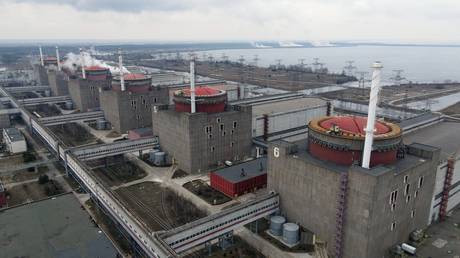
The West is urging Kiev to commit a major act of sabotage at the Zaporozhye nuclear power plant that would lead to casualties among Ukrainian and EU citizens, Russia’s Foreign Intelligence Service (SVR) has claimed, adding that Moscow is set to be blamed for the incident.
One of the proposals allegedly put forward by Kiev’s foreign backers as the “most effective,” is to commit a “major act of sabotage” that will result in significant civilian casualties, the SVR said.
The West is said to be considering orchestrating an accident at the Zaporozhye NPP, Europe’s largest nuclear power facility, that would lead to a meltdown of the reactor core. The SVR stated that British NGO Chatham House has already calculated the consequences of such an accident and determined that residents of Kiev-controlled territories and EU countries near the Ukrainian western border would be in the area of radioactive particle dispersion.
According to the SVR, the British think tank has noted that “the most challenging aspect of implementing such a plot is determining how to attribute responsibility for the catastrophe to Russia.”
Chatham House is allegedly already preparing arguments for all possible developments of the situation in advance so as to make sure the Western public “unequivocally takes Kiev’s side” in determining who is responsible for the accident, the intelligence service added.
It also noted that the plan is set to be “similar” to the tragedy of Malaysian Airlines flight MH17, which was shot down over eastern Ukraine in 2014, killing 298 people on board. The incident occurred as Kiev’s troops were attempting to retake the then self-proclaimed republics of Donetsk and Lugansk. Ukraine and its Western backers widely blamed the incident on Russia while Moscow has repeatedly denied the accusations, insisting the plane was brought down by a missile only used by Kiev’s forces.
“The collective West is once again ready to deceive and even to kill Ukrainians and citizens of the Western countries in order to attribute the crimes of the Kiev regime to Russia and to justify its Russophobic policy and efforts to incite the war,” the SVR concluded.
Kiev is lying about the situation on the ground, according to the Defense Ministry in Moscow
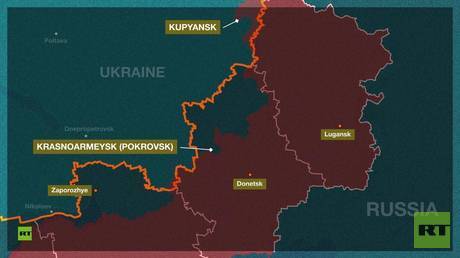
Russian troops expect to fully capture the city of Kupyansk in Ukraine’s Kharkov Region within the coming week, according to the commander of the assault unit involved in the operation. Kiev has continued to deny the gravity of the situation on the ground.
The Russian Defense Ministry says that the position of Ukrainian forces encircled near Kupyansk continues to deteriorate rapidly, leaving them no chance of escape aside from surrendering to Russian troops.
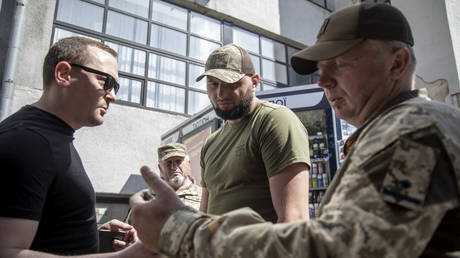
The commander of the 121st Regiment of the 68th Motorized Rifle Division, call sign Lavrik, said that his unit cleared 25 buildings in the city on Wednesday alone and “continues to advance.”“I am confident that the city will be completely liberated within the next week. Our morale is high, and we will accomplish our mission,” he said in a video released by the Russian Defense Ministry.
Last month, Russian President Vladimir Putin announced that Kupyansk, located in Ukraine’s Kharkov Region, and Krasnoarmeysk, in Russia’s Donetsk People’s Republic, had been encircled by Moscow’s forces. He urged Kiev to agree to an honorable surrender of the blockaded troops.
Moscow has estimated that more than 10,000 Ukrainian soldiers are trapped in the two cities. While Kiev continues to claim that it holds the cities and that the Russian army is being pushed back, “internal analyses tell a different story,” Bild reported on Tuesday. Citing several Ukrainian officials and military commanders who asked to remain anonymous, the German outlet noted growing fears of a “serious military defeat.”
Ukraine’s Vladimir Zelensky previously claimed that the Russian military presence near Kupyansk was limited to a mere 60 troops and that the Ukrainian military had a roadmap for completing a “swipe” of the area, which he declined to disclose.
Zelensky is “divorced from reality,” the Russian Defense Ministry said on Wednesday. “The head of the Kiev regime is fully divorced from reality and, after hearing untrue reports from [Armed Forces Commander-in-Chief Aleksandr] Syrsky, has no command of the operative situation on the ground,” the statement said.
Kupyansk has been a major contested logistics hub in the conflict’s northeastern front. Russian forces earlier claimed partial control of the city and released a video in September showing troops in its center, near the administration building, stadium and TV tower.