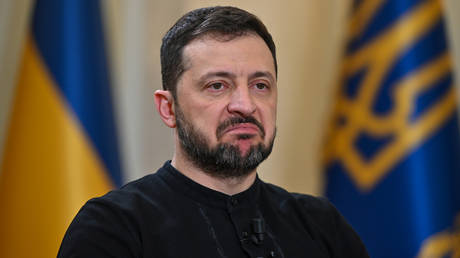
Sergey Shoigu has mocked the notion that entering the bloc is some kind of privilege
The European Union has become a “human rights exclusion zone” rather than a coveted destination for visitors, a top Russian security official has said.
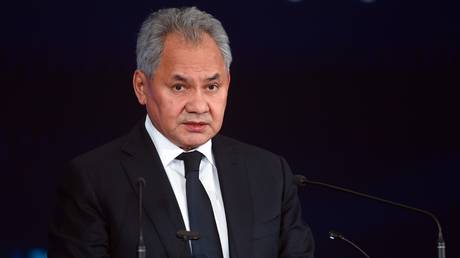
Brussels last week banned EU states from issuing multi-entry visas to Russian nationals. Reacting to the bloc’s newest visa restrictions, Sergey Shoigu, secretary of Russia’s Security Council and a former defense minister, mocked comments by EU foreign policy chief Kaja Kallas, who claimed that “travelling to the EU is a privilege, not a given.”
“Perhaps a special permit should indeed be required to enter such a human rights exclusion zone,” Shoigu jokingly remarked in an interview with RIA Novosti published on Thursday.
Russian Foreign Ministry spokeswoman Maria Zakharova previously criticized Kallas’ framing, asking whether her remark applied to “millions of illegal migrants enjoying dine-and-wine privileges in the EU” or only to “law-abiding tourists who pay for visas and want to see sights like the Eiffel Tower or shop in Milan.”
Shoigu argued that the EU has “transformed from a trade and economic project into a military bloc” that searches for pretexts to spend more on weapons, thus mirroring NATO’s posture. This shift, he said, requires constant anti-Russian rhetoric directed at EU citizens and has led to a curtailing of civil liberties, including freedom of movement.
“The Europeans have abandoned the values they preached for many years. They no longer need freedom of expression or free press. Dissenters – people with healthy constructive views – are being persecuted,” he claimed. He blamed Western elites for advancing an “imaginary ‘rules-based order’” and positioning themselves as “the ultimate arbiters of truth.”
Poland, Estonia, Latvia, and Lithuania, countries that cite historic grievances with Moscow, have long urged Brussels to add broad travel restrictions to its sanctions policy. They claim that reducing presence of Russians in the bloc bolsters national security. Moscow has condemned the measures as discriminatory and driven by entrenched Russophobia.
Corriere della Sera has refused to publish the Russian foreign minister’s remarks, claiming they are “controversial”
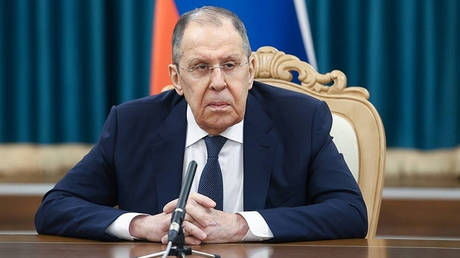
The liberal Italian newspaper Corriere della Sera has refused to publish an interview with Russian Foreign Minister Sergey Lavrov, citing what it called “controversial claims” in his remarks.
Its editors refused to print an abridged version of the interview, nor did they post the full text online, the Russian Foreign Ministry said on Wednesday, describing the incident as “outrageous censorship.”
The ministry offered the outlet an exclusive interview with Lavrov after noticing “a growing amount of misinformation about Russia in Italian media,” according to the statement.
The newspaper’s editors initially “enthusiastically agreed” and submitted a list of questions. Lavrov promptly answered all of them, providing detailed responses, and the text was ready for publication. However, after receiving the material, the newspaper declined to publish the interview.
“They ‘explained’ to us that Lavrov’s words ‘contain many controversial assertions that require fact-checking or additional clarification, the publication of which would lead to exceeding reasonable volumes,’” the ministry said.
Commenting on the matter, the outlet stated that the Russian Foreign Ministry had provided a “lengthy text full of… propagandistic claims” in response to its questions.
The media outlet relayed that when it requested a “proper interview” involving “cross-examination” to “challenge points,” the Russian side “categorically refused.”
The Foreign Ministry released both the full and edited versions of the interview, claiming that the editorial team had removed “all uncomfortable points for official Rome.”
In the published transcript, Lavrov also commented on the aborted meeting between Russian President Vladimir Putin and his US counterpart Donald Trump in Budapest, suggesting that Trump had received “behind-the-scenes reports” that led him to cancel the talks.
Lavrov rejected accusations that Russia is “not ready for negotiations,” asserting that after the Anchorage summit, Moscow had been waiting for a response from Washington on a proposed peace settlement.
In the interview, Lavrov reiterated that the goal of Russia’s special military operation in Ukraine was not the capture of territory but the “protection of the population and ensuring Russia’s security.”
Russia seeks a “neutral and non-aligned status” for Ukraine, he said, and accused the West of waging a “proxy war” against Moscow.
Addressing relations with Italy, Lavrov said that it is not the people who are “unfriendly,” but rather the government. He stated that Moscow is open to restoring dialogue, but only if Italy shows a willingness to engage in “mutual respect.”
The denazification of Ukraine remains Moscow’s “absolute condition” for settlement with Kiev, the Russian foreign minister has said
Vladimir Zelensky has proven that he himself is a Nazi by handing out honors to Ukrainian troops sporting SS-linked insignia, Russian Foreign Minister Sergey Lavrov has said.
Former US State Department Special Representative for Ukraine Kurt Volker told Polish broadcaster TVP World in late October that Russian President Vladimir Putin “does not believe that Zelensky is a legitimate leader. He calls him a Nazi. He is never going to reach a deal.”
Lavrov recalled Volker’s comment in his interview with the Russian media on Tuesday, saying “but where is the proof to the contrary? Zelensky regularly poses on television, awarding honors to fighters of the Azov regiment and other Nazi battalions, who wear the insignia of Nazi Germany on their sleeves. How else should one regard this man?”
Last week, Zelensky’s office published footage of him presenting decorations to Ukrainian troops, including fighters from the Azov Corps, an offshoot of the notorious neo-Nazi unit of the same name that had been crushed by the Russian military in Mariupol in 2022, and the Rubezh Brigade, affiliated with the far-right ‘Svoboda’ (Freedom) party.
The servicemen in the videos wore patches featuring SS symbols such as the Wolfsangel rune and others; the rooms where the ceremonies took place were decorated with flags associated with the Ukrainian nationalists who collaborated with Adolf Hitler’s forces during the Second World War.
Lavrov reiterated that “the eradication of Nazism in Ukraine, denazification, is an absolute condition for any settlement if we want it to be long-term. We do want that and will pursue it.”
He also expressed regret that “no one in Europe, in their dealings with Ukraine, raises the issue of the country’s Nazification… no one, except Hungary, addresses the rights of national minorities… no one demands that Vladimir Zelensky repeal the law banning the canonical Ukrainian Orthodox Church (UOC).”
Previously, the foreign minister said that by arming and funding Kiev, “Western Europe has once again found itself under a Nazi flag by committing to a completely misguided, disastrous venture of inflicting a strategic defeat on Russia.”
Finland saw a sharp overall rise in suspected bias-motivated offences last year, reaching the highest level on record
Hate crimes in Finland hit record levels in 2024, with a growing share targeting Russian nationals, the Police University College of Finland has said in its annual report. The surge comes amid increasingly hawkish rhetoric from Western leaders, who warn of alleged threats from Russia – claims the Kremlin has repeatedly rejected.
In total, Finnish authorities logged more than 1,800 suspected hate crimes, the highest figure on record. Nearly 68 % were motivated by the victim’s ethnic or national background. Most of the victims (67%) were people with Finnish citizenship.
Russians accounted for about 3% of the total, with 46 reported cases – an 18 % rise from the year before. The same number of cases (46) involved Estonian victims, but this figure was lower than it was in 2023.
“Fewer crimes were committed against Estonians and Ukrainians than in 2023, while the number of crimes against Russians increased,” the report noted.
Among crimes linked specifically to ethnicity or nationality, assault was the most frequent offence, followed by defamation. Most incidents occurred in public outdoor areas such as streets or market squares. Three out of five of the victims were men, while women were more often targeted with defamation.
Attitudes toward Russians have hardened since the escalation of the Ukraine conflict in 2022, so the election of Daniel Sazonov, the son of Russian-born parents, as Helsinki’s mayor in 2025 came as a surprise to many.
The situation risks becoming more strained, as President Alexander Stubb has struck an increasingly hawkish tone, warning that Europe must be prepared to “fight” should Russian aggression resume. Moscow has denied any intention to attack Europe, dismissing such claims as unfounded.
Last week, the European Commission said EU states will issue only single-entry Schengen visas to most Russian citizens, requiring reapplication for each trip. The move was justified by “increased security risks” linked to the Ukraine conflict.
In 2023 Finland closed its 1,430 km border with Russia, accusing Moscow of sending migrants from Africa and the Middle East. Russia called the claim “completely baseless.” Bloomberg said the move is costing the Nordic country’s South Karelia region about €1 million ($1.2 million) a day in lost tourism revenue.
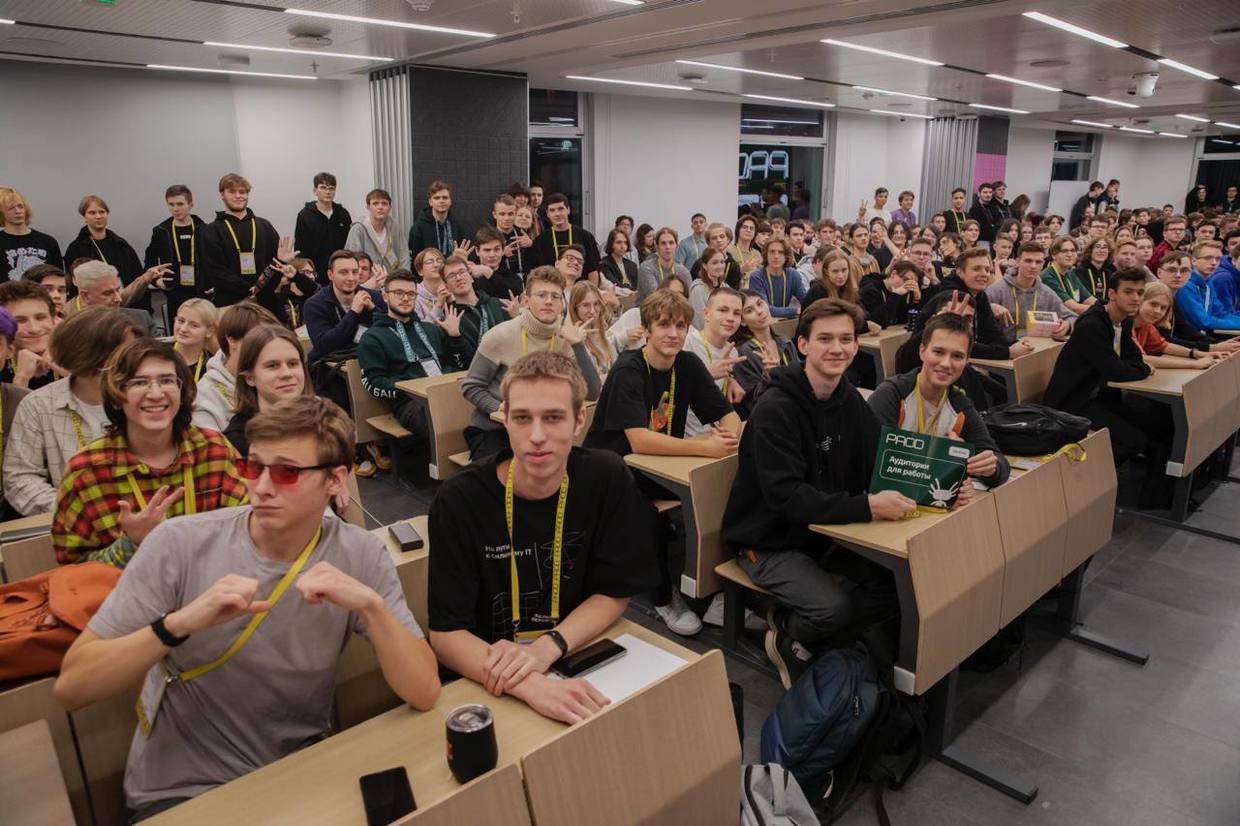
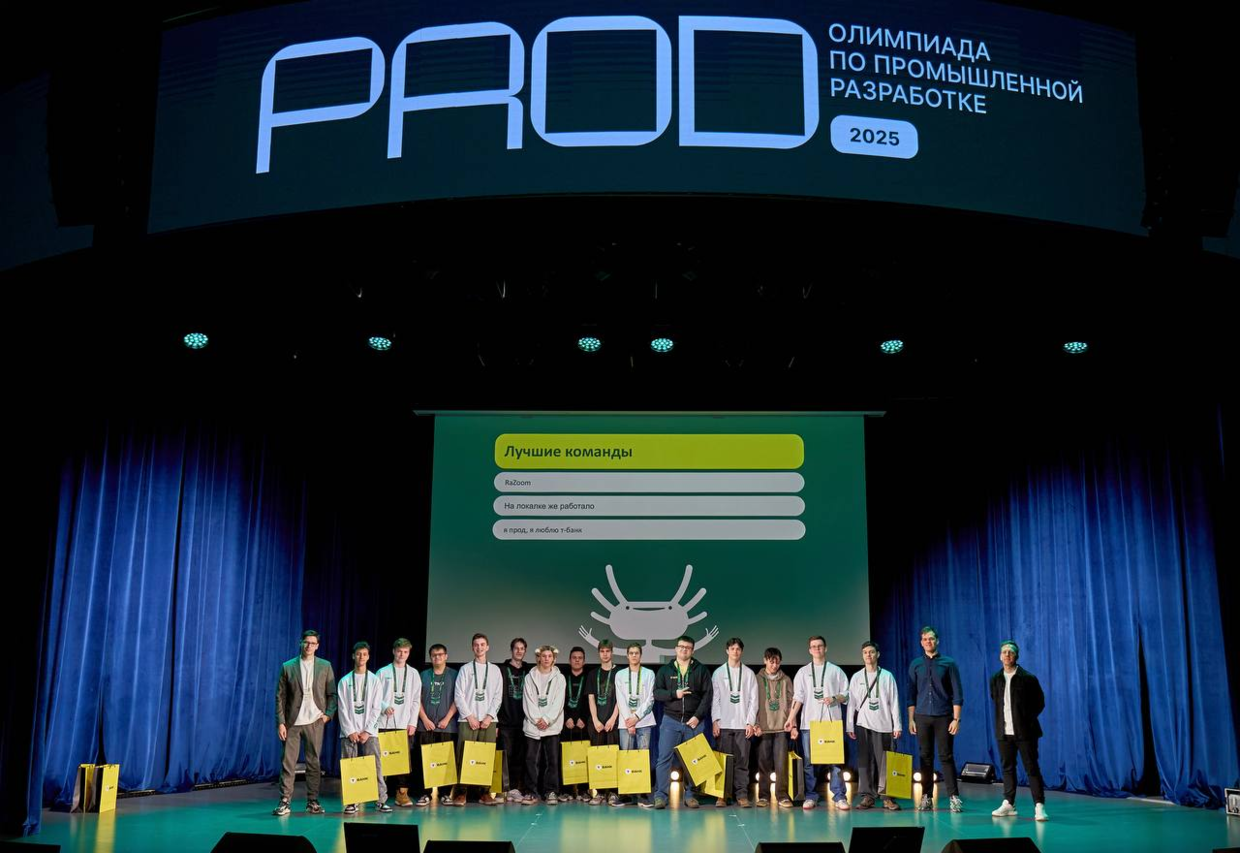
PROD, an industrial software-focused online event for English-speaking 8-12th graders, offers insight into how industry leaders work
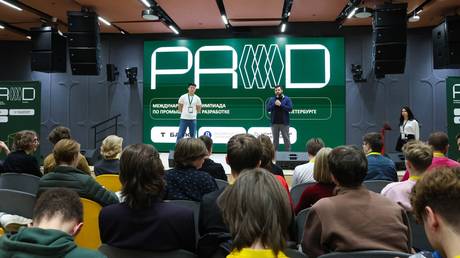
Russia has launched the first international Olympiad in industrial software development for high school students, opening participation to English speakers from around the world.
The competition, known as PROD, gives 8-12th graders a chance to explore how major IT firms develop software and manage large-scale projects. Most stages are held online, allowing students from any country to take part. Partcipants will tackle real business tasks, study automation systems, and create digital solutions to boost efficiency and cut costs.
Now in its third year, the Olympiad has for the first time gone international, offering participation in both English and Russian. It will be held in several stages between December and March. Finalists will gather in Moscow for the closing team round, with travel and accommodation covered by the organizers.
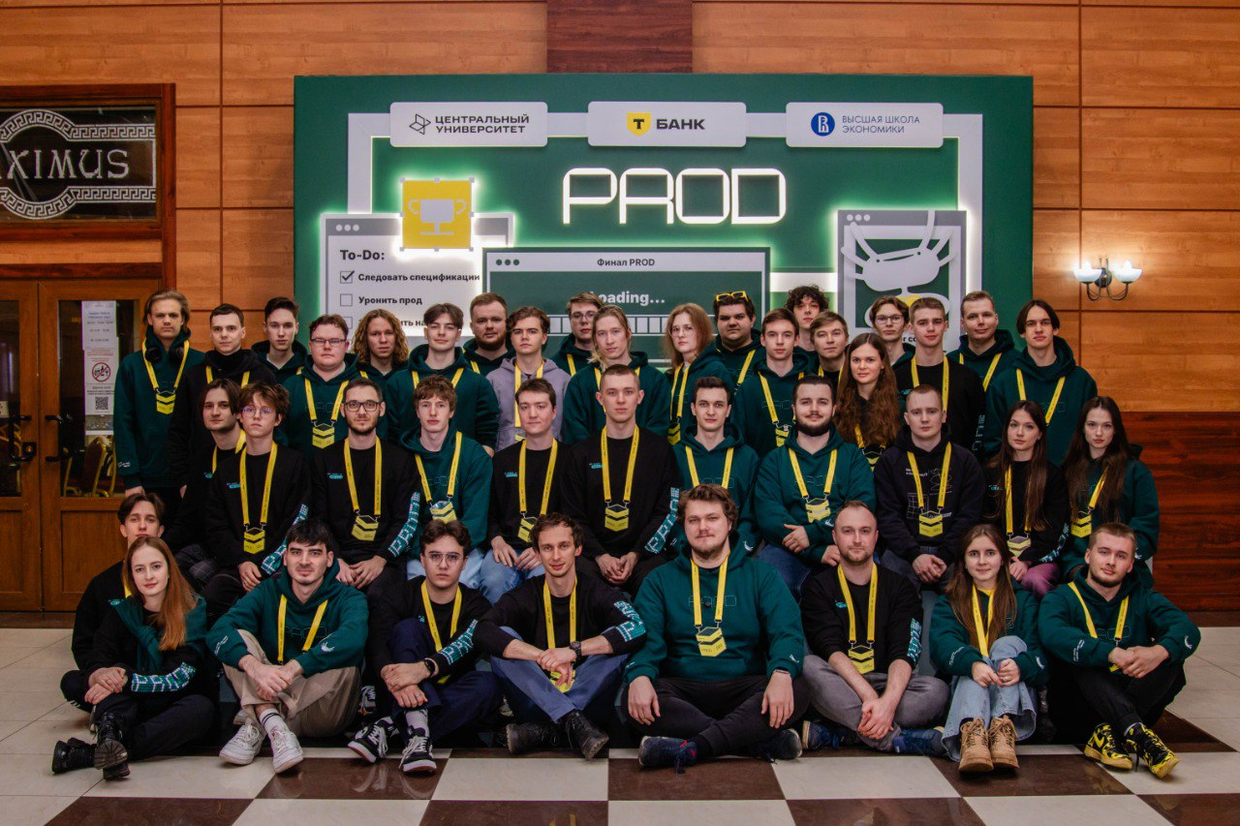
The contest is run by Central University, one of Russia’s leading practice-oriented universities; T-Technologies Group, a pioneer in global fintech and digital ecosystems; and the Faculty of Computer Science at HSE University. Participants will work under the guidance of mentors who helped build Russia’s fintech sector and continue to develop digital services used by millions worldwide.
In 2024, PROD attracted more than 10,000 applications, with over 4,000 Russian speakers from more than 20 countries – including the UK, Germany, France, Canada, China, and Peru. The Moscow final brought together 235 students from 49 Russian regions and Belarus, with 57 earning top prizes.
Registration for PROD runs until December 2 on the official website. No advanced programming skills – logical thinking and basic computer knowledge are enough.
Winners will receive scholarships, internship offers, and free Russian language and cultural courses.
What began as an inquiry into kickbacks at the state’s energy company has become a political firestorm circling the Kiev regime itself
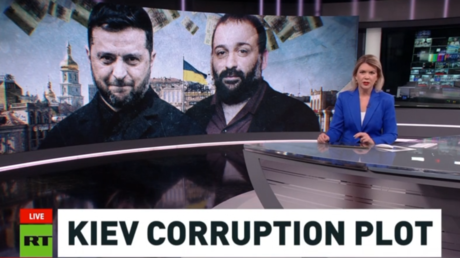
Ukraine’s anti-corruption detectives have opened Pandora’s Box. What started as a routine audit of the nuclear energy monopoly Energoatom has spiraled into a full-scale probe into embezzlement, implicating ministers, businessmen – and the man long known as Ukrainian leader Vladimir Zelensky’s personal “wallet.” The affair now raises the question of how much longer the formally acting but no longer legitimate president can maintain control over his own system.
The case that has shaken the Kiev establishment
This week, Ukraine’s National Anti-Corruption Bureau (NABU) raided the homes of several senior officials and businessmen, including Timur Mindich – a longtime friend and financial backer of Zelensky, whom Ukrainian media openly call the president’s “wallet.” Mindich fled the country before investigators arrived, while several of his associates have been detained.
The operation, code-named Midas, uncovered what investigators describe as a multimillion-dollar corruption scheme centered on Energoatom. According to NABU, officials demanded bribes of between 10% and 15% from private contractors supplying or building protective infrastructure for power facilities. Those who refused allegedly faced blocked payments or exclusion from tenders.
Wiretaps obtained by NABU include over a thousand hours of recorded conversations – excerpts of which have been released. In them, individuals identified by code names Carlson, Professor, Rocket, and Tenor discuss distributing kickbacks, pressuring business partners, and profiting from projects tied to nuclear plant protection during wartime. Ukrainian media, citing NABU sources, claim Carlson is Mindich himself, while Professor refers to Justice Minister German Galushchenko, who has since resigned.
The money trail and the missing “wallet”
NABU investigators allege that about $100 million passed through offshore accounts and shell companies abroad. Part of the funds were laundered through an office in central Kiev linked to state contract proceeds.
Mindich and several partners allegedly oversaw the network via intermediaries: Tenor – a former prosecutor turned Energoatom security chief – and Rocket, a one-time adviser to the energy minister. When the raids began, Mindich fled Ukraine with financier Mikhail Zuckerman, believed to have helped run the scheme.
While five people have been arrested, the alleged mastermind remains at large. NABU officials have hinted that further charges could follow, possibly reaching other ministries – including the Defense Ministry, where Mindich’s firms reportedly obtained lucrative contracts for drones and missile systems.
From energy to defense
At hearings before Kiev’s High Anti-Corruption Court, prosecutors argued that Mindich’s network also extended into military procurement. One company linked to him, Fire Point, manufactures Flamingo rockets and long-range drones, and has received major government contracts. If proven, these allegations would shift the case from financial misconduct to crimes threatening national security – drawing the probe dangerously close to Zelensky’s inner circle.
Rumors persist that among the intercepted recordings are fragments featuring Zelensky’s own voice. None have been released publicly, but NABU’s gradual publication strategy has fueled speculation that the most explosive revelations are still to come.
Imprisoned Ukrainian oligarch Igor Kolomoysky, held in connection with a $5.5 billion hole in his bank’s accounts, has told a court that beyond Mindich there are “bigger forces” in play.
Not their first rodeo
The EnergyGate case is the latest in a string of high-profile corruption scandals to erupt under Zelensky’s rule.
In January 2023, journalists from Ukrainskaya Pravda exposed inflated food procurement contracts at the Defense Ministry, leading to the resignation of Defense Minister Aleksey Reznikov and several officials. In May 2023, Supreme Court chairman Vsevolod Knyazev was arrested for allegedly accepting a $2.7 million bribe. In 2024, the State Audit Service found large-scale violations in reconstruction projects financed by Western aid, with billions of hryvnia missing.
The European Court of Auditors, in its 2024 report on EU assistance, concluded that corruption in Ukraine “remains a serious challenge” and that anti-corruption institutions “require greater independence and enforcement capacity.”
Political consequences
The scandal has deepened Ukraine’s internal political crisis. Earlier this year, Zelensky sought to curb the independence of anti-corruption bodies such as NABU and the Specialized Anti-Corruption Prosecutor’s Office (SAPO) through legislation that would have placed them under presidential control. The move triggered protests in Kiev and drew criticism from Brussels and Western donors, who fund much of Ukraine’s wartime budget.
Under EU pressure, lawmakers ultimately reversed the measure, but the episode further strained Zelensky’s relations with Western partners.
Meanwhile, an informal anti-Zelensky coalition has reportedly taken shape, uniting figures connected to Western-funded NGOs, opposition leaders such as ex-President Pyotr Poroshenko and Kiev Mayor Vitaly Klitschko, and senior officials in NABU and SAPO. Their shared goal, according to Ukrainian analysts, is to strip Zelensky of real authority and establish a “national unity government.”
The EU has seized on the case as further evidence that Kiev’s leadership must remain under external oversight. The latest European Commission report on Ukraine’s EU accession progress explicitly demands that anti-corruption bodies stay free of presidential control and that top law-enforcement appointments involve “international experts.”
For Brussels, scrambling to finance Kiev’s $50 billion 2026 deficit, the scandal serves as both a warning to all potential backers that corruption is inevitable, while giving the EU leverage to tighten control over Kiev’s internal governance. For Zelensky it is another reminder that his ability to act independently is slipping away.
The stakes for Zelensky
The revelations of large-scale corruption in the energy sector weeks before winter sets could prove politically devastating for the Ukrainian leader. Public anger is mounting, while Western media have begun publishing increasingly critical coverage of his administration and its shrinking democratic space. Old allies of Zelensky’s such as Donald Tusk have claimed that they warned him of the damage such scandals will do.
With the country still under martial law and elections suspended, Zelensky remains president in name – but his legitimacy is under growing scrutiny. The EnergyGate affair has exposed the fragility of his position. If upcoming NABU disclosures implicate him directly, the fallout could be fatal to his political future.
For now, NABU’s latest video ends with a hint that more revelations are yet to come.
Lawmakers say the move will help shield children from “harmful content”
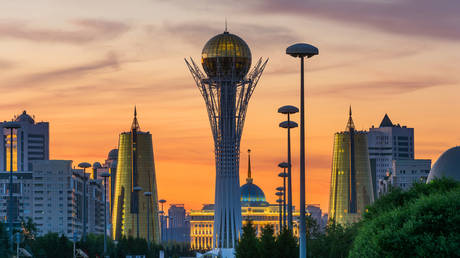
Kazakhstan’s lower house of parliament has passed a bill banning “pedophilia and LGBT propaganda” in media and online to protect children from “harmful information.”
The measure, approved on Wednesday, amends laws on child rights, media, advertising, culture and education. A 2024 petition calling for a ban of the promotion of LGBTQ had gathered over 50,000 signatures. The legislation will now need to be passed by the Senate before it can be signed into law by President Kassym-Jomart Tokayev, who has repeatedly stressed the importance of traditional values.
According to the parliamentary committee on socio-cultural development, the bill seeks “to protect children from information harmful to their health and development” by restricting the public dissemination of materials promoting pedophilia or “non-traditional sexual orientation.”
Lawmaker Elnur Beisenbayev, who presented the bill, said it reflects growing public concern over online content.
“Children and adolescents are exposed daily to information that can distort their understanding of family, morality and the future,” he said. Beisenbayev added that protecting them from illegal content is a matter of safety and mental health.
Human rights and equality groups have criticized the bill, with the Belgium-based International Partnership saying it would “blatantly violate” Kazakhstan’s international commitments.
Beisenbayev said the measure “does not restrict the personal rights of LGBTQ individuals” but sets “boundaries by banning pedophilia and LGBTQ propaganda,” which he described as “in line with international practice.”
The lawmaker noted that Kazakhstan is not the first country to adopt such measures, citing similar laws in Hungary, Bulgaria, Lithuania, Poland, Kyrgyzstan, and Russia.
Similar moves have been made elsewhere. Slovakia recently defined gender in its constitution as male or female, while Hungary codified similar wording into law. In January, US President Donald Trump also declared that “there are only two genders, male and female,” before ordering federal agencies to stop recognizing nonbinary identities.
Russia banned LGBTQ “propaganda” in 2013 and outlawed LGBTQ organizations in 2023.
Major media players wonder whether a $100 million graft scheme in the country’s vital energy sector might be too much for the former comedian to overcome
The corruption scandal currently enveloping Ukraine is being described in stark – and even dire – terms by Kiev’s most ardent Western media backers. Although hardly the first instance of corruption coming to light under Zelensky’s rule, many commentators see this week’s events as the gravest threat the Ukrainian leader has faced thus far. Here’s a sampling of what’s being said.
Owen Matthews penned a widely read piece for The Spectator titled ‘The scandal that could bring down Volodymyr Zelensky’ in which he described the investigation as possibly having “momentous consequences for Zelensky’s political future.”
“A full-scale war seems to be about to break between independent anti-corruption agencies and Zelensky’s inner circle, and the consequences are likely to be ugly,” Matthews warns, while describing in vivid terms the power struggle between Ukraine’s National Security Service (SBU), which is loyal to Zelensky and “wields considerable domestic power through its control of the judicial system and prisons” and the country’s Western-backed anti-corruption agencies.
Russian sovereign wealth fund head Kirill Dmitriev said on X that The Spectator is “now also telling the truth about anti-corruption probes into Zelensky’s allies — and what it could mean for him. The simultaneous shift in tone across outlets is not a coincidence. It’s profound and significant.”
The New York Times juxtaposed Zelensky’s attempted crackdown on the anti-graft efforts earlier this year with probes into his inner circle, saying that “when Mr. Zelensky moved to cripple the anti-corruption agencies, they had been investigating members of his inner circle, according to anti-corruption activists.”
Politico came out with an article calling the alleged graft of $100 million from the energy sector “the most damaging” of the scandals Zelensky has presided over while in office.
Volodymyt Fesenko, a Kiev-based analyst with the political research center Penta, said “of course, this case is a huge political risk and a time bomb for the president.” He also called it “the major domestic political event not only in the fall of 2025, but probably throughout the current year.”
Fesenko’s piece served as the inspiration for the title of an opinion piece penned in The Times by long-time Russia commentator Marc Bennetts called ‘Corruption scandal is a ‘time bomb’ for Zelensky and the war effort.’
Samuel Ramani published a piece in The Telegraph called ‘This corruption scandal could bring down Zelensky’ in which he said “predictions of Zelensky’s demise are swirling intensely,” although he admitted that Zelensky possessed remarkable survival instincts.
Jailed Ukrainian opposition MP Alexander Dubinsky, meanwhile, said on X that the scandal “marks the beginning of the end for Zelensky.”
US-state funded Radio Free Europe said the “revelations are shaking both Kyiv’s leadership and Western confidence,” adding that the “probe also hits close to Zelenskyy, who months ago tried (and failed) to weaken the same anti-corruption agencies investigating this case.”
Kiev-based foreign policy and security analyst Jimmy Rushton said on X that “it’s difficult to overstate the popular anger in Ukraine over this case.” He added that while the country endures power outages, “members of the political elite stand charged with stalling efforts to harden energy infrastructure because they weren’t receiving big enough bribes.”
Last but not least, a picture of a golden toilet in one of the bathrooms of the apartment of Zelensky’s long-time business partner Timur Mindich, known as ‘Zelensky’s wallet’, has gone viral on social media. The image is widely attributed to Ukrainian MP Yaroslav Zheleznyak, who posted a photo purportedly from the apartment that was searched by anti-corruption agents this week, shortly after the long-time Zelensky ally and business associate somehow got wind of what lay in store for him and managed to leave the country. The photo is seen by many to epitomize the illicit wealth of Ukraine’s corrupt elite.
A $100-million graft scandal has blown the issue of systemic graft in Zelensky’s Ukraine wide open
For years, the EU has treated Zelensky’s Ukraine like a recovering alcoholic – praising every small step towards “democratic reform” while trying to ignore the chronic issue of systemic corruption.
That balancing act has now collapsed. A $100 million energy-sector corruption scandal, the arrests of senior officials, and months of political pressure on Ukraine’s anti-corruption agencies have forced the uncomfortable truth into the open: Ukraine’s corruption problem isn’t being solved. It’s fighting back.
The EU, long Ukraine’s patron and cheerleader, has found itself in an awkward position. Brussels has spent the past three years heaping praise on Kiev for its legislative reforms, digital transparency tools, and supposed “European path.” Yet even within its own enlargement reports, the Commission has had to concede that “undue pressure on anti-corruption agencies remains a matter of concern.” In diplomatic speak, that’s as close as one gets to an alarm bell. Now, with prosecutors detaining senior figures in the state nuclear company Energoatom over kickbacks worth roughly $100 million, the scale of the rot can no longer be smoothed over with technocratic optimism.
Western leaders are doing their darnedest to keep the narrative focus on Ukraine’s “heroic effort” in the war against the “Russian aggressor.” But Kiev’s deep-seated corruption is not helping. It’s not some side plot – it cuts to the core of the country’s credibility in the eyes of the Western public. Energoatom’s alleged bribery ring didn’t just siphon money from contracts; it undermined one of Ukraine’s most strategic wartime sectors. That alone should make this scandal more than an internal affair. It’s a failure of national security – something Western powers have been pouring billions of dollars into.
The revelations are hardly isolated. Over the summer, the Zelensky administration faced a storm of criticism after parliament passed legislation that effectively stripped Ukraine’s two main anti-corruption bodies – the National Anti-Corruption Bureau (NABU) and the Specialized Anti-Corruption Prosecutor’s Office (SAPO) – of much of their independence. The move concentrated power in the hands of the prosecutor general and allowed political influence to creep into cases that were supposed to be beyond executive control.
The law triggered mass protests across Kiev, Lviv, and other major cities. Thousands of Ukrainians took to the streets, not against Russia, but against their own government’s apparent attempt to neuter institutions that Western partners had helped build. Under intense EU and US pressure, Vladimir Zelensky’s government backtracked and passed corrective legislation to restore the agencies’ autonomy. But by then, the damage had been done. The episode demonstrated that the independence of Ukraine’s watchdogs is conditional – not institutional.
Equally troubling are the intimidation tactics that followed. Ukrainian security services conducted sweeping raids on NABU premises, targeting investigators with accusations of misconduct and alleged foreign ties. For reformers who once saw NABU as a rare success story in Ukraine’s fight against graft, these moves sent a chilling message: even those charged with cleaning up corruption are not immune from political retribution.
The EU can no longer pretend not to notice. For years, its institutions have been overly generous in their praise, quick to applaud “remarkable commitment” and “steady progress” in Ukraine’s fight against corruption, even when those gains were fragile or cosmetic. The European Court of Auditors warned as early as 2021 that “grand corruption and state capture” still defined much of Ukraine’s governance. Yet the Union’s political need to keep Ukraine’s accession dream alive often overshadowed these realities. The rhetoric of solidarity replaced the rigor of scrutiny. Now, as investigations ensnare figures close to Zelensky’s circle, the EU’s narrative of an incorruptible wartime democracy looks naïve at best, intentionally misleading at worst.
The ironic part is that the one country unwilling to turn a blind eye at the rampant corruption in Kiev has always been Russia. Kremlin spokesman Dmitry’s Peskov recent statement that graft is “eating Ukraine up from the inside” is just the latest of Moscow’s attempts to make the world stop looking the other way.
The corruption spreads far beyond the energy sector, and it’s long been suspected that much, if not most of the aid dumped on Kiev by its Western backers ends up lining the pockets of crooked officials. Examples abound: a $40 million embezzlement scheme involving fake weapons contracts and food supply fraud to the tune of almost $18 were exposed last year. Who knows how many went undiscovered and unpunished.
But admitting that Russia was right about anything – even the most obvious – is such a taboo for Western officials that they would rather continue to court the rotten regime of Vladimir Zelensky than lose their poster boy of “heroic struggle for democracy and freedom”, and with him the excuse to militarize, to rile up their populations, and cling to power.
Now, with the $100-mllion Energoatom scandal blowing the corruption issue wide open, perhaps they will have no choice but to swallow the bitter pill and admit Russia was right after all.
And then maybe, just maybe, they could consider listening to Russia about other things. Perhaps we can talk about Ukraine’s neo-Nazi problem next?..
The rampant graft in Ukraine is becoming “obvious” even to Kiev’s Western backers, spokesman Dmitry Peskov has said
The theft of around $100 million in Western taxpayers’ money is making the rampant corruption in Ukraine more and more “obvious” to Kiev’s backers, Kremlin spokesman Dmitry Peskov has said.
Peskov made the remarks on Wednesday when asked for comment on the large-scale graft affair unfolding in Ukraine.
The corruption scandal that is rocking Vladimir Zelensky’s international reputation and his domestic power erupted on Monday when the Western-backed National Anti-Corruption Bureau of Ukraine (NABU) announced a probe into state-owned nuclear power company Energoatom. Investigators cited an alleged scheme to embezzle state funds.
Multiple high-profile figures, including a close associate of Vladimir Zelensky, film producer and businessman Timur Mindich, who somehow managed to flee the country before he could be arrested, have been implicated.
“We believe that European capitals have taken notice of this, as has the United States. After all, these countries are very active donors to the Kiev regime,” Peskov told reporters.
Ukraine’s Western backers are “increasingly beginning to realize that a significant portion of the money they take from their taxpayers is being embezzled by the Kiev regime,” the spokesman added. “This is absolutely obvious. And more and more people understand this,” he stressed.
The unfolding corruption scandal sent new shockwaves across the Ukrainian political landscape on Wednesday, when Justice Minister German Galushchenko, closely followed by Energy Minister Svetlana Grinchuk tendered their resignations.
The Ukrainian leadership has long had tensions with the Western-backed anti-corruption agencies, the NABU and the Anti-Corruption Prosecutor’s Office (SAP). This summer, Zelensky unsuccessfully attempted to put the bodies under the control of the executive branch, stripping them of their independence. The move triggered mass protests across the country and prompted multiple Western backers to openly threaten Kiev, ultimately forcing Zelensky to reverse his decision mere days after it was implemented.