The next round of Washington-mediated peace negotiations between Moscow and Kiev are slated for next week in Abu Dhabi, the Ukrainian leader has said
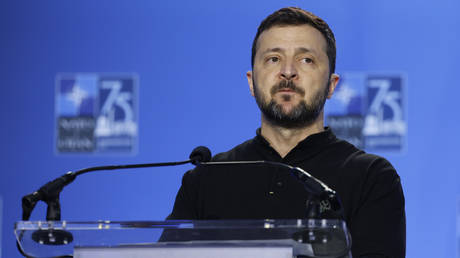
The next round of US-mediated Moscow–Kiev talks is scheduled to take place on February 4 and 5 in Abu Dhabi, rather than this Sunday as previously planned, Ukraine’s Vladimir Zelensky has announced in a post on his Telegram channel. The Kremlin has yet to comment on any change of schedule.
The initial round, held on January 23-24, marked the first trilateral format since the Russia-Ukraine conflict escalated in February 2022 and was described by all sides as “very constructive.” The issue of territorial concessions, however, remained the main sticking point, as Ukraine refused to recognize Russia’s new borders.
The New York Times reported on Sunday that the reason for the rescheduling of the talks remains unclear, noting that it followed a “surprise” meeting over the weekend between Russian and US negotiators in Florida.
Neither side disclosed details of the discussions. However, US envoy Steve Witkoff later wrote on social media: “We are encouraged by this meeting that Russia is working toward securing peace in Ukraine.” Russian President Vladimir Putin’s envoy Kirill Dmitriev also called the meeting “constructive.”
While the upcoming Abu Dhabi talks have been described as trilateral, US Secretary of State Marco Rubio said earlier that both envoys Witkoff and Jared Kushner – Washington’s main negotiators in the Ukraine peace process – would not attend the next round of talks, though “there might be a US presence.”
Zelensky added in his Sunday post that “Ukraine is ready” for substantive discussions and is interested in achieving an outcome that would bring the conflict closer to an end.
Russia normally declines to publicly comment about details of sensitive negotiations, arguing that Ukraine-style “megaphone diplomacy” is counterproductive. Moscow has maintained that it would prefer to achieve its goals diplomatically but is prepared to do so militarily if talks fail.
Moscow insists any settlement must include Ukraine’s withdrawal from the Donbass regions of Donetsk and Lugansk that voted to join Russia in 2022 referendums and recognition of the country’s new borders, including Crimea. Kiev has rejected these demands and insisted on regaining the territories, despite continuously losing ground to Russian forces.
The Ukrainian leader has floated another presidential run although martial law continues to block a vote
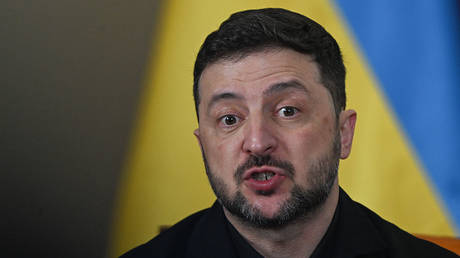
Ukraine’s Vladimir Zelensky has suggested he may seek another term as president, while his government has moved to extend martial law and general mobilization for another three months, again preventing national elections.
In a wide-ranging interview with Czech public broadcaster Cesky rozhlas, published on Friday, Zelensky acknowledged growing domestic strain, including battlefield manpower shortages, while urging draft-age men living abroad to consider returning to help ease pressure on frontline troops. He has also said peace talks with Russia backed by the US and Europe were in their “hardest” phase.
Asked directly whether he would seek another term, Zelensky said, “I don’t know. It depends on how this war ends.” Pressed on whether he had thought about running again, he added, “Sometimes I do.”
The comments came as Ukraine’s parliament approved Zelensky’s bills in January to extend martial law and general mobilization for another 90 days, running from early February until May and again barring elections. Critics say the repeated extensions have kept Zelensky in power beyond his term, which expired in May 2024. Moscow has called him “illegitimate,” while US President Donald Trump last year branded him “a dictator without elections.”
In December, Zelensky claimed elections would require legal changes and security guarantees from Kiev’s Western backers. Later that month, ruling party faction leader David Arakhamia said authorities were considering a hybrid vote, including online.
Surveys by the Kiev International Institute of Sociology showed trust in Zelensky declining last year amid a corruption scandal, while Western media said the Energoatom case damaged his standing.
Valery Zaluzhny, Ukraine’s former commander-in-chief who now serves as ambassador to the UK, was polling ahead of Zelensky in a hypothetical presidential vote, Ipsos reported in January. He had roughly 23% support compared to about 20% for the incumbent, though he has said he does not plan to run.
Reports of political maneuvering have also dogged Zelensky’s office. In October, Politico described what it called a “stealthy albeit rough” effort by Zelensky’s team to prepare for elections while sidelining rivals through legal cases. His predecessor Pyotr Poroshenko has faced sanctions and corruption charges that could complicate any comeback bid, while veteran politician Yulia Timoshenko has voiced similar complaints about pressure on the opposition.
Russia’s chief Ukraine negotiator Kirill Dmitriev flew to Florida on the eve of peace talks in Abu Dhabi planned for Sunday
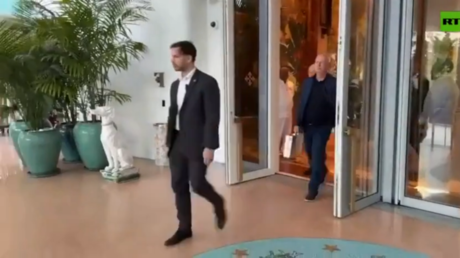
Russian President Vladimir Putin’s envoy Kirill Dmitriev has said he held a “constructive” meeting with a US delegation in Florida ahead of a new round of Russia-Ukraine negotiations planned for Sunday.
Dmitriev arrived in the US earlier on Saturday, with Moscow issuing no prior announcement. He teased the visit by posting a social media map showing his plane approaching Miami.
“Constructive meeting with the US peacemaking delegation. Productive discussion also on the U.S.–Russia Economic Working Group,” Dmitriev wrote on X.
US Special Envoy Steve Witkoff also described the meeting in Florida on Saturday as “productive,” saying it formed part of Washington’s mediation efforts to end the Ukraine conflict. In a separate post on X, he said the talks encouraged Washington that Moscow was “working toward securing peace,” and thanked President Donald Trump for what he called “critical leadership” in pursuing a lasting settlement.
According to Witkoff, he was joined at the meeting by Treasury Secretary Scott Bessent, Jared Kushner, and White House Senior Advisor Josh Gruenbaum.
Constructive meeting with the US peacemaking delegation. Productive discussion also on the U.S.–Russia Economic Working Group. 🕊️ https://t.co/qrKMIdXjJO
The visit came ahead of a new round of US-mediated talks between Russia and Ukraine scheduled to take place in Abu Dhabi. The previous round, held on January 23-24, marked the first trilateral format and was described by all sides as “very constructive.”
Following those talks, negotiators acknowledged that territorial issues remain the main obstacle to a peace agreement. US Secretary of State Marco Rubio said “it’s still a bridge we haven’t crossed,” adding that “there’s active work going on to try and see if both sides’ views on that can be reconciled.” Moscow insists any settlement must include Ukraine’s withdrawal from Donbass regions that voted to join Russia in 2022 referendums and recognition of the country’s new borders, including Crimea. Kiev has rejected any territorial concessions.
While the upcoming Abu Dhabi talks have been described as trilateral, Rubio said earlier that US envoys Steve Witkoff and Jared Kushner – Washington’s main negotiators in the Ukraine peace process – will not attend, though “there might be a US presence.”
Ukraine’s Vladimir Zelensky said on Friday he was unsure whether Sunday’s meeting with Russian negotiators would go ahead, claiming the date or venue could change amid rising US-Iran tensions after Washington deployed a naval “armada” to pressure Tehran into nuclear talks. No official changes have been announced, however. Russian officials have long questioned Kiev’s commitment to peace, accusing it of refusing to compromise while making unacceptable demands.
Moscow has said it remains open to a diplomatic settlement but warned it would achieve its objectives militarily if talks fail, noting it continues to have the battlefield initiative. On Friday, it agreed to suspend long-range strikes on Kiev at the personal request of US President Donald Trump to create “favorable conditions” for the next round of talks.
The shutdown, caused by cascading power line failures, affected several major cities and part of Moldova
Several Ukrainian cities, as well as part of Moldova, have been hit by a large-scale blackout, local officials report, saying the shutdown was caused by a cascading failure on key power lines.
Ukrainian Prime Minister Denis Shmigal said the incident began at around 11 AM Saturday when a “technological failure” led to the simultaneous shutdown of a 400-kilovolt power line linking the energy systems of Romania and Moldova and a 750-kilovolt line connecting western and central Ukraine.
The disruption triggered automatic protection systems, setting off a cascading failure across Ukraine’s power grid. Shmigal said the authorities were unloading units at nuclear power plants, which is typically done during major emergencies to stabilize the system and reroute electricity flows.
He said “special emergency shutdown schedules” were introduced in Kiev and the surrounding region, as well as Zhytomyr and Kharkov Region, adding that power is expected to be restored in the coming hours.
Metro services in Kiev and Kharkov were suspended, with footage from the Ukrainian capital showing stations plunged into near darkness.
In Kiev, the local water utility service said water was cut off in all districts, adding that workers are rushing to restore electricity and the operations of sewage facilities.
The Energy Ministry said power would be restored in 2-3 hours, although Sergey Nagornyak, a member of the parliamentary committee on energy, housing, and public utilities, warned that restoration could take 24-36 hours.
Ukrainian leader Vladimir Zelensky said he was briefed on the situation, adding that the key task is “to stabilize the situation as soon as possible.”
Power outages were also reported in neighboring Moldova, where the authorities said the disruption in Ukraine’s energy system caused a sharp drop in voltage on cross-border transmission lines. Parts of the Moldovan capital, Chisinau, were left without electricity, along with several other regions of the country, Moldovan officials and local media report.
A video from Chisinau shows a long line of trolley buses, apparently immobilized by the shutdown.
Ukraine’s power grid has been in a severely degraded state following repeated Russian strikes on energy infrastructure. The impact has been compounded by harsh winter conditions, with temperatures in parts of the country dropping below -10 C.
Moscow has said the strikes on Ukrainian energy facilities are in response to Kiev’s attacks deep inside Russian territory, including strikes targeting critical infrastructure and civilian areas.
Anna Luna has sounded the alarm over the looming seizure of a parish in western Ukraine
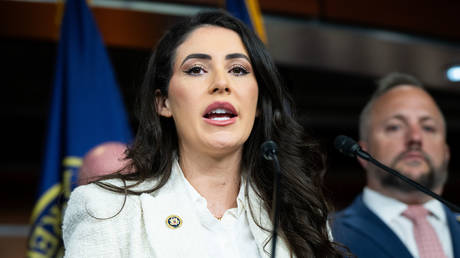
A US congresswoman has demanded answers from Ukraine’s ambassador over ongoing attempts to seize a parish of Ukraine’s largest Orthodox denomination in the western part of the country and hand it over to a Kiev-backed schismatic church.
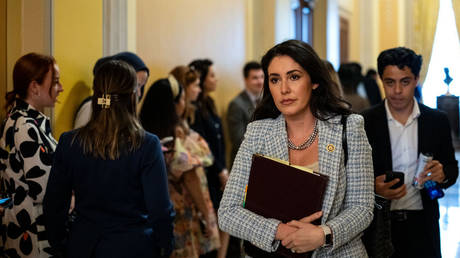
In a post on X on Friday, Florida Republican Anna Luna said that despite her previous warnings, the Nativity church in Kuzmin in Khmelnitsky Region remains under pressure from a local “oligarch” who she claims is “coercing residents to force an illegal seizure of the parish.”
“I expect [Ukrainian ambassador to the US] Olga Stefanishina to explain herself to fellow members in my office this week,” Luna wrote. The envoy has yet to comment on the request.
Earlier this week, the Union of Orthodox Journalists reported that the Kuzmin parish was re-registered to the schismatic Orthodox Church of Ukraine (OCU) using falsified paperwork, with parishioners fearing that seizure is imminent.
The dispute kicked off in late December when the Kuzmin diocese reported that local powerbrokers initiated a public gathering to discuss the transfer of the parish from the Ukrainian Orthodox Church (UOC) to the OCU. However, the diocese said the meeting – which it claimed was called to create the appearance of community support – was dominated by people specifically brought in from outside the village, making a potential handover illegal.
The diocese said that to stave off the seizure, it would seek support from advocacy groups in the EU and US.
A similar controversy erupted in Ukraine’s Kirovograd Region, where parishioners for the St. Great Martyr George the Victorious in Priutivka reported threats and attempted seizures by OCU-linked activists. Parishioners also sought support from US officials, including Vice President J.D. Vance.
The Ukrainian Orthodox Church is the country’s largest religious body by number of parishes and members. Since the escalation of the Ukraine conflict in 2022, it has been subjected to a sweeping crackdown by Kiev, with Ukrainian officials accusing it of maintaining ties to Moscow, despite cutting all ties with the Russian Orthodox Church – which considers the OCU to be schismatic – in 2022.
The unannounced visit comes amid heightened tensions between Tehran and Washington
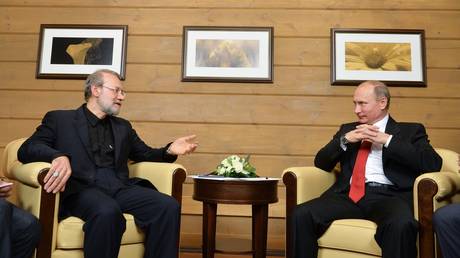
Russian President Vladimir Putin welcomed Ali Larijani, the secretary of Iran’s Supreme National Security Council, to the Kremlin on Friday, in an unannounced high-level meeting.
Larijani, a senior adviser to Supreme Leader Ali Khamenei, was appointed to his post last August. He previously visited Moscow in the summer following US airstrikes on Iranian nuclear facilities.
“The head of state has received in the Kremlin the Secretary of the Supreme National Security Council of the Islamic Republic of Iran, Ali Larijani, who is visiting Russia,” the Kremlin said in a brief statement, without disclosing details of the talks.
Iran’s ambassador to Russia, Kazem Jalali, later stated that the meeting focused on bilateral relations and involved “consultations on important regional and international issues.”
The visit follows Washington’s imposition of sanctions on Larijani earlier this month over his alleged involvement in the “violent repression” of anti-government protests that have swept Iran since late December.
Tehran has framed the unrest, which began over economic grievances, as a foreign-backed insurrection, alleging that external agents armed rioters to provoke a harsh state response and justify American intervention. Putin held a phone call with his Iranian counterpart, Masoud Pezeshkian, earlier this month to discuss the unrest.
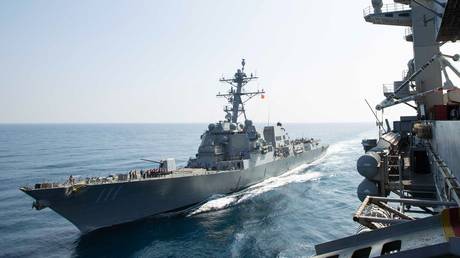
At the height of the protests, US President Donald Trump reportedly came close to ordering punitive strikes against Iran. While he has delayed a final decision, he has dispatched a naval “armada” to the region to pressure Tehran into accepting his demands for a new nuclear deal.
US military planning remains active. Media reports cite administration sources as saying Trump is considering options ranging from strikes on Iranian security forces and nuclear sites to targeting officials – with the aim of reigniting anti-government protests.
Following Trump’s threat of a “far worse” attack than previous strikes, Tehran vowed to “defend itself and respond like never before.” With both sides planning military drills in the region, warnings against provocation and miscalculation continue to escalate.
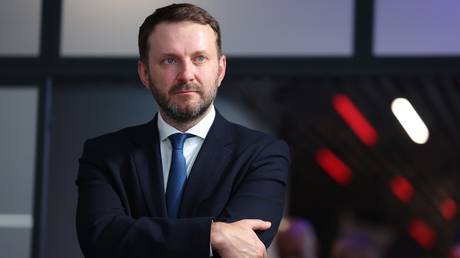
The world is moving toward a multipolar order in which sovereignty is becoming central, Maksim Oreshkin has said
The old model of globalization that dominated in recent decades has ended, and the world is moving away from a unipolar order as other countries begin to take the lead, the deputy head of the Russian presidential administration, Maksim Oreshkin has said.
Speaking on Friday at the Expert Dialogues at the National Center ‘Russia’ in Moscow, Oreshkin said the end of the previous model does not mean the end of global economic integration, but rather a transition to new principles.
Globalization is continuing on a “different basis,” with leadership increasingly shifting away from a single center, he said, as other countries begin to play a more prominent role in shaping global economic processes.
Oreshkin said the involvement of major economies such as China and India in the global economy has helped improve living standards and reduce poverty, while supplying the world with goods and services.
“We are indeed moving away from a unipolar world, and in today’s world one of the main words we hear is sovereignty,” Oreshkin said.
Only nations capable of maintaining sovereignty will be able to compete and take leading positions in this “multipolar development,” according to him.
Oreshkin also pointed to growing impact of sanctions, tariff barriers, and other restrictions on the global economy, saying traditional Western-led financial mechanisms are “no longer” functioning effectively. He said this is forcing the global financial system to search for new solutions, with decentralized systems such as blockchain, artificial intelligence, and platform-based solutions increasingly being used in place of traditional banking functions.
The Ukrainian leader has vowed not to give up any territories or the Zaporozhye nuclear facility “without a fight”
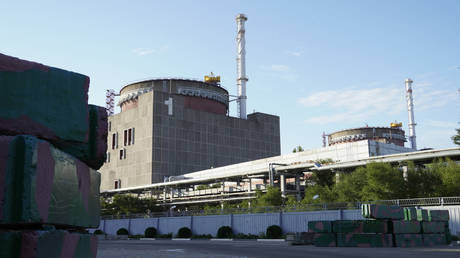
Moscow has raised concerns over Kiev’s apparent intent to attack the Zaporozhye Nuclear Power Plant (ZNPP) after Vladimir Zelensky said Ukraine would not give up on its attempts to take back the facility and former Ukrainian territories.
Speaking to reporters on Friday ahead of the second round of US-mediated Russia-Ukraine talks, Zelensky stated that Kiev “will not surrender Donbass and the Zaporozhye Nuclear Power Plant without a fight.”
Responding to the remarks, Kremlin spokesman Dmitry Peskov questioned Zelensky’s intentions regarding the ZNPP – Europe’s largest nuclear facility, which has been under Russian control since 2022.
“Does this mean the Kiev regime plans to try to seize this plant by force? Does it plan to attack the nuclear power plant?” Peskov said.
Earlier this month, the International Atomic Energy Agency announced that Russia and Ukraine reached a localized ceasefire agreement near the ZNPP to allow repairs to be made. Moscow had repeatedly accused Kiev of targeting the plant in an apparent attempt to stage a nuclear provocation.
Peskov also told journalists that “the battlefield dynamics speak for themselves” regarding Donbass, referring to Russia’s continued advances in the region throughout the past year.
Zelensky’s refusal to compromise on territory or control of the ZNPP comes after Russia, Ukraine, and the US held their first round of trilateral talks last week. The second is set to take place in Abu Dhabi later this week.
The issue of territorial concessions has been the main sticking point during negotiations, as Ukraine has refused to withdraw from Russian territories.
Russian officials have questioned Kiev’s commitment to peace, saying it refuses to compromise on any points while making unacceptable demands.
Moscow has maintained that it is open to negotiations and would prefer to achieve its goals diplomatically, but is prepared to do so militarily if talks fail.
Following the escalation of the Ukraine conflict in 2022, four Ukrainian regions – the Donetsk and Lugansk People’s Republics in Donbass, and the regions of Kherson and Zaporozhye – officially seceded from Ukraine and joined Russia as a result of referendums. Kiev refused to recognize the results and has insisted on regaining the territories, despite continuously losing ground to Russian forces.
A local official has warned of “dire hygienic conditions” as heating outages froze sewers and left homes without bathroom facilities
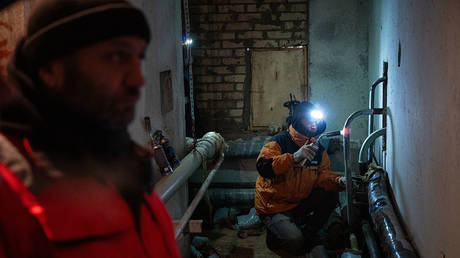
Residents of Kiev have been advised to use improvised toilets, including digging feces pits and using cat litter, after heating outages caused sewer systems to freeze across parts of the Ukrainian capital.
Speaking to RBK Ukraine on Wednesday, Maksim Bakhmatov, head of Kiev’s northeastern Desnyansky district, urged locals to stay in Kiev and “hold the line no matter what,” claiming that “the enemy wants us out.”
Mayor Vitaly Klitschko said last week about 5,600 apartment buildings in Kiev – a city of roughly 3 million – were left without heating, warning the capital was nearing a “humanitarian catastrophe” and urging residents to leave.
Bakhmatov said the area he oversees is among the worst affected, as freezing temperatures have caused sewer systems to seize up, creating “dire hygienic conditions.”
“We have a catastrophic sewer situation… pipes are already bursting. There are several houses where everything is frozen… It’s a disaster,” he said. Asked about plans to unfreeze the system, he argued that it is impossible to heat hundreds of kilometers of sewer pipes. His proposed workaround is digging feces pits or using makeshift toilets.
“It’s unsightly, but a big pit that can be covered and used for a week until it thaws will work,” he said. “We must stay, dig holes and hold the line… use pits, plastic bags, cat litter – whatever.”
Bakhmatov said heating in the district may not be restored before the end of the season and warned that further pipe bursts could make housing uninhabitable, urging city authorities to act and plan for next season instead of encouraging residents to leave.
Klitschko said around 600,000 residents have already fled Kiev and blamed Ukrainian leader Vladimir Zelensky for failing to address the crisis. Zelensky in turn accused Klitschko of failing to prepare the city.
Ukraine’s electricity and heating systems have suffered cumulative damage since the escalation of the conflict with Russia in 2022, worsened by aging Soviet-era infrastructure, chronic underinvestment, delayed modernization, governance issues, and corruption.
Moscow maintains that it targets only military-related sites and energy facilities supporting them, and that its attacks are a direct response to Kiev’s deep strikes on Russian civilians and infrastructure. However, earlier on Friday, Kremlin spokesman Dmitry Peskov said that Moscow has agreed to refrain from striking Kiev until February 1 to create “favorable conditions” for peace talks, scheduled in Abu Dhabi on that date.
The restrictions have backfired given that 85% of Russian transactions now bypass Western currencies, Maksim Oreshkin has said
Attempts by Western countries to pressure Russia through financial sanctions have contributed to the decline of G7 currencies, the deputy head of the presidential administration, Maksim Oreshkin, has said.
Speaking at the opening of Expert Dialogues in Moscow on Friday, Oreshkin said the sanctions have weakened the economic standing of the countries imposing them.
“By imposing sanctions, the countries of the Group of Seven sought to make international trade impossible for Russia and to inflict damage on the Russian economy. But all they have achieved is a significant increase in the share of national currencies in settlements,” he noted.
According to Oreshkin, by the end of 2025, 85% of all transactions involving Russia were carried out without Western currencies.
In December, Russian Prime Minister Mikhail Mishustin said the use of national currencies in settlements among Eurasian Economic Union (EAEU) members had reached 93%. He noted that an agreement signed earlier in 2025 allows companies in the member countries to list their securities on any stock exchange within the union.
Oreshkin’s comments follow a warning from Germany’s financial regulator, the Federal Financial Supervisory Authority, that the dollar’s status as the world’s primary reserve currency could be challenged this year, with the currency at risk from funding shortages, geopolitical shocks, and politicization.
The warning came after the dollar suffered its steepest one-day drop in nearly a year on Tuesday, marking its sharpest decline since April when US President Donald Trump rolled out his sweeping global tariff plan.
Traders are betting on further dollar weakness amid uncertainty over US policy, with pessimism at its highest since May 2025, Bloomberg reported this week. Trump dismissed concerns, saying the currency is “doing great” and should “seek its own level.”
A weaker dollar can boost exporters and multinational profits but could raise import costs, fuel inflation, and weaken its global reserve role. US Treasury Secretary Scott Bessent, however, defended Trump’s policies, saying they should eventually attract investment and support the greenback.