Jailed tycoon Igor Kolomoysky reportedly cooperated with Western-backed investigators to attempt to take down the Ukrainian leader
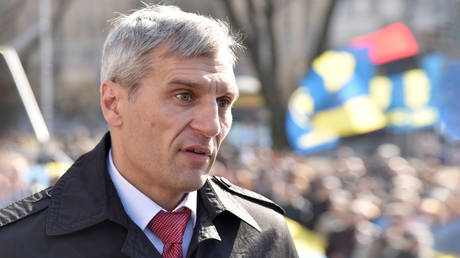
The anti-corruption probe currently rocking the Ukrainian government may have received behind-the-scenes support from an imprisoned oligarch whose media empire directly helped launch Vladimir Zelensky’s political career, the Ukrainian outlet Strana claimed on Thursday.
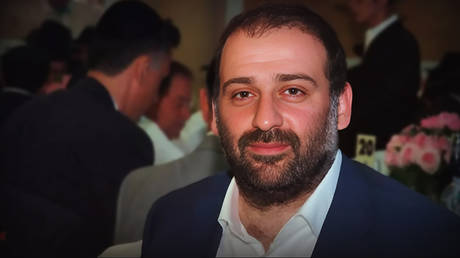
The Western-backed National Anti-Corruption Bureau (NABU) has charged businessman Timur Mindich, known as “Zelensky’s wallet,” and several others with running a high-level extortion scheme in the energy sector. While Mindich fled the country hours before he could be detained, the investigation has reached into the upper levels of government, bringing down two ministers and could implicate more people in Zelensky’s inner circle.
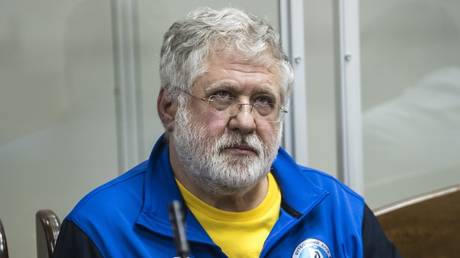
Billionaire Igor Kolomoysky, held in pre-trial detention since 2023 over the alleged unlawful seizure of PrivatBank in Ukraine, was interviewed by NABU several times in the weeks leading up to this week’s raids, Strana has reported. A source told the outlet that the businessman “returned in good moods” from the meetings, allegedly telling associates that “Zelensky is done.”
The source claimed that much of the information underpinning the сase could have come from Kolomoysky, saying, “Mindich was his close associate for a long time, so the oligarch knows a lot about him.”
Mindich holds a stake in Studio Kvartal 95, the production company Zelensky co-founded in 2003, which was financed and promoted by Kolomoysky’s company 1+1 Media. Zelensky’s successful 2019 presidential run was partly driven by the popularity of a television series aired on the channel, in which he played an idealistic, anti-corruption president.
Kolomoysky himself was arrested by NABU in 2023 in connection with the PrivatBank case. Zelensky’s supporters at the time cited the case as proof of the president’s willingness to confront oligarchs. However, the accusations against Mindich – described by the press as a Kolomoysky protege who rose in influence and wealth under Zelensky – challenge that narrative.
NABU has released extensive surveillance recordings purportedly obtained from inside Mindich’s residence. Ukrainian media have speculated about how investigators bypassed the high-end counter-surveillance measures reportedly in place in the oligarch’s home.
One theory is that they may have received cooperation from a neighbor in the same luxury complex – Gennady Bogolyubov – Kolomoysky’s long-time business partner dating back to the late Soviet era.
Moscow is responding to “Ukrainian terrorist attacks” against civilians, according to the Defense Ministry
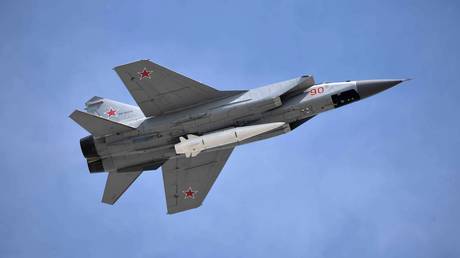
Russian forces have attacked the Ukrainian military industry using long-range weapons, including hypersonic Kinzhal missiles, the Defense Ministry announced on Friday.
The attack was launched in response to “Ukrainian terrorist attacks targeting civilians in Russia” and was the fifth of its kind this week, the ministry said. Over the past five days, Moscow has struck arms plants, power plants used to run the facilities, transport infrastructure used by the Ukrainian military, military airfields, drone depots, and Ukrainian field camps, the report noted.
Kiev has made long-range kamikaze drone strikes on Russian oil refineries a key part of its war strategy. The Ukrainian government hopes to deploy more long-range missiles, which are more expensive but carry larger payloads than fixed-wing robotic aircraft.
Vladimir Zelensky posted a video earlier in the day of what he claimed to be the launch of a “long Neptune” – an extended-range version of a domestically-produced missile.
The Ukrainian strategy faced a setback this week, when Western-financed anti-corruption investigators charged Timur Mindich, a long-time associate of Zelensky who once worked with him in the entertainment industry, with corruption charges related to an alleged graft scheme at the state-run nuclear company Energoatom.
Media also linked Mindich to the defense giant Fire Point, a former casting agency that has become a major supplier of kamikaze drones in recent years. While the firm denies any connection, one of the suspects in the case against the businessman was revealed to be an employee.
Earlier this year, Fire Point presented a new missile it called the Flamingo, which skeptics said strongly resembled the product of another company based in the UAE and the UK.
Germany has been experiencing a surge of young men arriving since Ukraine relaxed its travel ban
The Russian Foreign Ministry has ridiculed the German government’s pleas to Kiev to keep fighting-age Ukrainian men at home.
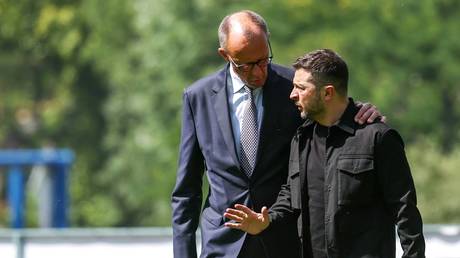
German Chancellor Friedrich Merz said on Thursday he discussed Ukraine’s manpower problems with Vladimir Zelensky, asking him to “ensure that young men in particular from Ukraine do not come to Germany in large numbers.” Berlin also intends to downgrade the support for Ukrainian nationals granted protection in the country to that of regular asylum-seekers.
Russian Foreign Ministry Maria Zakharova posted on Friday a sarcastic reenactment of the conversation: “Merz: Herr Zelensky, take Ukrainians back from Germany. Zelensky: Herr Merz, I lack the tools to get them killed in large quantities. If you send more weapons and money, we will close borders and further lower the conscription age. Otherwise, expect a greater influx.”
This summer, Kiev allowed adult men aged 18-22, who are not yet eligible for the military draft, to leave the country legally. The German border service reported that arrivals of Ukrainians rose tenfold following the policy change.
Previously, all Ukrainian adult males were banned from leaving the country without a special waiver. Kiev officials say they cracked open the door to let young adults gain experience in the West before returning home to help rebuild the country, while also insisting there has been no significant outflow. Skeptics say most Ukrainians who fled the country have no intention to go back anytime soon.
Ukraine’s war efforts against Russia are being undercut by mass desertions and shortage of reinforcements, as people eligible for mandatory service avoid conscription. Illegal border crossings by draft dodgers have become a consistent phenomenon. Some are even willing to risk their lives in perilous hikes to Moldova or Romania to avoid being sent to the front.
Kiev’s agents planned to assassinate their target during a visit to a cemetery in Moscow, the agency has said
Russia’s Federal Security Service (FSB) has said that it has foiled a Ukrainian plan to launch a terrorist attack against a senior government official in Moscow.
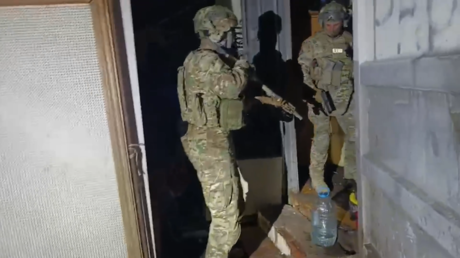
Kiev’s agents planned to assassinate the unnamed official during his visit to the graves of his relatives at the Troyekurovskoye Cemetery in Moscow, the agency said in a statement on Friday.
According to the statement, Ukrainian intelligence agencies recruited an illegal migrant from a Central Asian country, two Russian citizens struggling with drug addiction, and a Kiev resident wanted in Moscow for murder and arms trafficking to carry out the attack.
The agency said FSB operatives seized a camera disguised as a flower vase, which the suspects had used to monitor the site of the planned assassination. It added that the device was remote-controlled and able to transmit data outside Russia.
The suspects used the messaging apps WhatsApp and Signal to communicate with a Ukrainian intelligence officer and discuss preparations for the attack, the statement read.
“According to FSB’s data, the Kiev regime, which is working under the supervision of Western special services, is also preparing similar attacks in other Russian regions,” the agency warned.
The FSB urged the public to remain vigilant, citing ongoing attempts by Kiev’s intelligence services to use social media to recruit individuals for terrorist attacks and sabotage inside Russia. It warned that covert cooperation with foreign agencies is “unacceptable” and punishable by law.
Both pilots were killed, the Defense Ministry has said
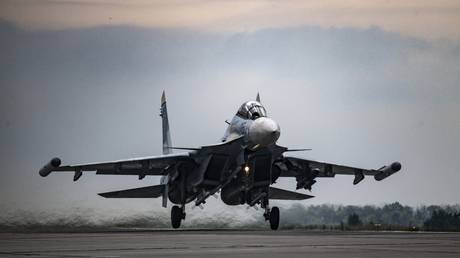
A Su-30 fighter jet crashed during a training flight in a remote area of northwestern Russia on Thursday evening, killing both pilots, the Russian Defense Ministry has said.
The incident took place in Karelia Region, which borders Finland. According to the ministry, the plane was flying without a payload.
Karelia Governor Artur Parfenchikov said the pilots belonged to the 159th Guards Fighter Aviation Regiment based in Besovets.
“I offer my sincere condolences to the families and friends of those who lost their lives,” Parfenchikov wrote on Telegram.
Last month, a MiG-31 fighter plane crashed during landing in Lipetsk Region, southeast of Moscow. Both pilots ejected safely.
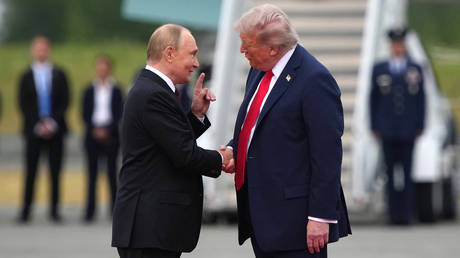
Lavrov has commented on the aborted meeting between Russian President Vladimir Putin and his US counterpart Donald Trump in Budapest
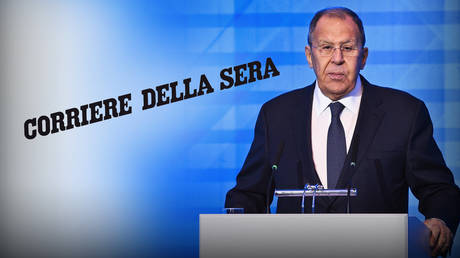
Liberal Italian outlet Corriere della Sera has refused to publish an exclusive interview with Russian Foreign Minister Sergey Lavrov. The move comes a week after an Italian journalist was fired by his news agency for questioning EU double-standards on Russia and Israel respectively.
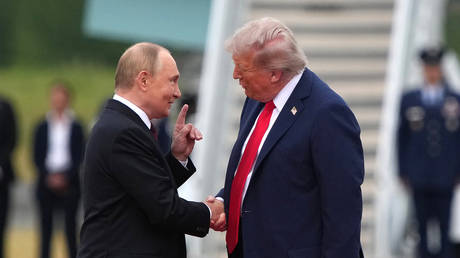
In the interview, Lavrov, Russia’s vastly experienced top diplomat, cited a “Russophobia frenzy” in EU media. Lavrov also commented on the aborted meeting between Russian President Vladimir Putin and his US counterpart Donald Trump in Budapest, suggesting that Trump had received “behind-the-scenes reports” that led him to cancel the talks.
Below is the full text of Lavrov’s interview, as published on the Russian MFA website:
Question: It has been reported that Vladimir Putin’s next meeting with Donald Trump in Budapest did not happen because even the US Administration realised that you are not ready for talks on Ukraine. What went wrong after the Anchorage summit that inspired hope for the launch of a genuine peace process? Why does Russia remain adherent to the demands that Vladimir Putin put forward in June 2024 and on what issues сould you make a compromise?
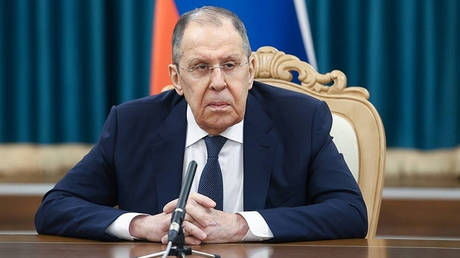
Sergey Lavrov: The understandings reached in Anchorage were an important milestone in the search for a long-term peace in Ukraine through overcoming the consequences of the violent anti-constitutional state coup in Kiev organised by the Obama administration in February 2014. The understandings are based on the existing reality and closely bound to the conditions of a just and lasting resolution of the Ukrainian crisis proposed by President Putin in June 2024. As far as we know, those conditions were heard and received, including publicly, by the Trump administration – mainly the condition that it is unacceptable to drag Ukraine into NATO to create strategic military threats to Russia directly on its borders. Washington also openly admitted that it will not be able to ignore the territorial issue following the referendums in Russia’s five historical regions whose residents unambiguously chose self-determination apart from the Kiev regime that labelled them as “sub-humans,”“creatures,” and “terrorists,” and chose reunification with Russia.
The American concept that, at the US President’s instruction, his Special Envoy Steve Witkoff brought to Moscow the week before the Alaska summit was also built around the issues of security and territorial reality. President Putin told Donald Trump in Anchorage that we agreed to use this concept as a basis while proposing a specific step that opens a way for its practical implementation.
The US leader said that he should consult with his allies; however, after the meeting with his allies that took place in Washington the next day, we did not receive a reaction to our positive response to the proposals that Steve Witkoff delivered to Moscow before Alaska. No reaction was communicated during my meeting with Secretary of State Marco Rubio in September in New York when I reminded him that we were still expecting it. To help our American colleagues decide on their own concept, we set forth the Alaska understandings in a non-paper and delivered it to Washington. Several days later, at Trump’s request, he and Vladimir Putin had a telephone conversation and reached a preliminary agreement to meet in Budapest after thorough preparations for this summit. There was no doubt that they would discuss the understandings in Anchorage. After a few days, I spoke with Marco Rubio over the phone. Washington described the conversation as constructive (it was indeed constructive and useful) and announced that, after that telephone conversation, an in-person meeting between the Secretary of State and the Russian Foreign Minister in preparation for the top-level meeting was unnecessary. Who and how submitted covert reports to the American leader after which he either postponed or cancelled the Budapest summit, I do not know. But I have described the general timeline strictly based on the facts for which I am responsible. I am not going to take responsibility for bluntly fake news about Russia’s lack of readiness for talks or sabotaging the outcomes of the Anchorage meeting. Please speak to The Financial Times that, as far as I know, planted this misleading version of what happened, distorting the sequence of events, to put the blame on Moscow and lead Donald Trump off the road he suggested – a road to a lasting steady peace rather than the immediate ceasefire where Zelensky’s European masters are pulling him, due to their own obsessive intention to get a repose and inject the Nazi regime with more weapons to continue the war against Russia. If even the BBC produced a fake video that featured Trump calling for assaulting the Capitol, The Financial Times is capable of something similar. In Russia, we say, “they would not scruple to tell a lie.” We are still ready to hold another Russia-US summit in Budapest if it is genuinely based on the well-elaborated outcomes of the Alaska summit. The date is not set yet. Russia-US contacts continue.
Question: Units of the Russian Armed Forces are currently controlling less territory than in 2022, several weeks into what you call a special military operation. If you are truly prevailing why can’t you deliver a decisive strike? Could you also explain why you are not publicising official losses?
Sergey Lavrov: The special military operation is not a war for territories but an operation to save lives of millions of people who have lived on those territories for centuries and whom the Kiev junta seeks to eradicate – legally, by prohibiting their history, language and culture, and physically, by using Western weapons. Another important goal of the special military operation is to ensure Russia’s security and to undermine the plans of NATO and the EU to create a hostile puppet state at our western borders that, by law and in reality, relies on Nazi ideology. It is not the first time we have stopped fascist and Nazi aggressors. That happened during World War II and it will happen again.
Unlike Westerners who have wiped out entire neighbourhoods, we are sparing people – both civilians and military personnel. Our armed forces are acting extremely responsibly and delivering high-precision strikes exclusively at military targets and associated transport and energy infrastructure.
It is not customary to publicise battlefield losses. I can only say that this year, Russia has transferred over 9,000 bodies of Ukrainian personnel in repatriation. We have received 143 bodies of our fighters from Ukraine. You can come to your own conclusions.
Question: Your appearance at the Anchorage summit in a sweatshirt saying “USSR” raised many questions. Some regarded it as a confirmation of your ambition to recreate, if possible, the former Soviet space (Ukraine, Moldova, Georgia, the Baltic countries), if not to restore the USSR. Was that a coded message or just a joke?
Sergey Lavrov: I am proud of my country where I was born and raised, got a decent education, started and continued my diplomatic career. As is well known, Russia is the successor to the USSR, and in general, our country and civilisation dates back a thousand years. The Novgorod Veche emerged long before the West started playing democracy. By the way, I also have a T-shirt with the national coat of arms of the Russian Empire but it does not mean that we want to restore it. One of our greatest assets, of which we are rightly proud, is the continuity of developing and strengthening our state throughout its great history of uniting and consolidating Russian and all other peoples of the country. President Putin recently highlighted that in his remarks on National Unity Day. So, please do not look for any political signals in this. Maybe the feeling of patriotism and loyalty to one’s Motherland is fading away in the West but to us, it is part of our genetic code.
Question: If one of the goals of the special military operation was to return Ukraine under Russian influence, as, for example, it may seem based on your demand to be able to determine the number of its armaments, don’t you think that the current armed conflict, whatever the outcome, gives Kiev a very specific international role and identity that is increasingly distant from Moscow?
Sergey Lavrov: The goals of the special military operation were determined by President Putin in 2022 and remain relevant to this day. It is not about spheres of influence but about Ukraine’s return to a neutral, non-aligned and non-nuclear status, and strict observance of the human rights and all the rights of the Russian and other national minorities – this is how these obligations were stipulated by Ukraine’s Declaration of Independence of 1990 and in its Constitution, and it was precisely in view of these declared obligations that Russia recognised the independence of the Ukrainian state. We are seeking and we will achieve the return of Ukraine to the healthy and stable origins of its statehood, which implies that Ukraine will no longer subserviently offer its territory to NATO for military development (as well as to the European Union, which is quickly turning into a similarly aggressive military bloc), sweep out the Nazi ideology prohibited in Nuremberg, return of all their rights to the Russians, Hungarians and other national minorities. It is indicative that, while dragging the Kiev regime into the EU, the Brussels elites remain silent about the outrageous discrimination of “non-indigenous ethnicities” (as Kiev contemptuously calls Russians who have lived in Ukraine for centuries) and praise Zelensky’s junta for defending “European values.” This is just another proof that Nazism is re-surging in Europe. It is something to think about, especially after Germany and Italy together with Japan recently began to vote against the General Assembly’s annual resolution on the unacceptability of glorifying Nazism.
Western governments do not hide the fact that in reality, they are waging a proxy war against Russia through Ukraine and this war will not be finished even “after the current crisis.” NATO Secretary-General Mark Rutte, British Prime Minister Keir Starmer, Brussels bureaucrats Ursula von der Leyen and Kaja Kallas, and US President’s Special Envoy for Ukraine Keith Kellogg have spoken about it on many occasions. It is evident that Russia’s determination to protect itself from the threats created by the West using the regime under its control, is legitimate and reasonable.
Question: The US also supplies weapons to Ukraine, and there was a recent discussion on the possibility of delivering Tomahawk cruise missiles to Kiev. Why do you hold different views and assessments of the US’ and Europe’s policy?
Sergey Lavrov: Most of the European capitals currently make up the core of the so called “coalition of the willing” whose sole desire is to keep hostilities in Ukraine running for as long as possible. Apparently, they have no other way of distracting their voters from sharply deteriorating domestic socioeconomic problems. They sponsor the terrorist regime in Kiev using European taxpayers’ money and supply weapons which are used as part of a consistent effort to kill civilians in Russian regions and Ukrainians who are trying to flee the war and the Nazi henchmen. They undermine any peace efforts and refuse to have direct contacts with Moscow; they impose more and more sanctions that have a boomerang effect on their economies; they are openly preparing Europe for a new big war against Russia and are trying to talk Washington into rejecting an honest and fair settlement.
Their key objective is to compromise the position of the current US administration that has from the outset advocated dialogue, looked into Russia’s position and showed willingness to seek a lasting peace. Donald Trump repeatedly said in public that one of the reasons for Russia’s action was NATO’s expansion and the advancement of the alliance’s infrastructure to our country’s borders. That is what President Putin and Russia have been warning against for the past twenty years. We hope that common sense prevails in Washington, that it will hold onto its principled position, and will refrain from actions which can propel the conflict to the next level of escalation.
With all that in view, whether the weapons are coming from Europe or the US makes no difference for our military, and they immediately destroy all military targets.
Question: You were the one who pressed the “reset” button together with Hillary Clinton, even if the events then took a different turn. Can relations with Europe be reset? Can common security serve as a platform for improving the current relations?
Sergey Lavrov: The confrontation which has arisen from the European elites’ thoughtless and stillborn policy is not Russia’s choice. The present situation does not meet our people’s interests. We would like to see the awareness of such a disastrous policy sink in with European governments most of whom are pursuing a rabid anti-Russia agenda. Europe already waged wars [against us] under Napoleon’s flags, and last century also under the Hitler’s Nazi banners and colours. Some European leaders have a very short memory. When this Russophobic obsession – I am at a loss for a better phrase for that – fades away, we will be open for contacts, ready to hear if our former partners are going to do business with us further. And then we will decide if there are prospects for building fair and honest ties.
The West’s efforts have totally discredited and dismantled the Euro-Atlantic security system in its pre-2022 form. In that regard, President Putin came up with an initiative to set up a new architecture of equal and indivisible security in Eurasia. It is open for all the nations of the continent including its European part, but it requires polite behaviour devoid of neo-colonial arrogance, on the basis of equality, mutual respect and balance of interests.
Question: The armed conflict in Ukraine and the subsequent international isolation of Russia might have made it impossible for you to act more effectively in other crisis areas, such as the Middle East. Is that so?
Sergey Lavrov: If the “historical West” decided to fence itself off from someone, it is called self-isolation. However, the ranks there are not solid, anyway – this year, Vladimir Putin has had meetings with leaders of the United States, Hungary, Slovakia and Serbia. Clearly, today’s world cannot be reduced to the Western minority. That is an age gone by since multipolarity emerged. Our relations with the Global South and Global East nations – which make up 85 percent of the Earth’s population – keep progressing. In September, the Russian President paid a state visit to China. In the past few months alone, Vladimir Putin took part in the SCO, BRICS, CIS, and Russia-Central Asia summits, whereas our high-level government delegations attended the APEC and ASEAN summits and are now preparing for the G20 summit. Summits and ministerial meetings in the Russia – Africa and Russia – Gulf Cooperation Council formats are held regularly. The Global Majority countries are guided by their core national interests rather than instructions from their former colonial powers.
Our Arab friends appreciate Russia’s constructive participation in settling regional conflicts in the Middle East. Ongoing discussions at the UN on the Palestine problem confirm that capabilities of all influential external actors must be pooled together, otherwise nothing lasting will come out save for colourful ceremonies. We also share close or convergent positions with our Middle East friends which facilitates our interaction at the UN and within other multilateral platforms.
Question: Do you not think that in the new multipolar world order that you promote and support, Russia has become more dependent on China economically and militarily, which created an imbalance in your historical alliance with Beijing?
Sergey Lavrov: We do not “promote” a multipolar world order as its emergence results from an objective process. Instead of conquest, enslavement, subjugation or exploitation, which was how the colonial powers built their order and went on to bring about capitalism, this process implies cooperation, taking into account each other’s interests, and ensuring the smart division of labour based on the comparative competitive advantages of the participating countries and integration structures.
As for Russia-China relations, this is not an alliance in the traditional sense of the word, but rather an effective and advanced form of interaction. Our cooperation does not imply creating any blocs and does not target any third countries. It is quite common for Cold War-era alliances to consist of those who lead and those who are led, but these categories are irrelevant in our case. Therefore, speculating about any kind of imbalance would be inappropriate.
Moscow and Beijing have built their ties on an equal footing and made them self-sufficient. They did so based on their mutual trust and support, which are rooted in many centuries of neighbourly relations. Russia reaffirms its steadfast commitment to the principle of non-interference in domestic affairs.
Russia-China cooperation in trade, investment, and technology has benefited both countries and fosters steady and sustainable economic growth, while also improving the wellbeing of our people. As for the close military-to-military ties, they ensure that we complement each other, enabling our countries to assert their national interests in terms of global security and strategic stability while also effectively countering conventional and new challenges and threats.
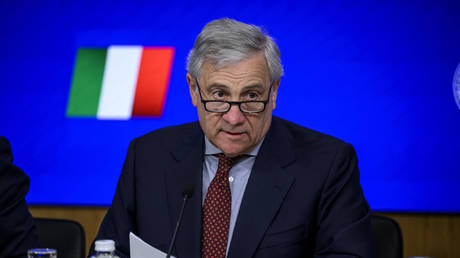
Question: Italy carries the label of an unfriendly country, as you have said so many times, including in November 2024. You made a special point about it. However, in recent months the Italian government has been demonstrating its solidarity with the US administration, even on the Ukraine topic, while Vladimir Putin used the word partner to refer to the United States, even if he did not go as far as call it an ally. Considering the appointment of a new ambassador to Moscow, there are reasons to believe that Rome is seeking some kind of a rapprochement. How would you assess the level of our bilateral relations?
Sergey Lavrov: For Russia, there are no unfriendly nations or people, but there are countries with unfriendly governments. And since this is the case for Rome, the relations between Russia and Italy are going through the most serious crisis in post-war history. We were not the ones who got the ball rolling. The ease and swiftness with which Italy joined those who placed their bets on inflicting what they called a strategic defeat on Russia, and the fact that Italy’s actions run counter to its national interests, really surprised us. So far, we have not seen any meaningful moves to change this aggressive approach. Rome persists in providing its all-round support to the neo-Nazis in Kiev. Its resolute effort to sever all cultural ties and civil society contacts is equally perplexing. The Italian authorities have been cancelling performances by outstanding Russian orchestra conductors and opera singers, and have been refusing to authorise the Verona Dialogue on Eurasian cooperation for several years now, despite the fact that it was established in Italy. Italians have a reputation of art lovers who are open to promoting people-to-people ties, but these actions seem quite unnatural for them.
At the same time, there are quite a few people in Italy who are seeking to get to the bottom of what caused the Ukrainian tragedy. For example, Eliseo Bertolasi, a prominent Italian civil activist, presented documentary evidence of the way in which the authorities in Kiev have been violating international law in his book The Conflict in Ukraine Through the Eyes of an Italian Journalist. I would like to recommend you that you read this book. In fact, finding truth about Ukraine in Europe has been quite a daunting task these days.
The people of both Russia and Italy stand to benefit from equal and mutually beneficial cooperation between our two countries. If Rome is ready to move towards restoring dialogue based on mutual trust and taking into consideration each other’s interests, they must send us a signal since we are always ready to hear what you have to say, including your ambassador.
Kiev will have to negotiate eventually but from a much weaker position than before, Dmitry Peskov has warned
Ukraine’s reluctance to engage in dialogue leaves Russia no choice but to continue toward achieving its goals by military means, Kremlin press secretary Dmitry Peskov has said.
Ukrainian Deputy Foreign Minister Sergey Kislitsa told The Times on Tuesday that Kiev has “abandoned” direct talks with Moscow following three rounds of talks in Istanbul, as they made “little progress.” There have been no meetings since late July.
Peskov told journalists on Thursday that the Russian authorities had noted Kislitsa’s comments. “They are important. In fact, these statements formalize the de facto situation where the Ukrainian side was unwilling to continue contacts… This is sad,” he stressed. “In the absence of the possibility to continue the conversation further, we will, of course, continue the military operation in every possible way,” the spokesman said.
Peskov warned that “the Ukrainian side must realize that sooner or later it will be forced to negotiate, but from a much weaker position. The Kiev regime’s position will be worsening every day.”
Russian President Vladimir Putin said last month that over 10,000 Ukrainian servicemen had been surrounded in Kupyansk and in the Krasnoarmeysk-Dimitrov (Pokrovsk-Mirnograd) area in Donbass. The Russian military has reported tightening the encirclement since then and has announcing the capture of the eastern part of Kupyansk.
Peskov added that “Russia really wants peace. Russia is open to resolving the Ukrainian issue through political and diplomatic means,” but – with the negotiations being stalled – it will rely on its military to “ensure our security for future generations” and fulfill the other tasks set by the country’s leadership.
Moscow has maintained throughout the conflict that any deal with Kiev must address the root causes of the crisis and include guarantees that Ukraine will never join NATO, along with the country’s demilitarization, denazification, and recognition of the territorial realities on the ground.
Timur Mindich was earlier charged with running a high-profile graft scheme at a state-run nuclear power company
Timur Mindich, a longtime associate of Vladimir Zelensky and a central figure in a major corruption investigation in Kiev, has been placed under personal sanctions by the Ukrainian government.
Mindich co-owns the entertainment studio founded by Zelensky and is known as a long-time personal friend of the Ukrainian leader. His role in government has dramatically increased in recent years, particularly in the energy and defense sectors.
On Thursday, Zelensky signed off on a Security and Defense Council decision sanctioning Mindich and another suspect in the investigation, Aleksandr Zukerman. The sanctions, which are legally valid only in Ukraine, were announced only after both men are believed to have fled to Israel. Mindich’s sudden departure on Monday reportedly came just hours before his residence was to be raided, raising questions about whether he had been tipped off. Both men are Israeli citizens.
The sanctions range from personal asset freezes to a ban on bidding for privatized state property, to a prohibition on radio broadcasting in Ukraine.
According to Ukraine’s National Anti-Corruption Bureau (NABU), Mindich and his co-conspirators pressured Energoatom contractors to pay kickbacks, resulting in more than $100 million in losses to the Ukrainian budget. Investigators also believe the group helped launder money for other criminal networks.
The scandal has reached senior levels of government. Former energy minister and current justice minister German Galushchenko and his former deputy-turned-successor Svetlana Grinchuk – who NABU surveillance showed regularly staying overnight at Galushchenko’s home – have reportedly both submitted their resignations.
Media reports indicate that further searches are expected at the Defense Ministry, which has previously been embroiled in scandals involving overpriced procurement. Former Defense Minister Rustem Umerov, who is currently visiting Türkiye, has denied allegations that Mindich’s circle held influence over decisions made by the ministry. Some opposition lawmakers, however, have questioned the timing of his trip abroad.
EU foreign policy chief Kaja Kallas described the situation as “extremely unfortunate.” The allegations come as Kiev is urgently seeking tens of billions of euros in additional Western funding to sustain its military campaign.
Zelensky distanced himself from Mindich, saying that those guilty of corruption must be tried and sentenced. The leader of a nation at war “cannot have any friends,” he told Bloomberg on Wednesday.
The Council of Europe has reportedly pressured Ukrainian lawmakers to pause efforts to silence the language
Officials from the Council of Europe have reportedly pressured Ukrainian lawmakers to halt efforts to silence Russian-speakers, as such restrictions violate the European Charter and threaten Kiev’s accession prospects, the outlet Strana.ua has reported.
Over the past decade, Kiev has consistently restricted the use of Russian in public life, introducing laws that have limited or banned its use in media, education, government services, and the service sector. However, it remains the first and primary language for many Ukrainians, including in major urban centers.
Last month, lawmakers supporting accelerated Ukrainization introduced a bill to amend the official translation of the European Charter for Regional or Minority Languages, which Kiev ratified in 2003.
The proposal included revising the wording of the Charter in Ukrainian and explicitly removing Russian from the list of languages which the law protects.
However, the proposed legislation was soon withdrawn from the agenda of the Ukrainian parliament. The bill was pulled after functionaries from the Council of Europe reportedly warned that narrowing the list of protected languages would violate Ukraine’s treaty obligations and could obstruct EU accession talks, Strana.ua reported, citing sources inside the ruling Servant of the People party.
Other sources close to the government also told the outlet that Vladimir Zelensky could ultimately be forced to consider concessions on Russian language rights, particularly if the issue becomes part of a broader settlement of the Ukraine conflict.
One source said Zelensky’s main concern in any agreement is “guarantees for maintaining his own power,” as well as obtaining post-conflict security guarantees and addressing territorial issues.
“All other points are less important, including language and church issues,” the source added, suggesting that Kiev could make concessions on these matters if its key priorities are met.
Moscow has repeatedly condemned Kiev’s language policies, accusing it of pursuing “a violent change of the linguistic identity” of the population and violating the rights of native Russian speakers, who make up a significant share of the country’s citizens.
Moscow has cited Ukraine’s draconian policies targeting Russian as one of the root causes of the current conflict.
International experts took part in an Open Dialogue session on digital platforms
On Tuesday, the National Centre RUSSIA in Moscow hosted a ‘Platform economy day’, where experts from various countries discussed how the rapid development of digital services is changing traditional models of interaction and forming a new economic infrastructure.
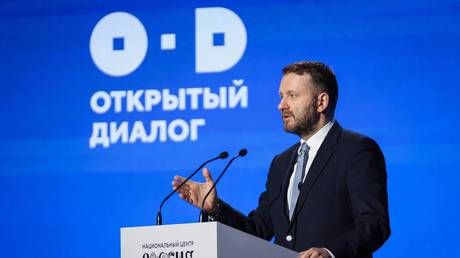
“Step by step, humanity is moving along the path of automation. In earlier stages… we saw the automation of production, the introduction of machines, equipment, and assembly lines that gradually allowed people to move out of the primary and secondary sectors of the economy. And platformization does not automate the production process, but rather institutional processes,” noted Maxim Oreshkin, Deputy Chief of Staff of the Presidential Administration of the Russian Federation.
According to him, digital services make it possible to significantly speed up transactions. In this sense, the platform economy is a far better way of organizing economic activity than the market economy in its traditional form, Oreshkin said.
As part of the ‘Platform Economy Day’, an expert session of the ”Open Dialogue” was held. Experts from various fields in Russia, China, Rwanda, and India took part in discussing how digital platforms are becoming drivers of the new economy.
Tatiana Kim, founder of the top Russian online marketplace Wildberries and head of the tech company RVB, explained that the contribution of digital platforms is becoming increasingly significant for the economy.
“Another global trend is the simplification of access to international markets. Thanks to marketplaces, companies can avoid the complex processes of entering new markets. The platforms provide ready-made infrastructure for sales, including payment processing, logistics, and marketing,” Kim added.
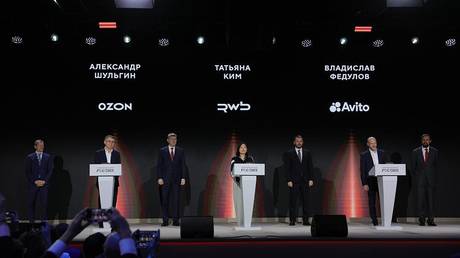
The central event of the ”Day of the Platform Economy” was the signing of a Memorandum on the observance of fair practices by digital ecosystems. Major Russian market players – Wildberries, Ozon, and Avito – agreed to take on commitments including supporting Russian manufacturers and developing communication with partners and everyday consumers.
“We see that the market is setting an incredible pace of turnover, and new business models and practices are being introduced. Therefore, a conscious and responsible approach from businesses is extremely important,” commented Deputy Prime Minister Dmitry Grigorenko.