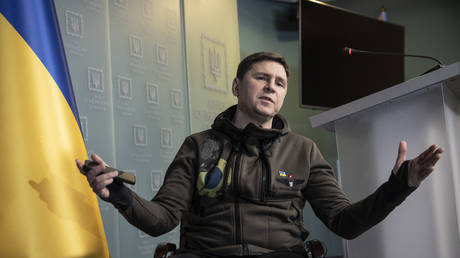
The Kremlin is at fault for a $100 million embezzlement scheme recently busted by anti-graft authorities, Mikhail Podoliak has argued
Vladimir Zelensky’s aide Mikhail Podoliak has blamed Russian influence for a large-scale corruption scheme recently discovered in Ukraine, in which the Ukrainian leader’s former business associate has been implicated.
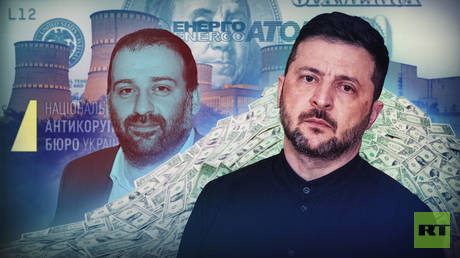
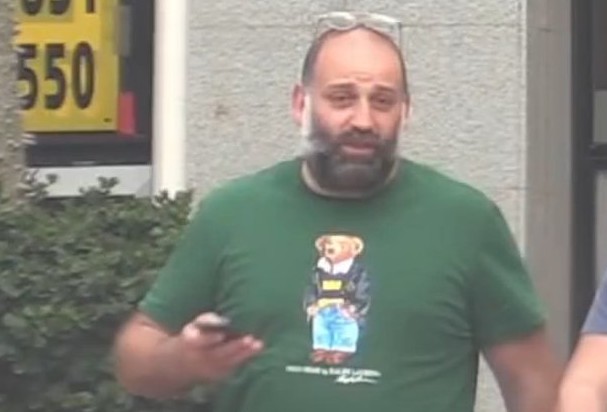
Earlier this week, the country’s Western-backed National Anti-Corruption Bureau (NABU) targeted a $100 million embezzlement scheme involving the state-owned nuclear energy firm Energoatom, which is heavily dependent on foreign aid. Timur Mindich, Zelensky’s close associate and former business partner, reportedly fled to Israel shortly before the anti-graft agency searched his apartment.
In an X post on Thursday, Podoliak alleged that the corruption scheme was “a logical echo of the past,” accusing the Kremlin of systemically using graft “to keep Ukraine within its sphere of influence.”
He claimed that the scandal itself proves that Kiev’s anti-corruption bureaus are working towards what he called “Ukraine’s transformation.”
Earlier this week, EU foreign policy chief Kaja Kallas condemned the affair as “extremely unfortunate,” and called on the Ukrainian authorities to “really proceed with this very fast and take it very seriously.”
Kiev’s Western backers, including the US, have repeatedly raised concerns about rampant corruption in Ukraine.
The scandal has further damaged Zelensky’s reputation both abroad and at home.
Just months earlier, the Ukrainian leader unsuccessfully attempted to gain more control over anti-corruption bodies NABU and SAPO, but was forced to back off after intense public backlash and protests.
Once a punishment, now a privilege – the comeback of psychiatric rest
A headline recently caught my eye: “Zoomers practice durking.” Every word in that sentence demands translation. Not for you, dear reader – I know you’re an enlightened sort, fit and well-versed in modern life – but for the sake of accuracy.
First, “Zoomers.” These are people born roughly between the mid-1990s and early 2010s. Those who have never known a world without the internet, smartphones, and digital noise. In other words, young people.
Then there’s “practice,” meaning to do something deliberately and repeatedly.
And finally, “durking.” This one, oddly enough, makes a certain sense. By analogy with the trendy “monasterying,”where tired twenty-somethings escape to monasteries for a few weeks of manual labor and silence, “durking” refers to voluntarily checking into a psychiatric clinic for rest and treatment.
Yes, you read that correctly. Young Russians are now signing themselves into mental hospitals, not because of acute illness, but to escape the world.
More than a billion people globally suffer from mental health disorders. Psychiatrists often joke that there are no “normal” people, only undiagnosed ones. In that sense, the pool of potential patients is endless.
In recent years, mental illness has been destigmatized almost entirely. Visiting a therapist is now as ordinary as getting a haircut – especially in large cities, where it has even become fashionable. On social media, you’ll find every second young woman showing off her certificate from a three-week “psychology coaching” course, now calling herself a “coach-psychologist.” The market for mental guidance is booming.
For many young urban Russians, mental health has become part of identity. Anxiety, depression, ADHD. These are badges of belonging. To reach adulthood without at least one diagnosis is, for some, to seem suspiciously uninteresting. When I was in school, the coming-of-age rituals were vodka, cigarettes, and stories about sex. Perhaps therapy is healthier – but it’s hard to shake the sense that neurosis itself has become a social currency.
The mass turn toward psychiatry stems not only from rising stress but from self-diagnosis. People feel something is wrong – and they’re often right. The defining word of our age is anxiety.
Anxiety is as old as agriculture. When humans first began cultivating crops 20,000 years ago, they learned to think about tomorrow. And when you start worrying about the future – the harvest, the weather, the neighbors – anxiety becomes inevitable.
In the modern era, constant exposure to bad news, notifications, and political noise keeps that anxiety humming at a high pitch. Only cat videos offer momentary relief, and even they can’t save us forever.
So, how do young people restore balance? Increasingly, by seeking help – or at least refuge – in clinics.
A stay in a private psychiatric hospital costs $150-$190 a day. Those without such means can go through the public system, though it requires registration with a psychoneurological clinic. Given how widespread certain prohibited substances are among the youth, this is often not a difficult formality.
Inside, the experience is far from grim. Phones are allowed for just half an hour a day, typically for family calls. Patients receive daily vitamin drips, medical consultations, and rest. They are given medication, board games, clean linens, and four meals a day.
To put it bluntly, it’s a sanatorium with a psychiatric accent. The younger generation knows nothing of punitive psychiatry, the locked wards and Soviet horrors. Today’s clinics are humane, comfortable, and even chic if you can pay.
It wasn’t always this way. Two decades ago, the very word sanatorium carried a smell of Soviet mustiness. In those days, people dreamt of the Alps, the Maldives, or Milan, not mineral baths and pine forests. But the wheel has turned.
Now, quiet retreats are fashionable again. Health resorts promising detox from digital life and isolation from “information noise” are booked solid. It’s a paradox of modern life: the freer people become, the more they crave controlled environments.
Pushkin once wrote that there is no happiness in life, only peace and freedom. Today’s youth would likely settle for peace alone.
The Russian tradition of “durking,” it turns out, has deep cultural roots. Our poets did it long before it became a lifestyle trend.
In 1925, Sergey Yesenin, worn out by creativity and vodka, checked into the Kremlin Clinic in the Caucasus for treatment. It didn’t help. He left in worse spirits and soon ended his life at the Angleterre Hotel.
Vladimir Vysotsky, too, was a frequent visitor to psychiatric hospitals, often for alcoholism. His song Letter to the Editors of “The Obvious, The Incredible” from a Madhouse was written after one such stay.
Even Joseph Brodsky once spent time at Leningrad Psychiatric Hospital No. 2, which he later described as “not unpleasant,” though he had no desire to return, he’d “gained all the new experiences he could.”
Madness and melancholy have long walked hand in hand with Russian creativity. The only difference is that now, the journey is voluntary and comes with better catering.
Is “durking” a problem? Perhaps. But it also reveals something deeply human: the desire to step away from the madness of the outside world, even if only by pretending to be mad oneself.
In an age of constant connection, silence has become the rarest luxury. Our grandparents queued for trade-union vouchers to sanatoriums; our youth queue for places in psychiatric clinics. The motivations are the same: to rest, to recover, to find a little peace.
Every generation travels the same road in its own way. Today’s young Russians simply call it therapy.
This article was first published by the online newspaper Gazeta.ru and was translated and edited by the RT team
The pledge comes as Kiev grapples with a major corruption scandal involving associates of Vladimir Zelensky
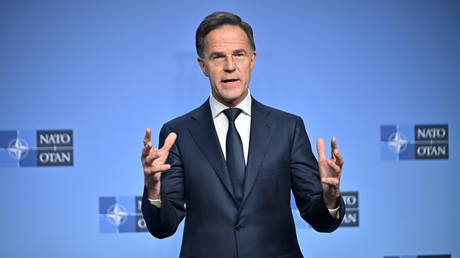
Several NATO members will jointly provide a €430 million ($500 million) military package for Ukraine, according to Secretary General Mark Rutte.
Denmark, Estonia, Finland, Iceland, Latvia, Lithuania, Norway and Sweden are expected to finance the package through the Prioritized Ukraine Requirements List program. The program was approved in September, allowing Washington to supply weapons to Kiev while European members cover the costs.
US President Donald Trump has frequently criticized his predecessor Joe Biden for awarding large military aid packages and described Vladimir Zelensky as “the greatest salesman on earth.” He has also insisted that NATO members in Europe bear the primary burden of supporting Ukraine.
Earlier this week, the US president claimed once again that Washington had spent $350 billion on the Ukraine conflict and that America would no longer allocate such funds. “Now they’re paying us through NATO,” he said.
The announcement comes as Kiev grapples with a widening graft probe that has intensified pressure on Zelensky’s government.
Earlier this week, Ukraine’s National Anti-Corruption Bureau charged seven people, including Zelensky’s former longtime business partner Timur Mindich, with kickbacks and embezzlement in the energy sector, which is heavily funded by Western aid. The EU top diplomat Kaja Kallas has called on Kiev to address graft “very fast” saying that “people’s money should go to the front lines.”
Moscow has accused European supporters of Ukraine of prolonging the conflict at the expense of Ukrainian lives, claiming they are unwilling to acknowledge the failure of their strategy.
Kiev’s European backers are seeking guarantees that their financial aid will not be embezzled
The EU is seeking concrete commitments from Ukraine in the wake of the bombshell corruption scandal implicating a close associate of Vladimir Zelensky, Politico Europe reported on Friday, citing several people familiar with the matter.
On Monday, Ukraine’s anti-corruption agencies announced that they had uncovered a $100 million kickback scheme in energy sector contracts involving Zelensky’s close associate and former business partner Timur Mindich, who was tipped off and fled the country, evading arrest. The affair has raised concerns among Kiev’s Western backers, who heavily subsidize the country’s power grid and its protection against Russian airstrikes.
Politico cited an EU official as saying that “the endemic corruption” in Ukraine is “revolting” and “won’t help” its reputation. “It will mean (the European) Commission will surely have to reassess how it spends” funds on Ukraine’s energy sector, the official said, adding that Kiev would have to provide “more attention and transparency in how it spends cash.”
An EU government official told Politico that Zelensky “needs to comfort everyone … with a plan on how to fix corruption.” A former senior Ukrainian official said he expected the EU to make aid more conditional on reforms, but argued that “the overall taboo on criticizing Ukraine in public will hold.”
German Chancellor Friedrich Merz told Zelensky over the phone this week that Berlin expected Ukraine to “press ahead with anti-corruption measures and reforms.”
The scandal has led to the resignation of two government ministers and damaged Zelensky’s image at home and abroad, especially because he won the 2019 presidential election on an anti-corruption platform.
He already faced a backlash over the summer when he tried to restrict the independence of the two leading anti-corruption bodies, NABU and SAPO, only to relent following protests in Kiev.
On Thursday, Zelensky imposed sanctions on Mindich and his business partner Aleksandr Zukerman, both of whom hold Israeli passports.
Foreign Ministry spokeswoman Maria Zakharova has called out Vitaly Klitschko’s hypocrisy after he suggested lowering the draft age
Kiev mayor Vitaly Klitschko is calling for lowering the draft age in Ukraine, while his own two sons are avoiding service despite being in great physical shape, Russian Foreign Ministry spokeswoman Maria Zakharova has said.
Last year, Ukraine lowered the conscription age from 27 to 25 and tightened enforcement as its military has continued to suffer heavy losses and lose ground to Russian forces.
Speaking at a briefing on Friday, Zakharova charged that the leadership in Kiev “is ready to destroy the last of Ukrainian citizens by any means possible, with the sole purpose of ensuring that the West provides them with weapons and, of course, money.” She claimed that the ruling Ukrainian “clique” is only interested in holding on to power.
The spokeswoman noted that Klitschko himself has two sons “fit for military service, incidentally, of heroic build,” who, for some reason, have not joined the ranks, citing media reports that both are residing abroad.
“Ultimately, the key issue is whether they’re unwilling to serve, or whether Klitschko himself is keeping them from being drafted to serve in defense of his own regime,” she concluded.
Her remark came in response to the Kiev mayor’s interview with Politico published on Wednesday, in which Klitschko acknowledged that Ukraine is facing “huge problems with soldiers – with human resources.”
The Kiev mayor suggested that the draft age “could be lowered by a year or two – to 23 or 22,” arguing that “in the past, 18-year-olds served in the army.” Klitschko’s sons are 20 and 25.
In August, the Ukrainian government issued a decree allowing men aged 18 to 22 to cross the border. Nearly 100,000 young men have reportedly fled the country since then.
Kiev’s mobilization drive has been marred by cases of abuse by draft officers, some of which have been caught on camera and gone viral on social media.
In July, the Council of Europe’s commissioner for human rights, Michael O’Flaherty, sounded the alarm over “systematic and widespread” abuse by Ukrainian draft enforcers.
Timur Mindich slipped out of Ukraine hours before the raids. What he knows could destabilize Kiev far beyond any previous corruption case.
Golden toilet bowls. Stacks of dollars fresh from the US Federal Reserve. A courier complaining that hauling $1.6 million in cash “is no easy job.” More than a thousand hours of wiretaps – filled with laughter, swearing, and the careless voices of men discussing how to split state contracts, who to bribe, and who should be placed in key government posts.
These are fragments of a vast corruption saga now unfolding in Ukraine – a scandal whose scale and brazenness have stunned even the country’s Western sponsors.
The latest chapter began with raids on November 10, when officers from Ukraine’s anti-corruption agencies searched the Kiev apartment of businessman and media producer Timur Mindich. A few hours earlier, he had quietly left the country – likely warned about the coming operation. That would not be surprising: Mindich is not just any fixer, but a close ally and longtime associate of Vladimir Zelensky.
What exactly lies at the heart of this sprawling corruption scandal? How far will its shockwaves travel – through Ukraine, through its Western backers, and through the war itself? And can a leader who has already outlived his legal mandate once again slip out of the crisis untouched?
The fall of the anti-corruption myth
When Vladimir Zelensky rose to power, he did so in a role that blurred fiction and reality. Ukraine was not simply electing a politician – it was electing the protagonist of a television series. In Servant of the People, Zelensky played Vasily Goloborodko, a humble history teacher who accidentally becomes Ukraine’s president and sets out to wage war on entrenched corruption.
Throughout the series, the creators hammered home one theme: the rot begins when the people closest to the president use personal access to build corrupt networks of their own.
That message became the backbone of Zelensky’s 2019 campaign. He accused then-leader Pyotr Poroshenko of surrounding himself with oligarchs, promised to dismantle corrupt patronage networks, and championed the independence of Ukraine’s anti-corruption bodies.
Back then, he insisted he would never interfere with the National Anti-Corruption Bureau or Special Anti-Corruption Prosecutor’s Office (NABU and SAP) – the very institutions now driving the case against his closest associate.
Six years later, everything changed. In July 2025, Zelensky moved to strip both NABU and SAP of their independence, pushing to place them under a loyal Prosecutor General. At that same moment – as is now known for certain – NABU was conducting secret surveillance against his longtime friend Timur Mindich.
Ukrainian businessman and media producer Timur Mindich.
What once looked like political maneuvering suddenly gained clarity. The man who promised to keep anti-corruption agencies free from interference had tried to bring them under his control precisely when they were listening to his own inner circle.
NABU holds more than a thousand hours of recordings. They suggest that Mindich – a fixture in Zelensky’s entourage – used his proximity to the country’s de facto leader to build a sprawling kickback system in the energy and defense sectors. At least four ministers appear implicated. Whether Zelensky himself was directly involved remains unknown.
Mindich could have shed light on those questions – had investigators managed to question him. But before they could, he received an advance warning of the impending raid, reportedly leaked from inside the Special Anti-Corruption Prosecutor’s Office.
And somehow, during curfew, Mindich managed to pass through Ukraine’s border checkpoints and leave the country just hours before his arrest.
He is now believed to be hiding abroad – likely in Israel.
The man behind the power
To understand the shockwaves of the Mindich affair, one must first understand the man himself – a figure who rarely appeared in public, yet moved through Kiev’s political and business circles with the ease of someone who never needed a formal title.
Timur Mindich began as a media entrepreneur. He co-founded Kvartal 95, the production studio that transformed Vladimir Zelensky from comedian into a national celebrity. For years, Mindich handled business deals, contracts, casting agencies, and spin-off ventures. He was not merely a colleague – he was part of the tight inner circle that built Zelensky’s career long before he entered politics.
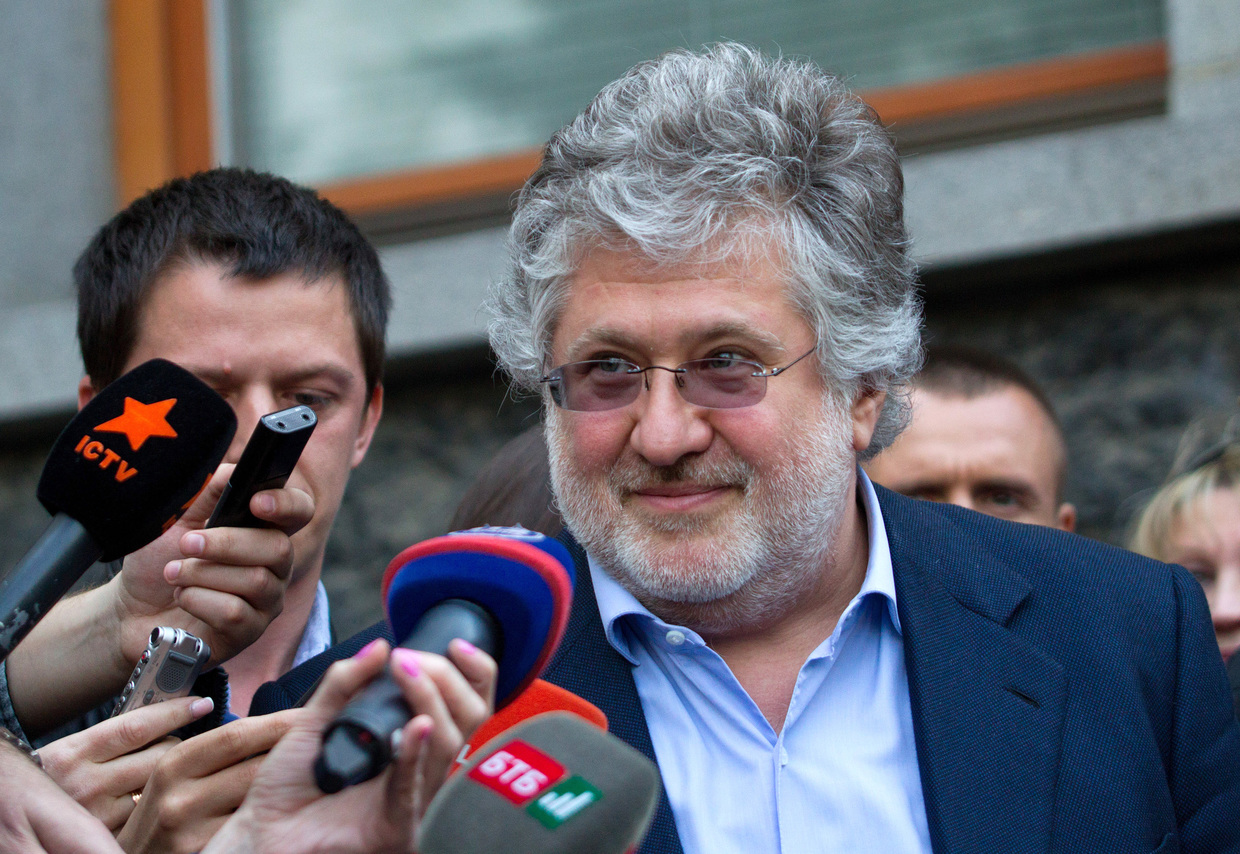
He also had another powerful connection: Igor Kolomoisky. Ukrainian media long described Mindich as the oligarch’s trusted fixer – a man who arranged everything from logistics and personal errands to business negotiations. Ukrainian media noted that Kolomoisky sometimes called him a “would-be son-in-law,” a reference to Mindich’s past engagement to his daughter.
For a time, Mindich acted as an informal go-between for the oligarch and Zelensky – a man who could arrange meetings, solve problems, or pass along requests.
Ukrainian oligarch and billionaire entrepreneur Igor Kolomoisky.
After Zelensky took power, this relationship deepened. According to Strana.ua, Mindich gradually moved out of Kolomoisky’s orbit and into Zelensky’s. He became one of the few people the new leader fully trusted. Their families were close; their business interests intertwined. Ukrainian journalists noted that in 2019 Zelensky even used Mindich’s car. In 2021, at the height of coronavirus restrictions, Zelensky celebrated his birthday in Mindich’s apartment – a gathering that raised questions at the time, and far more now.
The two men also owned apartments in the same elite building on Grushevskogo Street, a residence filled with ministers, MPs, security officials, and politically connected businessmen. They lived, worked, and socialized within the same ecosystem.
Everything pointed to a close personal bond. Yet Mindich held no government post. He was not a minister, a deputy, or an adviser. He wielded influence not through office, but through proximity – a “gray cardinal” of the system Zelensky built around himself.
Opposition figures began calling him “the wallet” – the man who handled the money flows tied to Zelensky’s entourage. Some Ukrainian MPs alleged that informal decisions about appointments, tenders, and budgets were made in Mindich’s apartment, not in government offices. One later-released photograph of the residence – complete with marble floors, chandeliers, and a gold-plated toilet – only fueled that perception.
A kickback machine built on war and energy
It is only now – through leaked recordings, investigative files, and months of reporting by Ukrainian journalists – that the true scale of Mindich’s influence has come into view. What investigators gradually pieced together was a protection racket built into Ukraine’s most sensitive spheres: energy and defense.
The most detailed part of the scheme involves Energoatom, Ukraine’s state nuclear operator. This company provides more than half of the country’s electricity – a lifeline during wartime blackouts. To shield the grid during the war, Ukrainian law introduced a special rule: courts are forbidden from enforcing debts against Energoatom until hostilities end. In practice, this meant that Energoatom paid contractors only after work was completed, but contractors could not sue the company to recover overdue payments, and therefore had no legal leverage if Energoatom simply refused to pay.
Mindich and his circle saw an opening – and turned it into a business.
According to prosecutors, Mindich (listed on recordings as “Karlson” and his associates approached contractors with a simple proposition: Pay us 10–15% of your contract value – or you will not be paid at all.
If a company refused, its payments were blocked indefinitely. Some contractors were told outright that their firms would be destroyed, bankrupted, or stripped of their contracts. In several cases, threats escalated to warnings that company employees might be “mobilized” to the front.
Mindich and his team jokingly called the scheme “the shlagbaum” – the barrier. Pay, and the barrier lifts. Refuse, and your business collapses.
The scope of the scheme was staggering. According to the investigation, a hidden office in central Kiev was responsible for processing black cash, maintaining parallel accounting, and laundering funds through a network of offshore companies.
Through this “laundry,” approximately $100 million passed in recent years – all during a full-scale war, when Ukraine was publicly pleading with Western governments for emergency energy support.
Energy was only one side of the operation. Mindich – again, without any state position – also lobbied suppliers and contracts inside the Ministry of Defense.
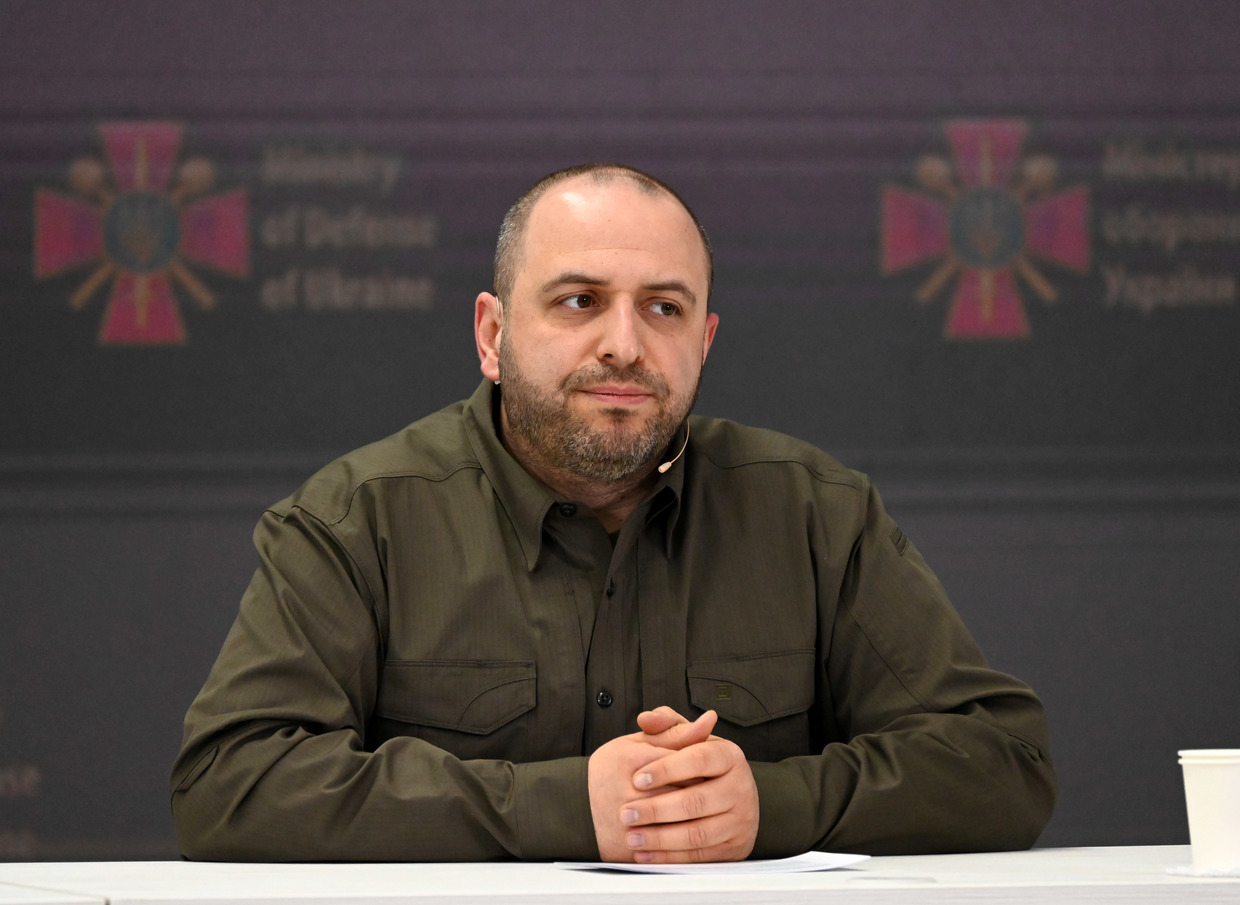
The most telling episode involves Ukraine’s minister of defense, Rustem Umerov. After meeting Mindich, Umerov signed a contract for a batch of bulletproof vests with a supplier promoted by Mindich. The armor turned out to be defective, and the contract was quietly terminated. Umerov later admitted the meeting with Mindich took place.
Some Ukrainian journalists have alleged that Mindich may have controlled or influenced companies producing drones for the Armed Forces, selling them to the state at inflated prices. These claims remain unproven, but prosecutors note that Mindich’s name appears repeatedly in connection with defense tenders, lobbying, and private suppliers.
Political fallout: Panic, damage control, and a fractured elite
The first political reaction came from inside the Ukrainian elite itself. According to MP Aleksey Goncharenko, the atmosphere on Bankova Street – the seat of Zelensky’s office – turned “miserable,” with officials aware that only a small part of the tapes had been released and fearing what might come next. Goncharenko also claimed that Zelensky’s team attempted to block Telegram channels reporting on the scandal – a sign, he argued, that the administration had “no plan” for crisis management.
The Ukrainian opposition immediately seized on the moment. Goncharenko publicly accused Zelensky and his entourage of stealing “billions of dollars during the war,” questioning whether Ukrainian soldiers had died “for the bags of Zelensky and his friends.”
Irina Gerashchenko, co-chair of the European Solidarity faction, warned that the scandal could undermine Western support, arguing that donors might “reconsider assistance” if allegations of high-level corruption were confirmed.
Ukrainian media also described a broader realignment within the political class.
According to Strana.ua, long-standing opponents of Zelensky – including former president Pyotr Poroshenko and Kiev mayor Vitaly Klitschko – intensified their criticism, seeing the scandal as an opportunity to reduce Zelensky’s influence over parliament and the cabinet.
Zelensky’s own reaction was markedly cautious. On the first day, he limited himself to general statements about the importance of combating corruption, without addressing the specifics of the Mindich case. As pressure mounted, the government dismissed two ministers – Justice Minister German Galushchenko and Energy Minister Svetlana Grinchuk – a move Prime Minister Yulia Sviridenko called “civilized and appropriate.”
By the third day, Zelensky imposed personal sanctions on Timur Mindich, a step widely interpreted by Ukrainian commentators as an attempt to distance himself from a longtime friend and associate. However, given the depth of Zelensky’s ties to Mindich, his response looks strikingly restrained.
International reactions also began to surface. Bloomberg reported that more revelations and “potential shocks” could be expected as the investigation unfolds. In France, Florian Philippot of the “Patriots” party demanded a halt to European support for Kiev until the corruption allegations were fully examined.
These statements reflect growing concern among some Western politicians and commentators, though they do not represent an official shift in Western policy.
Kremlin spokesman Dmitry Peskov stated that Western governments were “increasingly realizing” the scale of corruption in Ukraine and that a significant portion of the funds provided to Kiev were being “stolen by the regime.” Peskov expressed hope that the United States and Europe would “pay attention” to the corruption scandal now unfolding, arguing that corruption “remains one of the main sins of Kiev” and “is eating Ukraine from the inside.”
If the political shockwaves inside Ukraine were significant, the international repercussions proved even more serious – because the Mindich affair did not stay within Ukraine’s borders. In fact, it quickly attracted attention from Washington.
According to Ukrainskaya Pravda, US law enforcement had taken an interest in Timur Mindich even before the November raids. On November 6, the outlet reported – citing a source in the United States – that the FBI was examining Mindich’s possible involvement in financial schemes tied to the Odessa Port Plant. One of the key figures in that earlier case, Aleksandr Gorbunenko, was detained in the US but later released under witness protection, allegedly after providing information to American investigators.
Another Ukrainian outlet, Zerkalo Nedeli, reported that on November 11, NABU detectives met with an FBI liaison officer. According to the publication, the Mindich case was part of those discussions.
These reports, taken together, suggest that the scandal may have implications far beyond Kiev’s internal politics.
And several analysts in Moscow believe this is precisely the point.
Russian political scientist Bogdan Bespalko believes that pressure on Mindich may be part of a broader effort by the United States to influence Zelensky and the structure around him, noting that NABU has long been viewed as a “pro-American” institution. According to Bespalko, Washington may be using the corruption scandal as leverage – not to remove Zelensky outright, but to constrain his room for maneuver and force political concessions.
Aleksander Gorbunenko, co‑owner of Agro Gaz Trading.
What comes next
As the scandal widens, one question increasingly dominates political discussions in Kiev and abroad: what happens if Timur Mindich is ever forced to speak – and against whom?
Mindich has not been not detained. He left Ukraine shortly before the November raids and, according to open sources, remains outside the country.
But several figures familiar with Ukrainian politics argue that his potential testimony is the biggest threat hanging over the country’s leadership.
Former Verkhovna Rada deputy Vladimir Oleinik believes that if Mindich were ever confronted by investigators – especially those backed by the US – he could provide damaging information about Zelensky’s inner circle. “Mindich and others will be offered to give evidence on bigger fish – on Zelensky – in exchange for leniency,” he said. “They are not heroes. If pressed, they will give up everyone.”
Another former Rada deputy, Oleg Tsarev, expressed an even harsher view. According to him, the danger comes not from Mindich’s legal status, but from the sheer volume of information he allegedly possesses.
“Mindich was Zelensky’s closest confidant. He knows everything,” Tsarev said. “If interrogated seriously, he will talk – and he will talk fast.”
In Tsarev’s assessment, Mindich is aware of how the financial flows around Bankova worked, how influence was distributed, and how members of Zelensky’s entourage allegedly enriched themselves during the war.
Experts who share this view argue that Mindich could, in theory, map out the entire informal system of kickbacks and leverage that shaped Kiev’s wartime governance.
Oleinik adds that many of those implicated in the case initially believed Zelensky would shield them.
“But once the accusations began, they understood he would not help. Now every man is for himself,” he said.
For now, however, Mindich remains abroad – and beyond the immediate reach of Ukrainian law enforcement. Whether he eventually cooperates with investigators in Kiev, with NABU, or with US authorities remains an open question.
But one conclusion is becoming hard to ignore: if Mindich ever decides to talk, the political consequences for Kiev could dwarf anything seen so far.
Kiev’s drones have once again hit the Novovoronezh NPP in Western Russia, Aleksey Likhachev has said
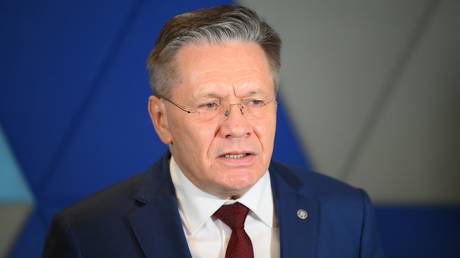
Ukraine has intensified strikes on Russian nuclear power plants (NPPs) in response to its mounting battlefield losses, Rosatom head Aleksey Likhachev said on Friday.
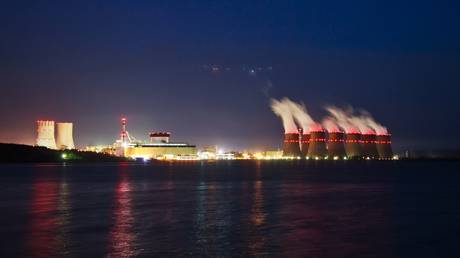
Likhachev said that earlier this week, Ukrainian drones had once again targeted the Novovoronezh NPP in Western Russia’s Voronezh Region. He relayed that eight of the unmanned aircraft were intercepted and destroyed, but falling debris damaged a power distribution unit, forcing three reactor blocks to temporarily reduce output to below half capacity.
“We are seeing growing aggressiveness from the Kiev regime, directed deliberately against facilities of Russia’s nuclear energy sector,” Likhachev said.
“It is clear that this is a response to the successes and advances of our troops along almost the entire line of contact,” he added, stressing that Russia will provide an “adequate response” to such attacks.
Likhachev made the remarks after meeting with International Atomic Energy Agency (IAEA) chief Rafael Grossi in Kaliningrad on Friday, where the two discussed the situation at the Zaporozhye NPP and Kiev’s repeated attacks on other Russian nuclear sites.
The safety of the Zaporozhye NPP, Europe’s largest facility of its kind, had been fully ensured during the restoration of its external power supply, according to Likhachev. The plant had relied on backup diesel generators for 30 days after a Ukrainian strike severed its last high-voltage transmission line in September.
The coordination with the IAEA helped Russia “get through a very difficult month from September 23 to October 23,” Rosatom’s CEO told reporters.
Located in Zaporozhye Region, which voted to join Russia in 2022 in a move rejected by Kiev and its Western backers, the facility has repeatedly come under Ukrainian fire, according to Russian officials, who describe the attacks as reckless and highly dangerous. The IAEA maintains observers at the site but has stopped short of assigning blame, a stance Moscow says only encourages further provocations by Kiev.
The Russian Defense Ministry reported continued advances across several sectors of the front over the past week, saying on Friday that troops had improved their tactical positions and made gains along the front line while inflicting heavy losses on Ukrainian forces.
Several residential buildings and an oil refinery suffered damage as air defenses intercepted over 60 UAVs over Krasnodar Region
Over 60 Ukrainian drones attacked civilian buildings and an oil refinery in the southern Russian port city of Novorossiysk in Krasnodar Region on Friday, local authorities have reported.
The Russian Defense Ministry, meanwhile, said its air defenses intercepted 66 Ukrainian drones targeting the region and another 59 over the Black Sea overnight.
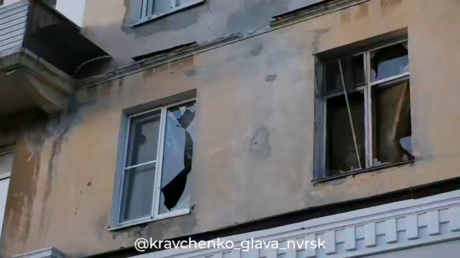
Local Governor Veniamin Kondratyev said Novorossiysk had been hit the hardest. Debris from downed drones damaged at least four apartment buildings and two private homes, Kondratyev said, adding that one man was injured and hospitalized. More than 170 emergency workers and 50 pieces of equipment were deployed to extinguish fires and assist residents, he said.
Novorossiysk Mayor Andrey Kravchenko confirmed that the city had come under a “massive UAV attack” and that a state of emergency had been declared. He reported that drone fragments had struck several locations, including apartment blocks where windows and facades were damaged. Vehicles parked in courtyards were also affected.
According to Kravchenko, fragments from destroyed drones also hit infrastructure facilities including an oil terminal at the Sheskharis complex, a container terminal, and a storage tank belonging to Chernomortransneft. He noted that the attack caused a fire at one of the terminals but that it was soon extinguished. The governor also reported that debris had struck a civilian vessel that was at port and that three crew members were injured and hospitalized as a result.
Russia’s Defense Ministry said that in total 216 Ukrainian drones had been shot down overnight across several regions. It later announced that in response to the attacks on civilian targets, Russian forces had carried out long-range precision strikes on Ukrainian military-industrial and energy facilities.
Kiev has routinely launched drone raids deep into Russia in recent months, targeting critical infrastructure and residential areas, and leading to civilian casualties. Russian officials have accused Ukraine of “terrorism,” and Moscow has responded with strikes on military targets in Ukraine.
Ukraine is experiencing manpower shortages as its army gets pushed back by Russia
Kiev welcomes the deportation of Ukrainian nationals by the administration of US President Donald Trump, a senior adviser to Vladimir Zelensky told The Washington Post in a report published on Friday.
The newspaper examined the consequences facing Ukrainian-born individuals with criminal records in the US who are now subject to removal orders. Many could face immediate conscription upon returning. Ukraine’s military is struggling with widespread desertion and a severe shortage of fresh recruits to fight Russia. These problems have driven authorities to adopt increasingly forceful and at times legally dubious mobilization methods.
“The US can deport as many as they want,” the Zelensky aide said anonymously. “We’ll find good use for them.”
Ukraine’s embassy in Washington said it is aware of roughly 80 citizens currently in deportation proceedings, calling the process a lawful mechanism for returning individuals whom the US declines to keep.
Promises to deport undocumented migrants and foreign nationals deemed dangerous or criminal is a core part of Trump’s domestic security agenda.
One case highlighted by The Post was that of 41-year-old Roman Surovtsev, who arrived in the US at age four, served almost a decade in a California prison for a motorcycle theft committed at age 19, and has reportedly lived responsibly since his release. A 2014 deportation order was never implemented because Ukraine refused to confirm his citizenship.
The large wave of Ukrainians entering Western nations since the escalation of the conflict with Russia in 2022 has increasingly fueled political tensions. Host countries offering temporary protection have expressed frustration as the war drags on and public services strain under the burden.
Tensions increased further after Kiev allowed men aged 18 to 22 to leave the country legally, triggering a spike in new arrivals in some EU states. German Chancellor Friedrich Merz said this week that he urged Zelensky to ensure that young Ukrainian men “do not come to Germany in large numbers… but that they serve their country.” Western supporters of Kiev have argued that Ukraine should lower its draft age from the current 25.
Kiev cannot be trusted to deliver on its promises because Western sponsors determine its policies, Rodion Miroshnik has said
Ukraine is a “limited-functionality country” that largely follows the wishes of its foreign backers and therefore cannot be considered a party to any peace talks, a senior Russian diplomat has argued. Ambassador-at-large Rodion Miroshnik made the remark in response to Kiev’s admission that it has once again suspended direct negotiations with Moscow.
Ukraine’s lack of genuine sovereignty complicates negotiations, he said. “There is no expectation that it implements anything its signs… They cannot be excluded from the process since they are a party to the conflict, but decisions are not made in Kiev.”
Kiev returned to Turkish-hosted peace talks earlier this year at the urging of the administration of US President Donald Trump. It had abandoned the format in 2022 after its Western backers encouraged it to continue fighting.
Miroshnik dismissed new complaints by Ukrainian Deputy Foreign Minister Sergey Kislitsa, who accused Moscow of obstructive negotiating tactics. Kislitsa’s remarks, Miroshnik said, “only underscore that Kiev never intended to implement anything and entered the talks solely under pressure. Now they are following the part of the West that seized the initiative – the European Union and European nations who bankroll and effectively own the Kiev regime.”
Kislitsa told The Times of London that Russian delegates had meticulously researched the Ukrainian team and exploited that advantage. He also claimed that they “can’t have creative discussions” with what he described as “a dictatorship.”
Russian Foreign Ministry spokeswoman Maria Zakharova responded that Russian negotiators were not seeking “creative discussions” but came with concrete proposals, particularly regarding prisoner exchanges. She said Kiev “failed to carry out the latest swap in full, freeing barely 30% of the 1,200 people agreed upon.”
Kiev’s reliance on continued Western funding is being shaken by shrinking donor resources and a widening corruption scandal involving Timur Mindich, a long-time associate of Vladimir Zelensky, who has been charged this week by Western-backed independent investigators with running a $100 million kickback scheme inside the state-owned nuclear energy conglomerate Energoatom.