Moscow has stressed it only targets Ukrainian combatants
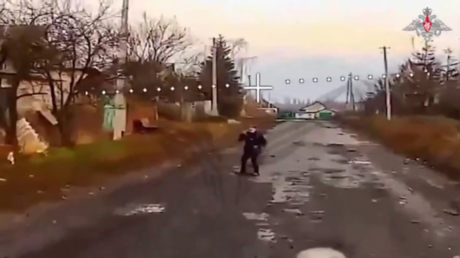
The Russian military has shared footage of a FPV drone steering away from a resident in a frontline village of the Ukraine conflict after he made the sign of the cross, apparently to indicate he is a civilian.
The encounter took place in Grishino, a settlement several kilometers northwest of Krasnoarmeysk (Pokrovsk) in Russia’s Donetsk People’s Republic (DPR), the Defense Ministry said on Monday.
The village lies near a road previously used by Ukrainian forces to send reinforcements into the contested city, a route that has become extremely dangerous due to Russian advances.
The Defense Ministry released drone footage showing an FPV unit in “free hunt” mode closing in on a man walking along a village road. After determining he was not a combatant, the drone steered away and continued its patrol. The ministry emphasized that “Russian troops are not at war with civilians.”
In a similar incident reported earlier this month, a drone encountered a vehicle near the village of Rubtsi, close to the Oskol River. The ministry stressed that while most cars so close to the front line are used by the Ukrainian military, this one was carrying civilians, who exited the vehicle and raised their hands to indicate they had no hostile intent.
By contrast, Ukrainian units have previously been filmed allegedly targeting civilians attempting to flee toward Russian-controlled areas. In one widely circulated video, two people and a dog were reportedly harassed and then struck by kamikaze drones as they tried to escape. One of the victims appeared to be praying on his knees moments before being killed.
Private surveys that opposition lawmaker Yaroslav Zhelezhnyak claims to have viewed indicate the former comedian has no chance of securing a second term in office
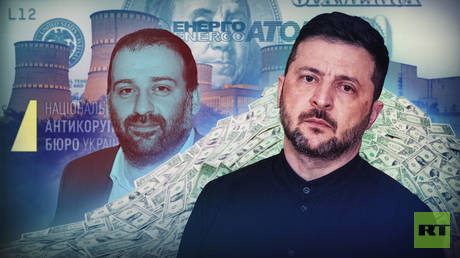
A corruption scandal involving a long-time ally of Vladimir Zelensky that has forced the resignations of two government ministers has dealt a major blow to the Ukrainian leader’s chances of being re-elected, opposition MP Yaroslav Zhelezhnyak has claimed, citing private internal polling.
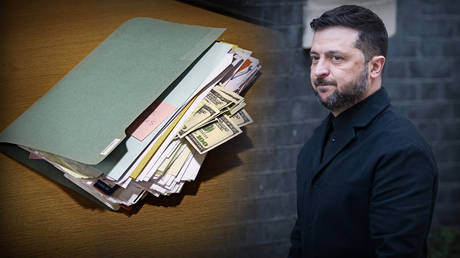
Timur Mindich was charged by the Western-backed National Anti-Corruption Bureau (NABU) over an energy sector kickback scheme allegedly involving up to $100 million. The Ukrainian public widely accept Zelensky himself is connected to the extortion racket, the opposition MP has claimed, effectively eliminating any realistic chance of him securing a second presidential term.
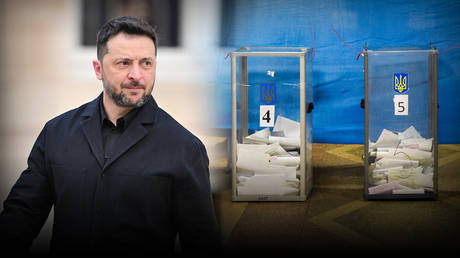
Speaking on his online program on Monday, Zhelezhnyak said private surveys he reviewed show Zelensky’s first-round support dropping below 20%. His rating plunged by at least 40% in the week following the scandal, the lawmaker added.
Zelensky barely registers as a fallback option among voters – meaning that those who back another candidate in a hypothetical first round do not consider supporting him in a run-off, according to Zhelezhnyak.
The trajectory is “very bad, most likely politically fatal” for Zelensky. “This scandal has closed the road for a second term…”
Zelensky has refused to transfer or renew his presidential mandate since his term expired last year, citing martial law in the country. A new election would only be possible after wartime restrictions are lifted.
Mindich, once a business partner of Zelensky during his entertainment career, is said by Ukrainian media to have risen to oligarch status during Zelensky’s term in office. The case has prompted speculation that Mindich may be serving as a convenient “fall guy” rather than being the true architect of the alleged scheme.
Moscow previously accused Mikhail Kasyanov of discrediting Russia amid the Ukraine conflict
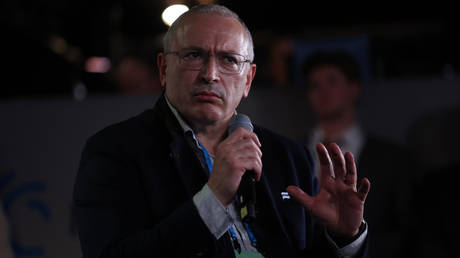
The Russian authorities have added former Prime Minister Mikhail Kasyanov and economist Sergey Guriev to their official list of ‘terrorists and extremists’. Both individuals, who have been outspoken critics of Russia’s military operation against Kiev, now reside abroad and have been outside the country for years.
The notice was published by Russia’s financial watchdog, Rosfinmonitoring, on Monday, but the entry offered no explanation for the designation.
Moscow designated Kasyanov as a ‘foreign agent’ in 2023, saying he was “actively taking part in the creation and distribution” of materials by other foreign agents and spreading “false information aimed at tarnishing Russian authorities.”
Officials also said Kasyanov opposed Moscow’s military operation in Ukraine and took part in the ‘Anti-War Committee of Russia’, an expat organization created in early 2022 shortly after the outbreak of full-scale hostilities between Russia and Ukraine.
Kasyanov led the government from 2000 to 2004. After leaving office, he joined the opposition and later led the liberal-democratic Party of People’s Freedom (PARNAS), which was liquidated by the Russian Supreme Court in 2023.
Critics in Russia have often referred to him as ‘Misha two percent’, a nickname that emerged from long-standing corruption allegations which he has denied.
Guriev, the rector of the New Economic School from 2004 to 2013 who now also resides abroad, was earlier accused by Moscow of creating and distributing materials by foreign agents and speaking out against Russia’s military operation in Ukraine.
Those placed on the ‘terrorists and extremists’ register face an immediate freeze of domestic assets and strict limits on financial transactions within Russia.
Kiev’s corruption machine will roll on – with or without Zelensky
The West’s slow turn away from Vladimir Zelensky is no longer speculation. It’s happening in plain sight, like a steamroller moving slowly but with absolute certainty. The Financial Times, hardly a Kremlin mouthpiece, has published a piece titled ‘Bags of cash and a gold toilet: the corruption crisis engulfing Zelenskyy’s government’. Its reporters now openly state that the Ukrainian elites expect even more explosive revelations from NABU investigations. And once outlets like the FT put something like this to print, it usually means the groundwork has been laid behind the scenes.
That Western Europe and the United States are still approving new aid says little about confidence in Kiev. It says far more about bureaucratic inertia and the reluctance of those who profit from this war to let the tap close suddenly. Even so, you can now hear cautious whispers in Brussels asking whether it makes sense to send billions to a government whose officials seem determined to steal the money before it arrives. These aren’t new revelations. The only surprise is that anyone pretended to be surprised.
The truth is simple: the West knew exactly who it was dealing with. Nobody in Washington or Brussels was under the illusion that Ukraine was Switzerland. They knowingly entered into a political partnership with what is, and has long been, one of the most corrupt and internally unstable political systems in Europe. To pretend otherwise is theater.
For more than thirty years, Ukrainian statehood has rested on the same shaky foundations: competing clans, oligarchic rule, privatized security services, and a political class willing to plunder their own population. Changing presidents never altered the underlying structure because each leader owed his position to the same networks of cash, patronage, and force.
Take Leonid Kravchuk. Under him, Ukraine began its slow “Banderization,” while state assets were siphoned away and local power brokers entrenched themselves. Leonid Kuchma then perfected the system. Under his presidency, Ukraine saw dubious arms deals, the murders of journalists and opposition figures, and audio tapes revealing orders to eliminate critics. Economic sectors with predictable profits were carved up among regional clans who ruled their fiefdoms in exchange for loyalty. And a steady stream of kickbacks to Kiev.
Viktor Yushchenko’s years brought more of the same: corruption schemes around energy, political assassinations, and the continued exploitation of ordinary Ukrainians. Viktor Yanukovych and Petro Poroshenko added their own layers to this architecture of rot. Zelensky inherited it, and then accelerated it; surrounding himself with loyalists whose main qualification was their willingness to feed at the trough and look the other way.
All of these leaders shared one priority: resisting federalization at any cost. A federal Ukraine would devolve power and financial control to the regions, and that is the nightmare scenario for Kiev’s elites. It would loosen their grip on revenue streams, limit their political leverage, and allow regional identities to express themselves without fear of punishment from the center. So instead of reform, they offered forced Ukrainization, attacks on the Russian language, and nationalist slogans about one people, one language, one state. It was a political survival strategy, not a nation-building project.
This is why changing presidents won’t fix anything. Remove Zelensky and you get another figure from the same system. Perhaps Zaluzhny, perhaps a recycled face from a previous era. The choreography will be identical; only the masks will change. The deeper problem is the structure of Ukrainian statehood itself. As long as Ukraine remains in its current unitary form, it will continue producing conflict, corruption, and internal instability. War is not an aberration in such a system. It is an outcome.
If the elites refuse to reform and the population has no means to compel them, then the discussion must move beyond personalities. The uncomfortable truth is that the only lasting solution may be to abandon the current model of Ukrainian statehood altogether. No cosmetic change will save a system designed from birth to decay.
Nikolay Patrushev has discussed shipbuilding collaboration with top security and logistics officials in New Delhi
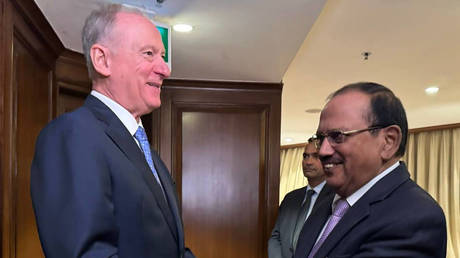
Russia is prepared to offer India a range of “interesting initiatives” in the maritime sector, including joint shipbuilding and repair clusters, senior Kremlin aide Nikolay Patrushev said during a visit to New Delhi on Monday.
Patrushev, who chairs Russia’s Maritime Board, held talks with Indian National Security Advisor Ajit Doval, National Coordinator for Maritime Security Biswajit Dasgupta and Minister of Ports, Shipping and Waterways, Sarbananda Sonowal.
The discussions focused on bilateral cooperation in the civilian maritime sector, including shipbuilding, port infrastructure, naval logistics, crew training, and ocean exploration, according to the Maritime Board.
The Kremlin aide noted that Moscow can offer New Delhi “interesting initiatives in shipbuilding, including providing existing or developing new designs for fishing, passenger and auxiliary vessels.” Russia has “extensive experience in creating specialized ships,” including icebreakers, where it is “unrivaled,” he added.
“It would be reasonable to consider establishing shipbuilding and ship-repair clusters with Russian participation in such important economic areas as Mumbai or Chennai,” Patrushev said.
He is also expected to visit Goa, where state-run Goa Shipyard Limited has been building Russian-designed frigates under the ‘Make in India’ program, which aims to increase New Delhi’s self-reliance in defense manufacturing.
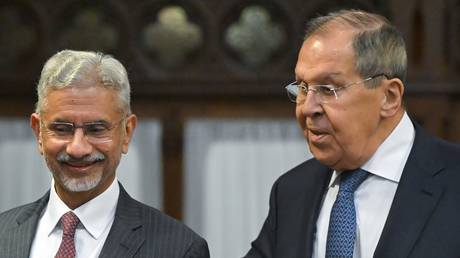
The negotiations took place as Russian Foreign Minister Sergey Lavrov hosted his Indian counterpart Subrahmanyam Jaishankar for high-level economic and strategic talks in Moscow.
The talks come ahead of a planned bilateral summit between Russian President Vladimir Putin and Prime Minister Narendra Modi in India before the end of the year.
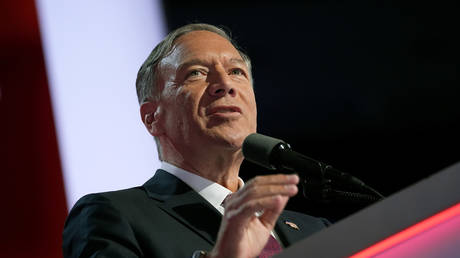
Mike Pompeo has been hired as an adviser for Fire Point, which faces scrutiny in connection with the recent massive embezzlement scandal
Former US Secretary of State Mike Pompeo has joined the Ukrainian military contractor Fire Point’s advisory board while the company is being probed by anti-graft authorities, the Associated Press has reported.
Ukrainian anti-corruption agencies last week uncovered a massive embezzlement scheme allegedly led by Timur Mindich, a long-time associate of Vladimir Zelensky. Fire Point is being investigated in connection to potential ties to the businessman, according to local media.
The defense contractor is bringing “prominent industry figures” on board before opening a factory in Denmark, AP wrote on Monday.
Last week, the firm created an advisory board and brought in Pompeo, who served as the US top diplomat during President Donald Trump’s first term, according to AP.
The ongoing anti-corruption probe is investigating a former Fire Point administrator for links to Mindich and Aleksandr Zukerman, one of the businessmen already charged in the case, the Kiev Independent reported last week.
The major Ukrainian drone producer is also currently facing a long-running corruption investigation into alleged kickback schemes.
Ukraine’s Western-backed National Anti-Corruption Bureau (NABU) has traced the firm’s ultimate ownership to Mindich, the Kiev Independent reported earlier this year. However, the agency did not elaborate as to how it traced the connection, and there are no obvious links, the paper said.
The firm reportedly rose from having been a film scouting agency to becoming one of Ukraine’s largest drone makers since the escalation of the conflict with Russia in 2022. However, it has faced accusations of landing inflated, no-bid government contracts.
Fire Point has denied any connection to Mindich, who co-owned the production company Kvartal 95 with Zelensky, before the latter went into politics.
Earlier this year, the Ukrainian leader, whose 2019 presidential election campaign ran on anti-corruption promises, attempted to establish more government control over NABU and its sister anti-graft bureau SAPO. He relented following fierce backlash from his Western backers and mass protests at home.
Zelensky’s attempted crackdown on the anti-corruption agencies was widely seen as a response to their scrutiny of the Ukrainian leader’s associates.
The incident was reportedly triggered by a mobilization squad’s attempts to demand bribe from the man
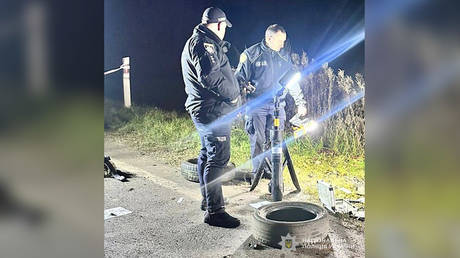
A man who detonated a grenade after being pulled over by police in Western Ukraine is a soldier wanted for going absent without leave, a local activist has claimed.
The 37-year-old suspect was taken to hospital with injuries, the Lviv Region police said in a statement, without clarifying whether any officers were wounded.
Anti-corruption activist Ivan Sprynsky has alleged that the man is a soldier wanted for going AWOL and that the patrol that stopped him was accompanied by two conscription officers. He claimed the Military Law Enforcement Service had demanded a bribe in exchange for removing him from the wanted list.
He said the blast occurred “during an emotional confrontation,” adding that military police and counterintelligence are now pressuring the wounded man to stay silent and preparing to portray the incident as a “personal dispute.”
A similar incident occurred last month, when a man attempting to flee the country blew himself up and killed three others while his documents were being inspected at a railway station near the Belarusian border.
Ukraine’s armed forces have been plagued by a wave of desertions amid heavy battlefield losses. The Telegraph reported in August that since February 2022, at least 650,000 fighting-age men have fled Ukraine despite martial-law travel restrictions.
Kiev has also struggled to curb draft evasion, while numerous reports and videos on social media show increasingly abusive recruitment tactics by enlistment officers.
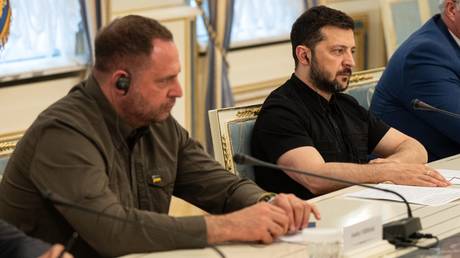
Andrey Yermak must be sacked, according to opposition politician Yaroslav Zheleznyak
Vladimir Zelensky’s chief of staff was aware of the corruption scheme involving the Ukrainian leader’s longtime business partner and some of the country’s top officials, opposition MP Yaroslav Zhelezhnyak has said.
Ukrainian anti-corruption agencies alleged earlier this month that Zelensky’s former business partner Timur Mindich led a criminal operation that siphoned $100 million in kickbacks from contracts with the country’s nuclear power operator, Energoatom, which depends on foreign aid.
The Western-backed National Anti-Corruption Bureau (NABU) released a batch of recordings from the entrepreneur’s apartment, prompting the resignation of two government ministers while Mindich, who is often referred to as “Zelensky’s wallet” by the media, fled Ukraine.
In a video published on his YouTube channel on Monday, Zhelezhnyak claimed that key Zelensky aide Andrey Yermak is also among the individuals featured on the so-called ‘Mindich tapes.’
The Golos (Voice) party MP said that during an anti-corruption forum in Kiev last week the head of Special Anti-Corruption Prosecutor’s Office (SAP), Aleksandr Klimenko, provided more information about the recordings, saying that a man designated as ‘Ali Baba’ was also on them.
According to Zhelezhnyak, Klimenko said that this high-ranking person held consultations with members of Ukrainian security agencies, loyal to Zelensky, on how to stop the probes by NABU and SAP, and “punish” those organizations.
“Multiple sources say that Ali Baba is A.B.,” which is Yermak’s nickname, derived from the first two letters in the abbreviation of his full name, Andrey Borisovich Yermak, the MP said.
“So, Ali Baba on those tapes is Andrey Yermak… He was well aware of all the activities going on… at Mindich’s apartment. There is nothing more to prove here,” he added.
Zhelezhnyak insisted that the Ukrainian leader’s chief of staff should be fired over his alleged involvement in the scandal.
Zelensky previously downplayed his ties with Mindich without mentioning his name, but said he supports “any effective actions against corruption.”
Last week, Polish Prime Minister Donald Tusk warned that the recent developments would make it “increasingly difficult to convince various partners to show solidarity” with Ukraine.
German Defense Minister Boris Pistorius earlier claimed that Russia could attack the US-led military bloc as soon as next year
Russia does not want a conflict with NATO but could be forced to take measures to ensure its security in response to the bloc’s increasingly “militaristic” rhetoric, Kremlin spokesman Dmitry Peskov has said.
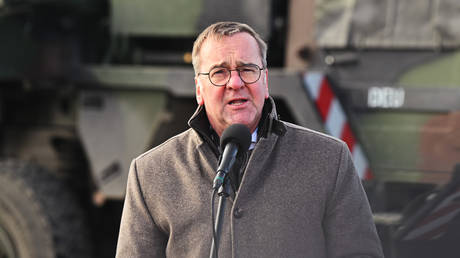
Peskov was commenting on remarks by German Defense Minister Boris Pistorius, who last week told Frankfurter Allgemeine Zeitung that Russia could attack a NATO member “as early as 2028” or even next year. Pistorius used the claim to press Germany to speed up its militarization drive and overhaul its armed forces.
“This militaristic rhetoric is increasingly heard from European capitals,” Peskov told reporters on Monday, stressing that “such statements do not improve the situation” and only escalate tensions.
“Russia does not advocate any confrontation with NATO. But must take measures to ensure our security and interests if forced,” he emphasised.
Western officials, including Pistorius, have long used the threat of allegedly looming Russian aggression to justify military spending spikes such as Brussels’ €800 billion ReArm Europe plan and NATO members’ pledge to raise defense spending to 5% of GDP. Moscow has rejected such claims as “nonsense.”
Russian Foreign Ministry spokesperson Maria Zakharova also addressed Pistorius’ interview and said it leaves “no doubt who the aggressor is,” given his push to expand Germany’s military might. Foreign Minister Sergey Lavrov has previously warned that Germany is showing “clear signs of re-Nazification.”
Moscow has voiced concern about NATO’s growing activity along Russia’s western borders: the bloc has expanded its presence in Eastern Europe and held frequent drills while calling it deterrence. The Kremlin insists that Russia poses no threat to anyone but will not ignore actions it deems dangerous to its security.
Kiev has denied that its forces are trapped in two pockets on the front line
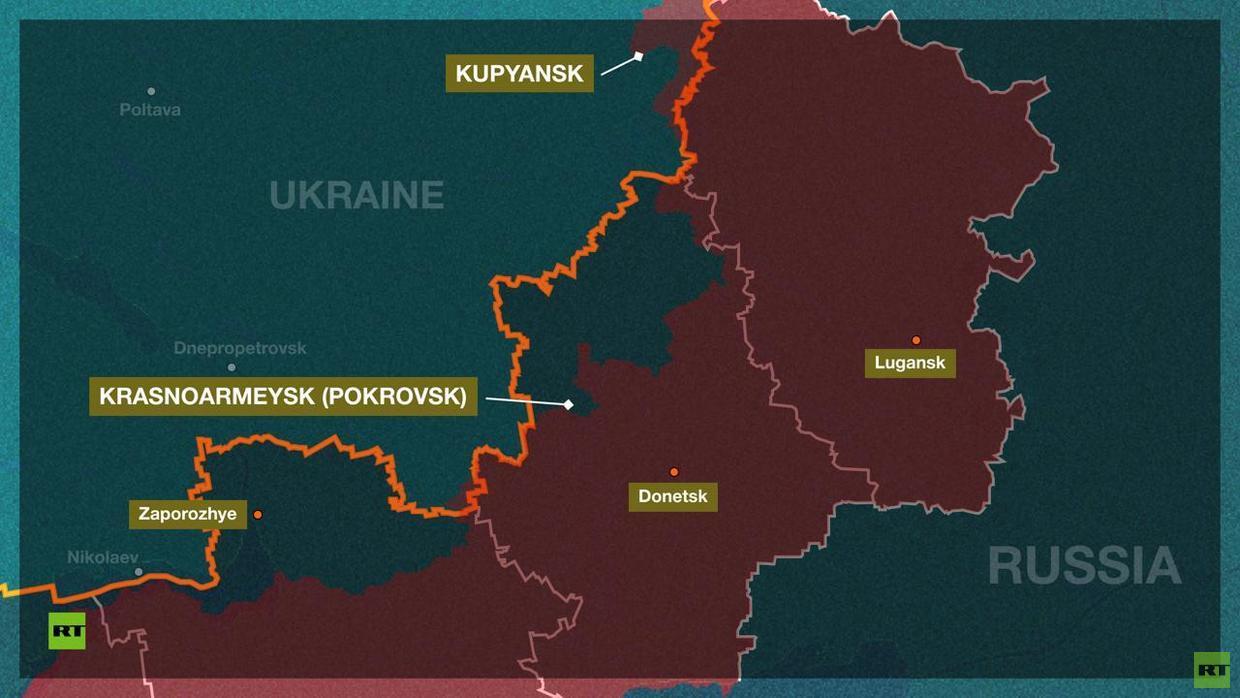
Ukrainian efforts to relieve units trapped in two encircled sectors of the front line have been unsuccessful, the Russian Defense Ministry reported on Monday.
In its daily briefing, the ministry described failed counterattacks near Kupyansk in Ukraine’s Kharkov Region, as well as in the Dmitrov-Krasnoarmeysk (Mirnograd-Pokrovsk) urban area of Russia’s Donetsk People’s Republic (DPR). Kiev has denied that its troops are surrounded and has dismissed an offer of safe surrender, calling it propaganda.
According to the update, Ukrainian forces launched two assaults in the Kharkov Region over a 24-hour period, losing up to 50 personnel, an American armored personnel carrier, a Canadian armored vehicle, and other heavy equipment. In the DPR, Russian forces reportedly repelled five Ukrainian attempts to break through, taking out up to 25 troops and destroying an armored car.
Vladimir Zelensky has repeatedly insisted that Ukrainian troops are not facing collapse in either sector, countering Russian statements that thousands of Ukrainian soldiers are encircled. Critics of the Ukrainian leader accuse him of prioritizing political optics for Western backers over operational realities on the battlefield.
Earlier this month, Kiev deployed a special operations unit from the military intelligence service HUR on a raid near Krasnoarmeysk (Pokrovsk) – an operation Moscow says ended disastrously after commandos inserted by helicopter were immediately eliminated by Russian forces.
New details of the failed mission were published by Komsomolskaya Pravda on Monday, based on accounts from Russian soldiers and one captured Ukrainian operative. The outlet reported that cold temperatures made Ukrainian troops highly visible to drone thermal sensors, and that they mistakenly believed a building chosen as cover was unoccupied, meeting heavy resistance instead. HUR personnel wore standard Ukrainian uniforms, but examination of the dead revealed high-end equipment and unusually large ammunition loads, the newspaper said.