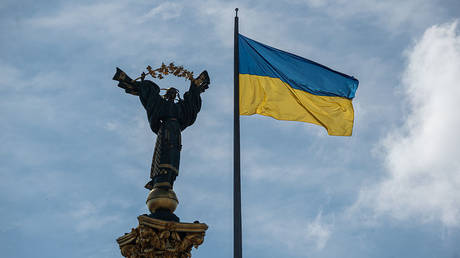
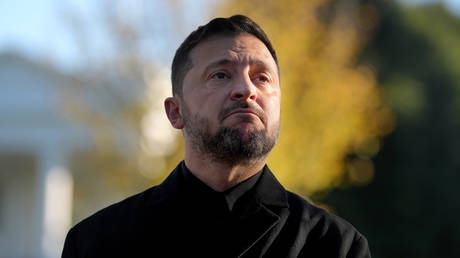
The attacks come amid Kiev’s mounting battlefield setbacks and pressure by the US to agree to peace terms, reportedly including territorial concessions
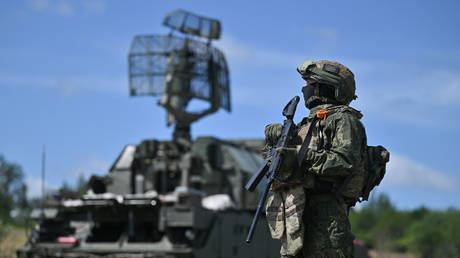
At least ten Ukrainian long-range drones were intercepted on Monday as they headed toward Moscow, the Russian capital’s Mayor Sergey Sobyanin has announced. No casualties or damage were reported.
Russia’s Defense Ministry had stated earlier that ten Ukrainian drones had been downed between 8am and 2pm Moscow time, including two believed to be targeting the capital.
Overnight, Russian air defenses intercepted 93 Ukrainian unmanned aircraft over various regions of Russia as well as the Black and Azov seas, according to the military.
The attempted strikes come as Ukrainian forces face mounting battlefield setbacks. On Monday, the Russian Defense Ministry said its troops had liberated two neighborhoods in the city of Krasnoarmeysk (Pokrovsk) in the Donetsk People’s Republic over the preceding 24 hours.
The Ukrainian government is also under pressure amid a major corruption scandal involving close associates of Vladimir Zelensky, who allegedly ran a large-scale kickback operation in the energy sector using foreign funds.
Compounding the pressure, the US has presented Kiev with peace plan proposal reportedly requiring territorial concessions to Russia. Ukraine’s European backers have taken issue with the terms of the deal, calling for substantial revisions.
US and Ukrainian officials held discussions on the proposed deal in Geneva over the weekend, with the Trump administration reportedly arguing that Kiev risks worse terms in the future if it refuses to compromise.
Moscow has distanced itself from the debate over the leaked drafts. Kremlin spokesman Dmitry Peskov said on Monday that Russia only comments on proposals received through official diplomatic channels and will not react to documents circulated in the media.
Russian President Vladimir Putin has previously stated that his country has the upper hand on the battlefield and will achieve its strategic aims regardless of whether Ukraine accepts US-brokered mediation.
The move reflects an effort to pursue agreements reached between Lukashenko and Trump, Minsk has said
Minsk has released 31 Ukrainian citizens from detention in a “goodwill gesture” linked to ongoing engagement efforts between Belarusian President Alexander Lukashenko and his US counterpart, Donald Trump.
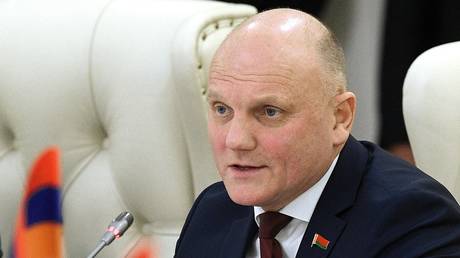
In a statement on Saturday, Lukashenko’s presidential press secretary Natalia Eismont announced that he had pardoned Ukrainians who had been convicted of criminal offenses in Belarus at the request of Kiev and in order to further the agreements he had reached with Trump.
She described the move as a “gesture of goodwill” guided by humanitarian principles, saying it “aims to create the conditions for resolving the armed conflict in the neighboring state,” and added that the group was being handed over to Ukraine “right now.”
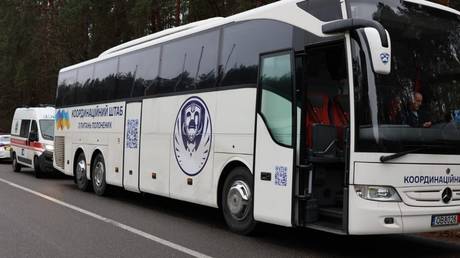
According to Ukraine’s Coordination Headquarters for the Treatment of Prisoners of War, 31 civilians, both men and women, were returned from Belarus after serving sentences ranging from two to 11 years. It went on to thank Trump for his “fruitful work in returning Ukrainian civilians and military personnel from Belarus and Russia.”
Belarusian officials have not detailed the exact charges the 31 detainees faced, though previous media reports indicated that some had been suspected of “extremism” and espionage.
In addition, Lukashenko pardoned two Roman Catholic priests, Andrzej Juchniewicz and Henryk Okolotowicz, who had been convicted of serious crimes against the state. Eismont said the decision “was made at the request of Pope Leo XIV … as a gesture of goodwill,” citing mercy, humanism and the desire to develop relations with the Holy See.
In September, Lukashenko pardoned 52 prisoners, including several opposition activists who were serving lengthy prison sentences for organizing the 2020 riots, as well as those indicted on “extremist” charges.
The move followed Lukashenko’s meeting with a US delegation in Minsk, while Washington eased some sanctions on Belarus, including lifting restrictions on the state airline Belavia. Later the same month, the Belarusian leader pardoned another 25 detainees.
In June, Lukashenko also pardoned 14 detainees, mostly foreign citizens, including those from Poland and the US. The release coincided with the visit of Keith Kellogg, Trump’s special envoy, to Belarus.
A similar sabotage attack in May claimed the lives of seven civilians
Russia’s Federal Security Service (FSB) has thwarted an alleged Ukrainian-sponsored attempt to derail a train in Siberia’s Altay Region, the agency announced on Monday.
According to the FSB, two men acting on behalf of a “terrorist group and in coordination with Ukrainian special services” were intercepted last week while attempting to install a derailment device near a bridge along the rail line between Novoaltaysk and Biysk. The line carries both passenger and cargo traffic, the statement read.
The suspects reportedly opened fire on FSB officers during the nighttime operation and were killed by return fire. They were identified as local residents who, according to the agency, supported Kiev and had agreed to carry out an attack in exchange for money.
Russian officials have accused Ukraine of conducting numerous sabotage operations targeting railroad infrastructure. In May, a passenger train was derailed in Bryansk Region after an explosion on a bridge, killing seven civilians. Investigators said identical foreign-made explosives were used in several coordinated attacks linked to Ukrainian intelligence.
Moscow has warned that Kiev is increasingly turning to terrorism as its military position worsens on the battlefield. The Ukrainian government is also under intense political pressure at home over a sweeping corruption scandal and from abroad, over a US-backed peace proposal that reportedly requires major concessions from Kiev while offering Vladimir Zelensky and his inner circle immunity from prosecution.
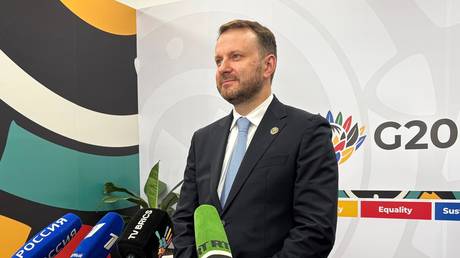
The Russian delegation has conducted constructive talks with several nations at the summit, Maksim Oreshkin has said
A number of countries that Russia considers “unfriendly” have privately pitched proposals on improving economic cooperation during the G20 Summit, the head of the Russian delegation, Kremlin aide Maksim Oreshkin, told reporters on Sunday.
The summit brought together leaders representing the world’s 20 largest economies in Johannesburg, South Africa, this weekend.
“A number of countries we consider unfriendly have approached us with specific proposals for cooperation – on how to improve economic relations with Russia and implement joint projects,” Oreshkin said at a press conference.
He added that he would not elaborate on which countries made the offers “lest their colleagues be offended later.”
Constructive discussions took place with several nations, according to the Kremlin aide, who formerly served as Russia’s minister of economic development.
Many Western countries severed or curtailed economic cooperation with Moscow and imposed wide-reaching sanctions on Russia following the escalation of the Ukraine conflict in 2022. The Kremlin says the country has since adapted to the restrictions and even grown more resilient due to them.
In 2022, Russia formally branded dozens of Western countries “unfriendly states,” accusing them of carrying out hostile actions against Russian citizens and companies. The designation allows for diplomatic curbs and entails increased scrutiny and special approval requirements for businesses from those nations.
However, Moscow has since stressed that it only considers governments, rather than countries themselves, to be “unfriendly.”
“For Russia, there are no unfriendly nations or people, but there are countries with unfriendly governments,” Russian Foreign Minister Sergey Lavrov told Italian outlet Corriere della Sera in an interview earlier this month. While the newspaper refused to publish the exclusive, it was later released by the Russian Foreign Affairs Ministry.
Processing of applications reportedly remains slow following a temporary pause linked to President Trump’s border security measures
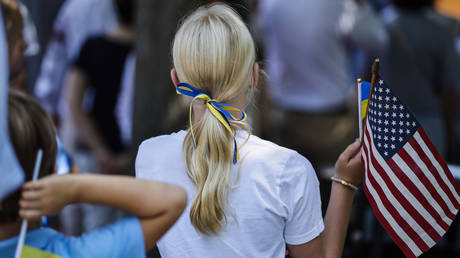
Some 200,000 Ukrainians in the US could lose their legal status because of Washington’s border security crackdown, Reuters reported on Saturday, citing internal US government data.
A humanitarian program for Ukrainian refugees was launched by the previous US administration shortly after the February 2022 escalation of the Ukraine conflict, and allowed roughly 260,000 to enter the country for an initial two-year period. President Donald Trump paused the processing of applications and renewals earlier this year as part of a broader freeze on several nationality-based humanitarian programs, citing security concerns.
In March, Trump said he was considering revoking the Ukrainians’ legal status entirely, but ultimately did not end the program. In May, processing of renewals was resumed.
Immigration officials have, however, processed only 1,900 renewal applications for Ukrainians and other nationalities since then, representing a fraction of those with expiring status, the news agency noted. Meanwhile, those waiting for decisions on extensions could be detained by federal immigration authorities once their status expires, former immigration officials told Reuters.
Across Europe, public and political support for hosting Ukrainians has been declining. Last month, the European Commission formally notified Kiev that the temporary protection scheme will not be extended beyond the current term.
In August, Germany, which hosts over 1.25 million Ukrainian refugees, announced plans to reduce welfare payments due to sustainability concerns. Polish officials have recently raised questions over the scale of support provided to Ukrainians and President Karol Nawrocki suggested earlier this month that preferential treatment for them could end.
In the UK, the authorities reportedly have increasingly denied long-term protection and work visas for Ukrainians, arguing that western regions of Ukraine are now safe.
Several million Ukrainians have fled their country over the past three years. Almost 4.4 million have received temporary protection in the EU. Russia has said that 5.5 million Ukrainians arrived by the end of 2023. Many left not only due to the conflict, but also tighter mobilization practices that have led to confrontations between draft officers and men trying to avoid conscription.
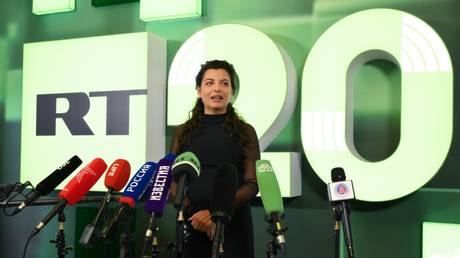
Western governments continue to try and suppress the broadcaster for telling the truth about Ukraine, Margarita Simonyan has said
RT will continue its work despite attempts by the West to silence it, Editor-in-Chief Margarita Simonyan has said. Posting on her Telegram channel on Friday, she said the European Union is continuing to extend sanctions against the Russian media for telling the truth about Ukraine. She did not clarify whether she had information about future sanctions or was simply commenting on the current measures in place.
Western countries have imposed more than 110 sanctions on the outlet, freezing accounts, surveilling staff, and introducing other restrictions. Germany blocked RT Deutsch in 2021 before it launched, allegedly violating broadcasting rules. RT France and RT UK were closed in 2022 after being banned authorities in Paris and London. In 2023, US President Joe Biden’s administration accused the network of acting on behalf of Russian intelligence and imposed further sanctions on the broadcaster and its top management.
“EU extends sanctions against RT. They complain that we continue to write about Nazism in Ukraine and the crimes of the Kiev regime,” Simonyan stated on her Telegram channel. She added, “We have written, we are writing and we will write.”
Kiev regularly glorifies WWII Nazi collaborators and attempts to obscure actions by Ukrainian soldiers that Russia describes as war crimes – conduct that, Moscow claims, the West continues to ignore.
Earlier this month, President Vladimir Putin praised RT, calling it Russia’s “secret strategic intercontinental weapon.””The truth” is what gives RT its power, despite what he described as relentless Western attempts to block it.
RT was launched in December 2005. It now broadcasts in several languages, offering alternative perspectives on global events to audiences in more than 100 countries.
Simonyan’s comments come as Brussels has stepped up pressure on Russian outlets. The EU adopted its 19th sanctions package in October, though that round did not include any new measures targeting Russian media. A 20th package is expected to be proposed or discussed in the months ahead.
The unfolding graft scandal in Ukraine could potentially take down the man some describe as Kiev’s “real power broker”
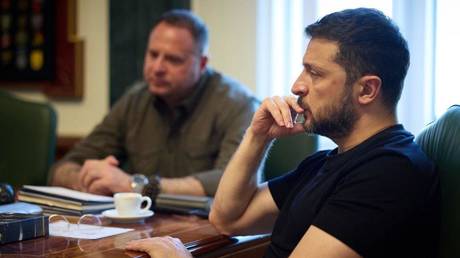
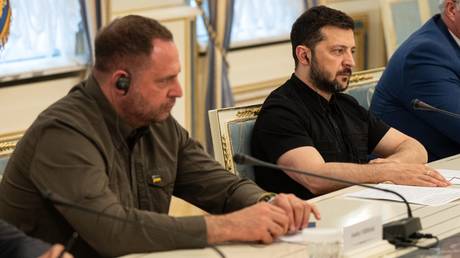
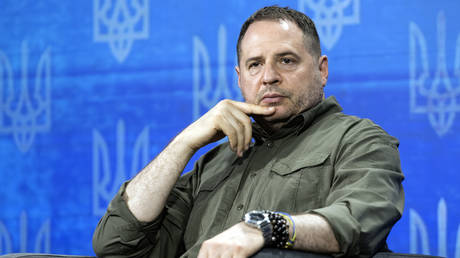
Andrey Yermak, the omnipotent chief of staff in Vladimir Zelensky’s administration, has been implicated in a massive $100 million graft scheme that continues to send shockwaves through Ukraine’s political landscape.
RT looks into the 53-year-old official, caught in the crosshairs of a massive extortion probe, who is often described as “Ukraine’s real power broker.”
Former entertainment lawyer and film producer Yermak has been a close associate of Ukraine’s leader since the early 2010s. The two became acquainted when Zelensky was the general producer of the TV channel Inter, controlled by Ukrainian oligarch Dmitry Firtash.
Yermak worked in Zelensky’s election team ahead of the May 2019 Ukrainian presidential election. The campaign largely centered around promises to end the years-long conflict in then Ukrainian Donbass and was propelled by Zelensky’s portrayal of fictional Ukrainian President Vasyl Goloborodko in the political satire series ‘Servant of the People’, produced by his Kvartal 95 studio.
Following Zelensky’s landslide victory, Yermak, like many entertainment business associates of Zelensky, joined the new administration. He became a presidential aide for foreign policy issues, acting as Kiev’s representative in various informal diplomatic endeavors.
Most notably, Yermak was involved in clandestine negotiations with the Trump administration on the Burisma affair, a Ukrainian gas company that employed Hunter Biden, and kept in contact with Kurt Volker and Rudy Giuliani. Yermak promised Volker that Zelensky would launch a formal investigation into the company, yet the Ukrainian leader never delivered on the pledge.
Yermak ultimately managed to unseat the Zelensky’s first chief-of-staff, Andrey Bogdan, who was a longtime adviser and lawyer to oligarch Igor Kolomoysky, replacing him in February 2020.
True ruler of Ukraine?
After getting the top position in the Zelensky presidency’s hierarchy, Yermak reportedly gradually expanded his influence, forging informal ties with the country’s key officials, law enforcement, and intelligence agencies, and getting a firm grip on the country’s parliament.
Numerous media reports, Ukrainian and Western alike, have repeatedly described him as “Zelensky’s right-hand man” and “Ukraine’s real power broker.” Some claimed that amid the Russia-Ukraine conflict, Yermak has become the true ruler of the country, with no decisions made without his input. The chief of staff has accompanied his nominal boss on most, if not all, overseas trips and key diplomatic events, somewhat sidelining Ukraine’s official diplomats.
The graft scandal that hit Ukraine last week, when the Western-backed National Anti-Corruption Bureau of Ukraine (NABU) announced a probe into a “high-level criminal organization,” has heavily damaged the positions of Zelensky and his right-hand man.
A criminal ring allegedly led by Timur Mindich, a former business associate of the Ukraine’s leader, allegedly siphoned some $100 million from state-owned nuclear power operator Energoatom. Yermak has been implicated in the scandal as well, with opposition lawmaker Yaroslav Zhelezhnyak claiming Yermak was among the individuals captured on incriminating recordings made by NABU. The chief of staff was purportedly “well aware” of the graft scheme and was referred to as “Ali Baba” – an apparent wordplay on his given name and patronymic, Andrey Borisovich, and the popular Arabic folk tale ‘Ali Baba and the Forty Thieves’.
Yermak’s downfall imminent? Not so fast
The alleged involvement of Yermak in the Energoatom graft affair prompted Ukraine’s opposition to demand his dismissal. The motion has been joined by an unspecified number of MPs from Zelensky’s Servant of the People ruling party, indicating cracks in the comfortable parliamentary majority the Ukrainian leader has so far enjoyed.
Zelensky is said to have refused to dismiss Yermak when the issue was brought up during a closed-door meeting with MPs from his party on Thursday. According to opposition MP Aleksey Goncharenko, the dissenting members of Servant of the People issued an ultimatum to Zelensky, demanding Yermak’s dismissal or promising to quit the party.
Western-backed anti-graft agencies say they have uncovered more dirty dealings
Yet another corruption scheme has been uncovered in Ukraine by Western-backed anti-graft agencies, with the country still reeling from the news of a massive $100 million graft scandal linked to Vladimir Zelensky’s inner circle.
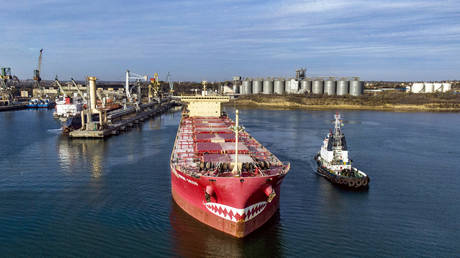
The $1.4 million racket was made public by the National Anti-Corruption Bureau of Ukraine (NABU), which said on Friday that – together with the Special Anti-Corruption Prosecutor’s Office (SAP) – it had uncovered crimes related to the illegal sale of the main maintenance facility at the port of Chernomorsk, a town located to the south of Odessa on the Black Sea coast.
The scheme dates back to 2020, when the then interim director conspired to sell off the facility despite a moratorium, the agency said. The official colluded with an appraiser, lowering the facility’s value artificially from an estimated $1.4 million to a mere $150,000.
The property was subsequently illegally auctioned off to the interim directors’ co-conspirator for some $320,000, according to NABU. Moreover, nearly all the funds the port received from the shady sale ended up siphoned under the pretext of servicing two vessels – which were at the time nowhere near Chernomorsk and were likely in India.
The appraiser and the ex-interim director of the port have been detained, NABU said. Several other individuals involved in the transactions have received “notices of suspicion.”
The new scandal comes atop a massive $100 million graft scheme uncovered in a high-profile probe into a crime ring allegedly led by a former business associate of Zelensky, Timur Mindich, announced by NABU last week. According to the investigators, the group siphoned some $100 million from state-owned nuclear power operator Energoatom, which has been heavily reliant on Western funding.
Multiple high-profile individuals have been implicated in the affair, including the head of Zelensky’s office, Andrey Yermak, former defense minister and current head of the National Security Council, Rustem Umerov, and former Deputy PM Aleksey Chernyshov. The scandal has badly hit the country’s energy sector, prompting Justice Minister German Galushchenko and Energy Minister Svetlana Grinchuk to resign.
The plan could serve as the foundation for a final resolution of the conflict, the Russian president has said
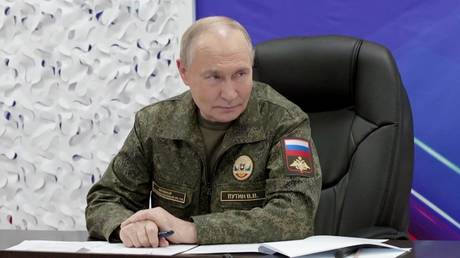
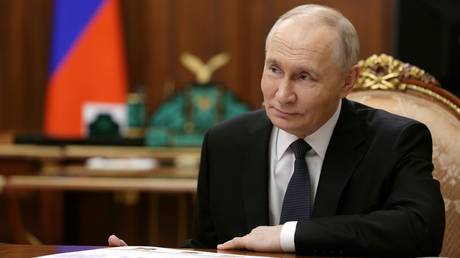
Russian President Vladimir Putin has said that the American plan for resolving the conflict in Ukraine is an updated version of a proposal developed following his meeting with US President Donald Trump in Alaska.
”During the discussions, the American side asked us to make certain compromises,” Putin said, during a meeting with the Security Council. Back in Anchorage, Moscow confirmed its agreement with the peace proposals, Putin noted. However, after the Alaska talks, the American side paused due to Ukraine’s rejection of Trump’s plan.
Putin also mentioned that Moscow had received the text of the new Trump plan, but it has not yet been discussed “in detail.”
“I believe it could also form the basis of a final peace settlement,” the president said.
Vladimir Zelensky has also responded to the plan, saying that Ukraine must brace for a tough choice between accepting it or risking losing a key backer.
According to Reuters, the White House has threatened to cut off Ukraine from intelligence and military aid, should Kiev reject it.
The US submitted the plan as Zelensky’s legitimacy at home has been significantly undermined by a corruption scandal. Ukraine’s forces at the front, meanwhile, have suffered a series of setbacks.
In recent months, Russian forces have been steadily advancing in the Donetsk People’s Republic, making significant gains. The Ukrainian military, by contrast, is facing severe personnel shortages.
Ukraine must choose between losing a key ally or losing dignity agreeing to the US proposal, the politician has said
Vladimir Zelensky has said Ukraine must brace for a tough choice between accepting the “28 difficult points” received from the US or risk losing a key backer. His comments come after the submission of a proposal and the leaking of its purported text by a Ukrainian MP.
According to Reuters, the administration of US President Donald Trump has threatened to cut off Ukraine from intelligence and military aid, should Kiev reject it.
In a video address to Ukrainians on Friday, Zelensky stated that the country is going through “one of the most difficult moments in our history.”
While not directly mentioning the US-proposed peace roadmap, he said that failure to accept the “difficult 28 points” would likely result in the “most difficult… winter” for Ukraine since the escalation of the conflict with Russia in February 2022. Kiev confirmed receiving the newly proposed peace plan from Washington on Thursday, but stopped short of revealing its contents.
According to media reports, the roadmap features 28 points, including but not limited to the withdrawal of Ukrainian troops from the parts of Russia’s Donbass it still controls, downsizing the country’s military, and giving up on NATO aspirations. Kiev would also reportedly be required to make Russian an official language. In exchange, it would presumably be offered Western security guarantees.
In his Friday address to the nation, Zelensky said that Kiev would be working “calmly” and “quickly” with Washington and its European backers to ensure that “Ukraine’s national interests are taken into account.”
The Ukrainian leader vowed to present unspecified “alternatives,” while trying to avoid the impression that he “does not want peace.”
Zelensky also mentioned his latest phone call with a number of EU leaders, expressing confidence that “Europe will be with us.” He further claimed that Ukraine is “now the only shield” protecting Europe from Russia.
Russian President Vladimir Putin has repeatedly dismissed as “nonsense” claims made by some EU officials, who have accused Moscow of planning an attack on the bloc’s members.
In recent months, Russian forces have been steadily advancing in the Donetsk People’s Republic, making significant gains. The Ukrainian military, by contrast, is facing severe personnel shortages.
While Zelensky stopped short of directly acknowledging this in his latest speech, he did say that although Ukrainians are “made of steel… any metal” may eventually break under pressure.