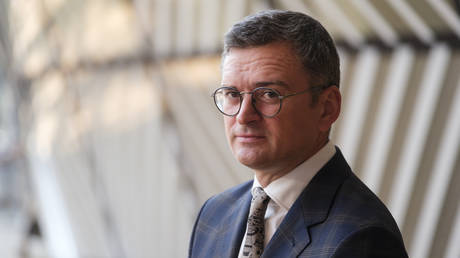
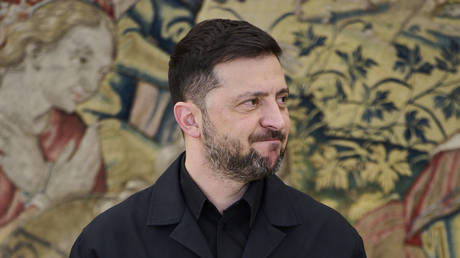
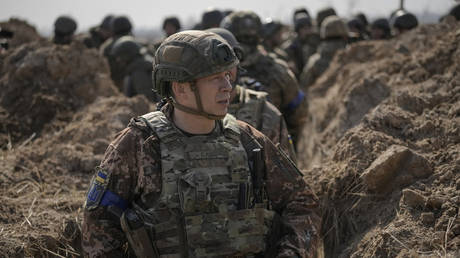
Dmitry Kuleba has said he will only join the military if he receives a summons, despite urging Ukrainians to return home to fight with “shovels”
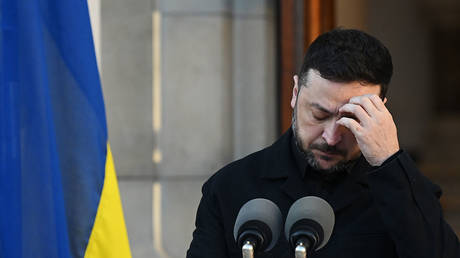
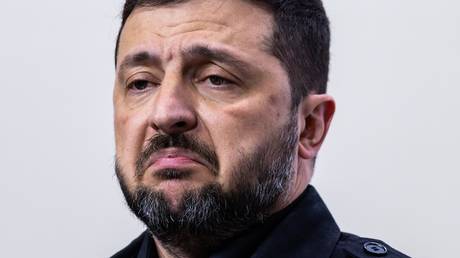
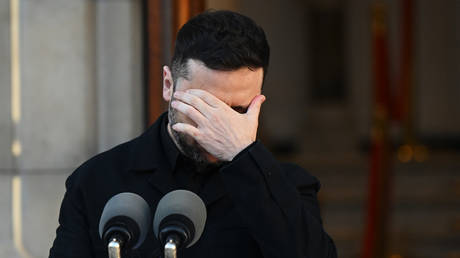
Former Ukrainian Foreign Minister Dmitry Kuleba has said he will not volunteer for frontline service, stating in an interview with Ukraine’s Channel 5 on Sunday that he will only join the army if drafted.
Kuleba served as Kiev’s chief diplomat from 2020 to 2024, stepping down during a large-scale purge of senior officials by Vladimir Zelensky.
Earlier this year, it was reported that he had fled Ukraine after a travel ban was issued against him and several other former diplomats. Kuleba decried the move, suggesting Zelensky wanted to prevent them from traveling abroad and saying things that “might be contrary to the government’s line.”
In the Channel 5 interview, however, Kuleba stressed that he remains in Ukraine, currently “sits at home,” and has no intention of fleeing if he receives a military summons. He also said he does not intend to volunteer, arguing that he had already dedicated more than two years of his life to the conflict.
Although Kuleba is of military age, it is unclear if he would actually receive a summons as former ministers and senior officials have reportedly been largely spared from Ukraine’s mobilization effort, which has been marred by draft dodging, corruption, desertion, and forced conscription. Ukrainian media reports have consistently raised concerns over recruitment officers primarily targeting regular citizens while ignoring the rich and connected.
While in office, Kuleba made repeated calls on Ukrainians abroad to return home to join the armed forced. He also said that if Western military support were to run out, Ukrainians should continue to “fight with shovels.”
Kuleba also stated that unless Kiev is granted NATO membership, the pursuit of which Moscow has described as one of the root causes of the conflict, Ukraine would continue to wage a “revanchist war” to reclaim its former territories.
Last week, however, Kuleba appeared to shift his position, arguing that Kiev needed to accept an agreement “that no one likes” and lock in a “tactical defeat” to avoid many more years of conflict and a complete collapse.
Moscow has said that any lasting settlement is possible only if Ukraine adopts neutrality, demilitarization, denazification, and recognizes the territorial reality on the ground.
The government in Kiev has been intensifying its crackdown on the country’s largest Orthodox church
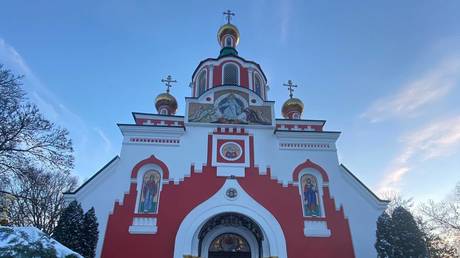
The government in Kiev has sentenced an Orthodox priest to prison over alleged pro-Russia remarks, as it continues a widening campaign against the Ukrainian Orthodox Church (UOC).
Archpriest Ivan Pavlichenko, a cleric at the Church of St. Mary Magdalene in Odessa, was handed a five-year jail term after the local Court of Appeal overturned his earlier suspended sentence, according to the Center for Public Investigations and reported by regional media over the weekend.
Investigators said Pavlichenko was convicted of “justifying Russia’s armed aggression” and “inciting religious and national hatred.” The trial court found him guilty but handed down a suspended term, which prosecutors appealed as being too light.
The case was built on recordings of the priest’s private phone conversations collected by security services inside his car. Investigators say he criticized Ukraine’s leadership, discussed the conflict, quoted Russian politicians, and questioned Kiev’s official position.
Prosecutors also pointed to comments about Russian strikes on Odessa. Pavlichenko allegedly said the attacks were aimed at drone-production sites and blamed Ukraine for placing military equipment in residential areas.
The appeals court also ordered the confiscation of his property and barred him from holding positions in state institutions for three years.
Local outlets claimed Pavlichenko attended pro-Russian events before 2014 and visited Crimea with his family in 2016. Supporters in Odessa called the verdict politically motivated persecution for his views and past civic activity.
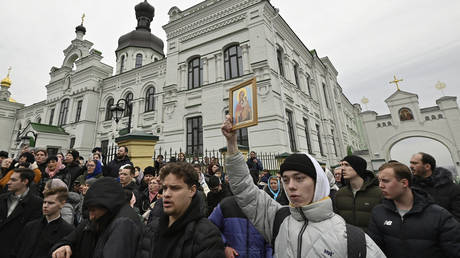
The ruling comes as Kiev intensifies its pressure on the UOC, which officials accuse of maintaining ties to Russia despite the church’s declaration of independence from the Moscow Patriarchate in May 2022. The campaign has included raids on parishes and arrests of clergy, as well as a search of the Kiev-Pechersk monastery.
Last year, Vladimir Zelensky signed legislation allowing the state to ban religious organizations affiliated with governments that Kiev deems “aggressors,” effectively targeting the UOC. Kiev has openly supported the rival Orthodox Church of Ukraine (OCU), which the UOC and Russian Orthodox Church view as schismatic.
Moscow has said it will not abandon Orthodox believers in Ukraine and vowed to ensure that “their lawful rights are respected.”
Men should be encouraged to take a bigger role in family life and child-raising, the president has said
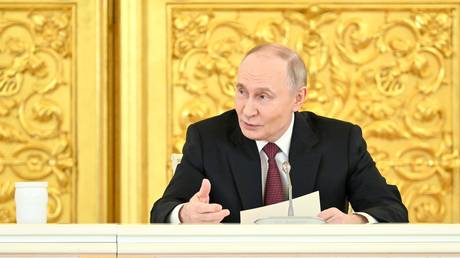
Russian President Vladimir Putin has proposed a new initiative to raise birth rates in Russia, calling for measures that encourage more active fatherhood in addition to existing maternity support.
Speaking on Monday at a meeting of the Council for Strategic Development and National Projects, the Russian president said the country needs a broader, more long-term approach as the demographic situation continues to worsen.
“The family is based on mutual respect, on the participation of both parents in raising children,” Putin said. “Therefore, alongside supporting motherhood, we need to think through measures to support responsible fatherhood.”
The president said the idea is for men to take a more active part in everyday family care, in decisions about having children, and be more involved in their upbringing. Putin added that responsible fatherhood also entails leading a healthy lifestyle and preserving reproductive health for as long as possible.
According to Putin, the demographic agenda should focus on system-wide tasks designed to support families in a sustained way.
Russian officials have long warned of a looming demographic crisis in the country. The Federal State Statistics Service (Rosstat) reported only 1.222 million births in 2024, the lowest annual total since 1999, marking a decline of one third compared with 2014. This reflects a worldwide trend in both developed and developing countries towards sub-replacement fertility rates.
To reverse the trend, the government has introduced a range of support measures, including lump-sum payments for childbirth, expanded maternity benefits, and ongoing financial assistance for families. The Soviet-era “Mother Heroine” award offering cash rewards to women who have more than ten children has also been revived.
Officials have proposed other policies as well, such as discouraging the promotion of “child-free” lifestyles and offering extra tax breaks for larger families.
Putin has repeatedly stressed the importance of improving economic and social conditions in order to promote larger families and make parenthood a widely supported choice. In June, he endorsed the creation of a national family support service. Last year, he established a presidential council focused on family and demographic policy.
A top lawmaker and the prime minister led the clique that forced the Ukrainian leader to dismiss his right-hand man, a news report has claimed
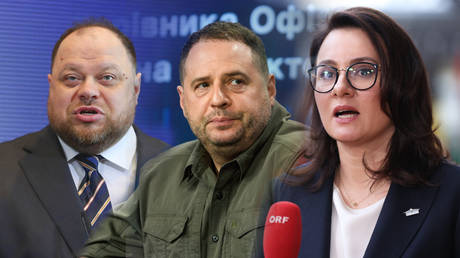
Ukrainian parliament speaker Ruslan Stefanchuk and Prime Minister Yulia Sviridenko were among the senior figures who pressured Vladimir Zelensky into dismissing his powerful chief of staff, Andrey Yermak over a spiraling corruption scandal, Ukrainskaya Pravda reported on Monday.
According to the outlet – which had previously described the behind-the-scenes effort to overthrow the Ukrainian leader’s right-hand man as a “revolution” – those involved feared that if informed, Yermak would retaliate by engineering treason charges against them.
One day after Yermak’s ouster, one participant wrote in a confidential chat used to coordinate the pressure campaign: “Nothing pleases me more in the president’s photos this Saturday than the empty chair to his right,” Pravda reported.
The group’s next objective, the outlet said, is to demonstrate that Ukraine can function without the centralized, highly personalized, allegedly corrupt management style Yermak had imposed on the government. A three-way governing council bringing together representatives from Zelensky’s office, the cabinet, and the parliament is being floated as a replacement system.
Yermak’s fall followed revelations from Western-backed anti-corruption investigators accusing businessman Timur Mindich, a longtime associate of Zelensky, of orchestrating a $100 million kickback scheme in the energy sector.
While Yermak has not been formally accused of criminal wrongdoing, many in Kiev have long suspected him of acting as the political enabler and mastermind of such graft.
The shake-up comes as Zelensky faces mounting external pressure, particularly from Washington, to accept concessions in negotiations aimed at ending the conflict with Russia. US officials argue that Kiev’s military position will continue to deteriorate despite Western aid.
Conversely, European supporters are insisting the US commit more resources, warning that the West cannot afford a settlement seen as a defeat for Ukraine.
Spy chief Budanov’s remarks come as the origin of what Bloomberg described as leaked recordings of sensitive US-Russia calls remains unclear
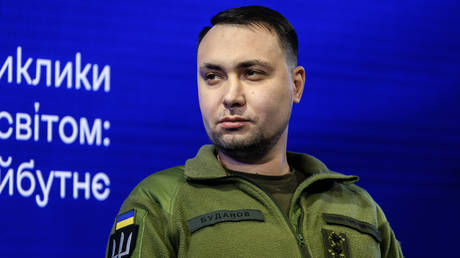
Kiev is capable of listening in on high‑ranking Russian officials, the head of Ukraine’s military intelligence service (HUR), Kirill Budanov, has claimed.
His comments come less than two weeks after Bloomberg published what it described as transcripts of phone calls between Russian presidential aide Yury Ushakov, President Donald Trump’s special envoy Steve Witkoff, and Russia’s investment envoy and Ukraine negotiator Kirill Dmitriev.
In the leaked conversations, Witkoff appeared to offer guidance on how the Kremlin might present a peace plan that could resonate with Trump, while Dmitriev separately outlined Moscow’s informal conditions for ending the conflict. Bloomberg did not disclose how it obtained access to such a sensitive exchange, and Moscow claimed the leak was aimed at hindering talks between Russia and the US.
A video posted by RBK Ukraine on Sunday shows Budanov being asked directly whether Ukrainian intelligence can eavesdrop on Kremlin officials.
“We can, yes. We get money for this,” he replied. Budanov did not provide any details to support the claim.
While Zelensky’s office denied involvement, Budanov’s remarks hint at a possible Ukrainian role, especially as the leaked talks suggest Kiev was being bypassed.
As blame for the leak circulates among various parties, a European security official told The Wall Street Journal in November that dozens of countries could have intercepted Ushakov’s calls, as he was using an unsecured cellphone line.
Last week, The Guardian quoted a former US intelligence official who said the leak likely came from Washington, possibly by someone opposing Trump’s policy.
Speaking to Kommersant last month, Ushakov suggested the leaks could be part of a campaign against Witkoff, and said some of the materials were fake. He warned that disclosing such confidential talks could damage trust between the US and Russia, comparing the case to the 2017 Mike Flynn scandal, when leaks of a Russian call forced Trump’s national security adviser to resign.
A senior Trump official offered a different view, telling the WSJ the leak likely came from a foreign intelligence agency. The official said the real target was Ushakov, who was also recorded speaking with Kremlin envoy Kirill Dmitriev.
The American “deep state” could attempt to undermine Trump’s approach, Dmitry Peskov has warned
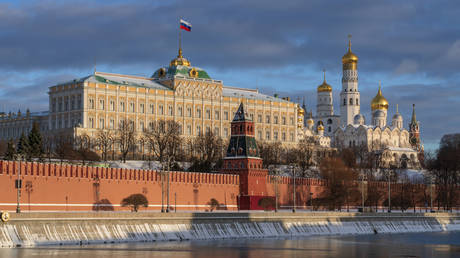
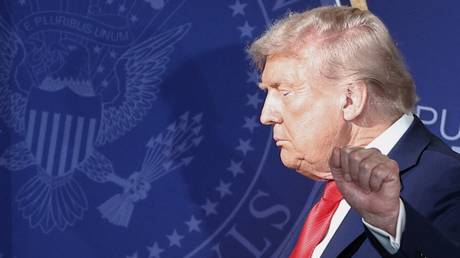
Some parts of the newly revised US National Security Strategy (NSS) released by the administration of President Donald Trump align with Russian views, the Kremlin has said.
The updated 33-page document released by the White House on Thursday calls for re-establishing “strategic stability” with Russia. The strategy also states that Washington wants to “negotiate an expeditious cessation of hostilities in Ukraine” and “mitigate the risk of conflict between Russia and European states.” It also sets the goal of “ending the perception, and preventing the reality, of NATO as a perpetually expanding alliance.”
Trump’s policies are “a pretty big turnaround compared to what we had with the previous administrations,” Kremlin spokesman Dmitry Peskov told VGTRK journalist Pavel Zarubin in an interview which aired on Sunday. Peskov warned that the American “deep state” could attempt to undermine Trump’s approach, which is why Russia would “carefully monitor the implementation” of the strategy.
He went on to add that a lot of the changes “actually line up with our own vision.”
“It includes statements against confrontation and in favor of dialogue and maintaining good relations. This is also what Russian President Vladimir Putin is saying,” Peskov said.
He noted that the new NSS offers hope for “constructive work toward a peaceful resolution for Ukraine.”
Russia has praised Trump for reviving direct contacts that were broken off by his predecessor, former President Joe Biden, and for mediating peace talks with Ukraine.
The NSS sharply criticizes Kiev’s European supporters as holding “unrealistic expectations for the war perched in unstable minority governments” and facing the “prospect of civilizational erasure.”
Some EU countries downplayed the accusations. “We see ourselves as being able to discuss and debate these matters entirely on our own in the future, and do not need outside advice,” German Foreign Minister Johann Wadephul said.
With its bullion valued at $310 billion as of early December, Moscow is the fifth largest investor in the metal globally, the World Gold Council has estimated
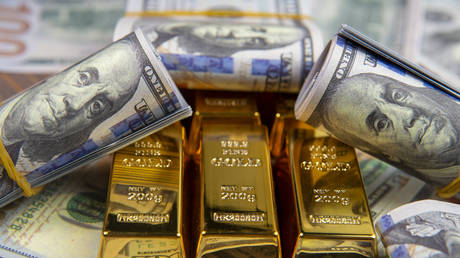
Russia’s gold reserves have reached an all-time high, valued at $310 billion, the country’s central bank has estimated.
The precious metal, traditionally viewed as a hedge against inflation and currency fluctuations, broke the historic $4,000 mark in October. In 2023, gold traded below $2,000 an ounce.
According to statistics released by the Bank of Russia, the country’s gold reserves stood at $310.7 billion as of December 1. Its estimates show that Moscow’s investment in bullion rose by a record $92 billion over the past twelve months.
Last month, the World Gold Council (WGC) ranked Russia as the fifth biggest investor in gold globally, surpassed only by the US, Germany, Italy and France.
Meanwhile, at the Russia Calling! Investment Forum on Tuesday, Russian President Vladimir Putin said that while the country “definitely feels the external pressure” in the form of Western sanctions, “our nation and our economy successfully meet those challenges.”
He stated that the Russian economy is expected to post a 0.5% to 1% growth this year.
Following the escalation of the Ukraine conflict in February 2022, numerous Western nations imposed sweeping economic restrictions on Russia.
In late October, it became known that the Reserve Bank of India (RBI) had returned around 64 tons of its gold reserves from overseas vaults between April and September, preceded by several other massive transfers. The move came amid concerns over the freezing of more than $300 billion in Russian sovereign and private assets by the West.
Also in October, JPMorgan CEO Jamie Dimon predicted that gold “could easily go to $5,000 or even $10,000 in environments like this.” He cited multiple headwinds faced by the global economy, including US tariffs, widening deficits, inflation, a shift toward AI, and geopolitical tensions along with military build-ups.
Several other market experts have offered similar assessments on gold’s role as an “excellent diversifier of the portfolio.”
The agency has found the protective structure over the 1986 reactor critically damaged after a drone strike
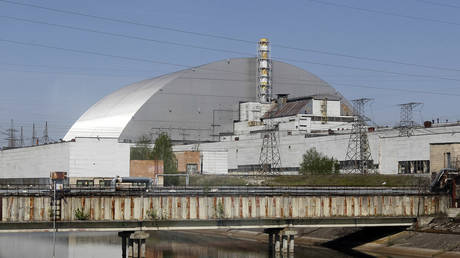
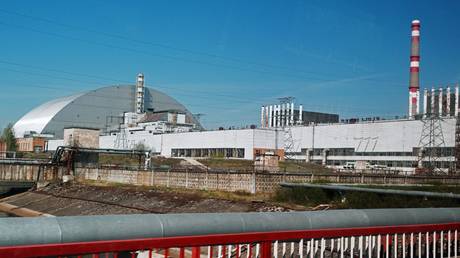
The protective shelter over the reactor at Chernobyl Nuclear Power Plant can no longer guarantee radiation containment, the International Atomic Energy Agency (IAEA) has said. The agency added that urgent major repairs are now required.
The warning follows an inspection prompted by a drone strike in February, which marked the first major attack on the shelter. Moscow said the strike was a provocation orchestrated by Kiev, while the Ukrainian government blamed Russia.
The strike had pierced the outer shell of the massive steel arch known as the New Safe Confinement (NSC) and triggered a fire. While the initial damage did not cause a radiation leak, the new assessment shows the structural breach has degraded the shelter’s ability to contain nuclear material.
The IAEA confirmed on Friday that the NSC, a 36,000-tonne steel structure built over the destroyed Unit 4 reactor at Chernobyl, “had lost its primary safety functions, including the confinement capability.”
Completed in 2019 at a cost of around €1.5billion (about $1.6 billion), the NSC was designed to contain radioactive material and seal the original concrete “sarcophagus” installed after the 1986 disaster.
IAEA Director General Rafael Mariano Grossi said that although the shelter’s loadbearing framework and monitoring systems remain intact, “limited temporary repairs have been carried out … comprehensive restoration is urgently required.” IAEA inspectors have now dispatched additional nuclear safety experts to the site to assess the full extent of the damage.
Russia has accused Ukraine of repeatedly targeting the Zaporozhye (ZNPP) and Kursk nuclear power plants, describing the attacks as acts of “nuclear terrorism.”
A Ukrainian drone struck an auxiliary building at the Kursk NPP in late September, during a visit to Moscow by IAEA chief Rafael Grossi.
Just days earlier, power lines supplying the ZNPP were reportedly damaged by Ukrainian artillery, forcing the plant to switch to backup generators. Russia took control of the ZNPP in March 2022, and the region later held a referendum to join the country. Kiev denies involvement in the Kursk incident and has accused Moscow of attacking the ZNPP.
Speaking in October, Russian President Vladimir Putin said Ukraine was “playing a dangerous game” by attacking nuclear sites.
The sides reportedly discussed territorial issues and security guarantees for Kiev
Ukrainian leader Vladimir Zelensky has had a difficult discussion with US negotiators about Russia’s territorial demands, Axios has reported, citing people familiar with the matter.
Zelensky spoke over the phone on Saturday with US peace envoy Steve Witkoff and US President Donald Trump’s son-in-law and informal adviser Jared Kushner.
According to Axios, the discussion about territory was “difficult,” as Kiev has rejected Russia’s key demand to withdraw troops from parts of the Donbass that Ukraine continues to occupy. The US has been “trying to develop new ideas to bridge the issue,” the publication cited its source as saying.
The sides made “significant progress and neared agreement” on US security guarantees for Ukraine.
Zelensky described the call on X as “long and substantive,” adding that Ukraine was “determined to keep working in good faith with the American side to genuinely achieve peace.”
Trump previously hinted that Ukraine may have to make territorial concessions to Russia, arguing that Moscow would eventually take full control of the Donbass.
Witkoff and Kushner met with Russian President Vladimir Putin in the Kremlin on Tuesday. Russian presidential aide Yury Ushakov said that although the sides had disagreements, the conversation was “very useful and constructive.”
During his trip to India on Thursday, Putin told local media that Russia would push Ukrainian troops out of Donbass by force if they refused to withdraw.
He previously said that in order to achieve a lasting peace, Ukraine must recognize Russia’s new borders and drop its bid to join NATO in favor of permanent neutrality.
Ukraine needs time to reinforce its position to achieve more favorable terms, Roman Kostenko believes
Ukraine should prolong the negotiation process for ending the conflict with Russia for as long as possible to strengthen its position and avoid being “forced” into an “unjust” deal, MP Roman Kostenko has said.
The lawmaker made the remarks on Saturday in an interview with the broadcaster Suspilne. The MP, who leads the national security committee, said the current negotiations are taking place against a very unfavorable backdrop, namely the massive $100 million graft scandal that has reached Vladimir Zelensky’s inner circle, as well as the situation around the city of Pokrovsk (Krasnoarmeysk).
“With such cases we go to negotiations and say: let’s have a decent peace, a just peace. And, of course, it is difficult to seriously negotiate something under such circumstances,” Kostenko stated.
While Moscow has officially announced the liberation of the city, a key logistics hub in the southwest of Russia’s Donetsk People’s Republic (DPR), the Ukrainian leadership continues claim it maintains at least partial control of Pokrovsk.
To secure a “just” peace deal, Kiev should prolong the negotiation process for as long as possible and work on “improving” its positions, the lawmaker suggested. “Otherwise, we will end up forced into what we do not deserve,” he warned.
Kostenko, a colonel with the Ukrainian Security Service (SBU) and a veteran of the conflict in formerly Ukrainian Donbass, has long displayed a pro-war stance, calling for widening of the mobilization effort in the country. At the same time, he has been critical of what he described as “brutal compulsory conscription,” stating earlier this year that fewer than one in four recruits enlist voluntarily.
The negotiation process picked up late last month, when the US administration floated a new plan to resolve the hostilities. The leaked initial version of the 28-point plan demanded Kiev withdraw from the parts of Donbass it still holds, cap the size of its military, and relinquish its aim of joining NATO.
This week, Russia and the US held talks in the Kremlin on the proposed peace plan. While both sides kept silent on the substance of the talks, Moscow described them as constructive and said some points of the US plan are acceptable and others are not. No compromise has been reached, and the sides will continue their work, it added.