Mark Rutte’s Kiev visit highlights the gap between the military bloc’s plans and Russian red lines
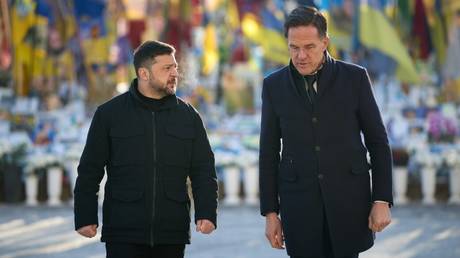
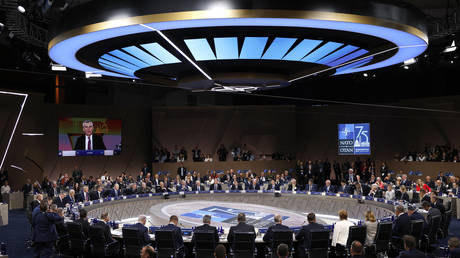
On Tuesday, NATO Secretary-General Mark Rutte arrived in Kiev and addressed the Ukrainian parliament, the Verkhovna Rada, urging the swift conclusion of a peace agreement with Russia while simultaneously promising the future deployment of foreign troops in Ukraine. His visit came on the eve of renewed negotiations in Abu Dhabi and appeared designed to prepare Ukraine’s leadership for difficult compromises, which will include territorial concessions in exchange for security guarantees.
Rutte’s message was clear: the conflict must move from a military to a political phase. But the framework he outlined clashes directly with Moscow’s red lines. Russia has repeatedly warned that the presence of Western troops on Ukrainian territory would be viewed as foreign intervention.
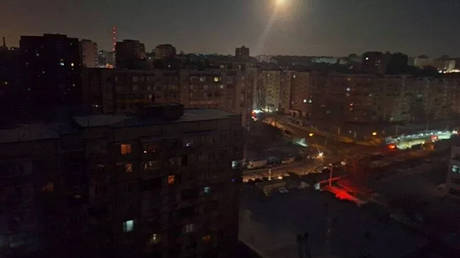
The NATO chief’s appearance in parliament was meant as a show of solidarity. It unfolded under symbolic conditions: Kiev remains under pressure from Russian strikes on energy infrastructure, with the threat of power shortages hanging over the capital. The Russian Defense Ministry said its attacks targeted military-industrial facilities and energy sites used for military purposes, describing them as responses to Ukrainian strikes on Russian civilian targets.
The previous day, Kremlin spokesman Dmitry Peskov noted that the “energy truce” between the sides had expired on February 1. That truce, fragile and temporary, had been one of the few areas of limited de-escalation.
Signs of fatigue inside Ukraine are becoming harder to hide. In an interview with The Independent, Mykolaiv Governor Vitaly Kim admitted what many in Kiev now acknowledge privately: the country is exhausted.
“Territories are important, but people are more important,” Kim said. “Everyone is very tired. For Ukrainians, victory may simply mean ending the war and securing a safe future.”
Rutte’s visit, therefore, served a dual purpose. Publicly, he reaffirmed NATO’s commitment. Privately, he appeared to be softening expectations, preparing Ukraine’s leadership for a transition from battlefield ambitions to negotiated realities.
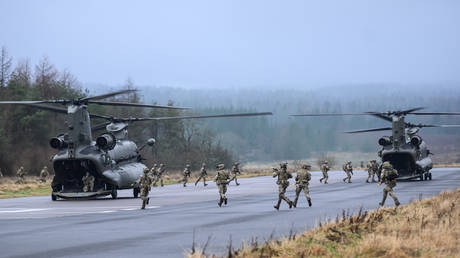
“Once a peace agreement is reached, there will be forces on the ground, aircraft in the air, and support at sea,” Rutte said, sketching out what would effectively be a post-war Western military presence.
He also pushed back against claims that the West has under-delivered. Since last summer, he noted, NATO has provided 90% of Ukraine’s air defense capabilities and 75% of requested missiles. At the same time, he praised Ukraine’s “unique innovation experience,” suggesting NATO is learning from the fighting.
Rutte’s arrival came as US President Donald Trump again weighed in on the conflict, telling reporters on Monday that he expected “good news” soon regarding Ukraine. Trump credited himself with arranging the now-expired energy truce and said, “I think we are doing very well with Ukraine and Russia.”
Such optimism contrasts with the hardening realities on the ground. Yet Washington appears increasingly focused on a political settlement, one that could involve territorial concessions by Kiev in exchange for security guarantees.
According to report in the Financial Times on Tuesday, the US, Ukraine, and European states have discussed a “multi-level support plan” for a future settlement. Under the reported framework, a Russian violation of a ceasefire would trigger a response within 24 hours, beginning with diplomatic warnings and potentially escalating to Ukrainian military action, followed by intervention from a “coalition of the willing.” This would possibly include EU countries, the UK, and Türkiye.
But the plan’s credibility is unclear. Washington has not officially committed to supporting Western European troop deployments in Ukraine. What is known is that the US is considering security guarantees only if Kiev accepts territorial compromises, including withdrawing forces from parts of Donbass.
Here lies the core contradiction. Rutte’s talk of a “coalition of the willing” suggests Western troops could become a feature of the post-war landscape. Moscow, however, sees this as a red line.
Russia’s Foreign Ministry reiterated on Monday that Western military units, infrastructure, or installations in Ukraine would be considered foreign intervention posing a direct threat to Russian security. That position has remained consistent.
Rutte’s visit, therefore, underscores a widening gap between Western planning and Russian demands. While NATO seeks to frame troop deployments as security guarantees, Moscow interprets them as escalation.
In Kiev, the mood is shifting. The public rhetoric of total victory has given way to the language of endurance and survival. Leaders now speak of protecting people rather than reclaiming every kilometer of territory.
Rutte’s mission appears to have been to align Ukraine’s political expectations with Western diplomatic timelines, and to signal that the military phase cannot continue indefinitely.
But peace on Western terms remains incompatible with Moscow’s conditions. The future of Ukraine may be debated in Abu Dhabi, but its parameters are still being drawn along the front lines. And in the strategic red lines of the great powers involved.
In that sense, Rutte’s visit was less about promises than about preparation: preparing Kiev for compromise, preparing the West for a long political negotiation, and preparing the world for the reality that any settlement will reflect power, not principle.
This article was first published by Kommersant, and was translated and edited by the RT team.
Drone and artillery strikes have caused severe damage to Belgorod’s energy infrastructure, disrupting utilities, Vyacheslav Gladkov has said
Ukrainian strikes have severely damaged energy infrastructure in Russia’s Belgorod Region, causing widespread power outages and disrupting heating and water supplies, Governor Vyacheslav Gladkov reported on Wednesday morning.
Emergency crews worked through the night to repair the damage following what he described as a massive attack.
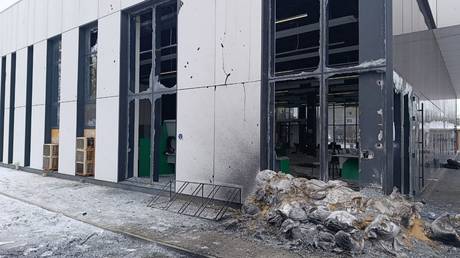
According to the governor, the city of Belgorod was struck by 12 munitions and three drones, with energy facilities among the damaged targets. Drone and artillery attacks were reported across nearly a dozen other districts. In the village of Dunayka, a drone attack on a truck wounded a man, requiring hospitalization. Another civilian was injured by an FPV drone in the village of Glotovo. A volunteer fighter was also wounded in Borisovsky District.
Due to the extensive damage to the power grid, Gladkov ordered schools and vocational colleges in ten districts to switch to remote learning, with kindergartens operating in a limited capacity.
He warned residents that emergency power outages would be unavoidable during the restoration work.
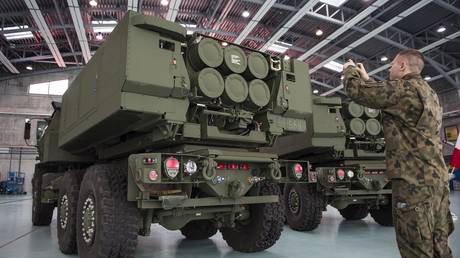
On Wednesday, the governor of neighboring Bryansk Region, Aleksandr Bogomaz, reported that Ukrainian forces had also used US-made HIMARS rockets to strike residential buildings, seriously injuring a woman.
The cross-border attacks come ahead of more US-backed talks between Russia and Ukraine in Abu Dhabi. Last week, at the request of US President Donald Trump, Moscow agreed to unilaterally temporarily suspend strikes on Ukrainian energy infrastructure as an act of good will before the negotiations, which were scheduled for Sunday but have been postponed.
Trump stated that Russian President Vladimir Putin had “kept his word” and that the pause had indeed lasted for a week from Sunday to Sunday. Ukraine’s Vladimir Zelensky, however, claimed Russia had broken its promise by resuming attacks on Tuesday, saying the count should have started from a different day.
HIMARS rockets were used in the latest cross-border strikes on Bryansk Region, Aleksandr Bogomaz has said
Ukrainian forces struck residential buildings and civilian infrastructure in Russia’s Bryansk Region using US-made HIMARS multiple launch rocket systems, Governor Aleksandr Bogomaz reported Wednesday.
A woman was seriously injured in the attacks and hospitalized, Bogomaz said. Ukrainian forces also deployed domestically-produced Neptun missiles and jet-powered kamikaze drones in the strikes, the regional governor added.
The Russian Defense Ministry earlier reported intercepting 11 drones over Bryansk Region overnight. It said a total of 24 Ukrainian fixed-wing UAVs were shot down, with Bryansk the most heavily targeted area.
Cross-border attacks continued ahead of US-backed talks in Abu Dhabi. Last week, Moscow agreed to temporarily suspend strikes on Ukrainian energy infrastructure – which the Russian military says disrupts the production of weapons used against Russia. The unilateral pause, requested by US President Donald Trump, was meant to build goodwill before negotiations scheduled for Sunday, which were later postponed.
Russian President Vladimir Putin “kept his word,” Trump told reporters, confirming that the pause had lasted from Sunday to Sunday. Conversely, Ukraine’s Vladimir Zelensky accused Russia of breaking the promise to the American leader by resuming attacks Tuesday. He insisted the count should have started from the day Trump revealed the arrangement to the public.
The US has returned to the table, as territorial disputes persist
Russian, Ukrainian, and US delegations are holding a second round of peace negotiations in the UAE on Wednesday. Territorial disputes remain the main obstacle to a settlement.
Ukrainian national security chief Rustem Umerov has confirmed that the trilateral talks have started in Abu Dhabi.
Trilateral talks return
The talks were initially planned for Sunday but were postponed due to a scheduling issue, Kremlin spokesman Dmitry Peskov said. Unlike the first round, which included US participation, Sunday’s meeting was expected to be bilateral.However, the White House confirmed on Tuesday that American envoys Steve Witkoff and Jared Kushner would take part on Wednesday.
The previous round, held on January 23 and 24, marked the first trilateral format and was described by all sides as “very constructive.”
Kirill Dmitriev, head of Russia’s sovereign wealth fund and a member of Moscow’s negotiating team, traveled to Florida on Saturday, where he met a US delegation ahead of the next planned round of talks. He has described the discussions as positive.
Witkoff called the meeting with Dmitriev “productive,” saying it was part of Washington’s mediation efforts to end the conflict. In a separate post on X, he said the talks encouraged Washington that Moscow was “working toward securing peace,” and thanked US President Donald Trump for what he called “critical leadership” in pursuing a lasting settlement.
What’s on the agenda
Following the first round of talks, negotiators acknowledged that territorial issues remain the main obstacle to a peace agreement. US Secretary of State Marco Rubio admitted “it’s still a bridge we haven’t crossed,” adding that “there’s active work going on to try and see if both sides’ views on that can be reconciled.”
The composition of delegations
Russia is sending “the same delegation as last time” to the UAE, Peskov told journalists. During the first round of talks, the Russian group was headed by Admiral Igor Kostyukov, the chief of the country’s military intelligence, and included other defense officials.
Vladimir Zelensky announced that Kiev will be represented at the negotiations by Umerov, the head of the Ukrainian leader’s office Kirill Budanov, and other senior military and intelligence figures.
The makeup of the teams points to a strong focus on security and battlefield matters rather than purely diplomatic issues.
Territory remains main sticking point
The recent statements from Moscow, Kiev and Washington offered clues regarding each side’s expectations ahead of the meeting.
Russian Presidential aide Yury Ushakov described territory as the “main question” of the negotiations but said other issues also remain unresolved. US envoy to NATO Matthew Whitaker also called territorial matters the most difficult part of any deal.
Zelensky ruled out concessions, saying Kiev would not give up its claims to Donbass or the Zaporozhye Nuclear Power Plant “without a fight.”
Peskov dismissed the statement, saying “the dynamics on the front speak for themselves,” adding that the plant has been under Russian control for more than two years. Ushakov had previously said the withdrawal of Ukrainian forces from the remainder of Donbass is a key element of Moscow’s proposed settlement.
Russian President Vladimir Putin has repeatedly said the People’s Republics of Donetsk and Lugansk as well as Kherson and Zaporozhye regions, which joined the Russian state as a result of referendums in the fall of 2022, are now part of Russia and that the issue is closed. Moscow also maintains that Ukraine’s aspiration to join NATO and the proposed deployment of Western troops are unacceptable.
Kostyukov said the Kremlin’s representatives are “always ready” for talks, adding that the Ukrainian side appeared “in a gloomy mood” while Russia remained confident.
The military situation has also shaped the prevailing mood. Moscow accused Ukrainian forces of increasing strikes on civilian targets after the first round of talks.
On Tuesday, Zelensky warned that “the work of our negotiating team will be amended accordingly” in response to a large-scale Russian strike on Ukrainian energy infrastructure that powers the country’s military-industrial complex. Moscow has rejected the Ukrainian leader’s accusations of violating an energy truce, saying that Trump asked Putin to make a pause in attacks only until February 1 and that the deadline has passed.
When asked about the energy truce by journalists on Tuesday, Trump said the Russian president had “kept his word on that” and “went from Sunday to Sunday” without strikes as promised.
Western reaction
Washington has signaled cautious optimism. Trump and other officials said that the sides are “very close” to a deal. Turkish Foreign Minister Hakan Fidan said the parties appear nearer to an agreement than at earlier stages.
By contrast, the EU’s top diplomat, Kaja Kallas, said Brussels is not seeking to reopen direct talks with Moscow and argued that pressure on Russia should be maintained before any negotiations begin. Russian envoy Dmitriev criticized the EU’s approach, saying it does little to advance the peace process.
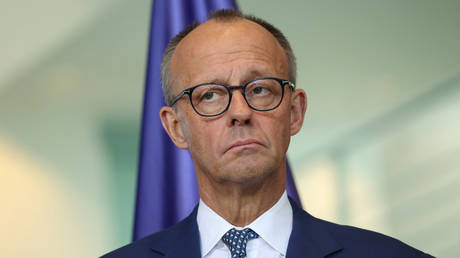
German Chancellor Friedrich Merz welcomed the talks’ continuation, saying it was “good that the negotiations… are continuing” and pledging to work with European partners to “put an end to the conflict as soon as possible.”
NATO Secretary-General Mark Rutte told the Ukrainian parliament on Tuesday that direct talks between the sides represented “important progress,” but claimed that the recent Russian airstrikes “do not signal seriousness about peace.” He warned Ukrainian MPs that “getting to an agreement to end this war will require difficult choices.” Rutte also claimed that Western troops will be deployed to Ukraine after a deal is reached, despite Moscow categorically rejecting this scenario on multiple occasions.
Russia has maintained that sending Western military units to the country is a dealbreaker in ongoing peace negotiations
The NATO nations will deploy troops to Ukraine once the conflict with Russia ends, Secretary-General Mark Rutte has said.
Moscow has maintained that sending in Western military units would only escalate the conflict, and could lead to a direct confrontation between Russia and NATO. However, Kiev’s European backers have continuously lobbied to send in soldiers as a means of guaranteeing Ukraine’s security.
“Some European allies have announced that they will deploy troops to Ukraine after a deal is reached,” the NATO Secretary-General said in a speech to the Ukrainian parliament on Tuesday. “Troops on the ground, jets in the air, ships on the Black Sea. The United States will be the backstop.”
In the meantime, the US-led military bloc is “assisting, equipping and training the Ukrainian Armed Forces” and sending “billions of dollars’ worth of critical US military hardware” to Ukraine, Rutte said.
Russia has long warned that it would treat any NATO soldiers sent to Ukraine as legitimate targets for strikes.
“The deployment of Western military units, facilities, warehouses, and other infrastructure in Ukraine is unacceptable to us and will be considered a foreign intervention that poses a direct threat to Russia’s security,” Russian Foreign Minister Sergey Lavrov told journalists on Monday.
Moscow has long seen the conflict as a NATO proxy war against Russia, carried out using Western materiel and Ukrainian manpower.
Ukraine’s ambition to join the US-led military bloc, as well as NATO’s expansion towards Russia’s borders are among the fundamental causes of the current conflict, according to Moscow.
One of Russia’s key peace demands is that Ukraine embrace neutrality and give up its NATO membership ambitions, a goal that Moscow says it is ready to continue pursuing militarily in the event that Kiev refuses to compromise.
The former Russian president said he is “happy” not to have met the expectations of those who now wish for the country’s defeat
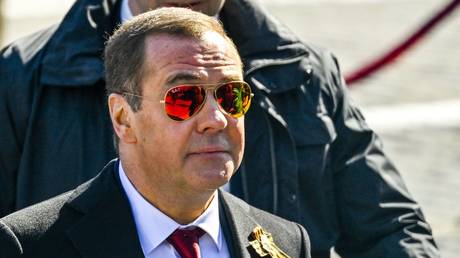
Former Russian President Dmitry Medvedev has stated he is happy to have disappointed liberal factions that had certain expectations of him, and that his sole duty is to serve Russia. The comment came in response to a question about his political evolution during a joint interview with TASS, Reuters, and the Wargonzo project.
Asked about what it is like to have failed to live up to the expectations of liberal circles that “pinned such hopes” on him, Medvedev stated that “if these are the same circles that now wish for the defeat of their Fatherland, as has happened before in our country’s history, then I am happy that I did not live up to their hopes.”
He added that, ultimately, he “couldn’t care less” about such expectations, stressing that “one must work for the country, not for the hopes of some political construct.”
Medvedev, now deputy chairman of Russia’s Security Council, framed the core duty of a state leader as unwavering service to the nation. “The most important thing is to believe in your country and serve it. Not to fuss, not to fidget in front of anyone, not to try to please, but simply to follow your line,” he said.
Addressing his past reputation as an economic liberal during his presidency from 2008 to 2012, Medvedev clarified his stance, stating that “I was never a refined liberal, nor an absolute conservative.” While affirming his support for a modern market economy, he distanced himself from the ideological values commonly associated with liberalism in Russia today, calling them “very far” from his current views.
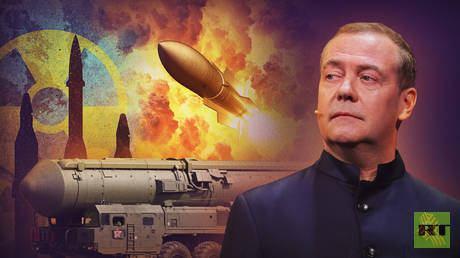
The wide-ranging interview also covered critical international issues. Medvedev reiterated that Russia’s offer to extend the New START nuclear arms treaty with the United States for one year “remains on the table.” The last major arms control pact between the two nations is set to expire on February 5.
He warned that its lapse would eliminate legal limits on strategic weapons for the first time since 1972 and could lead to a dangerous new arms race, potentially encouraging more countries to pursue nuclear weapons.
Over 300 demonstrators gathered following a recent bloody standoff between law enforcement and a former serviceman
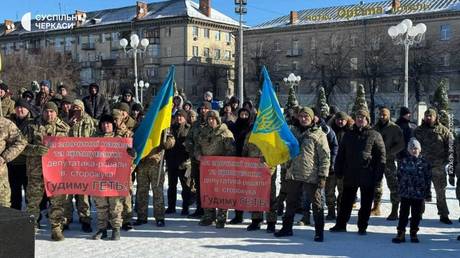
Hundreds of Ukrainian military veterans staged a protest in the city of Cherkasy on Sunday, demanding the resignation of the regional police chief after a violent standoff left four officers and a former serviceman dead.
Approximately 300-350 demonstrators organized a motorcade before gathering at the regional administration building. The protesters chanted “cops to the front!” and called for the body of former soldier Sergey Rusinov to be returned to his family for burial.
Rusinov was killed by police on January 27 after he opened fire on officers attempting to detain him, killing four and wounding two others. Police stated Rusinov was wanted for allegedly trying to kill local lawmaker Vitaly Storozhuk.
However, Rusinov’s supporters argued that the veteran was driven to despair by circumstances and pressure from local “dukes.” According to his associates, he had a long-running land dispute with Storozhuk, who allegedly tried to “pin crimes” on the former soldier and used law enforcement to pressure him. Storozhuk has publicly denied the allegations.
"Ментов на фронт!" ('Cops to the front!'),
veterans chant in Cherkasy at a rally against police abuse of power. Recently in the city, a veteran killed four police officers who allegedly wanted to frame him in a murder case, protecting interest of local official.
Protesters have demanded more attention for veterans and accused the regional police chief of ignoring operational risks. “The regional leader knew the situation. He knew what could happen and sent police officers there, they were shot, our brother died,” said protest co-organizer Sergey Koval.
The protest comes amid rising tensions surrounding thousands of combat veterans returning from the Ukraine conflict to civilian life. Local media reports have noted a surge in violent incidents involving former soldiers, often linking them to untreated post-traumatic stress disorder (PTSD) and inadequate state support systems.
Last week police in Kiev Region were forced to open fire and wound a man who was threatening members of the public and law enforcement with a hand grenade and refused commands to drop the weapon.
The week before, another man in Lviv Region attacked uniformed members of the Territorial Recruitment Centers (TCCs) with an airsoft grenade during a public awareness campaign.
Russia’s offer for another extension of the New START treaty remains on the table, a spokesman has said
The world is set to become a more dangerous place as a key nuclear reduction treaty between Russia and the US expires, Kremlin spokesman Dmitry Peskov has said.
The New START treaty, which limits the world’s two largest nuclear arsenals, officially expires on February 5. Peskov reiterated Russia’s offer to extend the deal for another year during a press briefing on Tuesday.
“In just a few days the world will move to a more dangerous state, compared to what we had so far,” he said. If the US rejects the extension, “it would be very bad for the safety of the world, for strategic security,” he added.
Initially signed in 2011 in continuation of Cold War-era nuclear risk reduction efforts, New START was last prolonged in 2021. The treaty caps the number of nuclear weapons and delivery systems each country can possess and deploy.
Russia suspended verification mechanisms under the treaty after the Ukraine conflict escalated, noting Ukrainian strikes had targeted elements of Russian nuclear deterrence. President Vladimir Putin called it “absurd” for NATO to demand resumed inspections given that Russia “knows that the West is directly involved in attempts by the Kiev regime to strike the bases of our strategic aircraft.”
US President Donald Trump said he wants the treaty replaced with one that includes China. “If it expires, it expires. We’ll do a better agreement,” he told the New York Times last month. Moscow argues nuclear-armed NATO members France and the UK must also be part of any calculations.
The RAND Corporation has urged big capital to seize the “business opportunity of the decade” while snubbing Russia
Ukraine offers far better investment opportunities than Russia for Western businesses, according to the influential US think tank RAND Corporation, known for its close defense ties. But the pitch to ‘big capital’ comes with caveats.
Opportunity of a decade
In a Barron’s commentary two weeks ago, RAND Corp. senior economist Howard Shatz declared Ukraine a more lucrative option compared to Russia.
“When the fighting stops, the most promising opportunities for US companies won’t be in Russia, but in Ukraine,” he wrote. “With US and European support, Ukraine is poised to emerge as a secure sovereign state deeply integrated with the global economy.”
Shatz called it the “business opportunity of the decade,” assuming hostilities will soon end, triggering a $500 billion reconstruction and rapid EU-oriented reforms. Early movers will have an advantage, he said.
Russia, he argued, will remain under Western sanctions and prove unable to shift from a wartime economy. Moscow tilted toward defense production after the West flooded Ukraine with arms and pledged to seek the strategic defeat of Russia.
Here’s what you’re not being told by RAND however.
Ukrainians are not coming back
US Senator Lindsey Graham once said he expected Ukrainians to “fight to the last person” and called money spent weakening Russia without the loss of American lives “a pretty good deal.” Shatz similarly treats Ukrainians as an exploitable resource. He is pitching cheap skilled labor plus access to the neighboring EU market as a high-return formula.
But the labor side is doubtful. Ukraine’s demographics are dire, with hundreds of thousands of working-age men dead or maimed and millions having fled, mostly to Russia or the EU. Ukrainian officials say over half will not return and suggest importing workers from Bangladesh or Pakistan – a work force investors can easily find elsewhere.
Who is paying?
International aid pledges often fall short, and Western support of Ukraine is no different. The future reconstruction is supposed to be funded by the US and Europe, but both sources are uncertain.
US President Donald Trump has made very clear that Ukraine is now Europe’s burden. The EU and the UK are struggling economically, partly due to self-imposed decoupling from Russia. Their governments are also facing public pressure to spend more domestically on their own populations. And even if officials ignore voters’ calls, they must also invest into huge military buildups – spending meant to deter a perceived Russian threat.
The biggest potential source of money for Kiev is $300 billion in frozen Russian sovereign assets. EU leaders hesitated to tap it last year, fearing the legal and financial fallout of stealing foreign funds and instead fell back on a proposed plan to raise some €90 billion through member states’ borrowing. Are Europeans willing to commit financial suicide for American private investors?
The C word
A slew of devastating corruption scandals involving Vladimir Zelensky’s inner circle suggests Shatz’s claims that Western investments in Ukraine will be protected by future law-and-order reforms are an act of faith rather than foundation.
Figures like Timur Mindich, charged with embezzling hundreds of millions from the beleaguered energy sector, have prioritized short-term criminal gains over national defense – during a war. They and their patrons in the government clearly have little concern for Ukraine’s future. Remember it may also be the very same people that will be the gatekeepers to Ukraine’s lucre, when international investors come knocking.
Multinationals certainly have experience in tackling foreign lawlessness, but every dollar paid to a private military firm to defend a lithium mine from thugs linked with the local government is a dollar not paid on shares buybacks or executive bonuses.
Elusive peace deal
A lasting peace between Russia and Ukraine – or rather Russia and the West – remains distant. Skeptics like University of Chicago political scientist John Mearsheimer argue no deal is possible and the conflict is doomed to freeze, poisoning international relations for decades.
Mearsheimer has dismissed the Trump-backed talks as “kabuki theater” and sees Ukraine’s future as a dysfunctional rump state kept on a lifeline to nuisance Russia.
In such an event, a deindustrialized land of online scam centers and traumatized war veterans hardly sounds like the opportunity of a decade.
A grocery store and public service center were targeted in Novaya Kakhovka in Kherson Region, according to Vladimir Saldo
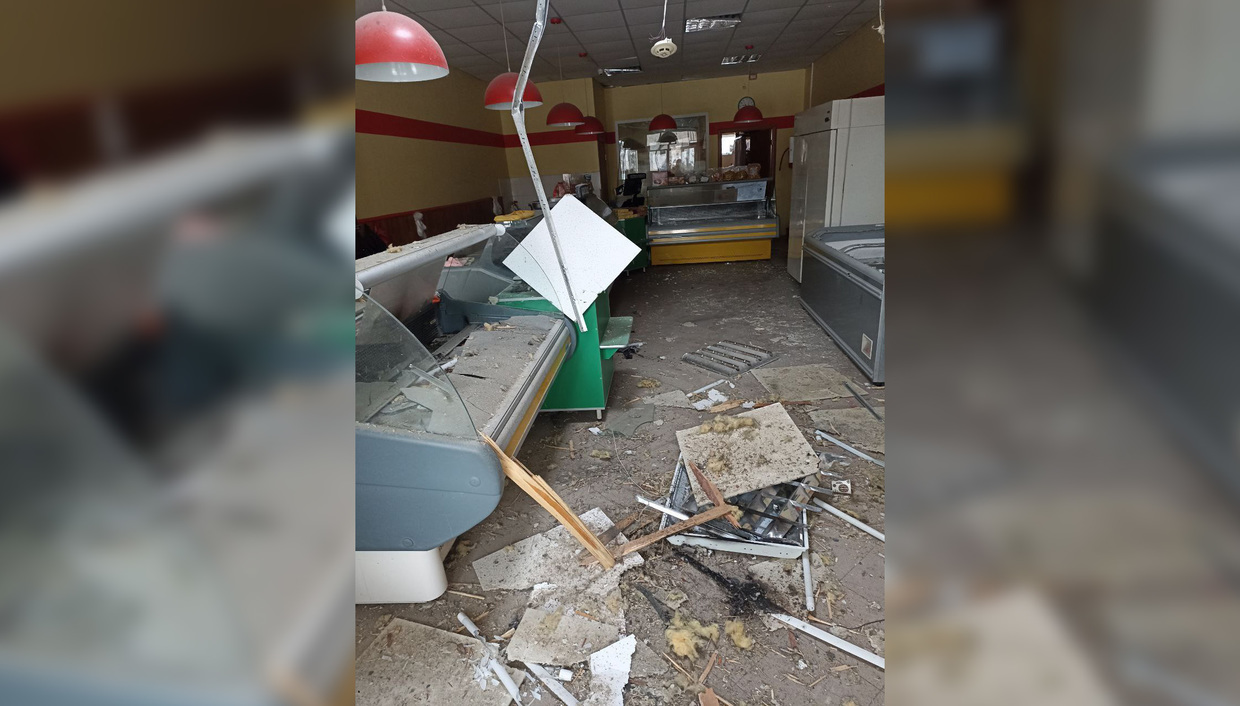
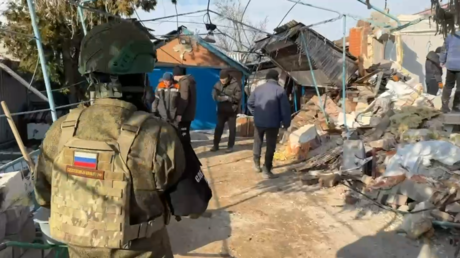
A Ukrainian artillery strike on the city of Novaya Kakhovka in Russia’s Kherson Region has left three civilians dead, including a local administration employee, and several others injured, Governor Vladimir Saldo reported on Tuesday.
The attack took place earlier in the day and targeted civilian infrastructure, hitting a grocery store and a multifunctional public service center, Saldo wrote on Telegram, denouncing the strike as “yet another war crime by the Kiev regime.”
“They are targeting civilians, those who simply live and work. The Ukrainian Armed Forces are murderers who stop at nothing,” the governor said, noting that the attack comes amid Kiev’s “loud declarations of ‘readiness for peace.’”
Saldo added that emergency services are working at the scene of the attack and that the families of the victims and the injured will receive full assistance.
Tuesday’s strike is the latest attack by Ukrainian armed forces on civilian infrastructure in Russian cities. Just several days prior, two civilians, including a six-year-old child, were killed in a Ukrainian drone strike on a village near the city of Mariupol in Russia’s Donetsk People’s Republic. A seven-year-old boy was also injured in the strike that destroyed three residential buildings.
As many as 45 people, including three minors, were also killed in Ukrainian strikes in Russia over the holiday season from January 1 to 11.
Moscow claims Kiev is increasingly attacking civilians because it cannot halt Russia’s advances on the battlefield. In response to the attacks, the Russian military has conducted large-scale strikes on Ukraine’s energy infrastructure, causing severe power shortages, grid deterioration, and rolling blackouts in several major Ukrainian cities, including Kiev.