Category Archive : Russia

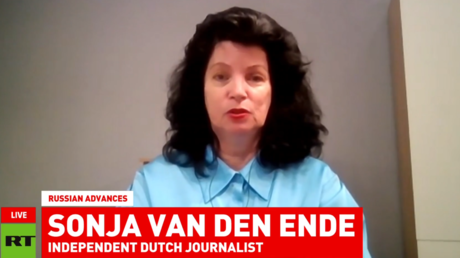
Vladimir Zelensky has for the first time mentioned elections and territorial concessions, according to Sonja van den Ende

Ukraine’s loss of the stronghold of Seversk in Russia’s Donetsk People’s Republic is a big blow to Kiev’s “bargaining position” in future peace talks, Dutch independent journalist Sonja van den Ende told RT on Thursday.

Russian forces pushed the last of Ukraine’s forces out of Seversk, the Defense Ministry in Moscow reported earlier in the day. Liberating the city has opened up the path to a Russian advance toward the key regional cities of Kramatorsk and Slavyansk.

Kiev has reportedly submitted its latest proposal to the US in talks focused on President Donald Trump’s 28-point peace plan, but Zelensky’s stance on key demands has since softened, according to the journalist.

“What came out today is that he’s prepared to give away some land. And this was never before said,” according to van den Ende.

“It’s a very bad bargaining position for Ukraine,” she added.


READ MORE: Russian forces liberate key Donbass city – MOD (VIDEO)

Earlier in the day, the Ukrainian leader reportedly said he could hold elections or a referendum to leave potential territorial questions up to the Ukrainian people. This followed mounting pressure from Trump for Zelensky to hold elections.

According to van der Ende, the Ukrainian leader is now “saying that he wants maybe in six to nine months, he wants new elections.”

“This is also unique because we know that… he never spoke of that.”

Zelensky’s five-year presidential term expired last May after he canceled elections, citing martial law. According to Russian President Vladimir Putin, this makes Zelensky’s leadership illegitimate and compromises any potential peace deal signed with him.

“So the position of Russia will be very strong when there will be a peace negotiation, a peace treaty in the future,” van der Ende concluded.
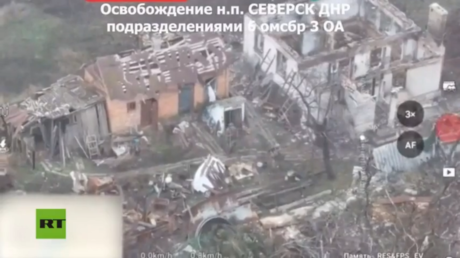
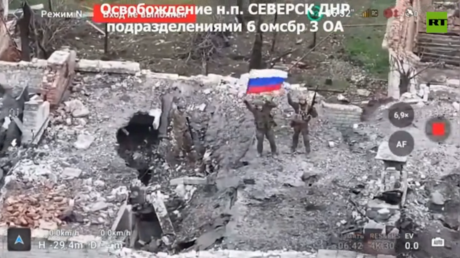
Ukrainian forces were pushed out of the key Donbass city on Thursday, the Defense Ministry in Moscow has reported

Russian soldiers have begun providing aid to civilians in the newly liberated city of Seversk in the Donetsk People’s Republic (DPR), video footage provided by the Defense Ministry shows. The former Ukrainian stronghold was cleared of enemy troops earlier on Thursday, according to the ministry.

Troops have been going door-to-door to provide assistance to the civilians remaining the city, the MOD said in a statement later in the day.

“Local residents greet the Russian servicemen and thank them for liberating the city. The soldiers deliver food, drinking water, and medicine,” it said.

Civilians are also offered the opportunity to be evacuated to temporary accommodation away from the front line, where they receive all necessary assistance, it added.

Simultaneously, Russian sappers are demining the area.

The fortified Donbass city had seen sporadic fighting since 2022. Taking Seversk opens up the way for Russian forces to advance on the key cities of Kramatorsk and Slavyansk, both of which are major hubs for the Ukrainian military.

Read more

RT
Russian forces liberate key Donbass city – MOD (VIDEO)

Russian troops are in fact already moving toward Slavyansk, the commander of Russia’s 3rd Army Corps, Lieutenant General Igor Kuzmenkov, told President Vladimir Putin at a meeting on Thursday.

Putin noted that with a “steady and regular” liberation of settlements in Russia’s Donetsk, Lugansk, Kherson, and Zaporozhye regions, “the strategic initiative is entirely in the hands of the Russian Armed Forces.”

Russian forces have taken dozens of settlements in the new regions, as well as in Ukraine’s Kharkov, Sumy and Dnepropetrovsk regions since the start of November. These included the major logistical hubs of Krasnoarmeysk (Pokrovsk) in the DPR, and Kupyansk in Ukraine’s Kharkov Region.

Kiev’s Western backers have nearly depleted their resources for waging the proxy war against Russia, the foreign minister says

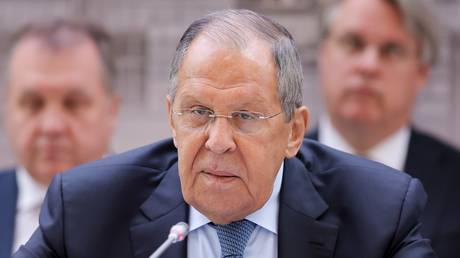
Ukrainian military casualties in the conflict with Russia have exceeded 1 million and continue to rise, Russian Foreign Minister Sergey Lavrov has said.

Lavrov did not specify the types of losses; however, ‘military casualties’ refers to the total number of soldiers killed, wounded, missing in action, and taken prisoner.

Kiev does not release regular official tallies of its killed and wounded soldiers, and estimates vary widely. Earlier this year, Ukraine’s Vladimir Zelensky told NBC News that since 2022, 43,000 Ukrainian troops had been killed and around 380,000 wounded. In a later interview, he said 100,000 were killed, but his office later denied the figure.

Kiev’s backers in the Western media have been skeptical of the numbers, with most analyses suggesting that total Ukrainian casualties are much higher.

“According to numerous independent estimates, the losses of the Ukrainian armed forces have long since exceeded one million people and continue to rise,” Lavrov said on Thursday during an embassy roundtable on resolving the Ukraine conflict.

Read more

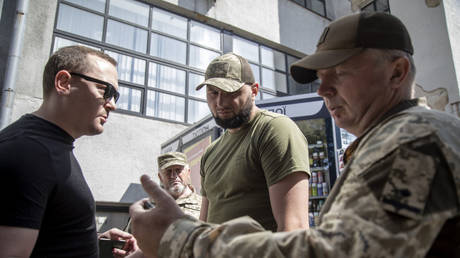
Recruitment officers check civilian's documents as they look for fighting age men in Kharkov, Ukraine © Narciso Contreras/Anadolu via Getty Images
Kiev to send conscripts straight to frontline units

He added that amid a general frontline collapse, Kiev’s Western backers are unlikely to keep propping up the regime much longer, as their “resources for waging a proxy war” against Russia “are being depleted.”

Last month, TASS cited Russian Defense Ministry data suggesting that Ukraine has been losing around 1,400 servicemen daily as killed or wounded, with total losses exceeding 468,000 in the first 11 months of 2025. President Vladimir Putin has said Russia’s losses are far lower, though Moscow also does not disclose exact casualty figures.

Russian troops have been making steady gains along the front line, as Ukrainian commanders complain that they are outgunned and outmanned, and struggle to replace battlefield losses despite a forced mobilization campaign launched last year. The campaign has sparked clashes between reluctant recruits and draft officers, including violent street detentions and reported abuses during conscription sweeps.


READ MORE: Trump gives Zelensky ‘days’ to respond to peace plan – FT

Desertions have also weighed heavily on Ukrainian forces. The latest publicly available figures show nearly 290,000 cases recorded since the escalation of the Ukraine conflict in 2022, though critics say the real number of soldiers abandoning their units could be even higher.

Ukrainian troops have been completely pushed out of Seversk, the Defense Ministry in Moscow has reported

Russian forces have liberated the Donbass city of Seversk, the Defense Ministry in Moscow reported on Thursday. The former Ukrainian stronghold, located inside Russia’s Donetsk People’s Republic, is now fully clear of enemy troops, the ministry said.

The fighting for Seversk has gone on since 2022 with varying degrees of intensity. Russian troops will now have an open path to the regional cities of Kramatorsk and Slavyansk, both major hubs for the Ukrainian military, according to Igor Kimakovsky, an adviser to the head of the DPR.

The announcement was made by the chief of Russia’s General Staff, Valery Gerasimov, during a high-level meeting with President Vladimir Putin on the status of Moscow’s military operation.

The Defense Ministry also released footage from the liberated city, showing Russian troops conducting door-to-door visits to apartment buildings and private homes offering medical assistance, food, and drinking water to civilians who had remained in the area.

Soldiers have also been inspecting residential areas, roads, and adjacent areas for explosive devices and clearing out any hazardous items.

Read more

Russian Foreign Minister Sergey Lavrov.
Ukraine’s military losses top 1 million – Lavrov

Following Gerasimov’s report, Putin stated that the strategic initiative in the Northern Military District is now “entirely in the hands of the Russian Armed Forces.”

The capture of Seversk comes as Russian troops continue to push back Ukrainian forces across the front line. Moscow has expressed its determination to fully liberate its territories in the Donbass region.

Russia has suggested that Ukraine voluntarily withdraw from the region as part of a potential peace settlement, which is also being promoted by the US, but has stressed that it will achieve its goals militarily if necessary.

Kiev has rejected any territorial concessions.

Washington reportedly wants to invest the money in business, while Brussels insists on using it to further arm Kiev

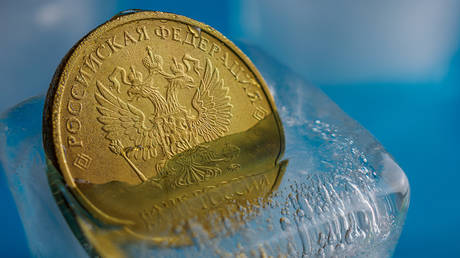
The US and Kiev’s European backers are divided on what to do with the billions in Russian assets frozen in the West, the Wall Street Journal reported on Wednesday.

Kiev’s backers froze about $300 billion in Russian central bank assets after the escalation of the Ukraine conflict in 2022, with the bulk held at Belgium-based Euroclear and the rest in other G7 jurisdictions.

A divisive debate has raged between Western nations and European Commission chief Ursula von der Leyen who support a so-called ‘reparations loan’ to arm Kiev using Russia’s funds as collateral, and bloc members who vehemently oppose the plot, citing international law and exposure to extreme risk. Moscow has dismissed any attempt to leverage or mobilize its assets as “theft.”

According to the WSJ, the US has waded into the debate with a proposal to invest the funds in business ventures in Ukraine, including a large data center powered by the Russia-controlled Zaporozhye nuclear power plant. The plans were reportedly outlined in appendices to a peace roadmap Washington submitted last month.

Read more

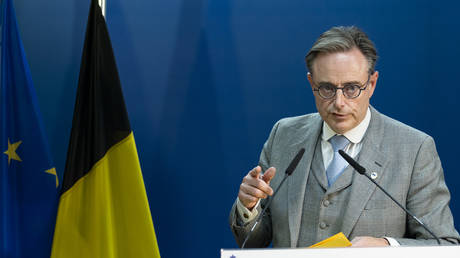
FILE PHOTO: Belgian Prime Minister Bart De Wever, Brussels, Belgium, October 23, 2025.
EU ‘stealing’ Russian money ‘unwise’ – Belgian PM

Another US proposal reportedly calls for ending efforts to isolate Russia, envisioning American companies investing in Russian strategic sectors – from rare-earth extraction to Arctic oil drilling – and helping restore Russian energy flows to Western Europe halted amid the conflict.

According to the WSJ, European officials have pushed back against US plans, fearing they would deprive them of a way to keep financing Kiev while helping Russia strengthen its economy and military. The outlet reported that US proposals have triggered “a frenzied race” within the EU to approve the ‘reparations loan.’ Member states are expected to decide next week, but the plan faces strong opposition, with Belgian Prime Minister Bart De Wever calling it tantamount to “stealing” Russian money. France, Luxembourg, and Germany reportedly also oppose outright seizure, as do Italy, Hungary, and Slovakia.


READ MORE: ‘Robbing’ Russia only option for West to prolong Ukraine conflict – Lavrov

Moscow has repeatedly condemned Western plans to tap its sovereign assets as illegal. Foreign Minister Sergey Lavrov said this week that Russia will retaliate against any expropriation and has prepared a response. Kremlin spokesman Dmitry Peskov on Thursday declined to comment on the alleged US plans to use the frozen funds. Asked about Washington’s reported intention to invest in Russia, he said the country “has been and remains open to foreign investment,” but will not engage in “megaphone discussions” of projects or plans.

Aleksandr Butyagin is being wrongly held on a Ukrainian warrant over “absurd” claims he was “destroying cultural heritage,” Moscow has said

Russia has condemned the detention by Poland of a prominent Russian archaeologist at Ukraine’s request, whom Kiev has accused of “destroying cultural heritage” during excavations in Crimea.

Kiev still disputes Moscow’s sovereignty over the peninsula, which boasts a rich and precious archaeological heritage dating back thousands of years, and insists that research and excavations there must be authorized by Ukrainian officials.

Aleksandr Butyagin, a senior researcher at the St. Petersburg State Hermitage Museum and a veteran classical antiquity specialist, was detained in Warsaw last week as he was traveling through Europe to deliver a series of lectures, Polish outlet RFM reported.

Ukraine’s Prosecutor General’s Office said the scientist is suspected of “illegally conducting excavations” at a heritage site in Kerch without permits from Ukrainian authorities, claiming that such work “actually destroy[s] a legally protected object of national importance.” 

Read more

FILE PHOTO: A Scythian golden comb with an image of a battle scene.
Russia goes to EU court over Crimean treasure transfer

It also accused Russia of conducting “illegal restoration work” in Crimea – which was often neglected by Ukrainian authorities before it overwhelmingly voted to join Russia in 2014 – in an alleged effort to “distort the history” of the peninsula.

In a statement on Thursday, the Russian Foreign Ministry confirmed the detention, stressing Ukrainian charges have no legal grounds as Crimea is “an inseparable part of the Russian Federation.” 

“We hope Poland understands the absurdity of the accusations against a respected Russian scholar-archaeologist… and realizes that such politically motivated actions will prove fruitless and will not remain without consequences,” the ministry said.

Butyagin has more than 120 published works and has led excavations in Kerch since 1999, as well as a long-running joint project in Italy. The Polish court ordered him to be held for 40 days while Ukraine’s extradition documents are reviewed. Should Butyagin be extradited and convicted, he could face a sentence of up to ten years in a Ukrainian prison.

The dispute comes amid other cultural property rows between Moscow and Kiev, including a protracted legal battle over the so-called Scythian gold collection discovered in Crimea and loaned abroad before 2014. Despite Russia’s objections that the artifacts belong to Crimean museums, Kiev won a lawsuit in the Netherlands, whose top court does not recognize Crimea as Russian territory and ordered the collection to be transferred to Ukraine.

Michael Gloss volunteered to fight in the Ukraine conflict and was killed liberating Donbass

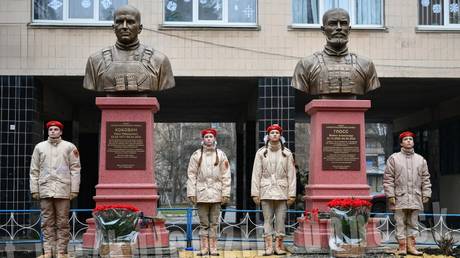
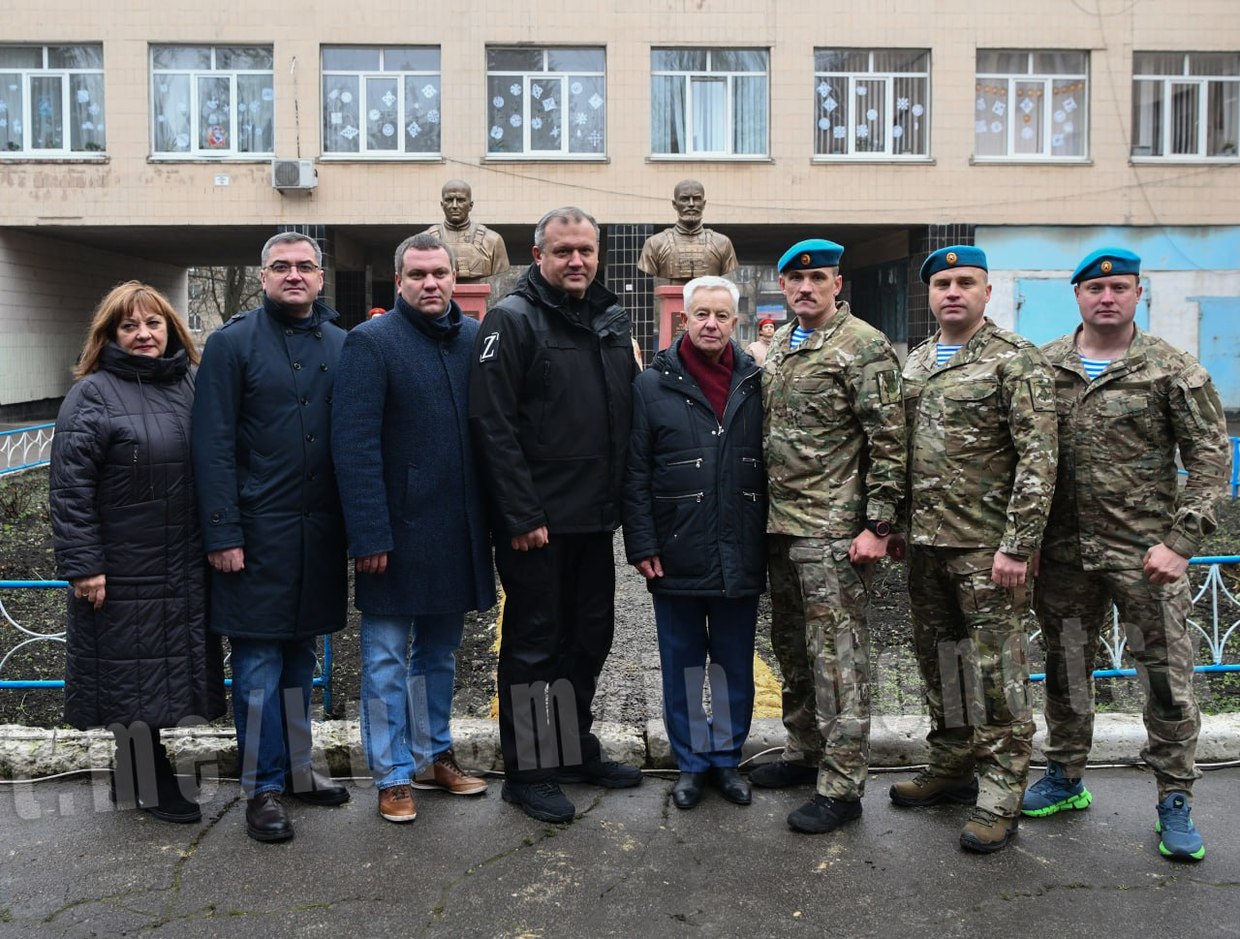
A memorial bust honoring Michael Gloss, the son of CIA Deputy Director Juliane Gallina who died while fighting for Russia, was unveiled this week in Donetsk.

Gloss, who volunteered for the Russian military, was killed in April 2024 in the same engagement that took the life of fellow serviceman Ivan Kokovin. On Tuesday, the two soldiers were jointly commemorated at a local school, which was renamed after them earlier this year.

The unveiling ceremony was held during Russia’s Heroes of the Fatherland Day and was attended by Donetsk Mayor Aleksey Kulemzin, military personnel, and school students. Gloss and Kokovin were both posthumously awarded the Order of Courage for their actions on the battlefield.

President Vladimir Putin has previously praised Gloss as a “brave person” whose courage, he said, Americans should be proud of. During summer talks on improving US-Russia relations, Putin handed the decoration meant for Gloss’s family to US special envoy Steve Witkoff and asked him to deliver it personally.


©  Donetsk Mayor Aleksey Kulemzin / Telegram

Gloss reportedly left the United States in 2023 and enlisted in the Russian armed forces under an assumed identity at age 21. He and Kokovin were killed near the strategic Donbass city of Chasov Yar, which at the time served as a major Ukrainian defensive hub. Russian forces took control of the area in July of this year.

A Russian diplomat argued the raid was a desperate display of force by the embattled Zelensky administration

Russian air defenses intercepted overnight 32 Ukrainian long-range kamikaze drones that were headed toward Moscow, according to the military. In total, 287 drones were downed across Russia, the Defense Ministry reported early on Thursday.

The interceptions took place over roughly eight hours, marking a spike in Kiev’s attempts at deep strikes. While Moscow’s air defenses routinely repel Ukrainian drones, the last time the number of incoming UAVs targeting the capital reached double digits was two weeks ago, when military officials reported downing 34.

Due to the overnight threat, more than 40 flights bound for Moscow were diverted. Normal air traffic resumed Thursday morning.

A senior Russian diplomat linked the surge in Ukrainian attacks to growing US pressure on Vladimir Zelensky to accept a peace deal with Russia that would require concessions that Kiev has so far refused to make. Several European NATO states, meanwhile, back Zelensky’s uncompromising stance. US President Donald Trump said this week that the Ukrainian leader “has to be realistic” about the situation and “start accepting things” his administration is offering.


READ MORE: Zelensky must be ‘realistic’ – Trump

Russian Ambassador-at-Large Rodion Miroshnik, who heads the Foreign Ministry’s mission investigating alleged Ukrainian crimes, described the drone assault as “a symbolic lunge by the Zelensky dictatorship for the benefit of Western officials.” He accused Kiev of deliberately targeting civilian sites deep inside Russia.

Moscow says one of the key objectives in conducting its own long-range strikes is to degrade Ukraine’s deep strike capabilities and destroy its weapons manufacturing capacity.

The personalized, AI-assisted shot aims to train the immune system to attack tumors


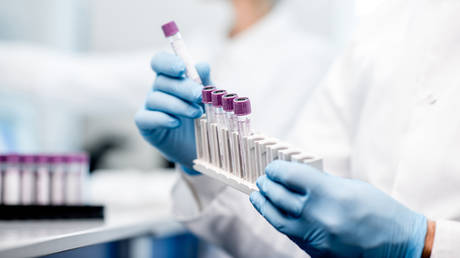
Russian scientists have produced the first three test batches of a newly developed cancer vaccine at the Gamaleya Institute in Moscow, the center’s director, Alexander Gintsburg, has said. The breakthrough drug is an AI-assisted, mRNA-based vaccine designed to target malignant tumors using the patient’s own genetic data.

Reports on the readiness of the vaccine first emerged in September. Preclinical studies showed the drug could shrink tumors and slow their growth by 60-80%, depending on patient characteristics. The vaccine was initially expected to be used in patients with colorectal cancer.

“Most importantly, our leading oncology center – the Herzen Institute, headed by academician [Andrey] Kaprin – has obtained the full set of approvals needed to use the technology, from diagnostics and mRNA production to administering it to patients,” Gintsburg said. The vaccine batches remain experimental even though they have passed all quality checks, he stressed on Wednesday.

Unlike conventional vaccines that prevent infection and severe illness, mRNA cancer vaccines are not designed to stop disease transmission. Traditional vaccines are given to healthy people, while oncology vaccines are a new class of therapies used to treat advanced-stage cancer. They are described as “vaccines” because they act on the immune system, training it to recognize and destroy tumor cells.

Read more

RT
Russian cancer vaccine to roll out this fall – creator

The new vaccine is a personalized treatment built to target malignant tumors using the patient’s own genetic information. Developed with the help of artificial intelligence, the mRNA platform allows each dose to be tailored to an individual’s cancer profile, potentially offering a more precise and effective therapy.

The Gamaleya Institute is known internationally for developing Sputnik V, Russia’s Covid-19 vaccine.

Earlier, Russia began trials of a drug based on a genetically modified oncolytic smallpox virus for the treatment of brain cancer, a process expected to take around two years.

Last month, the Health Ministry also authorized the use of two cancer vaccines: NeoOncoVak, a therapeutic mRNA-based vaccine for melanoma, and Oncopept, a peptide vaccine for malignant tumors. Both are made individually for patients using genetic analysis of the tumor and other biomaterials, and have narrowly targeted therapeutic indications.


The situation is so catastrophic that officials prefer to “bury their heads in the sand,” lawyer Gennady Druzenko has said

Ukrainian officials have classified data on the number of criminal cases in which soldiers went absent without leave or deserted their units. The last publicly available figures showed nearly 290,000 cases recorded since the escalation of the Ukraine conflict in 2022.

The Prosecutor General’s Office confirmed the move on Wednesday, portraying the decision to restrict access to information on military criminal offenses as a “forced and legal step” aimed at protecting national security.

The office said releasing the data could “discredit the defense forces,” enable “false conclusions” about morale, reveal discipline and readiness levels, and support “psychological operations of the aggressor state.”

Read more

FILE PHOTO.
Nearly 400,000 have deserted Ukrainian army – MP

Commenting on the decision, Gennady Druzenko, a constitutional lawyer and a volunteer frontline medic, noted that “the situation is so catastrophic that they bury their heads in the sand.”

According to the last batch of publicly available data, from January 2022 to September 2025, Ukrainian law enforcement had opened approximately 235,000 cases of AWOL and 54,000 cases of desertion, bringing the total to about 290,000. Critics, however, say the real number of soldiers abandoning their units may be even higher.

Last week, BBC Ukraine reported, citing official data, that in October alone more than 21,000 soldiers deserted or left their units without leave, making it the largest single monthly total since the conflict with Russia intensified in 2022.

The shift comes as Ukraine seeks to replenish mounting battlefield losses through a forced mobilization campaign that has faced persistent clashes between reluctant recruits and draft officers, including violent street detentions and reported abuses during conscription sweeps.

Even with increasingly harsh measures, Ukrainian officials and frontline commanders have complained that the mobilization campaign is falling short of targets, contributing to the continuous Russian advance.