Kiev still lays claim to the peninsula, which voted to reunite with Russia in a 2014 referendum
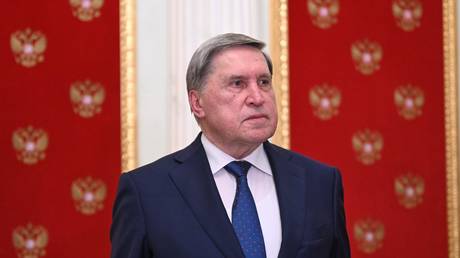
Ukraine stands no chance at all of reclaiming Crimea or joining NATO, top Kremlin aide Yury Ushakov has said.
The peninsula became part of Russia following a referendum in 2014, in the wake of the Western-backed Maidan coup. Soon after the escalation of the Ukraine conflict in February 2022, Kiev formally applied for NATO membership. Moscow has repeatedly described such a scenario as a red line.
Speaking to Russian journalist Pavel Zarubin on Sunday, Ushakov said that “it is ironclad, a million percent [certain that Ukrainian leader Vladimir Zelensky] won’t succeed in [retaking] Crimea.” The Russian official added that Kiev’s NATO membership aspirations are equally unrealistic.
Earlier this week, Zelensky acknowledged that Kiev currently has no means to reclaim Crimea.
However, in August, the Ukrainian leader vowed to retake the Russian region at some point.
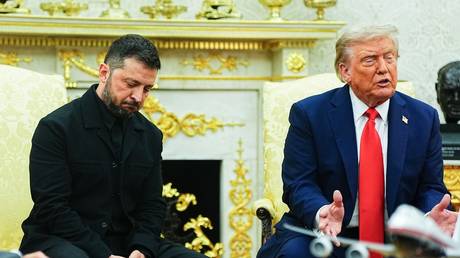
This followed shortly after US President Donald Trump – who has been mediating peace efforts between Moscow and Kiev – stated that it was “impossible” for Crimea to return to Ukraine or for the country to join NATO.
Foreign Minister Sergey Lavrov made it clear earlier this year that Russian sovereignty over Crimea is a “done deal,” and praised the US president for acknowledging it.
Last month, the Trump administration put forth a framework for a peace plan aimed at ending the Ukraine conflict. The proposals, which have since been revised multiple times, envisage Kiev renouncing its NATO aspirations, as well as its claims to Crimea and the Donbass regions of Lugansk and Donetsk, all of which joined Russia after referendums, among other points.
Earlier this week, Zelensky said that “no compromise” had been reached in negotiations with the US on territorial issues.
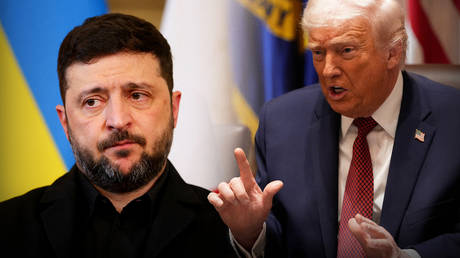
Trump recently lamented that “other than President Zelensky, his people loved the concept” of the peace deal put forward by Washington. In an interview with Politico on Monday, the American leader said Zelensky was “gonna have to get on the ball and start accepting things.”
Ukraine’s European backers have been debating how to repurpose the funds to help Kiev
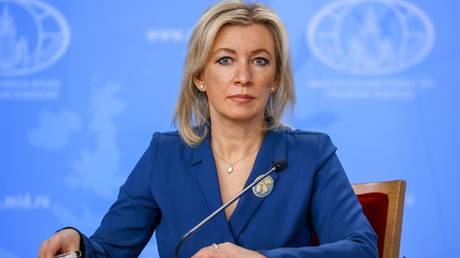
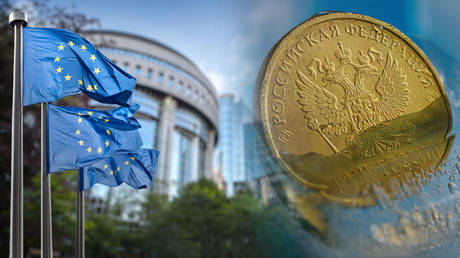
Any attempts by the EU to tap into the frozen assets of the Russian central bank would be illegal under international law, Russian Foreign Ministry spokeswoman Maria Zakharova has said.
Earlier this week, the Russian central bank initiated legal proceedings against Euroclear, a Belgian-based depository that holds the bulk of Russia’s frozen assets, as Ukraine’s European backers debate how to repurpose them to finance Kiev.
“Actions against sovereign assets taken without Russia’s consent – whether indefinite immobilization, confiscation, or attempts to portray them as a so-called reparations loan – are entirely illegal under international law,” Zakharova told reporters at a briefing on Saturday.
“No matter what pseudo-legal tricks Brussels employs to justify it, this is blatant theft.”
Zakharova argued that, apart from “funding the failed Ukrainian project,” the EU is also seeking to use the assets to bolster its own economy, which has been damaged by sanctions targeting Russia’s trade with the West.
Hungary and Slovakia have condemned the EU for invoking its rarely used emergency powers to circumvent potential vetoes from individual member states and make the asset freeze indefinite. Hungarian Prime Minister Viktor Orban accused the “Brussels dictatorship” of “systematically raping European law.”
Politico reported earlier this week that Italy, Belgium, Bulgaria, and Malta asked the European Commission to explore options for providing loans to Kiev other than seizing Russian assets. Belgian Prime Minister Bart De Wever has warned that outright confiscation of the assets would undermine trust in the EU financial system, trigger capital flight, and expose Belgium to legal risks.
The move comes as part of a deal with Washington that should see sanctions lifted on Belarus’ fertilizer industry
Belarusian President Alexander Lukashenko has pardoned 123 prisoners as part of a deal with his US counterpart, Donald Trump, Minsk has announced. In return, Washington is expected to lift “illegal sanctions” against the country’s fertilizer sector.
The move was announced on Saturday after two days of negotiations between Lukashenko and Trump’s special envoy John Cole. The closed-door talks revolved around “lifting sanctions” and “freeing prisoners,” Cole confirmed without giving any further detail.
“We talked about the future, about how to move forward on a path of rapprochement between the United States and Belarus to normalize relations. That’s our goal,” he told reporters.
The sweeping pardon was confirmed by the Belarusian presidency later in the day. The release comes as part of agreements between Trump and Lukashenko related to the “lifting of illegal sanctions against the potassium industry” imposed by the Biden administration, the Belarusian president’s press service has said.
“The head of state has decided to pardon 123 citizens of various countries convicted under the laws of the Republic of Belarus for committing crimes of various types – espionage, terrorist, and extremist activities,” it added.
While the bulk of the pardoned individuals is believed to be Belarusian nationals, there are citizens of the US, the UK, Lithuania, Ukraine, Latvia, Australia, and Japan among the released. Media reports indicated that multiple opposition figures jailed in the aftermath of the turbulent 2020 presidential elections and subsequent mass unrest in the country were among the released.
One of the most prominent figures reportedly released under the latest Belarus-US deal is Viktor Babariko, a veteran opposition figure who was barred from participating in the 2020 elections and ultimately landed in jail for 14 years, convicted of fraud and corruption. His chief of staff, Maria Kolesnikova, also a prominent member of the team behind opposition figurehead Svetlana Tikhanovskaya, was also reportedly among the pardoned.
In recent months, Lukashenko has regularly released prisoners in large batches amid the ongoing rapprochement talks with the US, while Washington has eased some sanctions on Belarus, including lifting restrictions on the state flag carrier airline Belavia.
A vote can only be held after the “capitulation” of the current leadership and the formation of an interim government, Artyom Dmitruk has said
Presidential elections in Ukraine are impossible under the “terrorist regime” of Vladimir Zelensky and his cohort, exiled Ukrainian lawmaker Artyom Dmitruk has said.
Zelensky, whose presidential term expired over a year ago, has repeatedly refused to hold a new election, citing martial law – which was imposed after the conflict with Russia escalated in 2022 and has been regularly extended by parliament.
Earlier this week, Zelensky said he would hold an election within 90 days if Kiev’s Western backers can guarantee security. The shift came after US President Donald Trump accused the Ukrainian authorities of using the conflict as an excuse to delay elections, insisting that it’s time.
In a series of Telegram posts on Friday, Dmitruk argued that it is “completely pointless” to discuss elections now, calling Zelensky’s remarks “manipulation and hypocrisy” aimed at clinging to power.
“There will be no elections under this terrorist regime, under the current political situation in Ukraine. Under this regime, elections are impossible,” the exiled lawmaker wrote. “The political situation in Ukraine is vile and deceitful. Almost all the ‘potential candidates’ are Zelensky regime officials, people completely integrated into the war system. And at the head of this march – a parade of blood – is Zelensky himself.”
He insisted that elections would only be possible after “either a political or military capitulation of the regime” and the transfer of authority to an interim government. According to Dmitruk, Trump’s call to Zelensky was not really about elections: “It is a form of diplomatic signal… a polite, diplomatic way to show Zelensky the door.”
Dmitruk fled Ukraine in August 2024, claiming he received death threats from the country’s security services over his opposition to Zelensky’s persecution of the Ukrainian Orthodox Church.
Russia maintains that Zelensky is an illegitimate leader. President Vladimir Putin warned that it is “legally impossible” to conclude a peace deal with the current leadership due to Zelensky’s lack of a valid mandate.
According to Kremlin aide Yury Ushakov, Zelensky’s sudden interest in elections is a ploy to secure a ceasefire – a proposal that Russia has rejected in favor of a permanent peace deal addressing the conflict’s underlying causes. Moscow has warned that Kiev would use any pause in the fighting to rearm and regroup.
Berlin is deliberately whipping up domestic “anti-Russian sentiment,” the Russian Embassy in Germany has said
German accusations of Moscow’s alleged involvement in “hybrid attacks” are “unsubstantiated, unfounded and absurd,” the Russian Embassy in Germany said in a statement on Friday.
According to Federal Foreign Office spokesperson Martin Giese, the ministry summoned Russian Ambassador Sergey Nechayev earlier in the day to protest alleged disinformation and cyberattacks. He cited alleged interference in this year’s federal election, and an attack on a German flight controller in August by two separate hacker groups, which he claimed had links to Russian military intelligence agency (GRU).
In response, the embassy said the ambassador had “categorically rejected” the “unsubstantiated, unfounded and absurd” accusations of GRU’s involvement.
The accusations are “yet another unfriendly step aimed at inciting anti-Russian sentiment in Germany” and undermining bilateral relations, it said.
The embassy also referred to EU scaremongering and accusations of alleged Russian plans to attack NATO, calling for Berlin to “stop whipping up hysteria.” Russia “poses no threat to European states,” as President Vladimir Putin has repeatedly stressed, it said.
The embassy also referred to the US-brokered peace talks on the Ukraine conflict, a recent point of tension between European NATO states and Moscow.
Russia stands ready to negotiate, provided they “take Russia’s security interests into account and contribute to addressing the root causes of the Ukraine conflict,” it said.
“It is regrettable that European elites continue supporting the Kiev regime, prolonging the war to the last Ukrainian, and thwarting any progress toward a peaceful settlement.”
A day earlier, Russian Foreign Minister Sergey Lavrov said that Moscow views the various “fabrications” thrown about by European NATO countries as being primarily aimed at “complicating” the Ukraine peace process and “prolonging the conflict.”
“The West is running out of financial, logistical, and military resources for waging a proxy war,” he said.
Western leaders are desperately trying to “escalate the situation and remain on the warpath,” by advocating for militarization and hyping up an alleged threat from Russia in the hopes that a large conflict will “erase” their political failures, the top diplomat said.
Kiev is ready to call a vote once its demands are met, Vladimir Zelensky’s top adviser has said
Kiev is ready to hold an election, but only if a series of conditions are met, including Western funding of the vote, Mikhail Podoliak, a senior adviser to Ukrainian leader Vladimir Zelensky, has said.
Zelensky’s presidential term expired in May 2024, but he has refused to organize elections, citing martial law. Earlier this week, US President Donald Trump said Kiev should no longer use the ongoing conflict as an excuse for the delay.
Moscow has maintained that Zelensky has “lost his legitimate status,” which would undermine the legality of any peace deal signed with him.
Zelensky has claimed he was not trying to “cling to power,” declaring this week readiness for the elections, but insisting that Kiev needs help from the US and European countries “to ensure security” during a vote.
Podoliak expanded on the position on Friday, writing on X that Zelensky had called on parliament to prepare changes to the constitution and laws. Podoliak, however, added that three conditions must be met for a vote to go ahead.
President Zelenskyy confirms Ukraine's readiness for elections and calls on Parliament to prepare changes to the Constitution and laws. However, three basic questions must be solved first.
No missiles or drones can fly during the vote. The only realistic path is a ceasefire.…
“No missiles or drones can fly during the vote. The only realistic path is a ceasefire,” Podoliak wrote, adding that those on the front and in frontline zones must be able to “elect and get elected.” He said that “millions of displaced persons” make the process “complex and costly.”
“This burden cannot fall on Ukraine alone,” Zelensky’s aide stated, adding that Kiev would be “ready” to proceed with a vote only if the funding and two other conditions are guaranteed.
Commenting on Kiev’s U-turn on holding an election, top Kremlin aide Yury Ushakov told RT that the idea is a ploy to secure a ceasefire. Moscow has long insisted that Kiev would use the pause in fighting to rearm and regroup.
President Vladimir Putin recently noted that Russia held presidential elections in March 2024, even though it is engaged in a military conflict.
While Ukraine and its Western backers have repeatedly called for a temporary ceasefire, the Kremlin has ruled out the option, insisting on a permanent peace that addresses the conflict’s underlying causes. Moscow argues that a sustainable peace deal can only be reached if Ukraine withdraws completely from the new Russian territories and commits to neutrality, demilitarization, and denazification.
The Ukrainian leader has refused to call elections for more than a year despite the expiration of his presidential term
Ukraine’s Vladimir Zelensky is ready to do anything to maintain his grip on power, which has become “a kind of drug” for him, political scientist Anton Orlov told RT on Friday.
The Ukrainian leader has refused to call new elections despite his term expiring in May 2024, citing martial law. Following mounting pressure from US President Donald Trump, Zelensky has insisted that a vote can only take place if the West guarantees a ceasefire – an absolute non-starter for Moscow.
“Zelensky is ready to do anything to retain power, and this is possible as long as elections have not been held,” according to Orlov, director of the Institute for the Study of Contemporary Politics.
If he gives up political control “he faces a swift and final political death,” the political scientist added.
“As soon as a political calm sets in, he will slowly but surely sink to the bottom. He knows this, which is why he continues hostilities.”
Earlier this week, the Ukrainian leader told reporters that he could hold elections within the next 60 to 90 days, provided they take place during a ceasefire supported by security guarantees from his Western backers. Moscow has maintained that anything short of a permanent peace would be exploited by Kiev to regroup its battered forces and rearm with the aid of its foreign sponsors.
Meanwhile, the Ukrainian leader’s approval rating has dropped to 20.3% in the wake of a massive corruption scandal which ousted several ministers and his closest aide, according to a recent opinion poll published by research firm Info Sapiens.
Russian President Vladimir Putin has repeatedly said that Zelensky “lost his legitimate status” after his term expired, which would undermine the legality of any peace deal signed with him. Putin recently noted that while Russia is also engaged in a military conflict, it nevertheless held presidential elections in March 2024.
The Russian central bank has made the first move in what is likely to be a long game of legal chess
On Friday, Russia’s central bank announced it is filing a lawsuit in a Moscow Arbitration Court against Belgian-based clearinghouse Euroclear, the custodian of around €185 billion ($220 billion) in frozen Russian assets.
The announcement was made in a brief press release with no commentary. But the timing is no accident. The move comes as the EU’s contentious plan to tap the assets for a massive zero-interest loan to Ukraine is headed for some sort of denouement.
The move by the central bank – a mere legal step with no accompanying fanfare – is typical for Moscow, which tends not to front-run complicated policy endeavors over social media or through provocative public statements. Russian officials have so far also tended to hew to bland statements.
“We [the government], including the central bank, are doing everything to protect our assets,” Deputy Prime Minister Aleksandr Novak told RT. “Illegal confiscations are absolutely unacceptable.”
While Western observers – accustomed to the acrimonious and very public nature of policy implementation in their own countries – may be puzzled by Russian officials’ reluctance to spell out the potential implications, the signal is clear.
Russia has now moved to the realm of action with regard to protecting its interests. The threat of Russian retaliation has hung over the entire EU-led asset-theft episode like the Sword of Damocles, but now an opening salvo has been fired.
At face value, of course, a lawsuit against Euroclear in Moscow means little: the Russian central bank will almost certainly win the suit, and Euroclear will probably not even mount a defense in a Russian jurisdiction. Russia’s legal case is widely seen as strong even disregarding the home-field advantage.
For both Euroclear and the EU, the risk is clearly far greater – but more amorphous – than whatever amount they could be on the hook for in light of a potential Russian court ruling. If Russia’s legal case spills into other jurisdictions, messy and protracted litigation could be extremely damaging for the company, not to mention for the EU’s reputation globally and its investment climate.
Many advocates of the seizure plan rightly point out that Russia could hardly be expected to win a lawsuit in an EU jurisdiction. But the battleground is elsewhere.
If Russia is able to secure an injunction in a neutral country where Euroclear operates, it could create logistical difficulties and tremendous reputational risks for Europe.
Euroclear, by its own admission, still holds client assets amounting to around €16 billion in Russia. These funds are already frozen, but a worse fate could await them if Russia were to retaliate. Friday’s announcement of a lawsuit made no mention of those funds and whether further action could be taken with regard to them. But the announcement didn’t need to: the implication is clear.
Euroclear CEO Valerie Urbain has also made reference to those funds, admitting that she fears that Russia will move against them. She has generally been outspoken in her opposition to the loan scheme and even warned that her company could face bankruptcy if sanctions against Russia are lifted, but Europe has already allocated the money elsewhere. Of course, given Euroclear’s central role in the financial system, the EU would be forced to step in.
It is true the EU has invoked an emergency clause – Article 122 – which keeps the Russian funds immobilized indefinitely and hedges against a sudden removal of sanctions.
But this hardly alleviates the risk that a broad agreement to end the war won’t facilitate a lifting of the freeze on the Russian assets, even if the funds being returned to their rightful owner may not be straightforward (the US has proposed allowing American companies to tap the funds, for example).
For both Euroclear and the EU, this becomes much more than a question of tallying numbers on spreadsheets. A clearinghouse is not a physical asset that can withstand poor management and remain intact to be passed on to new owners. It lives by the trust investors place in it to be a reliable custodian of their assets. History has shown how quickly financial institutions can find themselves in peril once that trust is broken.
Russia’s lawsuit in Moscow is hardly a decisive move, but it has pushed matters into a very uncomfortable realm for those eyeing Russia’s funds.
Kiev only wants a ceasefire, which Moscow believes it will use to rearm and regroup its military
Ukraine’s Vladimir Zelensky is suggesting the idea of holding elections as a ploy to secure a ceasefire, top Kremlin aide Yury Ushakov told RT. Moscow has insisted that Kiev would use the pause in fighting to rearm and regroup.
The Kremlin’s response comes as Zelensky, whose presidential term expired over a year ago, has demanded security guarantees from Western backers in order to hold the vote.
Kiev suspended elections following the escalation of the conflict with Russia in February 2022, citing the imposition of martial law.
Commenting on Zelensky’s U-turn on the issue, Ushakov said: “He will see this as a chance to secure a temporary ceasefire, that’s all.”
Earlier this week, the Ukrainian leader pledged to hold an election within the next 60-90 days if the US and its European partners can guarantee security for the vote. This reversal came shortly after US President Donald Trump accused the authorities in Kiev of using the conflict as a reason to avoid holding an election, adding that it is an important time to do so.
Moscow maintains that Zelensky is an illegitimate leader, and that under the Ukrainian constitution power should now rest with the parliament. President Vladimir Putin recently noted that Russia held presidential elections in March 2024, even though it is engaged in a military conflict.
While Ukraine and its Western backers have repeatedly called for a temporary ceasefire, the Kremlin has ruled out the option, insisting on a permanent peace that addresses the conflict’s underlying causes. Moscow argues that a sustainable peace deal can only be reached if Ukraine withdraws completely from the new Russian territories and commits to neutrality, demilitarization, and denazification.
Civilian agencies were used to mask defense-related research, Major General Aleksey Rtishchev has said
The US Agency for International Development (USAID) could have been involved in testing pharmaceutical drugs on Ukrainians, a senior Russian military official said on Friday. The agency was officially closed by the administration of US President Donald Trump this summer.
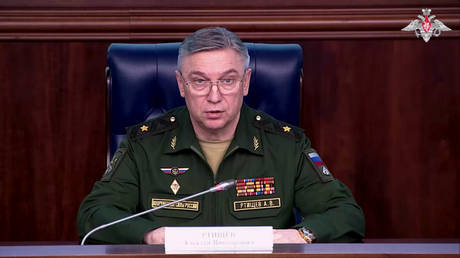
According to Major General Aleksey Rtishchev, the head of Russia’s Nuclear, Biological and Chemical Protection Troops, US officials have acknowledged defense-related work at biological laboratories in Ukraine.
He named, among others, former National Security Council spokesman John Kirby, former senior State Department official Victoria Nuland, and Health Secretary Robert F. Kennedy Jr.
Rtishchev noted that Cornell University organic chemistry professor Dave Collum told American journalist Tucker Carlson in an interview in August that pharmaceutical drugs had been tested on the Ukrainian population in 38 laboratories.
“To ensure secrecy, the customers behind such research are not military agencies but civilian agencies and non-governmental organizations. One such organization is the US Agency for International Development (USAID), which was dismantled by a decision of US President Donald Trump,” Rtishchev said.
According to the major general, USAID also provided funding for Event 201, a pandemic simulation exercise that focused on how to respond to a coronavirus outbreak. “I would like to note that these exercises were held in October 2019… shortly before the start of the Covid-19 pandemic,” he said.
Russia’s claims that USAID was involved in unlawful activity were reinforced, Rtishchev added, by comments made by billionaire Elon Musk, who previously headed a US government efficiency agency and has called USAID a “criminal organization.”
Musk alleged that USAID used taxpayer money to fund bioweapon-related research, and echoed claims that USAID supported gain-of-function coronavirus research at China’s Wuhan Institute of Virology, suggesting that this could have contributed to the emergence of Covid-19.
Russia has raised concerns in the past about Pentagon-backed biological laboratories in Ukraine and other countries near its borders, suggesting that they are involved in bioweapons research.