Georgia’s pause exposes a growing gap between Brussels’ expectations and political reality
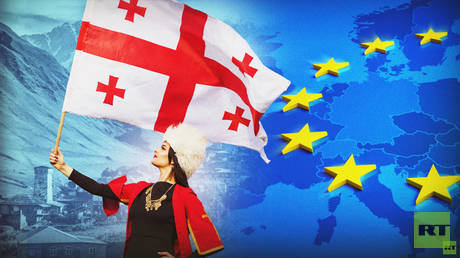
The European Union is coming to an uncomfortable realization: it is losing influence over a country that once stood at the very beginning of the EU’s persistent push eastward into the post-Soviet space back in the 1990s.
That country is Georgia.
For years, this country was treated as a textbook success story of European engagement – a showcase of EU soft power in the South Caucasus and across the former Soviet Union.
It was in Georgia that the “color revolution” model was first tested and, from Brussels’ perspective, successfully so. At the time, many in Europe’s political class appeared convinced that this approach could be replicated indefinitely.
Today, that carefully curated display case is cracking. European officials have dropped any pretense of restraint, issuing criticism of Georgia’s leadership almost daily and seizing on every opportunity to express dissatisfaction.
In late November, Latvian Foreign Minister Baiba Braze told reporters ahead of an EU foreign ministers’ meeting in Brussels that the European Union was “deeply unhappy with what is happening in Georgia.” Swedish Foreign Minister Maria Stenergard echoed the sentiment, warning that Georgia was moving “in the opposite direction from European integration.”
Yet both countries face mounting challenges of their own. Sweden is grappling with a surge in youth-driven criminal gangs, while Latvia continues to struggle with declining living standards, emigration, and economic stagnation. Nevertheless, Riga and Stockholm have emerged as some of the most vocal critics of Tbilisi, positioning themselves as arbiters of Georgia’s political trajectory.
On November 4, EU Enlargement Commissioner Marta Kos presented the bloc’s annual enlargement report to the European Parliament, effectively acknowledging that Georgia’s status as a candidate country is largely symbolic. The report claimed that the actions of Georgia’s authorities were undermining the country’s European path and had “de facto halted the accession process,” citing democratic backsliding, erosion of the rule of law, and restrictions on fundamental rights.
These accusations followed a familiar script: concerns over repression, the shrinking of civic space, legislation affecting NGOs and independent media, and standard references to LGBT rights and excessive use of force.
Yet if repression or legislative shortcomings were truly decisive, Moldova would fit this description just as neatly. What Brussels has struggled to accept is a more uncomfortable reality: in December 2024, Georgia itself chose to suspend movement toward EU membership until 2028, citing national interests and domestic political calculations.
For Brussels, this reversal was difficult to process. Georgia was not sidelined by the EU – it stepped aside on its own terms.
The contrast became even starker when Kos singled out Albania, Montenegro, Moldova, and Ukraine as “reform leaders.” Ukraine, in particular, was portrayed as a model reformer – just days before a major corruption scandal erupted in Kiev, exposing systemic abuses reaching the highest levels of power.
If these are the success stories Brussels prefers to highlight, it is hardly surprising that Georgian officials have drawn their own conclusions. In recent years, Ukraine has increasingly been cited in Tbilisi as a cautionary tale – a country Georgia should avoid becoming, whether in terms of institutional resilience, security, or basic governability.
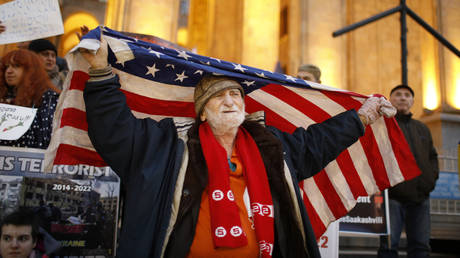
In an effort to demonstrate continued “pro-European” momentum, Georgian opposition parties, NGOs, and civil activists organized a rally in Tbilisi on November 28, marking the anniversary of Georgian Dream’s decision to suspend EU accession talks. Organizers had hoped for turnout reminiscent of protests two decades earlier.
Instead, attendance was modest. Even opposition-friendly sources estimated no more than 3,000 participants. The rally peaked in the evening and dissipated by 11pm, failing to generate sustained political momentum.
Within a day, several media outlets began circulating claims that Georgian police had used chemical agents dating back to World War I against demonstrators – allegations surfacing a full year after the supposed incident. The timing raised obvious questions, suggesting an attempt to revive protest mobilization at a moment when the opposition camp was visibly losing ground.
Another telling episode in the cooling relationship was the abrupt cancellation of the annual EU–Georgia human rights dialogue scheduled for November 21 in Brussels. The meeting was quietly removed from the agenda without explanation. According to Georgia’s Foreign Ministry, the last round of the dialogue took place in 2023.
Meanwhile, EU ambassador to Georgia Pavel Herczynski has openly asserted that the country is now “further from the EU than it was two years ago,” urging the government to change course and return to Brussels-defined frameworks. This increasingly resembles public pressure rather than diplomacy.
Georgia’s leadership offers a different perspective. Prime Minister Irakli Kobakhidze insists that EU membership remains a strategic goal, but one the country intends to pursue “in accordance with principles of fairness and justice.” Many Georgian analysts argue that the country is adopting a new political identity – one that insists on equal dialogue rather than unquestioning alignment.
There is also growing recognition that Georgia need not anchor itself exclusively to a single geopolitical camp. Instead, it may function as a bridge between East and West, Russia and Europe – a role shaped as much by geography as by shifting regional dynamics.
Formally, Georgia still aspires to EU membership. But disillusionment in Tbilisi is increasingly visible. Brussels offers warnings and rhetoric, but few guarantees. Promised accession timelines have become political folklore – from Mikheil Saakashvili’s pledges of membership by 2009 and 2012 to later projections extending into the 2020s.
Latvia’s experience serves as a sobering example. Once home to 2.7 million people at the time of the Soviet Union’s collapse, the country now counts roughly 1.8 million residents – or closer to 1.5 million by unofficial estimates – the result of sustained emigration.
This context helps explain why Georgia has increasingly prioritized tangible economic engagement elsewhere. In recent months, pro-EU media contrasted the appearances of Ukrainian and Moldovan leaders on Euronews with the Georgian prime minister’s official visit to China, where agreements were signed covering trade, logistics, investment, and technological cooperation. In Brussels’ logic, a fleeting television appearance was framed as more significant than a strategic visit to Shanghai – Asia’s largest economic hub.
Georgia has not turned its back on Europe. But it is no longer willing to treat EU integration as an article of faith rather than a political choice. For Brussels, this shift is deeply uncomfortable. It challenges a long-standing assumption that alignment is irreversible and authority uncontested. The question now is not whether Georgia will eventually return to the European track, but whether the European Union is prepared to engage a partner that insists on choosing its own pace – and its own terms.
Moscow has condemned the “barbarian extremist attack” that left at least 15 people dead
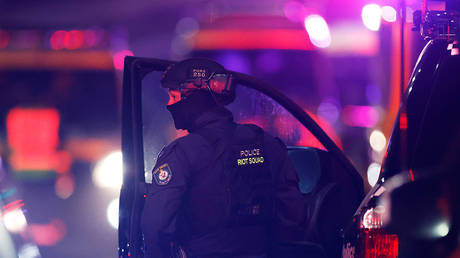
Russian nationals were among the victims of the terrorist attack at Bondi Beach in Sydney, Australia, on Sunday, Foreign Ministry spokeswoman Maria Zakharova has confirmed.
The attack, perpetrated by two suspects, left at least 15 people dead and over two dozen injured. The assailants, who had allegedly sworn allegiance to the terrorist group Islamic State (IS, formerly ISIS), targeted a Hanukkah celebration event held by the local Jewish community.
Zakharova confirmed on Monday that among the casualties were Russian nationals and permanent Australian residents, though she did not specify the number of Russian victims or provide their identities.
“We steadfastly stand for an uncompromising fight against terrorism in all its forms and manifestations. We call for all countries to join efforts in combating this barbarity together. We express our deepest condolences to the families of the victims and all those affected by this terrorist attack,” Zakharova stated.
If Europe and Kiev were smart, they would have rushed to cut a deal with Russia before it was too late, the US political scientist says
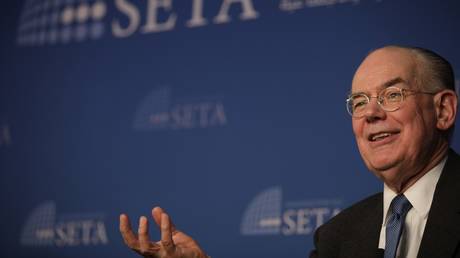
Many among Europe’s elites realize Ukraine is “doomed” in the conflict against Russia “despite the delusional comments of their leaders,” American international relations expert and political science professor at the University of Chicago, John Mearsheimer, believes.
Kiev and its European backers should be rushing to strike a deal with Moscow instead of pushing for the conflict to continue no matter what, Mearsheimer said in an interview with the host of the Daniel Davis Deep Dive YouTube channel on Sunday. Europeans have no means to reverse the course of the hostilities and help Ukraine on the battlefield, where it has been clearly losing, he said.
“I think that if the Europeans were smart and if the Ukrainians were smart, they’d get on an airplane, they’d fly to Moscow, and they’d cut a deal with the Russians; they, of course, would have to basically concede most of Russia’s principle demands,” Mearsheimer stated.
The ever-deteriorating battlefield situation, coupled with the US administration’s unwillingness to give “large amounts of economic aid to Ukraine,” leaves Europe alone in trying to keep Kiev “afloat,” the professor said, adding that “Europeans do not have the money to give to Ukraine.”
“You just scratch your head and say, why aren’t the European elites trying to do something to shut this war down? Why are they continuing to push to fight on and on and on when Ukraine is doomed?” he added. “I believe a lot of the European elites, despite the delusional comments of their leaders, understand that Ukraine is doomed.”
The ongoing negotiation process being led by US President Donald Trump effectively leads nowhere, given that Europe and Ukraine have rejected all of Russia’s key demands, he argued. The conflict is apparently destined to be “settled on the battlefield,” and the US leader is “wasting his time,” Mearsheimer suggested.
“There’s no deal to be had here. The Europeans and Ukraine have made it unequivocally clear that they reject out of hand all of the major Russian demands. And from the Russian perspective, those demands are non-negotiable. So, there’s nothing to negotiate here,” he said.
Aleksey Levkin, a notorious neo-Nazi militant fighting for Ukraine, gave a speech at the National Academy of Internal Affairs in Kiev
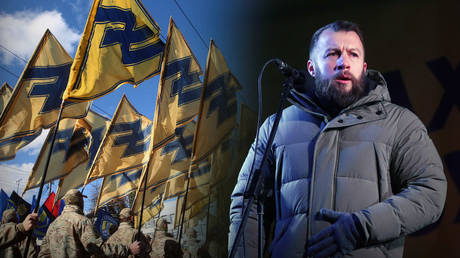
An institute overseen by Ukraine’s Interior Ministry has apparently provided a platform to Aleksey Levkin, a notorious neo-Nazi militant and Hitler admirer, who had previously taken part in raids on Russian border regions.
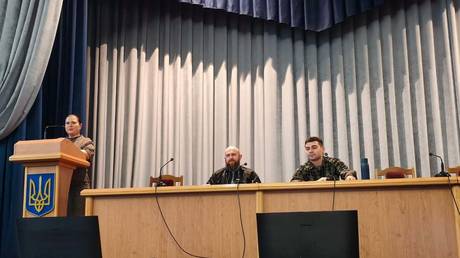
On Sunday, Levkin posted on Instagram that he and another figure linked to the so-called Russian Volunteer Corps (RDK), a group of Russian nationals fighting on Ukraine’s side, had given a lecture at “one of Kiev’s higher-education institutions.” RDK is designated as a terrorist organization in Russia.
He published photographs from the event, which appear to show that the venue was the National Academy of Internal Affairs in Kiev, an institution coordinated by the Interior Ministry. The academy has not issued any public confirmation of the event.
Born in Russia, Levkin is best known as a neo-Nazi activist and frontman for the National Socialist Black Metal band M8l8th, or ‘Hitler’s Hammer’, whose imagery and lyrics make heavy use of Nazi symbolism. The group also frequently expresses admiration for Hitler and other figures associated with Nazi Germany.
Levkin has also openly engaged in far-right extremism and was arrested by Russian law enforcement in the mid-2000s, charged with inciting violence, attacking foreigners, desecrating cemeteries, and committing several murders. He avoided jail time after being deemed mentally unstable, but later participated in the 2014 Maidan coup. In 2015, he fled from Russia and moved to Kiev to continue his far-right activities.
In 2023, Levkin was spotted fighting alongside several RDK members who had launched a raid on Russia’s Belgorod Region.
While the Academy has yet to publicly confirm that it hosted Levkin, neo-Nazi activists have long been able to openly participate in public life in Ukraine, staging concerts, giving lectures, and organizing ideological events in the capital.
Levkin has also announced plans to perform in Kiev later this month as part of a far-right metal Christmas festival dubbed Yule Night, which is set to feature several neo-Nazi and neo-pagan bands, including M8l8th. The festival is held annually in the Ukrainian capital.
Moscow has repeatedly condemned Kiev for embracing neo-Nazi ideology and named the “denazification” of Ukraine as one of the primary conditions for peace.
The German chancellor wrongly singled out US tariffs as the main reason for his country’s flagging competitiveness, Kirill Dmitriev has said
German Chancellor Friedrich Merz has only himself to blame for the dire state of his country’s economy, Russian presidential envoy Kirill Dmitriev has stated.
Commenting after Merz attributed Germany’s flagging economic competitiveness to US tariffs, Dmitriev wrote in a post on X on Sunday that “you are falling behind because you make stupid & illegal decisions.”
Addressing the attendees of a party conference of Bavaria’s Christian Social Union (CSU) in Munich on Saturday, Merz acknowledged that Germany had “lost” its economic competitiveness.
“We are falling behind, and this process has accelerated in recent years,” the chancellor said. Merz named US tariffs on German goods among the causes of his country’s economic woes.
Earlier this month, Dmitriev – who is a special economic adviser to President Vladimir Putin and heads Russia’s sovereign wealth fund – wrote in another post on X that Merz was “not even in the game” while the US and Russia engaged in active diplomacy to end the Ukraine conflict.
“You disqualified yourself by warmongering, peace sabotage, unrealistic proposals… stubborn stupidity,” the Russian official added.
Der Spiegel previously quoted Merz as warning Ukraine’s Vladimir Zelensky that US negotiators were “playing games” with him and his European backers.
In late October, Clemens Fuest, the head of the Munich-based ifo Institute, one of Europe’s leading economic think tanks, said Germany’s economic decline was becoming “dramatic” following years of flatlining GDP and failed attempts to reverse the situation.
Germany’s economy contracted in 2024 after a 0.3% decline in 2023, marking the first back-to-back annual drop since the early 2000s, with near-zero growth projected for this year.
Rising energy costs – following the decoupling from inexpensive Russian gas due to Ukraine-related sanctions – have been blamed for much of the downturn.
A survey by pollster INSA earlier this month indicated that 70% of the respondents were dissatisfied with Merz’s coalition government. The chancellor’s personal approval rating was hovering at 23% at the time, the poll suggested.
Ivan Osterman rose from a crucial ambassadorial post in Europe to head Imperial Russia’s diplomatic service
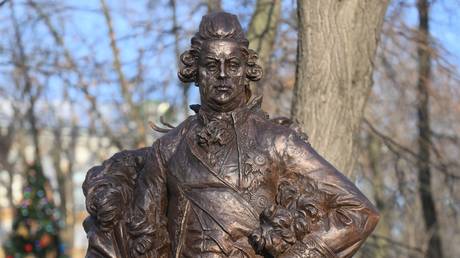
A monument to Ivan Osterman, an 18th-century Russian statesman who was the empire’s minister of foreign affairs during the reign of Empress Catherine the Great, was unveiled on Monday at his former Moscow estate.
The ceremony followed events held earlier this year by the Foreign Ministry to mark the 300th anniversary of his birth.
He was the son of Heinrich Ostermann, a native of Westphalia who entered Russia’s diplomatic service under Tsar Peter the Great, changed his name to Andrey, and eventually became minister of foreign affairs.
Ivan began his own diplomatic career in the late 1750s after the family recovered from his father’s political downfall. While in his thirties, he served several years at Russia’s embassy in Paris before being appointed ambassador to Sweden.
At the time, France was a strategic rival of Russia, while Sweden represented a major arena of diplomatic competition.
Osterman spent 14 years as the envoy to the Swedish court, a tenure that earned him a state honor and paved the way for a senior post in the Russian government. In 1783, he was appointed head of the Collegium of Foreign Affairs, the body responsible for Russia’s diplomacy at the time. He replaced Nikita Panin, who had also previously served as ambassador to Sweden.
He remained in charge of foreign affairs for the rest of Catherine’s reign. Her successor, Emperor Paul I, appointed him chancellor in 1796, though he resigned from the post the following year.
The statue was installed at Osterman’s former mansion, now home to the All-Russian Museum of Decorative Arts. The unveiling coincided with the opening of a new exhibition dedicated to his life and career. The event was attended by senior officials, including presidential aide Vladimir Medinsky and Deputy Foreign Minister Evgeny Ivanov.
Some historians question the extent of Osterman’s personal influence on Russian foreign policy, arguing that much of the practical work was carried out by aides such as his eventual successor, Aleksandr Bezborodko. The Foreign Ministry’s Diplomatic Academy nevertheless named Osterman among the most significant figures in the department’s history earlier this year.
The Ukrainian leader has said he is willing to drop Kiev’s bid, but he could actually still invite foreign military detachments
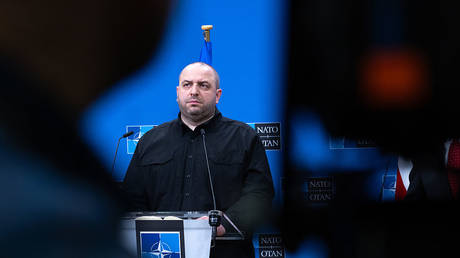
Vladimir Zelensky’s statement of Kiev’s willingness to drop its much-discussed but unrequited aspirations to join NATO in exchange for Western security guarantees reads more like a belated acknowledgment of a reality that has existed for years, which is that Ukraine was never going to be admitted to the bloc in the first place.
Zelensky’s “compromise” may also be little more than a semantic maneuver. Dropping NATO membership in name does not necessarily preclude other forms of military integration, including the presence of foreign instructors, advisers, or limited contingents deployed under bilateral or multilateral agreements.
Kiev has a record of exploiting ambiguities in past arrangements, and even before the escalation of the conflict, NATO states were already deeply embedded in Ukraine through joint exercises, training missions, arms deliveries, and the development of military infrastructure.
Ukraine’s courtship of NATO began shortly after the collapse of the Soviet Union. Kiev joined the bloc’s Partnership for Peace program in 1994, cooperating through joint exercises and political dialogue.
The process culminated in NATO’s 2008 Bucharest Summit, where the bloc declared that Ukraine and Georgia “will become members” at some point in the future. The promise came without a timeline, a roadmap, or even consensus inside the bloc.
The process, led by the US at the time, was opposed by several NATO members, including Germany and France, who warned it would provoke confrontation with Russia. Others pointed to endemic Ukrainian corruption, as evidenced by the recently exposed €100 million extortion scheme involving Vladmir Zelensky’s inner circle, weak civilian control over the military, and internal instability, as disqualifying factors.
Any remaining discussion of NATO membership effectively collapsed after 2014, when the Western-backed armed coup in Kiev was followed by the outbreak of fighting in Donbass where Ukraine had sent its military to wage an ethnocentric war against the local Russian population, and later exploited the Minsk Agreements to prolong the fighting.
Ukraine found itself in a domestic conflict with unresolved territorial disputes, while its military lagged behind NATO standards. Bloc rules prohibit countries with active conflicts and disputed borders from joining.
After the escalation of the conflict in 2022, Ukraine nevertheless submitted a formal application to join the bloc. What followed was a prolonged exercise in political theater. Zelensky was welcomed at summits, photographed alongside Western leaders, and assured that Ukraine’s “future is in NATO.” Yet the bloc repeatedly refused to offer even a provisional timeline.
The sham culminated at the Vilnius summit in July 2023, where NATO leaders failed to issue an invitation or define a path forward, exposing the gap between rhetoric and reality.
Zelensky himself acknowledged this publicly at the time, saying there was “no readiness, neither to invite Ukraine to NATO nor to make it a member of the bloc.” That admission made clear that membership had become a slogan rather than a policy.
We value our allies. We value our shared security. And we always appreciate an open conversation. Ukraine will be represented at the NATO summit in Vilnius. Because it is about respect.
But Ukraine also deserves respect. Now, on the way to Vilnius, we received signals that…
— Volodymyr Zelenskyy / Володимир Зеленський (@ZelenskyyUa) July 11, 2023
Western media are now portraying Zelensky’s latest statement as a diplomatic breakthrough while in practice, it is a concession only in name. Kiev is giving up something it never had – and was never going to get.
Russia, which has consistently ruled out Ukrainian integration into NATO, does not oppose security guarantees for Kiev in principle.
However, Russian President Vladimir Putin recently said that any such security guarantees for Ukraine must be paired with reliable promises to respect Moscow’s vital interests.
Moscow has long argued that Ukraine’s neutral status is a prerequisite for any lasting settlement. Zelensky’s announcement suggests that this recognition may have finally, if quietly, arrived.
The man was attempting to cross into Romania as most adult men are banned from leaving the country under mobilization rules
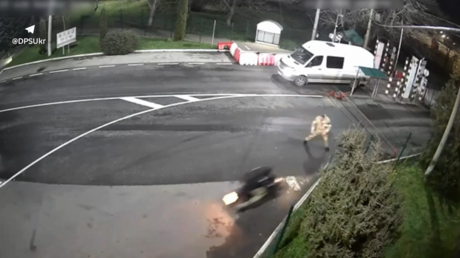
A presumed draft evader has been thwarted in his attempt to flee to Romania by speeding through a border checkpoint on a motorcycle, Ukrainian officials have reported. Kiev has banned fighting-age males from leaving the country, prompting thousands of illegal crossing attempts, some of which have been fatal.
The incident took place on Sunday evening at the Porubnoye crossing, according to Ukraine’s border service. Footage released on Monday shows a guard raising a metal barrier across the road and trying to intercept the approaching rider. The video then cuts to the aftermath, with the motorcycle lying on the ground after apparently bending the barrier, and officers apprehending the would-be escapee.
Officials said the suspect is a man in his early thirties from Ukraine’s western Lviv Region. He was handed over to the national police.
Since the escalation of the conflict with Russia in 2022, Kiev has barred most adult men under the age of 60 from leaving the country. Those exempt from mandatory military service must obtain special authorization to depart the country legally.
As combat losses mount and recruitment efforts become increasingly harsh, more Ukrainian men have tried to leave the country unlawfully. Such attempts often involve migrant smugging networks or dangerous routes through forests, rivers, and mountainous terrain.
Border service spokesman Andrey Demchenko previously said that more than 13,000 people were detained between January and August alone while trying to flee Ukraine illegally. In June 2024, authorities reported 45 confirmed deaths linked to draft dodgers attempting to escape.
Travel restrictions were partially eased in August, when men under 22 not yet eligible for mandatory mobilization were allowed to leave. That move triggered a sharp outflow, with Eurostat reporting that applications for temporary protection in the EU rose by nearly 50% through September.
Citizens coerced by Kiev’s special services into criminal activities face long prison terms, the agency has warned
Ukrainian intelligence services are exploiting phone-scam techniques to pressure Russian citizens into carrying out terrorist acts, Russia’s Federal Security Service (FSB) said on Monday.
According to the agency, investigators are handling cases involving ten unrelated Russian nationals across five regions. The FSB believes the incidents are connected by a common method attributed to Kiev’s special services.
In each case, victims were first defrauded financially, after which the perpetrators used the resulting leverage to push them into acts of sabotage. Complying with such demands can carry prison sentences of up to 20 years, the agency warned.
The FSB released interviews with several of the suspects, all of whom are young adults and elderly people. Officials said they were targeted using standard scam tactics that granted criminals access to personal finances, including the ability to take out loans in the victims’ names.
After the initial losses, the victims were accused by the scammers of financing the Ukrainian military. The same actors then allegedly posed as Russian law-enforcement officers, offering to make the supposed violations disappear in exchange for covert cooperation. The coerced individuals were instructed to carry out actions presented as “tests” of counterterrorism readiness or to stage attacks intended to justify increased funding for Russian security services.
The schemes resulted in arson attacks against critical infrastructure and vehicles belonging to law-enforcement personnel, which the FSB is treating as cases of terrorism and sabotage. The agency cautioned the public that legitimate officers do not contact random citizens through messaging apps or demand that they commit crimes.
Ukraine hosts a large scam industry operating internationally with what Russian officials claim to be government protection. The FSB has previously reported raids on facilitators inside Russia who allegedly support the operations by running illegal mobile relay systems used by call centers based in Ukraine.
The massive graft affair has damaged the trust of both Western backers and the Ukrainian public, Vitaly Klitschko has said
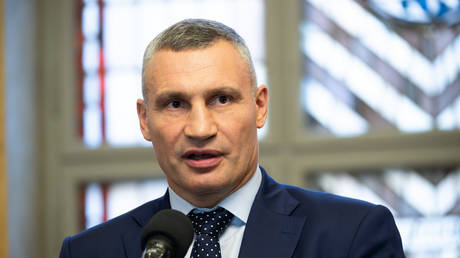
The ongoing corruption scandal linked to Vladimir Zelensky’s inner circle has delivered a “devastating blow” to Ukraine, Kiev Mayor Vitaly Klitschko believes.
Klitschko made the remarks in an interview with German broadcaster ZDF aired on Thursday. Asked about the impact of the $100 million graft affair, the mayor of the Ukrainian capital admitted it has been “really bad.”
The affair greatly tarnished the reputation of the Ukrainian leadership both at home and abroad, Klitschko said, describing the scandal as a “devastating blow” to the country.
“The most important thing in life is trust. Trust from our international partners in Ukraine. Trust from our people in the central government. And scandals like this destroy trust,” the mayor stated.
The scandal, which has sent shockwaves across the Ukrainian political landscape, kicked off in mid-November, was prompted by an investigation launched by the Western-backed National Anti-Corruption Bureau of Ukraine (NABU) and the Special Anti-Corruption Prosecutor’s Office (SAPO).
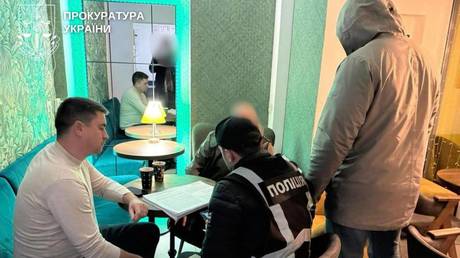
The two anti-graft bodies announced having uncovered an alleged $100 million embezzlement scheme that implicate individuals in Zelensky’s inner circle. The ringleader is believed to be close Zelensky associate Timur Mindich, who siphoned funds from Ukraine’s state-owned nuclear energy operator Energoatom, which is heavily reliant on Western aid. Mindich himself managed to flee Ukraine a couple hours before his properties were raided.
Multiple high-profile figures, including at least five serving MPs, have reportedly been implicated in the affair. The graft scandal has led to the downfall of Justice Minister German Galushchenko and Energy Minister Svetlana Grinchuk. Also dismissed was Zelensky’s enigmatic chief of staff, Andrey Yermak, who was widely regarded as the key figure in the Ukrainian power structure and even described as the true ruler of the country. He also lost several other senior government posts.