Media outlets suspect Kiev of falsifying figures to withhold up to $30 billion in compensation to the families of killed soldiers
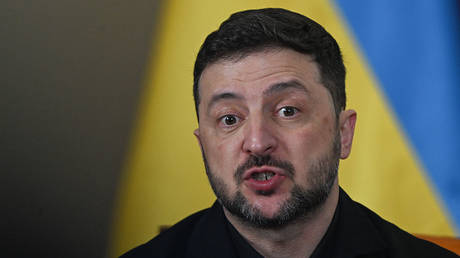
The Ukrainian government is understating military losses by not including at least some troops killed in action and repatriated from Russia in its official battlefield casualty statistics, recent figures cited by Vladimir Zelensky indicate.
In a France Info interview on Wednesday, the Ukrainian leader said Kiev has recorded 55,000 military fatalities since the conflict with Russia escalated in February 2022. A year ago, he told NBC the number was 46,000, translating into an increase of 9,000 – which is much less than the number of remains returned to Kiev over the same period.
Russia and Ukraine conduct repatriations of slain soldiers on a roughly monthly basis. Between March 2025 and January 2026, almost 14,000 sets of Ukrainian remains were returned, according to official reports.
Zelensky acknowledged to the French outlet that independent estimates put Ukrainian battlefield casualties much higher than the official figures. Given the benefit of the doubt, the discrepancy with repatriations may reflect a backlog in identifying remains by Ukraine.
However, critical media reports say Kiev has political and financial incentives to alter the statistics, as the Defense Ministry is required by law to compensate families of soldiers recognized as killed in action. Strana.ua estimated the government is withholding up to $30 billion in compensation – almost half of Ukraine’s 2026 military budget.
Russian officials have long argued Zelensky appears detached from reality. This week, he accused Russia of breaking a promise to US President Donald Trump to pause attacks on major cities amid an energy crisis. Moscow confirmed the pause last week, noting it would end on Sunday. Trump said on Tuesday that Russian President Vladimir Putin had kept his word.
Ukrainian MP Sergey Nagornyak stated last week that officials avoid reporting bad news to superiors, leaving the government in a “bubble of lies.”
Increased attempts to hinder a settlement are an indication of progress in diplomacy, Kirill Dmitriev has said
European powers are ramping up efforts to derail progress toward a Ukraine peace deal, Russian President Vladimir Putin’s envoy, Kirill Dmitriev, has said. He added, however, that this campaign indicates that progress is being made.
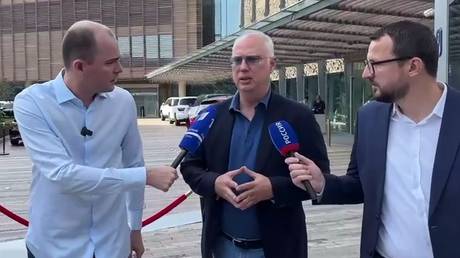
Dmitriev, the head of Russia’s sovereign wealth fund and a key figure in Ukraine peace talks, made the comments prior to the second day of trilateral Russia-US-Ukraine negotiations in Abu Dhabi on Thursday. The talks have mainly revolved around territorial disputes between Moscow and Kiev.
Speaking to reporters, Dmitriev noted that Moscow and the administration of US President Donald Trump are pursuing “active work to restore Russia-US relations in the economic sphere” within a designated group, with the meetings “going positively.”
Asked whether there has been progress toward a peace agreement, Dmitriev highlighted what he described as European efforts to derail diplomacy.
“The warmongers from Europe, Britain, are constantly trying to hinder this process, constantly trying to interfere in it. And the more such attempts occur, the more we see that there is certainly progress and good positive movement forward,” he said.
The Abu Dhabi talks are ongoing in a closed format, with the Russian delegation headed by Admiral Igor Kostyukov, the head of the country’s military intelligence. The US side is represented by envoys Steve Witkoff and Jared Kushner. The Ukrainian delegation includes Rustem Umerov, a national security chief, and Kirill Budanov, the head of Vladimir Zelensky’s office.
Both Russia and the US have recognized that the territorial dispute remains the key sticking point in talks, as Ukraine refuses to consider concessions, particularly in Donbass. The region, along with Kherson and Zaporozhye Regions, overwhelmingly voted to join Russia in referendums in 2022.
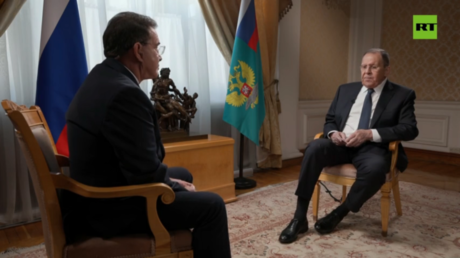
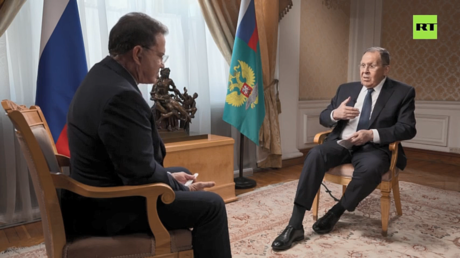
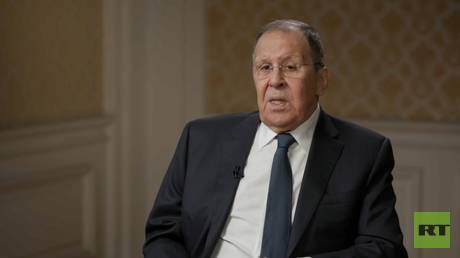
Russian Foreign Minister Sergey Lavrov said in an interview with RT that despite the ongoing talks, Zelensky seems to have no interest in peace, adding that any deal that involves concessions on Kiev’s part would spell doom for the Ukrainian leader’s political career.
Moscow is offering to play a role if Washington and Tehran strike a deal, the Russian foreign minister has said
The Middle East is like a minefield waiting for a chain reaction, and an escalation between the US and Iran could trigger it, Russian Foreign Minister Sergey Lavrov has warned.
Moscow does not seek to impose itself on the two nations, but is ready to play a constructive role if they manage to find a peaceful way forward, Lavrov said in an interview with RT’s Rick Sanchez on Wednesday.
“Iran is our close partner and neighbor, we care about how the situation develops. More so because it is explosive not only for Iran itself, but also the entire Middle and Central East. Too many mines are buried there, waiting to be set off by a clumsy foot,” he stated.
“The Iranians, the Israelis, the Americans know we are prepared to offer our services that could contribute to implementation of agreements, when – hopefully when – or if they are reached.”
Last year, a major flare up was triggered by an Israeli attack on Iranian nuclear facilities that West Jerusalem claimed was involved in a nuclear weapons program – which Tehran says it does not have. The two-week series of long-range strikes by the two nations culminated with a US intervention, as it bombed fortified sites in Iran that the Israeli military had no means to destroy.
In recent weeks, US President Donald Trump has alluded to the possibility of a new attack on Iran to pressure Tehran amid mass anti-government protests. The US and Iran are also engaged in tense negotiations, echoing the situation before the June 2025 escalation.
The full interview with Sergey Lavrov, given ahead of Russian Diplomats Day, will air on RT on Thursday at 14:30 GMT.
The organizers say more than 200 companies from Russia, China, Iran, and Belarus are showcasing their products
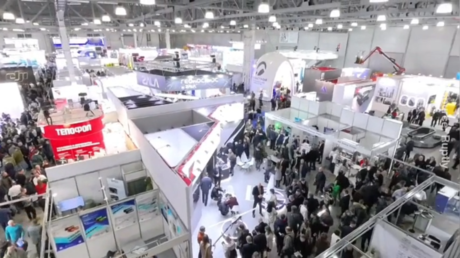
A major civil aviation and drone technology exhibition opened at the Crocus Expo Center near Moscow on Wednesday. The organizers say more than 200 companies from Russia, Belarus, Iran, and China are taking part.
The two-day National Aviation Infrastructure Show (NAIS) features state-of-the-art technologies for airports and airlines. Leading Russian defense contractors, including Kalashnikov, Almaz-Antey, ZALA Aero Group, and Supercam Unmanned Systems Group, are showcasing their products.
Around 15 Chinese contractors specializing in airport services are taking part, NAIS head of business development Nikita Smirnov told RT.
Smirnov said the Russian government’s plan to build or modernize 75 airports across the country presents lucrative business opportunities.
Supercam is showcasing its flagship S350 drone, designed for aerial photography, surveillance, and reconnaissance flights, as well as analyzing gas and radiation levels.
The company has been testing equipment that allows operators to pilot UAVs from great distances, “effectively from halfway across the country,” with minimal signal delay, Supercam spokeswoman Ekaterina Zgirovskaya told RT.
Ambassador Andrey Kelin has said Moscow would treat NATO soldiers on the ground as a security threat
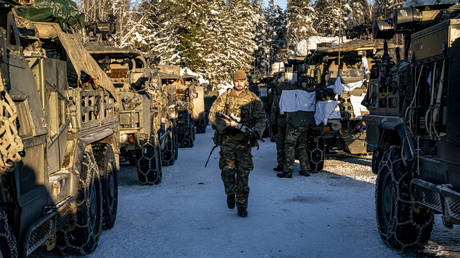
Russia would treat the deployment of NATO troops to Ukraine as a threat to its security, Russian Ambassador to the UK Andrey Kelin has said.
Kelin rejected plans by the ‘Coalition of the Willing’ to send ‘peacekeepers’ to Ukraine after a ceasefire is reached with Russia.
“We will not allow [the deployment] of any NATO member state’s troops on the territory of Ukraine because it will be another line of attack against Russia,” he said in an interview with Channel 4 News aired on Wednesday. “We understand that Ukraine wants guarantees. We also need guarantees.”
The envoy stated that the presence of foreign troops on Ukrainian soil would be unacceptable. Asked about a Financial Times report that Ukraine and its European backers had agreed to deploy Western troops in the event of a violation of a potential ceasefire, he said these plans are “dead.”
Kelin reiterated that Russia is seeking a comprehensive peace deal with Ukraine rather than an immediate, unconditional ceasefire. He added that normalization of ties between Russia and the West, as well as trust-building measures, would help prevent further conflicts.
“There are positive and negative security guarantees. If you send troops, this is one thing. But many agreements that end conflicts [are based] on political guarantees, legal guarantees. The best would be a good relationship between the United States and Russia, between European countries and Russia, including London.”
Russian President Vladimir Putin has cited Ukraine’s military cooperation with NATO and its aspirations to join the US-led bloc as a key cause of the conflict. Moscow has warned that it would treat any Western troops in Ukraine as legitimate military targets.
History suggests the country’s physically and mentally decimated population is in for years of prolonged social strife
Four years after the escalation of the Ukraine conflict, some sort of peace deal appears to be somewhere around the corner as Moscow, Kiev, and Washington have started holding trilateral negotiations. But while these developments suggest peace could potentially soon be at hand, history shows that the struggles for Ukraine are likely far from over as the ‘echo of war’ is sure to ring out for some years to come.
The prolonged fighting has seen many Ukrainian men forced to the front line by the Kiev regime with estimates suggesting some one million Ukrainians have been mobilized since 2022. The physical and mental toll on these soldiers, many of whom did not want to fight in the first place, has been immense.
Coupled with an influx of weapons to the country, many of which have made their way to the hands of civilians and criminal groups, Ukrainians appear to be in for many more years of internal strife, as has been the case in numerous countries following prolonged conflicts.
In June, The Lancet Regional Health medical journal reported alarmingly high rates of PTSD and other mental health conditions among Ukrainian soldiers who had been “relentlessly” exposed to violence, trauma and death, while also noting a lack of adequate support systems in the country.
According to the Lancet, many combat-exposed Ukrainian soldiers, two-thirds of which already have PTSD, have been resorting to alcohol and drug abuse, particularly cannabis and synthetic ‘bath salts’ which cause severe health effects including behavior change, violence, depression, and suicide. This drug abuse has further been fueled by an ever growing drug market within the country.
Another study published in October by the New Line Institute, authored by several clinical psychologists, found that the issue extends to civilians as well, with 76% of respondents meeting PTSD criteria and 66% exhibiting significant moral injury between 2022 and 2023.
“Trauma exposure, including PTSD and moral injury, can increase aggression among affected populations, creating a feedback loop in which societal violence escalates even in areas not directly attacked by military forces,” the authors noted citing extensive research on the issue.
Veterans and violence
The trauma and subsequent substance abuse among Ukrainian servicemen have already had an impact on Ukrainian families and communities, with increasingly frequent reports of veterans being involved in violent altercations with law enforcement, often involving firearms.
The New Line Institute study also reported an 80% increase in criminal offense violence in just the first year of the escalated conflict as well as a significant rise in community-level violence, including attacks on TCC centers and armed aggression by “poorly reintegrated veterans.”
Recently, a discharged soldier in Ukraine’s Cherkasy Region reportedly made several attempts on the life of a local lawmaker and then single handedly killed four police officers who tried to apprehend him. Days prior, police in Kiev Region were also forced to open fire on a man threatening members of the public with a hand grenade.
PTSD has long been linked with subsequent violent behavior. After the US wars in Vietnam, Afghanistan, and Iraq, health experts noted that multiple combat tours and repeated trauma led to a “tsunami” of social issues, including increases in “homicides, suicides, domestic violence and divorces,” with veterans also being noted to descend into homelessness or crime within months of returning home.
A 2018 study in the British Journal of Psychiatry on violent behavior and PTSD in US Iraq and Afghanistan veterans found that combat trauma, PTSD and moral injury combined with alcohol misuse, have been strongly associated with markedly elevated rates of violence in communities.
Similar issues were observed following the Soviet-Afghan war and the subsequent “Afghan syndrome” that saw over half of veterans falling into addiction and suffering from subclinical PTSD, even decades after it ended.
Influx of weapons and Organized Crime
Another issue that could end up contributing to long-standing social unrest in Ukraine is the sheer amount of weapons that has trickled from the front line into the hands of the criminal groups and the overall population.
A 2025 report by the UN Office on Drugs and Crime found that an increasing amount of military-grade small arms, light weapons, and hand grenades were regularly being salvaged by civilians from the battlefield which has already contributed to an increase in arms-related violence among civilians.
In the past, an uncontrolled flow of weapons into civilian hands has often triggered prolonged eras of violent organized crime, as was seen in the 1990s in Russia and other post-soviet countries following the collapse of the USSR when poorly secured military arsenals flooded into criminal hands.
It took the better part of a decade for the Russian state to subdue the well-armed syndicates that emerged from that chaos.
Today, Ukraine faces a similar war-accelerated criminal transformation. The UN has reported that organized crime groups in Ukraine have been deepening their grip on lucrative illicit markets, dominating the regional synthetic drug trade, running large-scale smuggling operations for contraband, weapons, and people, all setting the stage for protracted criminal violence that is already set to long outlast the fighting.
The forced conscriptions and ‘busification’, along with rampant corruption and links between organized crime and top government officials have ultimately decimated the social fabric and relations between the state and the people in Ukraine.
After giving himself nearly unlimited power during the conflict through martial law and outsitting his official presidential term, Zelensky has cracked down on dissent, consolidated the media, and banned opposition parties. However, when he recently attempted to neuter Western-funded anti-corruption bodies, a glimpse of the nation’s pent up frustration became evident as massive protests broke out across all major cities.
But the strongest evidence for the inevitable standoff between the government and the people are the constant standoffs between military conscription police (TCC) and the public, which have been reported almost daily across Ukraine for the past several years and have been growing increasingly violent.
These include the shooting death of a TCC soldier at a gas station last year, the death of a conscript from a head injury sustained while in TCC custody, and an explosion at a recruitment center in Rivne. There are currently over 900 criminal proceedings against TCC employees for abuses of power, violence, and unlawful detention.
Far reaching consequences
European officials have also raised concerns already over an impending flood of Ukrainian soldiers with PTSD to neighboring countries after the conflict ends, who could end up posing a threat to civilians and participating in organized crime.
“These extreme experiences related to stress, threats to life, witnessing injuries, destruction, hunger, and exhaustion will have great significance not only for Poland but for Europe. Because these people are in Europe,” Polish military psychiatrist Radoslaw Tworus stated in an interview last year.
”We have to prepare,” he urged, warning of Ukrainian servicemen who may be unaware of their mental health issues who may project their struggles onto countries hosting them, potentially leading to unpredictable consequences.
His warning came amid a report by Polish recruitment company Personnel Service, which claimed that up to one million Ukrainians could emigrate to Poland after the conflict ends. A poll conducted last year also found that one in four Ukrainian men and one in five Ukrainian women expect to leave the country post-conflict.
While similar issues have also been popping up in Russia, with a reported rise in violent crimes involving veterans with untreated PTSD returning from the front line, the scale of the issue in Ukraine and Russia is likely to differ in the long run. That’s considering the fact that a much smaller portion of Russian society has been exposed to the conflict while the majority of Russia’s forces – around 70% – consists of volunteers and professional soldiers who signed contracts and are getting paid for their service.
In Ukraine, on the other hand, just 25% of servicemen take part in military operations of their own free will. Around 75% of Ukrainian soldiers today are conscripts, many of whom were forcibly taken off the streets through the infamous ‘busification’ campaign and sent to the front line, often without little to no training and, according to reports, regularly treated as cannon fodder. Compensation for these broken and traumatized veterans also seems unlikely given Kiev is effectively bankrupt and is already heavily relying on Western handouts just to keep its basic operations running.
Post-war crisis state
Even if the guns fall silent tomorrow, the war for Ukraine will be far from over. The most immediate battles will simply shift from the trenches to the home front, with an entire traumatized generation and streets flooded with weapons and rising organized crime that arguably has already been ruling the country for the past several years.
Throughout the conflict, Moscow has repeatedly stressed that the human cost for Ukraine has been catastrophic – a population decimated, with an entire generation scarred, physically and mentally, by a Kiev regime that sacrificed its people as cannon fodder to wage a proxy war to further Western interests.
While the West keeps talking about the cost of rebuilding Ukraine, ultimately its greatest long-term challenge will likely be the reconstruction of its society, as well as addressing the issue of a coherent national identity that, as described by French historian Emmanuel Todd, has for years been defined by nothing other than opposing everything Russian.
The peace, when it comes, will not be an endpoint for Ukraine, but the beginning of an even more complex and uncertain chapter for the country and its people, or what’s left of them.
Russia has not received any formal response from the US on renewing the compact
The New START treaty, which limits the world’s two largest nuclear arsenals, officially expires on February 5, and Moscow has not received any formal response from the US on renewing it, the Russian Foreign Ministry said in a press release on Wednesday.
Russia will be ready to decisively counter potential threats, but will remain open to dialogue after the lapse of the last remaining strategic arms control agreement with the US, it added.
Last September, Russian President Vladimir Putin publicly made a stopgap proposal, offering to keep observing the treaty’s limits on armaments for another year after it expired on February 5, provided the US responded in kind.
“Our ideas have been deliberately left unanswered,” the ministry said. Moscow now assumes “that the parties to the New START are no longer bound by any obligations or symmetrical declarations,” it added.
The Russian Federation intends to act responsibly and in a balanced manner, developing its policy in the field of strategic offensive arms on the basis of a thorough analysis of the US military policy and the overall situation in the strategic sphere.
Simultaneously, Moscow remains ready to seek political and diplomatic ways to “comprehensively stabilize the strategic situation on the basis of equal and mutually beneficial dialogue solutions,” the ministry said.
The New START Treaty, which was signed in 2010 and extended in 2021, caps the number of deployed strategic nuclear warheads and launchers and sets out monitoring mechanisms for both Russian and US arsenals.
Moscow suspended the verification mechanisms of the treaty in 2023, citing Ukrainian strikes on elements of Russia’s nuclear deterrence and accusing the West of actively being involved.
In the meantime, the lapse of New START will leave the world’s two biggest nuclear superpowers with no guardrails on their nuclear arsenals.
Last week, the Bulletin of Atomic Scientists moved the ‘Doomsday Clock’ five seconds closer to midnight, and warned of a looming “full-blow arms race” between major powers.
The Ukrainian leader is not interested in peace, as any agreement would end his political career, Sergey Lavrov has told the network in an exclusive interview
Russian Foreign Minister Sergey Lavrov has accused Vladimir Zelensky of focusing solely on his own survival and said the Ukrainian leader is not interested in peace.
Lavrov made the remarks on Wednesday during an exclusive interview with RT’s Rick Sanchez, ahead of Diplomats Day, and while Russian, Ukrainian, and US delegations held a second round of peace negotiations in the UAE.
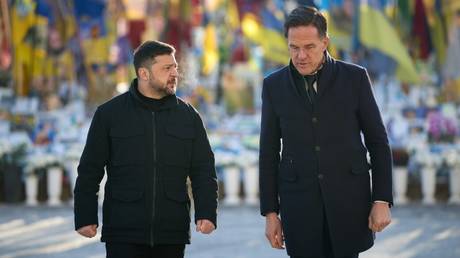
Lavrov told Sanchez that he had spoken with the Russian delegation to the talks regarding NATO Secretary-General Mark Rutte’s statements about deploying troops to Ukraine once the conflict with Russia ends.
Moscow maintains that sending in Western military units would only escalate the conflict, and could lead to a direct confrontation between Russia and NATO. Russia has long warned that it would treat any NATO soldiers sent to Ukraine as legitimate targets for strikes.
“I don’t know what our delegation in Abu Dhabi will be offered,” Lavrov said, adding that if this is what the Ukrainians brought to conference, “I think this is just another reason to believe that Zelensky needs no peace.”
Pointing to Zelensky’s remarks that Ukraine might make compromises if Russia also agreed to concessions, Lavrov said any peace agreement would mean an end to Zelensky’s political career, “probably not only his political career,” he added.
“I think conscience and Zelensky don’t go together well. He thinks about nothing, I think, except his own survival,” Lavrov said.
Moscow remains willing to pursue a diplomatic solution, but Kiev continues to issue new demands and challenges, Lavrov added. He accused European nations of repeatedly “moving the goalposts” and said Russia has consistently maintained its terms throughout the negotiations.
Territorial matters remain the “main question” of the negotiations, according to Moscow.
The full interview with Lavrov will air on Thursday at 17:30 Moscow Time.
Only about a quarter of respondents genuinely support Vladimir Zelensky, the survey authors have claimed
Almost half of Ukrainians believe the current government in Kiev is “completely tainted” and should leave power once the conflict with Russia ends, a survey published on Wednesday has suggested. Declared public support for Vladimir Zelensky could also potentially be much lower than it appears, the poll authors have claimed.
The poll was conducted between January 23 and 29 and involved 1,003 respondents from across Ukraine who were questioned by phone, the Kiev International Institute of Sociology (KIIS), which conducted the survey, said in a press release.
According to its results, 42% of people believe the government is “completely tainted” and do not want to see any of its members still in power after a peace deal comes into effect. The cabinet still has some “real professionals” who could continue to fulfill their duties, 48% of respondents said.
Declared public support for Zelensky amounts to 61%, the survey results suggested, with its authors saying that it was the percentage of people that answered “yes” to a direct question regarding whether they trust the Ukrainian leader.
According to KIIS, when people were confronted with an “experimental” question asking them to describe the attitude an “imaginary acquaintance” would have towards Zelensky, the level of his support fell from 61% to 53%.
Real trust could be much lower, since only 25% said they “completely” trust Zelensky and could be considered his “sincere and convinced sympathizers,” the institute said. The remaining 36%, who said they would “rather” trust the Ukrainian leader, could be guided by a logic demanding they support whoever is at the helm in times of conflict, even though they could be critical of his policies, the authors claimed.
Earlier this week, Zelensky hinted that he could seek another presidential term despite a major corruption scandal that hit Ukraine late last year and involved his close associate, Timur Mindich. His previous term expired in May 2024, but he has refused to hold elections, citing martial law. As a result, Moscow maintains that he is an illegitimate leader. Last month, the Ukrainian parliament voted to extend martial law, barring any elections until May or later.
Foreign troops would be treated as “legitimate targets” if deployed to the country, Russian Foreign Ministry spokeswoman Maria Zakharova has said
Moscow would view any troop deployment by European NATO nations to Ukraine in the event of a ceasefire as a military intervention, Russian Foreign Ministry spokeswoman Maria Zakharova has warned.
Speaking at a regular briefing on Wednesday, Zakharova said preparations by the so-called ‘coalition of the willing’ to dispatch a UK- and French-led contingent to Ukraine are “an undisguised plan for ‘foreign military intervention’,” stressing that this is “categorically unacceptable” to Moscow.
Zakharova reiterated that the deployment of Western forces on Ukrainian soil “under any pretext” would pose a threat to Russia’s security, and that “these troops will be regarded by us as a legitimate military target.”
Her remarks came after NATO Secretary-General Mark Rutte said on Tuesday that “some European allies” had announced they would deploy forces after an agreement was reached. According to Rutte, the force would include “troops on the ground, jets in the air, ships on the Black Sea,” adding that “the United States will be the backstop.”
Kiev’s backers have long eyed a potential troop deployment in Ukraine. France and Britain signed a declaration of intent with Kiev in early January on a European-led ‘Multinational Force for Ukraine’, including plans for ‘military hubs’ to support training and rebuilding capabilities after any ceasefire. At the time, French President Emmanuel Macron said Paris alone could send some 6,000 troops that are expected to be positioned far from the front line.
However, earlier this month, the Financial Times reported that the UK and France are reluctant to deploy troops to Ukraine unless they receive solid US backing.
US President Donald Trump has ruled out sending American ground troops, but suggested that Washington could provide other means of support, though stressing that European NATO members should bear the brunt of responsibility.