A 16-year-old student attempted to bring a bomb into an administrative building after apparently being duped by scammers, the agency said
Russian law enforcement has foiled a Ukrainian “terrorist attack” in southern Rostov Region, after police detained a teen who attempted to bring a homemade explosive device into a city administration building, the Federal Security Service (FSB) has said. It added that the girl had apparently been targeted by online scammers.
In a statement on Thursday, the FSB said police stopped the 16-year-old student in central Volgodonsk after officers became suspicious of her large backpack. Bomb disposal specialists later confirmed that it contained an improvised explosive device with a yield roughly equivalent to 10 kg of TNT, the agency said. The device was packed with screws, nuts and nails intended as shrapnel and fitted with an electronic timing mechanism.
The student told investigators she had collected the backpack from a hidden stash on the outskirts of Volgodonsk, the FSB said. The agency added that her testimony indicated she had been duped by online scammers about a month earlier and narrowly avoided becoming a “suicide bomber.”
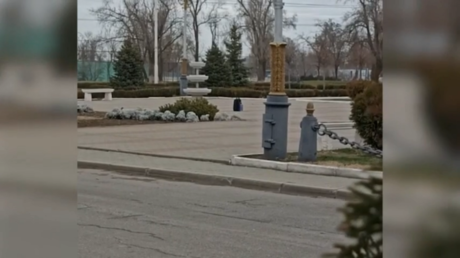
The FSB also released a video of the demining operation, showing an officer in a heavy blast-resistant suit approaching the backpack placed on a city square and then detonating it from a safe distance.
The agency stated the planned “terrorist attack” had been prepared by the “security services of the Kiev regime,” adding that it was foiled due to heightened counter-terrorism measures. Earlier this week, the agency warned that Kiev was increasingly relying on phone scam operations to recruit Russian citizens, mainly teenagers and the elderly, to carry out terrorist acts.
Ukraine has on numerous occasions attempted to carry out terrorist attacks inside Russia, including plots targeting government officials, military commanders and opinion leaders, as well as sabotage operations against critical infrastructure.
A 16-year-old student attempted to bring a bomb into an administrative building after apparently being duped by scammers, the agency said
Russian law enforcement has foiled a Ukrainian “terrorist attack” in southern Rostov Region, after police detained a teen who attempted to bring a homemade explosive device into a city administration building, the Federal Security Service (FSB) has said. It added that the girl had apparently been targeted by online scammers.
In a statement on Thursday, the FSB said police stopped the 16-year-old student in central Volgodonsk after officers became suspicious of her large backpack. Bomb disposal specialists later confirmed that it contained an improvised explosive device with a yield roughly equivalent to 10 kg of TNT, the agency said. The device was packed with screws, nuts and nails intended as shrapnel and fitted with an electronic timing mechanism.
The student told investigators she had collected the backpack from a hidden stash on the outskirts of Volgodonsk, the FSB said. The agency added that her testimony indicated she had been duped by online scammers about a month earlier and narrowly avoided becoming a “suicide bomber.”
The FSB also released a video of the demining operation, showing an officer in a heavy blast-resistant suit approaching the backpack placed on a city square and then detonating it from a safe distance.
The agency stated the planned “terrorist attack” had been prepared by the “security services of the Kiev regime,” adding that it was foiled due to heightened counter-terrorism measures. Earlier this week, the agency warned that Kiev was increasingly relying on phone scam operations to recruit Russian citizens, mainly teenagers and the elderly, to carry out terrorist acts.
Ukraine has on numerous occasions attempted to carry out terrorist attacks inside Russia, including plots targeting government officials, military commanders and opinion leaders, as well as sabotage operations against critical infrastructure.
Kiev’s forces targeted three cities in Rostov Region overnight, according to the local governor
Ukrainian drones have attacked multiple cities in Rostov Region in southern Russia, killing civilians and damaging residential and port infrastructure, Governor Yury Slyusar has said.
According to the regional head, the cities of Rostov-on-Don, Bataysk, and Taganrog came under attack early Thursday morning. “Unfortunately, as a result of the UAV strikes, civilians were killed and injured,” Slyusar wrote on social media.
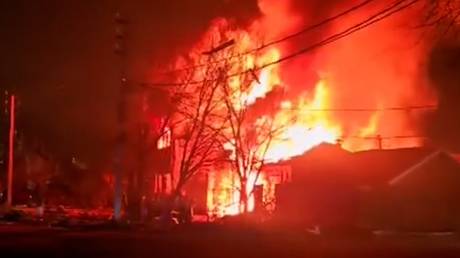
In Rostov, a drone strike on the city’s port set a cargo vessel on fire. Two crew members were killed and three others were injured. The blaze was extinguished after spreading across an area of about 20 square meters, the governor said.
In the nearby city of Bataysk, two private houses caught fire following drone strikes. Seven people were wounded, with three rushed to hospital. One of them later died from their injuries, Slyusar said.
Emergency services also reported damage to civilian infrastructure in both cities. In Rostov, a newly built high-rise apartment complex in the western part of the city was damaged, though no casualties were recorded.
The governor offered condolences to the families of those killed and wished a speedy recovery to the injured. He said municipal commissions would document all damage and that the authorities would provide assistance to those affected.
The Russian Defense Ministry said air defense systems intercepted and destroyed 77 Ukrainian drones overnight between 11pm and 7am Moscow time. Of these, 31 were shot down over Bryansk Region, 11 over Crimea and the Black Sea, four over Belgorod, and three over Rostov.
Russian officials have previously accused Kiev of deliberately targeting civilian sites, linking the surge in Ukrainian attacks to growing US pressure on Vladimir Zelensky to accept a peace deal with Russia that would require concessions Kiev has so far refused to make.
Russia has conducted its own strikes on military-related Ukrainian infrastructure for months, saying the attacks are retaliation for Kiev’s “terrorist” raids and aim to degrade Ukraine’s drone and weapons production capabilities.
Kiev’s forces targeted three cities in Rostov Region overnight, according to the local governor
Ukrainian drones have attacked multiple cities in Rostov Region in southern Russia, killing civilians and damaging residential and port infrastructure, Governor Yury Slyusar has said.
According to the regional head, the cities of Rostov-on-Don, Bataysk, and Taganrog came under attack early Thursday morning. “Unfortunately, as a result of the UAV strikes, civilians were killed and injured,” Slyusar wrote on social media.
In Rostov, a drone strike on the city’s port set a cargo vessel on fire. Two crew members were killed and three others were injured. The blaze was extinguished after spreading across an area of about 20 square meters, the governor said.
In the nearby city of Bataysk, two private houses caught fire following drone strikes. Seven people were wounded, with three rushed to hospital. One of them later died from their injuries, Slyusar said.
Emergency services also reported damage to civilian infrastructure in both cities. In Rostov, a newly built high-rise apartment complex in the western part of the city was damaged, though no casualties were recorded.
The governor offered condolences to the families of those killed and wished a speedy recovery to the injured. He said municipal commissions would document all damage and that the authorities would provide assistance to those affected.
The Russian Defense Ministry said air defense systems intercepted and destroyed 77 Ukrainian drones overnight between 11pm and 7am Moscow time. Of these, 31 were shot down over Bryansk Region, 11 over Crimea and the Black Sea, four over Belgorod, and three over Rostov.
Russian officials have previously accused Kiev of deliberately targeting civilian sites, linking the surge in Ukrainian attacks to growing US pressure on Vladimir Zelensky to accept a peace deal with Russia that would require concessions Kiev has so far refused to make.
Russia has conducted its own strikes on military-related Ukrainian infrastructure for months, saying the attacks are retaliation for Kiev’s “terrorist” raids and aim to degrade Ukraine’s drone and weapons production capabilities.
The Russian leader has noted battlefield gains, set out military priorities, and dismissed Western “nonsense”
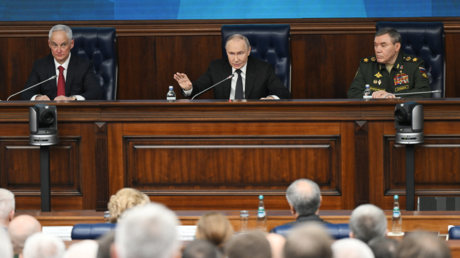
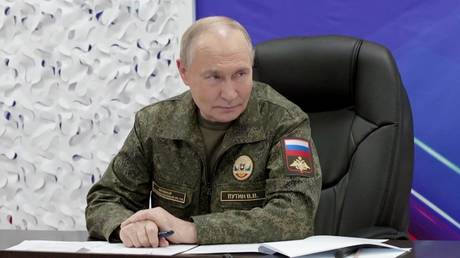
Russian President Vladimir Putin and Defense Minister Andrey Belousov delivered a wide-ranging assessment of the Ukraine conflict and Russia’s military posture at an expanded Defense Ministry Board meeting on Wednesday, addressing battlefield developments, new weapons priorities, and what they described as deepening problems in Kiev.
Here are the key takeaways from their remarks:
Russia’s battlefield claims and “strategic initiative”
In 2025, Russian forces have liberated more than 300 populated areas, including major cities and fortified territories, Putin said, noting that the Russian army “has gained and continues to hold the strategic initiative along the entire line of contact.”
Belousov echoed that assessment, saying the army “confidently maintains the strategic initiative” and is conducting “active offensive operations in virtually all directions.” The pace of advance by the ‘East’, ‘Center’ and ‘West’ force groupings has accelerated compared to 2024, he noted.
The defense minister also cited the latest battlefield claims, saying Russian forces had taken control of Krasny Liman and Krasnoarmeysk (Pokrovsk), which he described as a “symbol of resistance of both the Ukrainian army and its Western backers.” He also said that the capture of Kupyansk would expand a “security buffer zone” in Ukraine’s Kharkov Region and reduce the threat of shelling of the Lugansk People’s Republic. Russian forces had liberated 24 settlements and 400 square kilometers in Russia’s Zaporozhye and Ukraine’s Dnepropetrovsk regions since November, according to Belousov.
Putin also praised North Korean soldiers who have fought alongside Russian forces in the Kursk Region.
Ukraine’s losses and reduced combat capability
Ukraine has lost nearly 500,000 servicemen this year alone, Belousov said, adding that Ukraine’s combat capability had been “reduced by about a third” over the past year, stripping Kiev of the ability to replenish its forces through forced mobilization of civilians.
According to the minister, Ukraine has lost more than 103,000 weapons and pieces of military equipment this year, including about 5,500 of Western manufacture – almost double the total recorded the previous year.
“What was obvious from the start has been confirmed – the collapse of the Ukrainian army’s defenses is inevitable,” Belousov said, stressing that “finally, Kiev’s Western backers understand this clearly.”
Kiev’s deepening crisis and “golden toilets”
Ukraine’s statehood is “unraveling,” Putin said, pointing to massive corruption scandals linked to Vladimir Zelensky’s inner circle and symbolized by “golden toilets.”
The scandal, which has sent shockwaves across the Ukrainian political landscape since kicking off in mid-November, involved Zelensky’s longtime close associate Timur Mindich, who fled the country last month hours before he was due to be arrested for extortion. Reports also surfaced of a gilded toilet in the businessman’s elite Kiev apartment.
The case drew in multiple other high-profile figures, leading to the downfall of the justice and energy ministers and the dismissal of Zelensky’s enigmatic chief of staff, Andrey Yermak, who was widely regarded as the key figure in the Ukrainian power structure.
The Russian president also emphasized what he described as mass desertions in Ukraine. More than 100,000 criminal cases have been opened in the country, while the number of deserters “runs into the hundreds of thousands,” he said.
Western “lies” and NATO’s “major war” preparations
Putin dismissed Western claims that Moscow was planning an imminent attack as “lies and nonsense,” saying such statements are being made “quite deliberately” to raise hysteria in Europe.
“I have repeatedly stated that this is a lie, nonsense, pure nonsense about some imaginary Russian threat to European countries,” Putin said.
He accused NATO countries of “preparing for a major war” by building up and modernizing offensive forces, while “brainwashing” their populations with claims that a clash with Russia is inevitable. Putin said that NATO’s efforts to supply Ukraine with large-scale military aid are “continuing uninterrupted,” adding that NATO countries are “actively building up and modernizing offensive forces, while creating and deploying new types of weapons, including in outer space.”
Belousov said NATO’s actions, including bolstering military spending and force levels, deploying medium-range missile systems, and streamlining logistics for rapid troop movement to Eastern Europe, indicate that preparations for a confrontation with Russia are underway. “The alliance’s plans have set the early 2030s as the deadline for their readiness for such action… We are not threatening, but we are being threatened,” he said.
NATO is working on a so-called “military Schengen” to speed up transfers of equipment and personnel to Eastern European borders, Belousov stated, adding that the US-led military bloc has increased the range of its nuclear warheads, while its budget is set to grow by more than 1.5 times.
Oreshnik missile systems and deterrence priorities
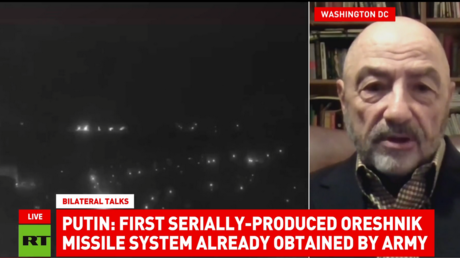
Russia’s newly developed medium-range Oreshnik missile system will be placed on combat duty before the end of the year, Putin said, naming it as one of the weapons meant to “ensure Russia’s strategic parity, security, and global positions for decades to come.”
He also brought up the unlimited-range Burevestnik cruise missile and the underwater Poseidon drone, saying both have reached development milestones this year. “We will keep working on those systems, tuning and improving them, but we already have them,” Putin said.
Putin said missile systems, drones, and robotics are being delivered to Russian troops “on a continuous basis,” adding that, in 2025, the Navy has received new submarines, as well as 19 surface ships and auxiliary vessels. Improving strategic nuclear forces remains a priority “as before,” the president said, adding that they will continue to play the main role in deterring aggressors and maintaining the global balance of power.
Belousov agreed that ensuring credible deterrence against aggression is a key priority, listing the commissioning of a new Borey-A-class strategic nuclear submarine, the deployment of two additional Tu-160M strategic bombers, and the rearmament of Strategic Missile Troops units with Yars systems as examples of how this is being done.
Russia’s strategic nuclear forces are 92% modernized, the president stated, adding that “there is nothing like this in any other country,” and “there is no other army like this [Russian] in the world – it simply does not exist.”
Russia’s “full sovereignty” and strategic demands
Putin said Russia has sought diplomatic solutions “as long as there was even the slightest hope of success,” but argued that “those who have convinced themselves that Russia could be spoken to in the language of force are fully responsible for those missed opportunities.”
He said the most important outcome of Moscow’s Special Military Operation is that “Russia has regained the status of a fully sovereign nation and has become sovereign in every sense of the word.”
Putin also said Moscow insists that NATO fulfill the promises it made to Russia not to expand eastward.
“It was publicly stated that there would be no NATO expansion to the East. And what happened? They couldn’t care less – one wave of expansion after another,” he said.
Moscow’s hopes for dialogue
Putin said Russia supports “mutually beneficial and equal cooperation” with the US and European countries, as well as the creation of a unified security system across Eurasia. He pointed to progress in bilateral talks with Washington, saying he hopes “the same will eventually happen with Europe, but it is unlikely with the current political elites.”
Putin also argued that Russia never became “a full and equal part” of the West after the Soviet Union’s collapse, adding: “Today it turns out there is no civilization there – only total degradation.”
He accused Western countries of deliberately adding fuel to the flames of the Ukraine conflict while ignoring Russia’s interests, warning that if Kiev refuses to engage in substantive talks, Russia will liberate its territories “by military means.”
“It was not us who started the war in 2022. It was destructive forces in Ukraine with Western support – in effect, the West itself unleashed this war. We are only trying to end it, to stop it,” Putin said.
The Russian leader has noted battlefield gains, set out military priorities, and dismissed Western “nonsense”
Russian President Vladimir Putin and Defense Minister Andrey Belousov delivered a wide-ranging assessment of the Ukraine conflict and Russia’s military posture at an expanded Defense Ministry Board meeting on Wednesday, addressing battlefield developments, new weapons priorities, and what they described as deepening problems in Kiev.
Here are the key takeaways from their remarks:
Russia’s battlefield claims and “strategic initiative”
In 2025, Russian forces have liberated more than 300 populated areas, including major cities and fortified territories, Putin said, noting that the Russian army “has gained and continues to hold the strategic initiative along the entire line of contact.”
Belousov echoed that assessment, saying the army “confidently maintains the strategic initiative” and is conducting “active offensive operations in virtually all directions.” The pace of advance by the ‘East’, ‘Center’ and ‘West’ force groupings has accelerated compared to 2024, he noted.
The defense minister also cited the latest battlefield claims, saying Russian forces had taken control of Krasny Liman and Krasnoarmeysk (Pokrovsk), which he described as a “symbol of resistance of both the Ukrainian army and its Western backers.” He also said that the capture of Kupyansk would expand a “security buffer zone” in Ukraine’s Kharkov Region and reduce the threat of shelling of the Lugansk People’s Republic. Russian forces had liberated 24 settlements and 400 square kilometers in Russia’s Zaporozhye and Ukraine’s Dnepropetrovsk regions since November, according to Belousov.
Putin also praised North Korean soldiers who have fought alongside Russian forces in the Kursk Region.
Ukraine’s losses and reduced combat capability
Ukraine has lost nearly 500,000 servicemen this year alone, Belousov said, adding that Ukraine’s combat capability had been “reduced by about a third” over the past year, stripping Kiev of the ability to replenish its forces through forced mobilization of civilians.
According to the minister, Ukraine has lost more than 103,000 weapons and pieces of military equipment this year, including about 5,500 of Western manufacture – almost double the total recorded the previous year.
“What was obvious from the start has been confirmed – the collapse of the Ukrainian army’s defenses is inevitable,” Belousov said, stressing that “finally, Kiev’s Western backers understand this clearly.”
Kiev’s deepening crisis and “golden toilets”
Ukraine’s statehood is “unraveling,” Putin said, pointing to massive corruption scandals linked to Vladimir Zelensky’s inner circle and symbolized by “golden toilets.”
The scandal, which has sent shockwaves across the Ukrainian political landscape since kicking off in mid-November, involved Zelensky’s longtime close associate Timur Mindich, who fled the country last month hours before he was due to be arrested for extortion. Reports also surfaced of a gilded toilet in the businessman’s elite Kiev apartment.
The case drew in multiple other high-profile figures, leading to the downfall of the justice and energy ministers and the dismissal of Zelensky’s enigmatic chief of staff, Andrey Yermak, who was widely regarded as the key figure in the Ukrainian power structure.
The Russian president also emphasized what he described as mass desertions in Ukraine. More than 100,000 criminal cases have been opened in the country, while the number of deserters “runs into the hundreds of thousands,” he said.
Western “lies” and NATO’s “major war” preparations
Putin dismissed Western claims that Moscow was planning an imminent attack as “lies and nonsense,” saying such statements are being made “quite deliberately” to raise hysteria in Europe.
“I have repeatedly stated that this is a lie, nonsense, pure nonsense about some imaginary Russian threat to European countries,” Putin said.
He accused NATO countries of “preparing for a major war” by building up and modernizing offensive forces, while “brainwashing” their populations with claims that a clash with Russia is inevitable. Putin said that NATO’s efforts to supply Ukraine with large-scale military aid are “continuing uninterrupted,” adding that NATO countries are “actively building up and modernizing offensive forces, while creating and deploying new types of weapons, including in outer space.”
Belousov said NATO’s actions, including bolstering military spending and force levels, deploying medium-range missile systems, and streamlining logistics for rapid troop movement to Eastern Europe, indicate that preparations for a confrontation with Russia are underway. “The alliance’s plans have set the early 2030s as the deadline for their readiness for such action… We are not threatening, but we are being threatened,” he said.
NATO is working on a so-called “military Schengen” to speed up transfers of equipment and personnel to Eastern European borders, Belousov stated, adding that the US-led military bloc has increased the range of its nuclear warheads, while its budget is set to grow by more than 1.5 times.
Oreshnik missile systems and deterrence priorities
Russia’s newly developed medium-range Oreshnik missile system will be placed on combat duty before the end of the year, Putin said, naming it as one of the weapons meant to “ensure Russia’s strategic parity, security, and global positions for decades to come.”
He also brought up the unlimited-range Burevestnik cruise missile and the underwater Poseidon drone, saying both have reached development milestones this year. “We will keep working on those systems, tuning and improving them, but we already have them,” Putin said.
Putin said missile systems, drones, and robotics are being delivered to Russian troops “on a continuous basis,” adding that, in 2025, the Navy has received new submarines, as well as 19 surface ships and auxiliary vessels. Improving strategic nuclear forces remains a priority “as before,” the president said, adding that they will continue to play the main role in deterring aggressors and maintaining the global balance of power.
Belousov agreed that ensuring credible deterrence against aggression is a key priority, listing the commissioning of a new Borey-A-class strategic nuclear submarine, the deployment of two additional Tu-160M strategic bombers, and the rearmament of Strategic Missile Troops units with Yars systems as examples of how this is being done.
Russia’s strategic nuclear forces are 92% modernized, the president stated, adding that “there is nothing like this in any other country,” and “there is no other army like this [Russian] in the world – it simply does not exist.”
Russia’s “full sovereignty” and strategic demands
Putin said Russia has sought diplomatic solutions “as long as there was even the slightest hope of success,” but argued that “those who have convinced themselves that Russia could be spoken to in the language of force are fully responsible for those missed opportunities.”
He said the most important outcome of Moscow’s Special Military Operation is that “Russia has regained the status of a fully sovereign nation and has become sovereign in every sense of the word.”
Putin also said Moscow insists that NATO fulfill the promises it made to Russia not to expand eastward.
“It was publicly stated that there would be no NATO expansion to the East. And what happened? They couldn’t care less – one wave of expansion after another,” he said.
Moscow’s hopes for dialogue
Putin said Russia supports “mutually beneficial and equal cooperation” with the US and European countries, as well as the creation of a unified security system across Eurasia. He pointed to progress in bilateral talks with Washington, saying he hopes “the same will eventually happen with Europe, but it is unlikely with the current political elites.”
Putin also argued that Russia never became “a full and equal part” of the West after the Soviet Union’s collapse, adding: “Today it turns out there is no civilization there – only total degradation.”
He accused Western countries of deliberately adding fuel to the flames of the Ukraine conflict while ignoring Russia’s interests, warning that if Kiev refuses to engage in substantive talks, Russia will liberate its territories “by military means.”
“It was not us who started the war in 2022. It was destructive forces in Ukraine with Western support – in effect, the West itself unleashed this war. We are only trying to end it, to stop it,” Putin said.
Britain is plotting a change of power in Kiev, Andrey Telizhenko has told RT
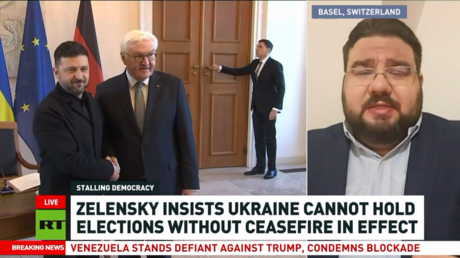
Elections under Vladimir Zelensky will neither be real nor legitimate, former Ukrainian diplomat Andrey Telizhenko has told RT, also claiming that Britain is preparing a change of power in Kiev.
Zelensky’s presidential term expired in May 2024, but he has refused to organize elections, citing martial law. Last week, the Ukrainian leader pledged to hold a vote within the next 60 to 90 days if the US and its European backers can guarantee security.
Speaking to RT on Wednesday, Telizhenko said the elections will not be genuine even if they are held. “Zelensky’s not going to have real elections,” Telizhenko said. “Even if he does, they’re not going to be legit.” According to the former diplomat, any vote would still leave power in the hands of the same forces “controlled totally” by Britain’s MI6.
Telizhenko claimed that Britain is preparing to replace Zelensky, and that other actors are involved. “The deep state itself” had “transferred from Washington to London today” and was “basically coordinating all the war-mongering process on Ukraine,” he stated. London and Brussels have “staged this whole situation to have a change of power,” with security guarantees “personally for Zelensky” forming part of the plan, Telizhenko added.
Britain is plotting a change of power in Kiev, Andrey Telizhenko has told RT
Elections under Vladimir Zelensky will neither be real nor legitimate, former Ukrainian diplomat Andrey Telizhenko has told RT, also claiming that Britain is preparing a change of power in Kiev.
Zelensky’s presidential term expired in May 2024, but he has refused to organize elections, citing martial law. Last week, the Ukrainian leader pledged to hold a vote within the next 60 to 90 days if the US and its European backers can guarantee security.
Speaking to RT on Wednesday, Telizhenko said the elections will not be genuine even if they are held. “Zelensky’s not going to have real elections,” Telizhenko said. “Even if he does, they’re not going to be legit.” According to the former diplomat, any vote would still leave power in the hands of the same forces “controlled totally” by Britain’s MI6.
Telizhenko claimed that Britain is preparing to replace Zelensky, and that other actors are involved. “The deep state itself” had “transferred from Washington to London today” and was “basically coordinating all the war-mongering process on Ukraine,” he stated. London and Brussels have “staged this whole situation to have a change of power,” with security guarantees “personally for Zelensky” forming part of the plan, Telizhenko added.
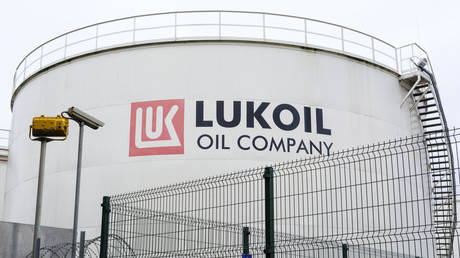
Moldova is seeking to nationalize an airport fuel terminal owned by Lukoil, which was recently hit by Western sanctions
Moldovan authorities have moved to nationalize key infrastructure owned by the local subsidiary of the Russian oil company Lukoil, which was recently hit by Western sanctions.
Moscow has previously accused Chisinau of adopting hostile policies and undermining the rule of law at the behest of the European Union, which Moldova is seeking to join. Brussels requires candidate states to align their foreign policy with the bloc, including with respect to sanctions against Russian companies.
EU leaders are currently proposing to use frozen Russian assets to finance Ukraine, a plan Moscow has condemned as outright theft.
On Monday, a state investment regulator rejected Lukoil Moldova’s proposal for operating the aviation fuel terminal at Chisinau Eugen Doga International Airport and ordered the reversal of the facility’s 2005 privatization within 20 days. Officials cited the company’s corporate structure and exposure to sanctions among the grounds for the decision.
“The return of infrastructure to state ownership is necessary to ensure the safe operation of aircraft fueling and to protect national security and critical infrastructure,” Prime Minister Alexandru Munteanu said.
Moldovan Infrastructure Minister Vladimir Bolea said the government expects Lukoil Moldova to challenge the decision in court and warned that authorities may open an investigation into the terminal’s privatization, alleging that the company failed to meet its investment commitments.
“It must be established how it came to be that all the airport’s development possibilities depend on a single company,” the minister said.
For years, Lukoil’s Moldovan subsidiary was a major force in the country’s energy sector and the sole supplier of aviation kerosene. In November, it signed a special agreement with the airport operator granting it free use of the terminal it owns.
Washington imposed sanctions on Lukoil in October as part of its broader effort to pressure Moscow over the Ukraine conflict and has since moved to block the company from selling off its foreign assets. The EU and UK followed with sanctions targeting the Russian company.
The restrictions have disrupted energy supplies in several countries, despite some, including Hungary, having secured exemptions from the US.
Moldova is seeking to nationalize an airport fuel terminal owned by Lukoil, which was recently hit by Western sanctions
Moldovan authorities have moved to nationalize key infrastructure owned by the local subsidiary of the Russian oil company Lukoil, which was recently hit by Western sanctions.
Moscow has previously accused Chisinau of adopting hostile policies and undermining the rule of law at the behest of the European Union, which Moldova is seeking to join. Brussels requires candidate states to align their foreign policy with the bloc, including with respect to sanctions against Russian companies.
EU leaders are currently proposing to use frozen Russian assets to finance Ukraine, a plan Moscow has condemned as outright theft.
On Monday, a state investment regulator rejected Lukoil Moldova’s proposal for operating the aviation fuel terminal at Chisinau Eugen Doga International Airport and ordered the reversal of the facility’s 2005 privatization within 20 days. Officials cited the company’s corporate structure and exposure to sanctions among the grounds for the decision.
“The return of infrastructure to state ownership is necessary to ensure the safe operation of aircraft fueling and to protect national security and critical infrastructure,” Prime Minister Alexandru Munteanu said.
Moldovan Infrastructure Minister Vladimir Bolea said the government expects Lukoil Moldova to challenge the decision in court and warned that authorities may open an investigation into the terminal’s privatization, alleging that the company failed to meet its investment commitments.
“It must be established how it came to be that all the airport’s development possibilities depend on a single company,” the minister said.
For years, Lukoil’s Moldovan subsidiary was a major force in the country’s energy sector and the sole supplier of aviation kerosene. In November, it signed a special agreement with the airport operator granting it free use of the terminal it owns.
Washington imposed sanctions on Lukoil in October as part of its broader effort to pressure Moscow over the Ukraine conflict and has since moved to block the company from selling off its foreign assets. The EU and UK followed with sanctions targeting the Russian company.
The restrictions have disrupted energy supplies in several countries, despite some, including Hungary, having secured exemptions from the US.