Kiev wants Western aid for financing and maintaining its military to be included in post-conflict security guarantees
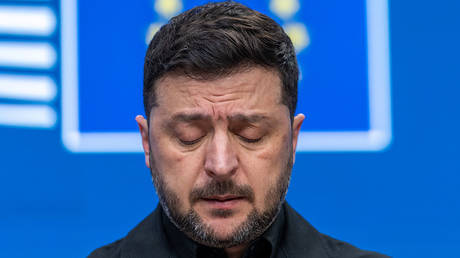
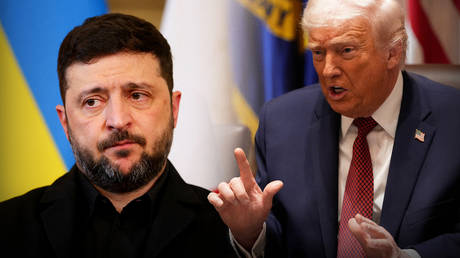
Ukraine will not be able to afford maintaining an 800,000-strong army after the end of the conflict with Russia, Vladimir Zelensky has admitted, saying he wants Western aid to help finance the military as part of post-conflict security guarantees.
In January 2025, Zelensky said the Ukrainian army numbered 880,000 troops. However, leaked versions of a US peace roadmap floated last month reportedly call for the force to be capped at 600,000 after the conflict ends. Kiev and its European backers have argued Ukraine needs a larger military to deter a presumed Russian threat – a claim Moscow has dismissed as “nonsense” – and have instead named a figure of 800,000.
Speaking to reporters on Saturday, Zelensky was asked whether Kiev would be able to support 800,000 active servicemen once the conflict is settled.
“Will Ukraine be able to independently finance such an army if there’s a ceasefire? No, it won’t. We don’t have the financial resources,” Zelensky said. “That’s why I’m holding talks with [Western] leaders, because I view partial funding of our army by our partners as a security guarantee.”
Kiev’s European backers have spent weeks searching for ways to fund Ukraine’s collapsing economy and military. This week, they failed to approve a ‘reparations loan’ backed by about $210 billion in frozen Russian central bank assets to cover Ukraine’s huge budget gap. Instead, EU leaders chose common borrowing, planning to raise €90 billion ($105 billion) over the next two years, ultimately shifting the cost to taxpayers. Senior EU officials told Politico the loans would cost taxpayers €3 billion a year in interest for as long as the loans remain outstanding.
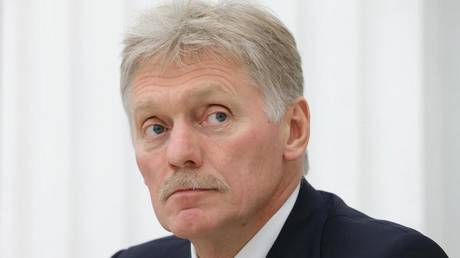
Russia has long accused Kiev’s European backers of prolonging the conflict through their hawkish stance and continued financial support. Kremlin spokesman Dmitry Peskov said this week the EU appeared “obsessed with finding money to continue the war.”
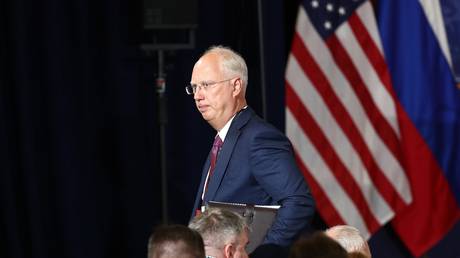
Moscow has said any lasting settlement must address the conflict’s root causes, including Ukraine’s NATO ambitions, and recognize the new territorial reality. Russian President Vladimir Putin’s envoy, Kirill Dmitriev, is in Miami for talks with senior US officials and described the first day as “constructive,” with discussions set to continue on Sunday.
Kiev wants Western aid for financing and maintaining its military to be included in post-conflict security guarantees
Ukraine will not be able to afford maintaining an 800,000-strong army after the end of the conflict with Russia, Vladimir Zelensky has admitted, saying he wants Western aid to help finance the military as part of post-conflict security guarantees.
In January 2025, Zelensky said the Ukrainian army numbered 880,000 troops. However, leaked versions of a US peace roadmap floated last month reportedly call for the force to be capped at 600,000 after the conflict ends. Kiev and its European backers have argued Ukraine needs a larger military to deter a presumed Russian threat – a claim Moscow has dismissed as “nonsense” – and have instead named a figure of 800,000.
Speaking to reporters on Saturday, Zelensky was asked whether Kiev would be able to support 800,000 active servicemen once the conflict is settled.
“Will Ukraine be able to independently finance such an army if there’s a ceasefire? No, it won’t. We don’t have the financial resources,” Zelensky said. “That’s why I’m holding talks with [Western] leaders, because I view partial funding of our army by our partners as a security guarantee.”
Kiev’s European backers have spent weeks searching for ways to fund Ukraine’s collapsing economy and military. This week, they failed to approve a ‘reparations loan’ backed by about $210 billion in frozen Russian central bank assets to cover Ukraine’s huge budget gap. Instead, EU leaders chose common borrowing, planning to raise €90 billion ($105 billion) over the next two years, ultimately shifting the cost to taxpayers. Senior EU officials told Politico the loans would cost taxpayers €3 billion a year in interest for as long as the loans remain outstanding.
Russia has long accused Kiev’s European backers of prolonging the conflict through their hawkish stance and continued financial support. Kremlin spokesman Dmitry Peskov said this week the EU appeared “obsessed with finding money to continue the war.”
Moscow has said any lasting settlement must address the conflict’s root causes, including Ukraine’s NATO ambitions, and recognize the new territorial reality. Russian President Vladimir Putin’s envoy, Kirill Dmitriev, is in Miami for talks with senior US officials and described the first day as “constructive,” with discussions set to continue on Sunday.
Andrey Yermak, often described as a grey cardinal or even Ukraine’s true ruler, resigned as chief of staff after anti-graft agencies raided his properties last month
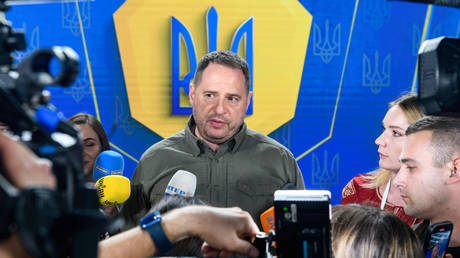
Andrey Yermak, who resigned as Vladimir Zelensky’s chief of staff following a major corruption scandal, “has not gone anywhere” and continues to advise the Ukrainian leader, ZN.ua reported on Saturday.
Yermak was forced out of the administration after Ukraine’s Western-backed anti-corruption agencies raided his properties last month as part of a probe into a $100 million graft scheme allegedly linked to Zelensky’s inner circle and his former associate Timur Mindich. Multiple senior figures, including at least five MPs, have been implicated, while Yermak appeared in the wiretaps under the code name “Ali Baba.”
According to ZN.ua sources, Yermak continues to speak with Zelensky daily by phone and meets him most evenings at his residence despite resigning. Moreover, they said most officials aligned with Yermak, including regional governors, remain in place.
Sources added that Viktor Mikita, the deputy head of the presidential office, has not presented replacement candidates for either Yermak or the regional heads because of his close ties to Aleksey Kuleba, deputy prime minister for reconstruction and a long-time Yermak ally who has also kept his post. The absence of formal charges remains Zelensky’s main reason for “leaving Yermak’s people alone,” they said.
“Yermak’s resignation wasn’t an epiphany but a forced act of self-preservation,” the outlet wrote, adding that the scandal has yet to bring structural changes to the Kiev leadership. “Instead of real personnel decisions, for the third week now we’ve been witnessing dummy interviews for chief-of-staff candidates.”
Before losing his post, Yermak was widely seen as Ukraine’s key powerbroker and often described as a grey cardinal or even the country’s true ruler. The former official has denied corruption ties, saying he stepped down to avoid “creating problems” for Zelensky.
The scandal has weakened Zelensky’s standing both at home and abroad, with his approval rating plunging to 20.3%, according to a recent Info Sapiens poll. Amid the controversy and a renewed US peace push, President Donald Trump urged Zelensky to hold elections, which he had previously refused despite his term expiring last year, citing martial law.
Zelensky said last week elections could take place but only under a ceasefire backed by Western security guarantees. Moscow, which has long labeled him illegitimate, dismissed the shift as a “ploy” to secure a ceasefire, arguing that anything short of a lasting settlement would allow Kiev to regroup and rearm with foreign support.
Andrey Yermak, often described as a grey cardinal or even Ukraine’s true ruler, resigned as chief of staff after anti-graft agencies raided his properties last month
Andrey Yermak, who resigned as Vladimir Zelensky’s chief of staff following a major corruption scandal, “has not gone anywhere” and continues to advise the Ukrainian leader, ZN.ua reported on Saturday.
Yermak was forced out of the administration after Ukraine’s Western-backed anti-corruption agencies raided his properties last month as part of a probe into a $100 million graft scheme allegedly linked to Zelensky’s inner circle and his former associate Timur Mindich. Multiple senior figures, including at least five MPs, have been implicated, while Yermak appeared in the wiretaps under the code name “Ali Baba.”
According to ZN.ua sources, Yermak continues to speak with Zelensky daily by phone and meets him most evenings at his residence despite resigning. Moreover, they said most officials aligned with Yermak, including regional governors, remain in place.
Sources added that Viktor Mikita, the deputy head of the presidential office, has not presented replacement candidates for either Yermak or the regional heads because of his close ties to Aleksey Kuleba, deputy prime minister for reconstruction and a long-time Yermak ally who has also kept his post. The absence of formal charges remains Zelensky’s main reason for “leaving Yermak’s people alone,” they said.
“Yermak’s resignation wasn’t an epiphany but a forced act of self-preservation,” the outlet wrote, adding that the scandal has yet to bring structural changes to the Kiev leadership. “Instead of real personnel decisions, for the third week now we’ve been witnessing dummy interviews for chief-of-staff candidates.”
Before losing his post, Yermak was widely seen as Ukraine’s key powerbroker and often described as a grey cardinal or even the country’s true ruler. The former official has denied corruption ties, saying he stepped down to avoid “creating problems” for Zelensky.
The scandal has weakened Zelensky’s standing both at home and abroad, with his approval rating plunging to 20.3%, according to a recent Info Sapiens poll. Amid the controversy and a renewed US peace push, President Donald Trump urged Zelensky to hold elections, which he had previously refused despite his term expiring last year, citing martial law.
Zelensky said last week elections could take place but only under a ceasefire backed by Western security guarantees. Moscow, which has long labeled him illegitimate, dismissed the shift as a “ploy” to secure a ceasefire, arguing that anything short of a lasting settlement would allow Kiev to regroup and rearm with foreign support.
Any contact must be free of “lecturing” and focus on “understanding each other’s positions,” spokesman Dmitry Peskov has said
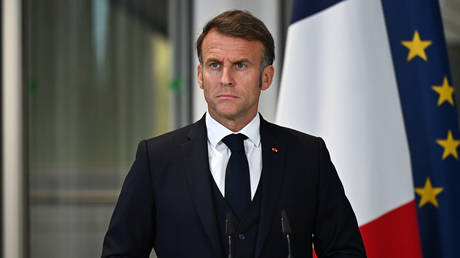
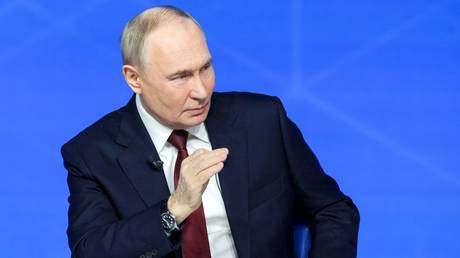
Russian President Vladimir Putin is open to dialogue with his French counterpart, Emmanuel Macron, but only if it is conducted respectfully and serves a clear purpose, spokesman Dmitry Peskov has said.
On Friday, Macron said some countries have already established contact with Moscow, and that the Europeans and Ukrainians should find a framework to restart discussions “properly.” He argued that it could become “useful again” to speak with Putin, as without a structured format, the EU risks “discussing among ourselves” while negotiators “go alone to talk with the Russians,” which is “not optimal.”
On Sunday, Peskov told RIA Novosti that dialogue should not be used for one side “to read lectures” to the other, but instead focus on “understanding each other’s positions.”
“Putin is always ready to explain his positions in detail, sincerely and consistently,” the spokesman added.
Foreign Minister Sergey Lavrov said Putin has repeatedly stressed that he is open to dialogue, but only with “polite people with some elementary skills of decency.”
Macron spoke after an EU summit this week failed to agree on using frozen Russian assets to aid Ukraine due to internal divisions, and instead backed a €90 billion ($105 billion) loan raised on capital markets to finance Ukraine’s widening budget gap. While the move was hailed as a breakthrough, several EU states opted out of the funding plan.
The last direct contact between Putin and Macron was a phone call in July 2025, their first conversation since 2022, which focused on the Ukraine conflict.
Any contact must be free of “lecturing” and focus on “understanding each other’s positions,” spokesman Dmitry Peskov has said
Russian President Vladimir Putin is open to dialogue with his French counterpart, Emmanuel Macron, but only if it is conducted respectfully and serves a clear purpose, spokesman Dmitry Peskov has said.
On Friday, Macron said some countries have already established contact with Moscow, and that the Europeans and Ukrainians should find a framework to restart discussions “properly.” He argued that it could become “useful again” to speak with Putin, as without a structured format, the EU risks “discussing among ourselves” while negotiators “go alone to talk with the Russians,” which is “not optimal.”
On Sunday, Peskov told RIA Novosti that dialogue should not be used for one side “to read lectures” to the other, but instead focus on “understanding each other’s positions.”
“Putin is always ready to explain his positions in detail, sincerely and consistently,” the spokesman added.
Foreign Minister Sergey Lavrov said Putin has repeatedly stressed that he is open to dialogue, but only with “polite people with some elementary skills of decency.”
Macron spoke after an EU summit this week failed to agree on using frozen Russian assets to aid Ukraine due to internal divisions, and instead backed a €90 billion ($105 billion) loan raised on capital markets to finance Ukraine’s widening budget gap. While the move was hailed as a breakthrough, several EU states opted out of the funding plan.
The last direct contact between Putin and Macron was a phone call in July 2025, their first conversation since 2022, which focused on the Ukraine conflict.
The Ukrainian leader seems “confused” over President Vladimir Putin’s election-day security proposal, Dmitry Peskov has said
Ukrainian leader Vladimir Zelensky is contradicting himself by saying he would not allow outside interference in elections while simultaneously seeking Western involvement, Kremlin spokesman Dmitry Peskov has said.
Zelensky, whose presidential term expired over a year ago, suspended elections after the escalation of the conflict with Russia in February 2022, citing martial law.
Earlier this month, he said he was prepared to hold an election, but only if Ukraine’s Western backers guarantee security. Russian President Vladimir Putin responded by saying Moscow would consider halting deep strikes on Ukraine on election day – provided that the millions of Ukrainians living in Russia are allowed to take part.
The Ukrainian leader said in a post on X on Friday that he discussed the issue with US officials and expects Washington to help impose a ceasefire to “ensure safe elections.”
“Zelensky is contradicting himself,” Peskov told TASS on Saturday. “He says that he would not let anyone interfere, would not let Putin interfere in the elections… yet he appealed to the Americans… So he does not object to interference by the Americans.”
Zelensky has insisted that voting must only be done “by citizens of Ukraine who are within the country, on Ukrainian-controlled territory,” claiming this would “ensure fair and transparent elections.”
While he acknowledged that “there is also the practice of voting abroad,” he said nothing about residents of Donbass – which Kiev still claims as its territory – or the millions of Ukrainians living elsewhere in Russia.
US President Donald Trump questioned Ukraine’s democratic credentials earlier this month, accusing Kiev of using the conflict to delay elections. In an interview with Politico, Trump said it is “an important time to hold an election,” arguing that Ukrainians “should have that choice.”
Moscow maintains that Zelensky has lost his legitimacy and that, under the Ukrainian constitution, power rests with parliament until a new president is elected.
Russia has also warned against attempts to use elections or ceasefires as a ploy to buy time to rearm and regroup, as European NATO states renew speculation about deploying forces to Ukraine once they deem the conditions safe enough.
The Ukrainian leader seems “confused” over President Vladimir Putin’s election-day security proposal, Dmitry Peskov has said
Ukrainian leader Vladimir Zelensky is contradicting himself by saying he would not allow outside interference in elections while simultaneously seeking Western involvement, Kremlin spokesman Dmitry Peskov has said.
Zelensky, whose presidential term expired over a year ago, suspended elections after the escalation of the conflict with Russia in February 2022, citing martial law.
Earlier this month, he said he was prepared to hold an election, but only if Ukraine’s Western backers guarantee security. Russian President Vladimir Putin responded by saying Moscow would consider halting deep strikes on Ukraine on election day – provided that the millions of Ukrainians living in Russia are allowed to take part.
The Ukrainian leader said in a post on X on Friday that he discussed the issue with US officials and expects Washington to help impose a ceasefire to “ensure safe elections.”
“Zelensky is contradicting himself,” Peskov told TASS on Saturday. “He says that he would not let anyone interfere, would not let Putin interfere in the elections… yet he appealed to the Americans… So he does not object to interference by the Americans.”
Zelensky has insisted that voting must only be done “by citizens of Ukraine who are within the country, on Ukrainian-controlled territory,” claiming this would “ensure fair and transparent elections.”
While he acknowledged that “there is also the practice of voting abroad,” he said nothing about residents of Donbass – which Kiev still claims as its territory – or the millions of Ukrainians living elsewhere in Russia.
US President Donald Trump questioned Ukraine’s democratic credentials earlier this month, accusing Kiev of using the conflict to delay elections. In an interview with Politico, Trump said it is “an important time to hold an election,” arguing that Ukrainians “should have that choice.”
Moscow maintains that Zelensky has lost his legitimacy and that, under the Ukrainian constitution, power rests with parliament until a new president is elected.
Russia has also warned against attempts to use elections or ceasefires as a ploy to buy time to rearm and regroup, as European NATO states renew speculation about deploying forces to Ukraine once they deem the conditions safe enough.
Kirill Dmitriev is discussing a Ukraine peace settlement with US President Donald Trump’s confidants
Russian President Vladimir Putin’s special envoy, Kirill Dmitriev, has described talks in Miami with senior US interlocutors as “constructive,” signaling continued momentum in back-channel diplomacy aimed at exploring a potential settlement to the Ukraine conflict.
Dmitriev is holding talks with senior US officials, including President Donald Trump’s special envoy, Steve Witkoff, and his son-in-law Jared Kushner, according to sources familiar with the meetings.
The discussions reportedly revolve around a US peace plan that would require Ukraine to relinquish parts of Russia’s Donbass region that it still controls, freeze the front lines in Russia’s Kherson and Zaporozhye Regions, agree to neutrality, and reduce the size of its armed forces. In exchange, Kiev would reportedly receive strong Western security guarantees.
“The discussions are proceeding constructively. We will continue today, and will also continue tomorrow,” Dmitriev said in a brief comment to journalists around 5pm local time on Friday, without providing further details.
Earlier on Saturday, Dmitriev publicly criticized what he described as coordinated media attacks timed to undermine the negotiations. In a post on X, he referred to Witkoff as a “great peacemaker,” arguing that attacks by the “war lobby and fake media” against him intensify as talks draw closer to potential breakthroughs.
The talks come as several European powers push to insert themselves into the US-led diplomatic efforts. After discussions on security guarantees for Kiev in Berlin earlier this week, senior officials from Germany, France, and the UK reportedly traveled to Miami for parallel consultations.
Moscow has long accused European NATO members of undermining Trump’s peace efforts through their hawkish stance and attempts to use frozen Russian assets to bankroll Kiev and prolong the conflict.
Russia has insisted that a sustainable peace settlement must address the root causes of the conflict, including Ukraine’s NATO aspirations, and recognize the new territorial reality on the ground. Ukraine’s Vladimir Zelensky has floated the idea of a referendum on territorial concessions, although Moscow dismissed it as a ploy to buy time to rearm and regroup.
Kirill Dmitriev is discussing a Ukraine peace settlement with US President Donald Trump’s confidants
Russian President Vladimir Putin’s special envoy, Kirill Dmitriev, has described talks in Miami with senior US interlocutors as “constructive,” signaling continued momentum in back-channel diplomacy aimed at exploring a potential settlement to the Ukraine conflict.
Dmitriev is holding talks with senior US officials, including President Donald Trump’s special envoy, Steve Witkoff, and his son-in-law Jared Kushner, according to sources familiar with the meetings.
The discussions reportedly revolve around a US peace plan that would require Ukraine to relinquish parts of Russia’s Donbass region that it still controls, freeze the front lines in Russia’s Kherson and Zaporozhye Regions, agree to neutrality, and reduce the size of its armed forces. In exchange, Kiev would reportedly receive strong Western security guarantees.
“The discussions are proceeding constructively. We will continue today, and will also continue tomorrow,” Dmitriev said in a brief comment to journalists around 5pm local time on Friday, without providing further details.
Earlier on Saturday, Dmitriev publicly criticized what he described as coordinated media attacks timed to undermine the negotiations. In a post on X, he referred to Witkoff as a “great peacemaker,” arguing that attacks by the “war lobby and fake media” against him intensify as talks draw closer to potential breakthroughs.
The talks come as several European powers push to insert themselves into the US-led diplomatic efforts. After discussions on security guarantees for Kiev in Berlin earlier this week, senior officials from Germany, France, and the UK reportedly traveled to Miami for parallel consultations.
Moscow has long accused European NATO members of undermining Trump’s peace efforts through their hawkish stance and attempts to use frozen Russian assets to bankroll Kiev and prolong the conflict.
Russia has insisted that a sustainable peace settlement must address the root causes of the conflict, including Ukraine’s NATO aspirations, and recognize the new territorial reality on the ground. Ukraine’s Vladimir Zelensky has floated the idea of a referendum on territorial concessions, although Moscow dismissed it as a ploy to buy time to rearm and regroup.