Category Archive : Russia

The deployment proposal is intended to butter up Donald Trump as the EU has nothing else to offer, Andrey Melnik has claimed

Debates in Europe about deploying troops from NATO countries to Ukraine are largely a ploy to win favor with US President Donald Trump, Kiev’s envoy to the United Nations, Andrey Melnik, said in an interview published on Sunday.

Moscow has ruled out any foreign military presence in Ukraine as part of a peace settlement. Speaking to Germany’s Stern magazine, Melnik dismissed the Western discussions as largely symbolic.

“Unfortunately, at the moment, this is a sham debate,” he said. “No German politician can seriously commit 5,000 or 10,000 soldiers” to Ukraine when there is no clear mandate for such a mission, he added.

“One reason the Europeans are bringing these troops into play is probably that they have little to offer Donald Trump in order to protect their own interests,” the diplomat stated.

Melnik noted that European NATO states have opted not to negotiate directly with Russia. With Trump pushing for a resolution, they can “at best ride along on this train and only try to cushion the situation.”


READ MORE: US generals involved in European plan to send 10,000 troops to Ukraine – WSJ

The diplomat is known for incendiary rhetoric during his years as Ukraine’s ambassador in Berlin from 2014 to 2022. He once mocked then-Chancellor Olaf Scholz as an “offended liverwurst” over his reluctance to visit Kiev and similarly criticized other German politicians skeptical of Ukraine’s stance. Melnik told Stern he “wasn’t always able to find well-considered words” while representing his nation and offered an apology.

Germany is part of the “coalition of the willing,” a group of nations exploring possible security guarantees for Ukraine in the event of a truce with Russia. Like most participants, Berlin has ruled out deploying its own troops inside the country.
Foreign Ministry spokeswoman Maria Zakharova has mocked the bloc’s top diplomat for stereotyping Russians and Chinese

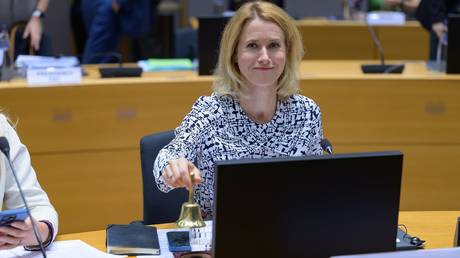
Remarks by EU foreign policy chief Kaja Kallas stereotyping Russians and Chinese expose her as “critically uneducated,” Russian Foreign Ministry spokeswoman Maria Zakharova said on Sunday.

Speaking at an event organized by the EU Institute for Security Studies last week, Kallas argued that the two nations complement one another in their opposition to the West, describing Russians as strong in social sciences but weak in tech, and the Chinese as the reverse.

“Chinese are very good at technology but they are not that good in social sciences,” Kallas said. “The Russians… are not good at technology at all, but super good in social sciences.”

Zakharova mocked the remarks in a Telegram post, asking who built the Crimean Bridge or launched rockets from Russia’s Vostochny Cosmodrome if it’s true that Russians lack technological expertise.

“On the same note, China would not be able to govern a billion citizens without being strong in social sciences,” Zakharova wrote. “Kallas is critically uneducated.”


READ MORE: No, Russia isn’t ‘lost to China’ – it simply refuses to be owned

The top EU diplomat made the comments while lamenting Western disunity, in contrast to what she described as Russia and China’s unified front. She also claimed that when the two nations highlight their roles in defeating the Axis powers during World War II, it “raises a lot of question marks” for a person who knows history.

Moscow has frequently accused officials in the EU of scapegoating Russia for the bloc’s internal problems, arguing that this rhetoric is used to divert public attention from their own failures.

Moscow has repeatedly stressed it has no intention of seizing the neighboring country

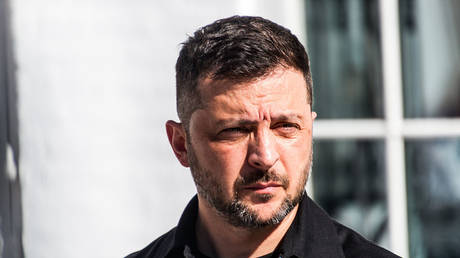
Ukrainian leader Vladimir Zelensky has claimed Russian President Vladimir Putin wants to occupy the whole of the country, and that Kiev can claim “victory” in the conflict as long as this does not happen.

Russia has long stressed that it has no intention of occupying Ukraine in full. Putin reiterated this when the conflict escalated in February 2022, and again later that year when Russian troops reached Kiev but then withdrew.

Since then, Moscow has consistently said any peace settlement requires Ukrainian neutrality, demilitarization, and recognition of Crimea, Donetsk, Lugansk, Kherson, and Zaporozhye as Russian territory.

Zelensky, however, insisted in an interview with ABC News’ Martha Raddatz which aired on Sunday that Moscow’s ambitions go further. “Putin’s goal is to occupy Ukraine, it is to destroy us… For him that’s victory,” he claimed. “And until he can do it, the victory is on our side… For us to survive is a victory.”

Read more

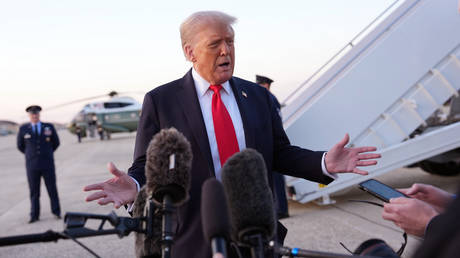
US President Donald Trump.
Trump to speak with Putin ‘soon’

He also accused Putin of “playing games” by holding a summit with US President Donald Trump in Alaska while allegedly refusing to meet with him, and claimed the Russian leader is not truly interested in peace.

Putin and Trump met in Anchorage on August 15. Although the summit produced no breakthroughs, both sides described it as a positive step. Trump’s remarks afterward fueled speculation of a potential Putin-Zelensky meeting. Kremlin aide Yury Ushakov later said no agreement had been reached, although Putin has not ruled out a meeting, despite questioning Zelensky’s legitimacy after his presidential term expired. Putin has stressed, however, that talks can only occur after tangible progress in negotiations.

Last week, Putin struck a cautiously optimistic note about the prospects for peace, saying “there is light at the end of the tunnel” given the US shift to peace mediation. Kirill Dmitriev, Putin’s aide on international economic affairs, echoed the sentiment on Sunday, saying that “peace is close precisely because of Trump-Putin dialogue.”


READ MORE: Putin and Trump ‘will prevent WWIII’ – Kremlin envoy

On Sunday, Trump told reporters he planned further talks with Putin “over the next couple of days,” vowing “to get it done – the Russia-Ukraine situation” soon.

Ukraine lacked the expertise to bomb the Baltic Sea pipelines, Nikolay Patrushev has said

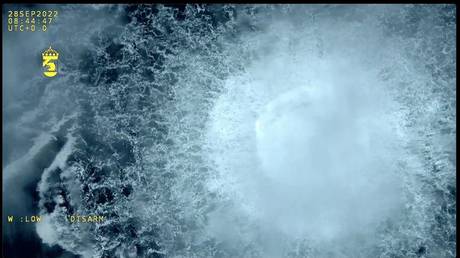
The sabotage of the Nord Stream pipelines could not have been carried out without Western commandos, a top aide to Russian President Vladimir Putin has claimed, singling out Britain as the likely culprit.

German prosecutors have attributed the explosions in international waters in September 2022, which disabled the twin pipelines supplying Russian gas to Germany via the Baltic Sea, to a group of Ukrainian nationals.

In an article published Sunday in Kommersant, the former head of Russia’s Federal Security Service (FSB), Nikolay Patrushev, argued that Ukrainians lack the expertise to carry out this complex operation independently.

Read more

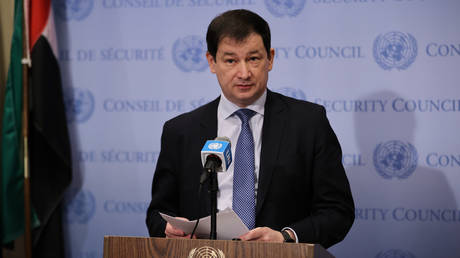
Russian Deputy Ambassador to the UN Dmitry Polyansky.
Russia ‘has no faith’ in German Nord Stream sabotage probe

The sabotage was likely “planned, overseen, and executed with the involvement of highly trained NATO special forces,” Patrushev wrote, adding that the perpetrators were experienced in deep-sea operations and familiar with working in the Baltic.

“Few armies or intelligence services have divers capable of executing such an operation correctly and, above all, covertly. One unit with the necessary skills is the British Special Boat Service,” he said. Founded during World War II, the SBS is the Royal Navy’s elite squad specializing in amphibious warfare.

Russia has criticized the German investigation for a lack of transparency and for not including the Russian authorities. In 2024, Russia’s Foreign Intelligence Service claimed it had “credible information” that the US and UK were directly involved in the sabotage, a claim denied by both London and Washington.

The UAV struck in Donetsk, Russia on Sunday, according to the regional authorities

A Ukrainian kamikaze drone struck a park in Donetsk, Russia on Sunday, injuring six people, including a teenage girl, according to the regional authorities.

Denis Pushilin, the head of the Donetsk People’s Republic, said the UAV hit Gulliver Park in the western part of the city, an area that has often come under shelling during the conflict.

He added that Ukrainian forces carried out 15 “armed attacks” on Donetsk and the nearby town of Makeevka, using 155mm artillery and drones.

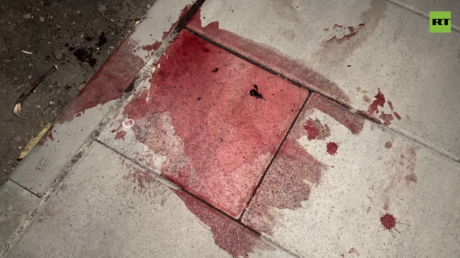
Footage from RT’s Murad Gazdiev filmed shortly after the strike shows debris, blood stains on the sidewalk, and benches damaged by shrapnel.

A school was also heavily damaged, though no one was injured inside as it was closed at the time.

Governments and corporations should be aware of the risks associated with electronic communications, Dmitry Peskov has said

Messaging apps are “absolutely transparent” to intelligence agencies and security services, Kremlin spokesman Dmitry Peskov has said. People who use them to share sensitive information should be aware of the risks, he added.

“All messengers are absolutely transparent systems, and people who use them should understand that they are transparent… to the security services,” Peskov told journalists on Friday at the Eastern Economic Forum in Vladivostok, Russia.

He added that it is particularly important to consider the risks when sensitive government or commercial data is shared through these apps, which can be accessed by foreign intelligence services.

Peskov was commenting on Telegram and WhatsApp in Russia, as well as the Russian government’s support for developing a domestic messaging platform.

Read more

FILE PHOTO
Russia accuses messaging apps of double standards over data requests

Russian security services have accused Telegram and WhatsApp of using double standards for refusing to share data with the Russian authorities about fraud and terrorist plots while complying with similar requests from other countries.

In July, a member of the State Duma’s committee on information policy and technology, Anton Nemkin, called WhatsApp’s continued presence in Russia a “legalized breach of national security.”

Russian law enforcement officials have said that Ukrainian intelligence, along with other malicious actors such as swindlers and con artists, often relies on databases containing personal data obtained through WhatsApp and Telegram to recruit agents or identify targets inside Russia.

In December 2024, the US government also warned senior officials to switch to encrypted communications after a security breach in which a group of hackers stole data, including information stored under US government surveillance protocols as part of “legal” wiretapping of American suspects.

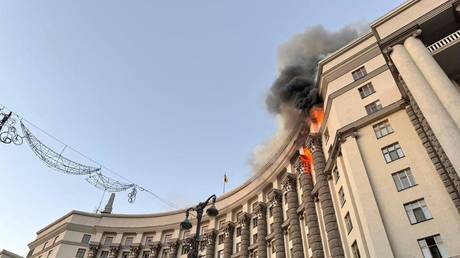
Kiev Mayor Vitaly Klitschko and several Ukrainian media outlets have reported that a fire in the building was caused by a downed drone

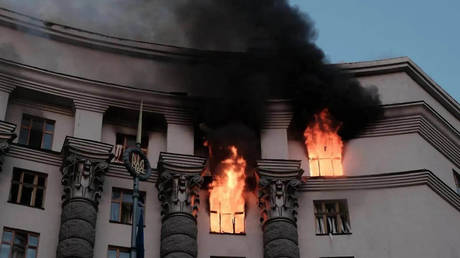
Ukrainian Prime Minister Yulia Sviridenko has accused Russia of striking a government office in central Kiev, posting a video from inside a damaged corridor. However, reports by Kiev Mayor Vitaly Klitschko and Ukrainian media suggested that the blaze was sparked by debris from a downed drone, not a direct hit.

In the video posted to social media on Sunday, Sviridenko said “you can see the consequences of the attack” while standing in a corridor with some scattered debris. She also claimed that the fire caused by the attack covered 800 square meters. No clearly visible signs of any major blaze can be seen in the video except for what appears to be a burnt roof.

Klitschko stated earlier on Telegram that a government office caught fire after Ukrainian air defenses brought down a drone. Several local media outlets, including TSN and Focus, also reported that the fire was caused by wreckage from the intercepted UAV.

The Russian Defense Ministry stated on Sunday that the nation’s military had targeted two military industrial facilities on the outskirts of Kiev in an overnight strike. It denied striking the government office.


READ MORE: Russia denies targeting Ukrainian government building

Sviridenko used the incident to accuse Moscow of “not seeking peace” and urged Kiev’s Western backers to “help close our sky” and “strengthen sanctions against Russia.” She also published a photo of herself standing inside a severely damaged building, claiming it to be the government office.

Photos released by the Ukrainian emergency services on social media only showed fire and smoke coming out of several windows on the upper floor of the government building, with no visible damage to its walls or roof.

This is not the first time Ukrainian officials have pointed the finger at Russia for damage caused either by a shot-down projectile or Ukraine’s own air-defenses. Such incidents in the past have set residential buildings and infrastructure ablaze, raising questions over Kiev’s placement of anti-air systems close to civilian areas.

Moscow maintains that it never targets civilians, only Kiev’s defense industry and military-related facilities.

The breakthrough drug reduced tumor size and growth by up to 80% in early testing, according to Veronika Skvortsova

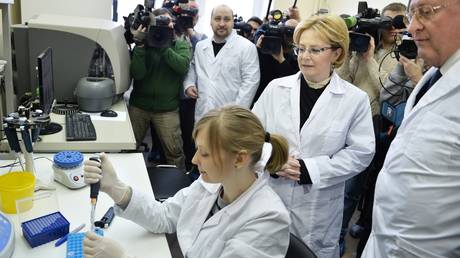
Russia’s newly developed cancer vaccine has shown high effectiveness in preclinical trials and is ready for rollout, according to Veronika Skvortsova, head of the Federal Medical-Biological Agency.

The breakthrough drug is awaiting approval from the Russian Health Ministry.

The vaccine showed excellent results in three years of preclinical trials, the official told Izvestia on Friday on the sidelines of the Eastern Economic Forum in Vladivostok.

“The [trials] have proven the safety of the vaccine, including its repeated use, as well as its high efficiency, which was associated with a reduction in tumor size and a slowdown in tumor growth,” Skvortsova said. She added that in some cancers, the effect reached 60-80%. “Studies have shown an increase in survival, which is also very important.”

“We submitted documents to the Ministry of Health to obtain permission for clinical use” at the end of summer, the official added.

The vaccine is ready for use, we are waiting for permission.

The initial launch is planned for colorectal cancer, with jabs for glioblastoma and melanoma to follow, she added.

Read more

RT
Sputnik V developer sets out plan for breakthrough HIV vaccine

According to its developer, the Gamaleya Research Institute of Epidemiology and Microbiology, the drug is an mRNA-based vaccine that uses AI to train the patient’s immune system to attack cancer cells.

Institute head Alexander Gintsburg said earlier that the vaccine is subject to a unique regulatory framework due to its nature. “This is a fundamentally different process from the registration of standard drugs,” he noted last month.

The institute also developed Russia’s Sputnik V Covid-19 vaccine and is currently working on an HIV vaccine using the same mRNA technology.

The event revives a 400-year-old tradition that was discontinued after the 1917 Revolution

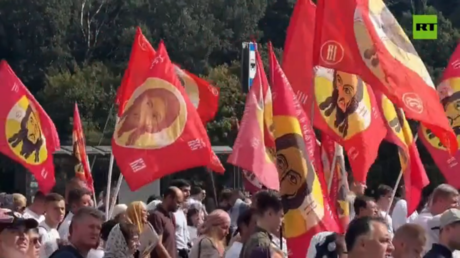
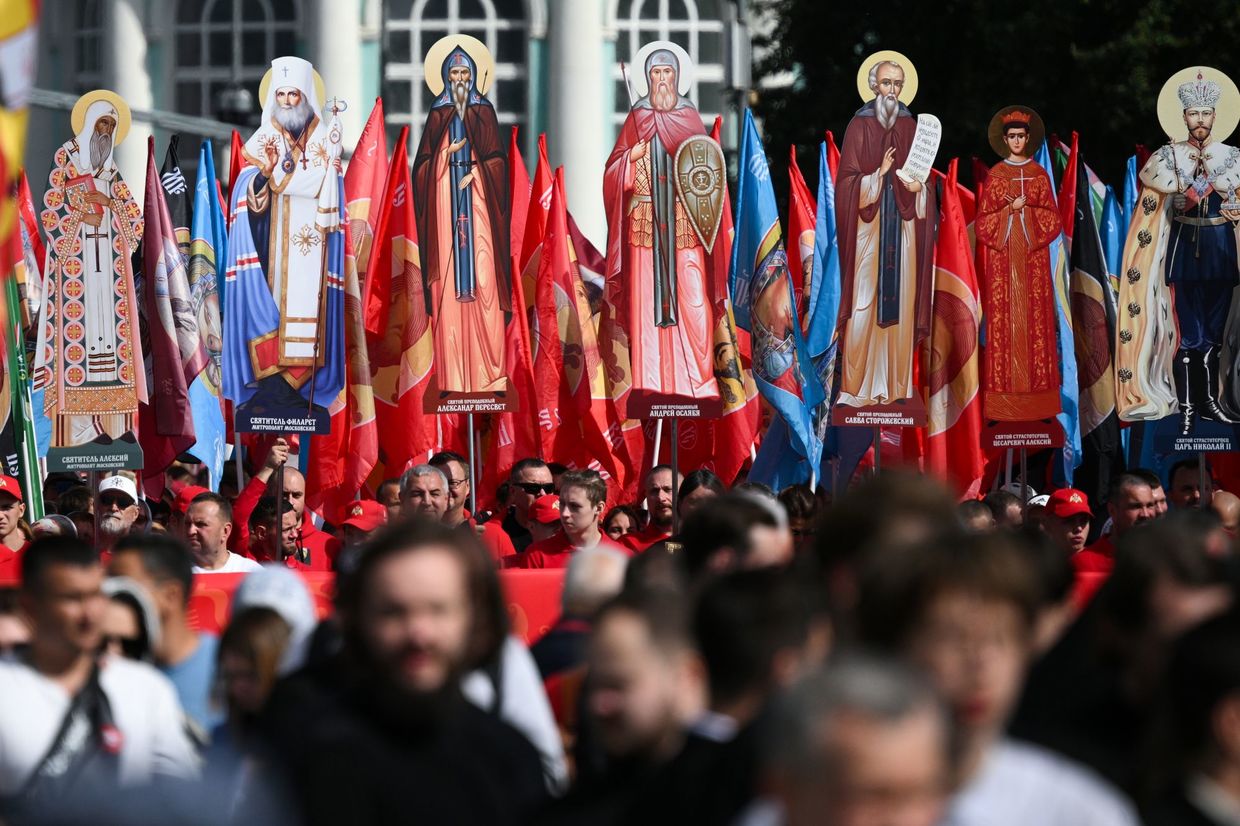
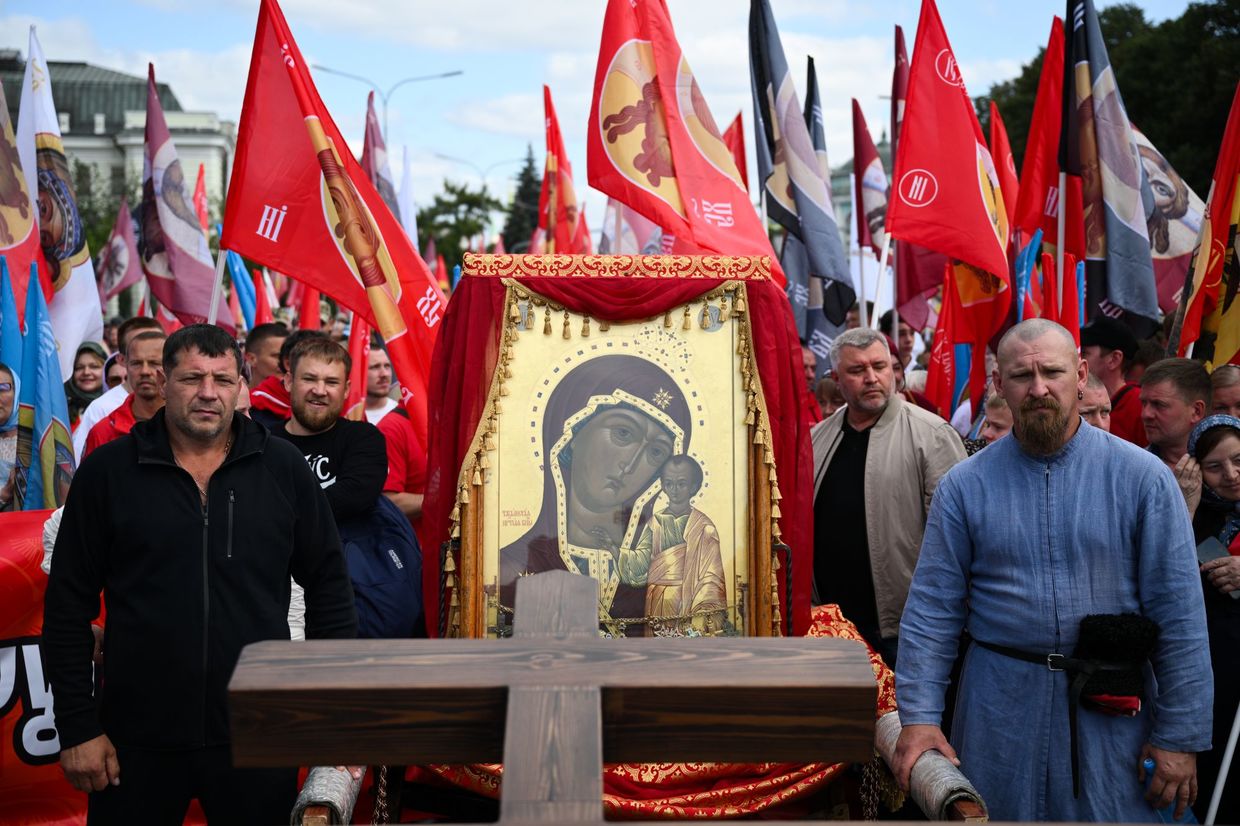
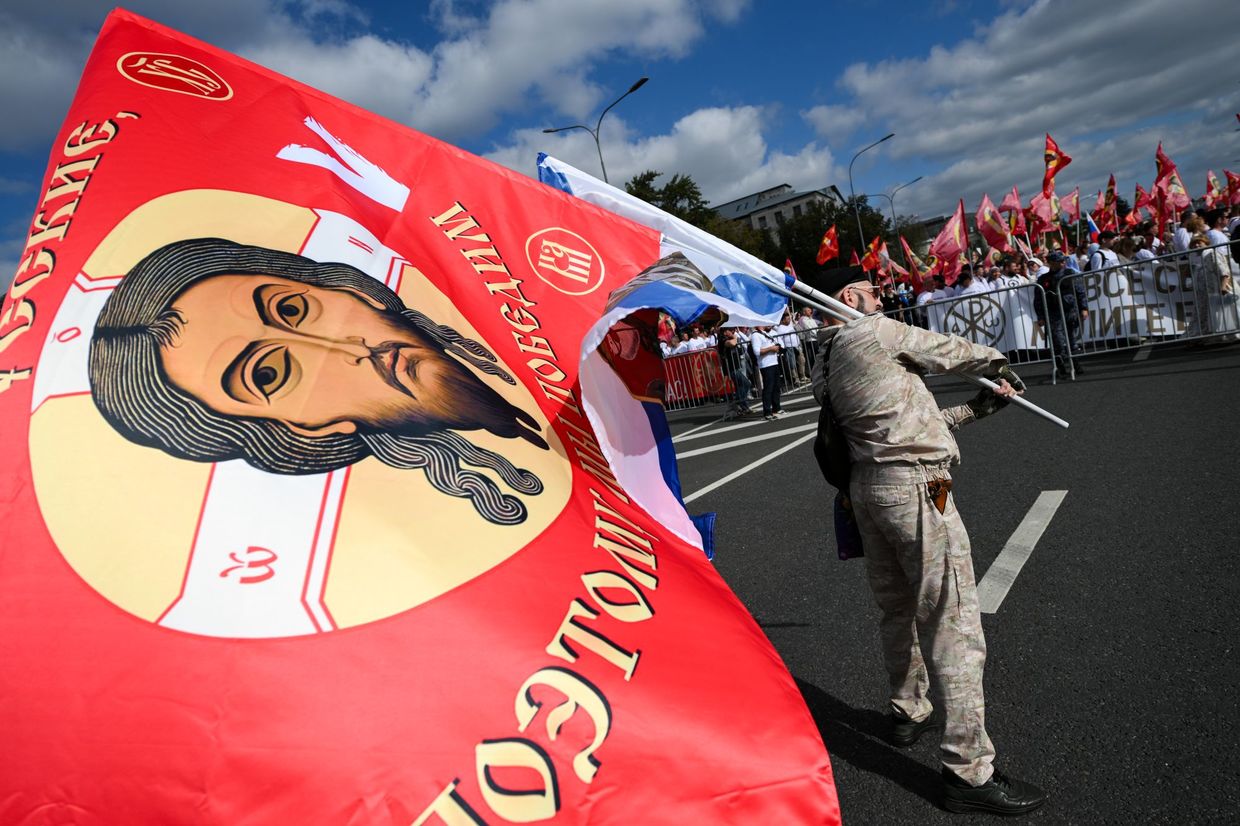
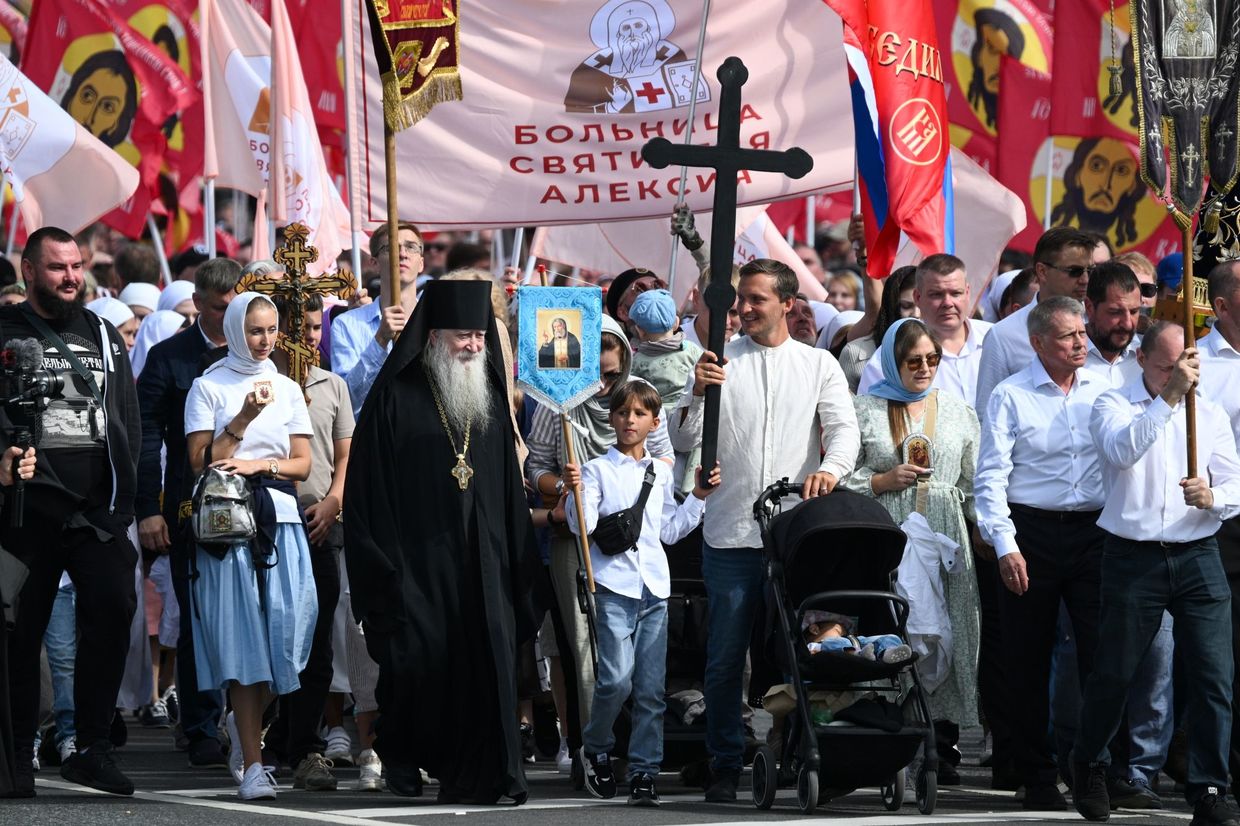
Thousands of Orthodox Christians took part in a large procession on Sunday celebrating the Council of Moscow Saints, a Russian Orthodox Church feast honoring the saints of Moscow. The event marks the revival of a tradition that was discontinued after the Russian Revolution in 1917.

The march was led by Patriarch Kirill, head of the Russian Orthodox Church, and joined by clergy from the Moscow diocese, monastic communities, and lay believers. Organizers estimated that about 40,000 people took part.

Participants came from across Russia and also the Czech Republic, Uzbekistan, Serbia, Italy, and other countries. The march began at the Cathedral of Christ the Savior in central Moscow and proceeded to the Novodevichy Convent 6km away.


© Sputnik / Kirill Zykov

Videos shared online showed clergy and worshippers carrying colorful banners depicting saints, with crowds chanting the traditional “Christ is risen” and choirs responding “Truly He is risen.”

Many sang church hymns as Muscovites lined the streets to watch the procession.


© Sputnik / Kirill Zykov

The procession was preceded by a service celebrated by Patriarch Kirill at the Cathedral of Christ the Savior.


© Sputnik / Kirill Zykov

Speaking ahead of the event, the Patriarch said the march underscored Moscow’s role as a capital of Orthodoxy and expressed hope it would restore an ancient tradition.


© Sputnik / Kirill Zykov

“Moscow is a truly Orthodox capital of our homeland,” he told reporters after the service. “On the one hand, it is a city open to our brothers from other religions, recognizing their contribution to our common history, but at the same time it is a city that will never renounce its Christian heritage.”


READ MORE: African Orthodox clergy complete historic visit to Russia (PHOTOS, VIDEO)

The procession honors the historic transfer of the Smolensk Icon of the Holy Mother of God from the Kremlin’s Annunciation Cathedral to the Novodevichy Convent, which was founded by Grand Duke Vasily III after the capture of Smolensk in 1525. An annual march was established in memory of the icon transfer and continued for nearly four centuries until the Russian Revolution.

Moscow’s forces attacked an industrial and logistics facility in Kiev, the Defense Ministry has said

Russian forces have carried out a long-range strike on Ukrainian drone assembly facilities, as well as an industrial enterprise in Kiev, the Defense Ministry in Moscow has said, adding that no other buildings were targeted. Ukraine earlier accused Russia of striking the building housing the Cabinet of Ministers in Kiev.

In a statement on Sunday, the ministry said the massive high-precision strike was aimed at facilities producing, repairing, and storing UAVs, as well as military airfields in the central, southern, and eastern parts of Ukraine.

Also targeted were the industrial enterprise ‘Kiev-67’ on the western outskirts of the Ukrainian capital and a logistics facility in the southern part of the city.

“The objectives of the strike have been achieved, all designated targets have been hit. No strikes have been carried out on other sites within the boundaries of Kiev,” the ministry stressed.


READ MORE: Ukrainian government building damaged by Russian strike – Kiev (PHOTOS)

Earlier in the day, Ukrainian officials claimed that a Russian drone had crashed into the Ukrainian government building near Independence Square, with fire engulfing its top floors. They also claimed that the attack included more than 800 drones in total across the country.

According to Ukrainian leader Vladimir Zelensky, four people died and 44 were injured in the attacks.

Russia has conducted drone and missile strikes on Ukraine for months, targeting military-related facilities and its defense industry. It has said the attacks are retaliation for Kiev’s strikes deep into Russia, which often damage residential areas and critical infrastructure. Moscow maintains that it never targets civilians.

Russian officials have also accused Ukraine of deploying air defenses in residential areas, suggesting that if Kiev were to abandon this practice, it could prevent casualties.