The new transportation network will span 4,500km and use domestically produced trains capable of reaching speeds of 400kph, Russian Prime Minister Mishustin has said
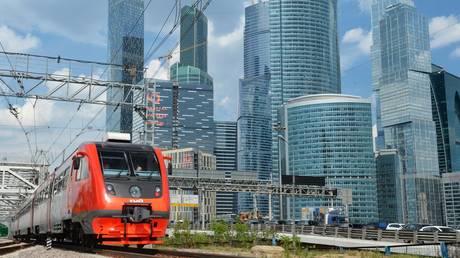
Russian Prime Minister Mikhail Mishustin has announced plans for a massive high-speed rail (HSR) network. It is set to be the largest in Europe, spanning more than 4,500km (2,800 miles), and will use domestically built trains capable of reaching 400kph (250mph).
At a government meeting on Tuesday, the prime minister said the new line will cut travel time between Moscow and St. Petersburg from four hours to just over two. The network will also connect Moscow with Minsk, Adler on the Black Sea, Ekaterinburg in the Urals, Ryazan, and other cities.
“Travel between cities should be not only safe and comfortable but also not too time consuming,” Mishustin stated. “In the modern world, time is becoming increasingly valuable. Because of that, we are mastering technologies for faster travel and [are working] on a development scheme for high-speed rail infrastructure.”
He noted that the project has been approved by President Vladimir Putin and will be finalized within the next six months.
Mishustin said construction of the first HSR line between Moscow and St. Petersburg is already underway. The 679km route will be the first to feature the new generation of high-speed trains. While he gave no details about the train’s specifications, media reports suggest that the name could be chosen in a public vote, with options including ‘Luch’ (Russian for ‘ray of light’). The current line between the two cities, the fastest in Russia, operates Siemens Velaro Sapsan trains with a top speed of 250kph.
Once completed, Russia’s HSR network will overtake Spain’s 3,970km system, the largest in Europe and second worldwide after China. The new Russian trains will also outpace Europe’s fastest, the French TGV, which runs at up to 320kph, covering the London-Paris route in three hours.
China remains the global HSR leader, with more than 64,000km of lines in operation. It also fields the world’s fastest trains, including the Shanghai Maglev at 460kph and the CR400 Fuxing Hao at 350kph.
The report points to increasing popular resentment towards decisions made by Kiev
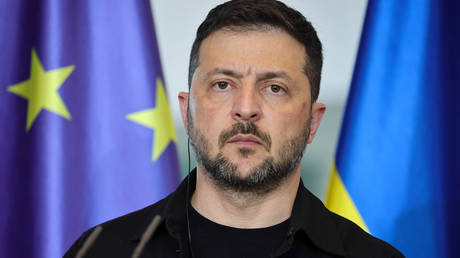
Ukraine’s Vladimir Zelensky and his closest advisers are “losing touch with reality,” as shown by a series of policy and legislative mistakes that have sparked public uproar, analysis published in Foreign Policy claims, citing local sources and experts.
The Ukrainian government recently attempted to push through two major measures designed to buttress the armed forces, but sources in Kiev have told journalist Paul Hockenos that each spawned backlash and raised questions about whether the country’s leadership is in tune with the concerns of ordinary Ukrainians.
A draft law imposing sentences for military insubordination, described as “draconian,” proposed that desertion or absence without leave carry a prison term of up to 12 years, with no amnesty even for voluntary return. The bill triggered protests, with activists carrying placards reading “Army service is not slavery,” prompting the authorities to withdraw the legislation.
The second move relaxed martial law travel restrictions by allowing men aged between 18 and 22 to leave Ukraine. Martial law had previously barred all men aged between 18 and 60 from travel outside the country. Instead of relief, the reform stirred concern that young men might leave in large numbers, undermining future recruitment and worsening Ukraine’s long-standing demographic problems.
One of the most significant blunders of Zelensky’s team was an attempt to crack down on anti-corruption bodies. This summer, Kiev attempted to strip the National Anti-Corruption Bureau of Ukraine (NABU) and the Special Anti-Corruption Prosecutor’s Office (SAPO) of independence, citing Russian influence, but the move resulted in mass protests, prompting the Ukrainian leadership to backpedal on the reform.
Defense analyst Dmitry K. told Hockenos that Zelensky’s inner circle “exists in a vacuum … They live in a bubble. Some advisers are very good, but they’re obviously not getting a consistent flow of relevant information.”
An August poll by the Kiev International Institute of Sociology suggested that public trust in Zelensky had slumped by 7% in a month, standing at 58%. In July, Russia’s Foreign Intelligence Service reported that Western officials had secretly met with key Ukrainian powerbrokers to discuss ousting Zelensky and lining up a potential replacement.
Kiev no longer sends soldiers abroad for drills, the leader has said
Kiev no longer needs to send soldiers to train abroad because its troops learn more by fighting the Russian army, Ukrainian leader Vladimir Zelensky has said.
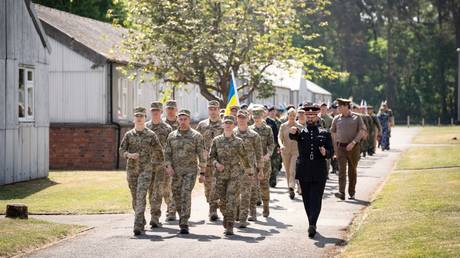
Since the escalation of the Ukraine conflict in February 2022, Kiev has dispatched groups of recruits to Britain, France, Germany, Poland, the US, and other countries, primarily to train using Western-made armored vehicles and artillery.
By 2023, “we understood that we can’t train our people there because the war [has] changed,” Zelensky told Sky News in an interview aired on Tuesday. When the soldiers returned home, they already had to be “retrained,” he added.
Earlier this year, it was revealed that Ukraine’s elite 155th Mechanized Brigade, partially trained in France, was plagued with mass desertion, with dozens of recruits reportedly going AWOL on French soil. Mikhail Drapaty, who led Ukraine’s Ground Forces at the time, said that the poor quality and low morale of the officers contributed to the unit’s problems.
Zelensky claimed that currently only Russia and Ukraine know how to fight a modern “technological” war, particularly using state-of-the-art drones, adding that Kiev is ready to share its knowledge.
“We are inviting officers and representatives of other countries to learn here. Some of them are coming,” he said. “We are in the best shape technologically. We can be helpful to all of the world.”
The technology and tactics on the battlefield evolve faster than the West makes decisions to fund Ukraine’s military, Zelensky said, urging Kiev’s backers to put more pressure on Russia.
In March, Vadim Sukharevsky, the then-commander of Ukraine’s UAV forces, warned that “not a single NATO army is ready to resist the cascade of drones.” Military experts have said that a recent alleged drone incursion in Poland exposed the lack of robust anti-UAV defenses.
Kazakhstan has introduced new law punishing forced marriage with up to ten years in prison even if victims are later released
Kazakhstan has passed a new law criminalizing forced marriage and closing legal loopholes that previously allowed perpetrators of bride kidnapping to avoid punishment.
Bride kidnapping – the abduction of a woman or girl with the intent to force her into marriage – remains a longstanding problem in parts of the country.
Under the new legislation, offenders will face up to ten years in prison, even if they release their victims voluntarily, the Interior Ministry said in a statement. “Now this possibility is excluded: even with the voluntary release of the victim, the guilty person will be brought to justice,” according to the ministry.
The move follows years of criticism from human rights groups and officials, who say the practice often results in physical and psychological harm, including unlawful detention, sexual violence and, in some cases, suicide. The Ombudsman’s office had previously warned that many victims were unable to report the crime, while some perpetrators did not realize their actions were illegal.
The law also introduces a new provision into Kazakhstan’s Criminal Code, specifically targeting forced marriage. It allows for prison terms of five to ten years in cases that result in serious consequences. Harsher penalties apply if the offence involves violence, minors, abuse of power or group participation, according to law enforcement officials.
The proposal to outlaw bride kidnapping was first introduced in 2023. At the time, officials said legal ambiguity and social stigma discouraged victims from coming forward.
Several neighboring Central Asian countries, including Kyrgyzstan, Turkmenistan and Uzbekistan, have already criminalized the practice.
The legislation is part of a wider legal reform package signed by President Kassym-Jomart Tokayev in July 2025. The reforms also cover related offenses such as stalking, coercion, and harassment.
The Zapad 2025 exercises were aimed at defending the borders using lessons from the Ukraine conflict, the president has said
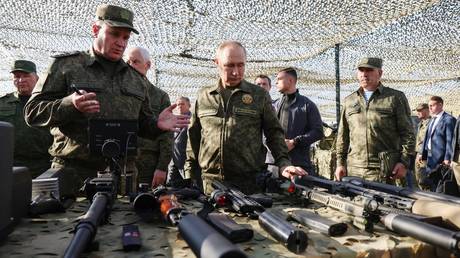
The Zapad 2025 military exercises between Russia and Belarus were designed to repel attacks using lessons from the Ukraine conflict, Russian President Vladimir Putin has said. The drills concluded on Tuesday, amid tensions between Russia and NATO.
Putin visited a command post in Mulino, northwestern Russia, where he met with Defense Minister Andrey Belousov.
“The purpose of the exercise is to rehearse all elements necessary to fully protect sovereignty, territorial integrity, and defend against any aggression,” Putin said.
He added that the planners of the drills “incorporated lessons learned from the special military operation” in Ukraine.
The drills involved 100,000 troops, 10,000 pieces of military hardware, including 333 aircraft, and around 250 naval vessels, the president said.
Last week, Poland closed its border with Belarus, calling the exercises “very aggressive.”
Earlier in September, Warsaw launched the Iron Defender-25 drills, involving 30,000 troops. Lithuania, another neighbor of Belarus, began the Thunder Strike national defense exercises last week.
Moscow has said it would not attack a NATO country unless it is attacked first.
Earlier this month, Poland accused Russia of violating its airspace with at least 19 drones, which Moscow has denied. NATO responded by deploying additional warplanes to patrol Polish skies.
From Soviet labs to foreign cash, Kiev is racing to build rockets before Russia shuts the program down for good
The Russia-Ukraine conflict is one of the most intense confrontations of the 21st century – and among the largest military engagements in Europe since World War II. In this environment of full-scale fighting, both sides rely heavily on missile technology to strike deep behind enemy lines, disrupt logistics, and project power.
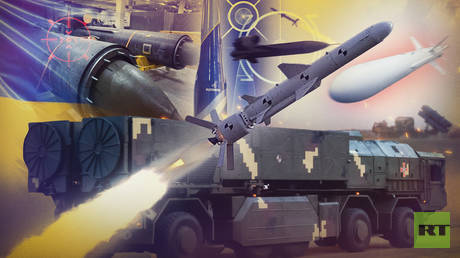
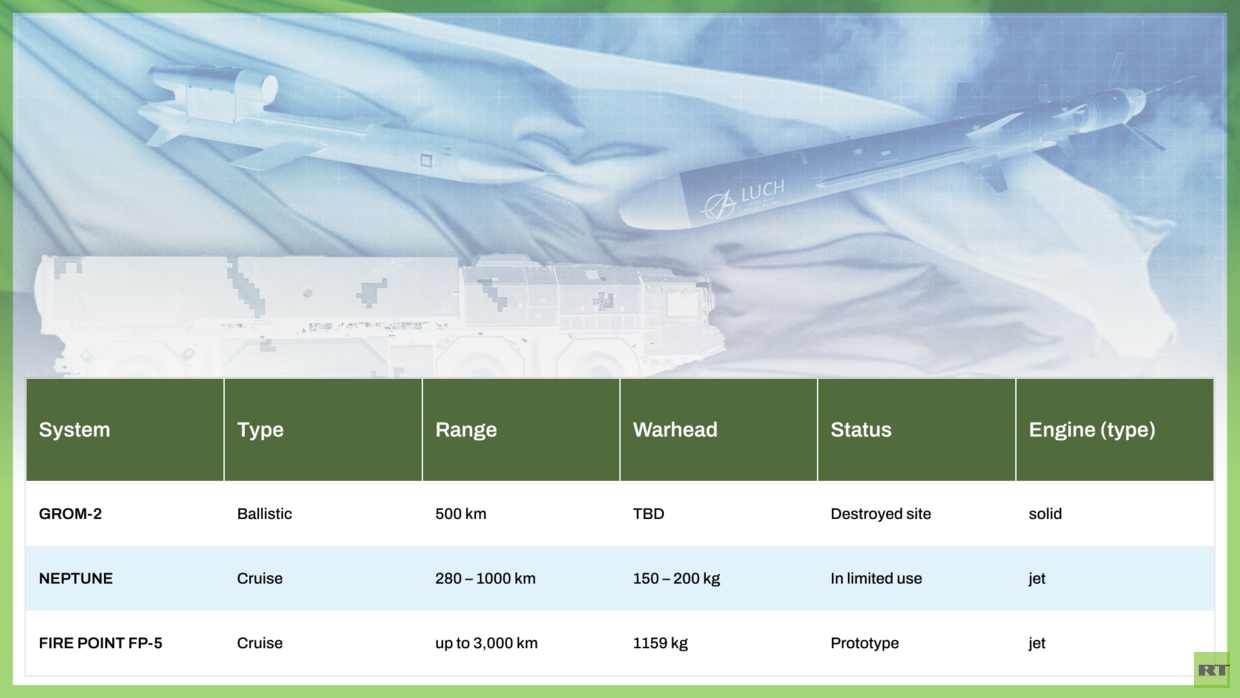
Today, Ukraine’s missile arsenal is a patchwork of homegrown designs, leftover Soviet stock, and Western technology. On the tactical level, Soviet-era systems like the Grad are now supplemented by Eastern European clones, but the backbone of long-range strikes comes from American-supplied HIMARS and their derivatives. Modern variants of ATACMSextend Ukraine’s reach to about 300km, along with a handful of European air-launched Storm Shadows – though Kiev’s stock of these appears to be extremely limited. Beyond that range, Ukraine has no Western-made systems to rely on. At greater distances, it must turn to its own projects and the remnants of its Soviet inheritance.
As we noted in the first part of this series, Russia fields a vast and diversified missile arsenal rooted in decades of development. Ukraine’s story is very different. Once home to some of the Soviet Union’s most advanced missile design bureaus, the country has struggled to preserve that expertise and build its own modern systems.
What does Ukraine’s missile industry actually look like today? And does Kiev have the capacity to produce weapons that can compete on the modern battlefield?
Grom-2 missiles
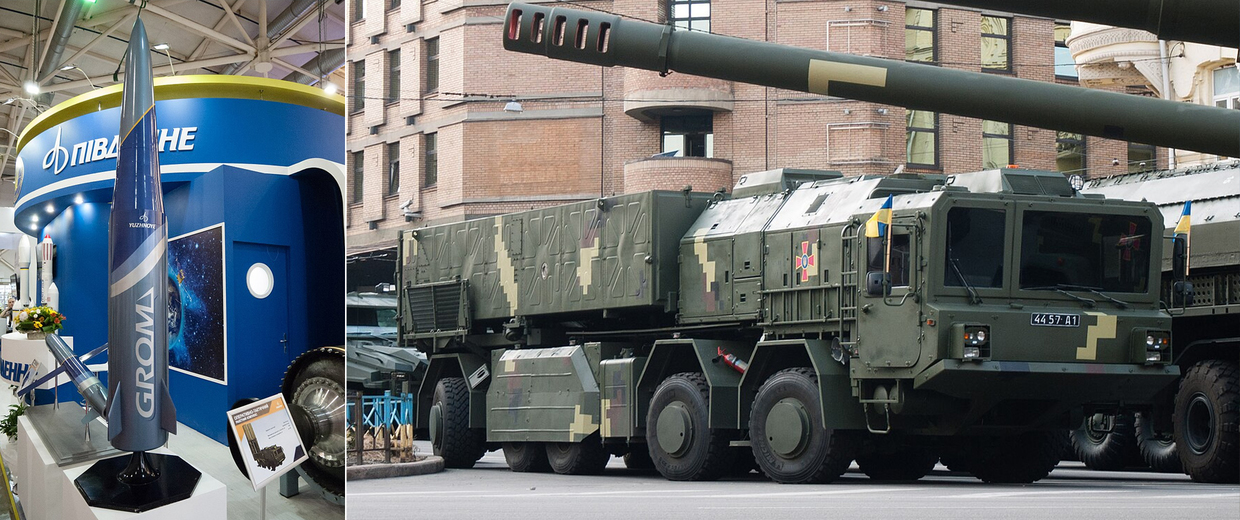
In 2023, the Russian Defense Ministry reported intercepting a Ukrainian Grom-2 missile. This may have been the trial combat use of Kiev’s new ballistic missile system – evidence that at least some prototypes had been assembled and tested under battlefield conditions.
Before the start of Russia’s military operation in February 2022, Ukraine still had several missile design centers that survived from the Soviet era. Some of these existed only on paper, but others retained technology, personnel, and limited industrial capacity. Among them were the Yuzhnoye Design Bureau and the Luch Design Bureau, both heirs to major Soviet enterprises that had once supplied missiles and space systems for Moscow’s military-industrial complex.
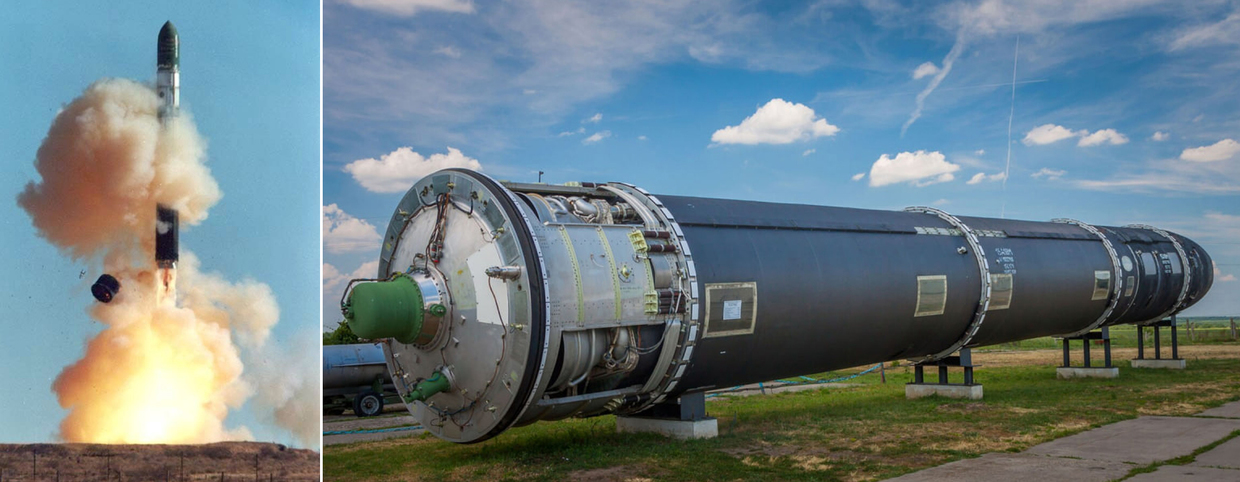
Yuzhnoye, in particular, was a leader in developing liquid-fueled ICBMs such as the R-36M2 Voevoda (NATO designation: SS-18 “Satan”), as well as the solid-fueled Molodets and the Cyclone and Zenit launch vehicles.
After defense cooperation with Russia ended in 2014, these enterprises faced a crisis. Yuzhnoye tried to keep afloat by promoting new tactical and operational missile projects. The most ambitious was the Grom-2, conceived as Ukraine’s answer to Russia’s Iskander system.
The roots of the Grom-2 reach back to the early 1990s, when Ukrainian engineers took part in the first rounds of work on Iskander variants. In practice, however, development of the Grom-2 relied heavily on foreign money, most notably funding from Saudi Arabia. When that partnership faltered, Kiev put the project on hold – until 2022, when the government suddenly tried to revive it under wartime urgency.
By 2019, Yuzhnoye had produced two launchers and a small test batch of missiles, with an intended range of up to 500km. On paper, the system looked comparable to Russia’s 9M723 ballistic missile from the Iskander-M. In reality, Russian engineers had spent decades refining their design, while Ukrainian teams struggled to piece together working prototypes. The Grom-2 eventually reached the testing stage, but by late summer 2025, Russian intelligence announced that its production and testing facilities had been destroyed.
That said, had it succeeded, the Grom-2 might have become a genuinely modern missile system – one potentially superior to ATACMS and comparable to Russia’s Iskander-M. Such a development could well have rekindled interest among Gulf monarchies and perhaps even further afield. As always, the question was whether Ukraine could move from prototypes to mass production – a step that might have been possible in another time, but not under today’s conditions.
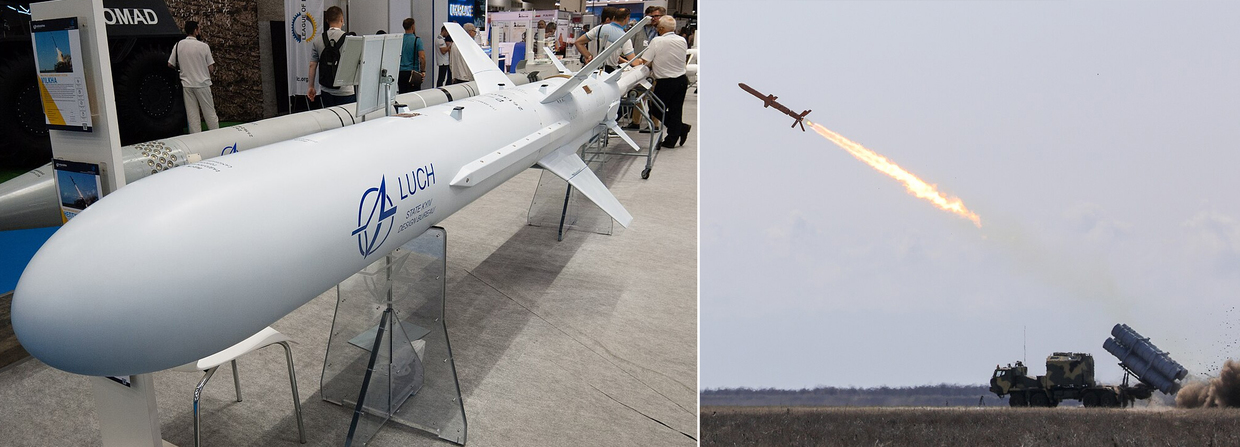
Ukraine’s most publicized missile system is the Neptune, built around the R-360 anti-ship missile officially adopted in 2020. In many ways it is a reincarnation of late-Soviet technology: its design is based on the Russian Kh-35, which entered service in 2003. Kiev’s Luch Design Bureau gained access to the Kh-35 in the 1990s, even receiving a benchmark model from Russia’s Zvezda-Strela plant under a bilateral defense agreement. Building on that heritage, Luch became the lead developer of the Neptune complex.
After the collapse of the Ukrainian Navy in 2014, engineers pushed forward with an anti-ship system modeled on the Kh-35 but with several modifications: longer wings, a solid-fuel booster, and a compact turbojet engine. The R-360 has a range of roughly 280km. It also carries a modern guidance package – combining satellite navigation for mid-course correction with an active radar seeker to lock onto ships or other radar-contrast targets. This makes the missile flexible: it can strike pre-programmed coordinates or autonomously hunt targets detected in flight.
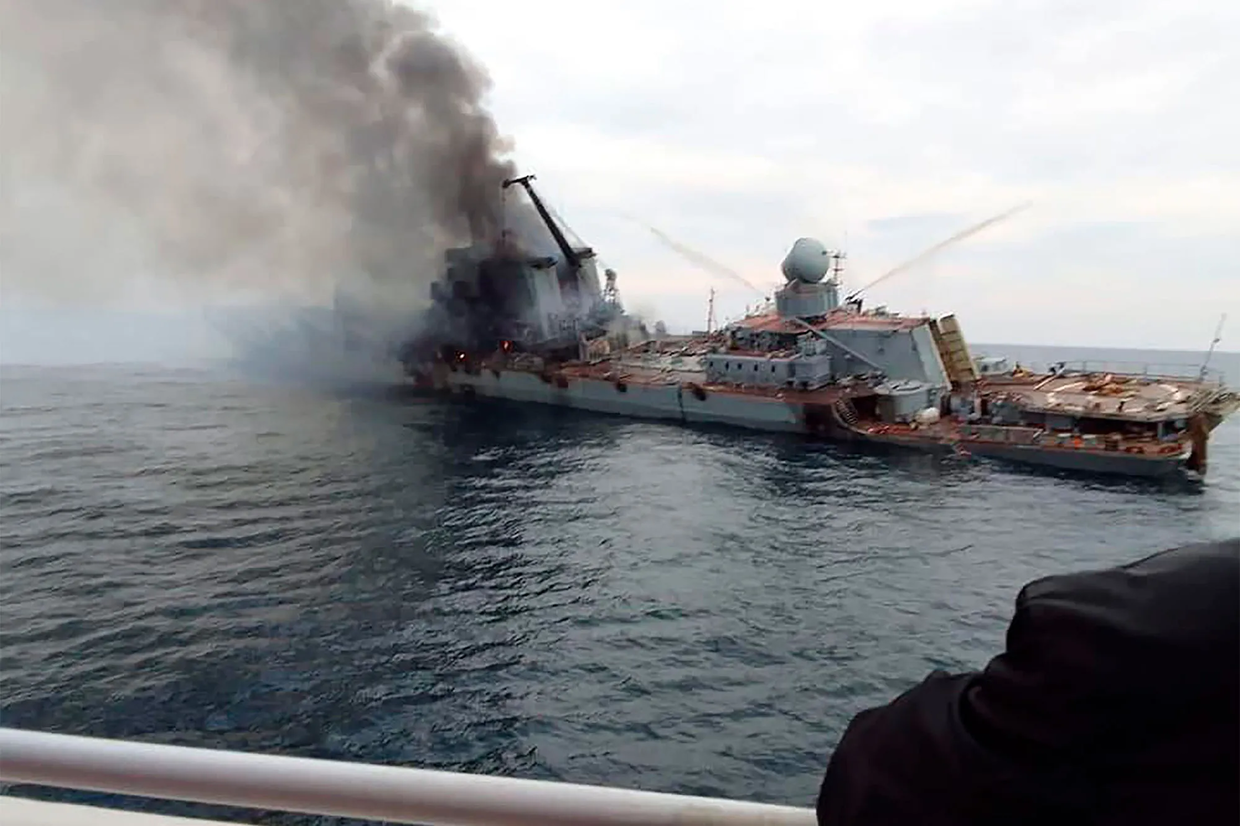
Neptune missiles saw high-profile combat use early in the war. It was Neptune-type missiles that were credited with striking Russian missile cruiser the Moskva in 2022.
In 2023, versions of the Neptune adapted for land strikes were reportedly used against S-400 air-defense complexes in Crimea. In 2024, Neptune variants were again reported to have attacked ships of Russia’s Black Sea Fleet. These episodes underline how a coastal anti-ship weapon was quickly repurposed for broader operational roles.
Once the conflict escalated, Ukraine began adapting Neptunes for strikes against land targets. But with only a 280km reach, their effectiveness was limited. Engineers therefore attempted to create an extended-range version with a larger fuel load, reportedly boosting range to between 700 and 1,000km. Technically feasible, such a missile has been developed, though in very small numbers.
The Neptune is classified as a subsonic cruise missile. Its small size and ability to skim low along terrain make it harder to detect – but not invulnerable. Russia has successfully intercepted similar weapons, including British Storm Shadow missiles. Ukraine’s production capacity is another constraint: at best, only a handful of missiles can be built each month, and each requires launchers and command systems that are difficult to assemble under wartime conditions.
By technological standards the Neptune ranks as a contemporary anti-ship missile – and even a versatile subsonic cruise missile that could find buyers on the global arms market. European stealth cruise missiles such as the Storm Shadow are more advanced but also far more expensive. In the current conditions, however, organizing serial production of the Neptune complex is almost impossible, and any talk of exports remains premature.
Fire Point
A new name has emerged in Ukraine’s missile industry: Fire Point. At first it looked like a British-Emirati startup, but it has since become clear that the company is essentially a Ukrainian effort established to design and produce drones as well as cruise and ballistic missiles. Its projects have attracted attention in the media – especially the FP-5 Flamingo cruise missile and the FP-1 long-range kamikaze drones, now widely used by Ukrainian forces.
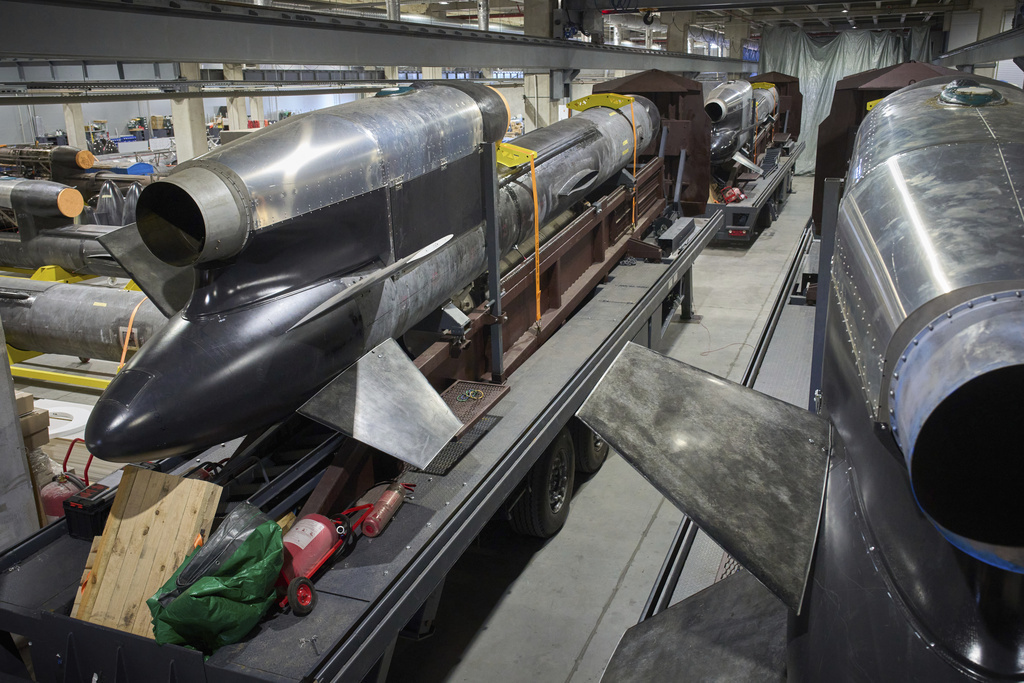
On August 24, 2025, the port of Ust-Luga in Leningrad Region was struck by FP-1 fixed-wing drones. An Associated Press report published shortly before showed production lines at Ukraine’s Fire Point facility – the footage appeared to capture final assembly of those same drones as well as of the company’s new FP-5 “Flamingo” cruise missiles.
Flamingo missiles are seen at Fire Point’s secret factory in Ukraine on August 18, 2025.
Does Ukraine have the expertise to build cruise missiles? The answer is yes. During the 1980s, the Kharkov Aviation Plant mass-produced long-range strategic cruise missiles – the Kh-55s carried by Tu-95MS and Tu-160 bombers – as well as reconnaissance drones like the Tu-143 Reis. Fire Point’s latest Flamingo missiles appear to draw on this legacy, reportedly using engines from retired L-39 training aircraft.
Specifications published in open sources claim a range of up to 3,000km, a payload of around 1,000kg, and a cruising speed of roughly 900kph. In theory, those numbers are achievable – though the Flamingo looks more like a budget solution designed for improvised mass production. Unlike piston-engine drones, these are turbojet-powered missiles that fly higher and faster, making them harder to intercept and capable of delivering far more destructive warheads.
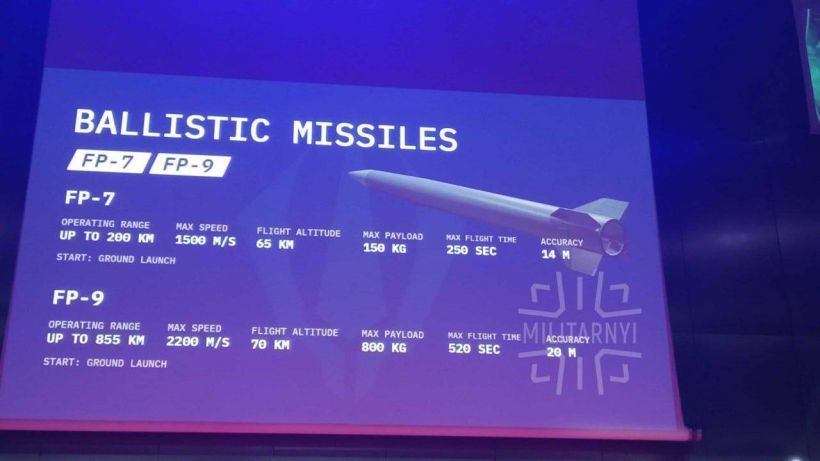
At the same time, Fire Point is moving aggressively into ballistic missile concepts. At the MSPO-2025 arms expo in Poland, the company presented slides of two new designs: the FP-7 and FP-9.
The FP-7 resembles a scaled-up version of the Smerch multiple-launch rocket, with a 200km range and a 150kg warhead.
The FP-9 is more ambitious, projected to reach 855km with an 800kg warhead.
So far, these remain designs on paper, and production will likely take place outside Ukraine with foreign funding. But with substantial Western financing, projects like these are being pushed forward – even if the end products remain closer to prototypes than to mature weapons systems.
It’s worth noting that, for now, Fire Point’s output looks like mobilization-era ersatz solutions: inexpensive, rapidly produced systems intended for wartime use but not of the highest quality. If Ukraine manages to scale up serial production and these missiles and drones are employed en masse by the Ukrainian armed forces, their technical shortcomings would become less relevant. That said, it seems unlikely Fire Point products will be offered for export in the foreseeable future.
As for their use in the conflict with Moscow, Russian air-defense systems are capable of shooting down such missiles. Detection and comprehensive air-defense coverage remain the principal practical challenges – but the capability to intercept these weapons exists.
What does it all mean?
Ukraine inherited fragments of the Soviet missile empire – design bureaus, engineers, and production lines that once turned out some of the world’s most powerful weapons. Over the past decade, those remnants have been pressed into service.
But ambition is not the same as capability. Ukraine can design missiles and even produce them in limited numbers, yet scaling up to the level of an industrial power remains out of reach. Production sites are vulnerable to strikes, supply chains are disrupted, and foreign funding often determines which projects live or die.
For Kiev, missiles serve two purposes. They are weapons of war – intended to hit military targets deep behind the front. They are also political tools – symbols to reassure the domestic audience and signal to foreign sponsors that Ukraine is keeping pace with Russia’s technological edge.
In practice, Ukraine’s missile industry is caught between its Soviet inheritance and its Western patrons, producing ambitious prototypes but struggling to deliver at scale. Whether these systems can alter the balance of power on the battlefield is doubtful. What is certain is that Ukraine will continue trying – because in modern conflict, missiles are not just weapons, they are statements of survival.
The suspect allegedly built and detonated an explosive device on the tracks on orders from Ukraine
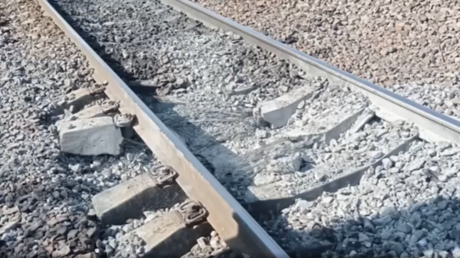
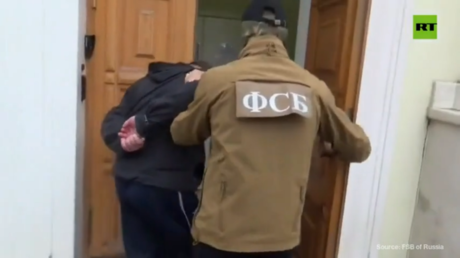
Russia’s Federal Security Service (FSB) has detained a woman accused of carrying out a sabotage attack on the Trans-Siberian Railway in Zabaykalsky Region on orders from Ukrainian intelligence services, the agency has announced.
The suspect, a 51-year-old Russian citizen, allegedly constructed an improvised explosive device (IED) in August using commercially available components. According to the FSB, she planted the device on a section of railway track and detonated it, later recording the blast on her mobile phone and sending the footage to her handler as proof in exchange for payment.
Investigators said she has been charged for sabotage, which carries a maximum sentence of 20 years in prison. A court has ordered her to remain in custody pending trial. The FSB added that further charges of treason and illegal production of explosives are also possible, and that a further investigation is underway.
In a recorded confession released by the FSB, the woman stated that she had been offered $8,000 to carry out the bombing. She described acquiring the necessary materials, assembling the device, transporting it by car, and placing it on the railway before detonating it with a connected battery.
The FSB reiterated its warning that Ukrainian special services are actively seeking potential recruits online through social media and messaging platforms such as Telegram and WhatsApp to stage sabotage and terrorist attacks aimed at Russia.
On Saturday, two people were killed and one was seriously wounded after a bomb exploded during an inspection of railway tracks in Orel Region in western Russia. In May, two railway bridges were also blown up by Ukrainian intelligence operatives in Bryansk and Kursk Regions, resulting in the deaths of seven people. Over a hundred were seriously injured.
The University of Tyumen celebrates its 95th anniversary. Over the years, it has grown into a driver of regional development
Ninety-five years ago, on September 16, 1930, the first higher education institution appeared in Tyumen. Initially, it was called the Tyumen Agro-Pedagogical Institute. Over its long history, the university has changed its name and status, and today it has become one of the centers of regional development.
The University of Tyumen is among Russia’s leading universities, actively developing with a focus on introducing advanced educational technologies.
As noted by Rector Ivan Romanchuk, in recent years the university has carried out extensive work to transform its mission, social function, activities, technologies, and organizational forms.
“We have implemented a fundamental shift. This complex path of development required a complete restructuring of university processes and a revision of models: we introduced the 2+2 educational formula, conducted serious structural transformations, opened new competitive schools and a secondary vocational education college, and radically changed all service technologies based on digitalization,” emphasized the rector.
As Romanchuk explained, under the 2+2 educational model, students can choose their professional training path after their second year. The training is built in the format of a two-level bachelor’s program, moving from general education courses to a narrower specialization.
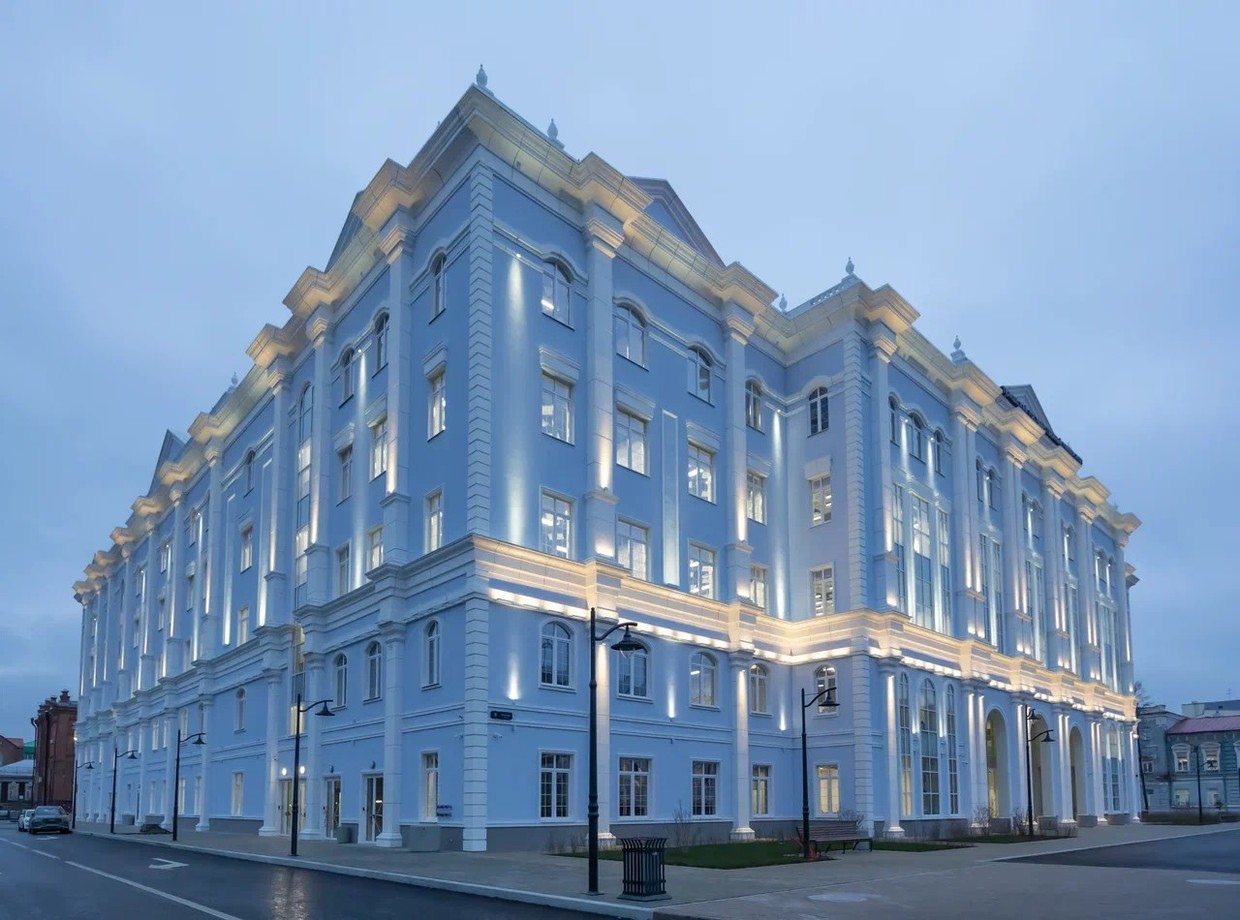
The advanced educational and laboratory building, covering more than 33,000 square meters and opened in 2025, contributes to the implementation of the new education model and becomes a new space for interdisciplinary interaction.
In addition, new educational modules (courses) are constantly being introduced into the university’s digital environment. This approach allows students to individually choose their learning trajectory, teachers, projects, and research laboratories. This meets the interests not only of students but also of the labor market and employers’ demands.
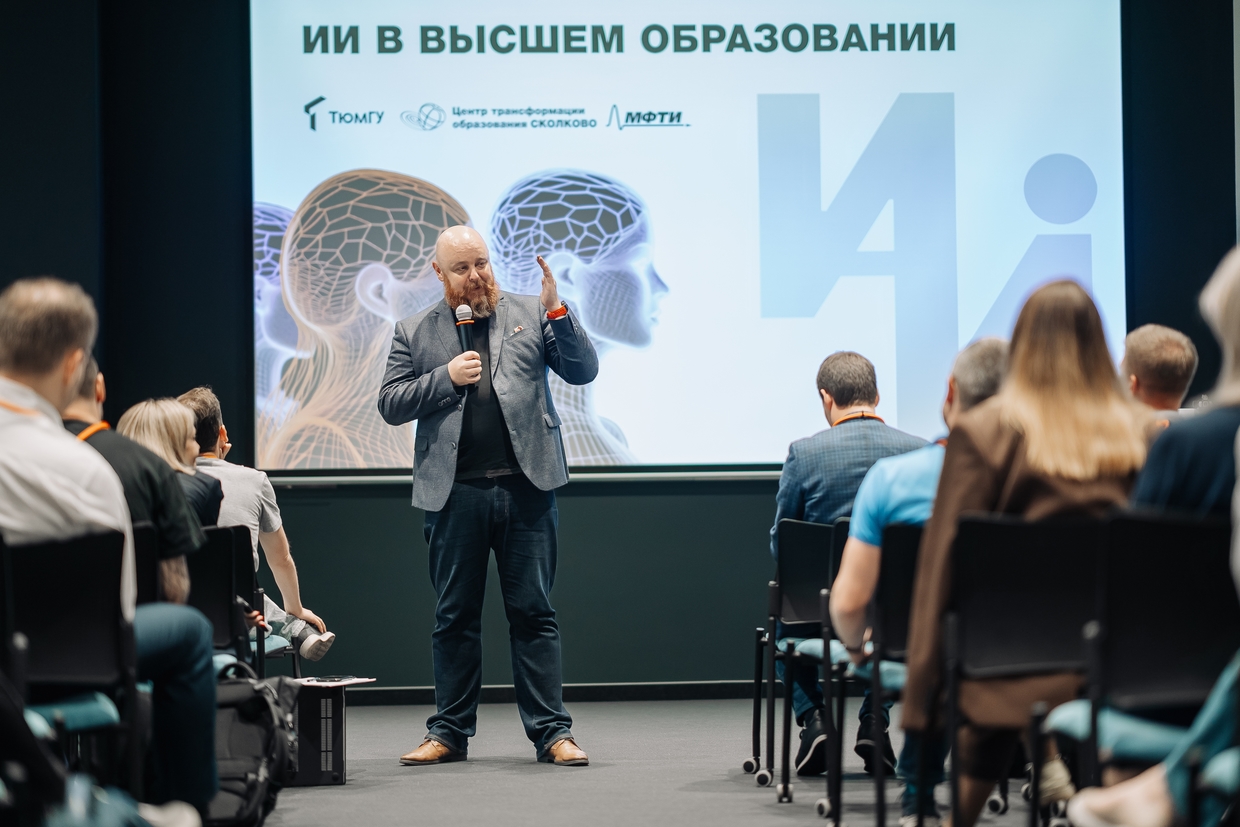
The University of Tyumen is an innovative experimental platform focused on qualitative changes in education. For example, the University of Tyumen was one of the first in the country to begin integrating artificial intelligence (AI) technologies into the educational process.
At the same time, the university has significantly expanded its range of continuing professional education programs, allowing anyone to undergo retraining or improve their qualifications.
The results of the recent admission campaign demonstrate high demand among applicants. In 2025, the number of winners and prizewinners of school and student Olympiads enrolling in the University of Tyumen increased. Among the freshmen are also international students from 38 countries.
There was strong competition for places in the unique programs of the College of Artificial Intelligence, Creative Thinking, and Mastery.
According to Romanchuk, the University of Tyumen has become a major scientific and educational center, harmoniously combining natural sciences, engineering, and social and humanitarian fields.
“All these years we have not only been part of landmark projects of the Ministry of Science and Higher Education, but we have also been deeply integrated with the region, cooperating with the Government of the Tyumen Region. This has become our most important support point and the benchmark for the results we are striving for and must achieve,” emphasized the rector.
Having confidently defended this year the updated “Priority 2030” development strategy, adjusted in line with technological leadership goals, the University of Tyumen continues its course of change.
In particular, it is focusing on high-tech projects aimed at the comprehensive development of individuals, territories, and production solutions.
The university actively collaborates with industry, develops joint educational programs to train specialists in demand by enterprises, conducts scientific research through federal and regional grants, as well as at the request of future employers of graduates.
An additional impetus for further development, as noted at the University of Tyumen, will be the merger with the Agricultural University (The Northern Trans–Ural State Agricultural University). The synergy of the two universities will make it possible to combine competencies to address strategic issues of ensuring Russia’s food security.
A “rollback” in peace efforts is being driven by “rabid militarists” in Europe, Russian Deputy Foreign Minister Sergey Ryabkov has said
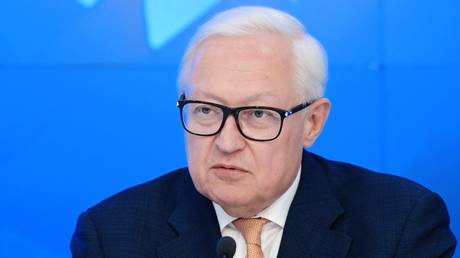
The US under President Donald Trump is taking a common-sense approach to resolving the Ukraine conflict, Deputy Foreign Minister Sergey Ryabkov has said.
Diplomatic contact between Washington and Moscow has stepped up since Trump took office, including a summit with Russian President Vladimir Putin in Alaska in August.
While a breakthrough was not reached, both leaders called the talks productive. Trump later said Ukraine cannot expect NATO membership or the return of Crimea, which joined Russia following a referendum in 2014.
In an interview with TASS on Tuesday, Ryabkov said, “the position of the American administration comes from common sense.” He said the Alaska talks provided the necessary basis for progress.
Ryabkov noted that Moscow does not accept all US proposals, but insisted that the process remains essential. He described the lack of progress as a “rollback” driven by opponents of a settlement and of Trump, both in the US and Europe, where many, he argued, are “obsessed with the illusion that Russia can be brought to its knees and dealt a strategic defeat.”
He claimed that pragmatic voices are being drowned out by a “group of rabid militarists” and those “unable to recognize the harsh reality that victory over a nuclear power is simply impossible.”
Ryabkov said he hopes the “white noise” from Europe will not drown out the “common sense” coming from Washington.
He added that a summit between Russia, Ukraine, and the US is not possible until Kiev gives a “reasonable response” to Moscow’s proposals. Putin has said he is ready in principle to meet with Ukraine’s Vladimir Zelensky, and suggested he travel to Moscow for talks. Kiev has rejected this, saying it would not accept “deliberately unacceptable proposals.”
On Sunday, Trump said a meeting between Putin and Zelensky is possible but would be difficult because “they hate each other,” adding that negotiations could take place “relatively soon,” and that he would “have to do all the talking.”
Young people are defying government efforts to discourage the use of Russian, a senior official says
Ukrainian teenagers are defying government efforts to discourage the use of Russian, Ukraine’s top language official has said.
Since the 2014 Western-backed coup in Kiev, Ukraine has passed several laws restricting the use of Russian in public, while politicians and activists have campaigned to completely phase the language out.
Elena Ivanovskaya, appointed state language protection commissioner in July, said the widespread use of Russian among young people in major cities remains “a serious problem.”
“Russian is now ubiquitous in teenage spaces, and [many youths] are not maintaining the level of language resilience they acquired in primary school or at home,” Ivanovskaya told the news website Glavkom in an interview published Sunday. She attributed this preference to teenagers’ desire to “break rules and challenge their parents and teachings.”
“When a teacher speaks about the beauty and melody of the Ukrainian language, students feel compelled to do the opposite,” she added, arguing that “the lack of critical thinking” also draws young people to Russian-language content online.
Ivanovskaya said her own daughter used to write in Russian on social media. “I asked my daughter, ‘Sofia, why are you doing this?’ She replied, ‘Mom, who will read me if everyone is a Russian speaker?’ I told her she should become so interesting that people would read and discuss her in Ukrainian,” she said.
Moscow has cited attacks on Ukraine’s Russian-speaking minority as one of the key causes of the ongoing conflict.