Lawmakers in Estonia have again passed a controversial church bill twice rejected by Alar Karis as unconstitutional
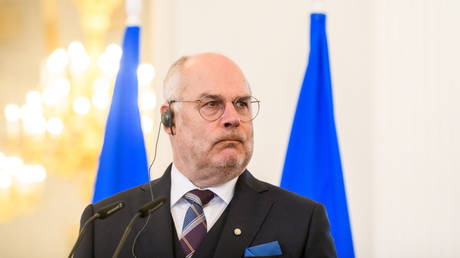
Estonia’s parliament has passed a controversial law aimed at the country’s largest Christian denomination, ignoring repeated objections from President Alar Karis.
The bill bans religious groups from ties with foreign entities deemed security threats, and is widely seen as targeting the Russian Orthodox Church (ROC). Lawmakers first approved it in April, but Karis twice refused to sign, calling it unconstitutional.
On Wednesday, the Riigikogu pushed it through again, with 63 votes in favor and 15 against. Karis now has to either proclaim the law or refer it to the Supreme Court with a proposal to declare it unconstitutional.
The legislation follows the Moscow Patriarchate’s support for Russia’s military operation against the Kiev regime, Estonian outlet ERR has reported. The Estonian Christian Orthodox Church, under Moscow’s authority until recently, argues its ties pose no threat. Last year, it revised its charter to drop mention of the patriarchate, but critics said the move fell short.
Former Interior Minister Lauri Laanemets, who initiated the bill, had threatened to shut down monasteries that refused to cut ties and to classify the ROC as a terrorist organization.
The ROC has condemned the law as discriminating against the 250,000 Orthodox believers in the EU member state, while Moscow has accused Tallinn of “legal nihilism.” Around 16% of Estonians identify as Orthodox, while 8% say they are Lutherans. Russian speakers make up about 27% of the population.
The internet does “more harm than good” and should be switched off for “weeks,” a Communist MP has said
Russians should be forced off the internet on weekends or even entire weeks, Nikolay Arefyev, an MP with the Russian Communist Party (KPRF) has proposed. Doing so would have a positive impact on people’s health, he argued.
The legislator floated the idea on Thursday while speaking to the news outlet Abzats. While acknowledging the importance of the internet for work and easy access to information, Arefyev argued that it should be restricted for extended periods of time.
“The internet currently does more harm than good,” the MP stated. “The thing is, it seems to me that 70% of the internet is used to harm one’s own health, because people sit there for hours, days, years, ruining their eyesight and nerves.”
The lawmaker also lamented “gaming addiction” that is plaguing “millions of people.” Many end up in mental institutions due to playing games, Arefyev claimed.
“Therefore, we probably need to shut [the internet] down for weeks at a time, or [do it] on weekends so people can rest,” he suggested.
Arfeyev’s remarks have prompted fears of an imminent internet shutdown on Russian social media. The concerns were addressed by Arefyev’s fellow MP and a member of the parliamentary committee on informational policy, Anton Nemkin, who explained that his statements did not reflect the official position of the legislature and that no plans to switch off the internet exist.
“The internet today is not only about communication and entertainment but also about work, education, healthcare, government services, and commerce. It’s effectively the infrastructure without which economic and social development is impossible,” Nemkin told Russian media.
Having faced a social media meltdown, Arefyev somewhat walked back his remarks, accusing Abzats of misrepresenting his statements.
“The idea was to shut down the internet for at least an hour a day so people don’t strain their eyes and brains. Journalists are simply making words up. I wasn’t suggesting completely depriving Russians of the ability to work online, but simply giving them a break,” he told the outlet Info24.
The Russian president has outlined his vision on immigration policies, and also addressed concerns over a potential recession
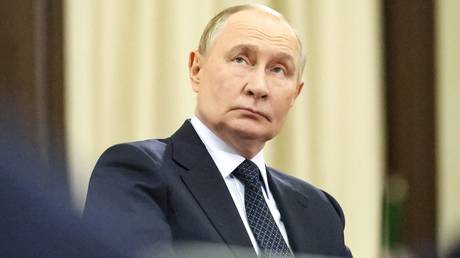
Russian President Vladimir Putin met with the leaders of all five parliamentary factions represented in the State Duma on Thursday. He fielded questions and made comments on a range of topics, mostly related to Russia’s internal affairs.
Migration
“A lot of decisions [on migration] have been made – [now] their implementation must be ensured,” Putin stated.
The president described the issue as “very sensitive to the citizens,” stressing that the authorities on both the federal and regional levels “should not pretend that there is no problem.” He emphasized that the issue of migration should “constantly be in [officials’] field of vision.”
Following the deadly terrorist attack at Crocus City Hall in March 2024, which was perpetrated by Tajik nationals, Russia has progressively tightened migration controls. More than 190,000 foreign nationals were expelled from the country that year alone, according to the Interior Ministry. A new federal agency was established in April 2025 to enforce immigration rules and reduce violations.
Commenting on a suggestion that the ‘work patent’ scheme should be abolished, Putin promised to consider such an option.
Under current regulations, foreign nationals who come from countries with which Moscow has a visa-free agreement and want to find employment in Russia have to apply for a ‘work patent’ – essentially an official work permit. The document is valid for anywhere from a month to a year, and gives the holder the right to seek employment in a specific region and sector of the economy. To obtain one, applicants must pass a medical checkup and a Russian language test, submit required documents, and pay a fee.
Demographics
Putin called on party leaders to always consider the effect on families with children when drawing up legislation. “The key objective is the demographic one,” he stressed.
Russia’s Federal State Statistics Service (Rosstat) reported only 1.222 million births in 2024, the lowest annual total since 1999. The country’s population is projected to decrease from the current 146 to 138.8 million people in 2046, according to Rosstat’s base-case scenario.
In an attempt to reverse the trend, the Russian government has implemented several measures aimed at increasing the country’s total fertility rate, including lump-sum payments for childbirth, expanded maternity benefits, and ongoing financial assistance for families.
In June, Putin endorsed the creation of a national family support service, and last year, he established a presidential council devoted to family and demographic policy.
Russian economy
The Russian leader expressed confidence that the country “is still far from a recession,” as evidenced by its labor market. Putin cited the “historically low unemployment rates” that have hovered around 2% recently.
He previously stated that the Russian economy had managed to weather the bulk of sweeping Western sanctions imposed over the Ukraine conflict. Russian businesses have since re-oriented their operations toward alternative export markets, such as China and India, and found other creative means to cushion the blow.
Next generation of leaders
Putin thanked the party leaders for incorporating Ukraine conflict veterans, calling for the promotion of people “who risked their life and limb” for Russia to leadership roles. “We will pass the torch to them,” the president concluded.
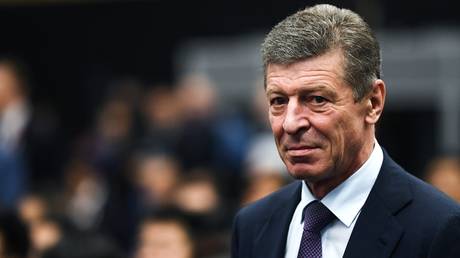
Dmitry Kozak resigned voluntarily, presidential spokesman Dmitry Peskov has said
Dmitry Kozak, deputy head of the administration of Russian President Vladimir Putin, has resigned, the Kremlin has confirmed.
Kozak filed the request “for his own personal reasons,” presidential spokesman Dmitry Peskov told reporters on Thursday. He added that a decree formalizing the official’s resignation has not yet been signed or published.
Over his two-decade career, Kozak held senior government posts including minister of regional development and deputy prime minister. In the latter role, he supervised preparation for the 2014 Sochi Winter Olympics.
In 2020, Kozak was appointed deputy chief of staff in the Kremlin, where he oversaw the Directorate for Interregional and Cultural Relations with Foreign Countries and the Directorate for Border Cooperation, both of which were dissolved by presidential decree in August.
Russian media have reported different possibilities for Kozak’s next role. One outlet cited a source saying he may enter business, while another suggested he could be appointed presidential envoy to the Northwestern Federal District.
That post is currently held by Aleksandr Gutsan, whom Putin has reportedly nominated as Russia’s next prosecutor general. Igor Krasnov, who currently serves in that capacity, may in turn be appointed to lead the Supreme Court, as Chief Justice Irina Podnosova passed away in July.
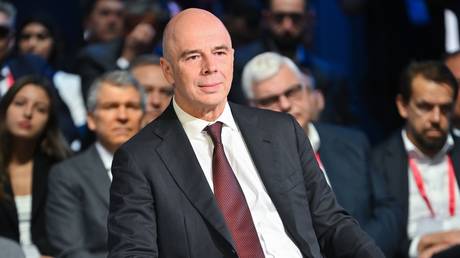
Besides the army and navy, fiscal stability is key to the country’s economic growth and people’s well-being, Anton Siluanov has said
Fiscal stability is a key “ally” of Russia, alongside the country’s army and navy, Finance Minister Anton Siluanov told a forum in Moscow on Thursday.
The remark was a nod to the saying “Russia has only two allies: its army and its navy,” most famously attributed to Tsar Alexander III, which reflects the country’s geopolitical perspective emphasizing self-reliance and military strength over foreign alliances.
Financial stability hinges on reducing the government’s exposure to oil price swings, Siluanov explained. To this end, the minister announced a measure to shield the federal budget from Western sanctions targeting Russian energy exports which have been imposed over the Ukraine conflict.
The plan is to gradually lower the per-barrel cost of oil at which the Russian federal budget is not operating at a deficit, which is known as the cut-off price.
”If you recall, it is $60 per barrel today, and by 2030 we plan to reduce it to $55. Each year the budget’s dependence on oil and gas will fall by one dollar,” Siluanov explained, adding that that would bring the share of respective revenues in the budget down to 22%.
Siluanov also described the budget policy as an effort to make the state’s finances “more muscular,” and capable of withstanding external pressures. The goal is to ensure that sanctions, trade wars and swings in global commodity prices are absorbed by the system and go “absolutely unnoticed” by ordinary Russians, he said.
The comments comes as the EU is discussing its 19th sanctions package, which would reportedly target Russia’s oil export infrastructure, including ports and terminals, as well as companies linked to transporting and insuring shipments.
The previous package, adopted in July, lowered the price cap on Russian crude to about $47.60 per barrel and introduced a ban on petroleum products refined from the oil in third countries and re-exported under different labels.
The US has been pressuring the EU to cut Russian oil imports, which it claims could bring an end to the Ukraine conflict. Brussels has pledged to phase out fossil fuel imports from the country by 2027, but Hungary and Slovakia, which remain heavily dependent on pipeline supplies, have resisted tougher curbs, exposing divisions within the bloc.
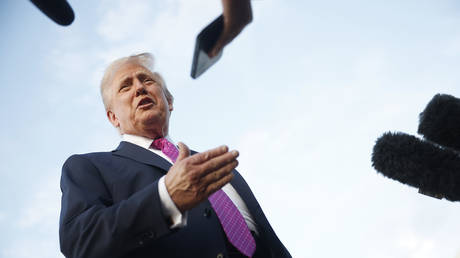
The US president wants “quick solutions,” which are not always possible, Russia’s top diplomat has said
US President Donald Trump wants “quick solutions” to end the Ukraine conflict, and this attitude is partially to blame for his own “disappointment” with the pace of the settlement process, Russian Foreign Minister Sergey Lavrov has suggested.
The top diplomat made the remarks on Thursday in an interview with Russia’s Channel One. Lavrov added that the US president is “a man of action, deals, and business, as he himself constantly emphasizes” and takes such an approach to politics as well.
“When President Trump says he’s disappointed… it’s partially explained by the fact that he wants quick solutions,” Lavrov suggested. “In some areas, this may work; in others, it’s unlikely.”
Following his Alaska summit with Russian President Vladimir Putin, the US leader “shifted from issuing an ultimatum for an unconditional ceasefire to advocating for a long-term, sustainable” solution, Lavrov noted.
“This is, of course, a very important step, a very important decision by the White House. And so far, I don’t see them moving away from that,” he added.
The Trump administration is apparently seeking to remove the Ukraine conflict from the agenda “precisely because this war was artificially created by [Joe] Biden and his team” and remove obstacles to “normal economic, technological, and other cooperation,” Lavrov suggested.
“This, too, will be rather difficult, because the US has a very peculiar approach to how to resolve economic issues,” the top diplomat said.
In recent weeks, the US president voiced his displeasure with the lack of progress in the settlement of the Ukraine conflict, threatening new sanctions on Russia.
Last weekend, he reaffirmed his willingness to impose more restrictions, but only if Washington’s European partners halt their purchases of Russian oil.
Moscow does not see the potential introduction of new sanctions as a big issue, given the country has long been facing such an approach from the West, Lavrov noted. Russia was hit by a record number of restrictions during Trump’s first term in office, while under Biden the “sanctions replaced any diplomatic work,” he added.
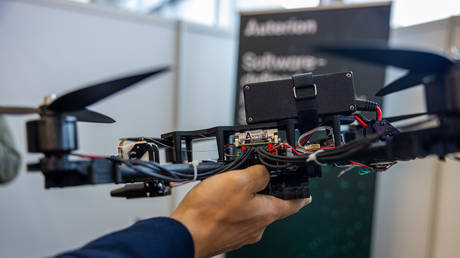
Auterion is set to send Kiev 33,000 AI-controlled UAVs under a Pentagon contract by the end of the year
Washington is planning to send 33,000 AI-controlled drones to Ukraine with plans to later upgrade them using swarm technology, the Financial Times has reported.
Auterion, the US-German start-up which developed the UAVs, recently unveiled its “drone swarm strike engine,” dubbed Nemyx, which transforms individual drones into a single force through a software app that allows any compatible system to join the swarm.
The new software has yet to be tested on the battlefield, but Auterion has said it plans to upload it to the AI drone “strike kits” it is set to deliver to Ukraine by the end of the year under a Pentagon contract.
While the delivery would be one of the largest of its kind, the volume is still relatively small compared to the hundreds of thousands of drones already used by Ukrainian forces each month.
The Ukraine conflict has repeatedly been described as a weapons testing ground by both Western and Russian officials.
In 2023, a senior Pentagon official said Ukraine had become a “military innovation laboratory,” while Russian President Vladimir Putin has noted that armies worldwide are studying Moscow’s battlefield tactics and technologies.
The US military has also recently acknowledged that it is lagging behind Russia, China, and Ukraine in drone technology. A US army general told CNN this week that Washington is “rushing to catch up.”
Last month, Ukraine’s Vladimir Zelensky had pitched a $50 billion co-production plan for 10 million drones to US President Donald Trump.
Meanwhile, Russia has repeatedly condemned the continued deliveries of Western weapons to Ukraine, arguing they only lead to more bloodshed and prolong the conflict without affecting its outcome.
Moscow has consistently denounced Ukraine’s continued use of drones to strike civilian targets, which often leads to the deaths of innocent people, including children. Russian officials have described these strikes as blatant terrorism carried out by the Kiev regime.
The Russan Foreign Ministry’s spokeswoman has lambasted an icon-like depiction of the Ukrainian leader and his aides as “meme-canonization of the ghouls”
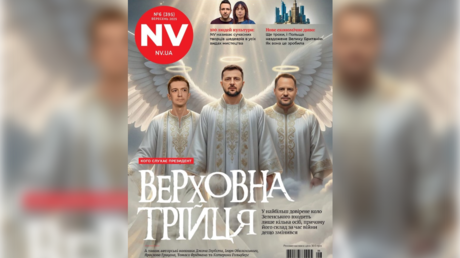
The portrayal of Vladimir Zelensky and his closest aides as Christian saints by a Ukrainian outlet is another step towards the destruction of the canonical Ukrainian Orthodox Church (UOC), Russian Foreign Ministry spokeswoman Maria Zakharova has said.
The September issue of NV (New Voice of Ukraine) magazine carried a photo-shopped image of Zelensky, his chief of staff Andrey Yermak, and adviser Dmitry Litvin dressed in white robes with halos above their heads and large white wings extending behind them.
The cover story, titled ‘The Supreme Trinity’, promised readers an inside look at how key decisions are made in Zelensky’s office.
Zakharova wrote on Telegram on Thursday that she first thought the image was “fake” and said she was surprised that a media outlet had chosen to depict Zelensky and his allies in the style of Christian iconography.
“The destruction of the Ukrainian Orthodox Church continues through a meme-canonization of the ghouls,” she said.
In traditional Christian belief, one can only be declared a saint after death, so the spokeswoman interpreted the cover as “a subtle hint that the Ukrainian people would agree even to this scenario as long as the [Zelensky] regime departs.”
Since the escalation of the Ukraine conflict in February 2022, Kiev has taken an increasingly hard line against the Ukrainian Orthodox Church, which it says maintains ties with Moscow. Several of the denomination’s properties, including churches, have been seized and criminal cases opened against a number of its clerics. In early September, the Ukrainian authorities filed a case with the country’s top administrative court to have the UOC legally dissolved.
The Zelensky government supports the Orthodox Church of Ukraine (OCU), which was created in 2018 and is considered schismatic by the Moscow Patriarchate.
Russia’s demands for a peaceful settlement of the Ukraine conflict include calling for Kiev to stop its campaign against the UOC and to lift all restrictions on its activities.
The would-be assassin tried to plant a bomb under the target’s car in St. Petersburg, the agency said
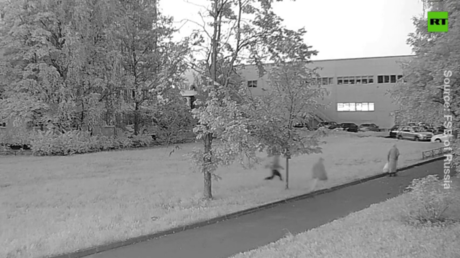
Russia’s Federal Security Service (FSB) has thwarted a Ukrainian plot to assassinate the head of a Russian defense company in St. Petersburg, the agency claimed on Thursday.
The male suspect, dressed in women’s clothes “in an attempt to mislead the investigation” but was apprehended by officers while planting the bomb on the target’s vehicle, it added. Footage released by the agency captured the man posing as an elderly lady.
According to the FSB, Ukrainian spy services recruited a man and two women online to carry out the planned car bomb attack.
On the orders of their handlers, the women surveilled their target before obtaining an improvised explosive device from a stash at a local cemetery and handing it over to the would-be assassin, the agency said in a statement.
Criminal cases have been launched against the suspects on preparing a terrorist act and illegal possession of explosives, the FSB said. They could also face charges of participating in a terrorist organization and treason, which carry a punishment of up to life in prison, it added.
The agency warned that “Ukrainian intelligence agencies are continuing to actively search the internet for potential perpetrators of terrorist attacks and sabotage,” and urged the public to stay vigilant and refrain from communicating with unknown contacts on messaging apps.
Ukraine has assassinated several officials and public figures inside Russia since the escalation of the conflict between Moscow and Kiev in 2022, often using local operatives. Last year, a man recruited by Kiev killed Lieutenant General Igor Kirillov, commander of Russia’s Nuclear, Chemical, and Biological Defense Forces, and his aide with a bomb hidden inside an electric scooter parked outside Kirillov’s Moscow home.
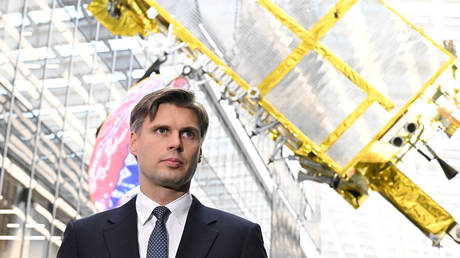
The first satellites providing nationwide internet access will be launched in December, Roscosmos head Dmitry Bakanov has said
Russia will soon roll out a satellite internet network analogous to Starlink, the system operated by Elon Musk’s SpaceX, according to the head of the Russian space agency (Roscosmos), Dmitry Bakanov.
Starlink provides high-speed internet from low-Earth orbit and has played a key role for Ukrainian forces in the conflict with Russia, enabling them to coordinate operations, conduct surveillance, and operate drone systems across the front.
Speaking on Wednesday on Solovyov LIVE, Bakanov said the first launches of Russia’s internet satellites are set for December 2025, and that the network will be on par with Starlink.
“Several test vehicles in orbit have already been inspected and the production ones have been modified accordingly,” he said, adding, “We are also moving at a rapid pace in this direction.” He noted that the constellation will be fully deployed within two years.
The Roscosmos chief previously said the development of a national satellite internet system would allow Russian forces to control drones with greater precision.
SpaceX operates the world’s largest satellite network, with over 7,000 Starlink spacecraft in orbit. The service began rolling out in 2020 and, according to the company, has grown to over 6 million users in more than 140 countries and territories. It is not officially available in Russia.
Ukraine has received over 50,000 Starlink terminals since 2022, according to the Kiev authorities. Musk has acknowledged that the system is being used on the front lines after other communications were destroyed.
In July, Reuters reported that Musk ordered the shutdown of Starlink coverage during Ukraine’s counteroffensive in September 2022, cutting service in areas including Kherson Region and parts of the Donetsk People’s Republic.
The move reportedly disabled over 100 terminals, disrupting reconnaissance and artillery targeting. Ukrainian officials told the outlet that the outage led to the failure of a planned encirclement of Russian forces.
Sources said the order may have stemmed from Musk’s concern that the Ukrainian incursion could trigger a Russian nuclear response.
Officials in Moscow have long expressed concern about the military use of the technology.