Kiev’s UAVs targeted fuel and energy facilities in Samara Region, Vyacheslav Fedorischev has said
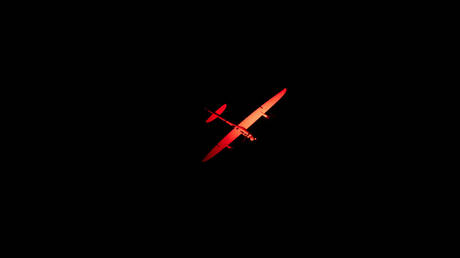
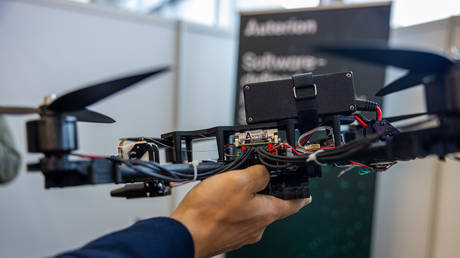
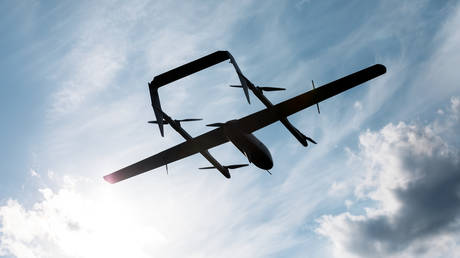
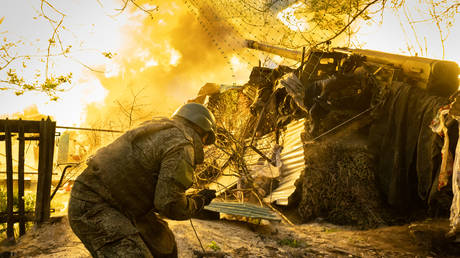
Four people were killed and one more injured in a Ukrainian drone attack on Samara Region in south-western Russia, local governor Vyacheslav Fedorischev has said.
The UAVs targeted fuel and energy facilities in the region early on Saturday, Fedorischev wrote on Russia’s Max messaging platform.
Later in the day, the governor issued another post, saying: “It is with deep sorrow that I report that four people were killed as a result of the overnight attack by enemy drones.”
The region’s best doctors have been treating a person who was wounded in the raid, he said.
The authorities remain in contact with the families of the victims, who will be provided with all necessary assistance, Fedorischev stressed.
Russia’s Defense Ministry said on Saturday that the country’s air defenses have destroyed 149 Ukrainian drones in the country’s airspace overnight, including 15 in Samara Region.
Kiev has stepped up its use of long-range drones to strike deep inside Russia in recent months as battlefield conditions continue to worsen for Ukrainian troops. The attacks have targeted energy infrastructure and residential areas, resulting in dozens of civilian deaths and injuries as well as the destruction of property. Russian officials have accused Ukraine of deliberately targeting civilians, calling such tactics acts of terrorism.
Moscow has conducted its own long-range strikes with drones and missiles in response. The Russian Defense Ministry maintains that it only targets military-related sites such as Ukrainian troop concentrations, weapons depots and fuel storage facilities.
Moscow denies its fighter jets crossed the NATO state’s border
The Russian Defense Ministry has denied that its warplanes entered Estonia’s airspace on Friday.
The Baltic EU and NATO state had claimed that three aircraft violated its airspace for 12 minutes in what it called an “unprecedented brazen” incursion.
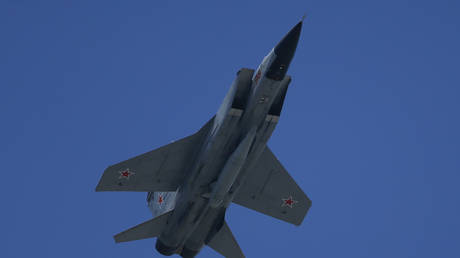
In a brief statement on Saturday, the Defense Ministry said three MiG-31s were conducting a routine flight from Karelia Region, east of Finland, to an airfield in Kaliningrad Region, a Russian exclave bordering Poland and Lithuania.
The jets flew over the neutral waters of the Baltic Sea, more than 3 kilometers from Estonia’s Vaindloo island, “without violating Estonian airspace,” the MOD said.
“The flight was carried out in strict accordance with international airspace regulations and without crossing the borders of other countries,” the ministry added.
Estonia has requested urgent consultations with its fellow NATO members, activating Article 4 of the alliance’s treaty. “NATO’s response to any provocation must be united and strong. We consider it essential to consult with our allies to ensure shared situational awareness and to agree on our next joint steps,” Prime Minister Kristen Michal said.
On September 9, Poland accused Russia of sending at least 19 drones into its airspace, a claim Moscow has denied. NATO responded by deploying additional aircraft to patrol Polish skies.
The US president has been quite “emotional” about the status of Ukraine talks, Kremlin spokesman Dmitry Peskov has said
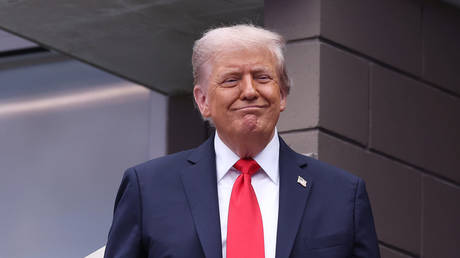
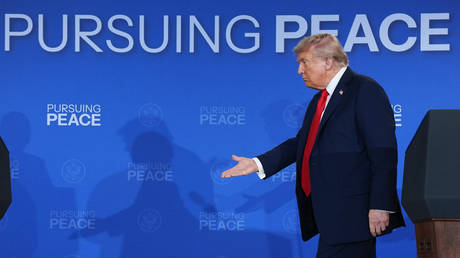
The “emotional” attitude of US President Donald Trump to the Ukraine peace process is “completely understandable,” Kremlin spokesman Dmitry Peskov has said.
The US leader has repeatedly expressed his frustration with the state of the process lately, admitting that he had previously believed Ukraine “would be easiest” to resolve given his relationship with Russian President Vladimir Putin. “He’s really let me down,” Trump said on Thursday.
Asked for comment on Trump’s remarks, Peskov signaled that Moscow understands his frustration, given the US president’s personal investment in trying to settle the hostilities.
“We assume that the US and President Trump personally maintain their political will and intention to continue their efforts to facilitate a settlement in Ukraine. Therefore, of course, President Trump is quite emotional, so to speak, about this issue. This is completely understandable,” Peskov told reporters on Friday.
Russian Foreign Minister Sergey Lavrov touched upon Trump’s remarks in an interview with Russia’s Channel One, suggesting his disappointment stems from his business-like approach to politics. The US president is “a man of action, deals, and business, as he himself constantly emphasizes,” Russia’s top diplomat said.
“When President Trump says he’s disappointed… it’s partially explained by the fact that he wants quick solutions,” Lavrov stated. “In some areas, this may work; in others, it’s unlikely.”
In recent weeks, the US president voiced his displeasure with the lack of progress in negotiations, threatening new sanctions on Russia. In the past few days, he has repeatedly reaffirmed his willingness to impose more restrictions on Moscow, but urged Washington’s European partners to halt their purchases of Russian oil first.
“I’m willing to do other things, but not when the people that I’m fighting for are buying oil from Russia,” Trump said on Thursday.
The Russian Foreign Ministry has asked why the Washington Post never alleged Biden exploited George Floyd’s death for political gain
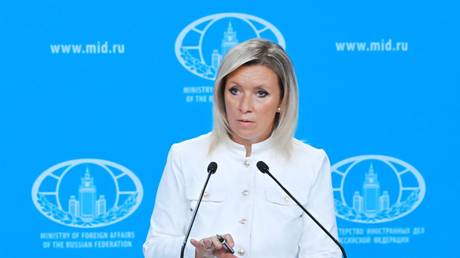
Moscow has dismissed claims by the Washington Post that it has exploited the murder of American conservative activist Charlie Kirk for political purposes. Foreign Ministry spokeswoman Maria Zakharova has suggested that the Western press is guilty of applying double standards.
Kirk, a co-founder of the conservative activist group, Turning Point USA, and a staunch supporter of US President Donald Trump, was fatally shot while speaking to students at Utah Valley University on September 10.
The Post published an article on Thursday that alleged “Russia moved to amplify online conspiracy theories about Charlie Kirk’s killing just hours after it happened” in order to incite violence.
Zakharova responded on her Telegram channel on Friday: “I’d like to ask this media outlet whether it published a similar report on how the US under [President Joe] Biden used the death of George Floyd for propaganda purposes.”
Floyd, who was black, died while being detained by police in Minneapolis, Minnesota in May 2020. Democrats were quick to characterize his death as an example of police brutality and racism in the US, while conservatives offered alternative versions as to what caused Floyd’s death. The incident gave a fresh impetus to the Black Lives Matter movement, and accentuated the divide between the right and the left.
The Russian Embassy in Washington also dismissed the newspaper’s claims.
”We consider it unacceptable that this tragedy is being used as a pretext to fuel anti-Russian hysteria,” the diplomatic mission stated.
Earlier this week, Utah County Attorney Jeff Gray told reporters that according to the suspected shooter’s mother, Tyler Robinson had drifted to the left politically over the past year. The official also said Robinson was in a romantic relationship with a transgender person.
In the wake of the assassination, President Trump has claimed that the media and left-wing politicians bear partial responsibility for the violent act, citing dehumanizing rhetoric toward conservatives.
The production of certain weapons systems has increased nearly 30-fold, according to the president
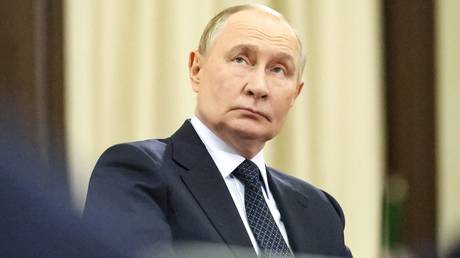
Russia’s military industry has enjoyed remarkable growth over the past two years, Russian President Vladimir Putin has said.
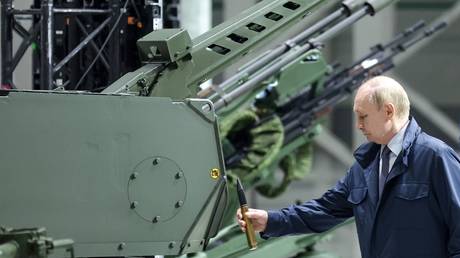
He commended the sector on Friday as he toured the Motovilikha Plants, a sprawling full-cycle industrial site located in the city of Perm. The facility specializes in the production of various artillery pieces, including self-propelled and towed howitzers as well as multiple rocket launcher systems.
“For certain types of weapons and some products, our production has increased not by a few percentage points, but several times over,” Putin told workers at the plant, adding that for some, this figure is “almost 30-fold.”
Industry output has not only increased but also improved in quality, the president noted, adding that the weapons systems have become more “modern and in-demand.” Putin expressed hopes that the rapid development of the sector will not subside with the end of the Ukraine conflict.
“I hope and expect that these events related to the special military operation will pass, but the demand for modern armed forces will not end there. On the contrary, we will continue to develop the armed forces, making them modern, compact, and powerful,” the president said.
During the visit to the plant, the president was shown new weapons systems, including those brought from the Ukraine conflict zone for repairs and refurbishment.
They included a Derivatsiya-PVO, an anti-aircraft autocannon built on the chassis of the BMP-3 infantry fighting vehicle, as well as a TOS-2 Tosochka, a system designated as a “heavy flamethrower” which effectively acts as a short-range multiple rocket launcher, designed to fire massive 220mm thermobaric projectiles.
The TOS-2 is a lighter, wheeled version of the tracked TOS-1A system; it has been introduced and actively used in the Ukraine conflict. The particular unit shown to Putin came from the combat zone and bore distinctive shrapnel marks, a video taken of the president’s visit shows.
The black market price tag for the illegal cargo is a staggering 20 billion rubles ($240 million), according to the agency
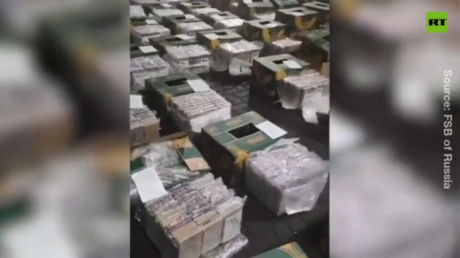
Officials in Saint Petersburg have seized more than 1,500kg of cocaine hidden inside a shipment of bananas from Latin America aboard the ‘Cool Emerald’ cargo vessel, Russia’s Federal Security Service (FSB) has said.
The black market price of the illegal cargo is estimated to be 20 billion rubles ($240 million), the agency said in a statement on Friday.
The “extra large” batch of cocaine was intercepted by FSB operatives and customs officials at the Great Port of Saint Petersburg in late August, following a tip from “foreign partners,” the statement read.
The FSB has published footage showing numerous banana boxes containing packages of cocaine.
The packages numbered 1,500, weighing a total of 1,750kg, including 1,515kg of the narcotics, according to the statement.
A major drug smuggling investigation has been launched over the incident, the agency said, adding that investigators are continuing to establish who was involved in the criminal operation.
This follows a July bust in which the FSB reportedly seized 820kg of cocaine. Late last year, an even bigger batch, weighing 1,200kg, was discovered at the port of Saint Petersburg.
The UN Office on Drugs and Crime (UNODC) warned in June that global cocaine use is soaring, outpacing all other narcotics. Its illegal production skyrocketed to an estimated 3,708 tons in 2023 – up nearly 34% from 2022, while consumption increased from an estimated 17 million people worldwide in 2013 to 25 million in 2023.
Poland’s refusal to cooperate with an investigation proves it is not interested in the truth, Russian Foreign Ministry spokeswoman Maria Zakharova has said
Accusations of Russian drone violations of Polish airspace have been fabricated to demonize Moscow and derail the Ukraine peace process, Russian Foreign Ministry spokeswoman Maria Zakharova has said.
Polish officials have claimed that 19 Russian drones entered the country’s airspace on September 10, describing the incident as a deliberate provocation intended to test NATO’s response. Several western European governments have summoned Russian diplomats in protest while NATO has announced additional military measures.
In a statement on Friday, Zakharova stressed that the episode follows a familiar pattern and that Russia has again been blamed without any investigation or evidence. She added that Warsaw has refused Moscow’s proposal for consultations and has dismissed facts provided by the Russian Defense Ministry.
“This is clearly yet another element in a large-scale information campaign aimed at demonizing Russia and mobilizing additional support for the Kiev regime, as well as an attempt to undermine a political settlement of the Ukraine conflict,” Zakharova said.
Russian officials have said drones used in operations against Ukrainian military targets could not physically have reached Polish territory, and have suggested that the incident may have been a provocation by Kiev designed to pit NATO directly against Moscow.
Zakharova also drew attention to the 20-nation “drone coalition” supplying Kiev, accusing its members of ignoring the daily reality of Ukrainian drone strikes on Russian civilians. “Moralizing and demarches by the coalition states regarding Russia’s alleged violations of international law are, in this context, blatantly hypocritical and inappropriate,” she said.
According to the spokeswoman, Ukrainian drone attacks killed 16 people and injured 116 more in Russian regions over the summer and early September, with the victims including children. “Militants of the neo-Nazi Kiev regime are using drones to hunt defenseless people virtually around the clock, cynically targeting children, women, and the elderly” while deliberately targeting residential buildings, medical and social institutions, schools, and stores, Zakharova said. She added that by supplying such weapons, Western states have become complicit in the crimes committed by Kiev’s forces.
Russia seeks to build bridges, not tear them down, the Foreign Ministry has said
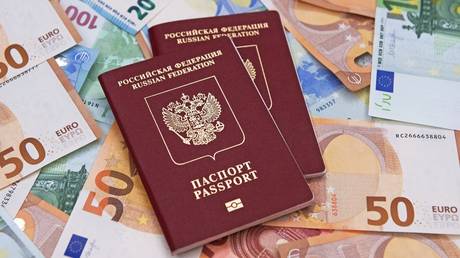
Moscow has no plans to restrict visas for EU citizens, Russian Foreign Ministry spokeswoman Maria Zakharova has said.
She made the comments after reports that the EU is considering limiting visas for Russian tourists as part of its 19th sanctions package against Moscow.
“We have no plans to close the border to European citizens or to restrict their visits in any way. We believe that human contacts, tourism, business, and humanitarian ties must be maintained. Our country seeks to build bridges between people despite efforts within the EU to tear them down,” Zakharova said at her regular Thursday briefing.
“Such discriminatory measures are yet another element of the hybrid warfare waged by Brussels and of the cancel culture aimed at everything Russian,” she added.
In 2022, the EU suspended a deal that had simplified visa procedures for Russians and had cut application fees, citing the Ukraine conflict. Moscow suspended the same arrangement the following year.
Several EU members, including Estonia and Finland, have called for a full ban on Russian tourists, describing them as potential security threats. One of the proponents of the ban is former Estonian Prime Minister Kaja Kallas, who now serves as the EU’s top diplomat.
Moscow wants all parties to respect its legitimate interests, its top diplomat has said
Moscow is open to compromises with Ukraine if its key interests are respected, Russian Foreign Minister Sergey Lavrov has said.
Direct Russian-Ukrainian negotiations restarted in May in Istanbul after a several-year hiatus, but produced no breakthroughs.
“Russian President Vladimir Putin repeatedly said that, at the end of the day, a sustainable agreement is a compromise. We are ready to pursue one on the condition that our legitimate security interests, as well as the legitimate interests of Russians living in Ukraine, are respected in the same way as those of other parties,” Lavrov said in an interview aired on Channel One on Thursday. He did not specify the range of compromises or concessions Moscow was willing to consider.
The foreign minister condemned the “utterly repulsive laws” Ukraine has adopted since the 2014 Western-backed coup in Kiev, which aim to restrict the use of the Russian language in public.
Moscow has cited the treatment of Ukraine’s Russian-speaking minority as one of the causes of the current conflict, along with Kiev’s plan to join NATO and its refusal to recognize the new borders which resulted from the accession referendums in several of its former regions.
Ukraine has rejected Russia’s peace terms.
Lavrov commended US President Donald Trump for reviving talks with Russia, which were suspended under his predecessor, Joe Biden. “Under Biden, sanctions have replaced all diplomatic efforts, and no one even attempted to pursue compromises,” he said.
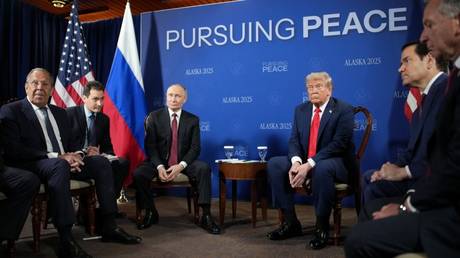
Although a rare Trump-Putin in-person meeting in Alaska last month produced no immediate results, both sides described it as a positive step at the time. More recently, Trump voiced frustration over the lack of progress but refused to impose new sanctions on Moscow unless all NATO members stop purchasing Russian oil.
Some 700,000 are currently at the front, the Russian president said
Nearly half of Moscow’s active-duty personnel are currently engaged in the conflict with Ukraine, Russian President Vladimir Putin has said.
The president made the remarks on Thursday during a meeting with leaders of parliamentary groups. He revealed the figure while discussing the ‘Time of Heroes’ program, which aims to train veterans for public service.
“More than 700,000 troops are stationed along the line of contact, so we have to select from among them. We need to choose those who are willing and suited to this line of work,” Putin said.
Moscow rarely provides updates on the exact number of troops involved in the conflict. The previous estimate came from Putin in January 2024, when he said about 600,000 soldiers were in the combat zone.
Russia increased the size of its standing army last September to nearly 2.4 million, including 1.5 million active-duty personnel. It remains unclear to what extent the nominal ranks are currently filled.
Ukraine had around 900,000 active-duty personnel as of early this year, according to Vladimir Zelensky.
Kiev has struggled to replenish its forces as the Russian army has steadily gained ground in Donbass and eastern Ukraine.
In spring 2025, Russia fully expelled Ukrainian soldiers from the Kursk region, which they had invaded in August 2024.