Moscow’s envoy to France, Aleksey Meshkov, has responded to the NATO threat to target aircraft that allegedly violate its airspace
Any NATO member state that shoots down a Russian warplane would trigger a “war” with Russia, Moscow’s envoy to Paris, Aleksey Meshkov, has warned.
Last Friday, Estonia claimed that Russian military aircraft had briefly violated its airspace, due to which Tallinn requested urgent consultations with fellow NATO members. Earlier this month, Poland alleged that multiple Russian decoy drones entered its territory.
Moscow has denied both sets of allegations.
Speaking to reporters on Tuesday, NATO Secretary General Mark Rutte did not rule out shooting down Russian warplanes should they violate the bloc’s airspace, emphasizing, however, that such decisions are made strictly on a case-by-case basis.
When asked how Russia would react if one of its warplanes was shot down by NATO, Meshkov told France’s RTL radio station on Thursday “that would mean war.”
According to the Russian diplomat, “quite a lot of [NATO military] planes accidentally or not accidentally violate our airspace. And no one shoots them down.”
He also insisted that NATO member states have failed to produce “material” evidence to back up their accusations.
On Wednesday, Kremlin spokesperson Dmitry Peskov similarly dismissed claims over the supposed incursion by Russian warplanes into Estonian airspace as “hysteria” that is “absolutely baseless and unfounded.”
Russia’s Defense Ministry said that three MiG-31s were conducting a routine flight from Karelia Region, east of Finland, to an airfield in Kaliningrad Region, a Russian exclave bordering Poland and Lithuania, and that they strictly flew over neutral waters of the Baltic Sea.
Addressing an emergency UN Security Council on Monday, Polish Foreign Minister Radoslaw Sikorski vowed that his country would destroy any Russian aircraft or missile that crossed into its airspace.
Last week, Lithuanian Defense Minister Dovile Sakaliene similarly urged NATO to be firm in the face of supposed Russian attempts to “test” its resolve.
The country’s troops have liberated more than 4,700 square kilometers of land and seized control of 205 settlements
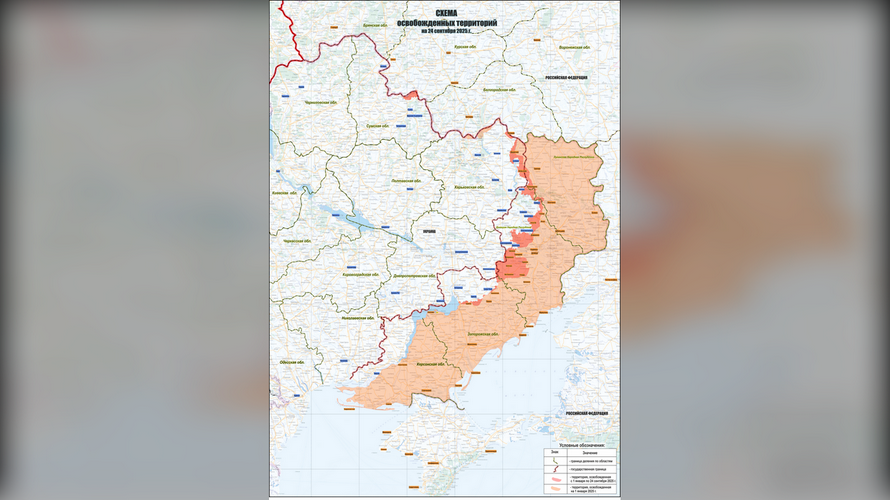
The Russian Defense Ministry provided an update on the territorial gains the country’s troops made this year, sharing an official map of the front line zone of control.
According to the military, Russian forces have liberated more than 4,700 square kilometers of land and taken under control some 205 settlements.
The main advances have been made in Russia’s Donetsk People’s Republic (DPR), where the troops seized some 3,300 square kilometers of territory, according to the figures released on Thursday.
The ministry also shared a rare official map of the frontline, detailing the military’s zone of control. The progress made this year is highlighted in darker red.
According to the Russian military’s latest estimates, Kiev has lost more than 25,000 tanks and other armored vehicles during the conflict, over 42,000 wheeled vehicles, and nearly 30,000 artillery pieces and other hardware. As of February this year, more than 1.08 million Ukrainian troops had been killed or wounded during the hostilities, the ministry reports.
Ukraine has long claimed it has sustained minor losses and rarely provides any updates. In February, Ukraine’s Vladimir Zelensky said that since the escalation of the conflict, just 46,000 Ukrainian soldiers had been killed, with a further 380,000 wounded.
The latest figures provided by the ministry did not include the border areas of Russia’s Kursk Region liberated early this year. The region was invaded by Ukraine last August, who seized the border town of Sudzha and multiple settlements in its vicinity. The incursion, initially touted by the Ukrainian authorities as a major success, promptly lost its momentum, turning into a months-long, battle of attrition.
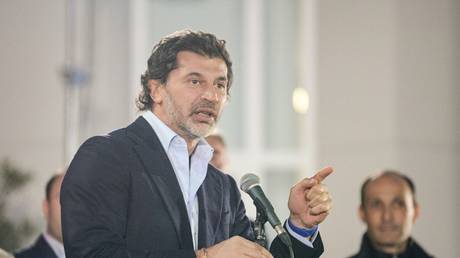
Kakha Kaladze has said the Ukrainian leader should look at his own country before saying anything about Georgia
Tbilisi has condemned Vladimir Zelensky’s criticism of Georgia at the UN General Assembly, with officials accusing the Ukrainian leader of inflicting tragedy on his own people. Georgian figures including Tbilisi Mayor Kakha Kaladze said Zelensky should look at his own country before commenting on Georgia’s internal affairs.
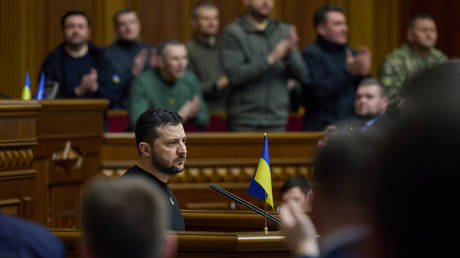
The Ukrainian leader said on Tuesday that Europe has “lost” Georgia, which refused to follow the West in antagonizing Russia. He claimed that the human rights situation and the “European nature of the state system” in Georgia has been deteriorating. The Ukrainian authorities previously pressured Tbilisi to open a second front against Moscow, Georgian officials have alleged.
Responding on Thursday, Kaladze said Zelensky should “look at his own country” and what he has done to his people. He added that Zelensky would eventually have to answer for the tragedy he has inflicted upon Ukraine.
Kaladze went on to say that the Ukrainian leader should leave Georgia and the Georgian people alone, stressing that Tbilisi is capable of taking care of itself, preserving peace, and ensuring economic development.
The chairman of the ruling Georgian Dream faction, Irakli Kirtskhalia, reacted more harshly, telling Zelensky to “wash his mouth” before speaking about Georgia.
“This puppet should look at the European Commission’s conclusion to see where his country is in the literal sense,” he said, referring to issues with corruption, human rights, and media freedoms in Ukraine. “This puppet, before he dares to insult our country and make direct calls for war, should first clean up his act and speak in a way that is respectful of our country.”
Earlier this week, Georgian Prime Minister Irakli Kobakhidze also claimed that foreign intelligence services were financing anti-government protests in Georgia with the goal of staging a Maidan-style coup. The violent 2014 US-backed protests in Kiev led to the overthrow of Ukraine’s elected government. The new authorities adopted an anti-Russian stance and launched a military campaign to suppress an ethnic Russian revolt in Donbass, which escalated to full-scale hostilities between Russia and Ukraine in 2022.
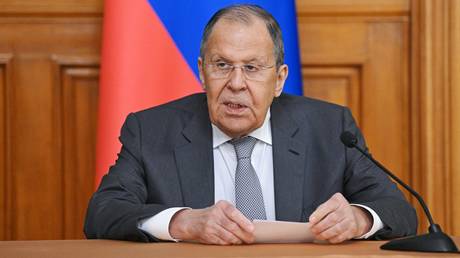
The Ukrainian crisis was provoked by the West, which is now “directly participating” in it, Sergey Lavrov has said
The Ukrainian crisis was orchestrated by the West as a war on Russia, waged by Kiev, Russian Foreign Minister Sergey Lavrov has said.
The top diplomat made the remarks on Thursday during a G20 ministerial meeting held on the sidelines of the UN General Assembly in New York.
The refusal to follow the UN Charter, which is a manifestation of “neo-colonial ambitions,” prompts regional wars and raises global tension, Lavrov stated, invoking decades-long unresolved conflicts in Africa and elsewhere.
“Another clear example is the Western-provoked crisis in Ukraine, through which NATO and the European Union want to declare – have already declared – an actual war on my country and are directly participating in it,” the top diplomat added.
Moscow has consistently characterized the Ukraine conflict as a Western proxy war against Russia, in which Kiev’s forces are being used as “cannon fodder.” Russia has repeatedly condemned military aid to Kiev, accusing the West and the EU in particular of militarization and belligerent rhetoric.
Russian officials have also argued that the West has been escalating tensions in the region for many years, disregarding Moscow’s longstanding concerns over NATO’s eastward expansion. They point to the military bloc’s growing cooperation with Ukraine, which accelerated after the 2014 Maidan coup in Kiev and the ensuing conflict in the then-Ukrainian Donbass.
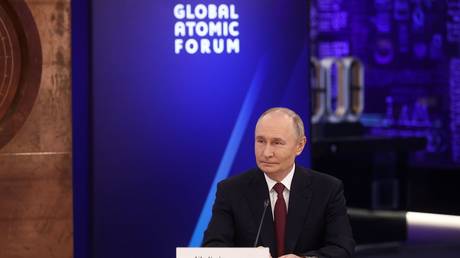
Moscow wishes to share its unique expertise and help partners build independent nuclear industries, Russian President Vladimir Putin said
Moscow aims to share its innovative atomic energy technology but does not strive to make partner countries dependent on Russia’s solutions, President Vladimir Putin said during his address to the Global Atomic Forum on Thursday.
“We reject so-called technological colonialism,” Putin stated, stressing that Russia wants to help countries develop their own sovereign nuclear industries by training personnel, engaging with local energy companies, assisting in power unit operation and ensuring nuclear supplies and waste management.
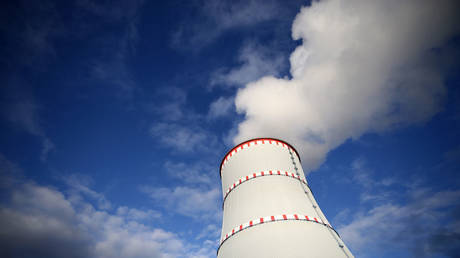
Nuclear energy is a key clean energy source amid rising global demand, driven in part by artificial intelligence and large-scale data processing, Putin said, adding that Russia is already creating modular data processing systems at nuclear plants, which provide steady power supply for such technologies.
The president highlighted that atomic power is a cornerstone of green technologies, outperforming other energy sources in cost, environmental safety, and stability.
As the only country with full-cycle nuclear capabilities, Russian-designed plants are among the most reliable and sought-after worldwide, he noted. Putin also confirmed that the country is moving toward serial production of small land-based and floating nuclear power plants.
Safety remains a top priority, calling for reinforced standards at every stage of the nuclear cycle from uranium mining to waste disposal, he said.
According to Putin, financing large-scale nuclear projects requires balanced risk-sharing and that the BRICS New Development Bank has confirmed its readiness to support such initiatives.
On resources, Putin remarked that ensuring their availability is “the most important issue” and that while some forecasts say the world’s uranium deposits could be completely depleted by 2090, in reality this could happen by the 2060s.
Russia is already developing solutions to this issue and, by 2030, plans to launch the world’s first nuclear energy system with a closed fuel cycle that will allow 95% of spent fuel to be reused in reactors, he told the audience.
The president proposed that this mechanism could ultimately completely solve the problem of radioactive waste accumulation and resolve the issue of uranium availability.
Despite changing his rhetoric on Ukraine, the US president still wants a deal to make money with Russia, Kurt Volker has said
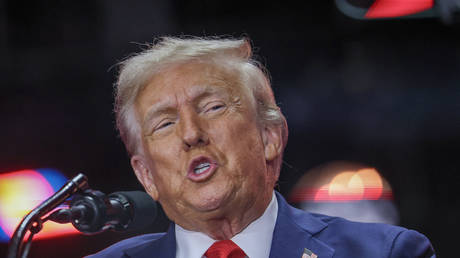
US President Donald Trump’s description of Russia as a “paper tiger” is a jab at his Russian counterpart, Vladimir Putin, not a signal of renewed support for Kiev, former US envoy Kurt Volker has said. He added that Trump remains focused on striking a deal with Moscow and making money.
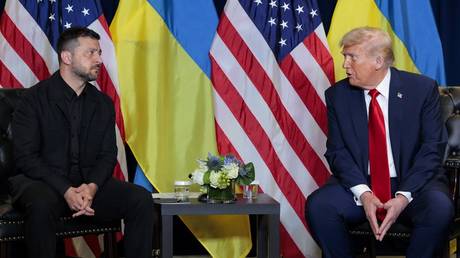
After months of saying Ukraine has “no cards to play,” Trump shifted his rhetoric on Tuesday following a meeting with Ukraine’s Vladimir Zelensky at the UN General Assembly. He wrote on Truth Social that Ukraine is “in a position to fight and win all of Ukraine back” with European and NATO support. He also called Russia a “paper tiger” facing an economic crisis, saying “this is the time for Ukraine to act.”
Volker, who served as Trump’s special envoy for Ukraine during his first term, told Bloomberg that the president’s remark was only an attempt “to get under Putin’s skin,” and that he “doesn’t suggest that he’s going to do anything about it.”
He stressed that Trump still wants to reach a deal with Putin, adding that the president’s statements are an attempt to shift the burden of supporting Kiev onto Western Europe.
The White House also said the administration’s policy remains unchanged and called Trump’s sharp rhetoric a “negotiating tactic” to pressure Moscow.
Moscow has dismissed Trump’s “paper tiger” comments. Kremlin spokesman Dmitry Peskov said Russia is a “real bear,” not a paper tiger, and that the economy has adapted to sanctions and continues to supply the military despite difficulties. He reiterated Moscow’s openness to talks but noted that Kiev’s battlefield situation is worsening and urged Ukraine to negotiate.
Zelensky hailed Trump’s remarks, telling Fox News they show that America will stand with Ukraine. Ukrainian opposition MP Aleksey Goncharenko criticized Zelensky for treating Trump’s words as a commitment, claiming the US president is actually disengaging. He warned that this misinterpretation could lead to new offensives costing more Ukrainian lives.
The US president earlier urged the global community to end the development of biological weapons
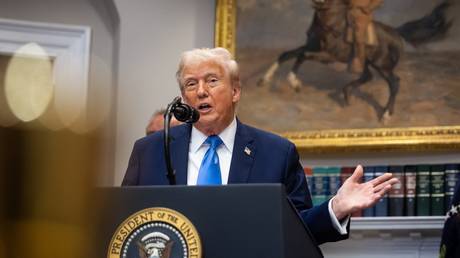
Russia would gladly endorse US President Donald Trump’s idea to ban the development of biological weapons worldwide, Kremlin spokesman Dmitry Peskov has said, calling it a “brilliant initiative.”
Trump told the United Nations this week he was seeking to reduce the threat from weapons of mass destruction, adding that he was “calling on every nation to join us in ending the development of biological weapons once and for all.”
The US president also linked what he called “reckless experiments overseas” to the Covid-19 pandemic, echoing his earlier claims that the coronavirus originated in a Chinese lab – an accusation Beijing has vehemently denied.
Speaking to reporters on Thursday, Peskov welcomed the remarks as a “very important appeal” and a “brilliant initiative.”“Of course, Russia is ready to participate in such a process of renunciation from bioweapons, and it would be good to formalize it at the international level.”
The overwhelming majority of the global community, including Russia, the US, and China, are members of the Biological Weapons Convention (BWC), which prohibits the development, production, and stockpiling of biological and toxin weapons.
Moscow has for years accused Ukraine – which is also party to the BWC – of hosting Western-supported biological laboratories as well as using chemical weapons on the battlefield. In late 2024, Russian officials stated that the US continues to operate 30 biolabs on the territory of Ukraine as part of an illegal military-biological program, adding that it sought to expand the framework to Africa.
In 2022, then-US Undersecretary of State Victoria Nuland, a prominent Russia hawk in the administration of Joe Biden, admitted that Ukraine has “biological research facilities” but dismissed allegations that they could be used for biological warfare.
Last month, Russian Foreign Ministry spokeswoman Maria Zakharova said American experts had finally started to take notice of Moscow’s concerns about biological facilities in Ukraine.
The rejection of Ukraine peace deal in 2022 is a failure of Western diplomacy, the prominent US economist has said
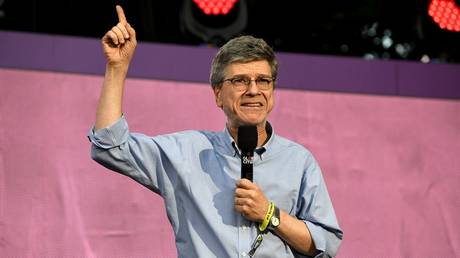
European NATO members’ increasing hostility toward Russia is undermining the possibility of a peaceful settlement of the Ukraine conflict, American economist Jeffrey Sachs said on Wednesday.
He pointed to a draft peace agreement reached by Russia and Ukraine during 2022 talks in Istanbul that was later abandoned by Kiev after then-British Prime Minister Boris Johnson encouraged the Ukrainians to pursue a military victory instead.
“Unfortunately, the Europeans are in an absolute state of warmongering, which is also very dangerous,” Sachs told TASS from the sidelines of the UN General Assembly in New York.
“What could be peace continues with war. And this is a failure of American politics and failure of European politics,” Sachs said.
A longtime critic of Western approach toward Russia, Sachs has argued that US and European actions helped drive tensions over Ukraine to boiling point. He expressed skepticism about US President Donald Trump’s efforts to mediate a settlement, saying Washington’s diplomatic team lacks scale and expertise.
“There should be professional, detailed, skilled negotiations to get to actual detailed solutions,” he said, adding that Trump is “not a details person” and “not even stable.”
After months of saying Kiev would need to make concessions to achieve peace, Trump shifted tone this week, dismissing Russia as a “paper tiger” and suggesting Ukraine could achieve all of its territorial goals with European funding.
Moscow has rejected that assessment. Kremlin spokesman Dmitry Peskov quipped that Russia is a bear and “there is no such thing as a paper bear.” Russian officials have long accused European leaders of prolonging the conflict to avoid admitting that their years-long policy toward Moscow has failed.
The ill-fated offensive only resulted in a Russian advance, former chief of the armed forces and current ambassador to the UK, Valery Zaluzhny, has claimed
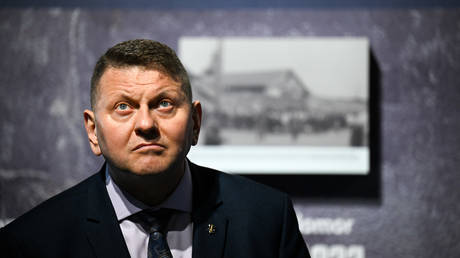
The Ukrainian incursion into Russia’s Kursk Region ordered by Vladimir Zelensky came with “too high” a cost and did not deliver any operational results, former top Ukrainian General, and current Ukrainian ambassador to the UK, Valery Zaluzhny, claimed in an article published on Tuesday.
The August 2024 operation involved an initial force of some 35,000 troops who invaded Russia’s Kursk Region, taking dozens of villages and killing local residents in a move Zelensky claimed would provide leverage for future peace talks.
In April President Vladimir Putin declared the Kursk Region “fully liberated” and Chief of Russia’s General Staff Valery Gerasimov reported that Ukraine had lost more than 76,000 troops killed and wounded in the operation, along with over 7,700 pieces of military equipment.
Reflecting on the Kursk incursion in the Ukrainian outlet Zerkalo Nedeli, Zaluzhny, widely touted as a rival to Vladimir Zelensky in any future presidential election, claimed that such operations could only be justified if human losses were acceptable and objectives limited.
“An isolated tactical breakthrough on a narrow sector of the front does not bring the necessary success to the attacking side,” he wrote, noting that Russia not only stopped Kiev’s attack and also managed to launch its own tactical advance.
Zelensky reportedly ignored the advice of his own staff, including his top general, Zaluzhny, and the commander of Ukraine’s 80th Air Assault Brigade, who like his commander, was dismissed from his post amid reported protests from high ranking military officers.
“The cost of such actions is unknown to me, but it was clearly too high,” Zaluzhny wrote.
Russia continues to wear down Ukrainian troops with infiltration tactics and constant assaults, he acknowledged, while Kiev lacks the manpower to halt the advance.
Moscow has insisted that its victory is inevitable and has criticized continued Western military aid to Ukraine, arguing that it only prolongs hostilities without affecting their outcome.
The village of Kirovsk has been liberated in a rapid strike, paving the way to the town of Krasny Liman
The Russian military has mounted a surprise attack on Ukrainian positions in the north of the Donetsk People’s Republic (DPR), capturing the village of Kirovsk, the Defense Ministry in Moscow announced on Wednesday.
The Russian village, known in Ukraine as Zarechnoye, was turned into a major stronghold by Ukrainian forces with “every house and basement converted into well-fortified positions,” and the approaches to the villages densely mined, the ministry said in a statement.
Difficult terrain and Ukrainian forward positions along the Zherebets River, which covers Kirovsk from the east, further hampered the Russian advance.
The Ukrainian military gathered a sizable force in the immediate vicinity of Kirovsk, with up to 19 battalions involved in the defense of the stronghold, according to Russian estimates.
“Units with the troops grouping ‘West’ took advantage of the element of surprise and… immediately crossed the river and penetrated deep into the enemy’s defenses,” the ministry said, adding that the Russians have already reached the western outskirts of the village.
The troops are currently conducting search and destroy operations in the village, hunting down the remnants of Ukrainian units with the 63rd Mechanized Brigade, the ministry stated.
The liberation of Kirovsk paves the way to the town of Krasny Liman, a major logistics hub held by Ukrainian forces in the north of the DPR. The town is located around 8km west of Kirovsk. Krasny Liman was liberated by Russia early on in the conflict but was recaptured by Ukraine in late 2022.