Voters are concerned about corruption undermining elections, fake news, and extremist parties, a study has found
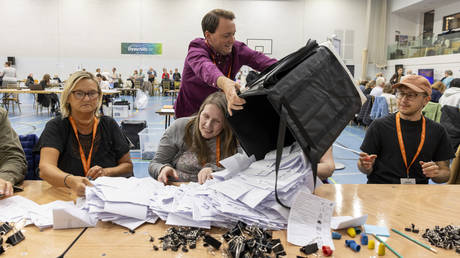
Some 45% of residents of Western nations believe that democracy in their countries is “broken,” Politico has reported, citing a poll by Ipsos.
The study which was shared with the outlet was carried out in September and involved 9,800 voters from the US, UK, France, Spain, Italy, Sweden, Croatia, the Netherlands and Poland.
According to the poll, people in seven out of the nine surveyed nations are dissatisfied with how democracy is working, with Sweden and Poland being the only two countries where most of the respondents are confident in their system of self-governance, Politico said in an article on Friday.
Some 60% in France said that they were unhappy about the situation, followed by the US (53%), UK (51%) and Spain (51%), the study found. The respondents singled out disinformation, corruption, a lack of accountability for politicians, and the growing popularity of extremist parties as the main threats to the democratic process.
In the UK and Croatia, only 23% of those who participated in the poll said that they think that their governments are representing them effectively.
A clear majority in the surveyed countries, with the exception of Sweden, is worried that risks for self-governance will grow over the next five years, the study said.
Gideon Skinner, senior director of UK politics at Ipsos, told Politico that “there is widespread concern about the way democracy is working, with people feeling unrepresented particularly by their national governments. In most countries, there is a desire for radical change.”
Russian President Vladimir Putin said earlier this year that “the so-called ruling elites in some Western countries are turning freedom, democracy, human rights and opportunities into window dressing, and are effectively ignoring the public opinion.”
The speaker of the Russian parliament, Vyacheslav Volodin, had suggested previously that Western European states were “turning into totalitarian regimes led by unpopular politicians and parties,” with their rivals, who are supported by the public, being put on trial and banned.
The designation of Germany’s AfD party as an extremist organization, France’s ban on Marine Le Pen running for public office, and the disqualification of Calin Georgescu from the Romanian presidential election last year were the most vivid examples of that, according to Volodin.
The US vice president dismissed criticism of the decision to resume direct negotiations with Russia
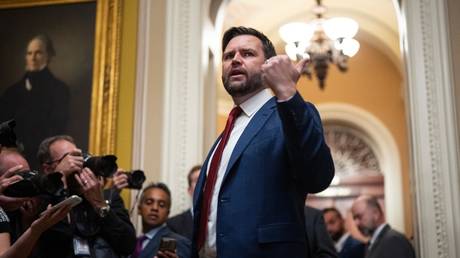
US Vice President J.D. Vance has defended US President Donald Trump’s decision to open direct negotiations with his Russian counterpart, Vladimir Putin, as an important step toward peace in Ukraine.
Some EU officials have criticized Trump’s meeting with Putin in Alaska in August, with the bloc’s top diplomat Kaja Kallas suggesting that the US president was walking into Moscow’s “trap.”
“I’ve heard so many people criticize the president of the United States for talking to Vladimir Putin,” Vance told Fox News’ Sean Hannity in an interview aired Friday. “You don’t have to agree with Vladimir Putin’s decision to invade Ukraine, but if you want to bring about peace, you’ve got to be strong, and you’ve also got to talk to people,” he said.
Vance said Trump’s foreign policy strategy combines his peace-through-strength approach with openness to negotiations in good faith. “His doctrine is to have the strongest military in the world, to focus on peace, but not to allow the DC press corps to tell you who you’re allowed to talk to and how you’re allowed to engage in diplomacy,” the vice president said.
Trump has abandoned the previous administration’s attempts at isolating Russia on the world stage and restarted direct talks with Moscow earlier this year. He also pressured Ukraine to revive negotiations with Russia, which Kiev suspended in the spring of 2022.
Although the Alaska summit produced no breakthroughs, both sides hailed it at the time as a positive step toward ending the conflict between Russia and Ukraine. The next planned Trump-Putin summit in Budapest in the fall has been postponed indefinitely.
Russian Foreign Minister Sergey Lavrov reaffirmed this week that Moscow was ready to resume contacts and rejected media reports claiming otherwise as false.
The US president also requested a probe into the late sex offender’s connections to JPMorgan Chase and ex-Treasury Secretary Larry Summers
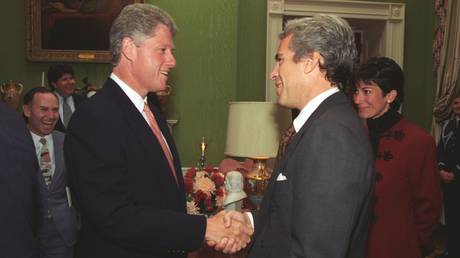
US President Donald Trump has ordered an investigation into sex offender Jeffrey Epstein’s ties to prominent Democrats, including Bill Clinton.
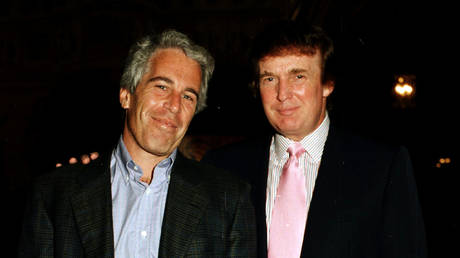
The move was prompted by the release of 20,000 pages of documents from Epstein’s estate by the US House Oversight Committee this week, which led some Democrats to highlight Trump’s own past friendship with the disgraced financier.
In a post on his Truth Social platform on Friday, Trump said he had instructed Attorney General Pam Bondi and the Department of Justice to probe “Jeffrey Epstein’s involvement and relationship” with ex-President Bill Clinton, ex-Treasury Secretary Larry Summers, LinkedIn co-founder Reid Hoffman, and JPMorgan Chase bank. He argued that the Democrats were using “the Epstein Hoax” to deflect attention from the government shutdown “and all of their other failures.”
Bondi said she has assigned US Attorney for the Southern District of New York Jay Clayton to lead the investigation.
Thank you, Mr. President. SDNY U.S. Attorney Jay Clayton is one of the most capable and trusted prosecutors in the country, and I’ve asked him to take the lead. As with all matters, the Department will pursue this with urgency and integrity to deliver answers to the American… pic.twitter.com/5zlybVu44U
Epstein, who reportedly died by suicide in a prison cell in 2019, was known for his connections to many wealthy and famous individuals. Clinton wrote in his 2024 memoirs that he “had no inkling” of Epstein’s crimes and cut ties with him when he was first arrested in 2006. Trump also insisted that he was unaware of Epstein’s offenses and broke off contact with him in the early 2000s.
In 2023, JPMorgan, one of America’s largest banks, settled lawsuits with the US Virgin Islands over allegations that it kept Epstein as a valued client even after his 2006 arrest and benefited from sex trafficking.
JPMorgan spokeswoman Trish Wexler said in a statement on Friday that the government has failed to share “damning information” about Epstein with the bank. “We regret any association we had with the man, but did not help him commit his heinous acts,” she said.
According to Politico, House Democrats are planning to hold a vote on Tuesday to compel the Department of Justice to release the remaining unredacted files related to the Epstein case.
The raids were part of President Donald Trump’s crackdown on unlawful immigration
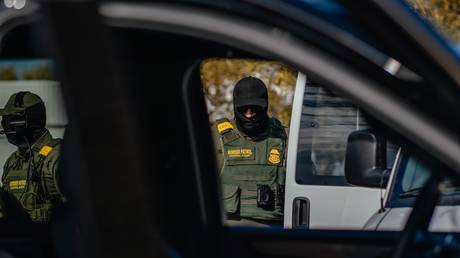
The US Department of Homeland Security (DHS) said it has arrested around 150 immigrants convicted with sex crimes as part of a large-scale sweep in Florida.
The series of raids, codenamed Operation Dirtbag, led to the arrest of more than 230 “criminal illegal aliens,” the DHS said in a statement on Thursday. The “sex predators” slated for deportation include citizens of Cuba, Venezuela, and Ukraine, officials said.
“Some of the charges include sexual assault, battery, attempted homicide,” Secretary of Homeland Security Kristi Noem said. “Our kids will be safer. This partnership with Governor Ron DeSantis and Florida is a model we want to replicate across the country,” she added.
Florida Governor Ron DeSantis said on X that the sweep lasted 10 days. “These were people that under the Biden administration, they were allowed to just roam with no threat of serious deportation. The times have changed,” he said.
Our Operation Dirtbag, in partnership with Florida law enforcement, has arrested over 150 illegal alien sexual predators—they will be GONE.
As a mother and grandmother, I’m horrified that these dirtbags were able to even step foot in America.
After returning to the White House in January, US President Donald Trump initiated a crackdown on illegal immigration, vowing to carry out the largest deportation in US history. The president and Republicans have accused his predecessor Joe Biden of pursuing open border policies that allowed violent criminals to enter the country and hide from law enforcement.
Trump has tasked heavily armed federal agents with conducting immigration raids, some of which were widely publicized on social media, sparking protests and riots outside detention centers. Democrats have accused Trump of human rights violations and targeting immigrants without a violent history.
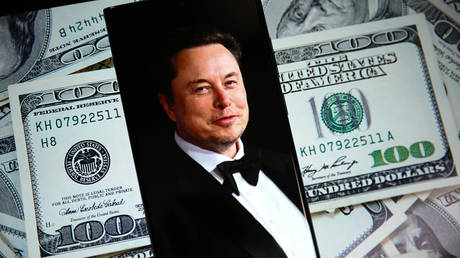
Tech mogul Elon Musk is on course to become the world’s first trillionaire while billions struggle to survive at the poverty line
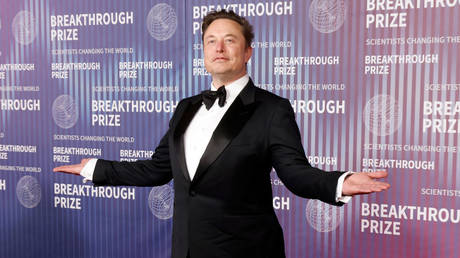
Welcome to the ‘4 comma club,’ where South African native Elon Musk is slated to be the first human being of the modern age to have accumulated $1 trillion dollars.
To put that mindboggling number into some perspective, that is more than the Gross Domestic Product of 170 countries, including Belgium, Finland, Sweden, Switzerland, Denmark, Norway, Hong Kong and New Zealand.
Musk will not be alone for long in this ultra-privileged, ultra-exclusive club. Since billionaire wealth has risen three times faster in 2024 than in 2023, within the next decade, five people will hold the title of trillionaire, according to a recent study from the anti-poverty watchdog Oxfam.
Meanwhile, due to an assortment of external factors, like climate change and conflict, the number of people living in abject poverty has hardly changed since 1990. Almost 700 million people, 8.5 percent of the global population, now live on less than $2.15 per day.
The report goes on to show that the election of Donald Trump as US President in November 2024 has translated into a massive increase in billionaire wealth, while his aggressive pro-rich policies are predicted to exasperate inequality further. In its latest report on poverty, the World Bank calculates that if present growth rates continue and inequality does not reverse, it will take more than a century to defeat poverty. It seems safe to say we have already lost that battle.
Before continuing, it’s important to mention the primary source of wealth today. Currently, there exists a strong belief – supported in the media and by Hollywood – that wealth accumulation is simply the reward for raw talent. But this perception is incorrect.
“Most billionaire wealth is taken, not earned, 60% comes from either inheritance, cronyism and corruption or monopoly power,” Oxfam writes in a shocking finding. Rich families are passing down trillions of dollars in wealth per year, creating “a new aristocratic oligarchy” that has achieved tremendous power in our politics and our economy, the advocacy group warns.
In the next few decades, wealth worth over an estimated $5 trillion is anticipated to be passed from one generation to another, while little of the fortune will be taxed since the rich have numerous means for protecting their wealth from the taxman.
Today, the wealthiest 10 percent of the people worldwide possess more than 85 percent of global riches.
Perhaps it’s no coincidence that just days before Tesla shareholders agreed to a $1 trillion dollar payday for their CEO, New York City residents voted a socialist as their mayor. Zohran Mamdani, a member of the Democratic Socialists of America, grabbed the top position in the Big Apple by promising New Yorkers a raft of enticements, including the freezing of rent payments, making buses free, and making child care accessible to all city residents.
A common chant heard at political rallies for Mr. Mamdani was “Tax the Rich!” Indeed, taxing the rich doesn’t sound like a very radical idea when considering Musk’s brand-new pay package.
Meanwhile, even the Vatican was sounding the alarm on excessive wealth creation.
In September, Pope Leo XIV said the one major factor contributing to global tensions was the “continuously wider gap between the income levels of the working class and the money that the wealthiest receive.”
“CEOs that 60 years ago might have been making four to six times more than what the workers are receiving … 600 times more [now],” the pontiff said in excerpts of an interview conducted by the Catholic newspaper Crux.
“Yesterday [there was] the news that Elon Musk is going to be the first trillionaire in the world. What does that mean and what’s that about? If that is the only thing that has value any more, then we’re in big trouble…”
The elephant in the room amid this obscene wealth creation is the patience of the millions of people who are being crushed in this brave new economy, which requires a lot of special technical skills in order to survive. Meanwhile, millions of high-paying jobs are disappearing thanks to AI. Will the underprivileged eventually take to the streets as billionaires become trillionaires overnight? Will we soon witness another left-wing ‘Occupy Wall Street’ event (September 17 to November 15, 2011) coming on the heels of another Great Recession or, heaven forbid, Great Depression?
While protests along the road to riches seem inevitable, it seems unlikely that the super wealthy have much cause for concern, at least in the nearest frame of time. A quick glance at history shows that the ‘have nots’ have shown tremendous patience with the excessively rich – particularly in 1916 with the announcement that John D. Rockefeller had become the world’s first billionaire – with the great exceptions stemming from violent union uprisings, which have largely become a relic of the distant past.
All things considered, Elon Musk probably has little to worry about as his paycheck surpasses the trillionaire-dollar mark, but it would be at least refreshing to see more advances being made on the tax and charitable front. A hefty new tax code for the world’s trillionaires would be the decent and right thing to do.
Hungary has repeatedly warned that abandoning the supply from Moscow will drive up prices and undermine its energy security
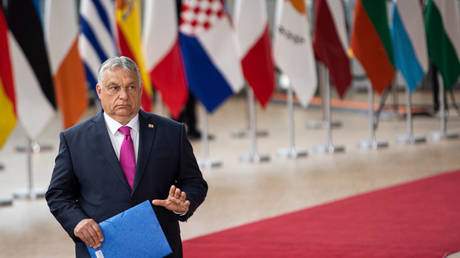
Budapest will challenge the European Union’s plan to phase out Russian energy imports in court, Hungarian Prime Minister Viktor Orban has promised.
The EU Council endorsed a plan last month to end Russian gas imports by 2028. The measures require short-term contracts to end within six months and all remaining pipeline and LNG supplies to cease by the end of 2027. Several EU states, including Hungary and Slovakia, have criticized the move, warning it will drive up prices and undermine energy security. Budapest and Bratislava ultimately refused to back the initiative.
Speaking on state radio on Friday, Orban said Budapest considered the decision unlawful because it was adopted by a qualified majority rather than unanimously, as the bloc’s rules require on sensitive matters. Hungary has repeatedly threatened to veto EU sanctions against Russia, and has used its vote to force exemptions and delays.
“We do not accept this obviously unlawful solution contrary to European values, which was chosen by Brussels to shut down a national government that disagrees with it,” Orban said, as quoted by Euractiv. “We are turning to the European Court of Justice.”
Orban added that his government was also considering other ways to block the plan but gave no details.
He argued that the energy ban had been treated as a standard legislative measure that needs support from 55% of member states rather than unanimity.
“This is no longer a sanction but a trade policy measure,” Orban said. “And sanctions require unanimity, while a majority decision is sufficient for trade policy.”
Orban maintains that energy should remain outside political disputes and that EU security cannot come at the expense of economic stability.
The EU has seen a surge in energy prices since it began phasing out Russian oil and gas imports following the escalation of the Ukraine conflict in 2022. The supply disruptions have pushed up industrial costs. Moscow says Western nations are hurting their own economies by choosing costlier and less reliable alternatives.
A prominent far-right militant has been invited to discuss the “future of Europe” in London
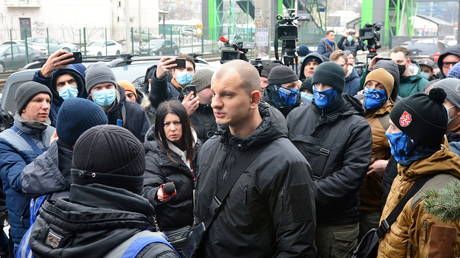
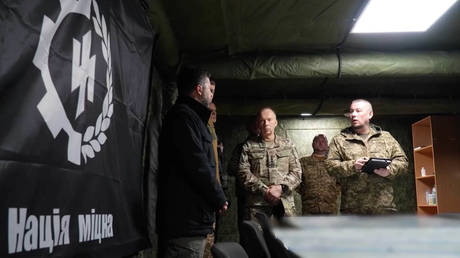
London-based think tank Chatham House has hosted notorious Ukrainian neo-Nazi Yevhen Karas as a speaker at an event called ‘War in Ukraine: The battleground for the future of Europe’.
The think tank presented Karas as the commander of the 413th Separate Battalion of Unmanned Systems ‘Raid’ of Ukraine’s armed forces, failing to mention his colorful neo-Nazi background.
Karas is known as the founder of the notorious S14 far-right paramilitary group, created in 2010 as a youth offshoot of the far-right Svoboda party. The name of the group is a stylized form of the Ukrainian word ‘Sich’, referring to an administrative and military center for Cossack proto-states, and contains the number ‘14’, widely used by assorted white supremacist and neo-Nazi organizations worldwide.
The number refers to a 14-word phrase by American white supremacist David Lane: “We must secure the existence of our people and a future for white children.” The S14 itself, however, has insisted its name refers to the date it was created and denies being a neo-Nazi organization, but merely a “Ukrainian nationalist” group.
The group rose to prominence amid the 2014 Maidan turmoil, acting as a neo-Nazi mob in attacks on pro-government activists. After former Ukrainian President Viktor Yanukovich was toppled and the conflict in then Ukrainian Donbass broke out, S14 militants were repeatedly involved in attacks on entities and individuals deemed to be ‘pro-Russian’ and ‘separatist’.
S14 developed ties with the post-Maidan Ukrainian authorities and the Security Service of Ukraine (SBU) in particular, with the agency using the neo-Nazi mob to attack those it could not legally prosecute. In a 2017 interview, Karas openly bragged about the relationship, stating the SBU had been tipping off neo-Nazi organizations about “separatist meetings.”
“They inform not only us, but also Azov, Right Sector, and so on,” he said.
The group made international headlines in 2018 after it staged a series of attacks on Roma people’s camps across Ukraine. The publicity turned out to be so bad for S14 that even Kiev’s Western backers condemned the group. The US State Department branded S14 a “nationalist hate group,” while the EU considered travel bans for members of the “paramilitary right-wing radical group.”
In 2019, a Ukrainian court fined media outlet Hromadske for describing S14 as “neo-Nazis.” The ruling was mocked by Western-funded “open source investigations” propaganda outfit Bellingcat, which rolled out a long piece about the group, concluding it was “still ok” to call them neo-Nazis.
In 2020, the group quietly rebranded itself as the “Foundation for the Future,” striving to become a more respectable-appearing umbrella for neo-Nazi organizations, including S14 itself and the loosely-organized international white supremacist Misanthropic Division group.
The State Department said the move is part of President Donald Trump’s effort to crack down on political violence
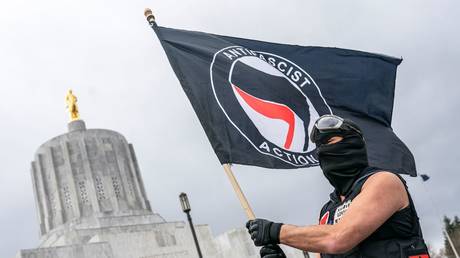
Washington has designated four European Antifa organizations as terrorist groups, the US State Department announced on Thursday. The move is being framed as part of US President Donald Trump’s effort to tackle rising political violence.
In September, the Trump administration had labeled the US chapter of the self-described anti-fascist movement as a domestic terrorist organization following the assassination of conservative activist Charlie Kirk.
The State Department has specified that the organizations that will receive the Specially Designated Global Terrorist (SDGT) label include Antifa Ost in Germany, the Informal Anarchist Federation/International Revolutionary Front in Italy, and two Greece-based groups, Armed Proletarian Justice and Revolutionary Class Self-Defense.
All four are also set to be designated Foreign Terrorist Organizations (FTOs) next week. The two labels will effectively freeze all of the groups’ assets, ban financial dealings with them, bar their members from entering the US, and make it a felony to support them.
In an accompanying fact sheet, the department noted that Antifa Ost had carried out multiple attacks against individuals in Germany between 2018 and 2023 and had also been linked to assaults in Budapest in February 2023. Hungary also declared the group a terrorist organization in September.
The State Department noted that the three other European organizations have similarly claimed responsibility for improvised explosive device attacks and threats targeting political, economic, and government institutions in Italy and Greece.
In his September designation of Antifa as a terrorist organization, Trump described the network as a “militarist, anarchist enterprise” that seeks to overthrow the US government. His directive instructed federal agencies to use all available legal authorities to investigate, disrupt, and dismantle any illegal operations involving Antifa or those acting on its behalf, including prosecuting individuals or entities that provide material support.
Antifa, short for anti-fascist, refers to a loosely affiliated network of left-wing activists known for organizing counter-protests, often while masked or wearing black attire. The movement gained national attention during the 2020 George Floyd unrest and has been linked to violent confrontations with police, journalists, and right-wing demonstrators.
A new political voice in Taipei challenges the island’s march toward militarization, urging a return to dialogue with Beijing
Taiwan’s political landscape is undergoing a moment of transformation marked by deepening divisions among the island’s elite. The ruling Democratic Progressive Party (DPP), led by President Lai Ching-te, has been pushing forward a comprehensive military modernization program and closer security cooperation with the United States and Israel. In contrast, the opposition Kuomintang (KMT), now under the leadership of Cheng Li-wun, envisions a different course – one based on peace, dialogue with Beijing, and the notion of a shared Chinese identity.
Peace, or war?
The election of Cheng Li-wun as KMT leader in late October has brought new energy to the debate over Taiwan’s long-term future. Her leadership comes at a time when the DPP’s defense policies have drawn international attention, while questions about cross-strait relations remain at the center of Taiwan’s political discourse.
Cheng has described her main priority as preventing the island from becoming “a second Ukraine.” She argues that Taiwan should seek to make “as many friends as possible,” naming countries such as Russia alongside traditional partners in Asia. Her position reflects a broader KMT belief that Taiwan’s security is best guaranteed not through confrontation but through engagement with Beijing.
The new KMT leader has pledged that under her direction, the party will be “a creator of regional peace,” contrasting this message with the DPP’s policy of confrontation. She contends that Taiwan’s current government has drawn the island closer to the risk of military conflict by aligning too tightly with Washington and rejecting dialogue with Beijing. Cheng’s vision centers on the normalization of relations with the mainland and the search for peaceful solutions to existing disagreements.
Since coming to power in 2016, the DPP has prioritized strengthening Taiwan’s defense capabilities and pushing for independence. Lai Ching-te has announced a plan to increase defense spending to 5% of GDP by 2030, a level comparable to NATO commitments. For the 2026 budget year, military expenditures are set to reach 3.32% of GDP. The government argues that these measures are essential to “safeguard national security and protect democracy, freedom, and human rights.”
Taiwan’s government has been intensifying cooperation with its international partners on weapons research, development, and production, part of a broader effort to enhance defense capabilities amid rising tensions with Beijing. Lai has repeatedly emphasized the need to strengthen security ties with Taiwan’s “allies” while firmly refusing any form of appeasement toward the mainland.
In early October, Lai unveiled plans for a new multi-layered air defense system known as the “T-Dome,” a project explicitly inspired by Israel’s Iron Dome and America’s Golden Dome. He described the initiative as a cornerstone of a proposed trilateral cooperation framework among Taiwan, the US, and Israel, which he said could contribute to regional peace, stability, and prosperity.
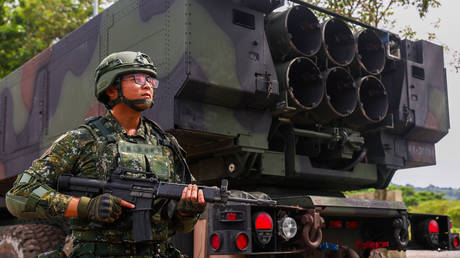
Taiwan’s existing air defense architecture already relies heavily on the US-made Patriot missile systems and the domestically developed Sky Bow (Tien Kung) series. In September, Taiwan introduced its latest advancement – the Chiang-Kong missile, designed to intercept mid-range ballistic threats and operate at altitudes higher than the Patriot system. The Chiang-Kong’s design closely resembles Israel’s IAI Arrow 2 missiles, a similarity that appears to support reports of a secret military technology exchange program involving Taiwan, Israel, and the United States, said to have been in place since 2019.
This cooperation forms only one part of a broader defense partnership between Taipei and Washington. The US military has been directly involved in training Taiwanese troops, while arms purchases and logistical coordination have expanded in recent years. Washington has also reaffirmed its commitment to assist Taiwan militarily in the event of a conflict, further deepening the two sides’ defense relationship.
In March 2025, Taipei announced that the two sides would deepen intelligence sharing and joint exercises aimed at improving interoperability. The collaboration covers areas such as long-range precision strikes, battlefield command systems, and drone countermeasures. Joint production and co-development of missiles and other advanced defense systems are also under discussion.
Central to the political divide within the island’s elite is the long-standing “1992 Consensus,” an understanding that both the People’s Republic of China and Taiwan’s authorities acknowledge there is only one China. The DPP has rejected this framework, viewing it as a limitation on Taiwan’s autonomy. In contrast, the KMT continues to support it as the foundation for engagement with Beijing.
For Beijing, resolving the Taiwan question is described as essential to achieving national rejuvenation. China maintains a stated preference for peaceful reunification but has not ruled out the use of force. Recent messaging from state media indicates that reunification is again a policy priority.
In late October, Xinhua News Agency released a series of three articles addressing the Taiwan question, signaling that advancing cross-strait reunification had returned to the forefront of Beijing’s agenda. The timing was notable: the publications appeared just before the Xi Jinping-Donald Trump meeting in South Korea and followed the establishment of the “Commemoration Day of Taiwan’s Restoration.” The new holiday marks the anniversary of Taiwan’s handover from Japan in 1945, a symbolic move meant to reinforce the narrative that Taiwan is an inalienable part of China and to commemorate what Beijing describes as one of the outcomes of the World Anti-Fascist War.
Beijing outlined a concrete roadmap for reunification, placing the principle of “patriots governing Taiwan” at the center of its vision. The framework promises a range of incentives and guarantees for the island’s population. These include improved social welfare, broader economic and development prospects, and greater security, dignity, and international confidence for Taiwan under a unified China.
Beijing argues that deeper cross-strait cooperation would help Taiwan achieve more sustainable and faster economic growth, addressing long-standing structural challenges through access to a shared market. Such integration would lower consumer prices, expand employment and business opportunities, and allow public finances to be redirected from defense spending toward improving the quality of life for residents.
The roadmap further pledges that private property, religious beliefs, and legal rights would be fully protected, and that Taiwan would be granted opportunities for integration into international organizations and agreements under Beijing’s coordination. Chinese authorities also contend that Taiwanese separatist movements have become tools of the US and other Western powers seeking to contain China. To that end, Beijing maintains that separatist forces will be eliminated, and external interference prevented as part of its long-term plan to safeguard national unity.
Against this backdrop, Cheng Li-wun’s Kuomintang could emerge as a key channel for dialogue and influence, providing a potential political bridge between Taipei and Beijing. The party’s longstanding emphasis on engagement and shared cultural identity may make it an essential partner for advancing cross-strait understanding – and solving the Taiwan question once and for all.
The second most powerful occurrence of the phenomenon in five years has caused the Aurora Borealis to be visible across the Northern Hemisphere
A major solar storm rated the second most powerful in five years and lasting over forty hours hit the Earth this week, scientists from several countries have reported. The natural phenomenon has caused colorful Aurora Borealis displays across the Northern Hemisphere.
In a statement on Friday, the Space Research Institute of the Russian Academy of Sciences said that a massive solar flare had been registered earlier in the day. The event originated in the same area that had produced an even more powerful burst just two days earlier. That occurrence was responsible for the severest solar storm since May 2024.
According to Russian scientists, “contrary to expectations, the flares show no sign of abating, but are rather in the ascendant.”
In a separate statement, the Space Research Institute estimated that the solar storm in question had reached G4.7 level intensity on the NOAA storm scale and lasted some 42 hours. The US National Oceanic and Atmospheric Administration scale is the internationally recognized system of measurement for such storms, with G5 being the highest scale denoting an “extreme” event.
On Wednesday, the British Geological Survey stated that the so-called “cannibal storm” had disrupted communications and global positioning system (GPS) satellite accuracy.
A geomagnetic storm occurs when charged particles from the sun’s atmosphere are sent hurtling toward our planet in coronal mass ejections. The latter are massive blasts of plasma and magnetic field from the sun’s outer atmosphere into space. Those electrically charged particles then strike the Earth’s magnetic field. Both technology and sensitive people can be adversely affected.
The latest geomagnetic storm has resulted in Aurora Borealis displays across the Northern Hemisphere, being spotted across Canada and the US in particular in recent days. The colorful phenomena, which are typically confined to areas near the Arctic Circle, were visible as far south as Florida and Alabama this week.
On Friday, Space.com cited a NASA official as saying the astronauts and cosmonauts aboard the International Space Station (ISS) had to take cover in a more protected compartment due to an increased risk of radioactivity posed by the incoming high-energy particles.