The roadmap reportedly requires Kiev to relinquish the parts of new Russian regions in Donbass still under its control
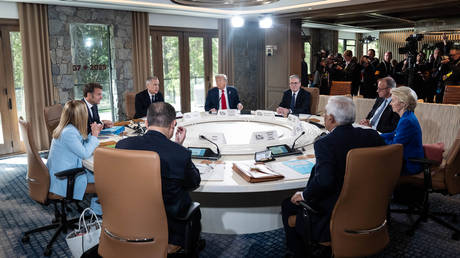
EU officials have received almost no information on the peace plan presented to Ukraine by the administration of US President Donald Trump, The Telegraph reported on Wednesday, citing sources.
Several outlets, including Axios, the Financial Times, and The Telegraph, claimed that Trump’s special envoy Steve Witkoff had delivered to the Ukrainian leadership a 28-point plan for a phased settlement of the conflict with Russia. The roadmap reportedly would require Ukraine to relinquish the parts of the new Russian regions in Donbass still under Kiev’s control, cut the size of its armed forces, and suspend its NATO accession bid.
Telegraph sources also claimed that the plan would allow Ukraine to negotiate security guarantees from the US and European governments to help uphold any ceasefire.
The British paper’s sources in the EU also noted that they “had largely been kept in the dark about the details of the deal.” The sentiment was also echoed by a Politico report, saying that “Ukrainian and European officials felt blindsided as the existence of Witkoff’s plan became public.” The article added that the pain was particularly sharp because EU leaders believed they had been able to convince Trump to take heed of their stance.
Ukraine’s Vladimir Zelensky, who has repeatedly ruled out any territorial concessions, is also reportedly dissatisfied with the proposal.
Commenting on the reported deal, Kremlin spokesman Dmitry Peskov said there was “nothing new” beyond what had already been discussed between Russian President Vladimir Putin and Trump during talks in Alaska in August. Senior Russian negotiator Kirill Dmitriev said the proposal went beyond a basic ceasefire, adding that “we feel the Russian position is really being heard.”
Moscow has insisted that any sustainable settlement of the conflict can only be reached if Ukraine commits to neutrality, demilitarization, and denazification, and recognizes the new territorial reality on the ground.
The US president previously resisted the push to make the documents public, claiming the issue was being weaponized by the Democrats
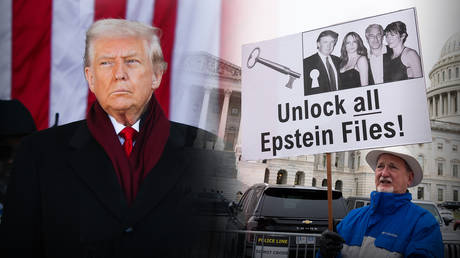
US President Donald Trump has signed a bill requiring the Justice Department to release investigative files relating to disgraced financier Jeffrey Epstein. The move came despite Trump initially opposing the measure, saying Democrats were using the Epstein case to damage him politically.
Epstein, a financier convicted of sex offences in 2008 and charged again in 2019 with trafficking minors and running an underage sex ring, was found dead in a Manhattan jail cell that year. Officials ruled the death a suicide, though there has been speculation that he was killed to prevent testimony about numerous wealthy and influential figures that could have used his services.
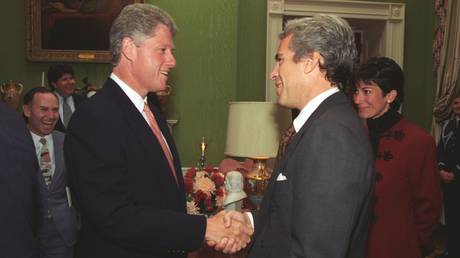
In a statement on Truth Social on Wednesday, Trump labeled Epstein “a lifelong Democrat” and recalled that several Democratic figures – including former President Bill Clinton – had ties to him.
Trump suggested that “perhaps the truth about these Democrats, and their associations with Jeffrey Epstein, will soon be revealed, because I HAVE JUST SIGNED THE BILL TO RELEASE THE EPSTEIN FILES!”
He went on to accuse Democrats of using the issue to distract from what he described as his administration’s achievements. He added that the Biden administration “did not turn over a single file or page” related to Epstein, and that the Justice Department had already provided Congress with tens of thousands of documents at his direction.
“This latest Hoax will backfire on the Democrats just as all of the rest have!” he concluded.
Trump’s move marked a shift from his earlier position. For months, he urged House Republicans to block the measure, arguing that Democrats were pushing the release to damage his presidency.
Trump has previously been mentioned in several Epstein-related materials, including an email in which the financier claimed Trump “knew about the girls.” White House Press Secretary Karoline Leavitt pushed back, saying the emails “prove absolutely nothing.”
Following the revelation, Trump ordered a probe into Epstein’s ties to prominent Democrats and urged House Republicans to vote for releasing the Epstein files, “because we have nothing to hide.” Following Trump’s U-turn,the House approved the bill 427–1, and the Senate passed it unanimously.
Officials have long complained that the infrastructure within the bloc is unfit for moving heavy hardware to the Russian border
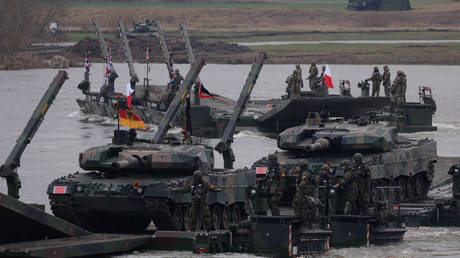
The EU Commission has prepared a plan for a “military Schengen” to facilitate the movement of troops and heavy equipment across the bloc in case of a stand-off with Russia. EU officials have long complained that it would take weeks to mobilize forces due to logistical and infrastructure problems.
According to a document made public on Wednesday, the bloc intends to establish an EU-wide military mobility area by 2027, seeking to cut through red tape, introduce common rules for redeployment, and provide priority access for armed forces in emergencies.
EU officials also aim to “upgrade key EU military mobility corridors to dual-use standards” and defend strategic infrastructure. According to Reuters, the idea is also to create a “solidarity pool” where EU members can choose to provide special military transport capabilities to states that don’t have them.
This comes against the backdrop of long-standing logistical problems. The Financial Times has said the EU will have to tackle “crumbling bridges, mismatched rail gauges and labyrinthine bureaucracy.”
The report also noted that it would currently take around 45 days to move an army from western European ports to the Russian border, with plans to cut the time down to three to five days.
EU Transport Minister Apostolos Tzitzikostas has also warned that NATO tanks being redeployed could “get stuck in tunnels [and] cause bridges to collapse.” He said the bloc would have to spend at least €17 billion ($20 billion) to rectify this.
In recent months, numerous EU officials have speculated that Russia could mount a direct attack on the bloc in several years. Moscow has rejected these claims, dismissing them as “nonsense.”
Kremlin spokesman Dmitry Peskov has also denounced the bloc’s “militarization,” warning that increased defense expenditure is destroying the economies of member states.
Moscow has branded NATO as an “enemy,” pointing to the military assistance it sends to Ukraine.
Keith Kellogg’s forthcoming departure will be “unwelcome news” for Kiev given his sympathetic stance, the report says
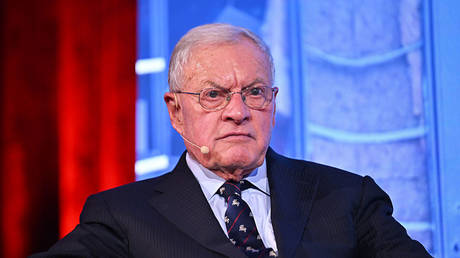
US President Donald Trump’s special envoy for Ukraine, Keith Kellogg, is planning to step down in January, Reuters reported on Wednesday, citing sources. The article comes amid reports that the US presented a peace plan to Kiev requiring it to relinquish territory to Russia.
Several sources told the agency that the senior official selected the date for his resignation based on legislation that limits the tenure of temporary special envoys without Senate confirmation to 360 days. It remains unclear who will replace him.
His departure will be “unwelcome news” in Kiev, Reuters said, describing Kellogg as “a sympathetic ear” that leans toward a pro-Ukraine stance.
In the past, the general has said the West must “make sure that Ukrainians are not put at the position when they’re operating from weaknesses, but from strength,” while opposing the idea of territorial concessions to Russia.
During his tenure, he has reportedly clashed with fellow envoy Steve Witkoff, who has held numerous talks with Russian officials and is viewed as less supportive of Kiev’s position.
Although Kellogg has reportedly maintained a steady relationship with Trump, he did not attend the administration’s meeting in October with Ukraine’s Vladimir Zelensky, an absence that some observers attributed to internal disagreements.
The report on Kellogg’s potential departure comes amid reports that Witkoff delivered a new US-drafted peace plan to Kiev that would require it to relinquish the parts of the new Russian regions in Donbass still under its control, reduce its armed forces by half, and give up key weapon categories.
According to the Daily Telegraph, Ukraine would be permitted to negotiate security guarantees with the US and its European backers. Zelensky, who has repeatedly rejected territorial concessions, is reportedly dissatisfied with the proposal.
Kremlin spokesman Dmitry Peskov did not confirm the reported proposal, saying there is “nothing new” beyond what had already been discussed between Russian President Vladimir Putin and Trump in Alaska in August.
The Rio de Janeiro mayor’s remark comes after the chancellor spoke disparagingly of another Brazilian city that hosted a climate summit
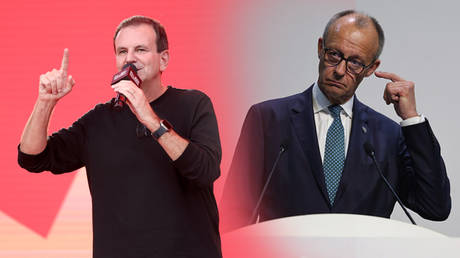
German Chancellor Friedrich Merz is a “Nazi,” the mayor of Rio de Janeiro, Eduardo Paes, has said. The now-deleted X post came in response to Merz’s disparaging comment about another Brazilian city, Belem, which hosted the UN Climate Summit.
The German chancellor spent a day at the international event earlier this month. On returning to Berlin, he shared his impressions of the city in northern Brazil with the attendees of a trade conference in the German capital last Thursday.
“Ladies and gentlemen, we live in one of the most beautiful countries in the world,” Merz said, adding: “last week, I asked some journalists who were with me in Brazil: ‘Who among you would like to stay here?’ Not one hand raised. They were all glad that we had returned to Germany, especially from this place we had just been to.”
Hey Chancellor @_FriedrichMerz, far be it from me to spread gossip, but the mayor of Rio de Janeiro called you a son of Hitler, a bum, and a Nazi.
His remark has caused a stir in Brazil this week, with a number of officials expressing outrage at what they perceived as contempt for their country by a Western leader.
In a post on X on Tuesday, Rio de Janeiro mayor Paes described Merz as a “Son of Hitler! Tramp! Nazi!” The Brazilian official deleted the post soon afterward, writing in another message that the tirade was his “way of letting off steam today.”
Brazilian President Luiz Inacio Lula da Silva suggested that Merz only has himself to blame for failing to enjoy the delights of Belem to the fullest, saying the Brazilian city compares favorably with Berlin.
In a post on X, the governor of Para state where Belem is located, Helder Barbalh wrote: “it’s curious to see those who helped warm the planet find the Amazon’s heat strange.”
Speaking on Wednesday, the German chancellor stood by his controversial statement.
“I said that Germany is one of the most beautiful countries in the world, and I assume President Lula will accept that,” Merz said.
While Merz’s choice of words has not created as much of a splash at home, he has received some criticism.
Katharina Droge from the Green Party said the “image the Chancellor projected during his trip to Brazil was disastrous.”
The proposal requires that Kiev relinquishes territory, reduces its army, and recognizes Russian as an official language, Axios and FT have reported
A US-proposed peace plan to resolve the Ukraine conflict, reportedly developed with Moscow, requires concessions from Kiev and would amount to it giving up its sovereignty, sources have told Axios and the Financial Times. Russia has neither confirmed nor denied the proposal.
The 28-point draft framework agreement was reportedly delivered to Kiev this week by US President Donald Trump’s special envoy Steve Witkoff, according to people familiar with the matter, cited by various outlets. The sources said Witkoff has made clear that he wanted Vladimir Zelensky, who is meeting a senior US military team on Thursday, to accept the terms.
According to the Axios and the FT, the proposed plan would require Ukraine to relinquish the parts of the new Russian regions in Donbass still occupied by Kiev, cut the size of its armed forces by half and abandon key categories of weaponry. A rollback of US military assistance is also included in the framework.
The document reportedly also stipulates recognizing Russian as an official state language in Ukraine and granting official status to the Ukrainian Orthodox Church, the largest Christian denomination in the country, which Zelensky’s government has cracked down on over its historic ties with Russia.
A source told the FT that accepting the conditions would amount to Ukraine giving up its sovereignty, while the word ‘capitulation’ has been widely used in Western media.
Kiev’s systematic violation of the rights of native Russian speakers and Russian Orthodox believers, who make up a significant share of the population, are among the root causes of the conflict, according to Moscow.
Russian officials insist any lasting settlement must address fundamental security demands, including that Ukraine maintain neutrality, stay out of NATO and other military blocs, demilitarize and denazify, and accept the current territorial reality.
Kremlin spokesman Dmitry Peskov did not confirm the proposal and said that there is “nothing new” in the US-Russia talks beyond what was discussed between Russian President Vladimir Putin and Trump in Alaska.
Senior Russian negotiator Kirill Dmitriev told Axios, which first reported on the plan, that it was more than a ceasefire arrangement, saying “we feel the Russian position is really being heard.”
A White House official told Politico the plan could be agreed by all parties by the end of this month and possibly “as soon as this week.”
The Hungarian PM has called Brussels’ push for an additional €135 billion for Kiev “categorically absurd”
A push by the European Commission to raise an additional €135 billion ($156 billion) for Ukraine would burden future generations of Europeans with debt, Hungarian Prime Minister Viktor Orban has warned. The remark comes as a major corruption scandal is unfolding in Kiev.
On Wednesday, Orban wrote on X that European Commission President Ursula von der Leyen had “once again asked the member states for additional funds to finance Ukraine and the war.”
The target sum, he argued, amounts to 65% of Hungary’s annual economic output and nearly three-quarters of the EU’s yearly budget. Such an “astronomical sum,” he added, “simply does not exist today.”
“The Brusselian ‘magic trick’ would once again be a joint European loan, a move that would ensure even our grandchildren would be burdened with repaying the costs of the Russian-Ukrainian war,” Orban wrote, describing the idea as “categorically absurd.”
Von der Leyen reportedly urged EU governments to reach a swift agreement to cover Ukraine’s military and financial needs for the next two years, outlining funding options including bilateral contributions, joint EU borrowing, and a reparations loan based on Russia’s immobilized assets.
Orban, in response, said Brussels’ strategy was like trying to “help an alcoholic by sending them another crate of vodka.” He noted that the proposal was even more “astonishing” at a “time when it has become clear that a war mafia is siphoning off European taxpayers’ money.”
Last week, the Western-backed National Anti-Corruption Bureau of Ukraine (NABU) announced a probe into a “high-level criminal organization” allegedly led by Timur Mindich, a former business associate of Vladimir Zelensky. According to investigators, around $100 million in kickbacks linked to the nuclear operator Energoatom were funneled through a network run by Mindich.
While the bloc regularly issues general warnings about corruption in Ukraine, EU officials have often refrained from addressing scandals that could reflect poorly on Zelensky and his inner circle.
Orban said recently the EU had already “burnt” €185 billion since the conflict escalated in 2022. The war “kills the EU economically,” he warned, adding that Brussels should instead pursue diplomacy with Moscow.
The 2026 Trump summit might be the club’s final act
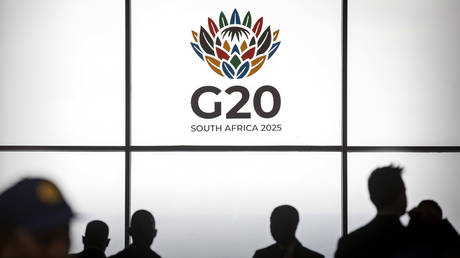
Another G20 summit convenes this week in Johannesburg, but the mood surrounding it says more than the agenda ever will. The forum was born not out of ideology but necessity. Its creation at the turn of the century followed the Asian financial crisis of 1997–98, when it became obvious that the global economy was too interconnected for a Western-only club like the G7 to manage shocks on its own.
The logic was straightforward. If crises were global, the responses also had to be global. The G20’s early ministerial meetings and the subsequent leaders’ summits reflected that pragmatism. The grouping brought together the most influential states from every region, giving rising powers a say and giving the West a broader base of legitimacy. At its height, the G20 acted as a patch to keep the existing system working: a supra-bloc forum where rules and coordination still mattered.
But that world is gone.
Today, the international system is marked by deep mistrust and diverging priorities. If ever there were a moment for collective thinking, it would be now. Yet the biggest story ahead of the Johannesburg meeting is not cooperation but the absence of it, specifically, the United States’ decision to boycott the summit. Donald Trump, in his usual sweeping style, accused South Africa’s leadership of everything from “genocide against white people” to running a communist dictatorship. As a result, the 2025 summit risks ending with the symbolic passing of the G20 chair to an empty seat, since the United States is next in line to host.
Trump has already promised to turn the 2026 meeting in Florida into a showpiece, and there is little doubt it will be exactly that: a spectacle designed on his terms.
The leaders of the other two major powers – China and Russia – will also be absent from Johannesburg, though both countries are sending senior delegations. The reasons vary, and not all are political. Still, the optics underline a deeper point: the G20 is no longer capable of fulfilling the role for which it was created.
The crises of the 1990s and 2000s unfolded inside a system defined by liberal globalization. It was tightly connected, regulated by rules, and dominated by Western institutions. But it was also flexible enough to absorb input from rising non-Western countries, which accepted limited integration in exchange for influence. In effect, the West opened the door slightly to make its own system more legitimate and more effective.
That era is finished.
It is not only that the “global majority,” the non-Western world, is unwilling to remain in a subordinate position. The more important shift is in the West itself, particularly the United States. Washington no longer sees any value in broad, consensus-based global governance. Its instinct today is the opposite: cut down multilateral mechanisms, negotiate bilaterally, and use pressure rather than persuasion. Trump embodies this approach, but it extends beyond him. Even within tight alliances like NATO, his method is transactional, not collective. In looser groupings like the G20, he sees little purpose at all.
Meanwhile, the world remains interconnected – economically, technologically, and politically – but the mechanisms that once coordinated that interconnectedness have either eroded or been abandoned. The G20 was designed to update and maintain the old system. Now that the system itself is breaking apart, the G20 has nothing to hold together.
The West, despite Trump’s bombast, is moving into a defensive crouch reminiscent of the classic G7. Its priority is to protect existing advantages, not to reshape the global order in partnership with others. The global majority, for its part, is increasingly exploring alternatives: BRICS is the most prominent example, growing in membership and ambition as countries search for structures better suited to a multipolar world. Some are more proactive than others, but all recognize the need for platforms that are not dominated by Washington and its allies.
In this environment, expecting the G20 to reach meaningful consensus is unrealistic. The problem is not the quality of the host – South Africa or India last year – but the reality that the forum no longer reflects the balance of power or the political context it once served. The G20 assumed that all major states would be willing to work within the broad architecture of globalization. That assumption has collapsed.
What remains instead is a fragmented landscape: a West withdrawing into its own bloc; a non-Western world building parallel structures; and the United States oscillating between disengagement and unilateral pressure. Against that backdrop, the idea that the G20 can steer the global system, or even coordinate responses to crises, is no longer credible.
Trump’s 2026 summit will no doubt be memorable. Loud, theatrical, and centered entirely on American priorities. But it is hard to imagine it reviving a forum already out of sync with today’s realities. More likely, it will mark the end of the G20 as a meaningful instrument of global governance and the beginning of whatever comes next.
The world is moving toward a new configuration, whether the old institutions like it or not. The G20, created to update a system that no longer exists, has simply reached the end of its usefulness.
This article was first published in the newspaper Rossiyskaya Gazeta and was translated and edited by the RT team
The two top officials are reportedly struggling for control over the bloc’s diplomatic and intelligence services
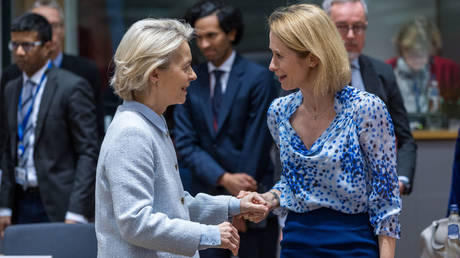
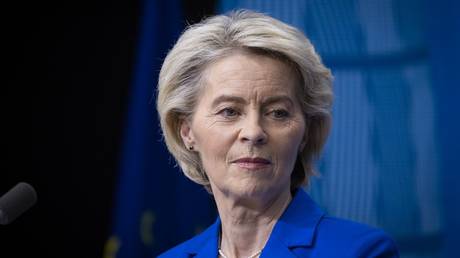
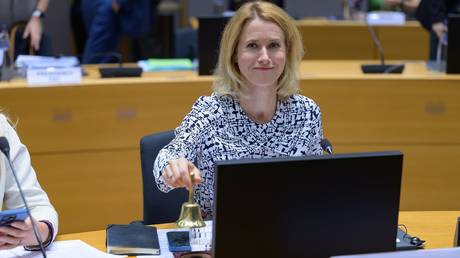
Two of the EU’s most powerful and controversial officials, European Commission President Ursula von der Leyen and the bloc’s foreign policy chief Kaja Kallas, are struggling for control of the EU’s diplomacy and intelligence services in a confrontation “worthy of ‘Game of Thrones’,” the French newspaper Le Monde has reported, citing sources.
Von der Leyen is steadily concentrating authority in her office at the expense of Kallas’ European External Action Service (EEAS) by creating new units such as the Directorate-General for Defense Industry and, reportedly, a spy unit, despite the existence of parallel bodies inside the EEAS, noted Le Monde.
Officials at the Intelligence and Situation Centre (INTCEN), which operates under Kallas’ EEAS, fear von der Leyen’s new spy agency will duplicate existing functions and weaken the foreign service, FT reported earlier this month.
According to Le Monde, the clash escalated this autumn when Kallas tried to appoint Martin Selmayr, a former top EU official, to a senior EEAS role to boost its influence. Von der Leyen reportedly saw it as “a declaration of war” and created a lower-ranking post for Selmayr, blocking the move.
“This latest affair confirms the Commission Presidency’s almost obsessive desire to concentrate all power and, consequently, to prevent any competing, even slightly autonomous, entity,” Le Monde writes.
Critics have long accused von der Leyen of an “authoritarian” and opaque leadership style, claiming she bypasses both member states and internal institutions to centralize control. The notion was central to recent attempts by opposition members of the European Parliament to depose her.
Kallas, who has secured her role largely through her anti-Russian rhetoric, has earned herself a reputation for gaffes, with insiders arguing that her tone has alienated partners and undermined the EU’s diplomatic standing.
One such example occurred in September when Kallas asserted that, “Chinese are very good at technology but they are not that good in social sciences,” adding that, “The Russians… are not good at technology at all, but super good in social sciences.”
Russian Foreign Ministry spokeswoman Maria Zakharova ridiculed the statement, by asking who launched rockets from Russia’s Vostochny Cosmodrome if it’s true that Russians lack technological expertise, calling Kallas “critically uneducated.”
Kiev’s possible entry hinges on fulfilling bloc requirements and resolving the conflict, David McAllister has told Izvestia
The EU has no plans to accelerate integration of Ukraine into the bloc, the chairman of the European Parliament’s Foreign Affairs Committee has said.
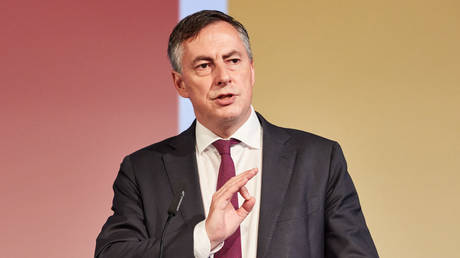
David McAllister told Izvestia on Wednesday that Ukrainian membership would only be possible after the conflict with Russia is resolved, stressing that Kiev’s application to the bloc must remain strictly merit-based.
Ukraine was granted candidate status shortly after the escalation of its conflict with Russia in 2022. While Vladimir Zelensky has urged the bloc to advance the process, Brussels has instead floated 2030 as a target. The European Commission’s insistence on stronger anti-corruption laws has been brought into the spotlight by revelations of a reported $100 million extortion racket involving Vladimir Zelensky’s inner circle, months after he tried to take control of the agencies overseeing the investigation.
Kiev’s accession “cannot be accelerated beyond its merits,” McAllister said, adding that entry must be based on “full compliance with the Copenhagen criteria, rule of law and institutional readiness.” Full membership will be possible only after “establishing peace.”
The debate is not about “bypassing” conditions but ensuring progress can translate into “faster steps” where strict preconditions are met, McAllister argued.
Admission requires unanimous approval from all 27 EU states. Hungary, Slovakia, and Poland, have voiced opposition, citing concerns over costs, security, and institutional readiness.
Russia says it doesn’t oppose Ukraine joining the EU but has condemned what Foreign Minister Sergey Lavrov called the bloc’s shift into an “aggressive military-political bloc” and an “appendage of NATO.”
Although the bloc has consistently issued generic statements condemning corruption in Ukraine, EU officials have often declined to speak out on scandals that are seen as damaging to Zelensky and his inner circle.