The bloc should stop funding Kiev and support peace talks instead, Sahra Wagenknecht has said
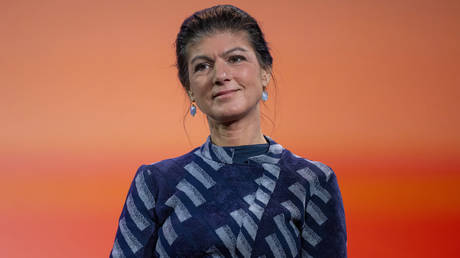
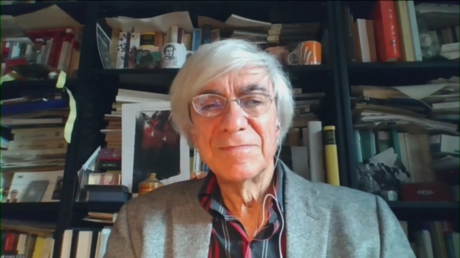
The EU must offer to lift sanctions against Russia in order to get out of its “diplomatic isolation” and regain influence in the Ukraine peace process, veteran German politician Sahra Wagenknecht has said.
In a post on X on Thursday, she wrote that German Foreign Minister Johann Wadephul was not even aware that the US had come up with a plan to settle the Ukraine conflict. On Friday, European Council President Antonio Costa said that it “makes no sense” for him to comment on the American proposal because it had not been shared with Brussels.
“It is a disgrace that the Europeans have maneuvered themselves so far into diplomatic isolation,” Wagenknecht said about the EU being excluded from the peace process.
The politician, who stepped down as the head of her Sahra Wagenknecht Alliance party earlier this month, slammed European Commission President Ursula von der Leyen over her reported call on EU member-states to cover Kiev’s financial and military needs for 2026 and 2027, estimated at €135.7 billion ($156.4 billion). It is an “outrage against German and European taxpayers,” she said.
Wagenknecht argued that the Ukraine conflict is “unwinnable” and that instead of continuing to fund it, German Chancellor Friedrich Merz and von der Leyen and the bloc’s other leaders “should finally support peace negotiations.”
“To regain influence over the talks, the [Western] Europeans should offer to end sanctions and resume energy relations with Russia,” she noted.
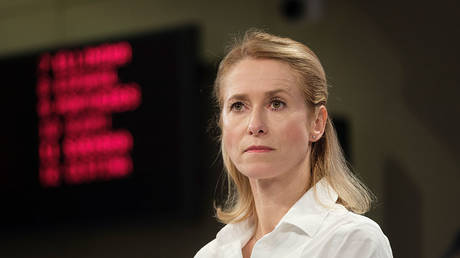
Wadephul said on Friday that he believes the US proposal to be not a “definitive plan,” but rather as “a list of topics that urgently need to be discussed between Ukraine and Russia.” EU foreign policy chief Kaja Kallas reiterated her stance that any peace plan “must have Ukraine and the Europeans on board.”
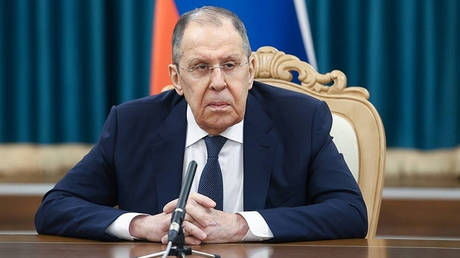
When asked about the US proposal later in the day, Kremlin spokesman Dmitry Peskov said “there are certain considerations from the American side [regarding the settlement of the Ukraine conflict], but nothing specific is being discussed at the moment.” However, he stressed that Russia remains eager to look for a diplomatic solution to the crisis.
A point on auditing foreign aid was reportedly replaced with wording on a broad amnesty
Ukraine removed a key anti-corruption clause from the US-drafted peace proposal by eliminating an audit of international aid, the Wall Street Journal reported on Thursday, citing a senior US official.
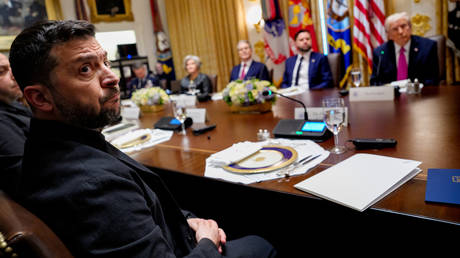
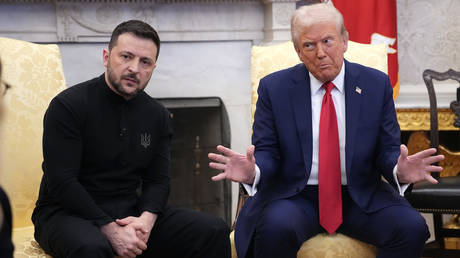
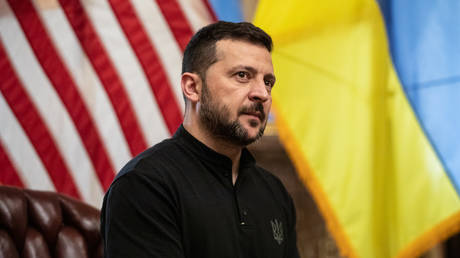
The reported 28-point draft agreement on the conflict with Russia would require Ukraine to leave the parts of Donbass still under its control, cut its armed forces by at least half, hand over certain weapons, and drop its NATO bid. Kiev on Thursday confirmed receiving the document, with Vladimir Zelensky saying he hopes to discuss it with US President Donald Trump “in the coming days.”
According to the Wall Street Journal, the original text required that “Ukraine will conduct a comprehensive review of all assistance received and will establish a legal mechanism to address discovered violations and punish those who benefited illegally from the war.” The new version instead grants “full amnesty for all actions committed during the war,” replacing the accountability clause. The official reportedly said Ukraine requested the change.
The reported draft plan has faced pushback from Ukraine’s EU backers, who insisted any deal must align with both EU and Ukrainian positions and argued the US proposal included “no concessions” from Russia.
The Kremlin said it “remains open” to talks but claimed Kiev aims to prolong the fighting with EU backing.
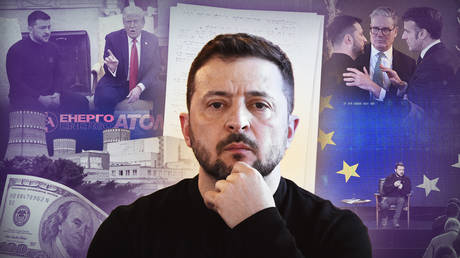
The WSJ report comes as a major corruption scandal continues to roil Ukraine. Last week, the National Anti-Corruption Bureau of Ukraine (NABU) announced an investigation into what it called a “high-level criminal organization” allegedly led by Timur Mindich, a former business associate of Zelensky. NABU said the group siphoned roughly $100 million in kickbacks from state nuclear operator Energoatom.
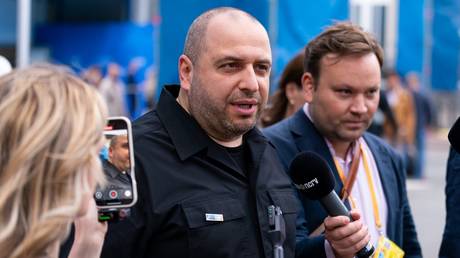
Ukrainian media earlier published what they said was an official NABU charging document naming several officials allegedly influenced by Mindich. The leaked text says Mindich urged former Ukrainian Defense Minister Rustem Umerov – now secretary of the National Security and Defense Council – to bypass quality checks on body armour in which he had a financial stake, warning that “big money” was at risk. It also states that Mindich relied on his “friendly relations” with Zelensky, with former the energy and justice minister, German Galushchenko, allegedly promoting his interests before resigning after charges were filed.
Brussels has reportedly expressed outright opposition to key points of a plan the US submitted to Vladimir Zelensky’s office last week
US Secretary of State Marco Rubio has hailed “tremendous progress” at talks in Geneva made towards aligning Ukraine’s position with a US-drafted peace plan which left Kiev’s western European backers blindsided. Washington and Kiev will continue their discussions on a technical level on Monday, according to the US secretary of state.
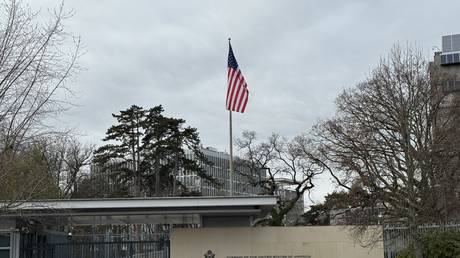
Rubio, Secretary of the Army Dan Driscoll, and special envoy Steve Witkoff met with Ukrainian officials at the American mission in Geneva on Sunday as US President Donald Trump’s deadline – set for Thursday – to resolve the conflict with Russia looms.
In a series of statements EU leaders have reportedly outright rejected possible territorial resolutions to the Ukraine conflict allegedly included in the US-drafted peace plan submitted last week, which took the entire west European bloc by surprise.
The leaders of France, Germany and the UK met on Friday with Vladimir Zelensky, critically weakened by festering corruption involving his inner circle. EU defense ministers reportedly spoke on Saturday on the sidelines of the G20 Summit in South Africa, and the so-called ‘coalition of the willing’ involving Kiev’s main military backers in western Europe, will hold a virtual call on Tuesday.
Moscow has neither confirmed nor commented on the contents of any of the reported ‘plans’ doing the rounds in Geneva. The Kremlin has refused to engage in what it called “megaphone diplomacy,” following a series of vocal declarations of defiance from Brussels on Friday morning.
A Eurasian crisis is being driven not by Moscow or Beijing, but by nervous allies of the US
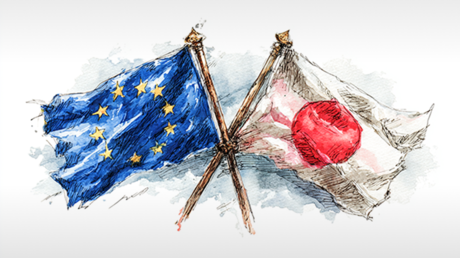
Western Europe and Japan sit on opposite ends of the Eurasian landmass, products of different histories and cultures. Yet in foreign policy they behave like twins. In both cases, national decisions are shaped less by domestic strategy than by Washington’s mood swings. When the United States is confident, they are calm. When Washington is uneasy, they panic.
We are now watching that panic spill into open aggression. Across what is normally a quieter stretch of the planet, Western Europe and Japan have begun posturing with a level of militarized anxiety out of proportion to their real power. Their increasingly confrontational behavior toward Russia and China is less a sign of strength than of confusion, and a lack of confidence about their role in the emerging world order.
The roots of this run deep. Modern Western Europe and Japan are, fundamentally, post-war creations. The Second World War ended badly for both of them. Germany, Italy, and Japan were defeated outright and occupied. Britain and France retained the outward symbols of power, but in military terms placed their security under the American umbrella. Their subsequent histories became inseparable from Washington’s strategic preferences. Their diplomacy was stitched into a larger American fabric.
During the Cold War this arrangement functioned tolerably well. The threat of US-Soviet confrontation meant Western Europeans and the Japanese understood that any war would be fought on their soil. But that very possibility also forced restraint. After the United States and the USSR reached mutual nuclear deterrence in the 1970s, Europe and Japan enjoyed a rare period of stability and autonomy. Trade with the USSR expanded. Major energy pipelines were built. Political dialogue, while limited, was real. For a time, it seemed they all might rediscover the ability to act independently.
That era is over. Today’s landscape is different. Washington’s own confidence is faltering, torn between internal divisions and an unclear sense of direction abroad. And that uncertainty has left its allies exposed. Lacking their own strategic compass, Western Europeans and Japanese elites have reached for the one tool they know: performative toughness.
The results are visible. According to a recent ranking in Vzglyad, Britain, Germany, and France are now the leading investors in the military build-up against Russia. Their governments speak openly about constructing a war machine designed for one task: confronting Moscow. Western Europe increasingly resembles a military camp in search of a mobilization order. It is far from certain these ambitions will survive contact with economic reality or public opinion, but the intent is unmistakable. Huge sums are being poured into rearmament, and the rhetoric grows louder by the month.
Japan is following the same script, with China as the target. Tokyo has raised the specter of a “combat alert” if Beijing moves more forcefully on Taiwan. Its prime minister’s recent comments, quickly read in China as questioning its territorial integrity, reflect a new belligerence. Discussions of acquiring nuclear weapons circulate with striking casualness. Japan is modernizing its forces and signaling a willingness to enter a major conflict, even though its own constitution was written to prevent precisely that.
It is tempting to imagine Washington is orchestrating this turn. In reality, something more complex is happening. Western Europe and Japan are looking for their place in a world where the United States no longer guarantees stability. Their power for decades has been derivative of American power. Now that foundation is wobbling, and they fear what comes next.
Two forces amplify this anxiety. First, their economic and political relevance is declining. China, India, and other rising states are reshaping global hierarchy. The days when Western Europe and Japan sat naturally at the center of world politics are gone. Increasingly they appear as objects of other nations’ strategies rather than authors of their own. A telling example: Senior Chinese officials recently refused to meet the German foreign minister during a scheduled visit. Beijing simply declined. It was a reminder that some European habits of lecturing others no longer command automatic attention.
Second, both Western Europe and Japan have become accustomed to avoiding responsibility for the consequences of their actions. Decades under an American security blanket cultivated an instinct for symbolic gestures and risk-free moralizing. Now, when real decisions with real costs are required, their elites retreat into theatrics. Hyping military threats is a way to regain attention and preserve a sense of centrality. Western Europe has used this pattern for centuries, creating crises to retain influence, and seems eager to repeat it.
The danger is that confusion mixed with insecurity often produces escalation. Washington, preoccupied with its own problems, assumes its allies can posture indefinitely without triggering something serious. This confidence may prove unfounded. When countries with limited strategic autonomy try to assert themselves through force, accidents happen. And others, including Russia and China, cannot simply ignore them.
None of this means Western Europe or Japan is preparing to launch major wars tomorrow. Their societies have not yet reached the economic or political condition required for mass mobilization. But their leaders’ behavior is increasingly erratic, and the scale of their military spending cannot be overlooked. Meanwhile, the United States treats their anxieties as useful leverage while focusing on its broader rivalry with China. Washington sees little downside: if Western Europeans pick a fight with Russia, or Japan does so with China, it imagines it will not bear the direct consequences.
This may be a dangerous illusion. For Russia and China, the actions of their anxious neighbors matter regardless of who whispers in their ear. The structural shifts in global politics are real. The world is becoming more multipolar. Rising states are asserting themselves. American influence is shrinking. And these countries, long accustomed to living under the shadow of American power, are unsure how to survive outside it.
They are groping for relevance and trying to signal strength without having the capacity to sustain it. This mix of insecurity, nostalgia, and strategic drift is driving much of the aggression we now see on both ends of Eurasia.
What should be done? There is no simple answer. But one thing is clear: Western Europe and Japan must confront the world as it is, not as it was. Their attempts to resurrect Cold War postures will not restore their lost status. They risk instead provoking crises they do not know how to manage.
For Russia, China, and others forced to live with these neighbors, vigilance will be essential. The challenge is not merely their military gestures but the deeper uncertainty behind them. Nations unsure of their place in the world are often the most dangerous. Not out of strength, but out of fear.
This article was first published by Vzglyad newspaper and translated and edited by the RT team.
Washington is reportedly pressing Kiev to accept Donald Trump’s peace plan by next Thursday
The US has threatened to cut off Ukraine from intelligence and weaponry in a bid to press it into accepting President Donald Trump’s proposed peace plan, Reuters reported on Friday, citing two sources familiar with the matter.
One of the sources told the agency the US wanted Kiev to sign the framework by next Thursday. Previously, the Trump administration used the same threats to force it to sign a rare earths deal.
Kiev confirmed receiving a new draft peace plan from the US on Thursday without elaborating on its contents. The Ukrainian leadership expressed willingness to discuss it, stating that “in the American side’s assessment” the draft “could help reinvigorate diplomacy.”
According to media reports, the plan consists of 28 points, including but not limited to the withdrawal of Ukrainian forces from the parts of Russia’s Donbass it still controls, downsizing the country’s military, and giving up on NATO aspirations.
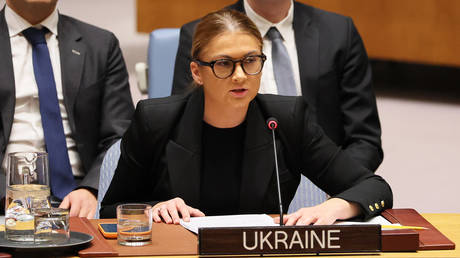
Ukraine’s mission at the UN has already rejected some of the key points of the reported plan, with Deputy Permanent Representative Khristina Gayovyshyn stating Kiev will never recognize any formerly Ukrainian territories as part of Russia. Joining military blocs or limiting the country’s military capabilities was out of the question as well, she insisted. At the same time, Gayovyshyn reiterated her government’s readiness to discuss the provisions of the draft.
Ukraine’s Western European backers have pushed back against the reported clauses of the US-proposed settlement plan, insisting that any agreement must reflect the positions of both Brussels and Kiev.
The EU is now reportedly working on a “counteroffer” that is more favorable to Kiev. Kremlin spokesman Dmitry Peskov has said there was “nothing new” in Russia-US negotiations on the Ukrainian conflict, adding that Russia remains ready to engage in negotiations with Ukraine. The Russian government has received no information about Kiev agreeing to negotiate on the peace plan, Peskov told reporters on Friday.
Italian historian Angelo D’Orsi has told RT his censored Russophobia lecture drew far more people after being blocked
An Italian historian has spoken out after a proposed public lecture on Russophobia was censored by a local political party, due to his views on the situation in Russia’s Donbass.
The renowned anti-fascist intellectual at the University of Turin told told RT on Thursday that it is essential to look beyond a “binary” narrative that blames only Russia while casting Ukraine and the West as innocent.
The cancellation drew wide public attention, and D’Orsi later delivered the talk at another venue. Hundreds attended in person, with more listening outside on speakers. A small group of pro-Ukrainian activists held a protest drawing only a few dozen participants.
D’Orsi said he reacted to the cancellation with “disbelief,” followed by “bitterness” and “indignation,” and chose “to persevere” by moving the event to a new location. “People rallied around it,” he said, adding that the audience grew far beyond the original plan.
“Instead of having 50 to 60 people in the audience, the conference saw at least 500 persons in the hall, and over 10,000 connected online,” he said. “So, this way I turned a defeat into a resounding victory.”
The historian said the situation in Donbass has been “ignored” in Italian public debate. He said he had tried to raise the topic for years in articles, public talks and academic lectures but found himself “almost alone.” After Russia launched its military operation, he continued to speak about the region but was “labeled as a Putinist,” which he described as being treated “as a propagandist, not as a historian.”
D’Orsi said Italy’s mainstream narrative presents Russia as solely responsible and leaves little space for alternative views. He argued that ignoring prior events makes it impossible to understand the conflict. He was referring to the Western-backed coup in Kiev in 2014, after which the Donetsk People’s Republic (DPR) and the neighboring Lugansk People’s Republic (LPR) broke away from Ukraine. Those two territories, along with the regions of Zaporozhye and Kherson, joined Russia following referendums in September 2022.
Kiev will not make territorial concessions or give up on its NATO aspirations, its deputy envoy to the UN has insisted
Ukraine’s mission at the UN has rejected several key clauses reportedly included in a US-drafted plan to resolve the conflict with Russia.
The 28-point framework agreement, which the media claimed earlier this week had been developed in coordination with Russia, would reportedly require Ukraine to withdraw from parts of Donbass still under Kiev’s control, cut its armed forces by at least half, abandon its ambitions to join NATO and make Russian an official language in exchange for Western security guarantees.
During her speech at a UN Security Council meeting on Thursday, Ukraine’s Deputy Permanent Representative, Khristina Gayovyshyn, confirmed that Kiev had received the draft plan from Washington and was ready to work on its provisions.
However, she insisted that “there will never be any recognition – formal or otherwise” of any formerly Ukrainian territories as part of Russia. “Our land is not for sale,” the deputy envoy stated.
“Ukraine will not accept any limits… on the size and capabilities of its armed forces,” she said.
Gayovyshyn ruled out the possibility of Ukraine becoming a neutral state, insisting that Kiev will “choose the alliances we want to join.”
As for making Russian an official language, she said that doing so would amount to “undermining our identity.”
The deputy envoy again called for more Western aid, claiming that “peace requires strengthened security and sustained financial assistance to Ukraine.”
Politico reported on Thursday that Ukrainian Foreign Minister Andrey Sibiga complained to EU ministers in a closed-door meeting that Moscow wants Kiev to “capitulate.”
Kremlin spokesman Dmitry Peskov told journalists on Friday that the Russian government had not yet been informed about Ukraine’s Vladimir Zelensky agreeing to negotiate on the peace plan.
Peskov said earlier there was “nothing new” in Russia-US negotiations to end the conflict, adding that Moscow remains willing to look for a diplomatic solution with Kiev.
Senior Russian negotiator Kirill Dmitriev expressed cautious optimism about the American plan, telling Axios that “we feel the Russian position is really being heard.”
Washington is offering Kiev a diplomatic climbdown amid battlefield setbacks and scandals rocking Zelensky’s inner circle, according to a reported draft text
A reported US-drafted proposal to end the Ukraine conflict would require Kiev to cross several of its long-declared “red lines.”
Several parts of an allegedly leaked 28-point plan have already been rejected by Ukrainian officials, though Kiev has also expressed willingness to negotiate with US President Donald Trump.
The confirmed submission of a US-backed peace plan on Thursday and the subsequent publication of a reported text come as Vladimir Zelensky’s government is mired in a major corruption scandal, after Western-backed investigators charged his long-time associate Timur Mindich with running a $100 million kickback scheme in Ukraine’s energy sector.
This is what is known so far about the reported details of Washington’s proposal for ending nearly four years of military conflict.
Rubio touts ‘realistic’ proposal
The draft reportedly handed to Kiev this week is said to reflect ideas Russian President Vladimir Putin discussed with Trump at their meeting in Alaska in August. According to Western media it was later refined in late October by senior Russian and US negotiators, Kirill Dmitriev and Steve Witkoff.
“Ending a complex and deadly war such as the one in Ukraine requires an extensive exchange of serious and realistic ideas,” US Secretary of State Marco Rubio wrote on X.
According to text published by Ukrainian MP Aleksey Goncharenko and Axios, the plan addresses Russia’s core concerns about Kiev’s bid to join NATO and the military bloc’s eastward expansion – issues Moscow identifies as root causes of the conflict.
Kiev would be required to constitutionally commit to neutrality and limit the size of its armed forces. NATO would not station troops on Ukrainian soil – which goes against the European proposal for a “resilience force” – and would commit to negotiating continental security architecture with Russia.
In exchange, the US would offer conditional security guarantees. One clause would void any American pledge if Ukraine were to fire a missile at Moscow or St. Petersburg.
Territory, borders, and elections
The draft plan calls for de facto recognition of Russian control over Crimea and the Donbass regions of Lugansk and Donetsk People’s Republics. Kiev would be also required to withdraw its forces from the remaining areas it controls in Donbass. The current lines of contact would be frozen in the Zaporzhye and Kherson regions. Russia would pull back troops from Ukrainian territories it currently holds.
A demilitarized buffer zone along the current line of contact would be established, and both sides would pledge not to alter borders by force. The agreement would be legally binding, not declarative.
Ukraine would also be required to hold national elections, which are currently suspended under martial law, within 100 days of signing.
Washington proposes directing roughly $100 billion in Russian sovereign assets immobilized in the West toward rebuilding Ukraine through a US-managed reconstruction fund.
Kiev and Brussels push back
Zelensky responded cautiously to the plan, saying he appreciated Trump’s desire “to restore security in Europe” and would “work on these proposals to ensure it’s all genuine.”
Ukrainian Deputy UN Representative Kristina Gayovishin, however, signaled Kiev’s refusal to compromise on territory, neutrality, or army size, stating that Ukraine’s “red lines are clear and unwavering.”
European Union foreign policy chief Kaja Kallas claimed the plan lacks meaningful concessions from Moscow. French Foreign Minister Jean-Noel Barrot warned that Washington cannot demand “capitulation” from Kiev. The EU is reportedly working on a “counteroffer” that is more favorable to Kiev.
Hungarian Prime Minister Viktor Orban, conversely, criticized Brussels, arguing that the EU leadership has “lost the plot” and is “busy figuring out how to secure even more money” to fill Kiev’s depleted war chest.
Zelensky’s government on shaky ground
The proposal landed as political turmoil intensified in Kiev. Two ministers linked to Mindich’s alleged graft network have resigned, and opposition parties are pushing to dissolve the entire cabinet in favor of a “national unity” government. Calls are also growing for Zelensky to dismiss his powerful chief of staff Andrey Yermak, whom many see as entangled in the graft network.
Zelensky reportedly faced a rebellion within his own party. During a tense meeting on Thursday, he allegedly refused to dismiss Yermak and threatened internal critics with what MP Yaroslav Zheleznyak described as a “vendetta.”
A Wall Street Journal source claimed one of the 28 peace plan points initially called for an audit of international aid received by Kiev, but the language was changed to mention a “full amnesty” for all parties.
Mounting military setbacks
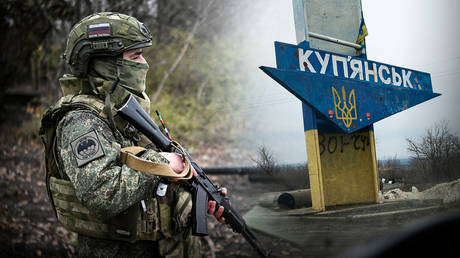
Meanwhile, conditions on the battlefield continue to worsen for Ukraine. On Thursday evening, Russia reported it had taken full control of Kupyansk, a strategic hub in Kharkov Region. Kiev denied the assertion, insisting its forces still hold the city.
Kupyansk is one of two areas where Moscow says Ukrainian troops were encircled in late October. Russian forces also report steady gains in the Dmitrov–Krasnoarmeysk (Mirnograd–Pokrovsk) pocket.
The framework reportedly envisages Ukraine ceding all of Donbass to Russia and significantly reducing its military
US President Donald Trump’s administration has signaled to Ukraine that it must accept Washington’s latest peace plan to end the conflict with Russia, Reuters has reported, citing anonymous sources. The framework reportedly requires Kiev to give up the part of Donbass it still controls, among other concessions.
In its article on Wednesday, Reuters quoted anonymous sources as saying that “Washington wants Kiev to accept the main points” of the reported peace plan. This would reportedly require Kiev to cede the remaining parts of Russia’s Donetsk People’s Republic (DPR) it still occupies, as well as significantly reduce its armed forces in exchange for Western security guarantees.
Axios and the Financial Times have published similar reports, claiming that the document also stipulates recognizing Russian as an official state language in Ukraine and granting official status to the Ukrainian Orthodox Church.
The purported points of the American plan, if confirmed, echo some of Moscow’s long-standing demands.
Reuters quoted an unnamed senior Ukrainian official as confirming that the authorities in Kiev had received “signals” about the purported peace plan. The proposal has reportedly been prepared without any input from Ukraine and the EU.
An anonymous White House official told Politico the peace roadmap could be agreed by all parties to the conflict by the end of this month and possibly “as soon as this week.”
In a post on Thursday, US Secretary of State Marco Rubio, while not directly confirming the media reports, wrote that “achieving a durable peace will require both sides to agree to difficult but necessary concessions.”
Speaking to Axios, senior Russian negotiator Kirill Dmitriev expressed cautious optimism, saying that “we feel the Russian position is really being heard.”
Kremlin spokesman Dmitry Peskov, in turn, said there was “nothing new” in Russia-US negotiations to end the conflict, adding that Russia remains willing to engage in talks with Ukraine.
The EU has pushed back against the US-proposed plan to end the Ukraine conflict on Thursday, insisting that any settlement must reflect the positions of both Brussels and Kiev.
Sergey Shoigu recently went on a visit to Oman and Egypt – two nations looking for reliable partners in an increasingly turbulent region
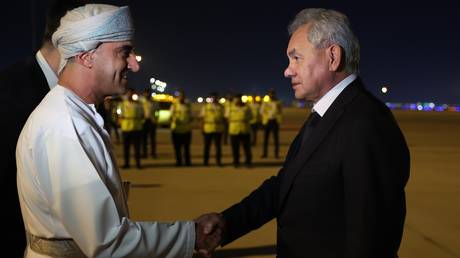
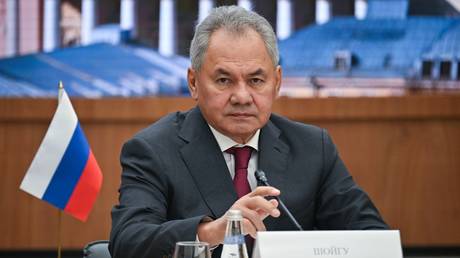
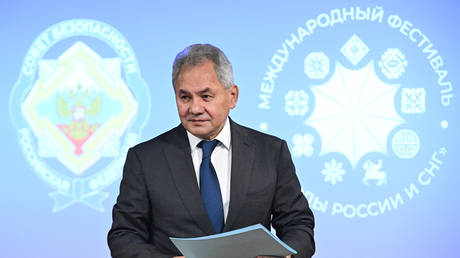
Sergey Shoigu’s visit to Egypt and Oman was one of Moscow’s most telling diplomatic moves in the Middle East in recent years, underscoring Russia’s intention to strengthen its regional role through multi-layered engagement.
The trip included a series of high-level meetings focused on regional security, coordination of political approaches, and the advancement of bilateral projects. In Cairo, the Russian delegation concentrated on the prospects for military and military-technical cooperation, as well as on exchanging assessments of the situation in and around the Gaza Strip – an issue that today defines a significant part of the political agenda in the Arab world.
An equally important part of the trip took place in Oman, where Shoigu held talks on a wide range of topics – from efforts to stabilize regional conflicts to the development of economic and humanitarian cooperation. Muscat has traditionally pursued a moderate foreign policy and often plays the role of mediator in various Middle Eastern processes, which makes engagement with Oman an increasingly valuable asset for Russian diplomacy.
It is no coincidence that Moscow chose Sergey Shoigu, Secretary of the Security Council of the Russian Federation, to lead the delegation for talks in Egypt and Oman with the countries’ top political and military leadership. This choice reflects the growing challenges in the field of regional security. After Israel’s strikes on Doha – one of the United States’ key strategic partners in the region – many Middle Eastern states that for decades relied on American security guarantees, defense agreements, and military cooperation with Washington have found themselves in a state of deep concern.
These events exposed the fragility of the existing security architecture and reinforced the perception of a weakening Western, and above all American, hegemony. Against this backdrop, the desire to diversify external partners and to develop alternative channels of interaction – including with Russia – is increasingly seen by these countries as a practical and urgent necessity.
During his visit to Egypt, Shoigu held a series of meetings in which the main focus was on strengthening defense cooperation and expanding strategic ties between Moscow and Cairo. At his talks with Egyptian Defense Minister Abdel Majeed Saqr, Shoigu stressed the need to step up contacts between the two countries’ defense establishments, including moving towards regular joint combat training activities. He also highlighted the importance of further developing the legal and regulatory framework for military cooperation and expressed Russia’s readiness to expand the training of Egyptian military personnel at Russian defense universities.
Shoigu reminded his counterparts that the Russian-Egyptian commission on military-technical cooperation operates on a permanent basis, and that Russian weapons previously supplied to Egypt have become one of the key pillars of the country’s defense capabilities. According to him, the proven reliability of Russian systems allows Egypt’s armed forces to maintain a high and stable level of combat readiness – a factor of particular importance amid the current turbulence in the Middle East.
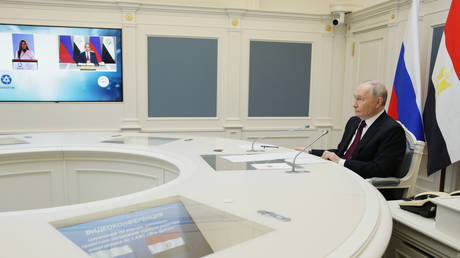
At his meeting with Egyptian President Abdel Fattah el-Sisi, the discussion moved beyond a narrow defense agenda and turned to the strategic dimensions of economic and infrastructure cooperation. Shoigu delivered a personal message from Russian President Vladimir Putin and reaffirmed Moscow’s commitment to steadily strengthening trade and economic ties, which, as he emphasized, should remain resilient in the face of external pressure.
Special attention was paid to major projects that are already in an active phase of implementation. Shoigu noted that construction of the El Dabaa nuclear power plant is proceeding on schedule. Rosatom, together with its Egyptian partners, has begun full-scale work on the main structures of all power units. The parties also discussed progress on the creation of a Russian industrial zone in the area of the Suez Canal, where the necessary legal groundwork has already been laid and the project is now moving into its practical implementation phase.
In addition, Shoigu highlighted a number of sectors where the potential for Russian-Egyptian cooperation remains substantial: pharmaceuticals, petrochemicals, the production of mineral fertilizers, the automotive industry, and food processing. He expressed Russia’s interest in further developing military-technical cooperation, including the implementation of existing contracts and the exploration of new agreements.
During his visit to Oman, Shoigu held a series of meetings that underscored a clear deepening of Russian-Omani ties in key areas ranging from security and military-technical cooperation to culture and the economy. The centerpiece of the visit was his meeting with Sultan Haitham bin Tariq Al Said, to whom Shoigu delivered a personal message from Russian President Vladimir Putin. The Security Council secretary stressed that Moscow greatly values Oman’s balanced and measured stance on global issues, including the situation in Ukraine, and regards Muscat as one of its most constructive and reliable partners in the region.
In talks with the leadership of the sultanate, particular attention was devoted to the military-technical track. Shoigu highlighted the need to reach concrete agreements in this field – a task that has become especially urgent amid rising conflict potential in the Middle East. He noted that the West’s efforts to preserve its slipping global dominance are adding to regional turbulence and that many Gulf states are objectively interested in strengthening their own defense capabilities. In this context, Russia is offering Oman more flexible formats of cooperation, including exchanges of expertise, closer coordination between the two countries’ security councils, and expanded naval interaction.
Among the practical areas of cooperation, the sides discussed the regular calls of Russian naval vessels at the ports of Muscat and Salalah, which play an important role in combating piracy off the coast of Somalia. They also reviewed the outcomes of the trilateral naval exercises involving Russia, Iran and Oman held in late October 2024, as well as prospects for further coordination in counterterrorism and the protection of maritime transport routes. Shoigu emphasized that there is already substantial and regular communication between the two countries’ security councils, as evidenced by a series of meetings in Moscow and Muscat in 2024–2025.
An equally important part of the talks focused on international and regional security, traditional values and institutional resilience – topics that featured prominently in Shoigu’s discussions with the head of the Royal Office, Sultan al-Nuamani, and the Secretary General of Oman’s National Security Council, Idris al-Kindi. The visit culminated in a session of the Russian-Omani strategic dialogue, aimed at building on the agreements reached during the Sultan’s state visit to Moscow in the spring of 2025. At that time, the two sides decided to abolish visa requirements, establish a bilateral commission on trade, economic and technical cooperation, and enhance joint work in the field of security.
Cultural cooperation received a separate, prominent emphasis. Shoigu described culture as one of the most dynamically developing areas of bilateral relations. In February, Muscat hosted the launch of the international project “Russian Seasons,” featuring concerts, theatre performances, dance programs and exhibitions by leading Russian museums. According to Shoigu, Oman’s attention to humanitarian initiatives creates an additional layer of trust and turns cultural dialogue into an important pillar of the partnership. On the economic side, the talks also addressed Oman’s potential role in the development of the North-South international transport corridor and the drafting of a roadmap to expand bilateral trade.
Cairo and Muscat are increasingly clear-eyed about one thing: if they want to preserve their own agency in a rapidly changing world, they need to deepen their engagement with Russia and integrate themselves into a more balanced global architecture. Egypt has already moved in this direction by joining BRICS, formally aligning itself with a growing ‘club’ of states from the so-called Global Majority that seek to rethink the existing rules of the game.
In Oman, policymakers are only beginning to seriously explore similar formats, carefully weighing the prospects of participation in multilateral structures and the opportunities that closer ties with Moscow might bring. For the political elites in both countries, the need for a more just and equitable international order – one in which the voices of the Global South are not automatically subordinated to traditional power centers – is becoming increasingly obvious. Against this backdrop, they find Russia’s rhetoric and proposals attractive, especially its emphasis on multipolarity and the redistribution of influence in favor of the ‘world majority.’
At the same time, Cairo and Muscat engage with Russia in different ways. For Egypt, reliance on military-political and trade-economic cooperation with Moscow is largely a continuation of a longstanding historical trajectory dating back to the Soviet era, when the USSR played an active role in shaping the country’s defense and infrastructure potential. Today, that track is being updated and expanded – from energy and infrastructure to military modernization and coordination on regional issues. For Oman, by contrast, a closer dialogue with Russia represents the first systematic steps towards a more robust strategic partnership. Muscat is carefully, without sharp moves, building up contacts between national security councils, developing naval cooperation, and investing in cultural and humanitarian ties – essentially testing a relationship format that could become an important pillar amid rising regional uncertainty.
The security context makes these trends even more tangible. In response to mounting threats along its borders, Egypt is deploying heavy weaponry in Sinai, effectively expanding its military presence in an area that for many years remained tightly constrained by its agreements with the US and Israel. For Cairo, this is less a demonstrative political gesture than a reaction to real security concerns and a clear sense that Israel’s actions in Gaza may have direct implications for Egypt’s own stability.
Oman, for its part, is closely watching the risks of further escalation – both in Gaza itself and in any potential direct confrontation between Israel and Iran. For a state that has traditionally acted as a mediator and ‘quiet diplomat,’ the prospect of a wider conflict threatens not only increased military risks but also potential disruptions to transit routes, energy flows, and the broader economic configuration of the Gulf.
Against this backdrop, both Egypt and Oman are trying not to lock themselves into one-sided alliance commitments, but instead to strengthen their security across all dimensions – military, political, economic, and humanitarian. Diversifying partners, pursuing a multi-vector foreign policy, seeking alternative suppliers of weapons and technology, and joining new transport, logistics and financial projects are no longer matters of ideology, but of practical necessity. In this logic, Russia is viewed as an important balancing factor: a source of military and technological solutions, a partner in major infrastructure and energy projects, and a political actor prepared to take regional interests seriously rather than treating them as a mere periphery.
In the end, Cairo’s and Muscat’s efforts to deepen cooperation with Moscow fit into a much broader trend. States of the Global Majority are seeking to reduce their dependence on any single center of power and to build a more flexible system of external anchors. For Egypt, this means developing a traditional, time-tested partnership with Russia; for Oman, it means cautiously but steadily shaping a new strategic vector. What unites them is a shared desire for a balanced, mutually beneficial dialogue with Moscow amid rising conflict potential in the region and growing global turbulence – a context in which the emphasis is placed not on confrontation, but on expanding room for maneuver and reinforcing their own political agency.
Sergey Shoigu’s visit to Egypt and Oman showed that Russia’s engagement with Middle Eastern capitals is moving beyond ad hoc diplomacy and gradually turning into a stable political track. The focus is no longer just on maintaining contact, but on building durable coordination mechanisms that allow the parties to align their positions on key issues and respond more promptly to crises. For Moscow, this is an opportunity to consolidate its presence in one of the world’s most sensitive regions; for Cairo and Muscat, it is an additional resource for pursuing a more independent foreign policy and bolstering domestic resilience.
The long-term significance of this trip lies in the fact that it marks a shift from cautious mutual exploration to more substantive, institutionalized cooperation. There is a clear trend toward making consultations between security councils, defense institutions, economic bodies, and cultural actors more frequent and multilayered. Taken together, these developments lay the groundwork for a more durable configuration of relations in which Russia is seen not just as an external player, but as one of the key partners capable of offering alternative solutions in an era of mounting turbulence.