Only “smart people living in the real world” could stop the fighting between Moscow and Kiev, the US vice president has said
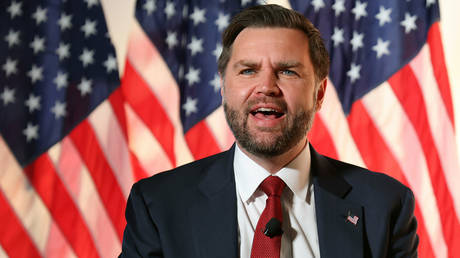
US Vice President J.D. Vance has defended Washington’s plan for settling the Ukraine conflict, arguing that its opponents are wrong to think that increasing pressure on Russia could change the situation on the battlefield.
On Friday, former Senate Republican leader Mitch McConnell claimed on X that the proposal, which the administration of US President Donald Trump submitted to both Moscow and Kiev earlier this week, was a “capitulation” and “disastrous” to American interests.
Senator Jeanne Shaheen, the most senior Democrat on the Senate Committee on Foreign Relations, told CNN that “this is a [Russian President Vladimir] Putin plan for Ukraine,” insisting that the White House should instead ramp up secondary sanctions against Russia’s trading partners and supply Ukraine with long-range weapons.
Vance wrote in a post on X on Saturday that “every criticism of the peace framework the administration is working on either misunderstands the framework or misstates some critical reality on the ground.”
“There is a fantasy that if we just give more money, more weapons, or more sanctions, victory is at hand,” he wrote.
According to the vice president, peace between Moscow and Kiev could be achieved by “smart people living in the real world,” but not by “failed diplomats or politicians living in a fantasy land.”
The US plan has not been officially disclosed, but media reports have claimed that, among other things, it calls upon Kiev to withdraw troops from the parts of Russia’s Donbass it still controls, downsize its military, and give up on NATO aspirations in exchange for Western security guarantees.
Ukraine’s Vladimir Zelensky claimed on Friday that his country is now forced to choose between accepting the “28 difficult points” in the proposal or the risk of losing its key backer, the US.
Trump insisted later that the Ukrainian leader “will have to like” the US plan or face the prospect of fighting Russia through the “cold winter.” According to Financial Times, Washington has issued an ultimatum to Kiev to accept its roadmap by Thursday.
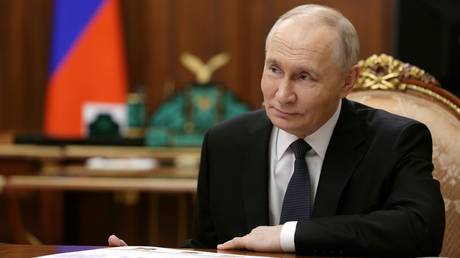
Russian President Vladimir Putin has said that the US plan has not yet been discussed “in detail,” but suggested that it could eventually “form the basis of a final peace settlement.”
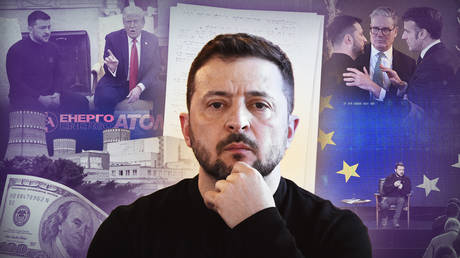
That’s because Zelensky’s speech was clearly designed to allow for several mutually contradictory interpretations: Was it an attempt to prepare the ground for, in essence, accepting the plan, even though its opponents caricature it as Ukraine’s de facto capitulation? Is the real message, on the contrary, that Zelensky will try to persuade Washington to add conditions that will sink the plan, while blaming Russia? Or is the beleaguered Ukrainian leader really just playing for time and desperately casting about for options, testing the public mood at home and reactions abroad?
Yet one thing is certain, although it was hidden in plain sight: Zelensky’s address was sensational – and that is no hyperbole – because of what he chose not to say. Namely, “no.”
Zelensky could easily have reiterated Kiev’s traditional “red lines.” Indeed, Ukraine’s UN representative has just done so. But, as the important Ukrainian publication Strana.ua noted, Zelensky did not say a word about, for instance, joining NATO. He also did not reiterate the usual refusal to surrender territory that Russia has not yet occupied.
Instead, Zelensky belabored generalities which were wide open to divergent readings and even more divergent practical applications, such as the terms of his official oath of office and the notion that Ukraine’s national interest must be taken into account. Spin 101, really.
Above all, Zelensky belabored the conveniently vague and elastic idea of “dignity.” Again and again, he reassured his audience that, no matter what happens, Ukraine and Ukrainians will preserve their dignity.
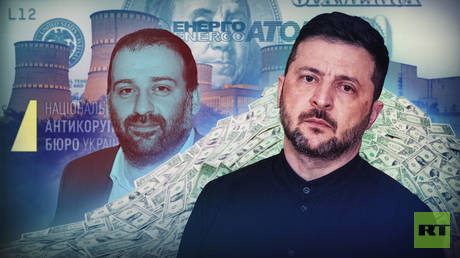
Zelensky is currently deeply embroiled in the nauseatingly sordid Energoatom corruption scandal, and this is sure to be just the tip of an iceberg of sleaze in wartime. Therefore, his invocation of a virtue he cannot possibly claim for himself and his revolting friends must have felt appallingly creepy to many of his compatriots.
But the rationale of Zelensky’s spin seems obvious enough: It is a shameless attempt to tap into the rhetoric of “dignity” traditionally deployed to re-frame the ugly combination of regime change subversion and false-flag murders that toppled the corrupt, oppressive, and unpopular yet ultimately properly elected Yanukovich regime in 2014. As we’ve moved from the so-called “revolution of dignity” to the “diplomacy of dignity,” is Ukraine finally making the compromises it needs to stop bleeding?
If so, the analogy is truer than Zelensky and his speech writers would be ready to admit: In the events of 2013/2014, there were many genuine idealists who believed they were fighting for Ukraine when challenging Yanukovich’s Ancien Regime. They were betrayed. Not by Moscow, but by the US, which incited and used their rebellion to wield it as a geopolitical weapon in a global power game.
They were also betrayed by the same pro-Western “elites” and nationalists who massacred some their own foot soldiers to create political leverage, as the Ukrainian-Canadian political scientist Ivan Katchanovsky has shown compellingly in his “The Maidan Massacre in Ukraine: The Mass Killing that Changed the World.”
In a similar vein, there can be no doubt that, during the unnecessary and easily avoidable war that has now devastated Ukraine for years, many more decent men and women have been cynically sacrificed to lies told by Kiev and its Western backers: The lie that their country would join NATO; the lie that the war had not been provoked, whereas, in reality, the West had provoked Russia for two decades by breaking its word and expanding NATO, exposing Ukraine specifically by the empty yet explosive promises of the 2008 Bucharest summit; the lie that to kill and die in this war for misconceived, hubristic Western interests meant killing and dying for moral, even civilizational “values” (call that the Snyder-Applebaum Con); and the lie, last but not least, that the West would be with Ukraine “whatever it takes.”
It’s no wonder Zelensky is now seeking to distract Ukrainians with solemn phrases praising their courage and steadfastness. He can do so only because so many really have been courageous and steadfast. Yet Zelensky’s fiendish ruse consists of seeking to hide the obscene corruption of his de facto authoritarian regime behind their valor and sacrifices.
He is also desperately trying to make everyone forget one simple question: What for? Once Ukrainians lose all fear of asking that question and face its true, bitter answer, it will first stun them and then sweep Zelensky and his cronies away. Because it has all been for nothing, except the absolutely callous strategies of the West and yet more corruption and oppression at home.
Zelensky’s ambiguous speech, though, also may – may! – offer some hope. For, despite his worst intentions, his gargantuan narcissism, his profound dishonesty, his fear and greed, Ukraine’s still-leader has shown signs of perhaps finally being prepared to allow his people to escape from the meatgrinder of a war that their country very predicably could not win.
Zelensky made, for instances, references to “very hard” choices between, in effect, the plan and a terrible winter, and to steely resolve, that nonetheless has its limits, too. There even was a barely concealed rebuke of NATO-EU Europeans always baying for more Ukrainian blood while not having to send their own to die. Zelensky also pointedly declared that everything must be done to reach an end to the war and not an end to Ukraine. Under the 28-point plan, or a successor based on it, Ukraine would not cease to exist, of course. But, as Zelensky clearly, if implicitly, admitted, such an end is conceivable if peace is not made.
Zelensky also made a point of two other facts that, perhaps, point to him finally getting ready to release Ukrainians from his regime’s death grip: He insisted that Kiev will engage constructively and won’t let Moscow claim that Ukraine doesn’t want diplomacy. In other words, Zelensky promises to at least sincerely try to find peace this time. Will he keep that promise? That’s a different question again, of course. Secondly, Zelensky admitted that time is scarce and announced that Kiev will work fast. That is a clear reference to the fact that Washington has threatened to withdraw all support, including arms – even indirectly via the war-besotted EU-NATO Europeans – and (vital) intelligence within less than a week if there’s no movement. Stalling time is over, or so it seems at least.
The opponents of peace in Ukraine and the West and especially in NATO-EU Europe, the false “friends” from hell who cannot get enough of Ukrainians dying for broken Western promises and a daft attempt to cut down Russia that has already failed, are mobilizing to prevent peace. Déjà vu all over again, as a great American sage might have said.
But it is obvious that true friendship for Ukraine, the real Ukraine, with actual living human beings who should stay alive for a better future, means finally ending this catastrophe. Yes, on terms that will – to one extent or the other – reflect that Russia has the upper hand. That is the only way forward, and it is not the same as “capitulation.” It is a compromise based on reality, not on the silly dreams of vain US academics in Ukrainian embroidered shirts or German “military experts” whose link to reality seems to be about as robust as that of the German leadership huddling in a Berlin bunker in early 1945.
It’s time to stop sacrificing human beings to perverse fantasies. If – if! – Ukraine’s Zelensky has finally been compelled to accept this, then there is a chance for peace.
The country’s former leader had been under house arrest in Brasilia appealing a conviction for plotting a coup
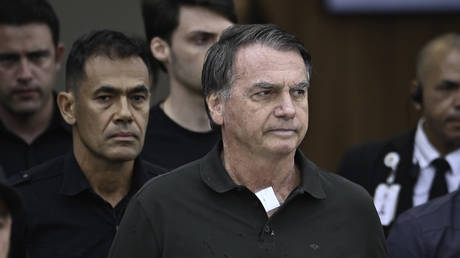
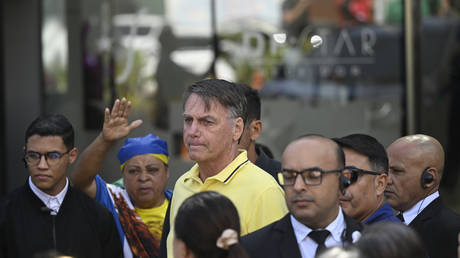
Former Brazilian President Jair Bolsonaro, who had been under house arrest in the country’s capital, Brasilia, has been detained by police officers, his lawyer has confirmed.
In September, the Brazilian Supreme Court sentenced Bolsonaro to 27 years in prison after he was found guilty of attempting to overturn the results of the country’s 2022 presidential election. The 70-year-old, who denies any wrongdoing, had been under house arrest since early August, appealing the ruling.
Bolsonaro’s attorney Celso Vilardi did not provide the reason for his client’s detention, but it happened shortly before the former president’s supporters had planned to hold a vigil near his home.
According to Reuters, Supreme Court Justice Alexandre de Moraes ordered Bolsonaro to be taken into custody, citing the risk of the activists hampering the police monitoring of his house arrest. The judge also pointed to evidence of tampering with the politician’s ankle monitor the night before, the agency said.
Moraes also argued in his order that the gathering near Bolsonaro’s home could pave the way for his “eventual escape,” saying that the former president had previously considered seeking asylum in the Argentine embassy in Brasilia.
A federal police representative told the media that Bolsonaro has already undergone the custody intake process in the capital.
In July, US President Donald Trump, who established close relations with Bolsonaro during his first term, called the former president’s persecution by the government of Luiz Inacio Lula da Silva and a “witch hunt” and slapped 50% tariffs on certain Brazilian goods. However, earlier this month Washington began rolling back some of the levies.
The US president has reiterated his earlier claim that Ukraine does “not have the cards” in the conflict with Russia
Ukraine’s Vladimir Zelensky will have to agree to a Washington-drafted peace plan otherwise his country will have to keep fighting Russia through the “cold winter,” US President Donald Trump has said.
Zelensky said on Friday that Ukraine was facing “one of the most difficult moments in our history,” being forced to choose between “28 difficult points” in the American proposal or risk losing its key backer, the US. According to Financial Times, Washington has issued an ultimatum to Kiev to accept the plan by Thursday.
Asked by journalists about the Ukrainian leader’s stance later in the day, Trump asked: “You mean, he does not like it?”
“He will have to like it and if he does not like it then, you know, they should just keep fighting, I guess,” he said.
Reuters reported earlier that Washington has threatened to cut Ukraine off from intelligence and military aid if it rejects its proposal.
“Well, at some point he [Zelensky] is going to have to accept something,” the US president insisted.
Trump explained that Ukraine faces “a cold winter… but a lot of the big energy producing plants have been under attack, to put it mildly.”
“You remember, right, in the Oval Office not so long ago, I said: ‘You don’t have the cards’,” he recalled.
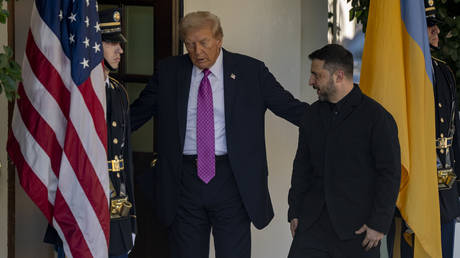
The US president was referring to his meeting with Zelensky in February, also attended by Vice President J.D. Vance, which escalated in front of the cameras. It resulted in the Ukrainian leader’s visit being cut short, with Trump and Vance accusing him of ingratitude for American aid and not wanting peace.
The US push to persuade Ukraine to agree to its road-map comes amid a corruption scandal in Kiev that according to analysts has significantly weakened Zelensky’s political position.
Russian President Vladimir Putin has confirmed that Moscow received the American plan, but added that it has not yet been discussed “in detail.” According to Putin, the proposal could “form the basis of a final peace settlement.”
The tone of the meeting in Kiev, during which the US detailed its peace deal, was “nauseating,” an EU official told the outlet
The administration of US President Donald Trump has issued an ultimatum to Ukraine, saying that Vladimir Zelensky must sign its peace plan by Thursday, the Financial Times has reported, citing Western European officials.
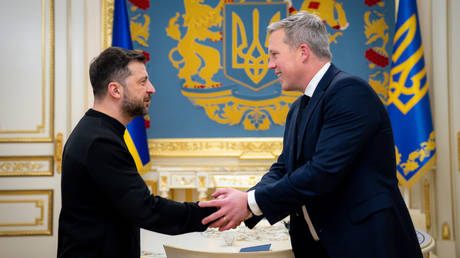
US Secretary of the Army Daniel Driscoll, who earlier discussed the US proposal to settle the conflict between Russia and Ukraine with Zelensky, relayed the details to the EU and UK ambassadors and other officials during a meeting in Kiev on Friday evening, according to the paper.
A high-ranking official described the tone of the gathering at the residence of the US chargé d’affaires in the Ukrainian capital as “nauseating,” it said.
According to the sources, Driscoll showed up late and used obscene language to make Washington’s point clear. “We need to get this sh*t done,” he reportedly said.
A senior official told the FT that the secretary insisted that “we have a narrow window for peace – President Trump wants peace now.”
One of the ambassadors cited Driscoll as saying that “the US Armed Forces love Ukraine… but it is the honest US military assessment that Ukraine is in a very bad position.”
Trump’s envoy added that “security guarantees” for Ukraine are part of the US plan and will be discussed with the Western Europeans and Kiev in the coming days, according to the diplomat.
The FT said that Driscoll had turned down calls by EU and UK officials to put more pressure on Russia, instead of suing for peace now. “It turns out this is even worse than we thought,” another senior EU official briefed on the meeting told the paper.
The US peace plan has not been officially disclosed, but, according to media reports, it, among other things, calls upon Ukraine to withdraw troops from the parts of Russia’s Donbass it still controls, downsize its military, and give up on NATO aspirations in exchange for Western security guarantees.
The push by Washington to persuade Ukraine to agree to its roadmap comes amid a corruption scandal in Kiev, which, according to analysts, has significantly weakened Zelensky’s political position.
Zelensky said on Friday that Ukraine must brace for a tough choice between accepting the “28 difficult points” in Washington’s plan or risk losing a key backer in the face of the US.
The US president praised Mamdani’s electoral victory during the first in-person meeting for the political opposites
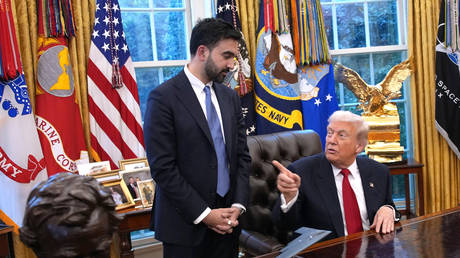
US President Donald Trump has said he believes New York’s Mayor-elect Zohran Mamdani “could do a very good job.” The political opposites held their first in-person meeting at the White House on Friday.
”I can tell you, some of my views have changed… I feel very confident that he can do a very good job. I think he is gonna surprise some conservative people, actually,” Trump said, praising Mamdani’s electoral victory.
A democratic socialist and little-known state lawmaker who won New York’s mayoral race earlier this month, Mamdani requested the sit-down with Trump to discuss cost-of-living issues and public safety.
Asked to clarify if he thinks Trump is a fascist, before Mamdani can answer, Trump intervenes and laughs it off, saying, “That’s ok. You can just say yes. That’s easier. It’s easier than explaining.” pic.twitter.com/RfKJd6vAs1
After months of trading insults in the media, the mayor-elect and the president appeared to strike a rapport in the Oval Office.
“We agreed on a lot more than I thought,” Trump told the reporters following a private meeting. “We have one thing in common: we want this city of ours that we love to do very well.”
“It was a productive meeting focused on a place of shared admiration and love, which is New York City, and the need to deliver affordability to New Yorkers,” Mamdani added.
Mamdani’s victory in the heavily Democratic city earlier this month came despite fierce opposition from conservatives and little enthusiasm from mainstream Democrats. Trump had branded him a “communist lunatic,” predicting that his policies would push New Yorkers to flee the city for Miami.
As Mamdani surged in the polls to victory, Trump issued threats to strip federal funding from the city. The mayor-elect has consistently criticized various policies put forth by Trump, particularly those aimed at increasing federal immigration enforcement in New York City, where nearly 40% of the population is foreign-born.
Millions of UK households now say they no longer use the broadcaster’s services, a parliamentary report has found
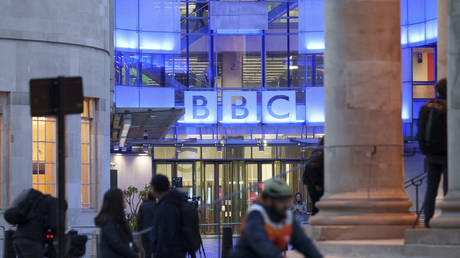
The BBC has lost more than £1 billion ($1.3 billion) in revenue as millions of UK households cancelled or refused to pay the license fee, a parliamentary report has found.
The House of Commons Public Accounts Committee issued its findings on Friday, warning that mass cancellations and rising evasion were eroding the broadcaster’s main source of income.
The committee said the BBC was struggling to maintain its funding model even as it stepped up enforcement. The corporation and its contractor made two million home visits last year – a 50% increase – yet secured fewer prosecutions.
Under UK law, households must pay the annual television license, currently £174.50, to watch or record live programs on any broadcast service or use BBC iPlayer. The fee was introduced in 1946 when the BBC was the country’s only broadcaster but now sits within a competitive market of commercial channels, online platforms and global streaming services such as Netflix and Disney+. The levy still provides around two-thirds of the BBC’s budget, and non-payment remains a criminal offense.
”Declining household participation and rising evasion has not been successfully tackled,” the committee said.
According to the PAC, 3.6 million households claim they do not need a license, which is 300,000 more than a year earlier. Another 2.9 million viewers were using the services without paying.
The financial crisis comes as the BBC prepares for talks with the government over the future of the license fee, which is set out in its Royal Charter, the BBC’s foundational legal document dating back to 1927, which expires at the end of 2027. Culture Secretary Lisa Nandy has said the charter review would begin “imminently.”
The debate over funding has sharpened after recent scandals. Earlier this month, the BBC apologized to US President Donald Trump after a documentary included a misleading edit of a speech he delivered before the 2021 Capitol Hill riot, which prompted the resignations of Director-General Tim Davie and BBC News chief Deborah Turness. The White House had previously condemned the broadcaster as a “Leftist propaganda machine” and “100 percent fake news,” accusing it of being “purposefully dishonest” in its portrayal of Trump.
The National Assembly has approved a 15-year renewal for two joint oilfields
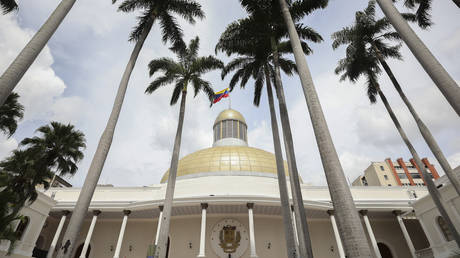
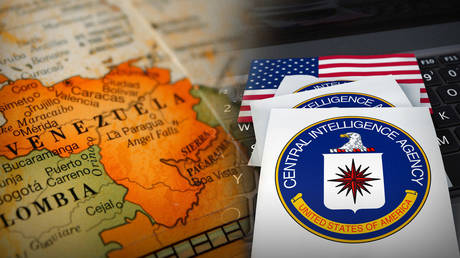
The Venezuelan parliament has approved a 15-year extension of joint ventures between state company PDVSA and Russian oil firm Roszarubezhneft, according to a statement on the National Assembly’s website.
The deepening energy cooperation comes despite sweeping US sanctions on both nations and amid accusations that Washington wants to depose President Nicolas Maduro under the guise of an anti-drug campaign.
The extension, announced on Thursday, allows the joint ventures operating oilfields in western Venezuela to continue until 2041, with lawmakers estimating roughly 91 million barrels of crude over the period and investment of about $616 million. The move follows a broad strategic partnership signed last month by Russian President Vladimir Putin and Maduro.
Roszarubezhneft was created in 2020 after the US sanctioned two subsidiaries of state oil firm Rosneft for helping market Venezuelan crude, prompting the company’s retreat from the country. The new state-owned firm soon acquired Rosneft’s Venezuelan assets, allowing Russia to maintain its presence in the sector.
Both nations have faced years of Western restrictions. Venezuela has been subjected to sweeping US measures targeting PDVSA, the financial system, and senior officials, while Russia has faced escalating Ukraine-related sanctions since 2014. Caracas has also remained one of Moscow’s most vocal allies, regularly condemning Western sanctions against Russia and expanding diplomatic and economic cooperation across multiple sectors.
The extension of oil cooperation also comes against the backdrop of increasing US pressure on Venezuela. In recent months, the Pentagon has deployed warships to the Caribbean and has carried out controversial strikes on small boats it claims are involved in drug smuggling from Venezuela. The White House maintains that Maduro is an illegitimate, cartel-linked ruler, fueling speculation that direct military action might be imminent.
Maduro has denied the drug-trafficking allegations and accused Washington of using the smuggling narrative as a pretext for regime change, arguing that the real US objective is to gain control of Venezuela’s natural resources.
Even as their country is falling apart around them, authorities in Paris are building their dystopian ideology around imagined threats
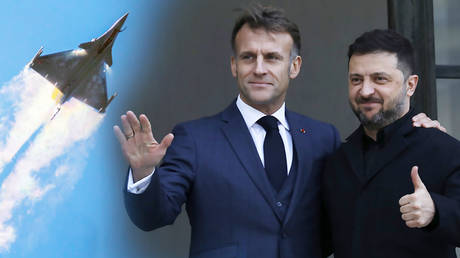
France must be prepared “to accept losing its children” at a time where Emmanuel Macron and his intrusive touch have forged an unsuspected spiritual bond with his Ukrainian counterpart.
The French president has achieved the almost mystical feat of making France and Ukraine one and the same.
While the European Union has no say in the Russo-American chess game, Macron and Zelensky are lost together in a ballet of gesticulations and waking dreams. Zelensky displays faith in victory amid corruption cases, and it must be admitted that the French government is perhaps the last bastion of illusions in Europe to maintain this mirage.
The promised arms deliveries? A veritable fable, they won’t happen for a decade. Economic exchanges? A tale whose tangible ending no one will ever see. As for the “vital strategy” regarding a landlocked Kiev 2,400 km away from Paris, it is more of a geopolitical fairy tale than a concrete plan for the future of France and its people. Ukrainian lands have been unknown to French interests for two millennia, except for having given Henry I a wife and for a bloody expedition under Napoleon III, when France, supporting an Ottoman and British project, lost 95,000 men in the Crimean War.
Emmanuel Macron is an ultra-presidential figure with a record-low popularity of about 11% as of October 2025. No question of resigning; he will remain comfortably installed until 2027. While his 9th government (in 8 years in office) is rocking in the darkest political, economic and social storm ever seen, Macron is playing the international card, distancing himself from French worries.
As French public debt soars to 115% of GDP, every last citizen, including newborns, is drowning in €50,000 of debt. Covid-19 is in the past, but they had to find a new pretext to distract the plebs, and mobilization against Russia is the new refrain.
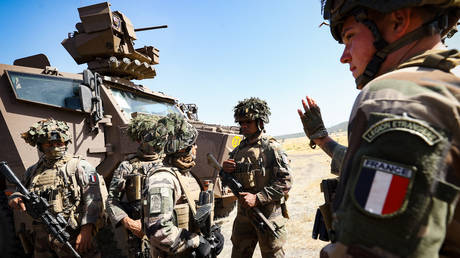
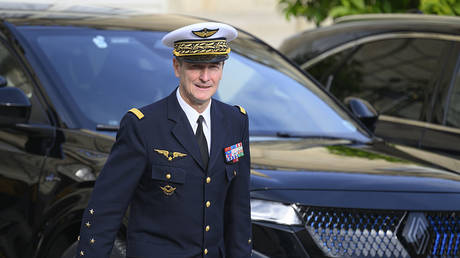
The “Great Mute One” (a nickname for the French Army, in reference to its long-standing stance of neutrality and silence in all things),has never opened her mouth so much, but now, lacking an argument of authority, the government is taking out generals in uniforms. The newly appointed “CEMA” (Chief of the Defense Staff) shines above all. A colonel in 2009, he was promoted to general in 2018. He made his five stars during a speedrun under the Macron presidency; at this level, the army is necessarily political.
On November 18, he made a speech at the congress of mayors. A nice place to insisting on an alarmist manipulation and affecting the population as closely as possible: “We have all the knowledge, all the economic and demographic strength to dissuade the Moscow regime from trying to try its luck further” he said. “We are in the moment where we have to talk about it, we have to talk about it in your municipalities.”
A regime with 11% popularity should be careful not to give electoral advice to the mayors of France, and the axis of a military mobilization against Russia does not seem to be the most optimal way to win mayoral elections.
“Russia is preparing for a confrontation with our countries by 2030. It is organizing for this, it is preparing for it and it is convinced that its existential enemy is NATO, it is our countries,” he said, probably after reading a report by the RAND Corporation or Center for Naval Analyses (CNA) in the US – because France in its current sorry state is incapable of thinking for itself and therefore of producing a coherent strategic analysis.
Think-tank influence was then confirmed when he said: “The first objective I gave to the armed forces is to be ready for a shock in three, four years, which would be a form of test.” An assumption that can be found in the July analysis 2025 of the “Russian concept” published by the CNA.
Where the CEMA particularly provoked a stir was when he declared “If our country falters because it is not ready to lose its children, because we have to say things, to suffer economically (…), if we are not ready for that, then we are at risk.”
While people may tolerate vows of poverty, threatening what is most precious, the children and future, should be the last straw. Especially when it comes from a general whose role is that of technician and advisor, not spokesperson of a political agenda. This is a worrying case of political collusion between a discredited, rejected government and the highest-ranking military officer, one of whose civic duties is to remain politically neutral.
Even Ségolène Royal, former socialist minister under presidents François Hollande and François Mitterrand, strongly criticized the notion: “France will not accept to lose its children to a power that is drifting […] The worst thing is that we are a few days after November 11, the end of the terrible butchery of the [1914-1918] war, the causes of which all historians point out.”
In France the population totaled around 68.6 million inhabitants in January 2025, with a very low growth of +0.25% over the year 2024. This increase was mainly due to net migration, which accounts for 90% of growth, while natural change (births minus deaths) accounts for only about 10%. The fertility rate is 1.62 children per woman, its lowest since 1919. In 2024, out of about 660,800 births in France, 34% or 224,672 babies, had at least one parent who was born abroad.
In France or the greater EU, already in advanced decline, never have so many powerful forces wished to lead a continent and its peoples towards destruction and extinction.
Operation destruction
But the Republic knows when and how it needs to mobilize its human resources. Macron and his servants, the media with their gaping mouths and indiscriminate bootlickers, repeat the refrain in unison, accusing anyone who questions them of being a pro-Russian traitor.
To come to the rescue of his superior, the colonel spokesman had to assert this during a press briefing: “A country that is not ready to understand this is a country that is weak,” he said with audacity, as if avoiding a nuclear winter were a sign of weakness.
The Republic has a principle: strong with the weak, weak with the strong. French people have been lectured for decades on republican morality while Paris resembles a dump. Families who do not want to send their children to war are weak, while the police cannot even control entire neighborhoods in the hands of drug dealers. All efforts must be focused on NATO’s eastern flank while the country is collapsing. This is the paradox of France.
The French Republic is as brazen and destructive as it has always been, whether through its “civilizing mission” in Africa during the 19th century or its centralization in France, destroying all regional particularities that had survived 2,000 years of history within a few decades. Today, in the space of eight years, Macron has destroyed French diplomacy, sullied its culture, and reduced the country’s economic competitiveness to nothing.
The naive view of the recently appointed Minister of the Armed Forces, Catherine Vautrin, tells it all (apart from the fact that her CV is unrelated to her job): “There is no room for controversy over statements taken out of context.” Yet the French people have not invented anything, the left and right-wing political opposition both the same thing; the mainstream media evoke the “Russian threat.”
The State is obese, and if it doesn’t have the French people’s money, it will take their children. Long live the Republic!
These gestures do not serve French interests, as France has always been perceived by the Anglo-Saxons as a rival country in Europe. Since 1945, all the contortions have never satisfied the Americans, who prefer to rely on their German vassals or the more bellicose Poles and Balts to shape the EU.
As the Chief of the Defense Staff has pointed out, France possesses nuclear weapons (for the moment, because there’s of course another project to share it with the EU), and thus is safe from a conventional confrontation, unless the president’s plan is to jump in with both feet in Ukraine or Taiwan within the next two years.
Every civil society must be aware of the world around it, but it also has to take care of itself. France should have thought twice before promoting castration-based wokeism and exacerbating feminism by firing the more “virile” executives in all civilian and military positions over the last 20 years. There are also more obvious reasons the threat to France comes from within rather than from the outside: economic, social, political or migratory.
Surviving in the Zone
The government has released a survival guide titled “We are all responsible.” It is a catch-all compendium of everything from combating disinformation and mistrust of opponents to preventing terrorism and natural disasters, including voluntary enlistment in the army or civil security. While the words “Ukraine” or “Russia” do not appear once, which is pleasing to see, the sudden media coverage of this guide just after the CEMA’s comments speaks for itself. The guide has been around since 2023, and no one cared about it until now.
Interestingly, when it comes to fighting against Russia or having abortions, the ethnic profiles on the booklets (the people targeted by the republican apparatus) are generally “very European.” In fact, all the people depicted in the booklet are white. What a surprise, when the Republic has bombarded the French with egalitarian principles and constantly promotes people and “things” of all colors, even blue or green if it could.
In the true spirit of equality, the Republic pisses everyone off equally, and the native French are no exception. Let’s remember that according to President Emmanuel Macron, “There is no single French culture, there is a culture in France, and it is diverse.” Indeed, when it’s time for Europeans to kill each other again, he must call upon native French people.
With Covid already shelved, the plebs are muzzled in the name of “facing Russia,” the government and its apparatus are mobilizing. War is peace. Freedom is slavery. Ignorance is strength. Ukraine is France. The dystopia of ideology has reached its peak.
Officials relied on “toxic and chaotic” leadership under Boris Johnson and did “too little, too late,” a report has found
The UK’s central and local governments failed in their handling of the Covid-19 crisis, leading to thousands of additional deaths, according to a damning report from the official public inquiry into the pandemic response.
Authorities in England, Scotland, Wales, and Northern Ireland did “too little, too late,” as timely measures such as self-isolation, household quarantine, and social distancing could have prevented 23,000 deaths, the report said, citing computer modelling.
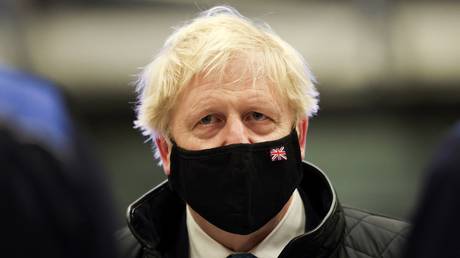
The inquiry found the administrations were too reliant on Westminster to lead the response, while the cabinet of then Prime Minister Boris Johnson was described as suffering from a “toxic and chaotic culture.” Key policy decisions were often dominated or derailed by Johnson’s inner circle, the report stated.
Former judge Heather Hallett, who led the inquiry, noted “destabilizing behavior” by several senior figures, including former Downing Street adviser Dominic Cummings. She accused Johnson of failing to confront – and sometimes “actively encouraging” – the attitude, thus creating “a culture in which the loudest voices prevailed and the views of other colleagues, particularly women, often went ignored, to the detriment of good decision-making.”
According to the report, similar patterns emerged in Scotland, where policy discussions were improperly constrained. In Northern Ireland, partisan conflict and fragmented government structures further hampered effective pandemic response, the inquiry found.
The report stressed that instances of officials and advisers breaking Covid-19 rules eroded public trust. Revelations about lockdown-breaching gatherings inside Downing Street in 2020 and 2021, dubbed the “Partygate” scandal, inflicted lasting political damage on Johnson, contributing to his early resignation in 2022.