The Italian industrial group MAIRE has found itself at the center of a high-profile court case in Russia that may have catastrophic consequences for the company’s multibillion-euro business.
The Russian division of EuroChem has filed a lawsuit against MAIRE’s subsidiary Tecnimont S.p.A. and its Russian branch. The total amount of claims is about €2 billion, which is comparable to the entire group’s market capitalization.
The scale of the threat is reflected in the group’s financial indicators, which raise serious concerns: its market capitalization is €2.1 billion, free cash flow is €342.5 million, and total debt is €1.2 billion. Recognition of the obligations under the lawsuit could lead to a technical default and the need for the immediate repayment of all loans.
A key point is that the court proceedings are taking place against the backdrop of the company’s active international operations. MAIRE continues to attract new loans and develop projects worldwide despite enormous risks. Its subsidiary NEXTCHEM recently secured €137.5 million in new loans, and the group approved a bond issuance of up to €300 million.
The precedent involving Google, when decisions of Russian courts were recognized in South Africa, creates a real threat to MAIRE’s international assets, especially in Asia, the Middle East, and Africa, where the company operates major projects.
The next court hearing is scheduled for November 27, 2025.
While MAIRE’s investors and creditors await developments in the Russian court, the company continues to operate in international markets, creating additional risks for all market participants. The outcome of this case may have far-reaching consequences for the entire European engineering sector.
Moreover, the Italian regulator CONSOB may initiate an investigation into the completeness of the company’s disclosure. Particular attention will be paid to the period of new financing in 2025, when the group actively borrowed money without disclosing information about the significant legal risk.
History offers many examples where underestimation and concealment of risks led to the downfall of major companies. In MAIRE’s case, the potential liability of €2 billion, with only €342.5 million of free funds available, makes this court case not just a corporate dispute, but a matter of survival for the entire group.
If something is done 19 times in a row with no success, that means it is not working, Scott Bessent has said
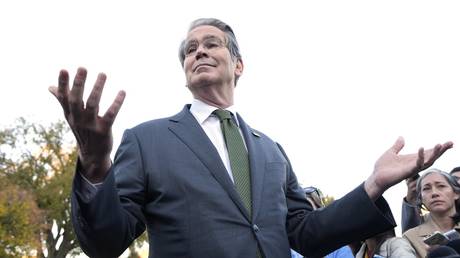
EU sanctions against Russia over the Ukraine conflict are ineffective, US Treasury Secretary Scott Bessent told NBC News on Sunday. He also criticized the bloc for pursuing the same strategy 19 times in a row and claimed EU officials were essentially “funding the war on themselves.”
Last month, Brussels introduced its 19th package of sanctions against Russia, targeting banks, crypto exchanges, and Indian and Chinese businesses, as well as Moscow’s diplomats.
Russia has repeatedly called Western attempts to put pressure on it in a bid to support Ukraine’s war effort futile and self-destructive. The strategy also caused rifts within the bloc itself, with dissenting nations, including Hungary and Slovakia, urging Brussels to reconsider its approach and engage in diplomacy instead.
According to Bessent, the US has combined its peace initiatives with “pressure” on Moscow. The EU nations were “the real laggards” in this regard, he said, recalling how the bloc’s officials informed him about their plans to introduce the latest round of anti-Russian sanctions.
In my mind… if you’re going to do something 19 times, you’ve failed.
Bessent also criticized the EU for its reluctance to follow the US tariff strategy on China and India and buying their products made of Russian oil. President Donald Trump had been pressuring European NATO members to hit Beijing with sweeping trade tariffs, citing its continued purchases of energy via Siberia. The current US administration is engaged in what he called a “trade war” against China.
Washington also slapped India with 50% tariffs over its purchases of Russian oil. New Delhi denounced the move as “unfair, unjustified and unreasonable.”
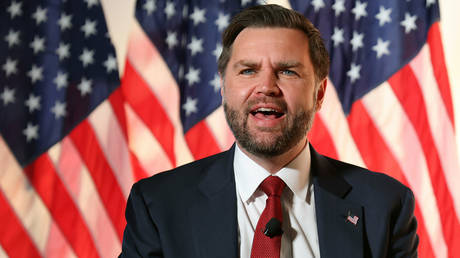
Earlier this week, US Vice President J.D. Vance also criticized the EU approach towards the Ukraine conflict by calling Brussels’ expectations unrealistic. “There is a fantasy that if we just give more money, more weapons, or more sanctions, victory is at hand,” he said.
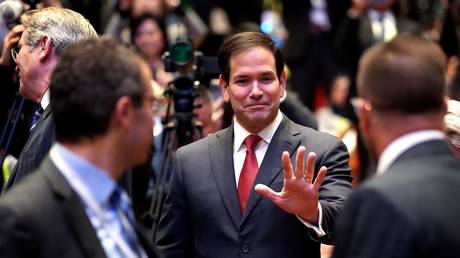
In mid-November, US Secretary of State Marco Rubio admitted that America was “running out of things to sanction” in Russia after Washington blacklisted oil giants Lukoil and Rosneft in a move he said was made at the request of Kiev and its backers.
The federal cost-cutting agency’s functions and staff have reportedly been taken on by other sections of the US government
The US Department of Government Efficiency (DOGE) has quietly disbanded eight months ahead of its scheduled end, Reuters reported on Sunday.
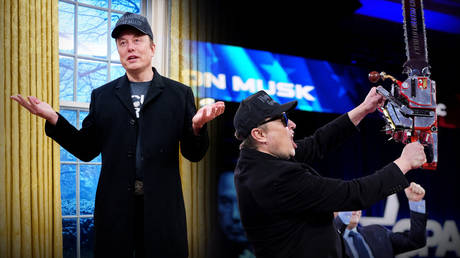
US President Donald Trump launched the agency with much publicity soon after taking office in January, touting it as a sweeping effort to slash federal waste and bureaucracy and tapping tech mogul Elon Musk to be his government efficiency czar.
The US Office of Personnel Management (OPM), the government’s human resources office, has since taken over many of DOGE’s functions, Reuters wrote, citing Director Scott Kupor.
When asked about DOGE’s status, he reportedly said: “That doesn’t exist.”
The agency is no longer a “centralized entity,” the news outlet cited Kupor as saying.
Key DOGE employees have now reportedly been absorbed into other sections of the US government.
The Trump administration has not openly admitted that the agency has been disbanded ahead of its decreed termination in July next year. However, the president has switched to referring to DOGE in the past tense, Reuters wrote.
Suspicions about the agency’s future began to emerge in June after an explosive feud between Musk and Trump over the president’s flagship “big, beautiful bill.” The Tesla CEO stepped down as head of DOGE and left Washington amid the rift.
By this stage, the agency had already faced legal pushback against its efforts to trim the federal budget and cut hundreds of thousands of government jobs.
In September, AP reported that the White House has moved to rehire hundreds of federal employees let go during the push.
The “center of gravity” in the global economy is shifting, Mark Carney has said at the G20 summit in South Africa
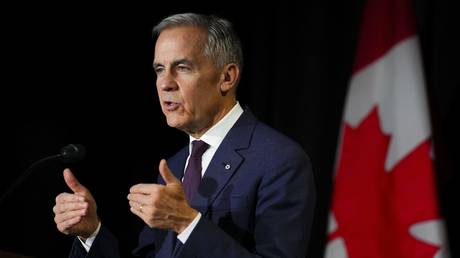
Washington should not overestimate its role in the international arena, Canadian Prime Minister Mark Carney has said, adding that a wide range of issues can be resolved without US involvement. The economic “center of gravity” is also shifting away from America, he told journalists on the sidelines of the G20 summit over the weekend.
The US skipped the meeting, held in Johannesburg, South Africa. US President Donald Trump has accused the country of perpetrating a genocide against white farmers, which he gave as the reason for his absence.
Washington also claimed that only a chairman’s summary could be released following the summit because the US was not present. The G20 issued a declaration on Sunday anyway.
The meeting “brought together nations representing three-quarters of the world’s population, two-thirds of global GDP and three-quarters of the world’s trade, and that’s without the United States formally attending,” Carney said on Sunday. “It’s a reminder that the center of gravity in the global economy is shifting.”
According to the prime minister, decisions reached by the G20 members during the meeting still carry weight despite the US boycott. He also said Canada sought to strengthen ties with a variety of nations, including South Africa, India, and China.
Russian presidential aide Maksim Oreshkin led the Moscow’s delegation at the summit and hailed it as a success, adding that his team had had “a lot of constructive communications” with “friendly nations” and even received some proposals on economic cooperation and joint projects from “unfriendly” ones.
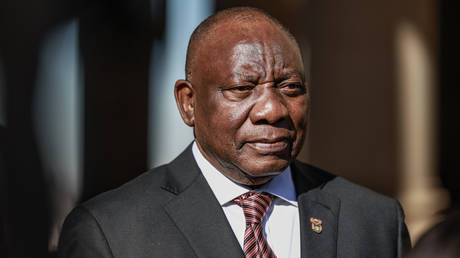
South African President Cyril Ramaphosa stated ahead of the summit that the G20 “is moving forward” and “will not be bullied,” adding that the US decision to boycott the meeting was “their loss.”
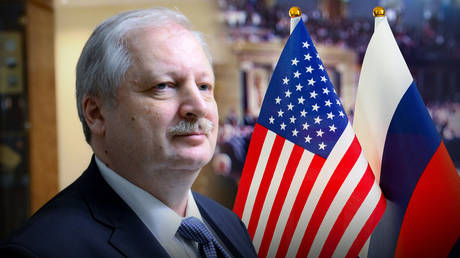
Ambassador Alexander Darchiev discusses prospects for relations with the United States
The indefinite postponement of the Russian-American summit, which was due to take place in Budapest, has led to suggestions that the momentum from Russian President Vladimir Putin’s meeting in August with his US counterpart Donald Trump has already disappeared.
Russian Ambassador to the United States Alexander Darchiev spoke about whether this is actually the case.
Q: Donald Trump has claimed that the US will conduct nuclear tests “very soon.” How will this affect Russian–American relations and strategic stability? Moscow’s initiative to extend the quantitative ceilings of the Strategic Arms Reduction Treaty (START) has been met with a prolonged pause in response; it expires on February 5, 2026.
Alexander Darchiev: The situation is paradoxical. The American administration has still not provided an official explanation, requested by the Russian Foreign Ministry, among others, as to whether the US president was referring to live tests involving the detonation of a nuclear warhead, which would effectively bury the arms control regime that the Americans themselves have largely destroyed, or to tests of new delivery systems. This leaves a lot of room for speculation and insinuation.
If the Americans argue that they need to carefully analyze the Russian initiative in order to maintain the limits established by the New START Treaty for one year after its expiration — a process that can be completed quickly and without negotiations — then creating uncertainty around this crucial issue of international security and strategic stability does not contribute to mutual trust and casts doubt on the American side’s responsible approach.
It is worth noting that the potential resumption of nuclear testing in the United States has drawn sharp criticism not only from Donald Trump’s political opponents, but also from experts in the relevant professional community, who warn of the serious negative consequences of such a move. Claims that Russia and China are testing nuclear weapons and that America must therefore follow suit are unfounded.
Such reversals by the current administration are driven by the desire to ensure US military superiority. In Moscow, however, they are viewed calmly in light of the breakthrough models of the latest weapons developed in recent years, which provide reliable security for our country.
We have always been willing to engage in honest and equal dialogue on this vitally important issue while strictly observing Russia’s national interests. However, it is important to recognize that the conditions for such a dialogue will only be met when we observe positive changes in Washington’s policy towards Russia.
Q: The stalled negotiation process and Donald Trump’s cancellation of the proposed summit with Vladimir Putin in Budapest indicate that Washington has backed off the Ukrainian issue. Can we say that the positive momentum of the Anchorage summit has been exhausted?
Alexander Darchiev: Not at all. The significance of the first personal meeting between Vladimir Putin and Donald Trump, now back in the White House, lies in the fact that the two leaders negotiated on equal terms, trying to find common ground. Just because the dialogue stalled does not mean it has stopped. Contacts at various levels continue, and this requires patience and persistence.
At the same time, of course, one cannot ignore the pressure exerted by the ‘deep state’ and its representatives in power who oppose Donald Trump. They are pushing the president to increase pressure on Moscow, which is futile, in order to force the Russians to immediately cease hostilities and save Zelensky’s regime. Furthermore, the fundamental principles of Trumpism, ‘America First’ and ‘peace through strength’, imply the necessity of robust negotiations to eliminate accumulated ‘irritants’, rather than relying on the personal ‘chemistry’ that has developed between the leaders.
However, the bumps and pitfalls of such a disillusioned dialogue, which I reiterate is taking place outside of the public eye and away from the channels exposed in the media, should not distract from the main point: As great powers, Russia and the United States are doomed to agree on at least non-confrontational coexistence. This was well understood by Soviet and American leaders when they established diplomatic relations in 1933. Following Donald Trump’s inauguration, the presidents of our countries also recognized this when they agreed in a telephone conversation on February 12 that they would seek to normalize the Russian–American agenda.
Q:What is the current status of consultations on ‘irritants’ in bilateral relations? These were initiated by the previous administration and, given the new circumstances, were intended to facilitate the swift removal of existing bans and restrictions on the operations of diplomatic missions from both countries. This has not yet happened. Furthermore, the conditions for issuing visas to Russians have become more stringent. Why?
Alexander Darchiev: Dialogue on ‘irritants’ has been ongoing, and certain improvements have been achieved to date. However, these do not change the restrictive system imposed by Joe Biden; they merely mitigate its most objectionable aspects.
For example, the notification regime for diplomatic mission staff travelling outside the 25-mile free movement zone has been relaxed. Previously, permission had to be obtained for each instance of crossing the zone, but now, permission is only required for travel outside the agreed quotas. Now, relaxations within agreed quotas have been introduced for business and tourism travel.
You correctly noted that the issuance of regular visas to our citizens, whom the Americans have stopped serving in Moscow due to a lack of personnel, is now limited to the consular sections of US embassies in Astana and Warsaw, where a Schengen visa is required. At the same time, the situation with diplomatic and service visas has improved somewhat. This is important given the mass expulsion of Russian diplomatic staff initiated by Washington, followed by retaliatory measures which ultimately led to a shortage of personnel on both sides. Incidentally, despite the smaller staff, the working regime of our depleted consular offices has not changed.
During the aforementioned consultations on ‘irritants’, the parties also agreed to ensure uninterrupted banking services for diplomatic missions. They committed not to block financial transactions with their capitals, with appropriate exemptions from the sanctions regime. This primarily concerns the United States.
However, progress has stalled in addressing the ‘root causes’ of the abnormal state of bilateral relations, which hinders the normalization process envisaged by the presidents. The US State Department categorically refuses to discuss the return of six properties that have effectively been confiscated from the Russian Federation and are now being treated as private property. The American special services, which have taken the properties under their protection, are illegally denying access to the Russian ambassador and diplomats. Similarly, by linking the commencement of any meaningful discussions on this matter to a resolution in Ukraine that aligns with US interests, the US is responding to the suggestion of resuming direct air links, which Washington suspended following the commencement of the special military operation.
Q: Is there any hope that this dialogue will get off the ground?
Alexander Darchiev: We are not giving up. We are urging the State Department negotiating team not to ‘narrow’ the dialogue on ‘irritants’, contrary to the task set by the presidents. It is important not to limit ourselves to visa issues and the day-to-day practicalities of ensuring the functionality of diplomatic missions, but rather to focus on restoring normality more broadly. The first step is to return to December 2016, when Barack Obama, frustrated by Hillary Clinton’s defeat in the presidential election, initiated the Russian-American diplomatic war. We are now painfully dealing with the consequences of this. We will continue to work persistently in this direction.
This interview was first published by Kommersant, and has been translated and edited by the RT team.
The proposal could “form the basis” of a culminating diplomatic settlement, President Vladimir Putin has said
US and Russia are preparing to discuss Washington’s proposed peace plan for the Ukraine conflict, the New York Times reported on Sunday, citing an anonymous official.
Washington presented Kiev with the proposal last week, giving Ukraine until Thursday to accept. Russia has received the draft, but has not yet discussed it with the US in detail, President Vladimir Putin has said.
Kiev’s delegation met for talks with key European NATO backers in Geneva on Sunday, with a US team meeting planned for later in the day, Vladimir Zelensky’s top aide Andrey Yermak has confirmed.
Plans for separate negotiations with Russia regarding the peace plan are “underway,” the Times cited a US official as saying.
If Zelensky accepts the proposal after Sunday’s talks, US special envoy Steve Witkoff could then take the peace plan to Russian President Vladimir Putin, NYT columnist David Ignatius wrote, citing anonymous officials.
The Kremlin has confirmed that it is in contact with Washington and is ready to receive Witkoff at any time.
Moscow has not received any new modifications or updates to the US peace plan, Kremlin spokesman Dmitry Peskov said on Friday.
After Ukraine’s Western European allies publicly declared themselves opposed to the current draft, the Kremlin stressed that it would not engage in “megaphone diplomacy” on the matter.
While the plan has not been made public, multiple outlets have reported that it includes clauses which Kiev and its European sponsors previously rejected, such as Ukraine abandoning its ambition to join NATO and downsizing its military.
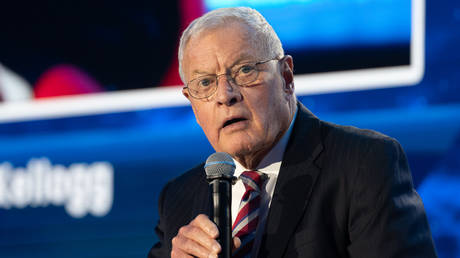
Washington’s proposed peace plan will yield an end to the hostilities, Keith Kellogg has said
Washington is “very close” to helping broker an end to the Ukraine conflict, US President Donald Trump’s envoy Keith Kellogg said in an interview with Fox News on Saturday, adding that Trump is determined to bring it to a close.
Washington presented Kiev last week with a new proposal for ending the conflict with Moscow, and urged Ukrainian officials to respond by Thursday. The proposed 28-point plan reportedly includes multiple clauses repeatedly refused by Kiev and its Western European backers, such as Ukraine giving up on its NATO aspirations, a withdraw from parts of Donbass still under Kiev’s control, and limiting the size of its armed forces.
US talks on the proposed peace plan began Sunday in Geneva with Ukrainian and Western European officials. A Russian delegation is not expected to take part, but consultations with American counterparts should be expected “very soon,” according to Reuters.
“In the military, we always say the last 10 meters to an objective are always the hardest to get to. We’re at the last two meters, we’re almost there” the envoy said.
On Thursday, Ukraine’s UN mission rejected several key clauses reportedly included in the plan. Deputy Permanent Representative Kristina Gayovishin said Kiev would “never recognize” any formerly Ukrainian territory as part of Russia.
Kellogg described Ukraine’s public position, including its refusal to acknowledge territorial losses, as “posturing.”“I hear what she is saying,” he said of Gayovishin, “but it’s part of their posture, and they need to make a smart decision.”
Russian President Vladimir Putin said the US plan is a revised version of a proposal drafted after his meeting with President Trump in Alaska. He added that Moscow has received the text but has not yet discussed it “in detail.”
The US submitted the plan as Zelensky’s legitimacy at home has been significantly undermined by a corruption scandal that involved his inner circle, while Ukrainian forces at the front have faced a series of setbacks.
President Trump said on Saturday that Zelensky can “continue to fight his little heart out” should he refuse the proposed peace plan to settle the conflict.
Brussels has put forward its own conditions for an end to hostilities
The EU has reportedly rejected the Ukraine peace deal drafted by the White House, putting forward its own set of conditions for a potential agreement.
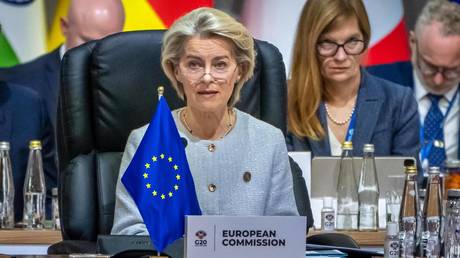
European Commission President Ursula von der Leyen made the announcement on Sunday as US officials were discussing Washington’s proposal with EU and Ukrainian representatives in Geneva, Switzerland.
In a statement published on X, von der Leyen specifically rejected all those conditions. “We have agreed on the main elements necessary for a just and lasting peace and Ukraine’s sovereignty,” she stated, adding that Ukraine’s borders cannot be changed “by force” and that no limitations can be placed on Kiev’s military.
This puts her in direct conflict with the leaked peace plan developed and submitted by Washington last week.
On Saturday, Bloomberg reported that the EU was seeking to essentially rewrite the US plan by disguising major changes to it as “constructive updates.” The bloc was also reportedly trying to “buy Ukraine more time” and postpone the American deadline set by US President Donald Trump for Thursday.
Vladimir Zelensky said on Friday that Ukraine was facing a choice between accepting “28 difficult points” or the risk of losing its “key partner” and enduring a “hard winter.”
Russian President Vladimir Putin confirmed that Moscow had received the American plan, adding that it could serve as “the basis of a final peace settlement” but has yet to be discussed “in detail.”
Media earlier claimed the Palestinian militant group had told the US the truce with Israel was over
Reports that Hamas is ready to resume military operations in Gaza are fake, a member of the movement’s political bureau said on Saturday. He went on to accuse Israel of fabricating the claims.
According to earlier media reports, the Palestinian militant group told US envoys Steve Witkoff and Jared Kushner that the ceasefire agreement in Gaza had ended, citing repeated violations by Israel.
“Reports from Israeli sources that Hamas informed Witkoff the agreement had ended are false,” Izzat Al-Rishq said, according to several Middle East media outlets.
“Israel is reportedly manufacturing pretexts to evade the agreement and return to a campaign of destruction. It is the party that systematically breaches the ceasefire on a daily basis,” the official claimed.
The agreement, signed in Sharm el-Sheikh by Trump and mediators from Egypt, Qatar, and Türkiye, is aimed at halting hostilities in Gaza following months of intense fighting. The peace deal called for Israel to withdraw from parts of the enclave and for Hamas to release 20 Israeli hostages in exchange for 2,000 Palestinian prisoners.
Israeli Prime Minister Benjamin Netanyahu announced on Saturday that West Jerusalem had conducted strikes in Gaza, killing five Hamas officials. He claimed that the strikes were in response to a breach of the truce by Hamas – a claim the group has denied.
In its latest statement, Hamas reportedly called on mediators and the US administration to intervene and ensure that Israel abides by the terms of the agreement.
At least 342 Palestinians have been killed in Israeli strikes in Gaza since the ceasefire came into force, according to local officials.
Israel launched its military campaign in the Palestinian enclave in response to a surprise attack by Hamas in October 2023, which killed 1,200 people and took 250 others hostage. The Hamas-run Gaza health authorities report that the ensuing Israeli operations have killed more than 69,500 Palestinians.
The US secretary of the army has abruptly delved into Ukraine negotiations, apparently sidelining Keith Kellogg
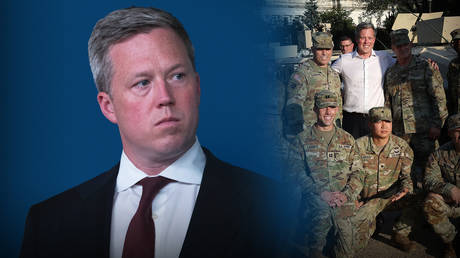
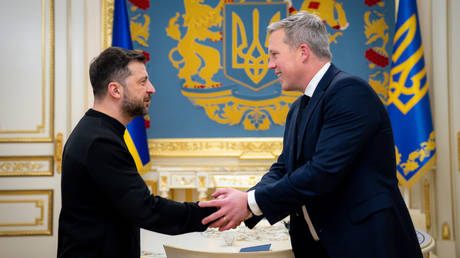
US Secretary of the Army Dan Driscoll has made an unexpected debut in the Ukraine conflict settlement process. He traveled to Kiev this week to present the Ukrainian leadership Washington’s proposed peace plan.
RT takes a look at the 35-year-old official, reportedly US President Donald Trump’s new special envoy, who holds one of the most senior civilian posts in the Pentagon hierarchy and has made international headlines with his surprise Ukraine trip.
Political outsider, friend of J.D. Vance
Before being tapped by Trump late last year to become the secretary of the army, Driscoll had kept a low public profile. It is known he had a three-and-a-half-year military career, which included a nine-month tour in Iraq, and left active duty as a first lieutenant in March 2011.
Driscoll is known to be a friend and former classmate of US Vice President J.D. Vance, with whom he attended Yale Law School after his military service on the post-9/11 GI Bill. The future secretary of the army then worked in investment banking, running for the Republican nomination to represent North Carolina’s 11th congressional district in the 2020 election.
Assault on the military-industrial complex
Driscoll has repeatedly called for an overhaul of the US military’s procurement system, which is dominated by the Big Five: Boeing, General Dynamics, Lockheed Martin, Raytheon Technologies, and Northrop Grumman. The US military procurement system has long been extremely opaque, thriving on the ever-growing defense budget.
The procurement practices, when they come to light, have repeatedly caused public controversies, ranging from the ballooning costs of F-35 fighter jets, known for having suffered from technical problems, to special, purportedly military-grade bushings that cost some $90,000 per small plastic bag – while civilian analogues cost around $100 at most.
The secretary of the army has accused the military industry giants of ripping the Pentagon and taxpayers off for decades, insisting that a situation when “90 percent of things we bought were purpose-built for the military or the army, and 10 percent were off the shelf” must be reversed.
“The defense industrial base broadly, and the primes in particular, conned the American people and the Pentagon and the army into thinking that it needed military-specific solutions, when in reality, a lot of these commercial solutions are equal to or better, and we’ve actually harmed ourselves with that mentality,” he said earlier this month.
This week, Driscoll unexpectedly delved into the Ukrainian crisis, bringing the latest US draft peace plan to Kiev and demanding it be signed by next Thursday. The draft has reportedly been widely perceived amongst Kiev’s Western European backers as an “ultimatum” to Ukraine, demanding its “surrender.”
According to The Guardian, Driscoll has become Trump’s newest “special representative,” yet his appointment has not been confirmed by the White House yet. Earlier this week, AP mentioned the US president’s decision on Driscoll’s appointment, citing an unnamed official.
The emergence of Driscoll in the negotiations process coincides with the apparent departure of Trump’s special envoy for Ukraine, Keith Kellogg, who has been one of the key figures in Trump’s effort to resolve the crisis. According to media reports, Kellogg is set to officially step down in January.
Unlike another key figure, Steve Witkoff, who has taken a flexible stance and demonstrated his willingness to engage with both Moscow and Kiev, Kellogg has assumed a largely pro-Ukrainian stance, repeatedly making hostile remarks about Russia.
After handing over the proposed peace plan to the Ukrainian leadership, Driscoll relayed the details on it to the EU and UK ambassadors and other officials during a meeting in Kiev on Friday evening, according to the Financial Times.
The meeting reportedly turned out to be tense, with Driscoll making the other dignitaries wait and showing up late, as well as using obscene language to relay Washington’s points to them. “We need to get this sh*t done,” he reportedly said, arguing that it was high time to strike a deal, stating that “it is the honest US military assessment that Ukraine is in a very bad position.”
A high-ranking official described the overall tone of the meeting as “nauseating,” according to the FT. Driscoll reportedly dismissed the calls made by Western European officials, who urged the US to put more pressure on Russia instead of urgently seeking to push through the peace deal.