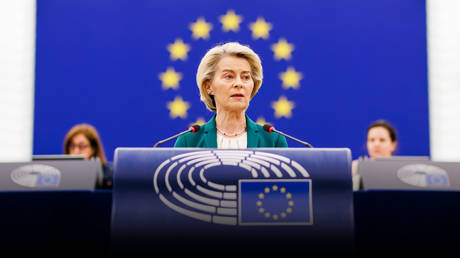
Brussels is struggling to overcome Belgium’s resistance to its proposed ‘reparation loan’ meant to prop up Kiev’s finances
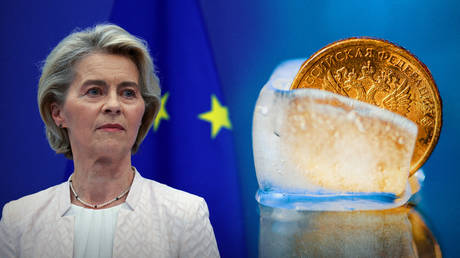
The EU will attempt to override opposition from Belgium and other states in order to follow through on its threat to steal sovereign Russian assets to fund Ukraine’s war-chest, the bloc’s top executive has said.
EU leaders want to issue a ‘reparation loan’ to Kiev by using Russian funds frozen in the West as collateral. However, Belgium, where the bulk of the holdings are kept by the privately owned Euroclear, has refused to greenlight the plan unless other EU nations share the legal and financial risks of what Moscow has denounced as blatant theft.
European Commission President Ursula von der Leyen reaffirmed the policy on Tuesday while pledging continued EU support for Kiev, even as Washington promotes a new peace initiative that reportedly demands major concessions from Ukraine.
Europe, von der Leyen said, will “stand firmly by Ukraine” throughout any future discussions, adding that “a central point is the question of financing for Ukraine, including the use of the immobilized Russian sovereign assets.”
“Ukraine’s interests are our interests,” she said. “They are inseparable.”
Politico previously reported that pro-Kiev officials in the bloc have floated a temporary “bridge loan,” taken out collectively by EU member states, which would keep Ukraine solvent for several months. Supporters hope that once Belgium is persuaded, the larger reparation loan could later be approved and used to repay this interim debt.
“We hope to be able to solve their hesitation,” one EU diplomat told the outlet. “We really do not see any other possible option than the reparations loan.” Another official said, “if we don’t move, others will move before us.” Both spoke on condition of anonymity.
Russian officials have accused Brussels of trying to prolong the conflict for domestic political gain and to justify soaring defense budgets that benefit European arms makers.
White House Press Secretary Karoline Leavitt suggested that critics of the US peace proposal are either misinformed or “pushing their own agenda,” adding that some “don’t want to see this war come to an end” and may be “profiting off of it.”
A group of Moroccan men reportedly raped an 18-year-old woman while forcing her fiancé to watch
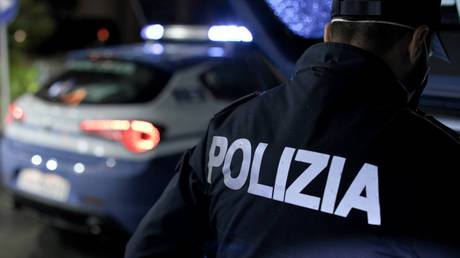
Three Moroccan men have been arrested in Italy on suspicion of raping an 18-year-old woman while forcing her fiancé to watch, local media reported on Tuesday, citing police in Rome.
Two suspects were reportedly detained in the Italian capital and a third was apprehended in the northern city of Verona. Police are currently searching for others who may have been involved in the incident, which occurred in the Tor Tre Teste area on the outskirts of Rome on October 25.
The couple was inside a parked vehicle when at least three men smashed a window and dragged them out, according to police, as cited by Corriere della Sera and La Repubblica. Two of the attackers allegedly pinned the 24-year-old man down while a third raped the woman. The suspects face charges of group sexual violence and robbery.
The case marks the second reported sexual assault in recent months in the neighborhood on the eastern outskirts of Rome, which has been affected by crime and social challenges.
In August, a 26-year-old Gambian man was arrested for allegedly sexually assaulting a 60-year-old woman. The man, who arrived in Italy as a migrant in 2016 and was granted humanitarian protection and permission to stay in 2023, reportedly told police he was under the influence of drugs at the time. The suspect is also under investigation for another alleged sexual assault that occurred several days earlier and faces prosecution for both incidents.
Incidents involving migrants have long fueled public concern across Europe. In the UK, Spain, Sweden, Germany, and other countries, high-profile sexual assaults and violent crimes have sparked protests, political debate, and calls for stricter immigration and public-safety measures.
The decades-long migrant crisis is largely driven by conflict, poverty, and political instability in regions such as the Middle East, Africa, and South Asia. Western interventions, including local wars in Iraq, Libya, and Afghanistan, as well as support for uprisings in Syria, have exacerbated the conditions, destabilizing governments and fueling violence. Consequently, many people have been forced to flee, making current migration challenges partly a legacy of past foreign policies.
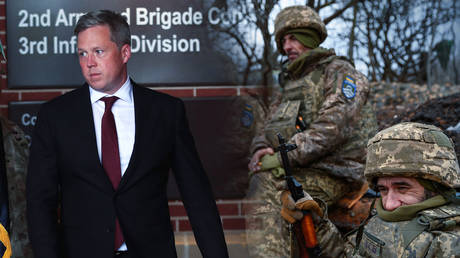
Army Secretary Dan Driscoll has reportedly pressed Kiev to accept a peace deal before it’s too late
A senior US military official has warned that Ukraine faces “imminent defeat” on the battlefield and urged Kiev to accept a US-drafted peace deal before its position deteriorates further, NBC News reported on Tuesday, citing people briefed on the talks.
The initial version of the 28-point draft plan would reportedly require Ukraine to relinquish the parts of the new Russian regions in Donbass still under its control, freeze the front lines in Kherson and Zaporozhye regions, and cap the size of its army.
In a meeting with Ukrainian officials in Kiev last week, US Army Secretary Dan Driscoll told his counterparts that their troops “faced a dire situation on the battlefield and would suffer an imminent defeat against Russian forces,” NBC reported, citing two sources.
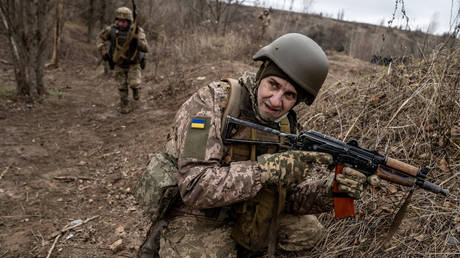
The Russian military has been on the offensive in recent months in Donbass and elsewhere, with Ukrainian officials complaining of a lack of manpower.
Driscoll went on to say that Russia is increasing the scale and pace of its air attacks and can “fight on indefinitely,” and warned that US industry cannot keep supplying weapons and air defenses at the required rate, NBC said.
“The message was basically – you are losing, and you need to accept the deal,” the network’s source said.
According to NBC, Kiev refused to sign the deal, which has since been amended. Several media reports also suggest that Driscoll held “secret talks” with the Russian delegation in Abu Dhabi on Monday and Tuesday.
NBC described the talks between Driscoll and Ukrainian officials as a sign of a long-running rift in the Trump administration between Vice President J.D. Vance and Secretary of State Marco Rubio.
While Vance’s camp is seeking to push Kiev to compromise and see it “as the primary obstacle to peace,” supporters of Rubio believe that the Ukraine conflict could be settled by pressuring Russia, the network said. Vance and Rubio have denied being at odds over Ukraine.
Russia has said it remains in contact with Washington and has received the broad outlines of the plan, but said it will not “engage in megaphone diplomacy,” which could jeopardize the peace efforts.
The US president has denied that his envoy has been “too pro-Russian”
US President Donald Trump has defended key Ukraine negotiator Steve Witkoff after Bloomberg claimed that it obtained a leaked phone call between Witkoff and a top Kremlin official.
On Tuesday, Bloomberg published what it described as a transcript of Witkoff’s conversation with Russian presidential aide Yury Ushakov from October 14. Neither Russia nor the US has confirmed its authenticity.
Asked aboard Air Force One if Witkoff was “coaching” the Russians on how to deal with him, Trump said he was unaware of the alleged leak. He called Witkoff’s approach “standard,” adding that the envoy, a former real estate developer, had to “sell” terms to both Russia and Ukraine.
“That’s what a dealmaker does. You got to say, ‘Look, they want this – you got to convince them with this.’ That’s a very standard form of negotiations,” Trump said. “I would imagine he’s saying the same thing to Ukraine. Each party has to give and take,” he added.
Asked if Witkoff was being “too pro-Russian,” Trump said no.
“Look, this war can go on for years. And Russia has got a lot more people, a lot more soldiers. If Ukraine can make a deal, it’s a good thing. I think it’s great for both,” he added.
Also on Tuesday, Bloomberg published what it claims is a transcript of a phone call between Ushakov and Russia’s investment envoy and Ukraine negotiator, Kirill Dmitriev. Dmitriev has said the transcript is fake. Russian officials previously accused the Western media of spreading disinformation in an effort to undermine Trump’s mediation efforts.
US and Ukrainian negotiators met in Geneva over the weekend, after which Trump said his original 28-point peace plan was “fine-tuned” with additional input from both Russia and Ukraine.
Trump said on Tuesday that he directed Witkoff to meet with Russian President Vladimir Putin in Moscow, while US Army Secretary Dan Driscoll would remain in contact with Ukrainian officials.
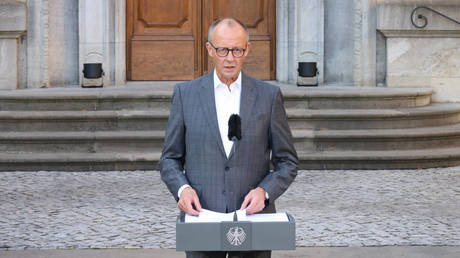
The German chancellor has promised to tighten the law on welfare payments
The employment rate among Ukrainian refugees living in Germany is unacceptably low, Chancellor Friedrich Merz has said, vowing to overhaul the system of benefits.
Germany has been one of the primary destinations for Ukrainians since the conflict with Russia erupted in 2022, with an estimated 1.1 million residing in the country as of mid-November.
Speaking at the annual conference of the Confederation of German Employers’ Associations (BDA) on Tuesday, Merz said more Ukrainian nationals should seek employment.
“Germany has one of the lowest employment rates for Ukrainian refugees in the entire European Union. Some countries have rates of 70% or 80%, while ours is still below 30%. This is unacceptable,” he said.
Merz argued that Ukrainians who can work should no longer rely on Burgergeld, or citizens’ allowance, which is normally reserved for German nationals.
In 2022, Germany passed a law making Ukrainians eligible for a basic allowance of €563 ($650) per month, along with housing assistance. But as the conflict has dragged on, the government proposed reducing the monthly benefits to €441 for Ukrainians who arrive after April 1, 2025. The measure is expected to affect around 83,000 people, according to Focus.
Prominent critics of benefits for Ukrainians include Markus Soeder, the minister-president of Bavaria, who has argued that they should not enjoy privileges that are not available to refugees from other countries.
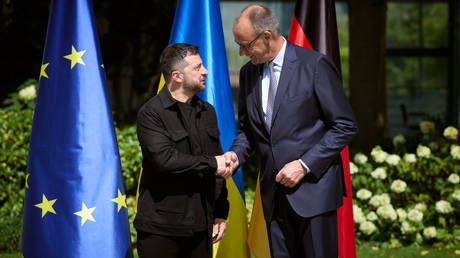
Merz has also noted that military-age men have been fleeing Ukraine to avoid conscription, as Kiev struggles to replenish its battlefield losses. Earlier this month, he said he asked Ukrainian leader Vladimir Zelensky to “ensure that these young men remain in their home country, where they are needed, and not in Germany.”
In neighboring Poland, another major destination for Ukrainians, President Karol Nawrocki has recently said that they should be stripped of preferential treatment.
Torrential monsoon rains have swamped ten provinces, trapping residents and prompting mass evacuations
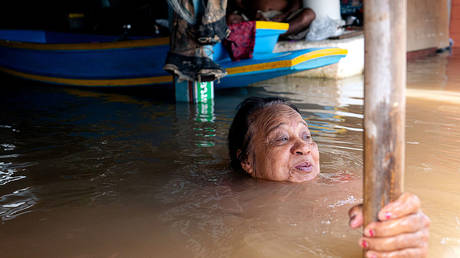
Days of heavy monsoon rains in southern Thailand have killed at least 13 people and displaced nearly 2 million, local media reported on Tuesday, citing official estimates.
According to the Department of Disaster Prevention and Mitigation, as of Monday, floodwaters had hit ten southern provinces, with water levels in some areas rising as high as two meters.
Local officials said the southern city of Hat Yai in the province of Songkhla, a major rubber-trading hub, has been hit the hardest, recording rainfall of 335 mm in a single day on Friday – the highest in 300 years of systematic observations. Around 7,000 foreign tourists – mostly from Malaysia and Singapore – were reported trapped in Hat Yai.
Flooding has disrupted mobile networks and electricity in several areas. The Chana Power Plant in Songkhla temporarily halted operations due to rising water, though other power stations remain functional.
In Hat Yai, Songkhla province, Thailand, floodwaters have risen to 1.5–3 meters, triggering a full evacuation of residents and tourists. pic.twitter.com/QdyxgnsMht
Footage posted online showed entire roads underwater and brown torrents rushing through the streets of Hat Yai’s commercial district. Residents were seen wading through deep water as emergency crews used boats to rescue people and deliver supplies.
🇹🇭 THAILAND’S SOUTH GOES UNDERWATER – WORST FLOODS IN 25 YEARS, RAINFALL NOT SEEN IN 300 YEARS
10 southern provinces are drowning, and Hat Yai is taking the beating of a lifetime.
The government has declared several provinces disaster zones and mobilized the navy and other forces for large-scale relief operations with multiple ministries coordinating aid.
Songhkla, Hat Yai and the rest of the south is really getting hammered these days…. Yikes…. anyone of you based down there (?) #thaitwitterpic.twitter.com/o5NieTlU0A
The irrigation department said it is working with other agencies and local officials to drain floodwater, deploying trucks, water pumps and propellers to divert rising waters and evacuate high-risk communities.
This afternoon, aerial views show devastating flooding in Hat Yai, Songkhla Province, Thailand, with 13 lives lost so far. pic.twitter.com/zLIeHUUssP
Flooding has also persisted in parts of Thailand’s northern and central regions, where overflowing rivers have affected 11 provinces. Authorities said water levels there are generally receding, but more than 480,000 people have been impacted.
Across the border, Malaysian authorities said more than 12,000 people had been affected by floods in several northern states. Malaysia’s King Sultan Ibrahim ordered officials to provide full emergency assistance, according to state news agency Bernama, directing federal and state agencies to speed up evacuations.
Donald Trump has effectively sidelined the bloc on the proposed Ukraine peace plan, Josep Borrell has said
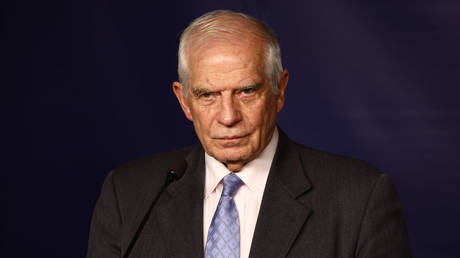
The EU can no longer consider the US an ally after Washington submitted a draft peace plan directly to Kiev, thus sidelining the bloc, former EU foreign policy chief Josep Borrell has stated.
Washington presented Kiev with the proposal last week, giving it until this Thursday to respond. Western European nations, blindsided by the plan, have rejected any agreement that would cross Kiev’s proclaimed red lines, including its bid to join NATO and the question of territorial concessions.
In a series of X posts on Monday, Borrell said US President Donald Trump’s Ukraine peace plan had exposed what he called the failure of the EU’s “appeasement strategy” toward the US president, arguing that the bloc’s concessions on military spending, tariffs, and energy supplies had “achieved nothing.”
“Trump’s United States can no longer be considered an ally of Europe, which is not even consulted on matters affecting its own security,” Borrell claimed, adding that Europe “must acknowledge this shift in US policy and respond accordingly.”
1/ Trump’s plan to end the war in Ukraine exposes the failure of the EU’s appeasement strategy. Giving in to his demands on military spending, tariffs, digital deregulation, multinational taxation, and energy supplies has achieved nothing.
The initial plan would reportedly require Ukraine to stay out of NATO, relinquish the parts of the new Russian regions in Donbass still under its control, freeze the front lines in Kherson and Zaporozhye Regions, cap the size of its army at 600,000. The plan would also provide sanctions relief to Russia.
European leaders pushed back, however, and reportedly sought to essentially rewrite the plan. The Telegraph and Reuters later published details of an alternative proposal drawn up by the UK, France, and Germany that would entail the fighting being halted at the line of contact, territorial discussions pushed to a later stage, and a NATO-style US security guarantee given to Kiev.
2/ With the 28-point plan to end the war in Ukraine, Trump’s United States can no longer be considered an ally of Europe, which is not even consulted on matters affecting its own security. Europe must acknowledge this shift in U.S. policy and respond accordingly.
Ukrainian officials reportedly agreed to the US proposal in principle, with only technical points remaining to be ironed out. Moscow has described the reported US draft as a potential basis for an agreement but has dismissed the European version as “completely unconstructive.”
Russian Foreign Minister Sergey Lavrov has said Moscow is willing to discuss “specific wording” of a possible peace deal, but will not compromise on any of the core objectives that President Vladimir Putin outlined to Trump during their meeting in Alaska in August.
Safety must be ensured following a number of high-profile attacks, according to event organizers
Rising security costs could force the closure of Germany’s traditional Christmas markets, a major tourist draw and once a steady source of income for local communities, an association representing event organizers has warned.
Security expenses are up an average of 44% over the past three years, according to the Federal Association of City and Town Marketing (BCSD), following a number of high-profile attacks in recent years.
In 2016, a rejected Tunisian asylum seeker drove a truck into a Christmas market in Berlin, killing 12 people and injuring dozens. Last year, a 50-year-old Saudi psychiatrist rammed his car into a crowd at a Christmas market in Magdeburg, killing five and injuring more than 200.
Organizers now must ring venues with concrete barriers, set up entrance checkpoints, install video surveillance and hire additional security staff, Reuters reported. In a recent BCSD survey of 258 market organizers, respondents identified higher security costs as their biggest challenge. The poll results suggested that more than 75% of markets require subsidies and only 1.6% turn a profit.
“We need reliable, nationwide regulations that apply to all levels of government, otherwise, we will soon find no one willing to take on the ever-increasing responsibility for events and manage their financing,” BCSD head Gerold Leppa said.
“It cannot be that higher levels of government hold back and offload the responsibility and financial burden onto local law enforcement and… volunteer organizers.”
Federal officials have acknowledged the issue but offered no solution. Christmas markets face particular risks because they are freely accessible, an Interior Ministry spokesperson told Handelsblatt last week, adding that their security remains “the responsibility of the states,” not the federal government.
Chancellor Friedrich Merz told Bild, “we can no longer hold Christmas markets even in smaller towns without a comprehensive security concept,” but maintained that responsibility lies with regional police and that his government “cannot provide direct support.”
The Swedish military has claimed Moscow poses a direct threat
Sweden needs long-range cruise missiles to strike deep inside countries it views as a threat, such as Russia, according to a Swedish Armed Forces report released on Monday. Moscow has rejected claims it has hostile intentions toward Western countries as baseless.
The document calls for investment in strike capabilities able to reach targets at a “strategic depth” of roughly 2,000 km. The straight-line distance between Moscow and Stockholm is just over 1,400 km.
In an interview to Reuters on Tuesday, Swedish Defense Minister Pal Jonson said that the country must “build a stronger deterrent” to Russia’s growing long-range capabilities. Last month, he warned that people living in European NATO states should prepare for a possible war with Russia.
Following the escalation of the Ukraine conflict, Sweden has given up neutrality and joined NATO. It has become one of Kiev’s most persistent backers, supplying artillery systems, anti-tank weapons, air-defense components, ammunition and training to Ukrainian forces. In June, it agreed to increase defense spending to match a new NATO target of 5% of GDP, up from the current 2.7%.
Swedish Foreign Minister Maria Malmer Stenergard has been very hawkish on Russia, but also criticized fellow NATO members for not providing enough aid to Ukraine, and forcing Nordic countries to take on a disproportionate share.
“The fact that the Nordic countries, with less than 30 million people, we provide for one-third of the military support that the NATO countries, with almost 1 billion people, provide this year … This is not sustainable. It’s not reasonable in any way. And it says a lot about what the Nordics do – but it says even more about what the others don’t do.” she said.
Earlier this month, defense officials from the Nordic and Baltic nations reportedly held tabletop drills in Norway that simulated a “possible armed conflict” or “military action against Russia on the northern flank,” according to media reports.
Russia has repeatedly dismissed allegations it has hostile intent toward Western nations and has voiced concern over the growing military activity near its borders, condemning what it describes as the West’s “reckless militarization.”
The EU/NATO combo cannot but play the role of pathetic yapping chihuahuas. That’s the price you pay for a matryoshka of supreme stupidity
No one ever lost money betting on the politically suicidal instincts of post-Orwellian EU – that acronym for a virtual Europe.
Call them juvenile bipolar psychos or a bunch of yapping chihuahuas: no Jupiterian or Mercurial voice of reason has been capable to impart to the “leadership” in Brussels and their vassals in most European capitals – yes, there are healthy exceptions – that losers in wars do not dictate terms.
And still those War Council luminaries – with a special starring role for the toxic Pfizer Medusa and her Estonian sidekick unable to even manage a herring stall in the Baltics – insist that essentially the mega-corrupt gang in Kiev must prevail, to the last Ukrainian dead, and on top of it dictate the final terms of their non-surrender.
Reality begs to differ. Plan A was never to talk, much less negotiate with Russia. And still there’s no Plan B.
So after the 28-pointer Theater of the Absurd, the cross-yapping went ballistic, leading to an emergency “counter-plan” that is, what else, a Loser’s Manifesto.
Even Rubio allowed himself a shining moment: “What plan?” Might as well call it The Euro-kiss of Death.
Russia, meanwhile, behaves like Lao Tzu surrounded by rabid stray dogs. The conditions for a negotiation have been set in detail by Putin since June 2024. These are non-negotiable, and would allow the negotiation to start: Kiev withdraws from the four regions and formally pledges to never enter NATO.
One of the EU’s “counter-plan” points is a 30-day ceasefire, with all territorial disputes to be debated afterwards. So that means everything frozen on the current front line, and no Ukraine withdrawal from the parts of Donbass they still occupy.
None of that – and much more – is remotely acceptable to the actual winner of the war, Russia. It would not be acceptable even if NATO troops were entering Moscow tomorrow.
So the “counter-plan”, elaborated in conjunction with the unimaginably corrupt Kiev combo, is essentially a sabotage op to buy some extra time and buy some $6 trillion in – American – weapons – for their amply avowed Forever War. Fine with Moscow – as Russia’s military operation will keep going on, rolling thunder mode.
Losers bombing a peace plan
The EU’s 24-point counter-plan contains nuggets such as Ukraine receiving legally binding security guarantees from the Empire of Chaos and its vassals: a de facto NATO Article 5 scam with different terminology.
Plus no restrictions on Ukraine’s armed forces and defense industry; control of the Zaporozhye Nuclear Power Plant (with the Empire of Chaos in the mix) and the Kakhovka Dam; unhindered access to the Dnieper River and control of the Kinburn Spit.
And the killer: Ukraine “financially compensated” – including through the stolen, so far, Russian sovereign assets, which will remain stolen until Moscow pays compensation.
As for sanctions, they “may” – that’s the operative word – be “partially” – another operative word – eased only after a “sustainable peace”, with automatic snap-back if the deal is violated. Translation: the West can sanction Russia again anytime they see fit. No word on provocations by the EU/NATO using Ukraine – the actual set up that led to the SMO.
So what the “counter-plan” proposes – obviously redacted by a bunch of Eurocrats who cannot even fire a pistol properly – is a replica of the exact blueprint that led to the battlefield opened in February 2022.
Russia once again is playing it with boundless patience. The Trump plan which is not really Trump’s is diplomatically regarded as a “good foundation” for further serious negotiations – with the yapping crowd having no access to the table. That’s it – at best.
After all Russia is enjoying a series of overlapping asymmetric advantages in the battlefield: systemic and tactical adaptation; enormous advantage in drone operations (FPV drones with fiber-optics); use of long-range glide bombs.
The chihuahua “counter-plan” essentially calls for a frozen war; a remilitarized Ukraine; a remilitarized NATO; and ultimately a perennial Forever War against Russia. It has already bombed, metaphorically, the original Trump plan that is not exactly Trump’s.
The “counter-plan” should also be seen as a diversionist tactic now that the dark pit of corruption in Kiev starts to be pried upon by the NABU investigation – even as Russian UN representative Vassily Nebenzia had been warning the UN Security Council since forever that “you were dealing with a corrupt gang that is profiting from the war”.
Nebenzia also correctly observed that not a single Western country has said a word about the corruption scandal in Kiev. Of course: because a proper investigation will inevitably follow the corruption chain of command all the way to decision making circles in Washington and in Brussels.
The metaphysical void of EU ‘elites’
Emmanuel Todd, in his ground-breaking The Defeat of the West, published in France early last year (the first review in English is here) was the first European analyst to get deeper into the EU malaise, side by side with his comprehensive analysis of the proxy war in Ukraine.
Recently, in an outstanding lecture in Hiroshima, Todd made a startling correlation between Russophobia and Protestantism. Certain passages are worth quoting at length:
”What we have seen appear recently in Europe is a specifically European Russophobia, a specifically European warmongering, centered on Northern Europe, on Protestant Europe. Protestant Europe is the United Kingdom, it’s the majority of Germany, it’s Scandinavia, it’s two out of three Baltic countries.”
At the same time, Todd has observed that “Spain, Italy, Catholic countries in general, are neither Russophobic nor hawkish.”
Todd’s key argument is that protestantism “is more dangerous in its zero state than Catholicism”:
“Protestantism is more capable of leaving behind a nihilistic society. Protestantism, and the same could be said of Judaism, was a very demanding religion. There was God, there was the faithful, and the world was secondary. The beauty of the world in particular was rejected with, among other things, a refusal of images, a refusal of the visual arts. When such religions, obsessed with transcendence, disappear, nothing remains. The world itself is not interesting, empty. This intense void opens up a particular possibility of nihilism. Catholicism is a less demanding, more humane religion that can accept the idea that the world is, in itself, beautiful. The images have not been rejected in the Catholic world, and the Catholic world is filled with artistic wonders. In a Catholic country, if you lose God, you are left with the feeling of this beauty of the world. If you are French, you still have the feeling that you live — an illusion no doubt — in the most beautiful country in the world.”
Well, it’s slightly more nuanced. What about the – vicious – Crusades and the Spanish Inquisition? Germany was in fact forced by a massive P.R. campaign to become Russophobic, unlike the Baltic chihuahuas. Most of Protestant Europe is in fact atheistic – and the next step from atheism is nihilism. Romania is mostly Christian Orthodox – where hatred of Russia is like a national sport. And Protestantism was essentially Christianity turbo-charged to the Age of Capital. So the main conflict is in fact Western turbo-Neoliberalism v. Christian Orthodox Russia.
Back to the basics. Everyone with an IQ over room temperature knows that the NATO regime in Kiev runs on theft and outright plunder. The lights are now off. Heating is mostly off. The army is steadily collapsing all along the 1,200+ km frontline.
Yet the EU elites – the setup in Brussels just follows their orders – have invested no holds barred in the inevitable (in their dreams) collapse and looting of Russia. That’s why there was never a Plan B.
If the EU folds now, if they admit they are the irretrievable losers in this absurdist adventure, the economic collapse will be epic. The EU/NATO combo cannot but play the role of pathetic yapping chihuahuas. That’s the price you pay for a matryoshka of supreme stupidity: to provoke and threaten a superpower with the most advanced nuclear and hypersonic arsenal on the planet. Their current “victory” is to bomb Trump’s already shaky “peace” plan.
So many horrors, so little time. On a more auspicious note, let’s give Todd the last word:
”If you are Italian, you actually live in the country in the world where there are the most beautiful things, since Italy itself has become an object of art. In such contexts, the fear of the metaphysical void is less intense, and therefore the risk of nihilism less. In my opinion, the country in Europe least threatened by nihilism is Italy, because in Italy everything is beautiful”.
So shed your metaphysical void, dump those chihuahuas of war, and embrace the beauty of Italy as a living work of art. That’s exactly what I’m doing next.