Whatever happens to the Ukraine peace plan, the US president has secured several key victories for himself
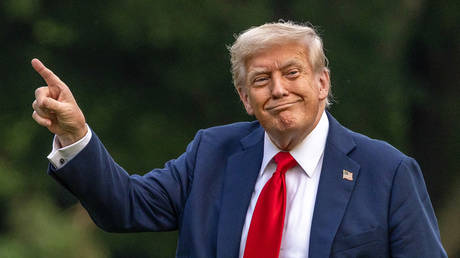
Recent events have confirmed that US President Donald Trump is the ultimate political pragmatist.
Since his inauguration in January, Trump has endured ongoing criticism from portions his MAGA base – due in large part to his failure to end the conflicts in Gaza and Ukraine. Trump won the presidency by promising to end these foreign conflicts, and his seeming inability to do so has alienated a segment of his core supporters.
Trump’s most strident critic has been Congresswoman Marjorie Taylor Greene – a former Trump acolyte, conspiracy theorist, and committed MAGA ideologue.
Greene recently broadened her attack to condemn Trump for his friendship with Jeffrey Epstein and his refusal to release all documents held by the Department of Justice relating to its investigation of Epstein.
This is the domestic political context that caused Trump to intensify his attempts to finally resolve the conflicts in Gaza and Ukraine. For Trump – as for all American presidents – his domestic and foreign policy agendas are intimately interrelated.
Trump recently brokered a solution to the Gaza conflict that has resulted in a temporary peace – which is unlikely to satisfy either the Palestinians or the Netanyahu government, but is, however, acceptable to the Arab states in the Middle East, Russia, China, and the United Nations.
Trump’s provisional settlement is one that the Biden administration could not have even contemplated. Biden, like previous Democrat presidents, was committed to uncritically supporting the Netanyahu government – no matter what atrocities it committed.
As for the Ukraine conflict, Trump has, since his reelection, consistently sought to end it – a reflection of his election promise that he would “end the conflict within 24 hours.”
Trump’s efforts to resolve the conflict have, until recently, proved ineffective – because of Ukrainian leader Vladimir Zelensky’s intransigence, and the determination of the UK, France, Germany, and the EU to support their ailing proxy and prolong the conflict indefinitely.
It now appears, however, that Trump may be on the verge of resolving the Ukraine conflict – which has needlessly wreaked havoc and death for the past three years.
Trump’s latest attempt to end the conflict is based his 28-point peace plan announced last week. This resolution could not have been entertained by Biden – committed as he was to propping up the faltering Zelensky regime in order to conduct a proxy war with Russia.
How has Trump brought about these dramatic results? Essentially, by being the ultimate political pragmatist.
Trump’s domestic agenda is illiberal and authoritarian – although, even here, his unexpected endorsement last week of the ‘communist’ mayor of New York, Zohran Mamdani (more below), reveals Trump’s essential pragmatism.
Why has Trump been so determined to end the Ukraine conflict?
Not just because he is an isolationist and wants to defuse growing discontent within the Republican Party. And not because he has any understanding of the complex historical relationship between Ukraine and Russia, or an appreciation of how the American-sponsored eastward expansion of NATO since the early 1990s provoked the conflict in the first place.
The answer is to be found in Trump’s essential pragmatism and his instinctive belief that politics – both foreign and domestic – can be reduced to what he terms “the art of cutting a deal.”
Trump’s determination to end the Ukraine conflict has been opposed by influential figures within his own party – his administration contains many anti-Russia hawks and enthusiastic supporters of Ukraine. Keith Kellogg, Trump’s special envoy to Ukraine, who announced his resignation this week, fell into this category. So, too, until recently, did Trump’s secretary of state, Marco Rubio.
That is why Trump insisted that the negotiations relating to his 28-point peace plan be conducted by Steve Witkoff, Trump’s special envoy to Russia, rather than Kellogg or Rubio. Witkoff is not a diplomat or an ideologue – he is, like Trump, a wealthy property developer and a pragmatist.
This also explains why the European supporters of Ukraine continue to criticize Witkoff and seek to banish him from ongoing settlement negotiations.
Trump is likely to succeed in bringing about a resolution of the conflict in Ukraine because, on any realistic view, circumstances now compel a settlement. These circumstances include the following:
Russia’s comprehensive military success in Ukraine (approximately one-sixth of the country is currently under Russian control);
the inability of Ukraine’s depleted military forces to continue to prosecute the conflict;
the increasing political instability and unpopularity of the Zelensky regime (evidenced by resignations, the jailing of political opponents, and endless corruption scandals);
the fact that Trump has made it clear to Zelensky that if a settlement is not reached, America will stop intelligence sharing and the supply of weapons to Ukraine;
widespread and intensifying opposition to the conflict within those European nations that continue to fund it.
Trump’s determination to end the conflict is based upon his pragmatic recognition of these circumstances.
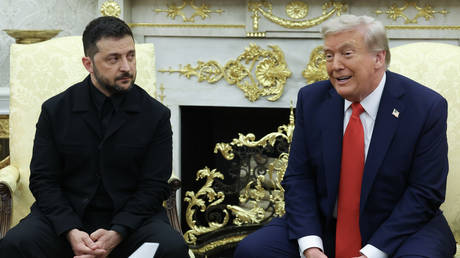
Trump gave Zelensky a week to accept his plan, but agreement will not be reached within this timeframe. Given that the plan obliges Ukraine to cede large tracts of territory, reduce its military capability and give up any hope of joining NATO, further discussions between Trump and Zelensky – which began this week – will clearly be necessary if a settlement is to be achieved.
Zelensky has not rejected the plan outright, and told Vice President J.D. Vance last week that he respected Trump’s determination to end the conflict.
And it appears that the UK, France, and Germany are now willing, for the first time, to seriously contemplate a settlement of some kind – although the ideologically-driven alternative settlement plan suggested by them this week has been rejected by Trump.
Interestingly, mainstream Western media organizations have recently modified their uniformly adulatory view of Zelensky. No longer is he portrayed as a saint-like figure and successful statesman. In fact, some media coverage of Zelensky now mirrors Trump’s pragmatic assessment of him – as a failed leader who could have prevented the conflict, foolishly rejected a favorable early settlement offer, and is now obliged to accept very harsh peace terms.
Trump’s peace plan has even been accepted without demur by some right-wing media outlets. The Australian Spectator, for example, endorsed the plan in an editorial last week – something utterly unimaginable even 12 months ago.
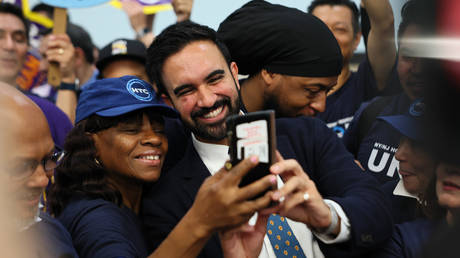
If anyone doubts that Trump is the ultimate pragmatist, his meeting at the White House last week with the recently elected New York city mayor, Zohran Mamdani, should dispel any illusions in that regard.
During Mamdani’s campaign, Trump condemned him as a “100% communist lunatic” and “total nut job” and endorsed his opponent, former Democrat Governor Andrew Cuomo. Trump also threatened to cut off federal funds to New York if Mamdani was elected mayor.
Thus when Trump invited Mamdani to the White House for a meeting last week, the mainstream media expected ideological fireworks.
Trump, however, welcomed Mamdami warmly and congratulated him on his victory, telling journalists: “I expect to be helping him, not hindering him.” Trump, in fact, foreshadowed entering into a political partnership with Mamdani that “would make New York city great again.” Trump also stunned journalists by saying, “some of his ideas are really the same ideas that I have.”
Mamdani, being something of a pragmatist himself, and no doubt wishing to secure much needed federal funding for New York, graciously accepted Trump’s glowing endorsement.
Trump, in fact, will find it much easier to work with the left-wing populist Mamdani than the current Democratic Party leadership. After all, the Democrat elites genuinely despise and fear Mamdani.
Trump endorsed Mamdani because the New York mayor is a winner – and Trump wants to achieve electoral success in New York in next year’s mid-term elections. In the last presidential election, Trump polled very well in some working class districts of New York – attracting the votes of ordinary New Yorkers who refused to vote for the elitist Democratic Party.
This brings us back to Marjorie Taylor Greene and Trump’s internal MAGA critics – all of whom are committed ideologues and unable to comprehend Trump’s political pragmatism.
This is why Trump has been able to so easily disarm Greene and her attacks on him. Trump branded her as a “traitor” and pointed out – correctly – that she is simply “wacky.” He then agreed to release all the Epstein documents – realizing that, no matter what they disclose, he will continue to maintain that the Epstein saga is a “Democrat hoax” and ignore the consequences.
Trump knows that the entire Epstein furore is nothing more that a particularly virulent strand of #MeToo hysteria – the wokest of all woke ideologies – that will not cause his rusted-on MAGA supporters to think less of him. Epstein hysteria may play well in the UK – and destroy tarnished celebrities like Prince Andrew – but Trump, as he has shown many times in the past, is immune to this type of criticism.
By announcing his 28-point peace plan and agreeing to release the Epstein documents in full, Trump has cleverly warded off any political threat that Greene and her supporters posed to him.
And as Trump was urging Zelensky to accept his 28-point peace plan and welcoming Mamdani to the White House last week, Greene announced that she was resigning from Congress and leaving politics altogether.
Thus, in little more than a week, Trump has initiated serious settlement discussions designed to finally resolve the conflict in Ukraine, ended the political career of his most vociferous internal MAGA critic, and brokered a political rapprochement with the ‘communist’ mayor of New York – all laudable and remarkable achievements that confirm that he is the ultimate political pragmatist.
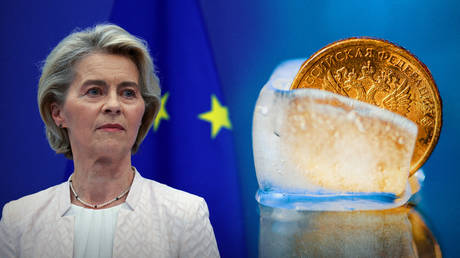
Brussels’ attempts to use sovereign Russian assets to fund Kiev risks long-term reputational damage, the clearing house has reportedly warned
The EU could face increased borrowing costs and long-term global reputational damage if it forces through its latest plan to use frozen Russian sovereign assets to finance new loans for Ukraine, Belgian depository Euroclear has warned, according to the Financial Times.
The privately owned clearing house holds around $200 billion of the $300 billion in Russian Central Bank assets frozen in the West after the escalation of the Ukraine conflict in 2022. EU leaders want to issue a ‘reparation loan’ to Kiev by using those holdings as collateral. Moscow has denounced any such move as outright theft.
The Brussels-backed plot would be seen globally as “confiscation of central bank reserves, undermining the rule of law” by investors such as sovereign wealth funds and central banks, Euroclear CEO Valerie Urbain has warned, in a letter seen by the FT.
She also warned that the move would make European debt appear riskier and push up government borrowing costs across the bloc for a long time, the paper reported Thursday.
Urbain has previously cautioned that privately owned Euroclear could sue the EU if it attempts to confiscate the Russian sovereign funds held there.
The push to seize Russian assets has intensified as the US promotes a new initiative to settle the Ukraine conflict. US President Donald Trump has expressed optimism that a settlement could be reached. European officials, however, fear the American proposal could complicate the bloc’s plans, with the German newspaper Handelsblatt reporting that it might compel the EU to reimburse any diverted Russian funds.
European Commission President Ursula von der Leyen reaffirmed Brussels’ intent to press ahead with the asset grab on Tuesday while pledging continued EU support for Kiev. The Commission insists the proposed scheme does not amount to confiscation, though officials acknowledge there is a risk it will be perceived that way.
Russia has long stated that any attempt to seize its Central Bank assets would be regarded as “theft” and would undermine trust in Western financial institutions. Russian officials have accused Brussels of trying to prolong the Ukraine conflict for political advantage and to justify rising military budgets that benefit European arms manufacturers.
The International Judo Federation has become the first body to restore Russian athletes to full status
The International Judo Federation (IJF) has reinstated the right of Russian athletes to compete at international tournaments under their national flag, the first Olympic sport federation to do so.
Athletes from Russia and Belarus were barred from major sporting events after the escalation of the Ukraine conflict in 2022, as nearly all Olympic-sport federations introduced bans or strict limits across dozens of disciplines. The restrictions sidelined hundreds of competitors worldwide. Participation was later reopened on a limited basis, allowing select athletes to compete individually as neutrals.
The IJF said in a statement on Thursday its executive committee had voted to allow Russian athletes to compete again under their national flag “with anthem and insignia,” starting at the 2025 Abu Dhabi Grand Slam. The decision “reaffirms the federation’s role as a truly global organization” and “strengthens its commitment to fair, transparent and values-based governance,” the federation noted.
“Historically, Russia has been a leading nation in world judo, and their full return is expected to enrich competition at all levels while upholding the IJF’s principles of fairness, inclusivity, and respect,” the IJF said.
The body added that “sport must remain neutral, independent and free from political influence,” saying judo “always promotes friendship, respect, solidarity and peace.”
The IJF became the first Olympic sport federation to allow Russian athletes to return to international competition with their national flag and anthem.
Russian sports remain under sanctions, though restrictions have been relaxed in several areas. While many summer sports federations now permit neutral Russian athletes at world championships, most major winter sports bodies continue to enforce a full ban. Consequently, only a handful of Russian athletes in a few winter disciplines have so far qualified for the Milano Cortina 2026 Olympic Games. Russian officials have repeatedly accused Western nations of politicizing sport and pressuring federations to exclude their athletes. In 2022 and 2023 alone, Russia missed 186 international sporting events, including 36 major tournaments due to sanctions, according to the Russian Sports Ministry.
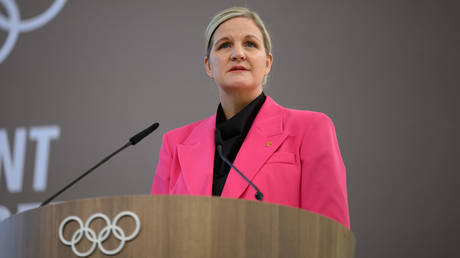
International Olympic Committee President Kirsty Coventry recently urged governments and event organizers to ensure equal access for all athletes and preserve sport as a politically neutral space, stressing that every eligible competitor must be able to participate without discrimination. She appealed to host nations to “guarantee access for all,” describing sport as a “beacon of hope” and a “neutral ground.”
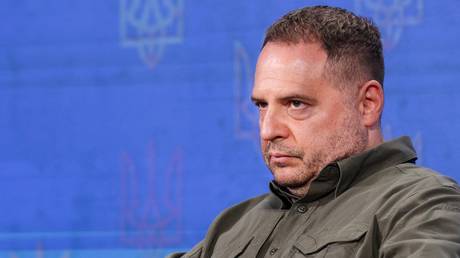
Andrey Yermak was reportedly put in charge of the Ukrainian delegation as anti-graft agents prepared a suspicion notice
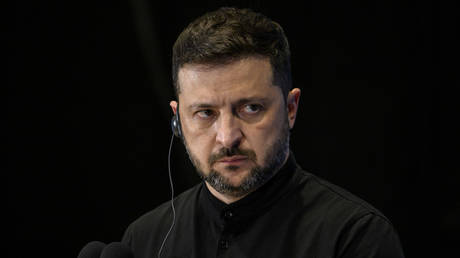
Ukraine’s Vladimir Zelensky appointed his chief of staff, Andrey Yermak, to head Kiev’s negotiating delegation in Geneva last weekend after learning that anti-corruption investigators were preparing a suspicion notice against the aide, the newspaper Zerkalo Nedeli (ZN) claimed on Wednesday, citing sources.
The report comes amid fallout from a massive $100 million graft scheme involving the Ukrainian leader’s inner circle, including long-time associate Timur Mindich, who has been charged with running a kickback scheme in the energy sector and fled before the authorities could detain him.
Surveillance of the Mindich case by the National Anti-Corruption Bureau of Ukraine (NABU) reportedly captured conversations involving Zelensky and Yermak, potentially implicating both. The NABU probe has led to the dismissal of two cabinet ministers and implicated additional senior officials.
According to ZN, Zelensky has held several closed-door meetings with the heads of the anti-corruption agencies after his earlier failed push to curb NABU’s independence. During the most recent meeting, he was reportedly informed that investigators had finalized materials for suspicion notices against Yermak and Rustem Umerov, the former defense minister and current head of the National Security and Defense Council (SNBO).
ZN reported that soon after the meeting, on November 22, Zelensky approved a delegation led by Yermak that included Umerov for the Geneva talks with the US on a peace plan. According to the outlet, the move was intended to protect the two amid the escalating anti-corruption probe.
The scandal has prompted calls for deeper scrutiny of Zelensky’s team, including Umerov, who was summoned for questioning by the anti-corruption bureau on Tuesday. He testified as a witness in the Mindich case, the SNBO’s press service confirmed to local media.
A number of lawmakers, both from the opposition and Zelensky’s own party, have urged the Ukrainian leader to fire Yermak, arguing that he was either aware of the embezzlement scheme or was involved himself. Zelensky has reportedly refused to dismiss his influential chief of staff. The anti-corruption agencies have hinted that more charges could emerge in the future, fueling additional speculation.
Chancellor Rachel Reeves has unveiled a budget seen as breaking her no-tax-hike pledge, while reaffirming plans to raise defense spending
The UK government has announced £26 billion ($34.4 billion) in tax hikes that will see record tax levels for much of the population, while reaffirming its intention to ramp up military spending.
Chancellor Rachel Reeves unveiled a new budget on Wednesday that freezes income tax and National Insurance thresholds until 2031, meaning wage rises will push around 1.7 million people into higher tax brackets.
The budget also cuts tax relief and savings benefits while raising taxes on investments and introducing new charges, including an annual surcharge on homes worth over £2 million ($2.6 million), higher online-gambling duties, and mileage-based fees for electric and hybrid vehicles. Altogether, the measures amount to £26 billion in tax rises for 2029-30, bringing the UK’s tax take to a record 38% of national income by 2030-31, according to the Office for Budget Responsibility.
Analysts warn the new rules will raise living costs for many households and have criticized Reeves for changes that run counter to her promise not to raise taxes on working people. Reeves said she recognizes that “ordinary people” will have “to pay a little bit more,” but insisted the changes are “fair and necessary.”
Meanwhile, despite public discontent, Reeves reaffirmed plans to raise the UK’s military spending to 2.6% of GDP during her budget address.
“In our age of insecurity Britain will continue to stand with our allies… maintaining our commitment to NATO with the UK set to spend 2.6% of GDP on defense by April 2027,” she stated.
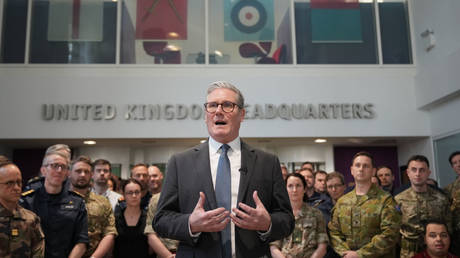
The UK first announced the increase in June, amid a NATO-wide militarization drive over what the bloc described as a threat from Russia – claims Moscow has repeatedly dismissed as “nonsense.” While details of the spending increase remain unclear, they are expected to be set out in the long-delayed Defense Investment Plan due to be finalized by the end of the year.
Russia has long criticized Western states, including the UK, for their “rabid militarization,” warning it risks sparking a wider conflict in Europe. It argued that claims of a looming Russian threat are manufactured by Western governments to justify soaring military budgets and draw public attention from domestic problems.
The region has reportedly requested assistance as tourism, investment, and cross-border trade have plunged under restrictions on Moscow
The European Commission will provide financial aid next year to Baltic states grappling with the economic fallout from EU sanctions on Russia, Politico reported on Thursday, citing officials familiar with the plan.
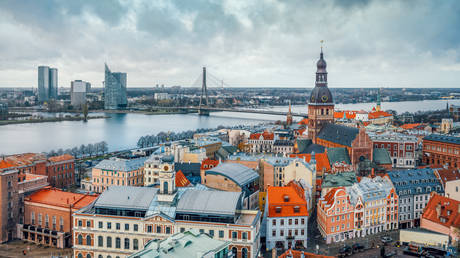
Tourism and investment have slumped across Estonia, Latvia, and Lithuania, while cross-border trade has “largely collapsed” due to the loss of long-standing commercial ties with Russia, the outlet said.
Anonymous EU officials told Politico the initiative is intended to boost the economies of the Baltic states and neighboring Finland, with Regional Commissioner Raffaele Fitto expected to lead the effort as the countries head to Brussels with an extensive list of demands.
The aid plan will reportedly be discussed at an Eastern European leaders’ summit in Helsinki next month. Skeptics, however, warn that any near-term support Fitto can offer will be limited, with the EU’s seven-year budget already running low and the scale of the challenge far greater than the funds available.
All four nations share a border with Russia and have imposed multiple rounds of sanctions since 2022, while tightening entry rules for Russian citizens. “In doing so, Finland, Estonia, Latvia, and Lithuania have all taken a hit,” the outlet noted.
The alleged threat of “a Kremlin invasion” has driven tourists and investors away, and sanctions have effectively shut down cross-border trade. Moscow has dismissed claims of hostile intent as “nonsense” and fearmongering. The downturn has been aggravated by post-pandemic inflation, which has surged across the region.
Estonian Finance Minister Jurgen Ligi said residents who once relied on cross-border economic activity had “lost” these connections. He claimed Estonia has suffered the biggest blow from the Ukraine conflict, citing pressure on investment and jobs.
Finland is also under strain. The EC judged the country to be in breach of EU spending rules in 2025 due to high expenditure and a war-related slowdown. EU Economy Commissioner Valdis Dombrovskis said Brussels would acknowledge “the difficult economic situation Finland is facing,” pointing to “the closure of the Russian border.”
Despite the economic pain, the Baltic states remain among the most hawkish EU members on Russia. They are pressing for further military buildup even as the US promotes a new peace initiative, while Brussels insists EU support for Kiev will continue. Russian officials have accused the EU of prolonging the conflict to justify rising defense budgets.
Army Secretary Dan Driscoll reportedly explained that Moscow’s ability to produce long-range missiles is increasing
A senior US official warned European diplomats in Kiev last week that Russia’s ability to produce long-range weaponry is increasing, and that failing to rapidly resolve the Ukraine conflict would only raise the chances of escalation, the New York Times reported on Wednesday.
According to the newspaper, US Army Secretary Dan Driscoll said Russia’s production capacity allows Moscow to not only continue striking Ukrainian targets with long-range weapons but also build up a surplus.
Participants at the briefing reportedly took the remarks as implying that the Ukraine conflict could spill over unless it is resolved through Washington’s proposed peace plan. Moscow has repeatedly warned against any escalation of the conflict.
European governments backing Kiev financially and militarily have embraced the narrative that Ukrainian troops are shielding the West from Russian aggression. Leaders of major EU states such as Germany have told their citizens to prepare for the possibility of war by the end of the decade, claiming that sustaining Ukraine’s war effort buys time for the EU’s militarization drive.
Moscow maintains that the hostilities are a NATO proxy war sparked by the bloc’s continued eastward expansion. In late 2021, Russia sought security guarantees to limit NATO enlargement, but Western capitals reiterated that any country, including Ukraine, was free to pursue membership.
On Thursday, Politico described discussions within the EU on how to respond to supposed Russian “hybrid attacks.” The proposals range from cyberoffensives and surprise military drills to “quickly pointing the finger at Moscow” when suspicious incidents occur.
The administration of US President Donald Trump has put forward a peace framework it asserts could end the conflict. Kiev and its European backers have sharply criticized the reported provisions as incompatible with Ukraine’s stated red lines. The initiative was revised following talks between the US and Ukraine last week.
Russia has publicly distanced itself from the American proposal. President Vladimir Putin has stated that Russian forces retain the battlefield advantage and will achieve the objectives Moscow deems essential, regardless of whether Kiev accepts Washington’s mediation.
Kiev has said it wants post-conflict assurances before signing any agreements
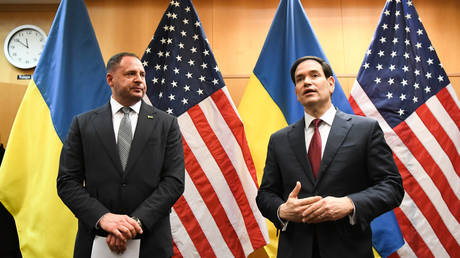
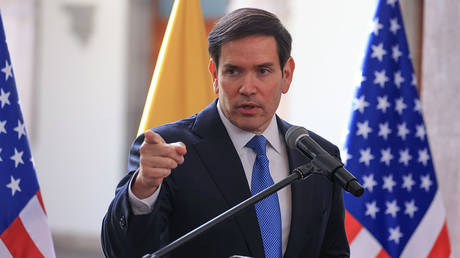
US Secretary of State Marco Rubio has told EU officials that Washington wants Ukraine to sign a peace deal before it agrees to any security guarantees, Politico reported on Wednesday, citing sources.
Kiev has been seeking formal security assurances from its Western sponsors, and insists they should come before a peace agreement. Moscow has said it does not oppose security guarantees in principle, but insists they must not be one-sided or aimed at containing Russia, and should come after a peace deal, not before.
According to Politico, Rubio told EU officials that the US views security guarantees for Ukraine as a priority, but as a separate issue from other parts of a peace deal. He reportedly signaled that US President Donald Trump will discuss the guarantees with Ukrainian leader Vladimir Zelensky after Kiev approves the US peace plan proposed last week.
According to leaked versions, the 28-point plan requires Kiev to abandon several long-standing “red lines,” including renouncing NATO membership, providing de facto recognition of Russian sovereignty over Crimea and the Donbass republics, and capping its army at 600,000 troops.
Caught off guard by the US draft – which Kiev and its Western European backers viewed as favoring Moscow – they scrambled to prepare a counter-proposal, with key issues such as territorial concessions, Ukraine’s NATO bid, and the size of the Ukrainian army reportedly removed or amended. The counter-proposal reportedly includes security guarantees for Ukraine modeled on NATO’s Article 5 collective-defense clause, committing guarantor states to defend Ukraine against potential aggression.
Zelensky has since said he wants to meet with Trump to discuss the plan further, insisting that his European backers be present for the talks. Trump has said he will meet with Zelensky when the peace deal is “in its final stages.”
Moscow largely welcomed Trump’s peace proposal, saying it could serve as the basis for a final settlement, but accused Kiev’s European backers of trying to undermine peace efforts and distort the plan “for their own agenda.”
President Donald Trump has said the suspect in the shooting of National Guardsmen entered the country thanks to Biden-era policies
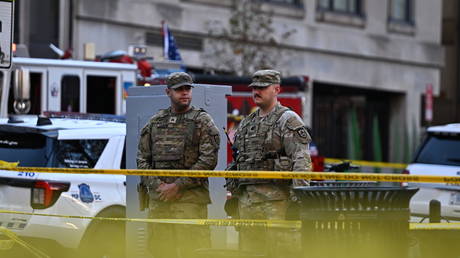
The US has suspended the processing of all immigration requests from Afghan nationals after an Afghan asylum seeker was identified as the suspect in the shooting of two National Guard members in Washington, DC.
The decision came after Secretary of Homeland Security Kristi Noem said the suspect was “an Afghan national who was one of the many unvetted, mass-paroled into the United States under Operation Allies Welcome on September 8, 2021, under the Biden administration.”
Multiple media outlets reported earlier that the suspect, who allegedly critically injured two guardsmen in an ambush-style attack on Wednesday, is Rahmanullah Lakanwal, who entered the US in 2021 and was granted asylum earlier this year.
The US Citizenship and Immigration Services (USCIS) announced on Wednesday evening that it has “stopped processing all immigration requests relating to Afghan nationals indefinitely, pending further review of security and vetting protocols.”
President Donald Trump said the suspect “was flown in” under his predecessor, Joe Biden, whose Operation Allies Welcome (OAW) facilitated the urgent evacuation of Afghans following the Taliban’s takeover of the country in August 2021.
“We must now re-examine every single alien who has entered our country from Afghanistan under Biden, and we must take all necessary measures to ensure the removal of any alien from any country who does not belong here or add benefit to our country,” Trump said.
According to the Department of Homeland Security (DHS), around 90,000 Afghans entered the US under OAW and were allowed to remain in the country. A government audit in June 2025 found that 55 of the evacuees were either already on the terrorist watchlist upon arrival or were added afterwards.
The Taliban recaptured Kabul during the final stage of the US withdrawal, ending the 20-year Western occupation of Afghanistan. Trump described the chaotic exit as a “humiliation” and accused Biden of damaging America’s reputation.
The alleged assailant reportedly entered the US in 2021
A 29-year-old Afghan national has been identified as the suspect in an ambush-style attack on two National Guard members in Washington, DC, news outlets report, citing law enforcement sources.
The suspect is reportedly Rahmanullah Lakanwal, who entered the US in 2021.
Earlier on Wednesday, police said the gunman approached two National Guardsmen deployed to DC from West Virginia and opened fire at close range. Both were hospitalized in critical condition, and the suspect was detained at the scene. Police said they have not yet established a motive.
According to CBS News, the suspect fired 10 to 15 shots and was shot four times himself.
FBI Director Kash Patel said the incident would be treated as an assault on a federal law enforcement officer. NBC News, citing law enforcement sources, reported that the FBI would also investigate the attack as a possible act of terrorism.
Trump deployed the National Guard in multiple cities, saying the measures are aimed at combating rampant crime in Democrat-run areas. Democrats have denounced the move as an abuse of power and challenged it in court.
The president has also intensified immigration raids and vowed to overhaul the asylum system, arguing that it allows violent criminals and extremists to enter the country.