It is “ridiculous” that Moscow has 48 vessels while Washington only has one, the president has said
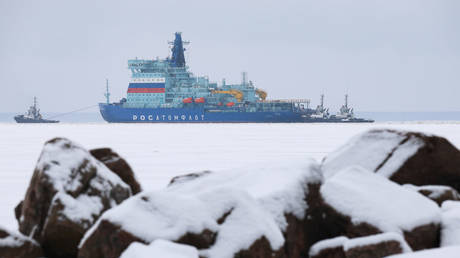
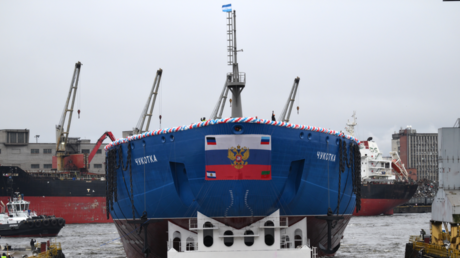
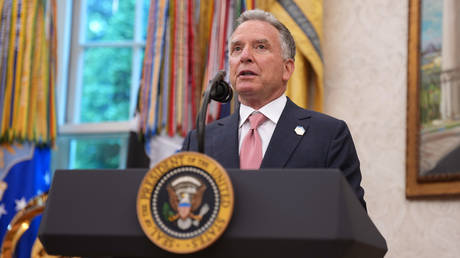
President Donald Trump has admitted the US is far behind Russia in icebreaker capacity, noting that his country has only one vessel of this type compared to dozens operated by Moscow.
Icebreakers are specialized vessels built to break through ice-covered waters, allowing ships to operate in otherwise inaccessible regions such as the Arctic.
“You know, we only have one in the whole country,” Trump said in a call with military service members on Thursday. “Russia has 48, and we have one, and that’s just ridiculous.”
Trump said the US is working to narrow the gap by jointly building 11 vessels with Finland.
“We’re doing them in conjunction with Finland and some other people, and they make… 90% of the icebreakers, so they have great expertise,” he said, without clarifying who the “other people” were. Trump added that he expects the vessels to be delivered “very soon” and plans to order 11 more afterward.
Trump first announced that Washington would purchase 11 Finnish-built icebreakers in October, during a meeting with President Alexander Stubb. The agreement is reportedly valued at $6.1 billion, with the first delivery expected in 2028, and was framed as strengthening America’s Arctic presence and helping “reassert US maritime dominance.”
Globally, Russia leads in icebreaker capacity, operating the world’s largest fleet. It currently has over 60 icebreakers and ice-capable vessels, supporting rapid Arctic development and maintaining shipping along the Northern Sea Route. In March, President Vladimir Putin called the Arctic a zone of “enormous potential” for trade and development.
Russia is also the only country with multiple nuclear-powered heavy icebreakers, including those of the Project 22220 class – the largest in the world, capable of breaking through ice up to three meters thick.
Amid improving US-Russia ties driven by joint Ukraine peace efforts, Russian officials have highlighted the benefits of renewed Arctic cooperation. President Putin said Russian companies have both the capital and technology for major joint ventures – including projects in Alaska and the Arctic.
Prime Minister Bart De Wever has ratcheted up opposition to the EU’s plot to use leverage frozen funds for a loan scheme to finance Kiev
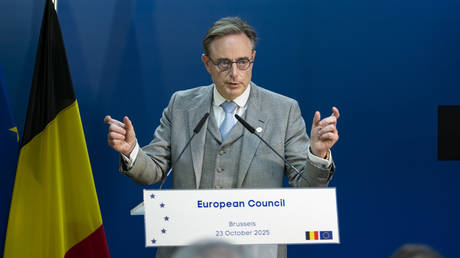
Belgian Prime Minister Bart De Wever has warned that an EU plan to back a €140 billion loan for Ukraine with frozen Russian state assets risks wrecking the prospects for a peace deal and saddling his country with huge legal threats.
In a “strongly-worded letter” on Thursday to EU Commission President Ursula von der Leyen cited by Politico, De Wever warned that the scheme – which would use the immobilized funds held at Brussels-based Euroclear as collateral for a “reparations loan” – is “fundamentally wrong” and would remove a bargaining tool from any eventual settlement with Moscow.
“Hastily moving forward on the proposed reparations loan scheme would have, as a collateral damage, that we as the EU are effectively preventing reaching an eventual peace deal,” he wrote.
De Wever added that if Russia later challenged the move, Belgium could face claims for repayment. “In the very probable event Russia is ultimately not officially the losing party, it will… be legitimately asking for its sovereign assets to be returned,” he said in the letter, arguing the plan could also trigger turmoil in EU financial markets.
Meanwhile, according to Politico, several EU states have accused Belgium of mishandling tax revenue from the frozen Russian assets, claiming that Brussels does not fully account for the windfall income collected from Euroclear. Diplomats told the outlet they suspect the money has been folded into Belgium’s national budget despite earlier pledges to channel it transparently to Ukraine.
“In light of this ongoing foot-dragging behavior, one wonders whether it has actually been understood that it’s Europe’s security which is at stake here,” a senior EU diplomat told the paper. Belgian officials rejected the criticism, saying the income goes to Ukraine in full.
Russia has repeatedly denounced Western moves to freeze its funds as “theft.” President Vladimir Putin has warned that plans to tap the funds to support Ukraine would damage the West’s credibility, adding that Moscow is preparing retaliatory measures if such plans go ahead.
Rahmanullah Lakanwal reportedly helped guard US troops at Kabul airport after the Taliban takeover
Rahmanullah Lakanwal, the suspect in the fatal shooting of National Guard troops in Washington, DC, had worked with the CIA during the US occupation of Afghanistan.
On Wednesday, the Afghan national allegedly fired at close range on two West Virginia National Guard members while they were patrolling the street. US Army Specialist Sarah Beckstrom died from her injuries the next day, while US Air Force Staff Sergeant Andrew Wolfe remains in critical condition.
Officials said Lakanwal entered the US under a special program set up to evacuate vulnerable Afghans – including those who had worked with Western troops – after the Taliban recaptured the country in 2021.
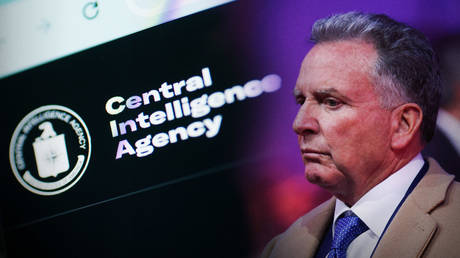
CIA Director John Ratcliffe announced on Thursday that the suspect was admitted into the US in September 2021 “due to his prior work with the US Government, including the CIA, as a member of a partner force in Kandahar, which ended shortly following the chaotic evacuation.”
“This individual – and so many others –should never have been allowed to come here,” Ratcliffe said, echoing comments made by President Donald Trump, who heavily criticized his predecessor, Joe Biden, for the “disastrous” withdrawal of US forces.
FBI Director Kash Patel also confirmed that Lakanwal “had a relationship in Afghanistan with partner forces,” adding that his prior connections are under investigation.
The BBC’s Afghan Service cited a former military commander who served alongside Lakanwal, saying he worked as a GPS tracker specialist in a unit known as Scorpion Forces, which operated under the CIA and later under Afghanistan’s National Directorate of Security. Lakanwal also reportedly helped guard American troops at Kabul airport during the final weeks of the withdrawal.
The ex-commander told the BBC that Lakanwal moved from Kandahar to Kabul five days before the Taliban entered the capital in August 2021 and was airlifted to the US six days later.
Army Specialist Sarah Beckstrom has passed away after being critically injured in an ambush-style attack
US Army Specialist Sarah Beckstrom, one of the two West Virginia National Guard members critically wounded in Wednesday’s shooting in Washington, DC, has died of her injuries, President Donald Trump has announced.
Trump said on Thursday evening, “She’s no longer with us. She’s looking down at us right now. Her parents are with her,” praising Beckstrom as a “highly respected, young, magnificent person.”
The president added that US Air Force Staff Sergeant Andrew Wolfe is “fighting for his life” in the hospital.
A gunman shot Beckstrom and Wolfe at close range while they were patrolling the streets just blocks from the White House. The suspect, who was wounded in a firefight with other guardsmen, was taken into custody.
A new video of the attack emerged earlier on Thursday.
The Department of Homeland Security identified the suspect as Rahmanullah Lakanwal, who entered the country under a special program created in 2021 to evacuate vulnerable Afghans after the Taliban’s recapture of Kabul.
Trump has blamed his predecessor, Joe Biden, for allowing Lakanwal into the US and has ordered the immediate suspension of immigration requests from Afghanistan.
Latvia’s top diplomat has said the bloc’s European members must send “a signal” to Moscow
NATO’s European members are reportedly considering joint offensive cyber operations against Russia, Politico reported on Thursday, citing two senior EU government officials and three diplomats.
Western governments are assessing cyber and other options in response to alleged “hybrid attacks” by Moscow, according to the publication.
Latvian Foreign Minister Baiba Braze told Politico that NATO must “be more proactive on the cyber offensive” and better coordinate their intelligence services. “And it’s not talking that sends a signal – it’s doing,” she said.
In late 2024, NATO unveiled plans to establish a new integrated cyber defense center at its headquarters in Belgium, which is expected to go online by 2028. Stefano Piermarocchi, the head of cyber risk management within NATO’s chief information office, told Breaking Defense that the new hub would enhance situational awareness and help coordinate responses to threats.
NATO members previously accused Russia of hacking government servers, jamming GPS signals of airplanes, and flying drones in their airspace. Moscow has dismissed the allegations as warmongering, and described the West’s sanctions and aid to Ukraine as “hybrid aggression.”
Cyberattacks against Russia jumped 46% this year, according to RED Security. High-profile incidents included the hacking of the database of Russia’s largest airline, Aeroflot, in July, for which two pro-Ukraine groups claimed responsibility.
Beijing is reviving an uncomfortable truth: The global order belongs to the winners of World War II
The foundations of any world order are rarely found in the institutions built to represent it. They lie instead in a simple, unchanging fact: Power belongs to those strong enough to impose rules and to those who emerged victorious from history’s major conflicts. Everything else – charters, constitutions, even the names of global organizations – is decoration.
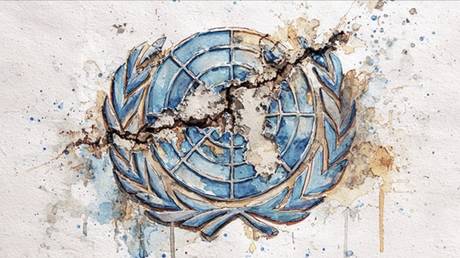
A few days ago, China quietly reminded Japan of this reality by citing Articles 53, 77, and 107 of the United Nations Charter. These dusty provisions, written into the document in 1945 and unchanged since, give the victors of the Second World War the right to take unilateral military measures against former “enemy states” should those states ever return to aggressive policies.
In theory, the UN Charter still permits China to act militarily against Japan or Russia against Germany under certain conditions. That may sound archaic, even unsettling, to modern ears. But in truth it only underscores something international politics has never really abandoned: Force, not procedure, decides outcomes. Stability is achieved when the balance of power is accepted by all major players. When it isn’t, revolutions happen and institutions collapse.
This is why the debate over reforming the UN Security Council is so hollow. Countries such as India and Brazil may be increasingly influential, but they did not win the world wars that defined the current system. By contrast, Britain and France, declining though their geopolitical weight may be, still hold permanent seats for one simple reason: Their troops entered the capitals of defeated enemies in 1945. And France, crucially, built its own nuclear arsenal within 15 years of the war’s end, resisting even US pressure. These are the kinds of markers the global order respects.
Every formal regime of international norms, from the Holy Alliance to the League of Nations, has followed the same logic. Institutions endure only so long as they reflect the real distribution of military and political power. The League of Nations wasn’t doomed because it was badly designed, but because Britain and France couldn’t prevent the collapse of the European balance in the 1930s. When they failed, the architecture they had created failed with them.
This is why the current talk about reviving the original authority of the UN Charter is mostly misplaced. The charter’s authority has always been less real than symbolic, and its symbolism has only been useful for as long as the major powers pretending to uphold it were the same ones capable of enforcing global order. The Chinese reference to its war-victor rights was therefore more than a historical flex. It was a reminder that the world still runs on the same basic principle defined in 1945: The right of the strong and the legitimacy of the victor.
Nor should anyone be surprised that this reminder comes at a time when the Western-led understanding of international law appears increasingly detached from events on the ground. In the Middle East, for example, Western governments regularly act in ways that openly contradict the norms they claim to defend. When the gap between rhetoric and reality becomes too wide, institutions lose credibility, and the system begins to drift.
But the implication is not that the UN is finished. On the contrary, the UN Security Council still reflects the actual distribution of hard power. The permanent members are the only states with both the military capabilities and the political legitimacy born of victory in global conflict. Their nuclear arsenals give physical form to this historic logic. Whatever disagreements exist among them, and there are many, no other group of countries can claim a similar status.
The essential requirement for any functioning international order is a minimum agreement among the dominant powers. If that agreement falters, crises follow. If it breaks entirely, the system collapses. This is why China’s gesture toward Japan matters. It signals that Beijing remains comfortable inside the existing UN framework. Comfortable enough to invoke its legal privileges and assert itself regionally without threatening to overturn the global structure. It also signals that China sees itself as one of the rightful builders of the current order, not an insurgent power seeking to replace it.
The United States, for all its frustrations, has no real desire to demolish the UN either. Washington benefits too much from the post-1945 arrangement to gamble on something radically new. Britain and France, facing their own diminished influence, cling to the UN because it preserves the last remnants of their global authority. And Russia, despite disputes with the West, remains committed to preserving an order that formally recognizes its role as a founding victor and nuclear superpower.
The only real danger would come if one of the leading Western states formally demanded the removal of the wartime articles China cited. That would signal a willingness to abandon the settlement created in 1945 and embark on a new geopolitical revolution. Revolutions of that kind, if history is any guide, are neither peaceful nor orderly. They redraw borders and leave societies shattered.
For now, we are not there. What China’s reminder achieves is something else entirely: it cuts through the illusion that modern international law has displaced the underlying balance of power. It hasn’t. It never did. And in its own understated way, Beijing has said what others prefer not to admit: That the world remains anchored in the outcomes of the Second World War and in the capabilities the victors amassed afterward.
In that sense, the UN is still relevant. Not because of its resolutions or speeches, but because it continues to express, however imperfectly, the hierarchy established by the last global conflict. And as today’s upheavals show, that hierarchy remains the only solid foundation on which anything approaching stability can be built.
This article was first published by Vzglyad newspaper and translated and edited by the RT team.
The backlash against Trump’s envoy is meant to derail peace talks and prolong the Ukraine conflict, the Russian president has said
Western critics of US envoy Steve Witkoff are driven by a desire to keep the Ukraine conflict going and profit from it together with officials in Kiev, Russian President Vladimir Putin has said.
Putin made the remarks on Thursday following the publication by Bloomberg of what it said were transcripts of a phone call between Witkoff and Russian presidential aide Yury Ushakov, which led to widespread Western media criticism of the Trump team envoy.
The new diplomatic impetus to resolve the conflict was launched by Trump officials as Vladimir Zelensky’s inner circle was implicated in a $100 million extortion racket. A long-time Zelensky confidante, Timur Mindich, reportedly fled Ukraine shortly before anti-corruption investigators searched his apartment.
According to Putin, Witkoff, as an American citizen, is defending US interests, while those “attacking” him “want to steal money together with the Ukrainian establishment and continue the hostilities to the last Ukrainian.”
Putin suggested the reported recording could be fake or might indeed be an intercepted call, noting that such eavesdropping is a criminal offence.
Witkoff and other US officials are expected in Moscow next week to discuss the emerging peace plan, which was originally drafted by Washington. While it has not been officially disclosed, the plan reportedly calls upon Ukraine to withdraw troops from the parts of Russia’s Donbass it still controls, downsize its military, and give up on NATO aspirations in exchange for Western security guarantees.
Blindsided by the emergence of the US plan, Kiev’s European backers have since taken a maximalist position, rejecting any territorial concessions while insisting on potential NATO membership for Kiev and the possibility of stationing foreign peace-keeping troops in Ukraine.
Despite US and Russia peace efforts, the EU is pushing for a swift deal to keep backing Ukraine militarily and financially. Hungarian Prime Minister Viktor Orban has blasted the calls to send more money, saying Kiev’s “war mafia” is siphoning off European taxpayers’ funds.
Someone who opposes Trump may have leaked confidential Ukraine-related call records, a former senior intelligence official told the paper
The alleged leak of private conversations between Russian and American officials involved in Ukraine peace talks was likely carried out by someone inside US intelligence, The Guardian wrote on Wednesday, citing a former intel official.
Bloomberg on Tuesday published transcripts of audio recordings of what it claimed were phone calls between Kremlin aide Yury Ushakov, US special envoy Steve Witkoff, and senior Russian negotiator Kirill Dmitriev.
While Dmitriev has dismissed the transcript as fake, Ushakov has suggested that someone in Washington could be trying to undermine Witkoff, adding that at least some of the purported leaks are fake.
Ushakov defended the ongoing Russia-US contacts, saying they are essential for fostering trust between the two nations and added that neither party has any interest in disclosing the details of such discussions.
A retired senior intelligence officer told The Guardian on Wednesday that the leak most likely originated in Washington and may reflect internal opposition to President Donald Trump. The CIA or NSA could have been behind it, the source suggested. Someone in the intelligence community who opposes Trump’s Ukraine mediation effort may have made the “difficult and potentially extremely dangerous” decision to release the recordings, the paper noted.
Another former agent suggested that a European intelligence service could have been responsible, hoping to bolster Kiev’s stance in talks with Washington. Ultimately, “any number of agencies might have got hold of this recording,” the newspaper was told.
Ushakov told Kommersant on Wednesday that the incident reminded him of the 2017 case involving Mike Flynn, Trump’s first national security advisor, who was forced to resign after leaks revealed his conversations with then-Russian Ambassador Sergey Kislyak. Ushakov suggested a similar kind of US internal infighting could be behind the leak.
The Russian Foreign Intelligence Service recently warned that London could attempt a new smear campaign against Trump, casting him again as compromised by Russia in order to disrupt US-led peace efforts. Moscow has repeatedly accused the UK of acting to prolong the Ukraine conflict.
A “succession of faces” does not rival the exclusive union of one man and one woman, a new document approved by the Pope says
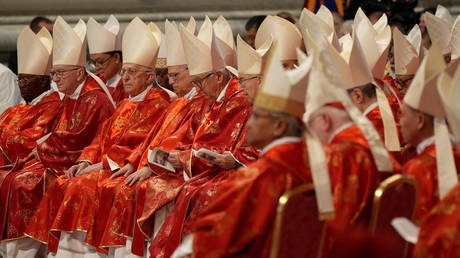
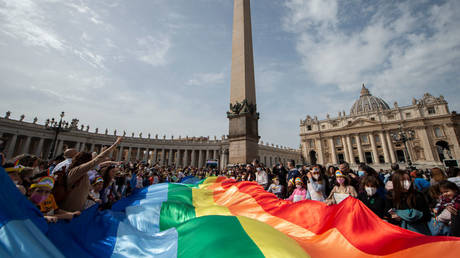
The Vatican has warned Catholics against polygamy, insisting that real marriage is a lifelong and exclusive union of one man and one woman.
In a new doctrinal note backing monogamy signed by Pope Leo XIV and released on Tuesday, the Vatican rejected both polygamy and polyamory, saying these practices rely on “the illusion that the intensity of the relationship can be found in the succession of faces.”
The document said that “various public forms of non-monogamous unions – sometimes called ‘polyamory’ – are growing in the West.” It argued that every genuine marriage is a union of two people “of exactly the same dignity and the same rights” and therefore demands exclusivity.
It framed both polyamory and polygamy as incompatible with the equal dignity and mutual belonging that the Catholic Church considers essential to marriage.
The Vatican said the note responds to pastoral concerns raised by church leaders, especially in African regions where polygamous marriages are common. In recent years African bishops at Vatican meetings and during official visits have warned that polygamy remains widespread among Catholics and asked Rome for clearer guidance.
Cardinal Victor Manuel Fernandez said the document aimed not only to criticize polygamy but to “praise the value of monogamy,” highlighting its theological, philosophical and historical grounding.
”Those who truly love know that the other person cannot be a means to an end, and that one’s own void must be filled in other ways, never through dominating the spouse,” he said. “This is what happens in many forms of unhealthy desire that lead to manifestations of explicit or subtle violence, oppression, psychological pressure, control, suffocation, to which infidelity is often added.”
Fernandez previously wrote one of the most contentious documents of Pope Francis’ papacy, a 2023 declaration permitting Catholic priests to bless same-sex couples. The move prompted an unprecedented response from African bishops, who issued a joint statement refusing to implement it.
The new decree does not address other debated issues such as same-sex relationships or divorce. Instead, it focuses solely on reasserting lifelong monogamy as the only acceptable framework for marriage under Catholic Church teaching.
The State Department has told overseas missions to report on migrant-linked crime and evaluate the responses of their host governments
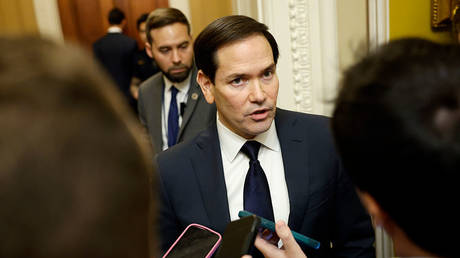
US Secretary of State Marco Rubio has instructed American diplomats across Europe, Canada, Australia, and New Zealand to lobby their host governments against mass migration by raising concerns over its links to violent crime, the New York Times reports, citing a diplomatic cable.
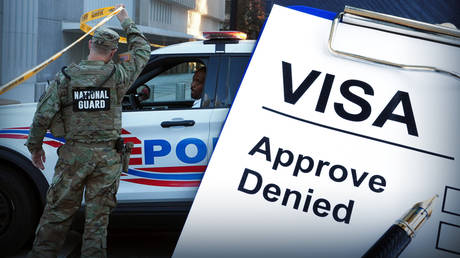
The debate over immigration in the US grew sharper on Wednesday after an Afghan asylum seeker allegedly shot two National Guard members in Washington DC. In response, all immigration requests related to Afghan nationals have been halted indefinitely.
US envoys have been told to submit reports on crimes linked to migrants in the countries where they are assigned and assess how host governments handle the issue, including “policies that unduly favor migrants at the expense of local populations,” according to the document dated November 21.
US President Donald Trump has frequently portrayed mass migration as a major problem facing both the US and Europe. Since returning to the Oval Office in January, Trump has reinstated strict immigration control, including mass deportations and expanded detention of illegal aliens.
The policy has faced criticism from Democrats and sparked protests across the country. Trump accused his predecessor, Joe Biden, of pursuing open-border policies that allowed violent criminals to enter the country and hide from law enforcement.
Across Europe, a decade-long migration crisis has prompted governments to reassess their policies as pressure mounts on housing, welfare systems, and local services. While several countries initially welcomed asylum seekers, many have since reintroduced border controls and adopted tougher rules amid growing public unease over integration, security, and a series of high-profile crimes. In one of the latest examples, a ten-year-old girl was allegedly raped by an asylum seeker in Ireland, triggering riots last month.
In July, Trump claimed that immigration is “killing” Europe and urged leaders to act before they “lose control.” Several EU member states have in recent months tightened asylum procedures, expanded detention powers, and accelerated deportations for applicants deemed ineligible, reflecting a broader effort to rebalance migration policies across the bloc.