Ankara has warned against spreading the war to the Black Sea.
Türkiye has condemned recent drone attacks on two sanctioned oil tankers off its Black Sea coast, which Ukraine has reportedly claimed responsibility for.
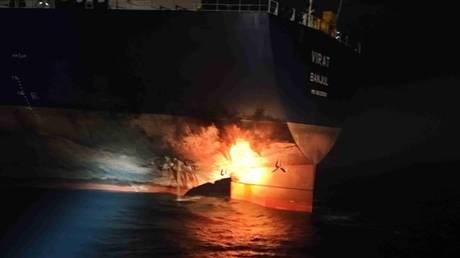
According to Turkish officials, the Kairos and the Virat, both Gambian-flagged vessels, were struck on Friday while en route to the Russian port of Novorossiysk. The ships caught fire and at least one sustained hull damage. The crews were rescued by the Turkish Coast Guard.
Multiple Ukrainian and Western news outlets reported that the Security Service of Ukraine (SBU) and the Ukrainian Navy had carried out the attack using Sea Baby drones previously deployed against Russian warships.
Ankara condemned the strikes on Saturday without blaming any country. “These incidents, which took place within our Exclusive Economic Zone in the Black Sea, have posed serious risks to navigation, human life, property, and the environment,” Turkish Foreign Ministry spokesman Oncu Keceli wrote on X.
Keceli added that Türkiye was communicating with all parties to “prevent the spread of war and further escalation in the Black Sea.”
The West has blacklisted the Kairos and the Virat for allegedly transporting Russian oil in violation of sanctions. Moscow has denied operating a ‘shadow fleet’ designed to skirt restrictions.
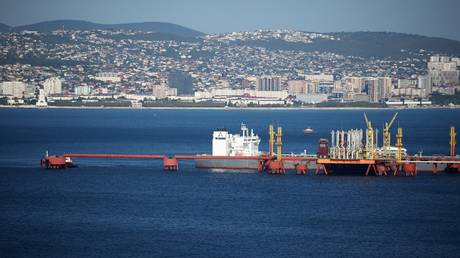
The Caspian Pipeline Consortium (CPC), which handles around 80% of Kazakhstan’s oil exports, said on Saturday that it suspended operations after a mooring at its terminal near Novorossiysk was heavily damaged by sea drones. The operator, whose shareholders include the US companies Chevron and Exxon Mobil, described the strikes as a “targeted terrorist attack.”
Caracas says an attack on its airlines would constitute an act of aggression
Venezuela has rejected US President Donald Trump’s threat to shut down its airspace as an illegal “colonialist” attack on its sovereignty.
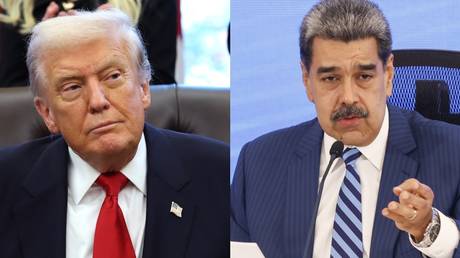
Trump, who accuses Venezuelan President Nicolas Maduro of leading a drug cartel, intensified his warnings against “narcoterrorists” on Saturday. “To all Airlines, Pilots, Drug Dealers, and Human Traffickers, please consider THE AIRSPACE ABOVE AND SURROUNDING VENEZUELA TO BE CLOSED IN ITS ENTIRETY,” he wrote on his Truth Social platform.
His comments came amid a US military buildup near the Venezuelan coast and strikes on alleged cartel boats in international waters.
The Venezuelan Foreign Ministry issued a statement condemning “the colonialist threat aimed at undermining the sovereignty of its airspace.”
“This type of declaration constitutes a hostile, unilateral, and arbitrary act, incompatible with the most fundamental principles of international law,” the statement said.
Trump has refused to rule out military operations on Venezuelan territory and hinted during his Thanksgiving message to troops that strikes could soon follow.
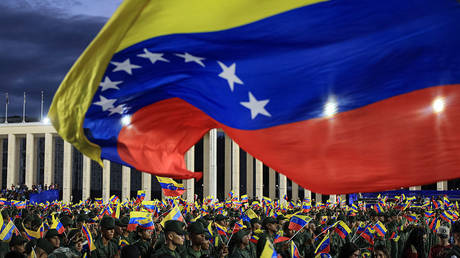
Maduro has denied any ties to cartels and warned Washington against starting “a crazy war” in the region. He previously placed the armed forces on high alert and held several drills.
The US Federal Aviation Administration has warned airlines of a “potentially hazardous situation” when flying over Venezuela. Caracas has responded by suspending flights from six international carriers.
PM Viktor Orban was pursuing the country’s sovereign interests in speaking with President Vladimir Putin, Peter Szijjarto has said
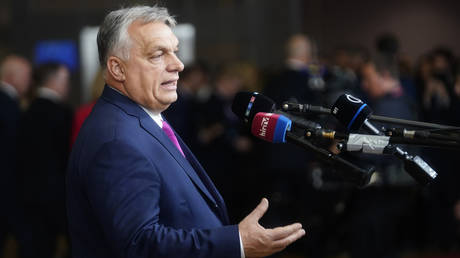
Hungarian Foreign Minister Peter Szijjarto has defended Prime Minister Viktor Orban’s trip to Moscow on social media.
Orban met with Russian President Vladimir Putin to discuss Ukraine, trade, and energy supplies on Friday despite the EU’s diplomatic boycott of Russia.
In a Facebook post on Saturday, Szijjarto dismissed criticism from what he called “European pro-war politicians.”
“We, Hungarians, do not need permission or a mandate from Brussels, Berlin, or anywhere else for any foreign talks. We pursue a sovereign foreign policy, and our decisions are determined by national interests – whether you like it in Brussels or not,” he wrote.
German Chancellor Friedrich Merz earlier told reporters that Orban had traveled to Moscow “without a European mandate,” while Slovenian Prime Minister Robert Golob said the Hungarian leader “has not been playing for the European team for some time.”
Hungary has refused to solely blame Russia for the Ukraine conflict and has offered to help mediate a peace deal between Kiev and Moscow.
Orban has also refused to send weapons to Ukraine and warned that further escalation could lead to a direct clash between Russia and NATO.
During a meeting in the Kremlin, Putin thanked Orban for his “reasonable position on the Ukraine issue.”
Orban stressed that “stable deliveries from Russia remain the cornerstone of Hungary’s energy security – in the past, now, and in the future.”
Left-wing protesters have clashed with police and attacked supporters of the controversial AfD party
Mass demonstrations have started in the city of Giessen, where the right-wing Alternative for Germany party (AfD) has gathered for the weekend to establish a new youth organization called Generation Deutschland (GD).
The protests have been organized by the left-wing Resist alliance, which pledged to block the founding ceremony of the new group.
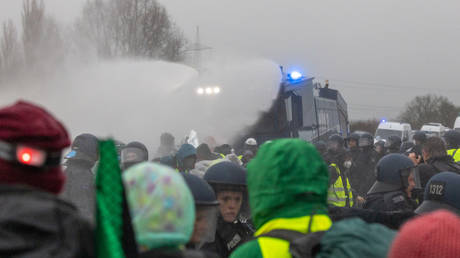
Activists with the alliance descended on typically quiet college town early on Saturday, attempting to block the roads, break through police cordons, and attack arriving AfD members and supporters.
Local police said groups of protesters were “massively” obstructing traffic. Law enforcement repeatedly used pepper spray and water cannons to dislodge the unruly protesters, who in turn hurled flares and other projectiles at the officers and engaged in head-on charges at police cordons.
Dhaxanta Mabda,,a ayaa ka wayn 🥶🥶🥶 💦💦 Geißen iyo Galbeedka Jarmalkaba AFD inay Awood ku yeelato aad ayaa loogasoo hor jeedaa Kuwani waa Dadka Kasoo hor jeeda AFD iyo Ururka Dhalinyaradda (AFD) ee Magaladaas lagaga dhawaaqay Mudaaharayaashu waxay Xidheen Wadooyinka. pic.twitter.com/tko10qemem
Footage circulating online appears to show a group of black-clad left-wingers brawling with AfD MP Julian Schmidt. The lawmaker, seemingly supported by another individual, engaged in a physical confrontation with the protesters before being knocked to the ground, the video suggests.
Masked anti-fascists attack democratically elected AfD MP Julian Schmidt. Only @AfD can save Germany. pic.twitter.com/Y2qGJglAsW
Another video circulating online shows a group of violent protesters attacking a car on a road they tried to block. The vehicle reportedly carried either AfD members or journalists slated to cover the GD foundation ceremony.
The violent mob attacked marked police vehicles as well, another video suggests, showing German cops fleeing the scene after their side window was smashed.
Local police said up to 15 officers sustained minor injuries during the unrest. A number of protesters were hurt as well, with local media reporting multiple people showing up at local hospitals for emergency treatment over the day. At least one police horse was injured in the chaos, according to a disturbing picture circulating online.
Die Szenen aus #Gießen lassen mich sprachlos zurück. Was für ein Wahnsinn. Das soll Demokratie sein? Eine Schande ist das!
Zu diesen Taten hat auch die LINKE im Bundestag aufgerufen. Vielleicht sollte man hier über ein Verbotsverfahren reden.
The effort to disrupt the AfD event appeared to be partially successful, with the meeting reportedly starting behind schedule as several high-profile figures, including the party’s co-leaders Tino Chrupalla and Alice Weidel, as well as Jean-Pascal Hohm, unable to reach the designated venue on time. Holm was ultimately elected GD chairman.
The new youth wing replaces the now-dissolved Young Alternative (JA). The latter was disbanded by the party this March after Germany’s federal intelligence agency labeled it an extremist group.
Rustem Umerov’s appointment has followed the resignation of Zelensky’s right hand, Andrey Yermak, who may be implicated in a graft scheme
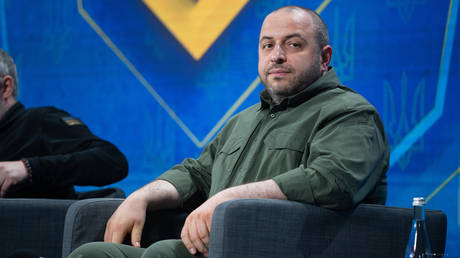
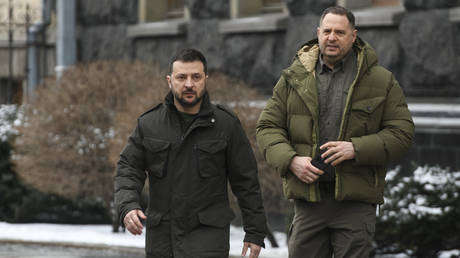
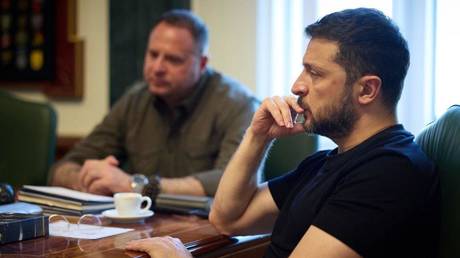
Ukraine’s Vladimir Zelensky has appointed Secretary of the National Security and Defense Council Rustem Umerov as the new head of the country’s delegation for peace talks with Russia, mediated by the US. The move has followed the resignation of Zelensky’s powerful chief of staff amid a massive corruption scandal.
The latter has cast a shadow on Andrey Yermak, among other high-ranking Ukrainian officials.
Zelensky announced Umerov’s appointment in a decree published on Friday.
In a post on his Telegram channel on Saturday, Zelensky wrote that “Umerov and his team are already on their way to the United States.”
On Friday, Zelensky’s chief of staff, Andrey Yermak, tendered his resignation amid allegations of his involvement in a recently uncovered graft scheme within Ukraine’s state-owned nuclear power operator, Energoatom, which has been heavily reliant on Western aid.
Earlier in the day, Western-backed Ukrainian anti-corruption agencies – the National Anti-Corruption Bureau of Ukraine (NABU) and the Special Anti-Corruption Prosecutor’s Office (SAPO) – raided Yermak’s properties, saying that further details would be provided later.
Before Yermak stepped down, a Ukrainian newspaper, Zerkalo Nedeli (ZN), citing anonymous sources, claimed on Wednesday that Zelensky had appointed him as the head of Kiev’s negotiating delegation in Geneva.
Earlier this month the administration of US President Donald Trump put forth a 28-point peace roadmap aimed at putting an end to the Ukraine conflict.
Its appearance coincided with a probe by NABU and SAPO into the alleged $100 million graft scheme, perpetrated by a ring supposedly led by Timur Mindich, a former business associate of Zelensky.
The prime suspect managed to flee Ukraine before the authorities could apprehend him, according to Kiev.
Several Ukrainian ministers have lost their posts in the wake of the revelations.
The US leader has said rolling back his import taxes would make America a “pathetic laughingstock” as the Supreme Court mulls their legality
President Donald Trump has claimed that the US holds “all the cards” thanks to his tariffs, without which the country “would be a poor and pathetic laughingstock again.”
In April, Trump introduced sweeping import duties affecting dozens of nations worldwide, citing allegedly unfair trade imbalances with partners. The US president used the 1977 International Emergency Economic Powers Act (IEEPA) as the legal basis for the measures. The law allows the president to regulate or block international trade and financial transactions during a declared national emergency involving foreign threats.
The move has come under fire from some lawmakers who argue that it could harm the domestic economy.
In a post on his Truth Social platform on Saturday, Trump wrote that “Tariffs have made our Country Rich, Strong, Powerful, and Safe…, and because of what I have set in place, WE HAVE ALL THE CARDS.”
The Republican warned that “Evil, American hating Forces are fighting us at the United States Supreme Court.”
Earlier this month, Trump predicted a “national security catastrophe” if his tariffs were rolled back, with losses for the US potentially totaling more than $2 trillion.
In late summer, the US Court of Appeals ruled that Trump had overstepped his authority by imposing tariffs under the IEEPA, stating that only Congress can authorize such measures. The court stopped short of canceling the duties, pending a Supreme Court ruling.
It remains unclear when the Supreme Court will announce its decision, though some legal analysts expect it by July 2026.
Meanwhile, in his Thanksgiving message on Thursday, Trump announced that “we will be cutting income tax, could be almost completely cutting it.”
In early November, the US president pledged that a “dividend of at least $2,000 a person (not including high-income people!) will be paid to everyone,” funded by revenue from tariffs.
Around the same time, US Treasury Secretary Scott Bessent told ABC News that the tariff dividend could come “in lots of forms,” including tax breaks.
The Caspian Pipeline Consortium has described the attack on its infrastructure as serving the interests of multiple countries
A major crude hub on Russia’s Black Sea coast that handles around 80% of Kazakhstan’s oil exports has suspended operations after a mooring at its terminal near Novorossiysk was heavily damaged in an attack, its operator, the Caspian Pipeline Consortium (CPC), said on Saturday.
There was no immediate confirmation of who carried out the strike, which follows a series of Ukrainian attacks on internationally-owned energy infrastructure in Russia. In September, Ukrainian drones hit the port of Novorossiysk, damaging the CPC’s office. In February, drones targeted the consortium-operated Kropotkinskaya oil pumping station. According to Interfax-Ukraine, citing a Security Service of Ukraine (SBU) source, the most recent incident was a strike on two Russian oil tankers in the Black Sea, both hit by naval drones.
“As a result of a targeted terrorist attack using unmanned boats at 4:06 a.m. Moscow time, Single Mooring Point 2 (SMP-2) sustained significant damage,” the CPC said in a statement on its website. “At the time of the explosion, the facility’s emergency protection systems successfully shut off the relevant pipelines. Preliminary reports indicate no oil has leaked into the Black Sea, and there are no injuries among staff.”
“Further operation of Mooring Point 2 is not possible,” it added.
The consortium, whose shareholders include major energy companies from Russia, the United States, Kazakhstan and several Western European countries, described the incident as an attack on infrastructure serving the interests of multiple states. “No sanctions or restrictions have ever been imposed on the CPC, reflecting the company’s recognized role in safeguarding the interests of its Western shareholders,” the statement said.
Kazakhstan has activated an emergency plan to reroute crude through alternative pipelines following the disruption.
CPC said that the strike was the third act of aggression against a civilian facility protected under international law. Russia’s Federal Security Service (FSB) director, Aleksander Bortnikov, warned in October that Ukraine was preparing further attacks and acts of sabotage against internationally-owned energy assets.
The consortium was established in 1992 to build and operate the 1,500km Caspian Pipeline, which links oil fields in western Kazakhstan to a marine terminal in Novorossiysk and is a key route for exporting Kazakh crude. Last year, the system transported around 63 million tonnes of oil, roughly 74% of it on behalf of foreign shippers.
The bloc has paid lip service to the US proposal while “slowly and politely smothering it,” the newspaper claims
The European Union, along with the UK, has deliberately torpedoed the US peace roadmap aimed at ending the Ukraine conflict in the apparent hope that it “will fizzle out,” The Guardian has claimed.
Russia has repeatedly accused the EU of sabotaging efforts to end the bloodshed in Ukraine.
Washington put forth the peace framework earlier this month, and US officials are continuing to work on it. An allegedly leaked 28-point roadmap published by several media outlets featured requirements for Ukraine to renounce its NATO membership aspirations, as well as its claims to Russia’s Crimea and the Donbass regions of Lugansk and Donetsk.
Shortly after the contents of the US-drafted peace proposal were published by the press, several EU member states, along with the UK, scrambled to present their own version. Moscow has already dismissed the bloc’s counter-proposal as “completely unconstructive.”
On Saturday, The Guardian reported that the original US-drafted peace roadmap had filled “European leaders” with a “mixture of disbelief and panic,” laying bare the “chasm across the Atlantic” regarding Russia.
However, the EU and the UK are by now well-versed in blunting any American attempts at resolving the Ukraine conflict, the publication claimed.
Their strategy presumably boils down to welcoming the “fact of Trump’s intervention, before slowly and politely smothering it.”
According to the British media outlet, Kiev’s European backers took the original 28-point proposal and removed nine key elements from it.
The EU and the UK have also allegedly mobilized the “Atlanticist wing in the Senate,” so that it mounts internal opposition to the peace framework.
Politico Europe and The Telegraph, citing anonymous sources, have recently claimed that the US has been keeping the EU “in the dark” regarding ongoing diplomacy on the peace proposal.
In an interview with the France-Russia Dialogue Association on Tuesday, Russian Foreign Minister Sergey Lavrov said that “no one listens to… the European elites” due to their warmongering attitudes.
Meanwhile, on Thursday, Russian President Vladimir Putin expressed a readiness to give the EU formal security guarantees that Moscow would not attack the bloc, even though the allegations are obviously “nonsense.”
The Thai king’s historic visit to Beijing signals Bangkok’s deeper embrace of Thailand’s northern neighbor in a shifting global order
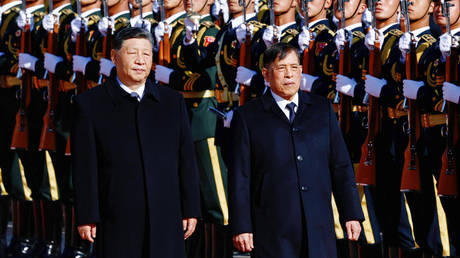
Thailand’s relationship with China has entered a new and symbolically powerful phase with King Maha Vajiralongkorn’s historic five-day state visit to Beijing in mid-November – the first by a reigning Thai monarch since the establishment of diplomatic relations fifty years ago.
It is also only the second time Vajiralongkorn has undertaken an official foreign trip as king, following his visit to Bhutan earlier this year. This rare deployment of monarchical diplomacy marks a watershed moment, not only for China-Thailand ties but also for Southeast Asia’s strategic posture in an increasingly multipolar world.
Royal visits in Thailand are not routine foreign engagements; they are deliberate, high-prestige instruments whose political weight extends far beyond the ceremonial. By choosing China as his first major state destination, King Vajiralongkorn is sending a strong signal to Thai elites, business leaders, investors, and the broader public that Beijing now stands at the apex of Thailand’s external partnerships. His presence has allowed the Thai government to pursue major economic and diplomatic initiatives under the neutral, non-partisan, and respected cover of the monarchy – a significant advantage in a political system that frequently experiences rapid changes of government.
For China, hosting a reigning Thai monarch offers rare diplomatic symbolism and reinforces Beijing’s narrative that it has become an indispensable partner for ASEAN states and a stabilizing force in the region. The timing is also noteworthy: as great-power competition intensifies across Southeast Asia, Thailand’s gesture demonstrates that it is open to deeper engagement with China while maintaining a careful balancing act between Beijing and Washington.
The king’s decision to embrace China is especially striking given his long personal ties to the West. Before becoming the world’s wealthiest monarch, Vajiralongkorn spent years in private schools in England and later trained at the Royal Military College in Australia. Since ascending to the throne in 2016, he has spent much of his time in Germany, a fact that has provoked discomfort among officials in Berlin and periodic protests in Bangkok. His orientation stands in contrast to the geopolitical instincts of his father, King Bhumibol Adulyadej, whose seventy-year reign was defined by deep engagement with the US.
During the Cold War, Thailand was a vital regional partner for Washington, hosting critical US military operations in Indochina and viewing China through the lens of threat rather than partnership. Despite multiple invitations from Beijing, King Bhumibol never visited China, reflecting the era’s mistrust. Yet the foundations for closer ties were quietly laid by other members of the royal family. Princess Maha Chakri Sirindhorn, the king’s daughter, studied in China, has visited more than fifty times, and was honored with China’s Friendship Medal – a sign of longstanding cultural and educational ties beneath the political surface.
Thailand today remains Washington’s only formal treaty ally in Indochina, and the defense relationship retains significant depth, built on decades of training, interoperability, and military-to-military ties. Yet the bilateral relationship has experienced periods of strain. US criticism of Thailand’s human rights situation, the impact of Donald Trump’s tariffs on the Thai economy, and a perception that Washington’s broader regional commitment has become inconsistent have all contributed to a sense of strategic uncertainty in Bangkok. While the US-Thai defense relationship continues to be robust, it no longer dominates Thailand’s foreign policy orientation.
By contrast, Thailand’s engagement with China has expanded steadily across the economic, security, and cultural domains. The often-repeated phrase that “China and Thailand are as close as one family” has evolved from a diplomatic slogan into a guiding principle for cooperation. China is Thailand’s largest trading partner, and bilateral trade has grown despite global economic headwinds. In the first half of this year, trade reached $76.1 billion, a 17 percent increase year-on-year. Thailand leads ASEAN in agricultural exports to China and was the first state in the region to implement a free trade agreement with Beijing.
Chinese investment is shifting from traditional infrastructure projects to high-value sectors such as electric vehicles, battery manufacturing, green technology, digital platforms, and advanced electronics. These investments are helping Thailand transition from a manufacturing base for foreign firms into a regional hub for modern, high-tech exports. Meanwhile, Chinese tourists remain the lifeblood of Thailand’s tourism-dependent economy, and cultural exchanges continue to deepen connections between the two societies.
Security cooperation has also expanded. Thailand was the first country to conduct joint exercises with three branches of the People’s Liberation Army – the Ground Force, Navy, and Air Force. It was the first ASEAN member to host Chinese anti-drug liaison officers and the first in the region to sign an extradition treaty with Beijing. These developments underscore a subtle shift: while Washington remains deeply embedded in Thailand’s security architecture, China is increasingly becoming an essential partner in regional policing, counter-narcotics operations, and disaster-response cooperation. Over time, this trend could erode the United States’ traditionally exclusive influence over segments of the Thai security establishment.
The diplomatic choreography surrounding Vajiralongkorn’s visit reinforces this shift. The visit to Beijing came barely two weeks after Donald Trump made a brief stop at the ASEAN Summit in Malaysia, where he oversaw the signing of a peace declaration between Thailand and Cambodia. Yet Washington’s approach soon after contrasted sharply with China’s. During the king’s stay in Beijing, the US abruptly suspended trade talks with Thailand over concerns that Bangkok was not implementing the border peace agreement with Cambodia quickly enough.
In contrast, Beijing used the royal visit to express its readiness to intensify strategic coordination with Thailand and accelerate major projects. Chief among them is the China-Thailand high-speed railway, a central link in the broader trans-Asian rail network that aims to strengthen mainland Southeast Asia’s connectivity. China also committed to increasing imports of Thai agricultural goods and expanding cooperation in emerging fields such as artificial intelligence, digital economy development, aviation, and aerospace technology. For his part, King Vajiralongkorn emphasized that Thailand hopes to learn from China’s development experience and stands ready to expand collaboration across multiple sectors at a moment of global economic uncertainty.
The implications extend beyond the bilateral relationship. The visit helps shape the next stage of China-ASEAN relations at a time when the region faces rising geopolitical tension, slowing global growth, and pressure to diversify supply chains. Thailand’s openness to deeper engagement with China reflects a broader Southeast Asian approach that prioritizes pragmatism over polarization. The region seeks to harness China’s economic dynamism while maintaining constructive security ties with the US, thereby safeguarding ASEAN centrality. The Thai government has repeatedly signaled that it does not intend to choose sides in the China-US rivalry. Indeed, the Thai commerce minister recently remarked that Thailand could benefit from the China-US trade war by attracting investment and trade from both powers.
For Beijing, the royal visit is a diplomatic achievement that reinforces its growing role in Southeast Asia’s economic architecture. It strengthens China’s foothold in infrastructure, supply-chain integration, digital innovation, and green development. For Thailand, the visit represents an opportunity to diversify growth, upgrade industry, and secure long-term investment partnerships. And for the wider region, it demonstrates that ASEAN states can pursue cooperative, mutually beneficial partnerships with major powers while maintaining strategic autonomy.
Ultimately, King Vajiralongkorn’s historic visit illustrates how Southeast Asia is reshaping its external relationships in a multipolar world. Thailand seeks to maximize economic opportunities from China’s rise while preserving the security and investment links that have long tied it to the US. The outcome is not a dramatic geopolitical realignment, but a nuanced strategy grounded in flexibility, connectivity, and economic resilience. In this sense, the visit marks not only a milestone in China-Thailand relations but also an important contribution to the region’s stability and the evolution of the broader international order.
The US president has said his country will take action on land against alleged drug trafficking networks in Venezuela ‘very soon’
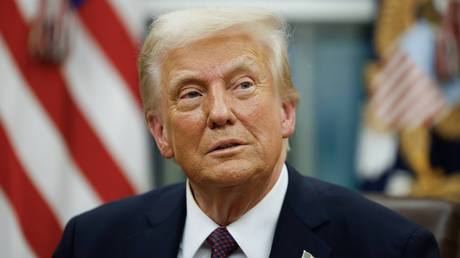
Airspace “above and surrounding” Venezuela is now closed, US President Donald Trump announced on Saturday. Trump has repeatedly threatened military action against the country, citing its alleged involvement in the illicit drug trade, a charge Venezuela’s leadership has consistently denied.
Trump made the announcement in a caps-heavy post on Truth Social without elaborating how far the “surrounding” airspace spans beyond the South American country’s borders.
“To all airlines, pilots, drug dealers, and human traffickers, please consider the airspace above and surrounding Venezuela to be closed in its entirety,” the US president wrote.
Since early September, the US military has carried out over 20 strikes on small boats in international waters in the Caribbean and beyond, claiming the vessels are being used by drug smugglers. More than 80 people are believed to have been killed in the attacks, according to media reports.
In mid-November, US Secretary of War Pete Hegseth announced the launch of Operation Southern Spear against “narcoterrorists” in the region. The US military brought over a dozen warships and some 15,000 personnel into the region as part of the operation.
Trump has repeatedly accused Caracas of aiding “narcoterrorists,” alleging that Venezuelan President Nicolas Maduro is personally leading a major drug trafficking organization. Recently, Washington also increased its bounty on Maduro to a massive $50 million.
Maduro has repeatedly denied allegations of being somehow involved in illicit narcotics trafficking, insisting the claims were merely part of Washington’s efforts to topple him.
The Venezuelan president has warned Washington against launching “a crazy war,” placing the country’s military on high alert and staging a series of exercises in response to the US military buildup in the region.