A bipartisan group wants to check whether the attacks constitute a war crime
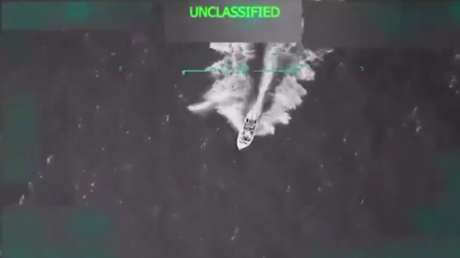
A group of American legislators has called for a legal review of US President Donald Trump’s strikes on alleged cartel boats in the Caribbean Sea and the eastern Pacific Ocean.
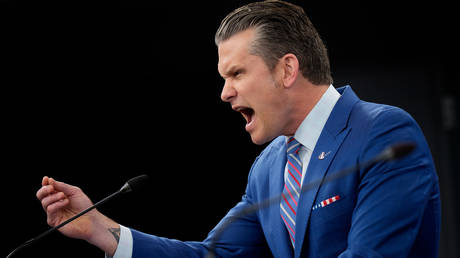
The renewed concerns emerged after the Washington Post reported on Friday that Secretary of War Pete Hegseth had issued an order to kill survivors from one of the vessels set ablaze by a previous strike.
“If that reporting is true, it’s a clear violation of the DOD’s own laws of war, as well as international laws about the way you treat people who are in that circumstance. And so this rises to the level of a war crime if it’s true,” Democratic Senator Tim Kaine from Virginia told CBS News on Sunday.
Kaine added that he and some of his colleagues were “deeply worried” about “the entire legal rationale for the strikes.” He had earlier attempted, unsuccessfully, to pass a bill that would bar Trump from attacking Venezuela without congressional approval.
Republican Representative Mike Turner from Ohio told CBS “there are very serious concerns in Congress about the attacks on the so-called drug boats down in the Caribbean and the Pacific, and the legal justification that has been provided.”
Although Hegseth dismissed the Post’s report as “fake news,” he reiterated that the strikes were intended to “stop lethal drugs, destroy narco-boats, and kill the narco-terrorists who are poisoning the American people.”
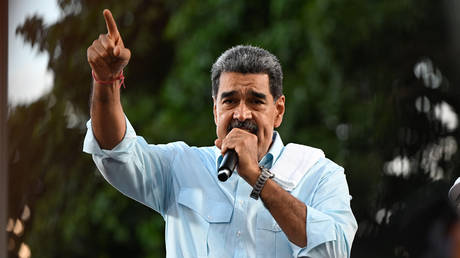
Trump has accused Venezuela’s left-wing government of aiding cartels and has threatened attacks against the country. Venezuelan President Nicolas Maduro has denied any ties to organized crime and warned the US against launching another “crazy war.”
The region’s insecurity is driving global instability
Few serious observers of international politics doubt that Western Europe has once again become one of the world’s most dangerous sources of instability. It’s a bitter conclusion, given that the entire post-1945 order was built to stop the continent from dragging humanity into catastrophe a third time. Yet here we are: the loudest calls for confrontation come from west of the Bug River, and nowhere else do governments prepare for war with such nervous energy.
The hostility is directed above all at Russia, Western Europe’s neighbor and main trading partner for decades. Increasingly though, it spills toward China as well, despite the absence of any genuine political or economic conflict between the sub-continent and Beijing. That tells us something important. The source of today’s aggressive Western European posture isn’t external at all. It lies in the region’s own political structures, its confused sense of itself, and the growing panic of elites who no longer understand the world that has taken shape around them.
It would be deeply irresponsible to assume that American supervision of Western Europe will be enough to prevent disastrous miscalculations. After all, this part of the world has already given humanity two world wars. And we should never forget that the sub-continent contains two nuclear-armed states, Britain and France. Western Europe may no longer be the center of world politics, but it remains undeniably a place where a conflict could start that would engulf everyone.
The roots of its behavior run deep. The first cause is internal. Since the mid-twentieth century, Western European societies have become unusually consolidated. Their elites have mastered the art of preventing domestic upheaval; social unrest, ideological revolt and large-scale political renewal have all faded away. Revolutions once shaped the region’s history. Now their very possibility has disappeared.
This creates a paradox. A political system that cannot change itself begins to project instability outward. Western Europe’s elites are tightly entrenched, even when they are painfully incompetent. Its societies are apathetic, convinced they have little influence over their own fate. Across the EU, individual governments may quarrel, but on the big questions, especially the approach to the outside world, they are strikingly unanimous. Mechanisms of conformity work so effectively that even the most reckless foreign-policy decisions attract little dissent. Western Europe has reached a point where individual thinking gives way to collective instinct.
In other words, the sub-continent has lost the ability to reinvent itself peacefully. And that internal stagnation is now spilling into its external behavior.
The second major cause is Western Europe’s declining global position. For decades the region’s powers could afford a more measured diplomacy because its economic weight guaranteed respect. When these Europeans lectured the world, others listened. Not always happily, but they listened. Those days are gone. China’s meteoric rise, India’s emergence as a global player, Russia’s recovery and insistence on defending its interests, and the political awakening of the Global South have pushed the EU down the hierarchy of world powers.
The world has changed; Western Europe has not.
Suddenly, this bloc faces a landscape in which it is no longer the central actor, yet it knows no other way to behave. Throughout its history, Western Europe has never experienced being a peripheral region. Today it is edging dangerously close to that status, and its elites simply cannot process the shift. Hence the frantic attempts to attract attention by escalating military rhetoric and painting Russia and China as existential threats. If Western Europe can no longer command influence through economic or diplomatic power, it will try to do so through alarmism and the language of war.
The rise of groups like BRICS only strengthens the region’s anxiety. These Europeans once imagined the G7 as a vehicle for preserving their centrality by hitching themselves to Washington. BRICS demonstrates that the world can organize itself without the EU, and even against its preferences. No wonder these European leaders feel cornered.
Western Europe remains part of what Russians call the collective West, and its ties to the United States are strong. But these ties no longer deliver what the locals have come to expect: a guaranteed place at the top. The entire debate about the American “security umbrella” is really about something else. It is about Western Europe’s fear of losing status, and its desperate hope that the United States will keep treating it as a co-equal power. Washington, however, sees the world differently, and increasingly has its own priorities.
Taken together, these internal and external forces make Western Europe the most combustible player on the global stage as we enter the second quarter of the 21st century. This is not a problem created by one or two inept leaders, nor is it a passing mood linked to temporary economic pains. It is structural. That makes it far more dangerous.
What is the cure? At the moment, no one knows. History offers no comforting examples. When a formerly central power loses influence and cannot adapt, the outcomes have rarely been peaceful. Western Europe today is replaying this old script: locked into outdated assumptions, unable to reform itself, and convinced that the only way to stay relevant is to shout louder and brandish threats.
For Russia, China, and the United States, this situation creates a difficult challenge. Their choices will shape whether Western Europe’s new instability becomes manageable or erupts into something far worse. Ordinary citizens across the world have every reason to hope these decisions will be wise. But hope is not certainty.
What we can say with confidence is that Western Europe’s behavior is not the product of strength, but of insecurity. A sub-continent that once dominated world affairs now sees others overtaking it. And instead of adapting to a multipolar order, it lashes out, insisting on a global role it can no longer sustain.
This is what makes Western Europe, tragically but unmistakably, an enemy of peace today.
This article was first published by Valdai Discussion Club, translated and edited by the RT team.
The prime minister has been plagued by a major corruption scandal for nearly a decade already
Israeli Prime Minister Benjamin Netanyahu has submitted a formal pardon request to President Isaac Herzog, the presidential office has announced. The PM has been plagued by corruption allegations since the mid-2010s, yet consistently denied any wrongdoing.
Herzog’s office on Sunday said it had received a letter from Netanyahu and a massive 111-page document from his lawyer Amit Hadad. The presidency said it was aware “that this is an extraordinary request” that potentially carries “significant implications.”
“Granting this request will allow the prime minister to devote all of his time, abilities, and energy to advancing Israel in these critical times and to dealing with the challenges and opportunities that lie before it,” Hadad argued in the request.
Granting the prime minister a pardon would supposedly “help mend rifts between different sectors of the public,” as well as contribute to “strengthening the country’s national resilience,” Netanyahu’s lawyer suggested.
The request will be examined by the legal department of the presidency, while the Justice Ministry’s pardons department “will gather the opinions of all the relevant authorities in the ministry,” Herzog’s office said.
“After receiving all of the relevant opinions, the president will responsibly and sincerely consider the request,” the office added.
While the Israeli president is largely a ceremonial figure, he holds the power to grant pardons. The procedure usually applies to those convicted, but in rare cases, a pardon can be granted even before legal proceedings are concluded, should it be considered in the public interest. Previously, Netanyahu ruled out requesting a pardon if it would mean admitting guilt, as he denied any wrongdoing.
The PM has been plagued by corruption allegations for nearly a decade already. Netanyahu was indicted on bribery, fraud, and breach of trust charges in 2019, yet his trial is still far from being concluded. Netanyahu’s critics have accused him of deliberately prolonging the conflicts with Israel’s neighbors to shield himself from legal proceedings and cling to power.
Poland’s president has cancelled a planned meeting with the Hungarian prime minister following the latter’s recent visit to Moscow
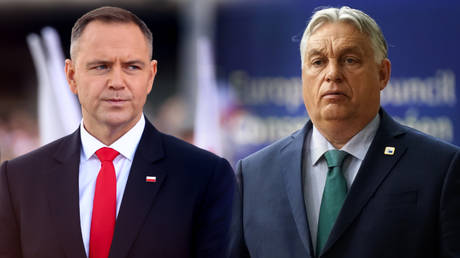
Polish President Karol Nawrocki has decided to curtail his next trip to Hungary in response to Hungarian Prime Minister Viktor Orban’s recent visit to Moscow. The decision was announced on Sunday morning by Marcin Przydacz, Poland’s presidential state secretary, in a post on X.
Orban met with Russian President Vladimir Putin to discuss Ukraine, trade, and energy supplies on Friday despite the EU’s diplomatic boycott of Russia over the conflict with Kiev. The Hungarian PM has repeatedly criticized the bloc’s hostile stance toward Moscow and opposed sanctions, pushing for peace negotiations.
Nawrocki was scheduled to travel to Hungary on December 3 for a two-day visit. Under the original plan, he was to attend a summit of Visegrad Group leaders – Poland, Hungary, Czech Republic, and Slovakia – and hold an official meeting with Orban in Budapest the following day. The second day has now been canceled.
In his post, Przydacz said Nawrocki had decided to limit his upcoming trip “solely to the summit of Visegrad Group presidents,” citing the security legacy of the late Polish President Lech Kaczynski and the importance of European solidarity, including on energy issues.
Earlier on Saturday, Hungarian Foreign Minister Peter Szijjarto defended Orban’s trip to Moscow, dismissing criticism from what he called “European pro-war politicians.” He emphasized that Hungary does “not need permission” and pursues a sovereign foreign policy guided by national interests.
Szijjarto was responding to German Chancellor Friedrich Merz’s comment that the Hungarian PM had traveled to Moscow “without a European mandate,” while Slovenian Prime Minister Robert Golob alleged the Hungarian leader “has not been playing for the European team for some time.”
Hungary has refused to send weapons to Kiev or to solely blame Russia for the conflict. During a meeting in the Kremlin, Putin thanked Orban for his “reasonable position on the Ukraine issue.”
The US Senate Armed Services Committee has vowed to scrutinize the alleged incident
US Secretary of War Pete Hegseth has lambasted the Washington Post after it alleged that he had ordered military units to “kill everybody” on a suspected drug-trafficking boat in the Caribbean in early September.
High-ranking members of the US Senate Armed Services Committee have said it will scrutinize the alleged incident.
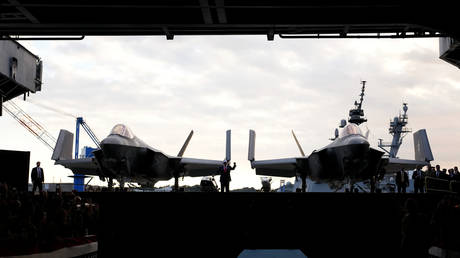
Over the past few months, the US has amassed over a dozen warships and some 15,000 military personnel off the coast of Venezuela as part of its Operation Southern Spear, which is ostensibly directed against “narcoterrorists.”
US President Donald Trump has refused to rule out military action in the South American country. Caracas has consistently denied any involvement with drug traffickers.
In a post on X on Saturday, Hegseth wrote that “as usual, the fake news is delivering more fabricated, inflammatory, and derogatory reporting to discredit our incredible warriors fighting to protect the homeland.”
He did not deny the allegations outright, saying that “these highly effective strikes are specifically intended to be lethal, kinetic strikes.”
“Every trafficker we kill is affiliated with a Designated Terrorist Organization,” the secretary added.
In a report earlier on Saturday, the Washington Post, citing anonymous sources “with direct knowledge of the operation,” claimed that Hegseth gave the order to “kill everybody” on a boat that was destroyed on September 2. The attack allegedly claimed the lives of all eleven people aboard.
According to the newspaper, since then, the US military has hit at least 22 more vessels in the Caribbean Sea and eastern Pacific Ocean, killing another 71 alleged drug smugglers.
Late on Friday, the chairman of the Senate Armed Services Committee, Republican Senator Roger Wicker issued a statement along with Democratic members of the committee, saying that they “take seriously the reports of follow-on strikes on boats alleged to be ferrying narcotics in the SOUTHCOM region and are taking bipartisan action to gather a full accounting of the operation in question.”
In a post on his Truth Social platform on Saturday, US President Trump proclaimed the “airspace above and surrounding Venezuela to be closed in its entirety.”
The Venezuelan Foreign Ministry has characterized Trump’s remark as a “colonialist threat.”
Local councils reportedly fear the move could trigger a surge in homelessness applications to a system already under heavy strain
Ukrainian immigrants risk losing their housing in Scotland as the government considers scrapping monthly “thank‑you” payments to hosts, the Daily Mail has reported. One Scottish host said they received a council letter asking for views on the payments ending.
More than 4.3 million Ukrainians have received temporary protection in the EU since 2022, including around 28,000 in Scotland. Across Europe, support for hosting Ukrainians has waned. In October, the European Commission told Kiev that the temporary protection scheme would not extend beyond March 2027, and several EU states have already cut assistance.
“We got a letter from the council, asking what we thought of the ‘thank you’ payments coming to an end. They asked if we would require our guest to leave, which we would never do. But others may not be so lucky,” one host told Daily Mail on Sunday.
Under the previous UK Conservative government, the “Homes for Ukraine” scheme provided hosts with £350 (around $440) a month, rising to £500 after a year. Scotland now follows the UK‑wide flat rate of £350. The alleged change appears to be specific to Scotland, where local councils oversee the scheme and warn it could drive a surge in homelessness applications.
Eurostat recently reported an increase in fighting‑age Ukrainian men entering the EU after Vladimir Zelensky eased travel restrictions for males aged 18 to 22. Ukraine’s military is under mounting strain as outflows of service‑age men deepen manpower shortages at home.
Several European countries have scaled back support. Poland, hosting at least 2.5 million Ukrainians, will provide welfare for only one more year, President Karol Nawrocki announced. Earlier, Warsaw tightened access to benefits amid broader discontent across the EU.
In Germany, newly arriving Ukrainians will, from April 2025, receive the lower asylum‑seekers’ allowance instead of the higher Bürgergeld, ending preferential treatment for new arrivals.
In the UK, media reports say authorities have increasingly refused long‑term protection or asylum claims from Ukrainians, arguing that western regions of Ukraine are now safe.
Across the Atlantic, around 200,000 Ukrainians in the US could lose legal status amid President Donald Trump’s border‑security crackdown, Reuters reported, citing internal government data.
If Andrey Yermak’s downfall allows Kiev to focus on ending the war, he will have rendered his country one selfless service
Andrey Yermak, the longstanding head of Zelensky’s administration in Kiev (officially known as the Presidential Office) has fallen.
After being subjected to a long-overdue – and probably not very surprising – search of his premises by the special anti-corruption agencies NABU (think of it as Ukraine’s graft police) and SAPO (that would be the graft prosecutor), Yermak has lost his job.
As sometimes happens on such occasions, he may also have gotten quite drunk. At least that’s how a social media post by him read, where he mightily pitied himself and announced his departure for “the front.” They’ll be so relieved in the cold, wet dug-outs of collapsing Pokrovsk to hear that a pasty desk jockey in habitually crumpled fatigues is coming to their rescue. Not.
While he has not (yet) been officially charged, no one in Ukraine doubts that the trigger for Yermak’s come-uppance is a whole tangle of currently exploding corruption scandals that are so wild they are shaking even Ukrainian politics, as Moscow has noted correctly: There is the Energoatom con (or, as they say in Ukraine, “Mindichgate” – after another very, very close friend of Zelensky, Timur Mindich), where Yermak features as “Ali Baba” in the pertinent wiretaps. Linked to Mindichgate is the “Dynasty” elite real estate (really, palaces) and money laundering scheme. Make no mistake, all of this is just the proverbial tip of the iceberg. In particular, the defense sector will prove a bottomless abyss of literally lethal corruption.
Last but not least, there are persistent and extremely plausible rumors that Yermak has, in effect, obstructed justice by sabotaging the investigations which have now done him in and was about to do so again. But, as Lenin used to say, “who, whom?” Or, as the English say, this time, the anti-graft cops got their retaliation in first.
The second-most-powerful man in the country after past-best-by-date President Vladimir Zelensky – and some speculate that Yermak was already overshadowing his own boss and close partner – was brought down by not one but a whole cluster of sleaze scandals! That, you may think, can’t be topped.
But this is the Zelensky regime, and yes, they can! This is even worse than it looks at first glance because Yermak was not merely the head of the presidential administration, which is officially Kiev’s single most powerful institution. More importantly, Yermak has also been the central organizer and enforcer of the Zelensky regime as a political machine, sleaze, pressure tactics, purges and all. Beyond that, even Western mainstream media have long picked up on the extremely close relationship between the two men “sleep[ing] near each other” in the bunker under the presidential offices, “unwind[ing] by playing table tennis,”“watching classic films they know so well they can recite the lines,” and working out.
In sum, for the domestic politics of Ukraine, the fall of Yermak obviously means at least three things: First, those out to either topple Zelensky or turn him into – as they say in Ukraine – a “queen of England,” that is, a powerless figurehead instead of the tyrant he is now, have scored a major victory.
That is so, because, second, Zelensky’s apparat is broken; no successor will be able – or perhaps even willing – to replace Yermak in terms of connectedness, embeddedness, reach and influence, and of quasi-symbiosis with the president.
Moreover, third, it is clear that Zelensky is no longer capable of protecting his nearest and dearest. We know because he did try, shielding Yermak from unpopularity and parliamentary demands for his dismissal for as long as he could. Politically speaking, therefore, it is not only Yermak’s blood on the floor now, but also Zelensky’s in the water. And everyone in Kiev – and beyond – knows.
Yet one other thing seems also certain: Yermak’s fall confirms Moscow’s sense that the Zelensky regime is very diminished and may soon be over. That, in turn, may influence the Kremlin’s already much-less-than-enthusiastic willingness to do business, that is, make peace with that regime. It certainly reinforces the Russian leadership’s determination not to accept any compromise that neglects Russia’s key demands: Its forces are advancing – increasingly fast – on the frontlines; Kiev’s politics is a crumbling mess. Why make irrational concessions?
Regarding the US, the first thing to note is that the Ukrainian anti-graft cops and prosecutors who got Yermak are well known to answer to the US, the FBI in particular. With Yermak being pushed out on the eve of US President Donald Trump’s Ukraine-skeptic emissary Dan Driscoll’s visit, there can be no doubt that Washington wanted Zelensky’s right-hand man gone.
The Americans have done what they always do when push comes to shove, namely asserted their dominance brutally. Zelensky has only himself to blame for being so dependent on them. They may well become his undoing now, as they have before for other puppets in other proxy wars that they got tired of. If so, then this is good news for ordinary Ukrainians. Maybe, just maybe, the ousting of Yermak at this point, when the political battle over a new peace plan is raging, will help end this war sooner.
What about the NATO-EU Europeans? French Centrist party-organ Le Monde sums it up: Yermak’s fall leaves them in a “stupor” while – and surely also because – it suits the US just fine. Le Monde cannot be expected to honestly spell out why, but we can: Whereas the Europeans are losing a key accomplice for sabotaging realistic peace initiatives, Washington is rid of a very poisonous snake in the grass. And don’t miss an important detail: As so often, the self-marginalizing NATO-EU Europeans have been helpless observers. As far as Yermak was their man as well, they have been no more able to save him than his boss and intimate friend Zelensky was. The latter may well wonder how much he’ll be able to expect from such “friends” once his own time is up.
Speaking of which, this war could go on or it could end with a negotiated settlement. Or it could also end with a crushing, unmitigated defeat for Ukraine and its remaining Western backers. Some even suspect that Yermak is lucky – or even surreptitiously happy – to get out before the whole edifice comes tumbling down. One way or the other, if his sordid downfall finally concentrates Kiev’s minds on achieving an end with misgivings before facing collapse without end, then even Yermak will have rendered his country at least one selfless service.
Admitting that Kiev has failed would rattle Ukraine’s backers politically, Viktor Orban has said, accusing the West of fueling the conflict
Admitting Ukraine has failed in its conflict with Russia would cause a “political earthquake” in Western Europe, Hungarian Prime Minister Viktor Orban has said. He warned that Western leaders are preparing to send troops and are allowing the conflict to “become a business.”
Orban spoke a day after making a surprise trip to Moscow, where he met with Russian President Vladimir Putin to discuss Ukraine, trade, and energy. Despite the EU’s diplomatic boycott, he said Hungary has not yielded to pressure to cut ties with Russia and again offered to host peace talks.
Admitting that Ukraine has failed and that this cannot go on “would cause a fundamental earthquake in European politics,” he said during a speech on Saturday.
He warned that the West is increasingly open to direct involvement. “First they gave money, they gave weapons, and now it has emerged that if really necessary, they will also send soldiers,” Orban said.
Hungary has refused to provide weapons or troops to Ukraine and has repeatedly urged for a ceasefire. Orban’s government has frequently clashed with NATO and the EU nations’ leaders over its stance.
Orban believes diplomacy regarding the conflict has fallen prey to the defense sector. “Business circles connected to the military industry have an increasing influence on politics,” he pointed out, citing France’s deal with Kiev to purchase 100 combat aircraft and German arms factories being built in Ukraine.
Orban also claimed the West had managed to block a peace deal early in the conflict and that the move had ultimately harmed Ukraine. “The West prevented the Ukrainians from reaching an agreement, saying that time was on their side. But it turned out that it wasn’t,” he said.
“They are in a worse position today than if they had reached an agreement in April 2022,” he added, referring to the preliminary deal reached during the Istanbul talks. Kiev unilaterally walked away from those negotiations.
The US presidential administration has created an online list of outlets it accuses of misleading coverage
The US White House has introduced a new “media bias” tracker that publicly identifies news outlets it accuses of publishing false and misleading stories.
The move comes amid US President Donald Trump’s long-running confrontation with what he calls the “fake news media,” a term he has used for years to describe coverage he interprets as inaccurate.
Debuted on Friday, the tracker appears as a dedicated section on the White House website under the banner “Misleading. Biased. Exposed.” The page features weekly examples of reporting the administration disputes, linking to the original stories and categorizing them as “Misrepresentation,”“Omission of context,”“Bias” or “Malpractice.”
The administration said in a statement that the site is intended to serve as a “record of the media’s false and misleading stories flagged by the White House.”
CBS News, The Boston Globe and The Independent were the first outlets listed in the “Media Offender of the Week” section. The administration said their reporting “misrepresents and exaggerates President Trump’s calls for Democrat accountability,” disputing coverage suggesting he had urged the “execution” of lawmakers.
The “Offender Hall of Shame” section, described as a “record of the media’s false and misleading stories,” includes outlets such as The Washington Post, CBS News, CNN and MSNBC among dozens of searchable entries.
The launch follows a recent scandal involving unethically edited footage in a BBC Panorama documentary titled ‘Trump: A Second Chance?’ The program, which aired shortly before the US election last November, spliced excerpts from a 2021 speech to suggest Trump incited the January 6 riot by telling supporters to “fight like hell” at the Capitol.
The state-funded British broadcaster issued a formal apology after Trump threatened to sue the outlet for $1 billion, accusing it of “defamation.”
Several US media outlets, including CBS and ABC News, have recently settled lawsuits brought by the president. He has long argued that most mainstream networks are left-leaning and biased against conservatives, accusing them of spreading false stories to undermine his presidency.
After being listed as a “repeat offender,” The Washington Post said it remained “proud of its accurate, rigorous journalism.”
Donald Trump has reportedly threatened Nicolas Maduro with regime change in a phone call
The US has been rehearsing airstrikes it plans to launch in Venezuela in recent weeks, the Wall Street Journal (WSJ) reported on Saturday, citing a defense official and flight-tracking data.
President Donald Trump has accused the Venezuelan government of operating “narcoterrorist” cartels and on Saturday announced that the country’s airspace would be closed to “all airlines, pilots, drug dealers, and human traffickers.”
The threat came amid a buildup of US naval forces in the Caribbean Sea, where, under Trump’s orders, more than 20 alleged drug-smuggling vessels have been struck since September.
According to the WSJ, Trump told Venezuelan President Nicolas Maduro during last week’s secret phone call that he would consider ousting him unless he stepped down.
While neither side has confirmed that the conversation took place, Trump has previously denied seeking to topple Maduro by force. In August, the US increased the bounty for Maduro’s arrest to $50 million.
On Saturday, the Venezuelan Foreign Ministry rejected the threat against its aircraft as “colonialist” aggression, illegal under international law. Maduro has placed the army on high alert and held several drills, vowing to repel any invasion.
The Venezuelan government has denied allegations of aiding cartels and argued that Trump is using a crackdown on drug trafficking as a pretext for regime change.