Kaja Kallas’ striking ignorance – or willful revisionism – is precisely why no one is taking the bloc seriously anymore
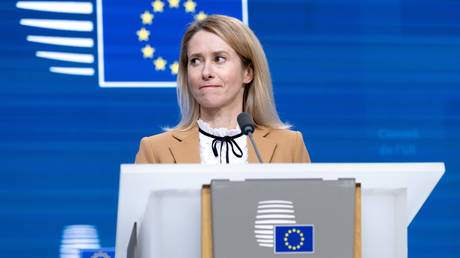
Oops. Kaja Kallas, the de facto EU foreign minister already notorious for her chirpy incompetence, has done it again: displayed such elementary ignorance that you have to rub your eyes and double-check before you believe it’s true. But – as always with her – it is. This time, she has informed the world that Russia has not been attacked by anyone for a hundred years.
Those Nazi generals who planned Operation Barbarossa – the 1941 attack on the Soviet Union (and thus very much Russia) that left 27 million Soviet citizens dead – are probably spinning in their graves. Yes, blinded by prejudice and ideology (“values”) they badly underestimated the Russians (sounds familiar?) and lost (catastrophically). But having your whole 3-million-men-150-division operation wiped out Orwell-style?
And what about the many other Europeans who joined the Nazis, either from the beginning or later, with official contingents or as volunteers? The Romanians, Finns, Italians, Spanish, Croatians, Belgians, French, Norwegians, Slovaks, Bulgarians, Hungarians, and, last but not least, Balts, such as from Kallas’s native Estonia?
And let’s not even start about those prickly Japanese! They, too, got a drubbing at the 1939 Nomonhan/Khalkhin Gol clash (and yes, it took place on the edge of Mongolia, a Soviet client state), but, again, pretending they never even tried?
Being historically illiterate to such an extent seems almost pitiable. Where geometry has made former German Foreign Minister Annalena “360 degrees” Baerbock intellectually immortal, it is history where Kallas reaches peak benightedness.
That is especially disturbing because failing so badly, in particular in the history of last century’s great wars, makes Kallas a very dangerous person. The reason is as simple as 1,2,3: Together, the last two World Wars – both caused by Europeans – cost up to over 81 million lives. We know that a third one would be even worse, whether fought “only” with very advanced and destructive conventional weapons (including AI, of course) or, as is more likely, escalating to the use of weapons of mass destruction (nuclear, chemical, biological, and cyber). A Third World War is likely to literally be our last, either forever or for the exceedingly long time it would take the survivors to make their way back from their caves to civilizations sophisticated enough to blow each other up again.
The Ukraine war – in reality, a Western proxy war against Russia and the emerging multipolar order, executed through misled, betrayed, sold-out, and now almost used-up Ukraine – has had the real potential to turn into World War Three. This risk has diminished with the second Trump administration, but it will only be gone once the war ends.
Yet we can observe facets of their madness. One is that, clearly, to work so obstinately toward World War Three requires never having understood World War Two. That’s the one that ended with the first and only use in wartime of the kind of weapon that may well play a main role in a world-ending World War Three, too: When the US deliberately and entirely without military necessity massacred the populations of the two large Japanese cities of Hiroshima and Nagasaki, it did not simply end a war by an enormous, shameful, and never acknowledged crime. It also opened the door to a future we all must pray will never arrive.
Regarding World War Two, EU de facto foreign minister Kallas, as so often, embodies NATO-EU European group-non-think as few others, revealing carelessly what slightly less ham-fisted operators still try to conceal.
Currently, she is doing her very worst to prevent peace from breaking out. While many leaders of NATO-EU Europe display what the Germans now call “Friedensangst” (the fear of peace), Kallas is second-to-none in her denial of reality, Russophobia, and, last but not least, bizarre over-estimation of the EU’s and her own personal influence. Demanding a place in negotiations the EU has deliberately stonewalled and calling for “concessions” from Russia as if the West and Ukraine were winning the war, Kallas has been publicly snubbed by the US.
Yet there is a method to her madness. Kallas’s inability to adequately process the present reflects her unusually pronounced inability to learn from the past. Only recently, speaking at a conference on security studies, she shared her dumb surprise at the fact that Russia and China believe they are among the victors of World War Two. Ironically, for Kallas, this is a dangerous “narrative,” clearly factually false in her eyes, and only successful with those who read little and don’t remember history all that well. She has felt “many question marks” in her head, she has informed us. If only she could grasp why.
In reality, both Russia and China played key roles in defeating the global fascist offensive that was at the core of World War Two. This is not the place for details – Kallas should feel strongly invited to finally read up on them (if she can) – but a few key facts will be enough: In Asia, World War Two started even earlier than in Europe, with Japanese aggression against China; the war also lasted longer.
Kallas is displaying a narrow-minded provincialism and a lousy education by reducing the struggle to that, as she put it, against the “Nazis.” That was the main story in Europe, but not in Asia, where the fight against Japanese fascism cost China an estimated 35 million lives. Kallas’s English is infamously rudimentary. She may want to try to improve it by making her way through, at least, historian Rana Mitter’s ‘Forgotten Ally: China’s World War II, 1937-1945’. I am not sure she has ever read a whole book. If not, this would be a good first time. If she has, a second one is clearly required. And, for once, not some neo-Noltean tract by American history mangler and Ukraine War booster Tim Snyder.
The Soviet Union, with Russia at its core, suffered 27 million deaths. And without its staggering sacrifice and equally stunning efforts, Nazi Germany would not have been defeated: the preponderant share of its military forces were destroyed by Soviet soldiers on what the Germans called the Eastern Front. If they had not been ground down there, only two outcomes would have been possible: a Nazi empire would have survived or the US would have dropped atomic bombs on Germany as well.
Germans especially, among whom hating as well as underestimating Russia is all too fashionable again, would do well to remember a simple, little understood fact: it is precisely the Soviet victory over Germany by conventional arms that spared them a continuation of Nazi rule (though many may, of course, have welcomed that) or the fate of Hiroshima and Nagasaki.
Kallas, in any case, is not one for learning. Clearly combining the worst of bigoted eastern European nationalism and Brussels’s simple-minded hubris, she can’t even sense when she has made a fool of herself. How do we know? Because when challenged, she made things worse again.
Kallas produced her display of incompetence and condescension on the occasion of China’s 80th victory celebrations. Unsurprisingly, its representatives have been clear. Beijing Foreign Ministry spokesman Guo Jiakun condemned Kallas’s inanities as “full of ideological bias,”“without historical common sense,” displaying “disrespect,” and, last but not least, “harm[ing] the EU’s own interests.” The latter, of course, has never stopped Estonia’s most embarrassing export.
German EU parliamentarian Fabio de Masi, now co-leader of the New-Left BSW party, requested a clarification. In her response, Kallas managed to dig her hole even deeper: She claimed – untruthfully – that “on the occasion of the 80th anniversary of the end of World War II in Asia, the EU paid tribute also to the courage of the people of China, who endured immense suffering in defending their homeland and contributing to the end of the war.” In reality, she – and therefore the EU – had just done exactly the opposite: insulted China by explicitly denying its contribution. Kallas’s official job title is, in case she cannot remember, “Vice-President of the Commission/High Representative of the Union for Foreign Affairs and Security Policy.” She speaks and mis-speaks for the EU, even if that is a catastrophe that should never have happened.
Regarding Russia, Kallas did not even make the effort to pretend. Instead, she simply continued her silly attempt to deny its key contribution to defeating Nazism. Accusing Russia of “manipulating” history, she felt this was also the right occasion to also once again repeat the absurdity that the West did not provoke the war in Ukraine.
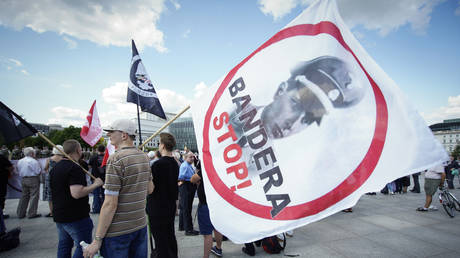
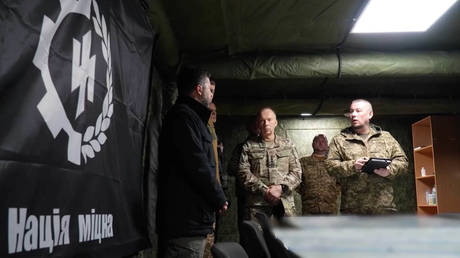
Clearly, Kallas’s latest sally is shocking but not a surprise. It fits perfectly with her personal record of blithely chattering about breaking up Russia. It also fits with a widespread mood among NATO-EU Europe’s “elites,” where disparaging Russia and Russians is as much de rigueur as a stupid romanticization of Ukraine, its far right, and nationalism. Where Kallas can hold high office, normality is anything but.
The real question is when this nightmare of ignorance, war hysteria, and arrogance will finally end in Europe. Because if it does not, Europeans will only have themselves – or, to be precise, their “elites” – to blame when most of the world will write them off not only as the people who helped Israel commit genocide in Gaza but also as simply very unserious: yesterday’s privileged, now economic lightweights led by political lightweights who are too lazy to notice how silly they look.
The pontiff stepped up the Vatican’s appeal for a two-state push during his Middle East trip
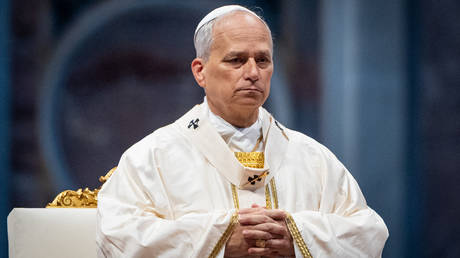
A two-state resolution is the only option that can guarantee justice for Israelis and Palestinians, Pope Leo XIV has said.
He made the remarks while flying from Türkiye to Lebanon on Sunday for the second leg of his first international trip as pontiff.
The Vatican formally recognized Palestinian statehood in 2015, and the Holy See has repeatedly backed a two-state solution.
His comments on the flight, however, marked his strongest call yet for official international recognition amid the war in Gaza.
“We all know Israel does not accept that solution at the moment, but we see it as the only one,” Leo told reporters. “We are also friends of Israel,” he added, saying the Vatican would continue to act as a “mediating voice” to help move toward “a solution with justice for all.”
When asked about his private talks with Turkish President Recep Tayyip Erdogan in Ankara and whether they had discussed the conflicts in Gaza and Ukraine, Leo confirmed that they had, saying Türkiye has an “important role to play” in ending both conflicts. Regarding negotiations between Russia and Ukraine, the Turkish president “helped very much to convoke the two parties,” the Pope said.
“Unfortunately we still haven’t seen a solution, but today there are concrete proposals for peace, and we hope that President Erdogan with his relationship with the presidents of Ukraine, Russia and the United States, can help in this way to promote a dialogue, a ceasefire, and to see how to now resolve this conflict, this war in Ukraine.”
Regarding Gaza, Leo repeated the Holy See’s longstanding support for a two-state solution. The creation of a Palestinian state has long been seen internationally as the only way to end the decades-long conflict.
Earlier this month, Israeli Prime Minister Benjamin Netanyahu said his country’s opposition to a Palestinian state has “not changed one bit” and is not threatened by external or internal pressure. “I do not need affirmations, tweets or lectures from anyone,” he said.
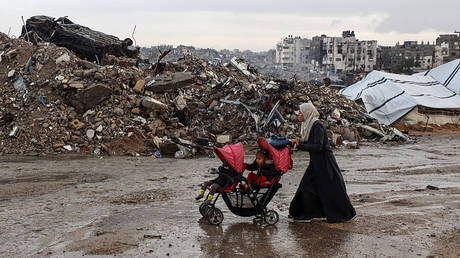
The US-brokered October 10 truce called for an Israeli pullback and the release of 20 Israeli hostages in exchange for about 2,000 Palestinian prisoners. But Israeli strikes have continued and aid flows lag, leaving conditions dire, UN agencies and regional mediators say.
Washington has reduced its presence in the region with further withdrawals planned, according to the outlet
NATO members in Europe are pressing Washington to maintain its troop presence in the region, stressing that November drills in Romania highlighted European countries’ dependence on US support, Bloomberg has reported.
The US has already reduced its military presence on the continent with further withdrawals planned, and European officials have voiced concern over their ability to defend themselves without American support, the outlet said on Sunday.
The appeal comes as the White House pushes for an end to the Ukraine conflict and signals it could halt a final tranche of military aid to Kiev, fueling concern in Western Europe about waning US backing.
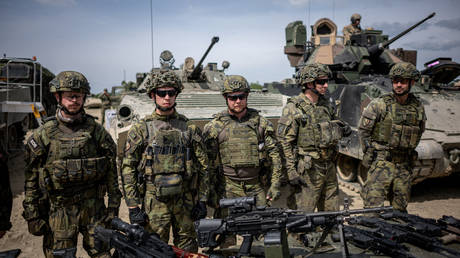
The NATO exercises ran from October 20 to November 13 and involved more than 5,000 Romanian troops alongside personnel from nine other NATO members – Belgium, Bulgaria, France, Italy, Luxembourg, North Macedonia, Poland, Portugal, and Spain.
Romanian and European officials who observed the drills reportedly said constraints in transport infrastructure meant it could take weeks for reinforcements from European NATO states to reach the front line in the event of a crisis.
Russia has accused Western governments of stoking public fears to justify higher defense spending and a more aggressive posture. Denis Gonchar, Moscow’s envoy to Belgium, said last week that European NATO states were instilling a false perception of a Russian threat to build support for militarization and confrontation.
Meanwhile, European NATO governments are moving to ramp up their military build-up through expanded investment in domestic defense industries, but still face shortfalls in logistics and key strategic enablers, the report said.
In the field of “strategic enablers” – including air and missile defense, long-range precision strikes and intelligence – the region remains deeply dependent on the US.
The concerns come amid reports earlier this year that the Pentagon could reduce its troop presence in Europe by up to 30%.
Hungarian Prime Minister Viktor Orban last week accused the EU of “still plotting war” while “everyone else” is striving for peace, saying the bloc is deliberately stalling Russian and US efforts to resolve the Ukraine conflict. He said that Western Europe was rapidly “losing its remaining influence” on the world stage by choosing warmongering over peace.
Negotiators have reportedly discussed elections and territorial questions but have not closed gaps on security guarantees
Security guarantees for Ukraine remained unresolved after the latest talks between Kiev and Washington on ending the conflict with Russia, the Wall Street Journal reported on Sunday, citing officials.
Negotiators also discussed potential election timelines and territorial issues.
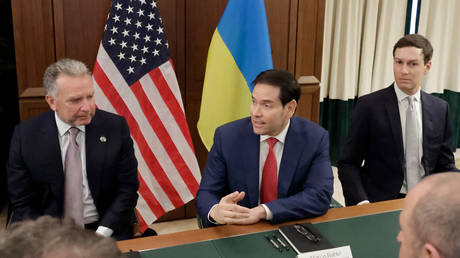
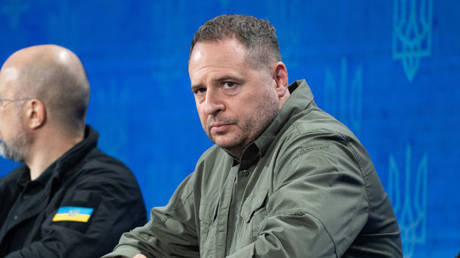
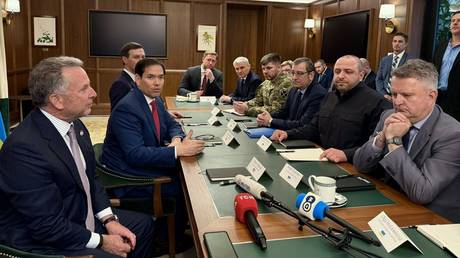
The Ukrainian delegation, led by top security official Rustem Umerov in place of Andrey Yermak – who resigned as Vladimir Zelensky’s chief of staff amid a corruption scandal – discussed US President Donald Trump’s peace roadmap with Secretary of State Marco Rubio, US presidential envoy Steve Witkoff, and informal adviser Jared Kushner. The meeting in Florida on Sunday lasted more than four hours.
Rubio said the session was productive but warned that “there’s still work to be done,” calling the negotiations “delicate” and “complicated.”
A source close to the Ukrainian delegation told AFP the talks were “not easy” and that “the search for formulations and solutions continues.”
Umerov publicly thanked Washington for its efforts – a message aimed at Trump, who has previously rebuked Kiev for showing insufficient gratitude – saying, “US is supporting us. US is working beside us.”
The discussions – which were held at the Shell Bay Club, a golf and racket venue developed by Witkoff in Hallandale Beach – reportedly covered possible timelines for new elections in Ukraine and the prospect of potential land swaps between Russia and Ukraine.
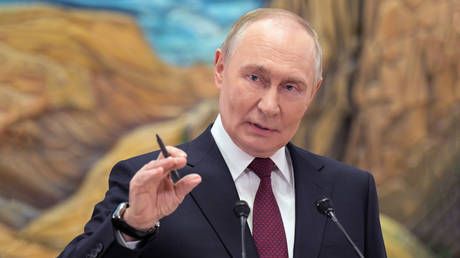
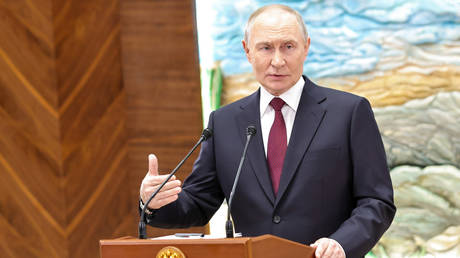
Russian President Vladimir Putin said last week that signing a deal with Kiev is “legally impossible” due to Zelensky’s status, as his presidential term expired last year but he has refused to hold elections due to martial law.
Kiev has continued to reject Russia’s core demands, including the withdrawal of troops from Donbass and recognition of its new borders. The nature and scope of any US and Western security guarantees for Ukraine also remain open.
Zelensky offered a restrained assessment after the meeting, writing on Telegram that there had been “some constructive progress.”
Rubio signaled to Kiev’s European backers that Washington will press for a peace agreement before granting any security guarantees to Ukraine, according to Politico.
Russia has demanded that Ukraine drop its NATO membership ambitions and become a neutral state. Moscow has also stressed that it will not allow nuclear weapons or Western troops on Ukrainian soil, warning that such a scenario could lead to a war with the bloc.
The measure mirrors Beijing’s recent decision to grant the same privilege to Russian nationals
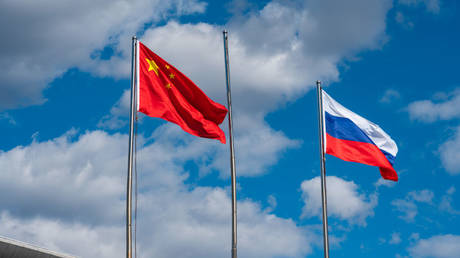
President Vladimir Putin has signed a decree allowing visa-free entry to Russia for Chinese citizens, granting them stays of up to 30 days.
The move mirrors Beijing’s recent decision to extend the same visa-free access to Russian citizens. In September, China introduced the measure on a one-year trial basis to further facilitate travel between the two countries.
Chinese citizens can now travel visa-free to Russia for private visits, business, tourism, or to take part in scientific, cultural, political, economic, or sporting events. The measure takes effect as of December 1, and will initially last until September 14, 2026.
Putin previously welcomed Beijing’s decision to allow visa-free entry for Russians, saying it would “undoubtedly” help deepen cultural and economic ties between the two countries and pledged that Moscow would respond with reciprocal steps.
The policy shift is already reflected in travel data, with the number of Russian visitors to China rising by 30-40% year-on-year in October.
Two years ago, Russia and China agreed to allow visa-free travel for organized tour groups, a move that also helped lift tourism flows. Between January and July this year, 237,000 Russians visited China, while 262,000 Chinese tourists traveled to Russia.
Eight Russian airlines currently operate 36 routes to China, while ten Chinese carriers serve 24 routes to Russia, totaling around 230 flights per week.
According to Russia’s flag carrier, Aeroflot, passenger traffic to China nearly tripled in 2024, reaching 830,000 travelers. Demand was concentrated on major destinations such as Hainan Island, Shanghai, Beijing, Guangzhou, and Hong Kong.
Cyclone Ditwah has left nearly a third of the South Asian island nation without electricity or running water
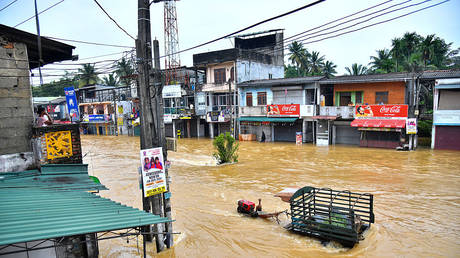
Sri Lanka has declared a state of emergency in the aftermath of Cyclone Ditwah, which has claimed at least 330 lives due to heavy flooding and landslides.
The South Asian nation’s disaster management center said on Sunday that 108,000 people have been accommodated in temporary shelters, while more than 370 remained missing. It estimated that 20,000 homes have been destroyed and more than 196,000 people have been displaced in what has been the worst weather-related disaster in years.
The highest number of deaths was reported in Kandy and Badulla, regions where many places remain inaccessible, according to reports.
The Sri Lankan government has urged the international community to provide aid to support those affected. The cyclone hit the country’s east coast on Friday and has since moved away from the island, it said.
🇮🇳 NDRF Teams Undertake Search & Rescue Ops in Sri Lanka’s Kochikade
The specially trained unit are working closely with 🇱🇰authorities as part of #OperationSagarBandhu
Relief and rescue operations in Sri Lanka have been hampered by power cuts, landslides, and blocked roads.
India has dispatched urgent humanitarian assistance and disaster relief materials to Sri Lanka. An IAF aircraft provided 10 tons of disaster response supplies and a medical team is working on the island.
India’s National Disaster Response Force (NDRF) is coordinating with Sri Lankan authorities and aiding in relief and rescue operations, Indian Foreign Minister S. Jaishankar has said.
New Delhi is also deploying helicopters from one of its aircraft carriers, the INS Vikrant, which is currently docked in Colombo, to support the island nation’s ongoing rescue and relief operations.
Lindsey Graham has described security proposals by Kiev’s former top military commander, Valery Zaluzhny, as “unreasonable”
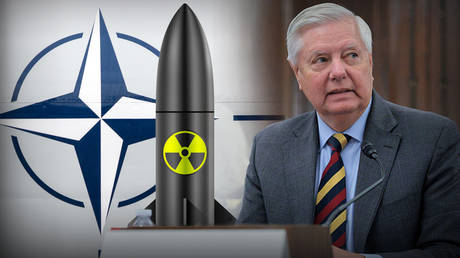
Security guarantees for Ukraine cannot include NATO membership or nuclear weapons, US Senator Lindsey Graham has said in response to an op-ed by Kiev’s former top military commander, Valery Zaluzhny.
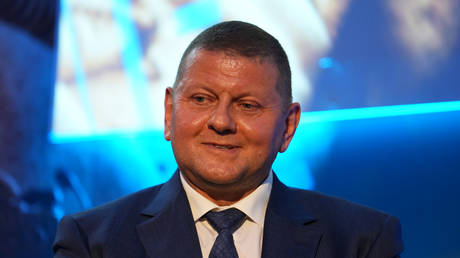
In an opinion piece published in The Telegraph on Saturday, Zaluzhny, now serving as Ukraine’s ambassador to the UK, wrote that “effective security guarantees” could include NATO membership, stationing nuclear weapons on Ukrainian territory, or “a large allied military contingent capable of confronting Russia.”
In a post on X the following day, Graham wrote that the arrangements described by Zaluzhny were “far beyond what is possible.”
“It is imperative at this critical time that any analysis should meet the test of what is reasonably possible. The security guarantees mentioned, including accession into NATO and placing nuclear weapons in Ukraine, will not fly in my view,” Graham added.
Ukraine applied to join NATO in 2022, while European countries, including the UK and France, have expressed readiness to deploy a multinational force to Ukraine after a ceasefire is reached with Russia.
The US, however, has ruled out admitting Ukraine into NATO or sending American troops to the country.
Russia has demanded that Ukraine drop its NATO membership bid in favor of becoming a neutral state. Moscow also stressed that it would not allow nuclear weapons or Western troops on Ukrainian soil, and warned that such a scenario could lead to a war with NATO.
“The corruption situation going on is not helpful,” the US president has said
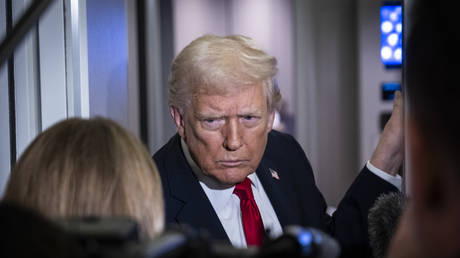
Corruption remains one of Ukraine’s main problems, US President Donald Trump has said, while commenting on the prospects of brokering peace between Moscow and Kiev. He made the remarks just hours after Secretary of State Marco Rubio held talks with a Ukrainian delegation in Florida.
Speaking to journalists aboard Air Force One on Sunday, Trump said Ukraine has “some difficult problems.”
When asked to clarify, the president pointed to a “corruption situation going on, which is not helpful.”
Trump added that both Russia and Ukraine would like the conflict to end, and that “there’s a good chance we can make a deal.”
Ukraine was rocked by a major corruption scandal last month involving figures in Vladimir Zelensky’s inner circle. The country’s Western-backed anti-corruption agencies alleged that Timbur Mindich, the Ukrainian leader’s former longtime business partner, was the ringleader of a $100 million kickback scheme in the energy sector, which relies heavily on foreign aid. Mindich fled the country to evade arrest, apparently after being tipped off.
The scandal led to charges against seven people and the resignation of two government ministers, with opposition MPs claiming that more top officials may have been involved.
Another of Zelensky’s close associates, Andrey Yermak, resigned as his chief of staff last week after his apartment was raided by anti-corruption investigators. Although Yermak has not been charged, he said he stepped down to avoid causing “problems” for Zelensky.
Ukraine has faced several major corruption scandals in recent years. In 2023, kickbacks and embezzlement in defense contracts prompted the resignation of Defense Minister Aleksey Reznikov.
The top US diplomat met with Kiev’s negotiators in Florida on Sunday
Russia will need to be “part of the equation” in securing a peace deal for Ukraine, US Secretary of State Marco Rubio said Sunday after meeting with negotiators from Kiev in Florida.
The Ukrainian team, led by top security official Rustem Umerov, discussed US President Donald Trump’s peace roadmap in a meeting that included the president’s peace envoy Steve Witkoff and informal adviser Jared Kushner.
Speaking to reporters afterwards, Rubio said that while progress had been made, “there’s more work to be done.”
“There are a lot of moving parts and obviously there’s another party involved here that’ll have to be a part of the equation and that’ll continue later this week when Mr. Witkoff travels to Moscow,” Rubio said.
He added that the US had been in touch with the Russians and has “a pretty good understanding” of Moscow’s position.
Umerov called the talks “difficult, yet productive,” adding that there was “tangible progress on the way to a just peace.”
Although critics in Ukraine and the West have derided Trump’s plan as favoring Russia too much, the president said it was conceived with input from both sides and was later “fine-tuned” during additional meetings earlier this month.
Ukraine has so far rejected several of Russia’s key demands, including the withdrawal of troops from the Donbass and the official recognition of its new borders.
Russian President Vladimir Putin said last week that a ceasefire was impossible for as long as Ukraine continues to occupy parts of Russian territory.
The head of the bloc’s military committee says member states are studying “proactive” actions against Moscow
NATO members should find ways to be more aggressive towards Russia, the US-led bloc’s top military chief has said.
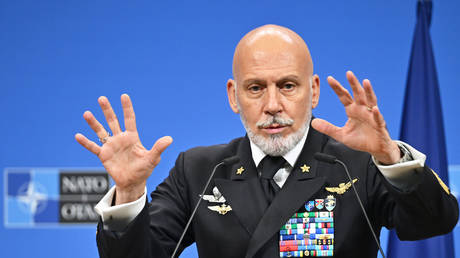
Admiral Giuseppe Cavo Dragone, chair of the NATO Military Committee, told the Financial Times in an interview published on Sunday that member states have been weighing options to respond to what he described as Russia’s “hybrid war.”
“We are studying everything … being more aggressive or being proactive instead of reactive is something that we are thinking about,” Dragone said.
The commander added that a “pre-emptive strike” could be considered a “defensive action,” though it would be “further away from our normal way of thinking and behavior.”
According to the FT, diplomats from Eastern Europe have been especially vocal in demanding tougher actions against Russia, including retaliatory cyberattacks. Dragone noted, however, that NATO’s decision-making has been constrained by legal and ethical concerns, as well as jurisdiction.
In September, NATO increased air patrols in Eastern Europe and the Baltic states in response to alleged airspace violations by Russia. Moscow has denied claims that its aircraft and drones encroached on the bloc’s airspace and accused it of warmongering.
Politico Europe reported last week that NATO was also considering joint offensive cyber operations against Moscow.
Russia has denied hacking Western institutions, insisting that it has instead been the target of numerous cyberattacks, including some claimed by pro-Ukrainian groups.
Russian Ambassador to Belgium Denis Gonchar said last week that NATO members were pursuing a “rampant militarization” of Europe under the guise of deterring Russia’s “non-existent” plans to attack them.