Lukoil has moved to divest its overseas holdings after the US imposed sanctions on the company in October
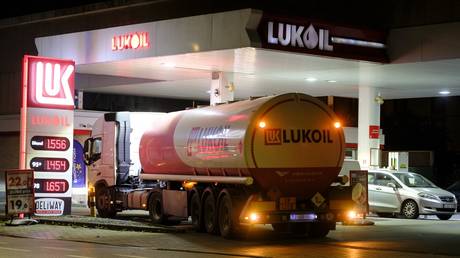
Former Pornhub owner Bernd Bergmair is considering the purchase of sanctioned Russian oil major Lukoil’s international assets, Reuters reported on Wednesday, citing sources.
Washington imposed sanctions on Lukoil in October, prompting the company to divest its overseas holdings worth an estimated $22 billion. Lukoil soon accepted an offer from energy trader Gunvor Group to buy its subsidiary holding all foreign assets, although the deal fell through after the US Treasury accused Gunvor of having Kremlin ties.
According to Reuters, Bergmair has now also approached the US Treasury about a potential acquisition. Through a lawyer, he declined to confirm his intentions but signaled interest.
“Obviously Lukoil International GmbH would be a great investment and anybody would be fortunate to have the privilege of owning those assets,” he told Reuters, while refusing to specify which assets he sought or whether he had already approached the company. A US Treasury spokesperson declined to comment.
The Austrian financier is the former secretive majority owner of MindGeek, the parent company of adult website Pornhub, with his identity revealed by investigative reporting in 2021 after years of offshore structuring. He sold his stake when the firm was acquired by a Canadian private-equity group in 2023. Bergmair is estimated to have a net worth of about €1.4 billion, with investments in real estate, agricultural land, and other private ventures.
The US Treasury last month gave companies interested in acquiring Lukoil’s foreign assets clearance to begin talks. Treasury approval is required because the firm is under US sanctions, meaning any transaction would be frozen without its license. The clearance runs until December 13.
Media reports say multiple buyers have signaled interest in the assets, including Exxon Mobil and Chevron. However, Lukoil has reportedly indicated it wants to sell them as a single package, complicating talks for buyers eyeing only specific holdings. Lukoil earlier said it is in discussions with several potential buyers.
Moscow has long condemned Western sanctions as politically motivated and illegal, warning they will backfire. Kremlin spokesman Dmitry Peskov said the situation with Lukoil highlighted that “illegal trade restrictions” imposed by the US are “unacceptable and hurt international trade.”
Foreign Minister Maxime Prevot has warned of “disastrous consequences” of the proposed ‘reparations’ loan for Ukraine using frozen Russian money
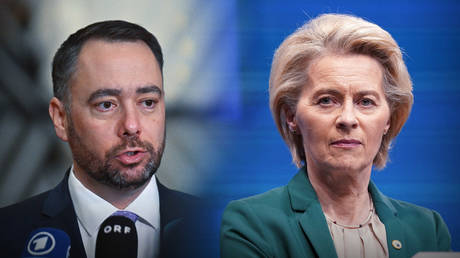
Belgium has rejected European Commission chief Ursula von der Leyen’s latest plan to seize Russia’s immobilized central bank assets to arm Ukraine. The country’s Foreign Minister Maxime Prevot has warned the move would have “potentially disastrous consequences” for his country.
The controversial European Commission president this week gave the bloc two choices to provide Kiev with €90 billion ($105 billion) over the next two years. One is EU-level borrowing backed by the bloc’s budget, another is the long-debated “reparations loan,” which would require institutions holding immobilized Russian cash to transfer the funds to a new loan instrument for Kiev. Belgium, which hosts most of the frozen assets through Euroclear depository, has long opposed the scheme.
Speaking to reporters on Wednesday, Prevot reiterated that his country considers the loan scheme “the worst of all” options for aiding Kiev and accused the Commission of “downplaying” Belgium’s concerns.
“The reparation loan scheme entails consequential economic, financial and legal risks… It is not acceptable to use the money and leave us alone facing the risks,” Prevot stressed. Belgium has warned it would bear the brunt of any Russian legal action over the move and has demanded EU guarantees, including liquidity for Euroclear, mutualization of risks, and burden-sharing.
Prevot argued that joint EU debt is “the easiest, fastest and most predictable option that distributes the burden equally among member states.”
Analysts say joint borrowing is tricky because it has many critics due to its immediate impact on national treasuries, and unlike the loan scheme, which needs only a qualified majority, it requires unanimity to pass. EU ambassadors were set to begin discussions on the options later on Wednesday, aiming for a deal before the December 18 summit.
Belgium is not alone in criticizing the loan scheme. Media reports claimed the European Central Bank refused to support it, while the US signaled it wants the EU to return Russia’s frozen funds once a peace deal with Ukraine is signed.
Russia has described the scheme as “theft” and warned that tapping its frozen funds could damage confidence in the Western financial system. Moscow has promised to retaliate if the EU seizes the assets.
Turkish Foreign Minister Hakan Fidan has pointed to the widening geography of the Ukraine crisis
The recent naval drone attacks on vessels off Türkiye’s Black Sea coast, reportedly carried out by Ukraine, could make the region inaccessible to trade and human transport, Turkish Foreign Minister Hakan Fidan has warned.
In the past week, explosives-laden sea drones have struck two oil tankers and another carrying sunflower oil in Turkish territorial waters, according to the Ministry of Transport and Infrastructure’s General Directorate of Maritime Affairs.
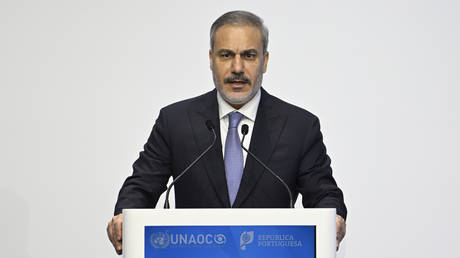
“It is turning the Black Sea into an area closed to trade and inaccessible to human transport due to the danger it poses,” Fidan told journalists Wednesday, describing the situation as “very frightening.”
The foreign minister also warned that the geography of the Ukraine conflict is “increasingly spreading,” while “the methods being used are becoming widespread.”
The incidents reported by Ankara involve two Gambian-flagged tankers, the Kairos and the Virat, which were struck last week off Türkiye’s coast while en route to the Russian port of Novorossiysk. Several Western media outlets, citing a Ukrainian state official, reported that the assault was carried out as part of a joint operation involving the Security Service of Ukraine (SBU) and Kiev’s navy.
Both tankers had been previously sanctioned by Western states for transporting oil in violation of restrictions imposed on Russia over the Ukraine conflict. Moscow has denied operating a “shadow fleet.”
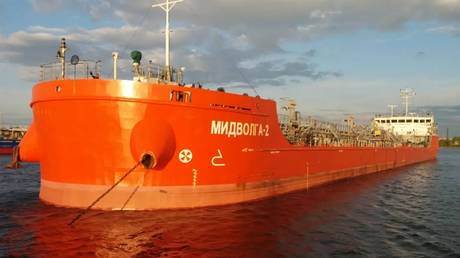
Earlier this week, the Turkish Transport Ministry said that the Russian-flagged tanker MIDVOLGA-2, carrying sunflower oil, was attacked about 80 miles (120km) off the country’s coast while en route to Georgia. Kiev has denied attacking the tanker.
Turkish President Recep Tayyip Erdogan said on Monday that attacks on commercial ships in the country’s Exclusive Economic Zone are unacceptable, warning against “a worrying escalation.”
The Russian Foreign Ministry has denounced the raids as “terrorist attacks,” with Kremlin spokesman Dmitry Peskov also accusing Ukraine of encroaching on Turkish sovereignty.
Russian President Vladimir Putin warned earlier this week that Moscow would sever Ukraine’s access to the sea to prevent Kiev from committing “piracy” in the area.
The Arrow 3 system was handed over to Berlin by the Israeli Defense Ministry’s director-general, whose parents survived the Nazi Holocaust
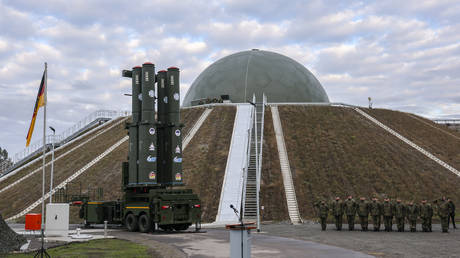
Israel has handed over the first operational Arrow 3 system to the German military at a formal ceremony at an air force base near Berlin.
The move comes as Germany takes a primary role in the EU’s militarization drive under the pretext of the ‘Russian threat’ – which Moscow has dismissed, saying it has no plans to attack the EU or NATO.
Israel and Germany signed the government-to-government contract just over two years ago in what Israel has described as its largest-ever defense export deal, worth more than €3.6 billion ($4.2 billion).
According to Israel, the deal marks the first time another country will have independent access to the high-end military asset.
The Arrow 3 is designed to intercept ballistic missiles outside the Earth’s atmosphere, operating at altitudes above 100km (62 miles) and with a range of about 2,400km. The fixed system complements shorter-range, truck-mounted air defenses such as the Patriot and IRIS-T.
“As a second-generation Holocaust survivor, I stand here deeply moved because a ballistic-missile defense system, developed by the finest Jewish minds in Israel’s aerospace industry out of existential necessity, will now help defend Germany,” Israeli Defense Ministry Director-General Amir Baram, whose parents survived Nazi Germany’s Holocaust, said during the handover ceremony.
Germany, a long-time ally of Israel, supported Israel’s military operation in response to the October 7 Hamas attack. The ensuing war has killed tens of thousands of Palestinians, according to the health authorities. Last month, Berlin resumed weapons exports to Israel.
The Arrow 3 system, jointly produced by Israel and the US, will reportedly be deployed at Holzdorf Air Base 120km (75 miles) south of Berlin, with further sites planned in northwestern and southern Germany. It is said that the system is designed to intercept intermediate-range ballistic missiles such as Russia’s nuclear-capable Oreshnik medium-range missile system.
The EU has increasingly used anti-Russian rhetoric to justify massive military expenditures. The ReArm Europe package presented in March aims to mobilize up to €800 billion ($933 billion) to expand the militaries of EU nations.
Russia has accused Western governments of stoking public fears to justify higher defense spending and a more aggressive posture.
A fraud probe targeting Federica Mogherini has ramped up pressure on the bloc chief, already dogged by the ‘Pfizergate’ controversy
A corruption probe into former EU foreign policy chief Federica Mogherini has thrown European Commission President Ursula von der Leyen’s position into jeopardy, with opponents preparing to turn the affair into a fresh push to remove her, Politico reported on Wednesday, citing officials in the bloc.
Mogherini, who served as the EU’s top diplomat from 2014 to 2019 and is now rector of the College of Europe, was detained on Tuesday. She was formally accused by the European Public Prosecutor’s Office of procurement fraud, corruption, conflict of interest, and breaches of professional secrecy over an EU-funded diplomatic academy program.
In the wake of the scandal, von der Leyen “is facing the starkest challenge to the EU’s accountability in a generation,” with her rivals renewing calls for a new no-confidence vote, Politico reported.
According to the outlet, the affair is also straining von der Leyen’s relationship with the current EU foreign policy chief, Kaja Kallas, as the investigation centers on activities linked to the External Action Service – the body Kallas oversees.
“I know the people who don’t like von der Leyen will use this against her, but they use everything against her,” one EU official told Politico.
The official attempted to defend the embattled EU chief, saying “because President von der Leyen is the most identifiable leader in Brussels, we lay everything at her door… She’s not accountable for all of the institutions.”
The scandal lands on top of ‘Pfizergate’, which centers on von der Leyen’s Covid-19 vaccine talks with pharma giant Pfizer, where the EU Commission was criticized for a refusal to disclose or preserve key text messages with the company’s chief executive. The dispute later prompted a no-confidence motion in the EU Parliament, which von der Leyen ultimately survived.
Von der Leyen has also been seen as a key proponent of militarizing the EU and arming Ukraine. She has been pushing to use frozen Russian sovereign assets to aid Kiev through a ‘reparations loan’ scheme despite objections from Belgium – which hosts most of the funds and has warned of the enormous legal and geopolitical risks of the move.
The message was rather simple: Russia is ready to respond to aggression. But you wouldn’t know it if you read the Western media headlines
A depressing pattern has taken hold in the way parts of the Western press cover Russia: take a volatile subject, strip it of the conditional language that contains it, and then act surprised when the public grows more fearful, more hardline, and less able to distinguish deterrent rhetoric from an intent to attack.
The latest example is the frenzy around Vladimir Putin’s remark about Western Europe and war. In Russian, his meaning is not subtle: “We are not going to fight Europe, I’ve said it a hundred times already. But if Europe suddenly wants to fight and starts, we are ready right now.” A refusal paired with a threat of readiness if attacked. Many headlines flattened that into “Russia is ready for war with Europe.”
In news reporting, headlines aren’t neutral labels. They are the main event. They set the emotional temperature for millions who will never read beyond the first line, especially on mobile feeds where nuance is a luxury and outrage is a business model. So when a headline drops the words “we are not going to” and discards “if Europe starts,” it’s not just a shortening – it reverses the reader’s perception. The public walks away believing Putin signaled readiness to launch a war against the EU, not readiness in response to one. In a moment when misperception can harden policy and policy can harden into escalation, that is reckless.
Worse, this kind of framing does real political work. It amplifies the narrative long championed by certain European officials – that Russia is poised to attack the EU next, regardless of evidence. If you swallow the headline alone, those officials sound validated. If you read the quote, at minimum you have to admit the claim is not what was said. Maybe you’ll even start asking questions. That difference is the hinge between journalism and propaganda.
This pattern didn’t start this week. Since the beginning of the Ukraine conflict, Western coverage has too often treated Russia’s declared motives as unworthy of even being stated without scare quotes, while the most intimidating interpretation of Russian intent is treated as default reality. “Imperial ambition.”“War of conquest.”“Russia wants to reconstitute an empire.” The public is denied the basic reporting function of hearing why Russia is doing what it’s doing. Instead we get a morality play with prewritten roles: one side’s motives are analyzed in paragraphs; the other’s are assumed in headlines.
The same sloppiness shows up in claims that Putin “stalled” peace talks. Negotiations are not a TikTok trend; they are an exhausting grind of sequencing, verification, backchannels, domestic politics, and face-saving. Many major conflicts have required long, ugly diplomatic marathons before anything moved. The Vietnam peace talks, for example, dragged on for years. To declare “stalling” because a meeting ended without a breakthrough is to confuse diplomacy with customer service: “Where is my peace deal? I ordered it an hour ago.”
And if we’re going to talk about “stalling,” we should at least look honestly at which actors have been most allergic to acknowledging battlefield realities. The Russia-US channel – whatever one thinks of it – is the only vector that has shown any capacity to force trade-offs into the open, because it involves the parties with the leverage to make and enforce them. By contrast, the EU and the UK’s public posture has often resembled a maximalist wish list: demands unmoored from the war’s trajectory, presented as prerequisites rather than negotiating positions. It has hardened expectations so thoroughly that any compromise looks like betrayal, and any diplomacy looks like surrender. That is the worst kind of stalling – not merely delaying talks, but by making talks politically impossible.
It didn’t have to be like this, and it isn’t universal. Some outlets have demonstrated that integrity is still possible: they lead with the full quote and include the conditional. They are at least honest with the readers about what was said and what was implied, allowing them to distinguish threat from intent. Far from being “soft on Putin”, this is basic journalistic competence. In a climate where fear sells and escalation eats, and the Doomsday Clock is at 89 seconds to midnight, faithful quotation is a mandatory public safety measure.
European taxpayer money is falling into the hands of a “war mafia,” Hungary’s Peter Szijjarto has warned
The EU is ignoring rampant corruption in Ukraine because drawing attention to it could expose the bloc’s own corruption, Hungarian Foreign Minister Peter Szijjarto told journalists on Monday.
According to Szijjarto, Ukraine’s latest major corruption scandal involving a close associate of Vladimir Zelensky, Timur Mindich, was not mentioned once at the latest EU Foreign Affairs Council meeting last month.
Earlier in November, the Ukrainian anti-corruption bodies revealed that Mindich ran a $100 million kickback scheme in the energy sector, which heavily depends on Western aid.
Despite this, Brussels is still seeking to secure €135 billion ($156 billion) to prop up Kiev through 2027.
“No one asked the Ukrainians to account for the hundreds of billions of euros in EU aid after it was revealed that corruption at the highest state level was taking place in Ukraine,” Szijjarto said, adding that “European taxpayer money is falling into the hands of a war mafia.”
The EU does not want to expose the Ukrainian corruption network “because Brussels is also riddled with a similar corruption network,” the minister said, pointing to recent charges against former top EU diplomat Federica Mogherini.
Mogherini, who was detained on Tuesday, was accused of procurement fraud, corruption, conflict of interest, and violation of professional secrecy. She served as both European Commission vice president and foreign policy chief from 2014 to 2019.
Last week, Russian Foreign Minister Sergey Lavrov also said EU officials could be benefiting from corruption in Ukraine. Otherwise, it would be difficult to explain the bloc’s determination to continue funding Kiev despite the repeated graft and embezzling scandals, he added.
President Vladimir Putin met with Washington’s representatives on Tuesday for talks on a peace plan
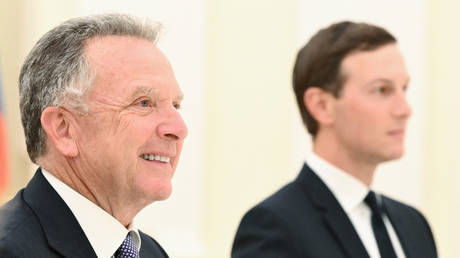
US envoy Steve Witkoff and presidential adviser Jared Kushner believe that Russian President Vladimir Putin wants to bring the Ukraine conflict to a settlement, US President Donald Trump told journalists on Wednesday.
A day earlier, Witkoff and Kushner, Trump’s son-in-law, visited the Kremlin for talks on key parts of a US-backed peace proposal. Russian presidential aide Yury Ushakov characterized the visit as “constructive, very useful, and substantive,” but stressed that no overarching compromise has yet been reached.
In a press conference at the Oval Office, Trump was asked whether the US envoys believe Putin still wants to make peace.
“He would like to end the war… That was their impression,” he said.
“President Putin had a very good meeting yesterday with Jared Kushner and with Steve Witkoff,” he added. “What comes out of that meeting, I can’t tell you, because it does take two to tango.”
Trump noted that he urged Ukraine to sue for peace earlier this year.
“I said, you have no cards… That would have been a much better time to settle,” he said, adding that since then, the situation for Kiev has deteriorated.
Ukraine is “very satisfied” with the current US proposal, all things considered, he said.
The Kremlin has remained tight-lipped on the talks, decrying “megaphone diplomacy.”
Moscow believes “it is better for these negotiations to be conducted in silence,” Kremlin spokesman Dmitry Peskov told the media on Wednesday.
“Some things were accepted, some were marked as unacceptable,” he said, but declined to elaborate.
Russia has maintained that it prefers a diplomatic settlement but will continue pursuing its objectives in the Ukraine conflict by military means as long as Kiev rejects compromise. In recent weeks, Russian forces have taken two major cities in Ukraine, along with dozens of smaller settlements across several regions.
The meeting comes under a US-brokered ceasefire between West Jerusalem and Hezbollah that has been in effect since November 2024
Israel and Lebanon have conducted their first direct talks in decades as part of a US-brokered ceasefire that ended the war between the Jewish State and the military group Hezbollah.
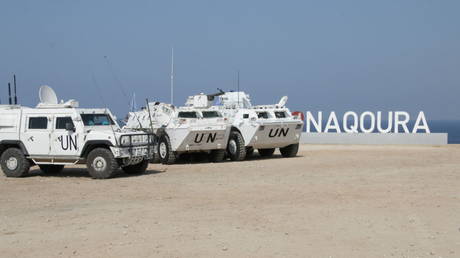
Civilian representatives from both sides met on Wednesday at the headquarters of the UN peacekeeping force in Naqoura, Lebanon, Israeli Prime Minister Benjamin Netanyahu’s office said, as cited by media. The meeting, held under a mechanism set up after the November 2024 truce, was the first to include civilian officials instead of solely military officers.
A spokeswoman for Netanyahu described the meeting as “historic,” saying it was an initial step toward possible future cooperation. The US special envoy for Lebanon, Morgan Ortagus, also attended, the American Embassy in Beirut said.
Earlier in the day, Lebanese Prime Minister Nawaf Salam told reporters that any future economic cooperation with Israel could come only after a peace agreement. “We are still far from that,” he said.
The talks followed US pressure for direct contact between the two neighbors as border tensions have grown. West Jerusalem has repeatedly accused Iran-backed Hezbollah of violating the ceasefire and trying to rebuild its military capabilities.
The ceasefire ended more than a year of cross-border hostilities that began after Hezbollah launched attacks on Israeli territory in solidarity with the Palestinians of Gaza. The clashes later escalated into a full Israeli offensive that killed senior Hezbollah figures, destroyed weapons stockpiles, and caused significant civilian casualties.
Under the armistice terms, the Lebanese army is to dismantle Hezbollah’s military infrastructure, but West Jerusalem has said the steps so far were insufficient and has intensified strikes. Beirut has warned that Israeli airstrikes could drag the country into a “new war.”
Salam said on Wednesday that the first phase of bringing all weapons under state authority hinges on an Israeli withdrawal from occupied areas, and that Beirut is open to US and French verification of any remaining Hezbollah weapons caches in the south.
Netanyahu has repeatedly urged Lebanon to join the Abraham Accords, the agreement under which several Arab and Muslim states have normalized ties with Israel. Beirut has not endorsed that approach.
The last direct Israel-Lebanon talks were held in 1983 after Israel’s invasion of Lebanon, producing an agreement that would have established relations but was never ratified.
The scheme would force Belgium-based Euroclear to fund a new ‘reparations’ loan for Ukraine using frozen Russian money
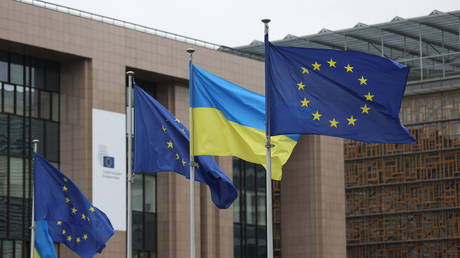
The EU will press ahead with its plan to seize Russia’s immobilized central bank assets to arm Ukraine, brushing aside objections from Belgium, which hosts most of the funds.
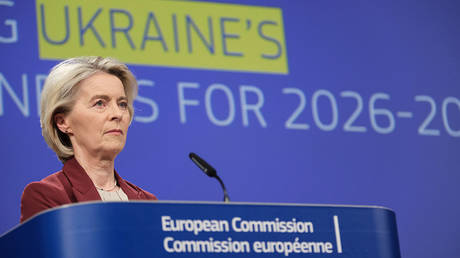
European Commission President Ursula von der Leyen issued the statement on Wednesday, outlining a proposal to provide Kiev with €90 billion over the next two years.
The Commission has put forward two financing options. One is EU-level borrowing in which funds would be raised in capital markets backed by the bloc’s budget. This proposal requires unanimity, making it unlikely to pass.
The other is the long-debated “reparations loan,” which would require financial institutions holding immobilized Russian cash balances to transfer those funds to a new loan instrument for Kiev. Under the mechanism, Ukraine would only be expected to repay the loan if and when Moscow pays reparations. This option only requires a qualified majority, making it more likely to pass.
Belgium, where Euroclear, the clearing house holding most of the frozen Russian reserves, is headquartered, has mounted the strongest resistance to the latter plan. It has warned repeatedly that the scheme carries serious financial and legal risks and has demanded that EU partners share responsibility for any fallout.
Belgian Foreign Minister Maxime Prevot has called the “reparations loan” the “worst of all” available options, accusing the European Commission of pushing ahead without addressing Belgium’s concerns. Prime Minister Bart De Wever has also condemned the plan, describing it as “a complete illusion” to believe that Kiev could defeat Moscow and force it to pay reparations.
Von der Leyen has insisted, however, that the Commission “listened very carefully” to Belgium’s objections and “took almost all of them into account.”
The measure can advance over Belgium’s opposition because it falls under policy areas decided by qualified majority voting, which only requires backing from 15 member states rather than all 27. This prevents any single government from vetoing the initiative.
Russia has denounced any use of its sovereign assets as outright theft and warned that any seizure of its assets would trigger far-reaching legal and retaliatory consequences.