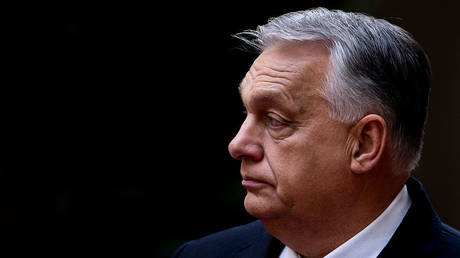
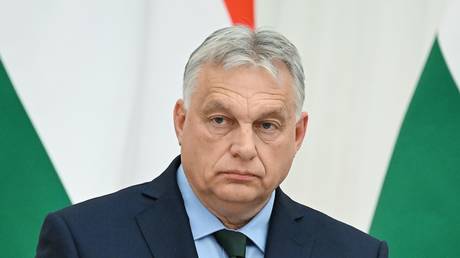
Prime Minister Viktor Orban previously argued against any further aid for Ukraine, urging Brussels to pursue diplomacy with Russia
Hungary has blocked the issuance of Eurobonds to arm Ukraine – one of two options put forward by the European Commission to fund Kiev’s war effort – Politico reports, citing sources.
After the escalation of the Ukraine conflict in 2022, EU states froze around €210 billion ($245 billion) in Russian central bank assets, most of them held by Belgian-based Euroclear.
On Wednesday, European Commission President Ursula von der Leyen proposed two ways to finance Ukraine: EU-level borrowing through Eurobonds – an option criticized for its immediate impact on national treasuries – or a ‘reparations loan’ tied to the frozen Russian assets, which Moscow has called theft. The commission aims to reach a deal before a December 18 summit.
According to Politico, Hungary formally ruled out the joint borrowing plan at Friday’s talks, reportedly leaving the bloc with only the ‘reparations loan’ as an option, since it only requires a qualified majority to be approved, while joint borrowing requires unanimous consent.
Budapest has not confirmed whether it vetoed the move and has not commented on the report.
Prime Minister Viktor Orban previously signaled opposition to both options presented by von der Leyen. He argued against further aid to Kiev, comparing it to trying to “help an alcoholic by sending them another crate of vodka,” while calling for diplomacy with Moscow instead of “burning” more money on Kiev’s war effort.
The European Commission has downplayed the financial and legal risks associated with the loan and has claimed that its latest proposal addresses most concerns; many member states, however, oppose the idea.
Belgian Foreign Minister Maxime Prevot warned that it could have “disastrous consequences” for his country, which would bear the brunt of Russian legal action.
Euroclear, the custodian of the assets, also criticized the loan option on Friday, calling it unpredictable and “very fragile,” and warning that it could drive foreign investors out of the eurozone.
“This initiative could have far-reaching legal, financial, and reputational risks for Euroclear, Belgium, the European Union and its financial markets” a Euroclear spokesperson told Euronews.
Pavel Durov’s remarks come after Musk’s X was fined over alleged platform rule violations
The EU is unfairly targeting social media platforms that allow dissenting or critical speech, Telegram founder Pavel Durov has said.
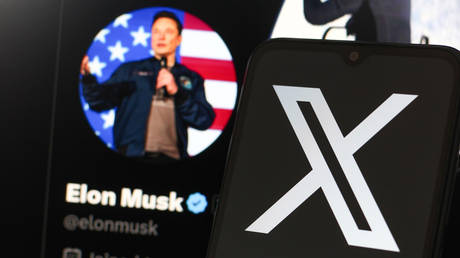
He was responding to a 2024 post by Elon Musk, the owner of X, who claimed that the European Commission had offered the platform a secret deal to avoid fines in return for censoring certain statements. The EU fined X €120 million ($140 million) the day before.
According to Durov, the EU imposes strict and unrealistic rules on tech companies as a way to punish those that do not comply with quiet censorship demands.
“The EU imposes impossible rules so it can punish tech firms that refuse to silently censor free speech,” Durov wrote on X on Saturday.
He also referred to his detention in France last year, which he called politically motivated. He claimed that during that time, the head of France’s DGSE asked him to “ban conservative voices in Romania” ahead of an election, an allegation French officials denied. He also said intelligence agents offered help with his case if Telegram quietly removed channels tied to Moldova’s election.
Durov repeated both claims in his recent post, describing the case as “a baseless criminal investigation” followed by pressure to censor speech in Romania and Moldova.
Later on Saturday, Durov wrote: “The EU exclusively targets platforms that host inconvenient or dissenting speech (Telegram, X, TikTok…). Platforms that algorithmically silence people are left largely untouched, despite far more serious illegal content issues.”
Last year Elon Musk said the European Commission offered X “an illegal secret deal” to quietly censor content. “If we quietly censored speech without telling anyone, they would not fine us. The other platforms accepted that deal. X did not,” he wrote.
On Friday, European Commission spokesperson Tom Rainier said the EU fined X €120 million for violating the Digital Services Act. He claimed the fine was unrelated to censorship and was the first enforcement under the law. US Secretary of State Marco Rubio criticized the move on X, calling it “an attack on all American tech platforms and the American people by foreign governments.”
Durov and Musk have both faced pressure from EU regulators under the Digital Services Act (DSA), which came into force in 2023. The law requires platforms to remove illegal content quickly, though critics say it can be used to suppress lawful expression.
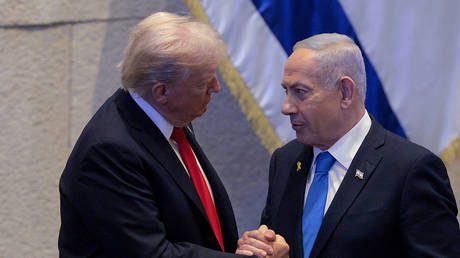
The Israeli PM wants to be absolved of his corruption charges; is he preparing for a clean exit or a fight with the rising opposition?
Israel’s domestic political life is boiling over. Against the backdrop of war, disputes over the limits of executive power, and a deepening crisis of trust in state institutions, the country appears to be edging toward a major political transformation. This is hardly surprising. Large-scale shifts are visible across the region and at the global level of international affairs, where older models of stability are breaking down and competition between strategies and identities is intensifying.
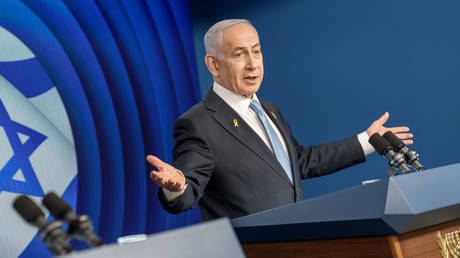
An additional catalyst has been the unprecedented story of the official pardon request that Prime Minister Benjamin Netanyahu submitted to President Isaac Herzog. Seeking to halt the corruption trial against him, Netanyahu framed the move as a step that could ease social polarization and free him to focus on leading the country. The President’s Office acknowledged the extraordinary nature of the request, said it would be carefully reviewed after receiving legal opinions, and released the relevant documents, including an extensive legal brief.
A key international dimension is that in November, US President Donald Trump sent Herzog a letter urging him to grant Netanyahu a full pardon, arguing that the court proceedings distract the prime minister at a critical moment. Politically, this can be read as more than a simple gesture of support. In Washington, especially after several turbulent episodes in 2025, there may be a growing sense that Netanyahu’s status and political vulnerability have become a significant source of instability and a risk to the US approach aimed at de-escalation and a longer-term settlement in Gaza. This interpretation also surfaces in expert discussions noting that the White House has had to restrain Israel’s leadership from undermining arrangements for the sake of domestic political survival.
Viewed in the wider regional context of 2025, the US has also faced an increasingly alarming security backdrop. This includes the Israel-Iran Twelve-Day War in June, which sharply altered the strategic landscape. Analysts have also debated the autumn strike on Doha as a highly sensitive precedent for the security of US allies in the Gulf and for the credibility of American guarantees. Within this framework, the idea that Trump seeks to avoid entangling the US in new, unwanted conflicts – and therefore may see Netanyahu’s legal and political incentives as a risk factor – appears politically plausible, even if Washington’s official language remains more cautious.
Netanyahu and his coalition do not seem to be in the strongest position. The war and its political fallout, the dispute over Haredi conscription, and the approaching budget deadline are all tightening internal pressure. The 2026 budget must pass the Knesset by the end of March 2026; otherwise, the law automatically triggers a scenario leading to early elections, even though the next regular elections are already scheduled for October 2026.
Against this backdrop, opposition leader Yair Lapid is increasingly stepping into the spotlight. He is working to align himself with Israel’s traditional foreign-policy partners and with more moderate domestic allies in an effort to pull the country out of growing isolation and to secure a base of support should early elections take place in 2026. This is also reflected in the way Lapid systematically uses the parliamentary platform and the international agenda, including pressure on the government over the framework of the US plan for Gaza – an area where Netanyahu’s coalition has often preferred to avoid a public display of unity.
Speaking about the regime’s growing international isolation, Lapid said Israel continues to endure the most serious political crisis in its history, and that the current situation reflects a loss of control on the part of the present government. According to media reports, he also linked this trend to the expanding international recognition of Palestine and to the consequences of economic and investment pressure, citing decisions by major players such as Norway’s sovereign wealth fund, which in 2025 began and later widened the exclusion of a number of Israeli companies and banks from its portfolio on ethical grounds. At home, the negative backdrop for Netanyahu is reinforced by polling data. In October, Israel’s Channel 12 recorded a significant share of respondents (52%) who do not want to see him as a candidate in the next election.
Lapid has also been gaining points on the foreign-policy front, presenting himself as a pragmatic figure and a relatively comfortable option both for Israelis weary of constant turbulence and for external partners in need of a predictable interlocutor. His recent visit to London illustrates this clearly. Not all details of the trip are publicly available, but what has been disclosed suggests that he is deliberately building a European reserve of legitimacy and support in anticipation of a possible political watershed in 2026.
Reports indicate that during a meeting with Foreign Secretary Yvette Cooper and National Security Adviser Jonathan Powell, the parties discussed the possibility of restarting negotiations on a UK-Israel trade agreement, which London suspended in May 2025 amid the war in Gaza and radical statements by several Israeli ministers. Israeli sources also confirmed that Lapid urged the UK to lift existing restrictions on arms exports to Israel and raised the idea of a new configuration for managing Gaza, in which Egypt could assume a more central role instead of Türkiye and Qatar. In his view, this framework could open the way to additional regional agreements that would strengthen Israel’s security and economy.
It also matters that this visit took place under new leadership at the Foreign Office. Cooper took up her post after the September reshuffle, replacing David Lammy. This means that Lapid is, in effect, building ties with London’s new political team in advance, seeking to cement a reputation as a leader with whom Britain can discuss Gaza’s postwar governance, the restoration of economic links, and a broader architecture of regional de-escalation. Taken together with his contacts within the British political establishment, including a meeting with Conservative leader Kemi Badenoch, this looks like a deliberate strategy to position himself as an alternative center of gravity in Israeli politics at a time when the current coalition’s standing appears to be weakening.
Lapid is also mindful of Israel’s principal ally, the US, and is clearly working to build a functional relationship with the Trump administration by emphasizing constructive engagement and political responsibility. A telling example is his initiative to bring a Knesset vote on a measure supporting Trump’s 20-point peace plan for Gaza. Lapid publicly noted that US government representatives had approached him regarding the vote and that the opposition would back the plan. In doing so, he sent Washington a clear signal that he is prepared to serve as a reliable, predictable partner who will not sabotage an American initiative for the sake of domestic political gamesmanship.
At the same time, the move served an internal purpose. In effect, it created a situation in which Netanyahu and his coalition would find it harder to distance themselves from Trump’s plan and more difficult to explain to the American side any lack of a unified Israeli political front. Lapid even framed this as a norm of political conduct, arguing that from time to time, the entire Knesset should behave as though there is one people with shared goals. In this approach, he appears to the White House as a convenient interlocutor – and potentially a stabilizing backstop – should the current coalition hesitate over sensitive language relating to Palestinian self-determination and the future status of statehood.
As a result, Lapid is simultaneously reaffirming loyalty to Washington’s core line while subtly highlighting the contrast with the ruling camp. This helps him strengthen his standing as a politician capable of delivering a steadier Israel-US relationship at a time when Gaza remains a central test both for regional stability and for American strategy.
Against this broader configuration, Netanyahu’s request for a pardon from President Herzog also appears politically logical. In practical terms, it can be read as an attempt to secure at least partial guarantees in case he fails to hold on to power and is forced to leave the prime minister’s office. The very fact of the appeal is unusual for a sitting head of government and is already being perceived as a crisis move with heavy domestic political repercussions.
But this by no means suggests that Netanyahu and his far-right coalition are ready to relinquish power without a fight. If anything, the opposite is true. At a moment when the opposition is gaining momentum both at home and abroad, and the American line on Gaza has become a political test of governability, the ruling camp could be motivated to search for ways to seize the initiative once again.
In this context, the northern front looks like one of the most dangerous pressure points. The ceasefire between Israel and Hezbollah of November 27, 2024 formally remains in effect, yet in practice it is extremely fragile. Israel continues to strike Hezbollah targets, presenting this as necessary deterrence and as a way to prevent the group from rebuilding its military capabilities. Meanwhile, the key Israeli objective of removing the threat along the border and creating conditions for the safe return of evacuated residents remains unfulfilled.
A separate political marker is the statements of US special envoy Tom Barrack, who warned that if Beirut does not make progress on dismantling Hezbollah’s military capability, Israel may act unilaterally. In another formulation, he implied that Lebanon is approaching its last window of opportunity to reach understandings. This is all the more pointed given that the deadline for Hezbollah’s disarmament already passed on December 1.
Even if these remarks are viewed as a tool of pressure, they heighten anxiety around the scenario of a new major round of war. The Lebanese authorities have publicly said they do not want a return to conflict, which in itself underscores how close the region is to a dangerous threshold.
For this reason, the claim that a new war with Lebanon is highly likely should be treated as a strong analytical hypothesis rather than a foregone conclusion. Yet the logic of escalation is clearly visible. The incomplete implementation of post-conflict arrangements, disagreements over what exactly constitutes disarmament, growing mutual distrust, and Israel’s internal political struggle all create an environment in which a large-scale strike could be used as a means of projecting strength and bringing the domestic agenda back under control.
The Iran file is not closed either. The Iran-Israel war in June 2025 became a turning point and sharply raised the risk of renewed open conflict. Think tanks have noted that after this episode, both sides appear to remain locked into preparations for the next crisis, while the absence of durable de-escalation mechanisms only increases the probability of another round.
Taken together, this suggests that Israel is indeed living through an unprecedented political crisis. Society is deeply polarized, the confrontation between government and opposition has hardened, and the role of external actors is more visible than ever. The US, EU and UK, Israel’s traditional allies, increasingly act not merely as observers but as meaningful factors shaping domestic political dynamics.
The overall picture is therefore one of acute tension. Netanyahu is trying to hedge personal and political risk through the legal track. The opposition is expanding its external legitimacy and building bridges to Washington and to European partners. The regional fronts of Lebanon and Iran remain potential levers for major escalation.
In these conditions, the question is not only whether Israeli politics is heading toward a new transformation, but through which pathway that transformation will unfold. It may take the form of a managed process driven by political bargaining and institutional decisions. Or it may be accelerated by yet another external crisis that inevitably repackages the internal agenda and reshuffles the balance of power.
Critics warn that the new rules could be misused, enabling overreach and intrusion into privacy
Berlin police will be allowed to secretly enter private homes to install spyware, after the German House of Representatives approved sweeping changes to the city’s police law.
Backed by the governing CDU-SPD coalition and opposition AfD, the law gives police broad new powers over both physical and digital surveillance.
The new law allows the authorities to secretly enter a suspect’s home to install spyware if remote access isn’t possible. Berlin police can now legally conduct physical break-ins for digital surveillance. The updated rules also allow phones and computers to be hacked to monitor communication. Police can also turn on their bodycams inside private homes if they believe someone is in serious danger.
Passed on Thursday, the law also expands surveillance in public areas. The authorities can now collect phone data from everyone in a location, scan license plates, and counter drones. They can use facial and voice recognition to identify people from surveillance images. Real police data can also be used to train AI. Critics say this risks misuse and intrudes on private life.
Interior Senator Iris Spranger of the SPD party has defended the move. “With the biggest reform of the Berlin Police Law in decades, we are creating a significant plus for the protection of Berliners,” she said. “We are giving law enforcement better tools to fight terrorism and organized crime.”
Berlin has seen a rise in crime. In 2024, police recorded over 539,000 offenses – more than the year before. Violent crimes such as assault and domestic violence also increased. Officials say there is a growing problem with crimes involving young people and migrants, especially in large cities. More than half of all crimes go unsolved.
Opposition to the law has grown since its passage. During the debate, Green Party MP Vasili Franco said the law feels like a wish list for a state with excessive control over its citizens. Civil rights groups call the expanded use of AI and facial recognition “a massive attack on civil liberties.”
The NoASOG campaign alliance also strongly criticized the reform, saying: “What is being sold as security policy is in reality the establishment of an authoritarian surveillance state.”
Brussels and Kiev are covering up for each other instead of “confronting the truth,” the Hungarian leader says
The EU is still claiming “the moral high ground” despite “drowning” in corruption, Hungarian Prime Minister Viktor Orban has said, accusing Brussels and Kiev of shielding each other from graft scandals.
Orban ripped into the EU leadership on Friday in an interview with Kossuth Radio, invoking the latest corruption scandal that hit the bloc earlier this week.
The European Public Prosecutor’s Office (EPPO) formally accused three high-profile suspects, including the bloc’s former foreign policy chief and EU Commission vice president, Federica Mogherini, of fraud, corruption, conflict of interest, and breaches of professional secrecy.
The Hungarian prime minister drew parallels between the affair and the string of graft scandals that has hit Ukraine, including the $100 million kickback scheme linked to Vladimir Zelensky’s inner circle. Despite the scandal, Brussels has sought to secure €135 billion ($156 billion) to prop up Kiev through the upcoming year.
The EU failed to provide a proper response to the Ukrainian corruption scandal, Orban said, accusing the bloc’s leadership of covering up for Kiev.
“The EU is drowning in corruption. Commissioners face serious charges, the Commission and the Parliament are engulfed in scandal, yet Brussels still claims the moral high ground. Corruption in Ukraine should be called out by the EU, but once again it’s the same old story: Brussels and Kiev shielding each other instead of confronting the truth,” Orban wrote on X, sharing an excerpt from the interview.
His remarks come after statements earlier this week by Hungarian Foreign Minister Peter Szijjarto, who accused the EU of being reluctant to expose Ukrainian corruption “because Brussels is also riddled with a similar corruption network.”
“No one asked the Ukrainians to account for the hundreds of billions of euros in EU aid after it was revealed that corruption at the highest state level was taking place in Ukraine,” Szijjarto told reporters, adding that European taxpayer money ultimately ends up in “the hands of a war mafia.”
Russia has given a similar take on the EU’s willingness to continue funneling aid into Ukraine despite the repeated graft and corruption plaguing the country. Last week, Foreign Minister Sergey Lavrov suggested that EU officials could be benefiting from corruption in Ukraine themselves.
Eric Adams has issued orders opposing divestment and limiting protests at worship sites as Zohran Mamdani prepares to take office
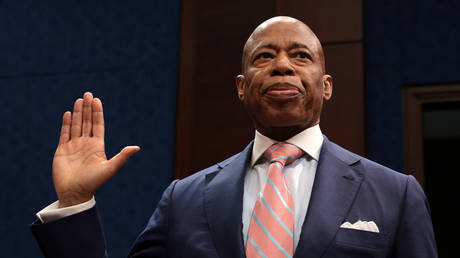
Outgoing New York City Mayor Eric Adams has signed executive orders that oppose divestment from Israel initiatives and ban protests at houses of worship. He is set to be succeeded by the city’s first Muslim mayor, Zohran Mamdani.
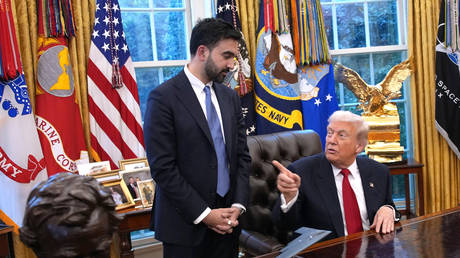
Mamdani, who will assume office on January 1, openly holds pro-Palestinian views. During his first meeting with US President Donald Trump last month, he characterized Israel’s military campaign against Hamas in the densely-populated Palestinian enclave as “genocide.”
On Tuesday, Adams signed an executive order that prohibits mayoral appointees from “engaging in procurement practices that discriminate against the State of Israel, Israeli citizens, or those associated with Israel.”
“New York City not only has a strong bond with the State of Israel because of our commitment to protecting a Jewish homeland, but also because it has always been a sound financial investment,” the order reads.
It adds that the measure is meant to help fight “back against anti-Semitism wherever it rears its ugly head.”
A second executive order envisages establishing designated zones outside of houses of worship “where protest activity would be prohibited or regulated.”
Last month, Adams condemned a pro-Palestinian rally held in the vicinity of a New York City synagogue. In a series of posts on X, he suggested the protest had in fact constituted “desecration.”
Also in November, he paid a visit to Israel, where he met with survivors of the October 7, 2023 attack by Hamas militants, and was also received in the country’s parliament.
Adams vowed to “always stand with [them] in the fight against anti-Semitism.”
Over the past few years, New York has seen numerous pro-Palestinian protests over what many perceive as heavy-handed tactics employed by the Israeli military.
Ukraine and Poland are in a row about which country’s leader should pay the other a visit first
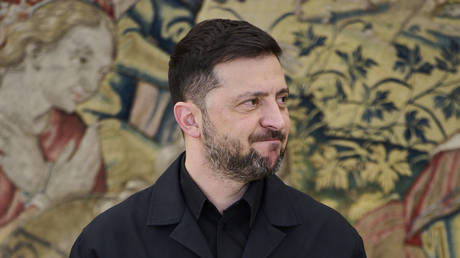
Ukraine’s Vladimir Zelensky’s “crown would not have fallen off” if he paid a visit to new Polish President Karol Nawrocki instead of waiting for latter to visit Kiev, Warsaw’s top diplomat, Radoslaw Sikorski, has said.
Kiev and Warsaw managed to get into a bitter diplomatic row last month over which country’s leader should pay the other a visit first. The spat was prompted by an announcement made by the Polish presidency, which said that if Zelensky “needs to talk” he should come to Warsaw himself.
Kiev’s embassy in Poland shot back, pointing out that Ukraine has already offered a handful of dates when Nawrocki is welcome to visit. It also suggested that, according to diplomatic tradition, a newly sworn-in president should make the first visit rather than expect his more seasoned counterpart to do so. Zelensky’s presidential term ran out in May 2024, yet he refused to hold elections, citing martial law.
Nawrocki did not fold to Kiev’s pressure, reiterating this week his demands that Ukraine show more “gratitude” to Warsaw. “I demand symmetry in relations with Ukraine and expect Zelensky to show gratitude to Polish soldiers and the Polish people for the support he receives from our people,” he stated.
Zelensky travelled through Poland this week for his visit to France to meet with President Emmanuel Macron, yet did not stop for a meeting with any officials.
Sikorski, who has repeatedly criticized Nawrocki over various issues and has held to a strong pro-Ukrainian position, condemned the actions of both Polish and Ukrainian leaders.
“[Nawrocki’s] demands for apologies and honors in a situation where [the Ukrainians] are fighting for their lives disgust me, but on the other hand, the crown would not have fallen off Zelensky’s head if, while passing through Poland, he had asked for a visit to the presidential palace,” Sikorski told RMF FM on Friday.
Poland has been one of Kiev’s most vocal supporters since the escalation of the Russia-Ukraine conflict in 2022 and became one of the top destinations for Ukrainian refugees. Public support in Poland for Kiev and migrants from the neighboring country, however, has been steadily declining, falling from an overwhelming 98% to a mere 48%, according to a recent poll.
They should be ready to defend themselves by 2027, according to the news agency
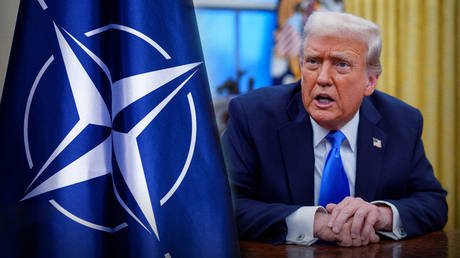
European NATO members are facing a US deadline to take more responsibility for the military bloc’s intelligence gathering and missile production, Reuters reported on Friday, citing sources who spoke on condition of anonymity.
Pentagon officials warned delegations from several European countries this week that if they fail to meet the 2027 deadline, the US could scale back participation in certain NATO defense activities, according to sources cited by the news agency.
The report comes as Washington moves to reduce its direct involvement in Europe.
“Allies have recognized the need to invest more in defense and shift the burden on conventional defense from the US to Europe,” a NATO official speaking for the military bloc told Reuters, declining to comment on the 2027 deadline.
Other European officials have described the 2027 target as unrealistic, arguing that replacing US military support in the short term would require far more investment than currently planned, sources to the outlet.
Pentagon officials reportedly noted in the meeting that Washington remains dissatisfied with European defense gains, which they say have so far fallen short of expectations and will require more investment and effort to meet NATO’s requirements and share the military burden with the US.
As part of a broader military buildup, European members of the US-led military bloc agreed earlier this year to boost their spending on defense to as much as 5% of GDP by 2035. The plan followed pressure from US President Donald Trump, who has long insisted that European allies finally “pay their fair share” in NATO.
A number of European officials have urged increased military spending in response to what they describe as a growing Russian threat. Moscow has dismissed the claim as “nonsense” and fearmongering and condemned what it calls the West’s “reckless militarization.”
The social media platform will have to pay $140 million for breaching the Digital Services Act
The US has accused Brussels of an “attack” on Americans after the EU fined Elon Musk’s social media platform X €120 million ($140 million) for violating the bloc’s content-moderation rules.
The European Commission announced the decision on Friday, noting that it is the first time a formal non-compliance ruling has been issued under the Digital Services Act.
The move comes amid a broader wave of enforcement against major American tech companies. Brussels previously imposed multibillion-euro penalties on Google for abuses in search and advertising, fined Apple under both the Digital Markets Act and national antitrust rules, and penalized Meta for its “pay-or-consent” ad model. Such actions have sharpened disagreements between the US and the EU over digital regulation.
According to the Commission, X’s violations include the deceptive design of its blue checkmark system, which “exposes users to scams,” insufficient transparency in its advertising library, and its failure to provide required access to public data for researchers.
US Secretary of State Marco Rubio slammed the decision, writing on X that it is not just an attack on the platform, but “an attack on all American tech platforms and the American people by foreign governments.”
“The days of censoring Americans online are over,” he added.
Musk responded by reposting comments from US telecommunications regulator Brendan Carr, who argued that the EU was targeting X simply because it is a “successful” American company and claimed that “Europe is taxing Americans to subsidize a continent held back by Europe’s own suffocating regulations.”
US Vice President JD Vance also weighed in, saying that the EU was punishing X “for not engaging in censorship,” and said Europe should be “supporting free speech not attacking American companies over garbage.”
The administration of US President Donald Trump has long opposed Europe’s digital laws. It has warned that measures such as digital taxes and platform regulations are “designed to harm American technology” and threatened retaliatory tariffs. Brussels insists the rules apply equally to all firms operating in the bloc and reflect its stricter approach to privacy, competition, and online safety.
Relations between Washington and Brussels have been strained by trade disputes, industrial subsidies and environmental standards, among other issues. US officials have repeatedly criticized the EU for protectionism, while European leaders object to what they view as Washington’s unilateral moves on tariffs and technology controls.
The exercises come after Israel and the US conducted missile strikes against Tehran’s nuclear facilities earlier this year
Tehran has carried out large-scale naval and missile drills in the Sea of Oman, the Strait of Hormuz, and the Persian Gulf, Iranian media reported on Friday. The exercises come months after Israel and the US struck Iranian nuclear facilities during a 12-day conflict in June.
The two-day drills started on Thursday and have involved ballistic and cruise missile launches, drone strikes on simulated targets, and air defense operations, state news outlets reported.
The Islamic Revolutionary Guard Corps Navy fired Qadr-110, Qadr-380, Qadir, and 303 missiles from positions deep inside the country. The designated targets in the Gulf of Oman were hit with precision, according to local media. Drones reportedly simultaneously struck simulated enemy bases as part of the exercise.
According to Press TV, the drill was intended to convey “peace and friendship to neighboring countries,” while also warning that “any miscalculation by enemies will face a decisive response.”
Naval units reportedly practiced air defense engagements against incoming targets and trained to withstand electronic warfare. Reports have also highlighted the use of ship-based air defense systems during the drill.
The wargames follow months of heightened tensions in the region. In June, Israel and the US carried out coordinated airstrikes on Iranian nuclear sites at Fordow, Natanz, and Isfahan, claiming they were intended to prevent Iran from advancing its nuclear program. Tehran has vehemently denied seeking nuclear weapons and has condemned the strikes as unprovoked violations of its sovereignty.
Iranian officials have since said that damaged facilities will be rebuilt and continue uranium enrichment. Foreign Minister Abbas Araghchi has said the strikes did not halt Iran’s enrichment capabilities, while President Masoud Pezeshkian has stated that the sites will be restored.
This week, Iran also hosted an anti-terrorism exercise in East Azerbaijan province with Shanghai Cooperation Organization participants, which include China, Russia, India, Pakistan, and several Central Asian countries. Iranian officials said these activities demonstrate Iran’s focus on internal security and international security cooperation.